How to Prove Fault in a Head-On Collisions Crash
A head-on motorcycle collision is arguably one of the most terrifying scenarios any rider can imagine. The sheer force involved, the suddenness, and the often catastrophic injuries can leave you reeling, not just physically, but emotionally and financially. When you’re faced with proving who was at fault in such a devastating incident, it can feel like an impossible uphill battle, especially when you’re recovering. This guide is here to break down exactly how to gather and present the evidence needed to establish fault in a head-on crash, helping you understand the complex journey ahead.
Understanding Head-On Collisions and Their Impact
There's a reason why head-on collisions are often synonymous with the most severe outcomes on the road. For motorcyclists, the stakes are even higher. The forces at play when two vehicles, especially a motorcycle and a larger car or truck, collide front-to-front are immense and rarely survivable without serious injury.
The Brutal Reality of Head-On Crashes
Unlike other types of accidents, like a rear-end collision or a side-swipe, a head-on impact means that the combined speeds of both vehicles amplify the force of the crash. If a car is traveling at 40 mph and a motorcycle at 30 mph, the impact is similar to hitting a stationary object at 70 mph. For a rider, this usually means being thrown from the bike, suffering severe blunt force trauma, crush injuries, and often catastrophic harm to the head, spine, and internal organs. We're talking about things like traumatic brain injuries, spinal cord damage, multiple fractures, and internal bleeding that require immediate and extensive medical intervention.
The reality is that these types of crashes leave little room for minor injuries. Victims often face months, if not years, of recovery, surgeries, physical therapy, and a significant impact on their quality of life. This makes proving fault absolutely critical, not just for justice, but for securing the substantial compensation needed to cover the astronomical medical bills and lost income that inevitably follow.
Common Scenarios Leading to Head-On Collisions
While head-on collisions are less frequent than other types of motorcycle accidents, they typically occur under specific, often preventable, circumstances. Understanding these common scenarios is key to identifying who was responsible.
- Crossing the Center Line: This is perhaps the most classic and dangerous scenario. A driver may cross into oncoming traffic due to distraction (texting, looking away), fatigue, falling asleep at the wheel, or impairment from alcohol or drugs. It could also happen if they swerve to avoid something in their lane and overcorrect. This often falls under common causes of motorcycle accidents.
- Improper Passing: When a driver attempts to pass another vehicle on a two-lane road without sufficient clear visibility, they risk running directly into oncoming traffic. This reckless maneuver is a major contributor to head-on crashes, especially on rural roads or highways where passing zones are limited.
- Road Hazards and Poor Conditions: Sometimes, the road itself contributes to the collision. A sharp, unmarked curve, significant potholes, debris, or poor weather conditions like heavy rain or ice can cause a driver to lose control and veer into the path of an oncoming motorcycle. While the other driver might still be at fault for failing to adapt to conditions, the road itself could also be a contributing factor, potentially leading to government liability for road hazards.
- Driver Confusion or Disorientation: This is less common but still happens, particularly with older drivers or those unfamiliar with the area. They might mistakenly enter a one-way street going the wrong direction or become confused at an intersection, turning into the wrong lane.
In almost all these cases, the fault lies squarely with the driver of the other vehicle who deviated from their lane of travel or failed to operate their vehicle safely. However, the insurance companies will often try to pin some blame on the motorcyclist, so gathering robust evidence is paramount.
Gathering Crucial Evidence at the Scene
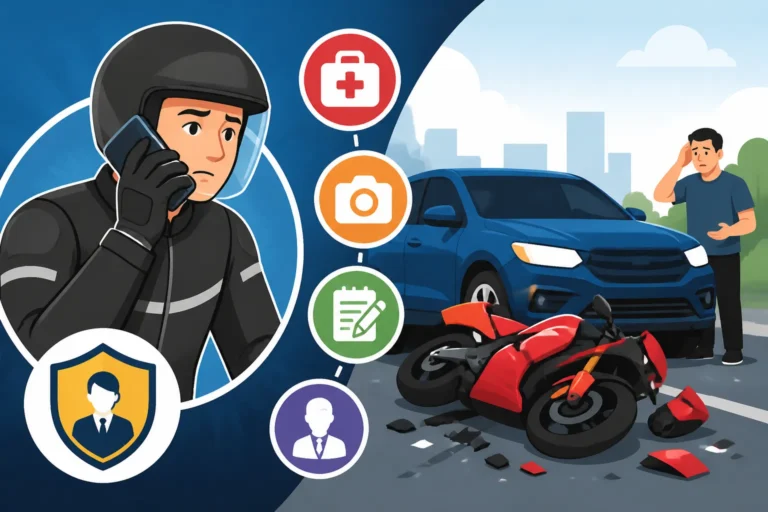
The moments immediately following a head-on collision are chaotic and frightening, but the actions you take (or have someone take for you if you're seriously injured) can be pivotal in proving fault. This isn't just about collecting facts; it's about building a narrative that supports your claim against the driver who caused such devastation. Knowing what to do after a motorcycle accident is critical.
Securing Physical Evidence
Physical evidence from the crash scene tells an objective story of what happened. It doesn't lie and can be incredibly powerful in reconstructing the events.
- Photographs and Videos: If you or someone with you is able, take as many photos and videos as possible. This means wide shots showing the general scene, specific shots of both vehicles from multiple angles (damage, points of impact, final resting positions), skid marks, debris fields, road conditions, traffic signs, and any relevant landmarks. Focus on details that show where the vehicles were before and after the impact. For example, if the other car crossed the center line, clear photos of its position relative to the lane markings are gold. Don't forget to capture any damage to your motorcycle and your gear. These photos can be critical motorcycle accident evidence for proving fault.
- Skid Marks and Debris: The presence and length of skid marks can help accident reconstructionists determine vehicle speeds, braking actions, and the point of impact. Debris, such as shattered glass, plastic, and fluids, also marks the general area of initial impact and can indicate the trajectory of the vehicles post-collision. Look for these crucial indicators and capture them in your photos.
- Road Conditions: Note any factors that might have contributed, such as potholes, standing water, ice, gravel, or construction zones. While the other driver may still be at fault, these details provide context. Also, observe any traffic signs or signals that might be relevant, like "no passing" zones or speed limits.
Witness Statements and Contact Information
Independent witnesses can provide unbiased accounts of the accident, often filling in gaps that physical evidence alone cannot. Their testimony can be invaluable, especially in "I didn't see the motorcycle" defense explained scenarios.
- Identifying Witnesses: Look around for anyone who stopped or was present at the time of the crash. They might be other drivers, pedestrians, or occupants of nearby businesses. Don't assume someone else has already talked to them; take the initiative.
- Collecting Information: Ask for their full name, phone number, and email address. If they're willing, briefly ask what they saw and make a note of it. Encourage them to stay until the police arrive to provide an official statement. However, if they cannot wait, getting their contact info is the most important step. Remember, their fresh recollection is often the most accurate.
- Dashcam Footage: In today's world, many vehicles, including commercial trucks and even personal cars, are equipped with dashcams. If a witness or another driver mentions having one, ask for a copy of their footage immediately. This can provide irrefutable proof of who was at fault and can be a game-changer for your claim. How dashcam footage proves fault cannot be overstated.
The Police Report's Role in Fault Determination
The official police report is often the first, and sometimes most influential, document in determining initial fault. It's a critical piece of evidence.
- Calling the Police: Always call law enforcement immediately after any accident, especially a serious one like a head-on collision. They will secure the scene, direct traffic, gather information, and typically issue a police report. This is one of the first steps to protect your motorcycle claim.
- Providing Your Statement: When the police arrive, be factual and concise. Stick to what you know for sure and avoid speculation or admitting fault. If you're disoriented or injured, let them know. It's perfectly acceptable to say, "I'm in shock right now, and I'm not entirely clear on all the details." Remember, you have the right to avoid self-incrimination. You can learn more about what to say to police after a motorcycle accident.
- Obtaining the Report: Once filed, the police report will usually contain a diagram of the accident, statements from drivers and witnesses, citations issued, and the investigating officer's determination of fault. It's crucial to obtain a copy as soon as it's available. Keep in mind, while influential, a police report is not the final word on fault. How police reports establish fault is important, but they can sometimes contain inaccuracies or incomplete information.
Leveraging Expert Analysis and Technical Evidence
Sometimes, the scene evidence isn't enough to definitively prove fault, especially if the impact was severe, obscuring initial positions, or if the drivers' accounts conflict. This is where specialized expertise comes into play, peeling back the layers of the crash to reveal the truth.
Accident Reconstruction Specialists
When the circumstances surrounding a head-on crash are complex or highly disputed, an accident reconstruction expert becomes invaluable. These professionals are like forensic detectives for traffic collisions.
- What They Do: These experts use scientific principles, physics, and advanced software to recreate the accident scene. They analyze everything: skid marks, vehicle damage, debris fields, road surface, traffic data, and even weather conditions. By combining this data, they can determine critical factors such as vehicle speeds, points of impact, angles of collision, and the sequence of events leading up to the crash. This process helps to definitively establish how fault is determined in motorcycle accidents.
- Why They're Crucial for Head-On Collisions: In head-on crashes, where injuries are typically severe and often involve fatalities, the need for precise fault determination is paramount. An accident reconstructionist can provide an objective, scientific opinion that often carries significant weight with insurance adjusters, juries, and even in settlement negotiations. For example, they can determine if a driver was truly asleep at the wheel by analyzing vehicle trajectory and lack of braking, or if they were traveling too fast for conditions. This is when to hire an accident reconstruction expert.
- Their Role in Court: If your case goes to trial, the expert's testimony, complete with visual aids like animated recreations, can be incredibly persuasive in helping a jury understand the mechanics of the crash and who was responsible.
Black Box Data and Electronic Evidence
Modern vehicles are technological marvels, and many of them record data that can be instrumental in proving fault. This is often referred to as "black box" data, although it's typically found in a vehicle's Event Data Recorder (EDR).
- Event Data Recorders (EDRs): Most cars manufactured after 1996, and almost all vehicles made after 2012, contain EDRs. These devices record crucial data points in the seconds leading up to and during a crash. This can include vehicle speed, brake application, throttle position, seatbelt usage, steering input, and even airbag deployment times. This data is objective and almost impossible to dispute.
- Telematics and GPS Data: Beyond EDRs, many vehicles have telematics systems (like GM's OnStar or FordPass) or third-party GPS units that record driving patterns and locations. This information can show where a vehicle was traveling, its speed, and even harsh braking events, providing a timeline and location context for the accident.
- Cell Phone Records: In cases where distracted driving is suspected, obtaining the other driver's cell phone records (via a subpoena) can show if they were texting, making a call, or using data at the time of the collision. This provides concrete evidence that they were not paying attention to the road, strengthening your case that their distracted driving caused the head-on crash.
Medical Records as Proof of Impact
While medical records primarily document your injuries and treatment, they also serve as vital evidence in your accident claim. They corroborate the severity of the crash and the direct link between the collision and your physical harm.
- Documenting Injuries: Detailed medical reports, doctor's notes, imaging scans (X-rays, MRIs, CT scans), and surgical reports provide an undeniable account of your injuries. For head-on collisions, these often highlight severe trauma, fractures, internal injuries, and sometimes spinal cord injuries from motorcycle accidents.
- Proving Causation: These records establish a clear link between the accident and your injuries. They show the immediate need for treatment and document the progression of your recovery, or sadly, the permanent nature of some injuries. Without this meticulous documentation, insurance companies may try to argue that your injuries were pre-existing or not directly caused by the crash. This is why you should always seek immediate medical attention, even if you feel fine right after the collision.
- Future Medical Needs: For catastrophic injuries common in head-on collisions, medical records, combined with expert medical opinions, can project future medical expenses, ongoing therapy, and potential long-term care, which are significant components of your overall damages.
Common Causes and How They Prove Fault
In head-on motorcycle collisions, specific actions (or inactions) by the other driver are almost always the root cause. Identifying these causes and linking them to concrete evidence is paramount for proving fault.
Driver Impairment and Distraction
These are two of the most prevalent causes of catastrophic accidents, and proving them can significantly bolster your claim.
- Drunk or Drugged Driving: When a driver is under the influence of alcohol or drugs, their judgment, reaction time, and ability to stay in their lane are severely compromised. Evidence here might include police reports detailing DUI charges, field sobriety test results, breathalyzer readings, or toxicology reports. Witness statements about erratic driving or the smell of alcohol at the scene are also crucial. A conviction for drunk driving can be incredibly powerful in proving the other driver's gross negligence and liability.
- Distracted Driving: Texting, talking on a cell phone, adjusting the radio, eating, or engaging with passengers can pull a driver's attention away from the road for critical seconds. Even a momentary lapse can lead to a vehicle drifting across the center line. Evidence can include cell phone records (showing usage at the time of the crash), witness accounts, or the driver's own admission. Proving a distracted driving motorcycle accident is usually the other driver's fault.
Reckless Driving and Lane Violations
Reckless behavior on the road, particularly involving speed or disregard for traffic laws, is another major contributor to head-on collisions.
- Excessive Speed: Speeding reduces a driver's reaction time and increases the distance required to stop, making it harder to avoid a collision. It also magnifies the force of impact. Evidence of speeding could come from traffic camera footage, witness statements, skid mark analysis by an accident reconstructionist, or even data from the vehicle's EDR. How speeding affects motorcycle accident fault is a significant factor.
- Improper Passing or Overtaking: On a two-lane road, a driver attempting to pass another vehicle must ensure the oncoming lane is clear. If they misjudge the distance or speed of an oncoming motorcycle, they can cause a devastating head-on crash. Photos of the road markings (e.g., solid yellow lines indicating no passing), witness statements, and accident reconstruction can prove this violation.
- Failure to Obey Traffic Signals or Signs: While less common for head-on crashes specifically, a driver running a red light or stop sign at an intersection could theoretically cause a head-on collision if they turn into the path of oncoming traffic. Dashcam footage or intersection cameras would be key here. Similarly, if a driver ignores "Do Not Enter" or "Wrong Way" signs, leading them into oncoming traffic, that's a clear lane violation.
Road Hazards and Other Contributing Factors
Sometimes, the environment itself plays a role, though typically, a driver still bears responsibility for failing to navigate these conditions safely.
- Poor Road Conditions: Potholes, sudden drops, uneven pavement, or construction debris can cause a driver to lose control and swerve into oncoming traffic. While the driver is often at fault for not maintaining control, it's worth investigating if there's government liability for road hazards. This requires documenting the specific road hazard, its size, and its location with photos and measurements.
- Weather Conditions: Rain, snow, ice, or dense fog can significantly reduce visibility and traction. Drivers are expected to adjust their speed and driving habits to these conditions. If a driver fails to do so and loses control, causing a head-on collision, they can still be held liable. Witness statements about weather conditions and accident reconstruction analysis of the conditions at the time can be valuable.
By meticulously gathering evidence related to these common causes, you can build a compelling case that clearly shows who is at fault in a motorcycle accident.
Here's a quick overview of how different types of evidence can help prove fault in a head-on collision:
| Evidence Type | What It Proves (Examples for Head-On Collisions) |
|---|---|
| Photos/Videos | Vehicle positions, damage, skid marks, debris, lane markings, road conditions, visibility |
| Witness Statements | Driver actions (swerving, speeding), distracted behavior, vehicle's path before impact |
| Police Report | Officer's assessment of fault, citations issued, scene description, initial statements |
| Accident Reconstruction | Vehicle speeds, point of impact, angles, driver input, sequence of events |
| Event Data Recorder (EDR) | Speed, braking, throttle position, steering in seconds before crash |
| Cell Phone Records | Distracted driving (calls, texts, data usage at time of crash) |
| Medical Records | Severity of injuries, direct link to accident, future medical needs |
| Traffic Camera Footage | Driver running red light/stop sign, lane violations, vehicle movement |
| Drug/Alcohol Test Results | Driver impairment, negligence, reckless behavior |
Proving fault in a head-on collision requires a thorough, systematic approach to evidence collection and analysis. It can feel overwhelming, especially while you're focused on recovery, but every piece of evidence plays a vital role. From the initial scene investigation to expert analysis, building a strong case is essential to secure the compensation you deserve.
Disclaimer
The information provided in this blog post is intended for general informational purposes only and does not constitute legal advice. Motorcycle accident claims are complex and highly dependent on specific facts and state laws. It is crucial to consult with a qualified legal professional for advice tailored to your individual situation.