How Often Are Car Drivers at Fault in Motorcycle Crashes
It’s a frustrating reality for motorcycle riders: when an accident happens, there's often an immediate, unfair assumption that the rider must have been at fault. This pervasive bias can make seeking justice incredibly difficult, even when the evidence clearly points to another driver's negligence. This guide aims to shed light on the true statistics of fault in motorcycle crashes, explaining why car drivers are often the negligent party and how to navigate these often-disputed claims.
Understanding the Statistics: The Real Story of Fault
When you're out on two wheels, you learn quickly that you're practically invisible to many car drivers. This isn't just a feeling; it's a reality backed by statistics. While it might seem like motorcycles are inherently dangerous and riders are always pushing the limits, the data consistently shows a different picture, one where car drivers bear the brunt of responsibility in a significant majority of collisions involving motorcycles. It's a bitter pill to swallow when you're hurt, and insurance adjusters try to pin the blame on you, but knowing the facts can empower you.
Why Perception Differs from Reality
There's a deeply ingrained societal perception that motorcycles are inherently risky, and therefore, anyone riding one must be taking unnecessary chances. This stereotype is incredibly damaging. When a motorcycle and a car collide, many people, including sometimes police officers and certainly insurance adjusters, subconsciously lean towards blaming the rider. They might point to the "vulnerability" of the motorcycle or speculate about speed or aggressive riding without a shred of evidence. This bias is a massive hurdle for riders seeking fair compensation. It overlooks the fact that many riders are highly skilled, cautious, and defensive operators, constantly anticipating the mistakes of others. This "rider bias" often overshadows the actual events leading to the crash, making it harder for the truth to emerge.
The reality is, studies consistently reveal that car drivers are at fault in about two-thirds of all motorcycle accidents. That's a huge number, far beyond what casual observers or even some law enforcement might assume. This discrepancy highlights the critical importance of diligent investigation and strong advocacy in the aftermath of a motorcycle crash. Riders often feel like they're fighting an uphill battle, not just against their injuries, but against a system that's predisposed to doubt them. Understanding that these statistics are on your side, even if public perception isn't, is the first step in combating that unfair bias.
Common Scenarios Where Drivers are At Fault
The reasons car drivers are frequently at fault are varied, but they often boil down to simple negligence, inattention, or a failure to properly observe the road. These aren't unique to motorcycle accidents, but they have particularly devastating consequences when a motorcycle is involved due to the rider's lack of protection. One of the most classic and tragic scenarios is the left-turn collision. A car driver attempting a left turn often fails to see an oncoming motorcycle, misjudges its speed, or simply doesn't yield the right-of-way. This kind of incident is incredibly common and almost always results in severe injuries for the rider. You can learn more about how fault is determined in these specific scenarios in our detailed guide on Left-Turn Motorcycle Accidents Explained.
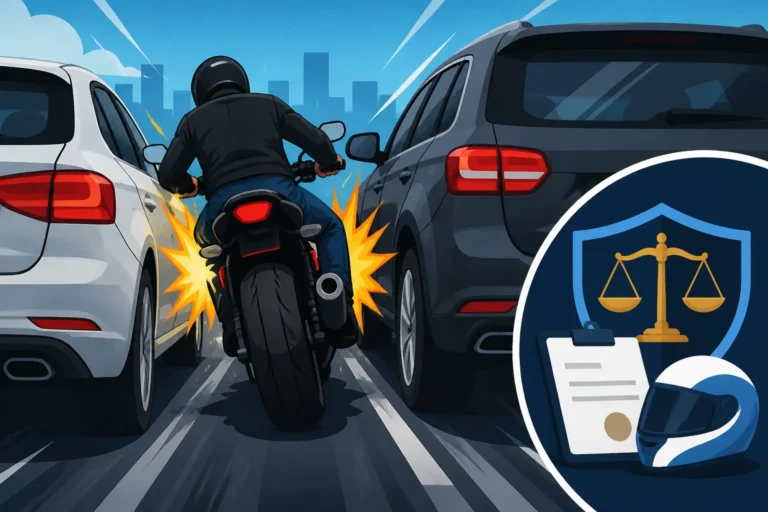
Another prevalent situation involves drivers making unsafe lane changes. They might fail to check their blind spots properly, glance quickly and miss the motorcycle, or simply not use their turn signals. A driver merging into a lane already occupied by a motorcycle can cause the rider to be run off the road or struck directly, leading to catastrophic injuries. These types of accidents often highlight the need for drivers to be more vigilant and aware of all vehicles on the road, not just other cars and trucks.
Then there are the rear-end collisions, which can be just as dangerous for motorcyclists as they are for car occupants, if not more so. A driver following too closely or failing to pay attention can easily rear-end a stopped or slowing motorcycle. Because motorcycles offer no protective cage, the rider is often thrown from the bike, sustaining severe impact injuries. These are often clear-cut cases of driver negligence, as maintaining a safe following distance is a fundamental rule of the road. Understanding these common causes can help in discerning Who Is at Fault in a Motorcycle Accident.
The 'I Didn't See the Motorcycle' Defense and Rider Bias
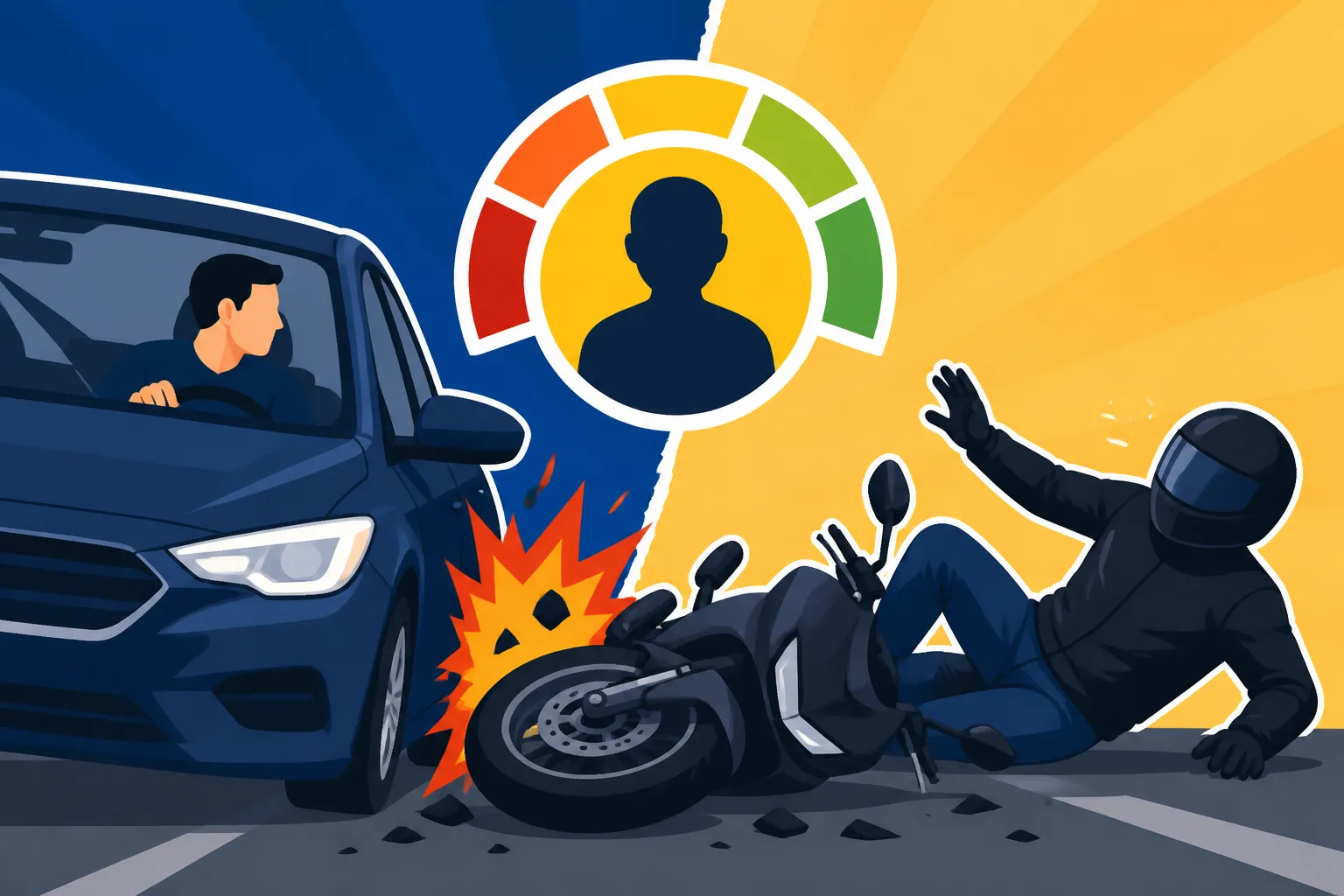
Perhaps no phrase grates on a motorcyclist's nerves more than "I didn't see the motorcycle." It’s a common refrain from drivers involved in collisions with bikes, and it often feels like an excuse rather than a valid explanation. While it might be true that they didn't see you, the legal question isn't whether they saw you, but whether they should have seen you. This defense is often a smokescreen for inattentiveness and forms the backbone of the pervasive rider bias that motorcycle accident victims face.
The Problem with Perceptual Errors
The human brain is an amazing thing, but it has its limitations, especially when it comes to attention. This is where "inattentional blindness" comes into play, a phenomenon often cited in cases where drivers claim not to have seen a motorcycle. Basically, people tend to focus on what they expect to see or what they perceive as the most significant threat. Because motorcycles are smaller and less common than cars, drivers’ brains may filter them out, even when they are directly in their field of vision. This isn't an excuse; it's a profound failure of observation that has devastating consequences for riders. A driver scanning for a large truck or car might completely miss a motorcycle, despite it being clearly visible.
This isn't to say all drivers are malicious. Many truly didn't register the motorcycle. But legally, that doesn't absolve them of responsibility. Drivers have a duty of care to operate their vehicles safely and observe their surroundings thoroughly. Failing to see a motorcycle because of cognitive blind spots or simple distraction is still negligence. The problem is, this perceptual error often feeds into the public's bias, making it seem like the motorcycle "came out of nowhere," when in reality, it was always there, just ignored. Our article on The 'I Didn't See the Motorcycle' Defense Explained delves deeper into how this defense is used and countered.
How Rider Stereotypes Influence Blame
Beyond perceptual errors, deeply ingrained stereotypes about motorcyclists play a huge role in how fault is assigned after an accident. The image of the reckless, speeding "biker" is unfortunately pervasive, often perpetuated by media portrayals. When a collision occurs, even if the rider was obeying every traffic law and driving defensively, an initial assumption of fault can be made against them simply because they were on a motorcycle. This bias can influence everything from the police report generated at the scene to the way insurance adjusters evaluate a claim.
Insurance companies, in particular, are notorious for leveraging these stereotypes. They might suggest the rider was speeding, weaving through traffic, or engaging in other risky behaviors without any evidence, simply because "motorcyclists do that." This pre-judgment can dramatically reduce settlement offers or even lead to outright denials of claims, forcing injured riders into prolonged legal battles just to prove they weren't the "bad guy." It's a truly unfair burden that adds insult to injury. Overcoming these stereotypes requires presenting undeniable evidence and often the assistance of an experienced legal professional who understands these biases.
Key Factors Contributing to Driver Fault
Beyond the common scenarios and the pervasive "I didn't see you" excuse, there are specific, quantifiable factors that lead to car drivers being primarily at fault in motorcycle crashes. These are often the same factors that cause accidents between cars, but with motorcycles, the outcomes are disproportionately severe.
Distracted and Impaired Driving
In today's world, distracted driving is an epidemic, and it's a leading cause of accidents involving motorcycles. A driver checking a text message, scrolling through social media, or even just adjusting their radio station for a few seconds can miss a crucial moment of observation. Those few seconds are all it takes for a motorcycle to enter their path unnoticed. Think about someone driving down a busy street in Seattle, glancing at their phone for just two seconds. In that brief moment, traveling at 30 mph, their car covers nearly 90 feet—a long distance for a motorcycle to suddenly appear in their blind spot or path. When they look up, it's too late. Our article on Motorcycle Accidents Caused by Distracted Driving goes into more detail about how common these incidents are.
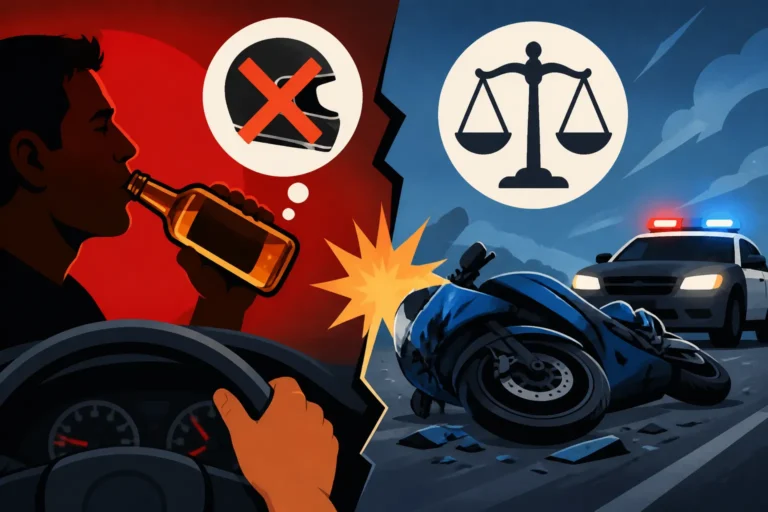
Impaired driving, whether from alcohol, illicit drugs, or even prescription medication, also significantly increases the risk of a car driver causing a motorcycle accident. Impairment slows reaction times, blurs judgment, and reduces peripheral vision—all critical faculties needed to spot smaller vehicles like motorcycles. An impaired driver might fail to yield at an intersection, swerve into a motorcycle's lane, or simply not react in time to avoid a collision, leading to catastrophic injuries for the rider. The devastating impact of these choices is profound and undeniable, and the fault lies squarely with the impaired driver.
Failure to Yield and Lane Violations
Failure to yield the right-of-way is perhaps one of the most common forms of driver negligence that leads to motorcycle accidents. This typically occurs at intersections, where a car driver might turn left directly into the path of an oncoming motorcycle, or pull out from a stop sign without giving way. The consequences are often head-on or T-bone collisions, which are among the most dangerous types of crashes for motorcyclists. Drivers often claim they simply didn't see the motorcycle, but legally, the responsibility to yield is absolute.
Similarly, lane violations are a frequent cause of accidents. This isn't just about unsafe lane changes, but also includes drivers drifting out of their lane, encroaching on a motorcycle's space, or even aggressively cutting off a motorcycle. When a driver enters a motorcycle's lane without warning, the rider often has nowhere to go and can be forced into a ditch, a barrier, or even into oncoming traffic. These violations often stem from a lack of attention, improper mirror use, or aggressive driving behavior, all of which directly point to the car driver's fault. For more on this, you can check our guide on Motorcycle Accidents Caused by Failure To Yield.
Road Hazards and Infrastructure
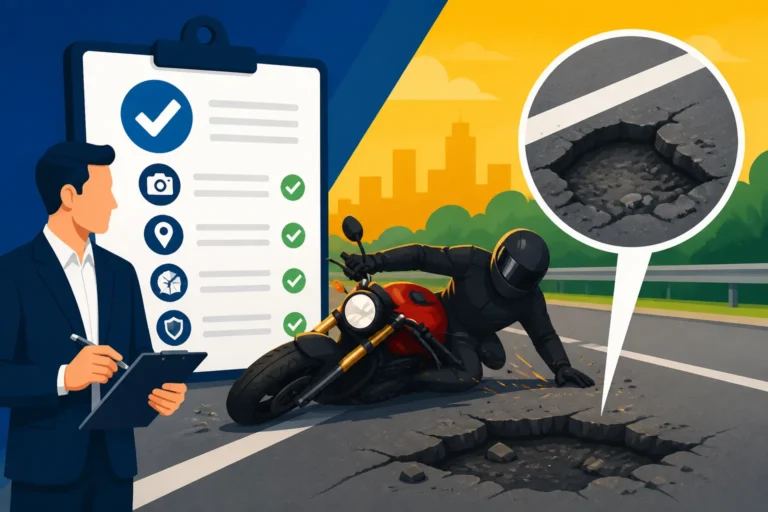
While direct driver negligence is a major factor, sometimes the fault isn't solely with another driver but also with the entities responsible for road maintenance. Poor road conditions, such as potholes, gravel, debris, or unmarked construction zones, can pose extreme dangers to motorcyclists. A car might drive over a pothole and barely notice it, but for a motorcycle, hitting the same pothole could mean a loss of control, a sudden swerve, or a debilitating crash. If these hazards are due to negligent maintenance by a municipality or a private contractor, liability can shift beyond the individual driver.
Consider a scenario where the Department of Transportation for a city like Phoenix fails to properly repair a crumbling section of Interstate 10, leading to a motorcycle crash. In such a case, the government entity responsible for the road could be held partially or entirely at fault. Similarly, if a construction company leaves loose gravel on the road after completing work on a highway in rural Texas, and a motorcyclist crashes as a result, that company could be liable. These situations demonstrate that identifying fault isn't always straightforward and sometimes involves multiple parties. Our article on Motorcycle Accidents Caused by Road Hazards explores this topic in greater detail.
Proving Driver Fault in Your Motorcycle Accident Claim
After a motorcycle crash, especially one where the car driver was at fault, your immediate priority should be your health and safety. But once you've addressed your medical needs, turning your attention to proving fault is crucial. Insurance companies will almost always try to minimize their payout, and that often means shifting blame to the motorcyclist. Having clear, undeniable evidence is your strongest weapon.
Gathering Critical Evidence
The moment after an accident, if you are able, is a critical window for gathering evidence. Photos and videos from the scene are incredibly powerful. Capture images of both vehicles from multiple angles, showing the extent of the damage, their final resting positions, and any debris on the road. Don't forget to photograph skid marks, traffic signals, road signs, and any relevant road hazards. These visual records can be instrumental in reconstructing the accident and proving what truly happened. Many modern smartphones capture location and timestamp data, further strengthening the evidence. Our guide on Motorcycle Accident Evidence for Proving Fault offers a comprehensive checklist.
Witness statements are also invaluable. Eyewitnesses, especially those who aren't involved in the accident, can provide an objective account of events. Get their contact information immediately: names, phone numbers, and email addresses. Even if they didn't see the entire sequence, their perspective on specific details, like the other driver's actions or the traffic conditions, can be incredibly helpful. If there's a police report, obtain a copy as soon as possible. While not always conclusive, a well-documented police report can be a strong piece of evidence regarding initial observations of fault and contributing factors. For instance, if the officer noted that the car driver received a citation for failing to yield, that's a powerful indicator of fault.
Finally, consider any technological evidence. Did your helmet have a dashcam? Many riders are now using helmet cameras or motorcycle-mounted cameras to record their rides. This footage can be irrefutable proof of how an accident occurred, capturing the other driver's actions in real-time. Even nearby businesses might have surveillance cameras that captured the incident. This type of objective data, like How Dashcam Footage Proves Fault, can often cut through subjective biases and clarify the chain of events.
The Role of Witnesses and Experts
Beyond initial witness statements, the testimony of experts can be pivotal, especially when fault is disputed. Accident reconstruction experts, for example, can analyze physical evidence from the scene—such as vehicle damage, skid marks, and impact points—to create a detailed scientific explanation of how the collision occurred. Their expertise can debunk false claims by the other driver or effectively counter the "I didn't see the motorcycle" defense by showing the motorcycle was clearly visible and the driver had ample time to react.
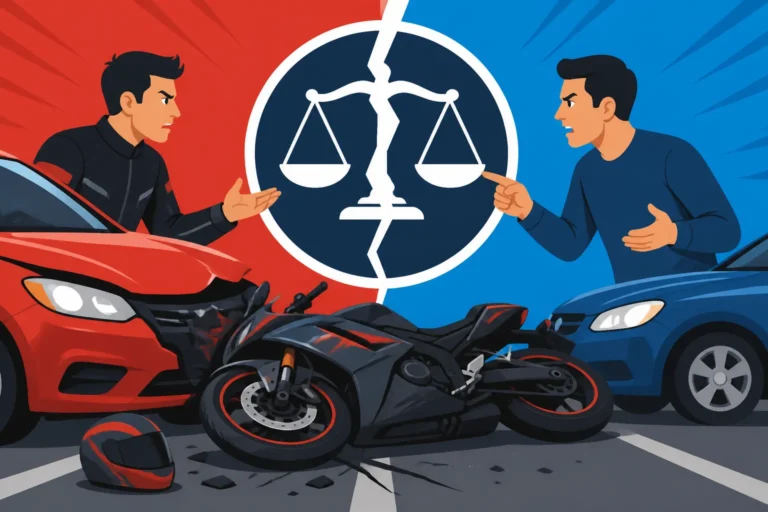
Medical experts are also crucial in documenting your injuries and their long-term impact. They can connect your injuries directly to the accident, countering any insurance company claims that your injuries were pre-existing or less severe than reported. Their testimony can establish the full extent of your damages, including future medical needs, which is vital for a fair settlement. When Fault Is Disputed in a Motorcycle Crash, assembling a team of experts can make all the difference.
| Accident Type | Common Driver Action | Typical Party at Fault | Key Evidence to Prove Fault |
|---|---|---|---|
| Left-Turn Collisions | Failing to yield to oncoming motorcycle | Car Driver | Witnesses, intersection cameras, vehicle damage, traffic laws |
| Unsafe Lane Changes | Failing to check blind spot, no signal | Car Driver | Dashcam footage, witness accounts, damage patterns |
| Rear-End Collisions | Following too closely, distracted driving | Car Driver | Skid marks, vehicle damage, witness testimony, police report |
| Running Stop Sign/Red Light | Ignoring traffic controls | Car Driver | Traffic cameras, witnesses, police report, intersection layout |
| Road Hazard Related | Negligent road maintenance (not a driver) | Government/Contractor | Photos of hazard, maintenance records, expert testimony |
| Dooring Accidents | Opening car door into path of motorcycle | Car Occupant/Driver | Witnesses, vehicle damage, proximity of parked car |
Finally, having a skilled legal advocate on your side, particularly one who specializes in motorcycle accidents, is perhaps the most important step. They understand the nuances of motorcycle law, the biases you'll face, and how to effectively present your case. They know How Police Reports Establish Fault and can gather critical evidence, interview witnesses, and negotiate with insurance companies on your behalf, ensuring your rights are protected and you receive the compensation you deserve.
Disclaimer
The information provided in this article is for general informational purposes only and does not constitute legal advice. Every motorcycle accident claim is unique, and the outcome depends on specific facts and circumstances. It is highly recommended to consult with a qualified legal professional specializing in motorcycle accident cases for advice tailored to your individual situation.