How to Prove Fault in a Unsafe Lane Changes Crash
Riding a motorcycle offers a sense of freedom and exhilaration that's hard to match, but it also comes with a unique set of challenges, especially when navigating busy roads. One of the most frustrating and dangerous situations riders face is when another driver makes an unsafe lane change, often cutting them off or colliding with them, leaving the rider with serious injuries and the daunting task of proving who was at fault. This guide is here to walk you through the essential steps and strategies for proving fault in an unsafe lane change motorcycle accident, ensuring your voice is heard and your rights are protected.
The Peril of Unsafe Lane Changes for Motorcyclists
When you're out on the open road, whether it's a multi-lane highway or a busy city street, an unsafe lane change by another vehicle isn't just an inconvenience; it can be a life-altering event for a motorcyclist. These incidents are unfortunately common and often result in significant injuries due to the sheer vulnerability of riders compared to those in enclosed vehicles. Understanding what legally constitutes an unsafe lane change and why these accidents happen is the first step in building a strong case.
What Defines an Unsafe Lane Change Legally
At its core, an unsafe lane change is any maneuver where a driver moves from one lane to another without first ensuring it's safe to do so. This typically involves failing to signal, not checking mirrors or blind spots adequately, or cutting off another vehicle, forcing them to brake suddenly or swerve. Most states have laws, often found in their vehicle codes, that explicitly outline these requirements. For instance, in California, Vehicle Code 22107 states that no person shall turn a vehicle from a direct course or move right or left upon a roadway until such movement can be made with reasonable safety and then only after the giving of an appropriate signal in the manner provided in this chapter in the event any other vehicle may be affected by the movement. This means a driver isn't just signaling; they have to wait until it's safe.
Imagine you're cruising down a freeway, minding your own business in your lane, and suddenly a car from the adjacent lane veers directly into your path without warning. This isn't just careless driving; it's a clear violation of safe driving practices and often state law. The driver might have been distracted, perhaps fiddling with their radio or talking on a phone, or they might simply have been impatient. Regardless of their intent, their action created a hazardous situation, directly endangering your life and potentially causing a collision. This lack of due care is precisely what needs to be highlighted when you're trying to prove fault in an unsafe lane changes crash.
When these incidents occur, the legal definition becomes incredibly important. It's not enough to say the driver "cut you off." You need to demonstrate that their actions directly violated traffic laws designed to prevent such collisions. This could involve an illegal lane change, failure to yield the right-of-way, or even distracted driving. These specific violations form the bedrock of your argument that the other driver was negligent and, therefore, at fault.
Why Motorcyclists Are Particularly Vulnerable
It's no secret that motorcycles offer very little in the way of protection during a collision. Unlike cars, which have steel frames, airbags, and seatbelts, a motorcyclist is directly exposed to the force of impact. This inherent vulnerability means that even a minor fender-bender for a car can result in catastrophic injuries for a rider. When a vehicle makes an unsafe lane change, there's often little to no time for a motorcyclist to react. They can't simply stomp on the brakes like a car and expect to stop safely without risking being thrown from their bike.
Furthermore, a lane change often involves a lateral movement, meaning the car might sweep into a rider's space from the side, giving them almost no advanced warning. This contrasts with, say, a rear-end collision where the rider might see the car approaching in their mirror. In an unsafe lane change, the other driver might appear from what they consider a "blind spot" and suddenly be right on top of the motorcycle. The rider is then faced with the terrifying choice: hit the car, swerve into another lane (potentially into more traffic), or brake hard and risk a high-side or low-side fall. None of these options are good, and all can lead to severe injuries, including traumatic brain injuries, spinal cord injuries, and extensive road rash.
This extreme vulnerability is often leveraged by insurance companies who might try to argue that the rider should have somehow avoided the accident, even when the other driver was clearly in the wrong. That's why documenting the specifics of how the unsafe lane change occurred, and how little time you had to react, is critical. It helps to counteract the insidious "rider bias" that unfortunately exists, where motorcyclists are sometimes unfairly blamed for accidents simply because they were on a bike.
The 'Blind Spot' Myth and Driver Negligence
Drivers often utter the phrase, "I didn't see the motorcycle!" after an accident, especially in lane change scenarios. This isn't just an excuse; it's a prevalent and dangerous problem that highlights driver negligence. The truth is, there's no such thing as a truly unavoidable "blind spot" for a diligent driver. Modern vehicles are equipped with side mirrors, rearview mirrors, and increasingly, blind-spot monitoring systems. More importantly, drivers are taught to perform a "head check" – a quick glance over the shoulder – before changing lanes. If they fail to do this and claim they didn't see you, it's not a valid defense; it's an admission of negligence.
The responsibility to see and account for other vehicles on the road, including motorcycles, falls squarely on the driver making the lane change. A motorcycle's smaller profile means a driver must be extra vigilant, not less. When a driver fails to adequately check their surroundings, they are failing in their duty of care to other road users. This negligence is a key component in proving fault. It's about demonstrating that the other driver's actions (or inactions) fell below the standard of a reasonable and prudent driver under similar circumstances.
Therefore, when a driver claims they didn't see you, it often strengthens your case for proving fault. It demonstrates they were not paying attention, were not performing proper checks, or were otherwise operating their vehicle carelessly. This common defense, "I Didn't See the Motorcycle' Defense Explained", can actually be turned into powerful evidence against the at-fault driver when properly addressed.
Immediate Actions and On-Scene Evidence Collection
After the shock of an unsafe lane change accident, your mind might be reeling. However, the moments immediately following the crash are incredibly critical for collecting evidence that will be vital in proving fault. What you do or don't do at the scene can significantly impact your ability to recover damages for your injuries and losses.
Prioritizing Safety and Calling for Help
First and foremost, your safety and the safety of others must be the top priority. If your motorcycle is in a dangerous position, like in the middle of a busy highway lane, and you are able to move it and yourself to the shoulder or a safer location, do so. However, if you are injured, do not move. Your injuries could be severe, and moving might exacerbate them. Call 911 immediately. Even if you think your injuries are minor, medical attention is crucial, both for your health and for documenting your injuries for your claim. The police report will also be a vital piece of evidence.
When the police arrive, they will secure the scene, direct traffic, and begin their investigation. It’s essential to provide them with clear, factual information about what happened. Avoid speculating or admitting fault, even if you’re unsure about certain details. Stick to the facts: where you were, what the other driver did, and how the accident occurred. The police report, which includes details like diagrams, witness statements, and initial findings on who is at fault, can be incredibly persuasive evidence. However, remember that a police report isn't always the final word on fault, and sometimes, they can contain inaccuracies or biases that need to be challenged, as explored in How Police Reports Establish Fault.
Documenting the Scene with Photos and Video
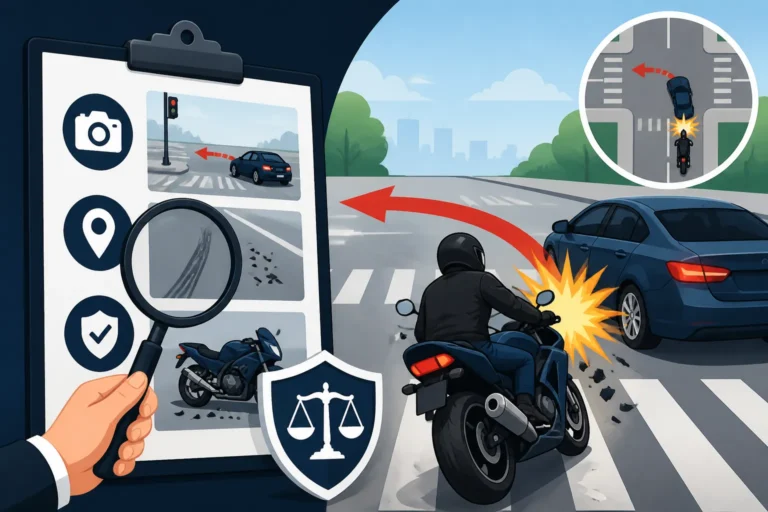
In the age of smartphones, taking photos and videos at the accident scene is one of the most powerful things you can do to prove fault. Don't rely solely on the police to do this. Take pictures from multiple angles. Capture the position of both vehicles, the damage to your motorcycle and the other vehicle, skid marks on the road (or lack thereof), road debris, and any traffic signs, signals, or lane markings that are relevant. You're looking for anything that tells the story of how the unsafe lane change happened.
For an unsafe lane change specifically, try to get photos that show the relative positions of the vehicles before they were moved, if possible. If the other vehicle moved into your lane, photos showing the point of impact on both vehicles can be very telling. For instance, if their front passenger side collided with your left side, it suggests they initiated the turn into your lane. Also, document the conditions of the road, weather, and lighting. These details might seem minor at the moment, but they can be crucial later in reconstructing the accident and proving the other driver's negligence. This immediate documentation is a key part of Motorcycle Accident Evidence for Proving Fault.
Securing Witness Information and Police Reports
Witnesses can be incredibly impactful when proving fault, especially in cases where accounts differ or the other driver denies responsibility. If anyone saw the unsafe lane change happen, ask for their name, phone number, and email address. A quick video recording of their statement on your phone at the scene can also be very helpful, as it captures their fresh recollection. People are often willing to help, especially after witnessing a jarring accident involving a motorcyclist. These accounts can confirm your version of events and corroborate the other driver’s negligent lane change.
| Type of Evidence | Description | Impact on Proving Fault |
|---|---|---|
| Police Report | Official record by law enforcement, includes diagrams, statements, initial fault finding. | Strong, but not always definitive; can be challenged. |
| Photos/Videos | Visual documentation of vehicle positions, damage, road conditions, skid marks. | Highly persuasive, objective, paints a clear picture of the scene. |
| Witness Statements | Eyewitness accounts of the accident. | Can corroborate your story, crucial if driver denies fault. |
| Dashcam Footage | Video from vehicle's dashcam, traffic cameras, nearby businesses. | Extremely strong, undeniable evidence of events. |
| Traffic Violations | Citations issued to the at-fault driver (e.g., unsafe lane change). | Direct proof of negligent driving action. |
| Medical Records | Documentation of injuries, treatment, and prognosis. | Essential for proving damages and severity of impact. |
While police reports are essential, sometimes officers don't assign fault or get the details wrong. That's why having independent witness statements is so valuable. How Witnesses Affect Motorcycle Fault can't be overstated. Their unbiased perspective can cut through disputes and solidify your claim that the other driver was solely responsible for the unsafe lane change. Make sure to get a copy of the official police report as soon as it's available, as it will contain important details and the other driver's insurance information.
Leveraging Post-Accident Investigations to Strengthen Your Claim
The work to prove fault doesn't stop once you leave the accident scene. In fact, some of the most compelling evidence often comes from a thorough investigation in the days and weeks following the crash. This is where dedicated effort can really make a difference, particularly when the other driver or their insurance company tries to shift blame onto you.
The Role of Accident Reconstruction Experts
In complex unsafe lane change cases, especially when injuries are severe or fault is heavily disputed, an accident reconstruction expert can be a game-changer. These specialists use scientific principles, physics, and detailed analysis of evidence from the scene – such as vehicle damage, skid marks, debris fields, and even dashcam footage – to recreate exactly how the accident occurred. They can determine vehicle speeds, angles of impact, and crucial timing elements, offering an objective, data-driven explanation of the collision.
For example, an expert might analyze the crumple patterns on both vehicles to show that the other driver's vehicle made contact with your motorcycle while veering left, rather than you hitting their side. They can also calculate how much time you had to react, often demonstrating that the unsafe lane change left you with no evasive options. This kind of expert testimony can be invaluable in court or during settlement negotiations, lending significant weight to your claim that the other driver was solely responsible for the unsafe lane change. When Fault Is Disputed in a Motorcycle Crash, these experts provide clarity.
Obtaining Digital Evidence: Dashcams and Traffic Footage
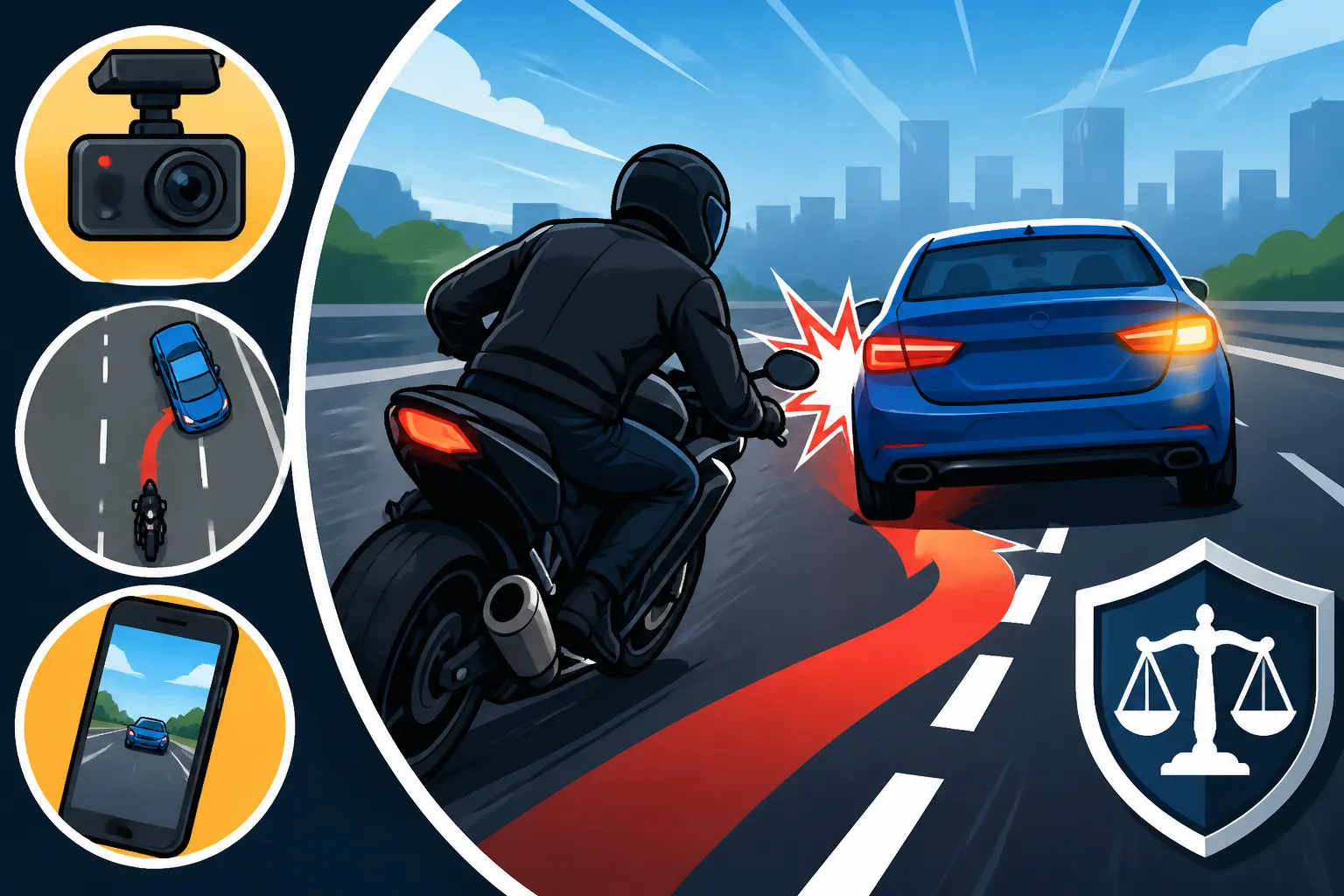
We live in a world surrounded by cameras, and this can be a huge advantage for motorcyclists trying to prove fault. Many vehicles today have dashcams, and increasingly, traffic cameras are installed at intersections and along major roadways. Nearby businesses might also have surveillance cameras that could have captured the incident. This "digital footprint" can provide irrefutable evidence of an unsafe lane change.
Your legal team can work to identify and secure any available footage. This might involve sending preservation letters to businesses or government agencies to ensure recordings aren't overwritten. Imagine footage showing a driver abruptly swerving into your lane without signaling, directly contradicting their claim that you swerved into them. This kind of objective evidence, as highlighted in How Dashcam Footage Proves Fault, can quickly resolve disputes and firmly establish who is to blame. It eliminates the "he said, she said" arguments that often plague motorcycle accident claims.
Medical Records and Long-Term Injury Documentation
While not directly proving fault for the unsafe lane change, your medical records are absolutely crucial for proving the damages caused by the accident. The severity of your injuries directly impacts the value of your claim, and these records link your injuries specifically to the accident. From the moment you receive emergency treatment to ongoing therapy and specialist visits, every medical document, bill, and doctor's note builds a comprehensive picture of the physical and emotional toll the accident has taken on you.
It’s vital to seek immediate medical attention, even for injuries that seem minor, as some serious conditions can have delayed symptoms. Consistent medical care also demonstrates to insurance companies that you are actively seeking treatment and not exaggerating your injuries. Furthermore, if you're facing long-term recovery, rehabilitation, or even permanent disability, detailed medical documentation from specialists will be essential in projecting future medical costs and establishing compensation for pain and suffering and loss of enjoyment of life. This meticulous documentation directly supports your overall motorcycle accident claim.
Overcoming Challenges and Proving Fault Effectively
Even with strong evidence, proving fault in a motorcycle accident can be an uphill battle. Insurance companies often have tactics to minimize payouts, and unfortunately, rider bias can sometimes influence perceptions. Knowing these challenges and how to strategically address them is key to a successful outcome.
Addressing Rider Bias and Disputed Fault
One of the most insidious challenges motorcyclists face is "rider bias." This refers to the preconceived notion, often held by jurors, police officers, and even insurance adjusters, that motorcyclists are inherently reckless or responsible for their own accidents. In an unsafe lane change scenario, an insurance company might try to argue that you were speeding, performing an illegal maneuver like lane splitting (even if it's legal in your state), or simply weren't "visible enough," implying you contributed to the accident. This is where proving fault in a clear, undeniable way becomes paramount.
To combat this, your evidence must be overwhelming and meticulously presented. Every photograph, every witness statement, every expert analysis should work together to paint a clear picture of the other driver's sole negligence. If the other driver claims you were speeding, for instance, accident reconstruction can often debunk that claim by analyzing impact forces and vehicle trajectories. It's about systematically dismantling their attempts to shift blame. You might hear the term "comparative negligence" or "contributory negligence" thrown around, which are legal doctrines that can reduce or even eliminate your ability to recover damages if you're found partially at fault. This makes a robust defense against rider bias incredibly important.
The Importance of Legal Counsel in Complex Cases
Navigating the aftermath of a motorcycle accident, especially one involving an unsafe lane change and significant injuries, is incredibly complex. Dealing with insurance adjusters, collecting evidence, understanding legal precedents, and potentially going to court is a monumental task, particularly when you're also trying to recover from injuries. This is where experienced legal counsel becomes indispensable. A skilled motorcycle accident attorney understands the nuances of these cases, the tactics insurance companies employ, and the best strategies for proving fault.
They can immediately launch an independent investigation, secure critical evidence like dashcam footage or traffic camera video, interview witnesses before memories fade, and engage accident reconstruction experts. They know the applicable traffic laws and how to apply them to your specific situation. For instance, they can challenge inaccuracies in police reports or bring in experts to counter biased claims. They also handle all communication with insurance companies, protecting you from inadvertently saying something that could harm your claim. This expertise is critical, especially when you consider that How Insurance Companies Assign Blame to Riders is often aimed at reducing their own liability, not ensuring fairness.
Understanding State-Specific Negligence Laws
The laws governing fault and negligence can vary significantly from state to state, and these differences can profoundly impact your ability to recover compensation. Most states follow some form of "comparative negligence," which allows you to recover damages even if you were partially at fault, but your compensation will be reduced by your percentage of fault. For example, if you're found 10% at fault, your $100,000 settlement would be reduced to $90,000. However, some states, like North Carolina, still adhere to "contributory negligence," where if you are found even 1% at fault, you may be barred from recovering any damages at all.
Knowing these laws is crucial for strategizing your case. An attorney familiar with your state's laws (e.g., Motorcycle Accident Fault Laws in California) can advise you on the best course of action. They can also help you understand how potential traffic violations you might have incurred (even minor ones) could impact the determination of fault, as discussed in How Traffic Violations Affect Fault. This legal landscape is complex, and attempting to navigate it alone, especially when recovering from injuries, can lead to costly mistakes. Having an advocate who understands these intricate details is not just helpful; it's often essential for securing the compensation you deserve after an unsafe lane change crash.
Disclaimer
The information provided in this article is for general informational purposes only and does not constitute legal advice. Motorcycle accident claims are highly fact-specific, and the laws governing them vary by jurisdiction. You should consult with a qualified attorney for advice regarding your individual situation.