How to Prove Fault in a Rear-End Collisions Crash
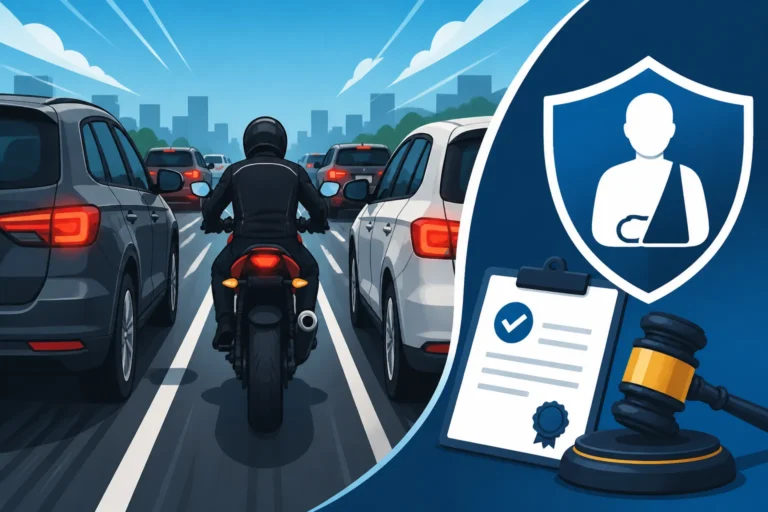
Riding a motorcycle offers a unique sense of freedom, but it also comes with unique risks, especially when navigating busy roads. One of the most jarring and frustrating experiences any rider can face is a rear-end collision. You're minding your own business, perhaps stopped at a light or slowing for traffic, and then bam – suddenly, you're on the ground, your bike is damaged, and you're likely injured. While it might seem obvious that the driver who hit you from behind is at fault, proving it unequivocally can sometimes be more complex than you'd think. This guide is here to walk you through exactly how to establish fault in a rear-end motorcycle accident, arming you with the knowledge you need to protect your rights and your claim.
Understanding the Presumption of Fault in Rear-End Collisions
When a car hits the back of your motorcycle, most people, including insurance adjusters and law enforcement, will initially assume the driver of the trailing vehicle is at fault. This isn't just common sense; it's often rooted in traffic laws and the basic principles of safe driving. Drivers are expected to maintain a safe following distance and be attentive enough to stop or react to traffic conditions ahead of them.
The Following Too Closely Rule
Across the United States, traffic laws generally dictate that drivers must maintain a safe following distance. This isn't usually defined by a precise number of feet but rather by what's reasonable and prudent given the speed, road conditions, and traffic. For instance, in a bustling city like Los Angeles, maintaining what feels like a large gap might still be considered a safe distance due to the fast-changing traffic, whereas on a rural highway in Montana, the same gap might be less critical. The idea is that you should have enough space and time to stop safely if the vehicle in front of you suddenly slows or stops. When a driver fails to do this and rear-ends another vehicle, they are typically deemed to have been "following too closely," a clear traffic violation that points directly to their negligence.
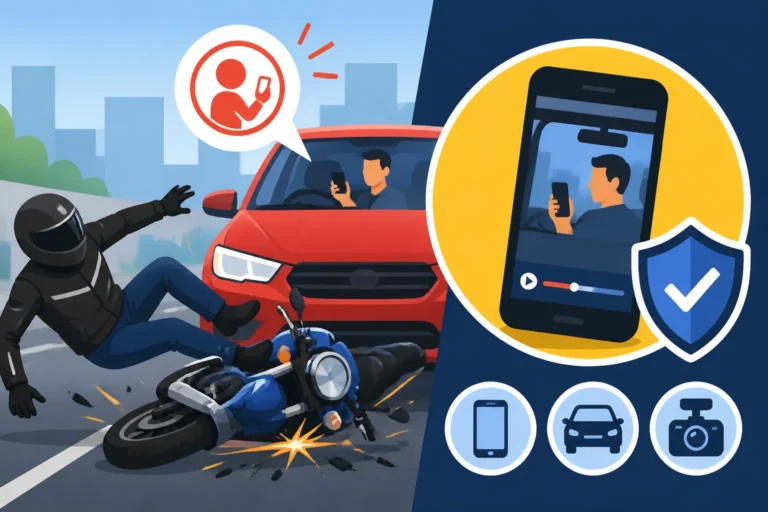
Consider a scenario on I-35 in Austin, Texas, during rush hour. Traffic is stop-and-go, and you, on your Harley-Davidson, are carefully leaving several bike lengths between you and the SUV in front. Suddenly, traffic ahead stops, and you smoothly apply your brakes. The driver behind you, perhaps distracted by their phone or simply not paying attention, doesn't react in time and slams into your rear fender, sending you sprawling. In this classic scenario, the driver behind you almost certainly violated the "following too closely" rule, and their negligence is the direct cause of your accident.
Exceptions to the Rear-Driver-at-Fault Rule
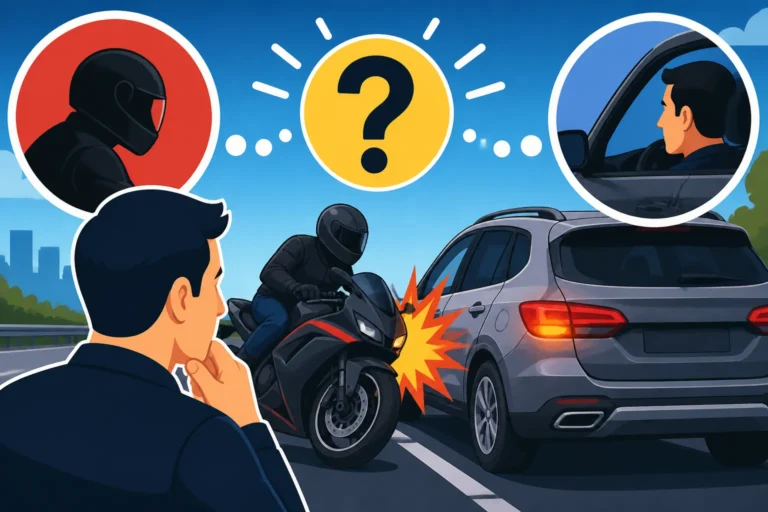
While the presumption often favors the lead vehicle, it's crucial to understand that there are exceptions. Insurance companies, always looking to minimize payouts, will aggressively try to find reasons to shift some or all of the blame to the motorcyclist, even in a rear-end collision. These exceptions are often the battleground for How Fault Is Determined in Motorcycle Accidents.
One common exception is if the lead vehicle (your motorcycle) made a sudden, unexpected stop for no valid reason. For example, if you slammed on your brakes to pick up something you dropped or intentionally brake-checked the car behind you, you could be found partially or entirely at fault. Another exception could involve a malfunctioning brake light on your motorcycle, making it impossible for the trailing driver to know you were decelerating. Furthermore, if you suddenly swerved or changed lanes abruptly right in front of the other driver, essentially cutting them off and then stopping, that could also introduce shared fault. Imagine you're on a multi-lane highway near Miami, Florida, and you make an abrupt lane change directly into the path of a car already too close behind you, then immediately have to brake hard for traffic ahead. In such a case, the driver might argue they had no time to react.
Gathering Immediate Evidence at the Scene
The moments immediately following a motorcycle accident are chaotic, painful, and often confusing. However, what you do or don't do in this critical window can significantly impact your ability to prove fault and secure fair compensation. This is your first and best chance to gather the raw data that will speak volumes later. For more comprehensive steps, refer to our guide on What to Do After a Motorcycle Accident.
Documenting the Scene with Photos and Videos
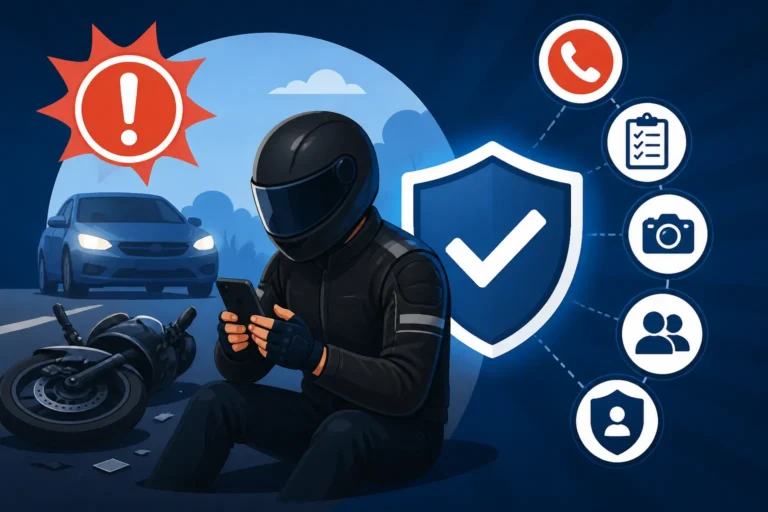
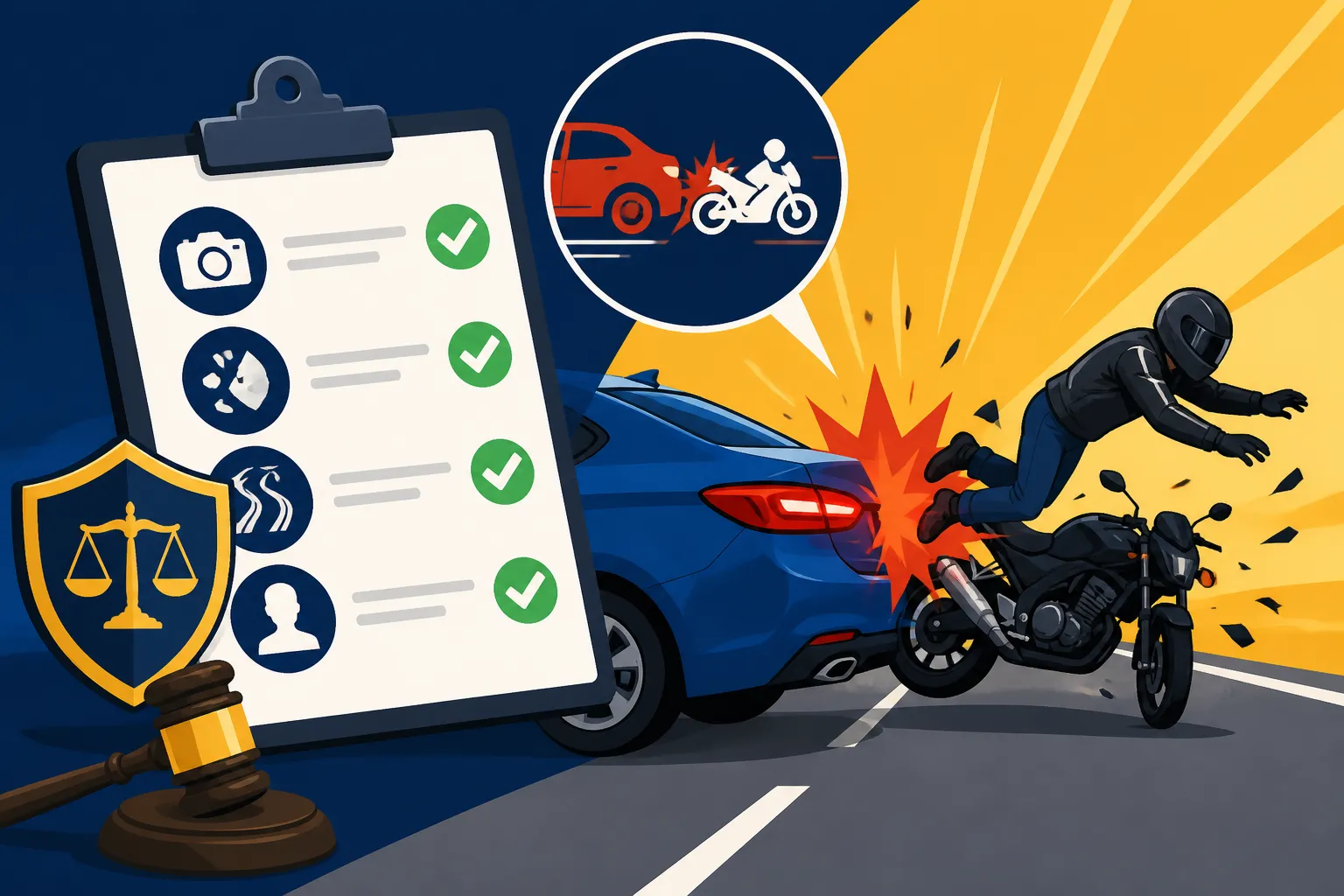
In today's world, almost everyone has a smartphone with a camera, and it is your most powerful tool after a crash. Take as many photos and videos as you possibly can from multiple angles. Don't worry about taking too many – it's better to have too much information than not enough.
Start with wide shots that show the overall accident scene, including the positions of both vehicles, any surrounding landmarks, and traffic signs. Then, move closer to capture detailed shots of the damage to your motorcycle and the other vehicle. Look for paint transfers, dents, scratches, and broken parts. Crucially, photograph any skid marks on the road, debris from the collision, or fluid leaks, as these can help an accident reconstruction expert understand the impact dynamics. Don't forget to get clear photos of the other driver's license plate, their driver's license, and their insurance card. If you suspect the other driver was distracted, try to get a photo of them looking at their phone or any other signs of distraction. Also, capture the weather and road conditions, like rain, ice, or potholes, if they contributed to the accident.
Calling Law Enforcement and Seeking Medical Attention
Even if you think your injuries are minor, calling the police is almost always a good idea. A police report creates an official record of the incident, documenting the basic facts, witness information, and often the initial assessment of fault by the responding officer. While a police report isn't always conclusive evidence of fault, it's a powerful tool, especially when insurance companies start questioning your account. In many jurisdictions, officers will issue citations if a traffic law was violated, such as "following too closely" or "distracted driving."
Equally important is seeking immediate medical attention. Your health is paramount, but from a legal standpoint, timely medical care creates an undeniable record of your injuries directly linked to the accident. Even if you feel okay, adrenaline can mask pain. Delayed symptoms are common after motorcycle crashes, especially for neck, back, and head injuries like concussions. Getting checked out by paramedics at the scene or going to an emergency room or urgent care facility right away establishes a clear timeline between the collision and your injuries, which is vital for claiming Motorcycle Accident Traumatic Brain Injuries or Spinal Cord Injuries from Motorcycle Accidents later on.
Leveraging Key Evidence for Your Claim
Once the initial shock subsides and you start the long road to recovery, the evidence you've gathered, or that can still be obtained, becomes the backbone of your claim. This is where you transition from documenting the event to building a compelling case for fault.
The Police Accident Report
The police accident report is a formal document created by law enforcement, detailing their findings at the scene. It includes critical information like the date, time, and location of the crash, the names and contact information of all parties involved, insurance details, and descriptions of vehicle damage. Most importantly, it often includes the officer's determination of who received a citation for a traffic violation, which can be a strong indicator of fault. For example, if the other driver was cited for failing to maintain a safe distance or for Motorcycle Accidents Caused by Distracted Driving, that goes a long way in establishing their negligence.
However, it's important to remember that police reports are not always infallible. Officers arrive after the fact and rely on what they see and what witnesses tell them. Sometimes, they might misinterpret the scene or rely too heavily on one party's account. If you believe the police report contains errors that unfairly assign you fault, it is possible to file a supplemental report or request an amendment, though this can be challenging. Our article on How Police Reports Establish Fault dives deeper into this topic.
Witness Statements
Independent witnesses can be invaluable. Unlike the parties directly involved in the accident, disinterested third parties often have no stake in the outcome and can provide an objective account of what happened. This is why it's so important to ask for contact information from anyone who saw the crash unfold.
Imagine a witness who saw the car behind you weaving through traffic, speeding, and then failing to brake as they approached your motorcycle. Their testimony can corroborate your story and counter any claims the at-fault driver or their insurance company might make about your actions. Even a brief statement can make a huge difference. How Witnesses Affect Motorcycle Fault can provide more details on this. Be sure to note their names and phone numbers at the scene, as they might not be included in the police report.
Traffic Laws and Violations
The laws of the road are there for a reason: to keep everyone safe. When a driver violates a traffic law and that violation directly leads to an accident, it's a strong indicator of their fault. For rear-end collisions, this often means "following too closely," but it can also involve other violations.
Consider a driver who was Motorcycle Accidents Caused by Speeding and couldn't stop in time, or a driver who was Motorcycle Accidents Caused by Drunk Driving. In cases where the other driver was impaired, their negligence is almost undeniable. Even less obvious violations, like driving with a broken headlight or failing to signal a turn (though less common in a direct rear-end), can demonstrate a general disregard for safe driving practices. Proving these violations, often through the police report or witness testimony, solidifies the argument that the other driver's actions were the cause of your crash.
Additional Investigative Avenues for Proving Fault
Sometimes, the initial evidence isn't enough, or the other driver's insurance company aggressively denies fault, even when it seems clear. In these situations, you might need to dig a little deeper, employing more advanced investigative techniques to get the truth. This is part of the broader effort to collect Motorcycle Accident Evidence for Proving Fault.
Vehicle Black Box Data and Dashcam Footage
Modern vehicles are technological marvels, and many are equipped with Event Data Recorders (EDRs), often called "black boxes." These devices record data points in the moments leading up to and during a crash, such as vehicle speed, braking, steering input, and even seatbelt usage. This data can provide an objective, scientific account of what the vehicle was doing, making it incredibly powerful evidence. For instance, if the other driver claims they were driving slowly and braked hard, but their EDR shows they were speeding and didn't hit the brakes until impact, it completely refutes their story.
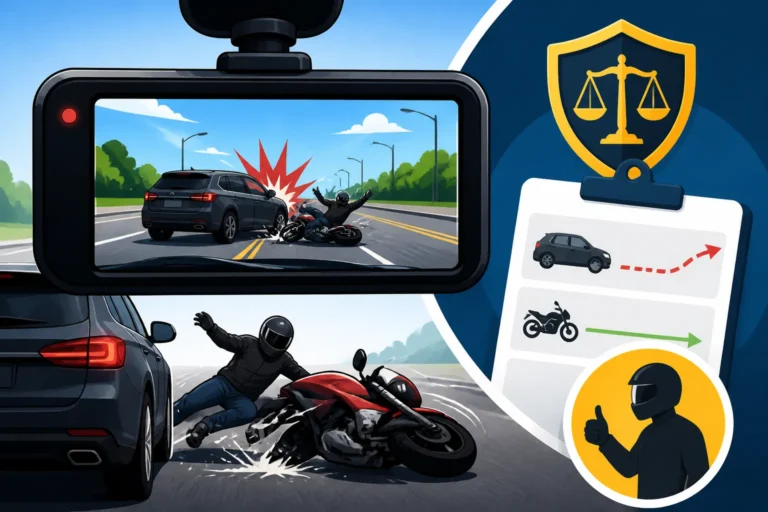
Similarly, the prevalence of dashcams, both in cars and on motorcycles, has become a game-changer. Dashcam footage provides undeniable visual proof of how an accident occurred. If the car behind you had a dashcam, or if you had one on your motorcycle, it could capture the entire sequence of events, including the precise moment of impact, traffic conditions, and the actions of both drivers. This kind of visual evidence is exceptionally compelling for insurance adjusters and in court. Our guide on How Dashcam Footage Proves Fault explores this further.
Accident Reconstruction Experts
When fault is heavily disputed, or the accident involves complex dynamics, an accident reconstruction expert can be invaluable. These professionals are highly specialized engineers or scientists who analyze all available evidence – photos, videos, police reports, vehicle damage, skid marks, EDR data, and even road conditions – to recreate the accident scenario.
They can determine vehicle speeds, points of impact, braking distances, and the sequence of events leading to the collision. Their findings are based on physics and forensic analysis, offering a highly credible, objective assessment of fault. While bringing in an expert is an added expense, their testimony can be the deciding factor in proving your case, especially if the insurance company for the at-fault driver is trying to argue that When Both Riders and Drivers Share Fault. This expertise can be particularly crucial in states with comparative negligence laws, where even a small percentage of fault attributed to you can reduce your overall compensation.
Here’s a table outlining common rear-end collision scenarios and the typical fault assignment:
| Scenario | Typical At-Fault Party | Key Evidence for Proof | Potential Exceptions (Lead Vehicle at Fault) |
|---|---|---|---|
| Following too closely / Distracted driver | Trailing Vehicle Driver | Police report, witness statements, dashcam footage, EDR data, driver's phone records (if subpoenaed) | N/A |
| Failure to brake in time | Trailing Vehicle Driver | Skid marks, police report, witness statements, EDR data | Lead vehicle had non-functioning brake lights |
| Sudden, unnecessary stop by lead vehicle | Lead Vehicle Rider | Witness statements, dashcam footage, EDR data from lead vehicle | If stop was necessary due to road hazard or sudden traffic change (e.g., child running into road) |
| Non-functioning brake lights on lead vehicle | Lead Vehicle Rider | Police report noting vehicle defect, trailing driver's testimony | If trailing driver was still following too closely or distracted |
| Cutting off then braking suddenly | Lead Vehicle Rider | Witness statements, dashcam footage, EDR data from lead vehicle | If trailing driver was also speeding or driving aggressively |
| Impaired driving (DUI/DWI) | Trailing Vehicle Driver | Police report (arrest, breathalyzer results), witness statements | N/A |
| Speeding by trailing vehicle | Trailing Vehicle Driver | Police report (citation), EDR data, witness estimates, accident reconstruction | N/A |
Ultimately, proving fault in a rear-end collision, while often straightforward, still requires diligence and careful collection of evidence. Don't underestimate the tactics insurance companies might employ to avoid paying out.
Disclaimer
Please remember that this article provides general information and is not a substitute for professional legal advice. Every motorcycle accident claim is unique, and the laws governing fault and liability vary by state. It is always recommended to consult with a qualified legal professional specializing in motorcycle accident claims to discuss the specifics of your situation and ensure your rights are fully protected.