Average Motorcycle Accident Settlement in Kentucky
When you've been in a motorcycle accident in Kentucky, one of the most pressing questions, beyond your recovery, is often about the financial implications. You might be staring at mounting medical bills, dealing with lost income, and facing the painful reality of your injuries, all while wondering what kind of compensation you can realistically expect. It's an overwhelming time, and understanding the potential value of your claim can offer some much-needed clarity and peace of mind. This comprehensive guide will walk you through the factors that influence motorcycle accident settlements in Kentucky, helping you understand how payouts are calculated and what you can do to protect your financial future.
Understanding Kentucky's Legal Landscape for Motorcycle Accident Claims
Navigating the aftermath of a motorcycle accident in Kentucky can feel like trekking through unfamiliar territory. The Bluegrass State has specific laws that significantly impact how a motorcycle accident claim is handled and, ultimately, what your settlement might look like. It's not just about who hit whom; it's about how the legal system assesses fault and damages within its own unique framework.
Kentucky's Pure Comparative Negligence Rule
One of the most critical aspects of personal injury law in Kentucky is its adherence to a "pure comparative negligence" system. This means that if you were partly at fault for the accident, your compensation can be reduced by your percentage of fault. For instance, if a jury determines your total damages are $100,000, but you were found 20% responsible for the crash, your award would be reduced by 20%, leaving you with $80,000. Unlike some states that bar recovery if you're above a certain percentage of fault, Kentucky allows you to recover damages even if you are mostly at fault, as long as you can prove the other party contributed. This system can be a double-edged sword, as it allows for recovery even with significant fault, but it also means the insurance company or opposing legal team will likely try their hardest to pin some blame on you. Understanding the nuances of Pure vs Modified Comparative Negligence is essential, as the pure system means every percentage point of fault matters.
No-Fault vs. Tort System and Motorcycles in Kentucky
Kentucky is typically considered a "no-fault" state for car accidents, meaning drivers usually file claims with their own insurance for medical expenses, regardless of who caused the accident, through Personal Injury Protection (PIP) coverage. However, motorcycles are often treated differently. While car owners in Kentucky are generally required to carry PIP, motorcycle owners typically have the option to reject PIP coverage. If you, as a motorcyclist, have rejected PIP, or if your medical expenses exceed your PIP limits (should you have chosen it), you can pursue a "tort" claim against the at-fault driver. This means you can step outside the no-fault system and seek full compensation for all your damages, including pain and suffering, from the responsible party's insurance. If you were injured by a car driver, their PIP may cover some of your initial medical expenses, regardless of fault, but this isn't always straightforward. For a deeper dive into the complexities, it helps to understand No-Fault States and Motorcycle Accidents.
Statute of Limitations for Filing a Claim in Kentucky
Time is not on your side after a motorcycle accident in Kentucky. Generally, you have a limited window, known as the statute of limitations, to file a personal injury lawsuit. In Kentucky, this period is typically one year from the date of the accident for most personal injury claims. This might seem like a decent amount of time, but trust me, it flies by, especially when you're focusing on recovery. If you miss this deadline, you could lose your right to pursue compensation entirely, no matter how severe your injuries or how clear the other driver's fault. This is why acting quickly to protect your claim is so important.
Key Factors Influencing Your Kentucky Motorcycle Accident Settlement
There's no magic calculator that spits out an "average" motorcycle accident settlement for Kentucky. The reality is that every accident is unique, and the final payout hinges on a multitude of individual factors. What one rider receives for a similar injury can be vastly different from another's, depending on the specifics of their case.
Severity and Type of Injuries Sustained
This is, without a doubt, the most significant factor in determining your settlement value. Motorcycle accidents notoriously result in severe injuries due to the lack of protection for riders. A minor injury, like road rash that heals completely, will yield a different settlement than a catastrophic injury such as a traumatic brain injury (TBI) or spinal cord damage.
- Road Rash and Minor Injuries: While "minor" in the grand scheme, even severe road rash can be incredibly painful, lead to infections, and require extensive medical care, including skin grafts. Claims involving significant Motorcycle Road Rash: Claims and Compensation might cover medical costs, scarring, and some pain and suffering. Other minor injuries, like sprains or bruising, will generally result in lower settlements, primarily covering direct medical costs and lost wages for a shorter period.
- Broken Bones and Fractures: These are common in motorcycle crashes and can range from a simple break that heals with a cast to complex, comminuted fractures requiring surgery, pins, and long-term physical therapy. The more invasive the treatment, the longer the recovery, and the higher the potential for permanent impairment, the greater the value of your claim.
- Traumatic Brain Injuries (TBIs): A TBI can be life-altering, leading to cognitive, emotional, and physical impairments that require extensive, lifelong care. From concussions to severe brain damage, these injuries are some of the most devastating and, consequently, lead to some of the highest settlements. Motorcycle Traumatic Brain Injury: Claims and Compensation cases require meticulous documentation of ongoing medical needs and future care.
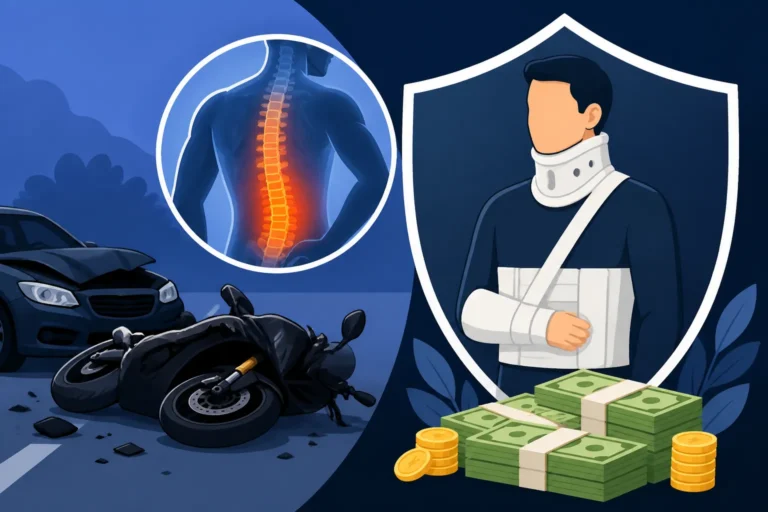
- Spinal Cord Injuries: Any damage to the spinal cord can result in partial or complete paralysis, dramatically changing a person's life. These catastrophic injuries necessitate huge medical expenses, adaptive equipment, home modifications, and long-term care, leading to very substantial settlements. You can learn more about Motorcycle Spinal Cord Injury: Claims and Compensation to understand the profound impact these injuries have on claims.
Economic vs. Non-Economic Damages
Your settlement will typically consist of two main categories of damages:
- Economic Damages: These are quantifiable financial losses directly attributable to the accident. They include:
- Medical Expenses: Everything from emergency room visits, ambulance rides, hospital stays, surgeries, prescriptions, physical therapy, and even future medical costs. Keeping meticulous records of all your bills is paramount. For more on this, see Medical Expenses in a Motorcycle Claim.
- Lost Wages: The income you've lost because you couldn't work after the accident, including bonuses, commissions, and benefits. If your injuries prevent you from returning to your previous job or working at all, you might also claim for loss of earning capacity. Documenting Lost Wages in a Motorcycle Claim is crucial.
- Property Damage: The cost to repair or replace your motorcycle, helmet, and any other damaged gear.
- Non-Economic Damages: These are more subjective losses that don't have a direct monetary value but significantly impact your quality of life. They include:
- Pain and Suffering: Physical pain, discomfort, and emotional distress caused by your injuries. This is a huge component of many motorcycle accident settlements due to the severe nature of the injuries. Factors like the intensity and duration of pain, the need for ongoing pain management, and the impact on your daily life are considered. Our article on Pain and Suffering in Motorcycle Settlements delves deeper into how this is quantified.
- Emotional Distress: Anxiety, depression, PTSD, fear, and other psychological impacts resulting from the trauma of the accident.
- Loss of Enjoyment of Life: The inability to participate in hobbies, recreational activities, or daily functions you once enjoyed due to your injuries.
- Loss of Consortium: In some cases, a spouse might claim for the loss of companionship, affection, and intimacy due to their partner's injuries.
Insurance Policy Limits
No matter how severe your injuries or how clear the other driver's fault, the at-fault driver's insurance policy limits often act as a ceiling for your settlement. For example, if the driver who hit you only has the Kentucky minimum liability coverage of $25,000 per person for bodily injury, it can be challenging to recover more than that from their policy, even if your damages far exceed it. This is why having your own Underinsured Motorist (UIM) coverage is so vital. UIM coverage can kick in when the at-fault driver's insurance isn't enough to cover your damages. Understanding How Insurance Policy Limits Affect Your Payout is critical for managing expectations and preparing your own coverage.
Estimating an Average Settlement in Kentucky: What the Data Shows and Doesn't
When searching for "average motorcycle accident settlement in Kentucky," it's completely natural to want a concrete number. You're looking for an anchor, a benchmark to understand what your future might hold. However, I have to be realistic with you: providing a single, reliable "average" figure for Kentucky is incredibly difficult and, frankly, often misleading.
The reason for this lies in the sheer variability of cases. A minor fender-bender with some road rash will settle for a vastly different amount than a collision involving a traumatic brain injury and permanent disability. What we can do, though, is look at ranges and the types of cases that fall within them, while keeping in mind that these are still broad estimates and your specific outcome can vary wildly.
Why a True "Average" is Elusive
Think about it this way: if one person settles for $10,000 for property damage and minor bruises, and another settles for $1,000,000 for a life-altering spinal cord injury, the "average" of those two cases ($505,000) doesn't accurately reflect either experience. Public databases rarely track detailed settlement amounts by state, especially for specific injury types, because most settlements are confidential.
Instead of an average, it's more helpful to think in terms of injury categories and the typical ranges associated with them, keeping in mind Kentucky's comparative negligence laws and insurance minimums.
Settlement Ranges Based on Injury Severity in Kentucky
While these are rough estimates, they can give you a general idea of how settlements typically align with injury severity. Remember, these are gross settlement amounts before attorney fees, medical liens, and other costs are deducted.
| Injury Severity | Typical Settlement Range (Kentucky) | Key Factors Influencing Range |
|---|---|---|
| Minor Injuries | $10,000 – $50,000 | Soft tissue injuries, minor road rash, bruises, sprains, short recovery period, minimal lost wages. Higher end for noticeable scarring. |
| Moderate Injuries | $50,000 – $250,000 | Broken bones (non-surgical), moderate fractures (surgical but full recovery expected), concussions, some lost wages, ongoing physical therapy. |
| Serious Injuries | $250,000 – $750,000 | Complex fractures requiring multiple surgeries, internal injuries, disk herniations, moderate TBIs, significant lost earning capacity, permanent pain. |
| Catastrophic Injuries | $750,000 – Several Million + | Severe TBIs, spinal cord injuries (paralysis), amputations, severe burns, permanent disability, lifelong medical care, profound loss of enjoyment of life. |
It's important to remember that these are just general guidelines. A "minor" injury for one person might lead to chronic pain for another, pushing their settlement into a higher category. The best way to get a realistic estimate for your specific situation is to consult with an experienced Kentucky motorcycle accident attorney who can evaluate all the unique details of your case. For more information on how injury severity impacts overall compensation, check out How Injury Severity Affects Compensation.
Maximizing Your Kentucky Motorcycle Accident Payout
Given the complexities of Kentucky law and the often-severe nature of motorcycle accident injuries, taking proactive steps is crucial to maximize your potential settlement. Don't underestimate the tactics insurance companies might employ to minimize their payout.
Document Everything Diligently
From the moment an accident occurs, documentation is your best friend. The more evidence you have, the stronger your claim will be.
- At the Scene: If you're able, take photos and videos of the accident scene, including your motorcycle, the other vehicle, road conditions, traffic signs, and any visible injuries. Exchange information with the other driver and gather contact details from any witnesses. Never admit fault, even casually, at the scene. Our guide on How to Document the Scene to Prove Fault offers a detailed checklist.
- Medical Records: Seek immediate medical attention, even if you feel fine. Some serious injuries, like concussions or internal bleeding, may have delayed symptoms. Follow all medical advice, attend all appointments, and keep records of every doctor's visit, therapy session, prescription, and medical bill. Gaps in treatment can be used by insurers to argue your injuries aren't as severe as you claim.
- Lost Wages and Expenses: Keep detailed records of any time you missed from work, pay stubs, and tax documents to prove your lost income. Also, track any out-of-pocket expenses related to the accident, such as transportation to medical appointments, home care, or over-the-counter medications.
- Pain and Suffering Journal: Maintain a daily journal documenting your pain levels, how your injuries impact your daily life, your mood, sleep patterns, and any limitations you face. This can be powerful evidence to support your claim for pain and suffering.
Never Settle for the First Offer
Insurance companies are businesses, and their goal is to pay out as little as possible. It's almost guaranteed that their initial settlement offer will be a lowball. They know you're likely stressed, facing financial pressure, and might be eager to resolve things quickly. Don't fall for it. This is where patience and professional guidance become invaluable. They might try to get you to sign a release early, but doing so could waive your right to pursue further compensation if your injuries worsen or new complications arise. Understanding How to Negotiate a Motorcycle Accident Settlement is key to ensuring you receive fair compensation.
The Critical Role of a Motorcycle Accident Attorney
While you can technically try to handle a minor claim yourself, for any significant injuries or disputed liability, hiring an attorney is almost always the best decision. An experienced Kentucky motorcycle accident lawyer understands the nuances of state law, knows how to deal with aggressive insurance adjusters, and can accurately value your claim.
- Expert Negotiation: An attorney will handle all communication and negotiations with the insurance company, protecting you from common tactics used to undervalue claims or trick you into saying something that could harm your case. They know how to counter lowball offers and fight for the full compensation you deserve.
- Thorough Investigation: Lawyers have the resources to conduct independent investigations, gather critical evidence (like accident reports, witness statements, expert testimonies, and accident reconstruction data), and determine all liable parties.
- Accurate Valuation: They can accurately calculate both your economic and non-economic damages, ensuring that future medical costs, lost earning capacity, and pain and suffering are properly accounted for, which you might miss on your own.
- Litigation Readiness: If negotiations fail, a lawyer can prepare your case for trial. Even if your case never goes to court, the insurance company is more likely to offer a fair settlement knowing they face a lawyer who is ready to litigate. Many people wonder, Do You Need a Motorcycle Accident Lawyer? For anything beyond property damage, the answer is almost always yes.
Disclaimer
Please remember that this article provides general information and is not a substitute for professional legal advice. Every motorcycle accident claim is unique, and the information presented here may not apply to your specific situation. We strongly recommend consulting with a qualified Kentucky personal injury attorney to discuss the details of your case and understand your legal rights and options.