Average Motorcycle Accident Settlement in Louisiana
It’s a tough road when you’ve been in a motorcycle accident, not just physically and emotionally, but financially too. One of the biggest questions that keeps riders up at night is, "What's my claim actually worth?" Trying to understand the average motorcycle accident settlement in Louisiana can feel like navigating a swamp in the dark – confusing, murky, and full of hidden pitfalls. This guide is here to shed some light, breaking down the crucial factors that shape what you might expect from a motorcycle accident claim in the Pelican State.
Understanding What Shapes Your Louisiana Motorcycle Accident Settlement
When you're dealing with the aftermath of a motorcycle crash, it's natural to wonder about settlement figures. But here's the honest truth: there isn't one single "average" number that applies to every motorcycle accident in Louisiana. Each case is a unique tapestry woven from countless details, from the impact speed to the color of your riding boots. However, we can certainly dig into the primary factors that universally influence how much a motorcycle accident claim might settle for in Louisiana.
Severity of Injuries and Medical Costs
This is often the heaviest hitter when it comes to determining a settlement's value. The more severe your injuries, the higher your medical bills, and the more extensive your recovery, the larger your potential settlement. We’re talking about everything from the initial ambulance ride and emergency room visits to ongoing physical therapy, specialist consultations, surgeries, and even future medical needs.
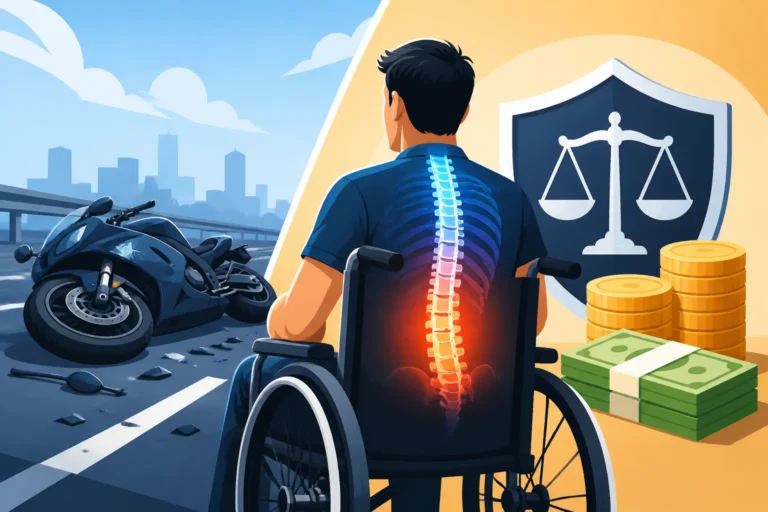
Imagine a rider, let's call him Mark, who was involved in a collision on I-10 in Baton Rouge. If Mark suffered only minor road rash and bruises, requiring a few doctor visits and some time off work, his economic damages would be relatively low. His medical bills might be a few thousand dollars, and his lost wages a few hundred. Contrast this with Sarah, who sustained a traumatic brain injury and a spinal cord injury after being T-boned at an intersection in New Orleans. Her medical journey could involve months in the hospital, multiple surgeries, extensive rehabilitation, and a lifetime of care. The costs associated with her injuries, including past and future medical care, could easily run into the hundreds of thousands, or even millions, significantly escalating her settlement value. It's not just about the immediate bills, but the long-term impact on your health and quality of life. Detailed documentation of all medical treatments and prognoses is absolutely critical here.
The Role of Fault Under Louisiana Law
Louisiana operates under a "pure comparative negligence" system, and this is a game-changer for your settlement. Unlike some states where even being a little bit at fault can completely bar your recovery, Louisiana allows you to recover damages even if you're mostly to blame, though your settlement will be reduced by your percentage of fault. For a deeper dive into how this works, you might find our guide on Comparative Negligence in Motorcycle Accidents immensely helpful.
Let's say a jury determines you were 20% at fault for an accident because you were slightly exceeding the speed limit on a winding rural road near Lafayette, even though the other driver clearly made an unsafe lane change without looking. If your total damages were assessed at $100,000, your final settlement would be reduced by 20%, leaving you with $80,000. This system makes every detail of how fault is determined incredibly important. Insurance companies, true to form, will try to assign as much blame as possible to the motorcyclist, leveraging existing biases against riders. Understanding How Insurance Companies Assign Blame to Riders is crucial for protecting your claim. Every piece of evidence, from police reports to witness statements and even dashcam footage, plays a vital role in proving who is at fault in a motorcycle accident.
Insurance Coverage and Policy Limits
Even if you have catastrophic injuries and zero fault, your settlement is often capped by the available insurance coverage. In Louisiana, drivers are legally required to carry minimum liability insurance, which is currently $15,000 for bodily injury per person, $30,000 for bodily injury per accident, and $25,000 for property damage. These limits are shockingly low, especially considering the severity of typical motorcycle accident injuries.
If the at-fault driver only has the state minimum coverage and your damages exceed $15,000, you could be left with significant unpaid medical bills and losses unless you have additional coverage. This is where your own uninsured/underinsured motorist (UM/UIM) coverage becomes a lifesaver. If the other driver's insurance isn't enough, your UM/UIM policy can step in to cover the difference, up to your policy limits. Without robust UM/UIM coverage, many riders in Louisiana find themselves in a tough spot after a serious crash. It’s a sobering reality that the depth of your own preparation for the worst-case scenario can dictate your financial recovery.
Breaking Down Damages in Louisiana Motorcycle Accident Claims
When we talk about settlement averages, what we're really discussing is the sum of various "damages" you can claim. These damages fall into a few key categories, each contributing to the overall value of your claim.
Quantifying Economic Losses
Economic damages are the tangible, verifiable financial losses you incur due to the accident. These are often easier to calculate because they come with invoices, receipts, and pay stubs.
- Medical Expenses: This includes everything from the moment of impact onwards – ambulance costs, ER visits, hospital stays, surgeries, prescription medications, rehabilitation, physical therapy, chiropractic care, and future anticipated medical treatments. Keep meticulous records of all medical appointments and bills.
- Lost Wages and Earning Capacity: If your injuries kept you from working, you can claim the wages you lost. This isn't just for the immediate aftermath; if your injuries prevent you from returning to your previous job or working at the same capacity, you can also claim for loss of future earning capacity. This calculation can get complex, especially for self-employed riders or those with specialized skills, and often requires expert testimony from economists.
- Property Damage: This covers the cost to repair or replace your motorcycle, helmet, gear, and any other personal property damaged in the crash. In many cases, especially with serious impacts, your bike might be totaled. The fair market value of your motorcycle before the accident is what you'd typically be compensated for.
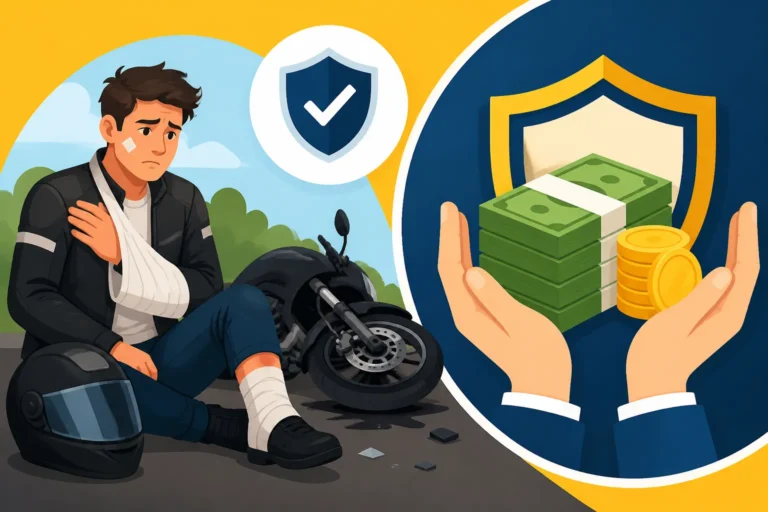
Let’s consider a rider whose vintage Harley-Davidson, a true passion project, was totaled in a crash on the Causeway. Beyond the market value of the bike, the rider also lost income from a contract job due to a broken wrist, and incurred tens of thousands in medical bills. All these calculable figures form the core of economic damages.
Valuing Non-Economic Suffering
Non-economic damages are trickier to quantify, as they represent the intangible impacts of your accident on your life. These are often referred to as "pain and suffering," but they encompass much more. Our comprehensive guide on Pain and Suffering in Motorcycle Settlements delves into this extensively.
- Physical Pain and Suffering: This is the actual physical discomfort and agony you endure from your injuries, both immediately after the accident and during your recovery. It also includes chronic pain that may persist long-term.
- Mental and Emotional Distress: A motorcycle accident can be a deeply traumatic event, leading to anxiety, depression, PTSD, fear of riding, sleep disturbances, and other psychological impacts. These emotional tolls are very real and can significantly affect your daily life.
- Loss of Enjoyment of Life: This accounts for your inability to participate in hobbies, recreational activities, or even daily routines that you enjoyed before the accident. If you can no longer ride your motorcycle, play with your kids, or pursue a beloved sport, that loss can be a significant component of your claim.
- Scarring and Disfigurement: Permanent scars, disfigurement, or amputations can have a profound psychological and social impact, affecting your self-esteem and quality of life. These are also compensable.
While there’s no fixed formula, insurance adjusters and courts often use a "multiplier method" (where economic damages are multiplied by a factor based on injury severity) or a "per diem" method (assigning a daily value to your suffering) to estimate non-economic damages. However, these are just starting points, and the actual value can vary wildly.
| Damage Type | Description | How It's Calculated/Proven |
|---|---|---|
| Medical Expenses | Hospital bills, doctor visits, medications, therapy, future medical care | Bills, receipts, medical records, expert testimony for future costs |
| Lost Wages | Income lost due to inability to work | Pay stubs, employment records, tax returns, employer statements |
| Loss of Earning Capacity | Reduction in future income potential due to permanent injury/disability | Economic expert analysis, vocational assessments |
| Property Damage | Repair or replacement costs for motorcycle and gear | Repair estimates, salvage value, fair market value appraisals |
| Pain and Suffering | Physical pain, emotional distress, mental anguish, inconvenience | Medical records, personal journals, witness testimony, psychological evaluations |
| Loss of Enjoyment of Life | Inability to partake in hobbies, activities, daily life | Personal testimony, witness accounts, documentation of past activities |
| Scarring/Disfigurement | Compensation for permanent physical alterations and their psychological impact | Medical documentation, photographs, expert testimony, psychological impact assessments |
Property Damage and Motorcycle Repair/Replacement
This is often the first part of a claim that gets settled, as it’s usually straightforward. If your bike is repairable, the at-fault driver's insurance should cover the cost of repairs. If your motorcycle is deemed a total loss, they should compensate you for its fair market value before the accident occurred. This includes your helmet and other damaged gear. However, remember that "fair market value" can be contentious. Insurance companies might try to undervalue your bike, especially if it's a custom build or an older model you've invested heavily in. It’s vital to have your own appraisal or documentation of any aftermarket parts and modifications. Sometimes, riders focus so much on their injuries that they overlook adequately documenting the damage to their prized machine.
Navigating Louisiana's Unique Legal Landscape After a Crash
Beyond the immediate impact of the collision, the specific laws and regulations in Louisiana play a massive role in shaping your motorcycle accident claim. Being informed about these can dramatically affect your chances of a fair recovery.
How Pure Comparative Negligence Impacts Your Recovery
As we touched on earlier, Louisiana's pure comparative negligence rule means that even if you are found 99% at fault, you can still recover 1% of your damages. While this sounds generous, it also means that the other side will fight tooth and nail to shift as much blame as possible onto you. Every percentage point of fault attributed to you directly reduces your potential settlement. For instance, if your total damages are $200,000 and the insurance company successfully argues you were 30% responsible for the accident, your final payout would be reduced by $60,000, leaving you with $140,000.
This makes gathering comprehensive evidence to prove the other driver's fault absolutely critical. This includes witness statements, accident reconstruction reports, traffic camera footage, and even expert analysis of skid marks or vehicle damage. Insurance companies frequently try to invoke rider bias, suggesting that motorcyclists are inherently reckless. Countering this narrative with solid evidence is paramount, as detailed in our guide on Proving Fault in a Motorcycle Accident.
Louisiana's Insurance Minimums and Their Effect
The low minimum liability insurance requirements in Louisiana (15/30/25) are a major concern for motorcyclists. Motorcycle accidents often result in severe injuries and high medical costs, easily exceeding these limits. If the at-fault driver is underinsured, your recovery options become limited unless you have adequate [UM/UIM coverage].
Think about a scenario where you're hit by a driver with only $15,000 in bodily injury coverage, but your medical bills alone are $50,000, plus lost wages and pain and suffering. If you don't have UM/UIM coverage, you might be forced to pursue the at-fault driver's personal assets, which is often a difficult and fruitless endeavor if they don't have substantial wealth. This highlights why having robust UM/UIM coverage on your own policy isn't just a good idea, it's virtually essential for any rider in Louisiana. It acts as a safety net when the other driver's coverage simply isn't enough.
The Critical Statute of Limitations
In Louisiana, you generally have one year from the date of the motorcycle accident to file a personal injury lawsuit. This is known as the "statute of limitations," and it's one of the shortest in the entire country. If you miss this deadline, you typically lose your right to pursue compensation, regardless of how strong your case might be.
This strict deadline means you cannot afford to delay. While negotiating with insurance companies can take time, it’s crucial to be aware of this one-year clock ticking. If settlement talks aren't progressing, you must file a lawsuit before the deadline to preserve your legal rights. This is another reason why reaching out for legal counsel sooner rather than later is often a wise move, as detailed in our advice on When to Hire a Motorcycle Accident Lawyer. They can help ensure all necessary legal actions are taken within this critical timeframe, preventing a devastating loss of your ability to claim damages.
Steps to Maximize Your Motorcycle Accident Payout in Louisiana
Navigating the aftermath of a motorcycle crash in Louisiana can be overwhelming, but taking the right steps can significantly impact your potential settlement. Don't leave money on the table or jeopardize your claim by making common mistakes.
Immediate Actions After a Crash
What you do in the moments and days following a motorcycle accident can lay the groundwork for a successful claim. First and foremost, ensure your safety and seek immediate medical attention, even if you feel okay. Some injuries, like internal bleeding or whiplash, have delayed symptoms. Documenting your injuries from the outset is paramount for proving their link to the accident.
After ensuring safety and seeking medical care, focus on gathering evidence at the scene, if possible and safe to do so. This includes taking photos and videos of:
- Vehicle damage (both yours and the other vehicle)
- The accident scene from multiple angles
- Road conditions, debris, skid marks
- Traffic signs and signals
- Your injuries (road rash, bruises, etc.)
Collect contact information from any witnesses. Exchange insurance and contact information with the other driver, but refrain from admitting fault or speculating about the accident. Remember, anything you say can be used against you. Filing a police report is also crucial, as it provides an official record of the incident. Our guide on What to Do After a Motorcycle Accident offers a step-by-step breakdown of these critical initial actions.
The Settlement Negotiation Process
Once you've received medical treatment and gathered initial evidence, the real work of negotiating with insurance companies begins. This is rarely a quick or simple process. Insurance adjusters are trained negotiators whose primary goal is to minimize their company's payout. They might offer a quick, lowball settlement hoping you'll accept it out of desperation, especially if you have mounting medical bills.
You'll need to compile a comprehensive demand package that includes all your medical records, bills, lost wage documentation, property damage estimates, and a detailed account of your pain and suffering. This package forms the basis of your negotiation. Be prepared for back-and-forth communication, and don't be afraid to say no to an insufficient offer. Understanding How to Negotiate a Motorcycle Accident Settlement effectively can be the difference between a fair payout and being shortchanged. This process can be lengthy, with claims sometimes taking months or even years to resolve, especially with serious injuries. Our insights on How Long Does a Motorcycle Settlement Take can give you a realistic expectation of the timeline.
The Advantage of Legal Representation
While it's technically possible to handle a motorcycle accident claim on your own, the complexities of Louisiana's legal system, combined with the aggressive tactics of insurance companies, often make professional legal representation invaluable. An experienced motorcycle accident lawyer in Louisiana understands the nuances of state law, knows how to accurately calculate the full extent of your damages, and can effectively counter insurance company strategies. They can also connect you with medical experts, accident reconstructionists, and other professionals who can bolster your case.
Studies often show that individuals with legal representation tend to receive significantly higher settlements than those who represent themselves, even after attorney fees are accounted for. A lawyer can take the burden of negotiation, paperwork, and legal deadlines off your shoulders, allowing you to focus on your recovery. They know how to maximize your motorcycle accident settlement by thoroughly documenting all economic and non-economic damages, and they aren't intimidated by adjusters trying to assign undue fault. If you're feeling overwhelmed, consulting with an attorney for a free case evaluation is a sensible next step.
Disclaimer
Please remember that this information is for educational purposes only and does not constitute legal advice. The "average" settlement for a motorcycle accident in Louisiana can vary wildly based on the specifics of each case. For personalized guidance regarding your unique situation, you should consult with a qualified legal professional in Louisiana.