How Policy Limits Cap Your Settlement
It’s a gut-wrenching reality for many motorcycle riders: you’ve been in a crash that wasn't your fault, you're facing astronomical medical bills, lost wages, and profound pain, only to discover that the at-fault driver’s insurance policy simply isn’t enough to cover your damages. This frustrating situation, where your legitimate losses far exceed the available insurance coverage, is what we call hitting the policy limits. This guide will meticulously break down how these limits cap your potential settlement and, more importantly, equip you with the knowledge to navigate this challenging landscape.
Understanding Insurance Policy Limits and Their Purpose
When we talk about insurance policy limits, we're really discussing the maximum amount an insurance company is obligated to pay out for a covered loss. It’s a cap, a ceiling, beyond which they typically won't go. These limits are set when the policy is purchased, and they vary wildly depending on the type of coverage, the state minimum requirements, and how much the policyholder was willing to pay in premiums. For motorcycle accident victims, understanding these limits, especially those held by the at-fault driver, is absolutely critical because they directly dictate how much compensation you can expect.
Decoding Bodily Injury Liability Coverage
Bodily Injury (BI) liability coverage is probably the most crucial limit when you've been injured in an accident caused by another driver. This part of their insurance policy pays for the bodily injury expenses of other people (like you, the injured rider) if their policyholder is found at fault. This can include your medical bills, lost income, and compensation for pain and suffering.
Most states use a "split limit" system for BI coverage, often represented as three numbers, like 25/50/25. Let's break that down:
- The first number ($25,000 in this example) is the maximum amount the insurance company will pay for bodily injuries per person in a single accident.
- The second number ($50,000) is the maximum total amount they will pay for bodily injuries for all people injured in that same accident.
- The third number ($25,000) is the maximum amount they will pay for property damage per accident.
So, if the at-fault driver who hit you has 25/50/25 coverage, and your medical bills and other damages alone total $75,000, their insurance will only pay you up to $25,000 for your injuries. This leaves a massive $50,000 gap that you are suddenly responsible for, even though you did nothing wrong. This is the stark reality that many riders face, especially given the severity of common motorcycle injuries.
Property Damage Liability Coverage Explained
While bodily injury is often the primary concern, property damage (PD) liability coverage is also a significant component. This covers the cost of repairing or replacing your motorcycle and any personal property damaged in the accident (like your helmet, gear, or phone). Using our 25/50/25 example, the "25" at the end means the insurance company will pay up to $25,000 for all property damage caused by their insured driver in a single accident.
For motorcycle riders, this can be especially important. Motorcycles, particularly higher-end models like a Harley-Davidson Street Glide or a BMW R 1250 GS, can be expensive to repair or replace. Custom parts, specialized paint jobs, and even high-quality riding gear can add up quickly. If your custom bike is totaled and it was worth $30,000, but the at-fault driver only has $10,000 in property damage coverage, you're again left with a significant financial shortfall. This is a common point of contention and frustration, as the value of a motorcycle often exceeds the property damage limits of many standard auto policies.
The Role of Uninsured/Underinsured Motorist (UM/UIM) Coverage
Here's where your own insurance policy can become your knight in shining armor: Uninsured/Underinsured Motorist (UM/UIM) coverage. This is perhaps the single most critical type of coverage a motorcycle rider can have, and it's something I advocate for all riders to invest in.
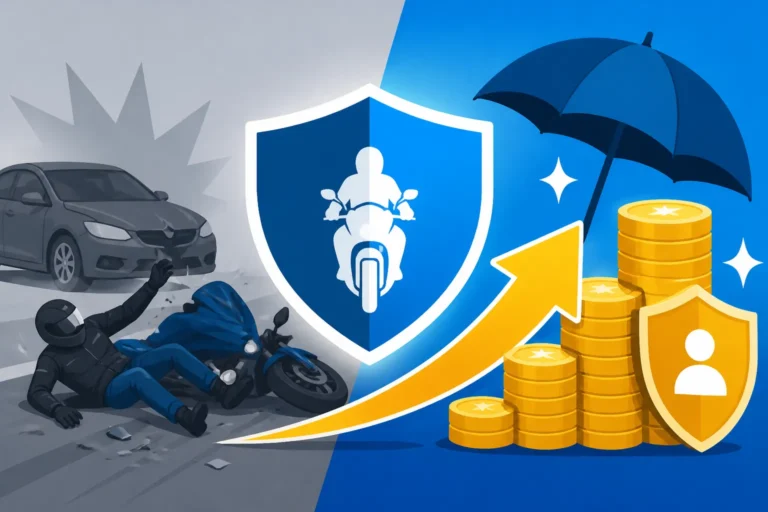
UM coverage kicks in if the driver who caused your accident has no insurance at all. UIM coverage, on the other hand, comes into play when the at-fault driver has insurance, but their policy limits are simply not enough to cover the full extent of your damages, which is precisely the problem we're discussing here. This coverage essentially acts as a safety net, allowing your own insurance company to pay you the difference between the at-fault driver's low limits and your actual damages, up to your UIM policy limits.
For example, if the at-fault driver has that $25,000 BI limit, and your injuries total $75,000, your UIM coverage of $50,000 could potentially bridge that gap, giving you a total recovery of $75,000. It’s a voluntary add-on in many states, but for motorcycle riders who are statistically more vulnerable to severe injuries, it’s arguably the most important protection you can buy. Don't assume your state's minimum requirements are sufficient; they rarely are for the unique risks riders face. You can learn more about how this coverage can significantly increase your payout in our guide on "How UM/UIM Coverage Increases Payouts".
The Hard Reality: When Your Damages Exceed the At-Fault Driver's Policy Limits
It's a harsh truth that many motorcycle riders learn the hard way: the cost of recovering from a serious motorcycle accident can quickly outpace the typical liability insurance policies held by most drivers. This isn't just about hospital bills; it's about the entire ripple effect of a catastrophic incident.
Why Motorcycle Injuries Often Lead to Higher Damages
Motorcycle accidents are inherently more dangerous for riders than car accidents are for drivers. We lack the protective steel cage, airbags, and crumple zones that four-wheeled vehicles offer. This often means that even a relatively minor impact can result in devastating injuries for the rider.
Consider some of the common injuries:
- Road Rash: Often described as "third-degree burns without the fire," severe road rash can require extensive wound care, multiple skin graft surgeries, and leave permanent scarring and nerve damage. The pain alone can be excruciating and long-lasting.
- Broken Bones and Fractures: Fractures of the arms, legs, pelvis, and ribs are extremely common. A compound fracture can mean multiple surgeries, pins, plates, and a lengthy rehabilitation process.
- Traumatic Brain Injuries (TBIs): Despite wearing a helmet, the sheer force of impact can cause concussions or more severe TBIs. These injuries can lead to lifelong cognitive, emotional, and physical impairments, impacting everything from memory to personality. For more on this, check out "Motorcycle Traumatic Brain Injury: Claims and Compensation".
- Spinal Cord Injuries: Even a compression fracture of the spine can lead to chronic pain, nerve damage, or, in the worst cases, paralysis. The cost of long-term care, therapy, and adaptive equipment for a spinal cord injury can easily run into the millions.
These aren't just physical injuries; they come with a hefty price tag in terms of medical treatment, rehabilitation, lost wages (both current and future), and profound pain and suffering. When you add up hospital stays, doctor visits, physical therapy, medication, mental health counseling for PTSD, and the income you can't earn because you're laid up or permanently disabled, it's not uncommon for damages to soar into the hundreds of thousands, if not millions. This is a huge factor in "How Motorcycle Accident Settlements Are Calculated" and "What Affects Your Motorcycle Accident Payout".
The "Cap" Effect on Your Settlement Amount
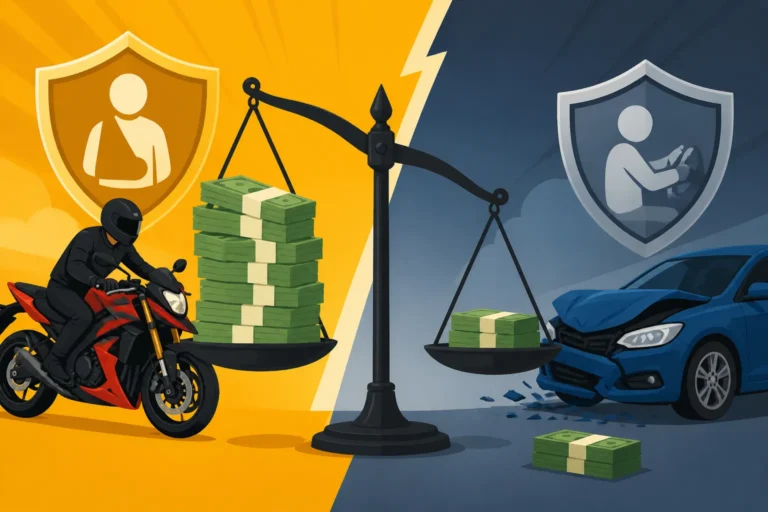
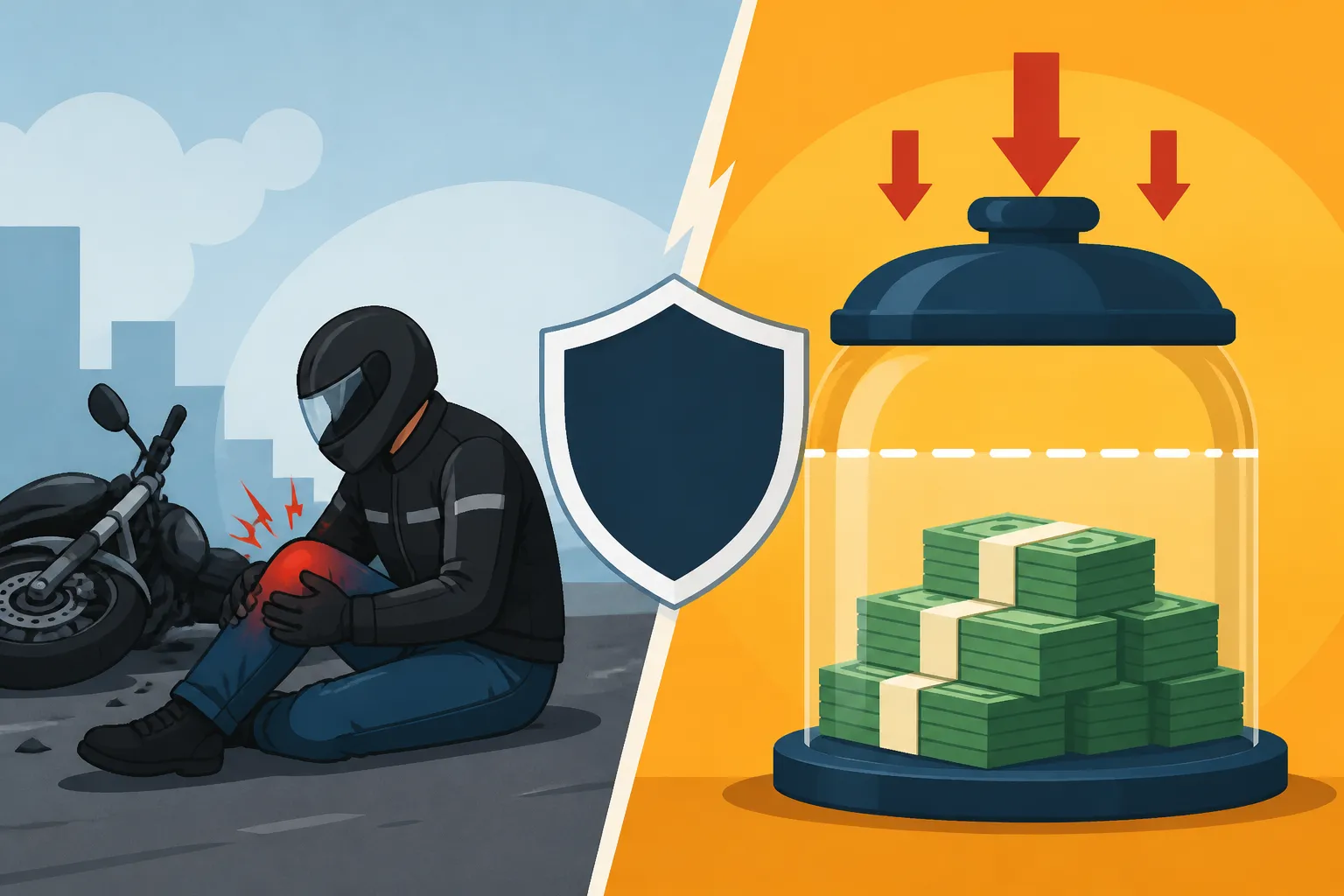
Once your damages are tallied and determined, the at-fault driver's insurance company will generally pay up to their policy's liability limit and no more. This is the "cap" effect in action. It doesn't matter if your actual losses are five times that amount; their contractual obligation is only to their policy limit.
Let’s visualize this:
- Imagine your total damages for medical bills, lost wages, and pain and suffering from a serious crash amount to $150,000.
- The driver who caused the accident only carries the state minimum bodily injury liability, which in many places might be $25,000 per person.
- The at-fault driver's insurance company will likely offer you the full $25,000, claiming they've fulfilled their obligation under the policy.
- You are then left with a $125,000 gap that their insurance will not cover.
This scenario is incredibly frustrating and leaves many riders feeling victimized twice: once by the accident and again by an inadequate insurance system. It forces injured riders to explore other avenues of recovery, which can be complex and challenging to navigate on your own. It’s why understanding "What Happens When Damages Exceed Coverage" is so crucial, as it prepares you for the tough conversations ahead.
Navigating the Aftermath: Options When Policy Limits Fall Short
Discovering that the at-fault driver's insurance limits are insufficient to cover your monumental losses can feel like a devastating blow. However, it's not always the end of the road. There are strategic avenues to explore, though each comes with its own set of complexities and challenges.
Leveraging Your Own Underinsured Motorist (UIM) Coverage
As discussed, your Underinsured Motorist (UIM) coverage is often the best and most direct path to recover additional compensation when the other driver's limits are too low. It's designed specifically for this frustrating situation. When you have UIM coverage, your own insurance company steps in to pay for damages that exceed the at-fault driver's liability limits, up to your own UIM policy limits.
Let’s consider an example: You suffer $100,000 in damages. The at-fault driver has a $25,000 bodily injury liability policy. Their insurance pays you $25,000. If you have a $100,000 UIM policy, your own insurance company could potentially pay you the remaining $75,000 ($100,000 total damages – $25,000 from at-fault driver = $75,000 covered by your UIM).
It’s important to note that UIM policies vary by state and insurer. Some states allow "stacking" of UIM coverage, meaning if you have multiple vehicles insured under the same policy, you might be able to combine the UIM limits for each vehicle to increase your total available coverage. Always check your policy details and discuss this with your insurance provider. This type of coverage is paramount for motorcycle riders due to the high potential for severe injuries and corresponding costs.
Pursuing the At-Fault Driver's Personal Assets
When all insurance avenues are exhausted, and your damages still aren't fully covered, another option, though often a challenging one, is to pursue the at-fault driver's personal assets. This typically means filing a personal injury lawsuit against them directly, obtaining a judgment in court, and then attempting to collect on that judgment.
However, there are significant hurdles:
- Collectibility: Most individuals don't have substantial liquid assets readily available to cover large judgments. You might win a $100,000 judgment, but if the driver only has a few thousand dollars in their bank account and no significant property, collecting that money can be incredibly difficult, if not impossible.
- Bankruptcy: A judgment against an individual can sometimes lead them to file for bankruptcy, which could wipe out your ability to collect.
- Cost and Time: Pursuing a lawsuit and attempting to enforce a judgment can be a lengthy and expensive process, with no guarantee of success.
This route is generally only viable if the at-fault driver has considerable assets—like a valuable home with significant equity, a high-paying job with garnishable wages, or other investments. Your attorney would conduct an asset search to determine if this path is even worth pursuing. In most cases, if the at-fault driver has limited assets, their personal resources will not make up for the shortfall.
Exploring Other Potential Insurance Policies
Beyond the at-fault driver's primary auto policy and your own UIM, there might be other insurance policies that could offer additional compensation. These are often overlooked but can be crucial in severe accident cases.
- Umbrella Policies: Some drivers, especially those with significant assets to protect, carry umbrella insurance policies. These policies provide an extra layer of liability coverage above their standard auto and home insurance policies. If the at-fault driver has one of these, it could provide substantial additional funds after their primary auto policy limits are exhausted.
- Commercial Policies: If the at-fault driver was operating a vehicle for work purposes at the time of the accident, their employer's commercial insurance policy might come into play. Commercial policies typically have much higher liability limits than personal policies. For instance, a delivery driver for Amazon or FedEx, if they cause an accident while on the clock, would likely be covered by their company's extensive commercial insurance.
- Multiple Vehicle Policies: In some very specific scenarios, if the at-fault driver had multiple vehicles insured under the same policy with potentially "stacked" liability coverage, there might be an argument to access more. This is less common for liability, but it's worth exploring with a seasoned legal professional.
Identifying and accessing these additional policies can be complex, often requiring persistent investigation and negotiation. This is where the expertise of a motorcycle accident attorney becomes invaluable. They know how to uncover all potential sources of recovery, leaving no stone unturned.
Proactive Steps: Protecting Yourself Before an Accident
While no one ever wants to think about being in a motorcycle accident, preparing for the worst-case scenario is the smartest thing any rider can do. The decisions you make about your own insurance coverage before an accident can make all the difference in your financial recovery after one.
The Critical Importance of Adequate UM/UIM Coverage
Let me say it again: your own Uninsured/Underinsured Motorist (UM/UIM) coverage is your best friend on the road. It’s the single most impactful way to protect yourself from the financial devastation that can come from a crash with a low-insured or uninsured driver.
Here’s why it’s so critical:
- High Injury Severity: As we've discussed, motorcycle accidents often result in severe, costly injuries. Standard medical bills for a broken limb, surgery, and rehab can easily exceed $50,000. A traumatic brain injury or spinal cord injury can quickly reach hundreds of thousands or even millions.
- Prevalence of Low Limits: Many drivers carry only the minimum liability insurance required by their state, which is often shockingly low. For example, in Florida, the minimum bodily injury liability is often not even required, though property damage is. In states where it is required, it might be as low as $15,000 or $25,000 per person. If you're hit by such a driver, your damages will almost certainly exceed their coverage.
- Uninsured Drivers: Despite laws requiring insurance, a significant number of drivers on the road are completely uninsured. Nationally, estimates for uninsured drivers range from 10-15%, with some states even higher. Without UM coverage, if you're hit by one of these drivers, you're on your own for all your medical bills and losses.
My advice is always to purchase UM/UIM coverage that at least matches your own bodily injury liability limits. If you have $250,000/$500,000 in liability coverage, you should aim for the same in UM/UIM. Don't skimp on this. Talk to your insurance agent at companies like Progressive, GEICO, or State Farm, and explicitly ask about increasing your UM/UIM limits. It’s a relatively small increase in premium for potentially massive financial protection.
Understanding Minimum State Requirements vs. Reality
State minimum insurance requirements are, frankly, often a joke when it comes to covering serious motorcycle accident injuries. These minimums are designed to keep insurance premiums low and ensure most drivers can afford some coverage, but they are rarely adequate for real-world accident costs.
Let's look at a few examples:
- California: Requires 15/30/5 ($15,000 per person BI, $30,000 per accident BI, $5,000 PD). Imagine if your medical bills are $50,000. You're left holding the bag for $35,000.
- Florida: Infamously, Florida generally doesn't require bodily injury liability coverage for private passenger vehicles, only Personal Injury Protection (PIP) and Property Damage liability. This means if an at-fault Florida driver hits you, they might have no bodily injury coverage at all for your serious injuries. This makes strong UM/UIM coverage absolutely essential for riders in Florida. Our article on "Motorcycle Accident Fault Laws in Florida" delves deeper into these unique challenges.
- Texas: Requires 30/60/25. Again, a $30,000 individual limit can be quickly exhausted by even moderate motorcycle injuries.
Relying on these minimums, either for your own liability or hoping the other driver has more, is a recipe for financial disaster. As a rider, you are disproportionately at risk for severe injuries, and you need to take proactive steps to ensure your financial well-being is protected.
Documenting Everything Post-Accident to Strengthen Your Claim
While documenting the scene won't magically increase policy limits, it is absolutely essential for maximizing your recovery within those limits and for any alternative avenues you pursue. Thorough documentation creates an undeniable record of what happened and the extent of your losses, making it harder for insurance companies to dispute your claim or minimize your damages.
Here's what you should do:
- Photos and Videos: Capture everything – damage to both vehicles, road conditions, traffic signs, skid marks, debris, the surrounding area, and especially your visible injuries. Take photos from multiple angles and distances. Our guide on "Motorcycle Accident Evidence for Proving Fault" provides more details on what to capture.
- Witness Information: Get names, phone numbers, and email addresses of anyone who saw the accident. Their testimony can be invaluable.
- Police Report: Obtain a copy of the official police accident report. While not always definitive on fault, it provides crucial details.
- Medical Records: Seek immediate medical attention, even if you feel fine. Document all your symptoms and follow every doctor's recommendation. Keep detailed records of all appointments, treatments, medications, and therapy. Gaps in treatment can be used against you. This is vital for "How to Document Injuries for a Claim".
- Injury Journal: Keep a detailed journal of your pain levels, limitations, emotional distress, and how your injuries are impacting your daily life. This helps quantify non-economic damages like pain and suffering.
- Lost Wage Documentation: Get statements from your employer detailing lost income, and if you're self-employed, gather tax returns, invoices, and bank statements to prove lost earning capacity.
The more detailed and comprehensive your documentation, the stronger your claim will be, ensuring that you receive every dollar you're entitled to up to the available policy limits.
The Role of a Motorcycle Accident Lawyer
When you’re dealing with the aftermath of a motorcycle accident, especially when policy limits are a concern, trying to go it alone against an insurance company is like bringing a butter knife to a gunfight. Insurance adjusters are professionals whose job it is to minimize payouts. A seasoned motorcycle accident lawyer becomes your most potent ally.
Why a Lawyer is Essential for Maximizing Recovery
It’s easy to feel overwhelmed after a crash. You're injured, perhaps in pain, juggling medical appointments, and trying to get your life back on track. Adding the burden of understanding complex legal jargon, negotiating with insurers, and identifying all potential sources of recovery is simply too much. This is where a dedicated legal professional shines.
Here's why they're essential:
- Navigating Complex Insurance Policies: Insurance policies are dense, full of legalese, and designed to protect the insurer, not necessarily you. Lawyers understand the nuances of bodily injury liability, property damage, UIM coverage, and even umbrella policies. They can decipher the fine print and identify all possible avenues for compensation.
- Identifying All Sources of Recovery: Beyond the obvious at-fault driver's policy and your own UIM, an attorney can investigate if there are other responsible parties or additional insurance policies at play, such as commercial policies or even government liability if poor road conditions contributed to the crash.
- Accurate Valuation of Damages: An experienced lawyer knows how to properly calculate the full extent of your damages, including not just immediate medical bills and lost wages, but also future medical costs, future lost earning capacity, and the often substantial non-economic damages like pain and suffering, emotional distress, and loss of enjoyment of life. This accurate valuation ensures you don't settle for less than your case is truly worth.
- Strong Negotiation Skills: Insurance companies are notorious for offering lowball settlements, especially to unrepresented individuals. A lawyer knows how to counter these tactics, present a compelling case backed by evidence, and negotiate fiercely to get you the maximum possible settlement within the existing policy limits, or beyond them if other avenues are available. Our guide "How a Lawyer Increases Your Settlement" provides a deeper dive into this.
The question isn't usually "Can I handle this without a lawyer?" but "Will I get significantly less compensation if I don't hire a lawyer?" The answer to the latter is almost always yes. If you're wondering "Do You Need a Motorcycle Accident Lawyer", especially with injuries, the answer is usually a resounding yes.
Dealing with Insurance Companies When Limits are an Issue
Insurance companies, even your own, operate as businesses designed to protect their bottom line. When policy limits become an issue, their strategies become even more pronounced. They will try to settle for the lowest amount possible, often right at the at-fault driver's policy limit, regardless of your actual damages.
A skilled motorcycle accident attorney will handle this critical phase:
- Formal Demand Letters: Your lawyer will send a detailed demand letter that outlines all your damages, supported by medical records, wage loss documentation, and expert opinions (if necessary). This demand will likely exceed the at-fault driver's policy limits, not just to establish your full losses, but also to trigger your own UIM coverage.
- Policy Limit Disclosure: Attorneys can formally request disclosure of all applicable insurance policies from the at-fault driver. Insurers are legally obligated to provide this information.
- Negotiating with Multiple Insurers: If both the at-fault driver's insurance and your UIM coverage are involved, your attorney will negotiate with both companies, ensuring that they work together (or are compelled to) to fully compensate you.
- Bad Faith Claims: In some rare instances, if an insurance company acts unreasonably or refuses to settle a valid claim within policy limits when they clearly should, your attorney might be able to pursue a "bad faith" claim against them. This is a complex area of law and requires experienced legal counsel.
- Preparing for Litigation: If a fair settlement cannot be reached through negotiation, a lawyer will prepare your case for litigation, demonstrating to the insurance companies that you are serious about pursuing full compensation, even if it means going to court. This pressure can often lead to a more favorable settlement.
Remember, insurance adjusters are not on your side, even if they sound friendly. They are trained negotiators with a profit motive. They are well-versed in tactics to minimize payouts and can often make riders feel pressured or confused. Our article on "How Insurers Lowball Motorcycle Riders" illuminates some of these common practices. Having an experienced attorney in your corner levels the playing field, ensuring your rights are protected and your case is presented effectively.
Real-World Scenarios and Practical Considerations
Understanding the theory behind policy limits is one thing, but seeing how it plays out in real-life scenarios really drives home the importance of being prepared. Let's look at a couple of hypothetical, yet very common, situations.
Scenario 1: The "Typical" Low-Limit Crash
Imagine Mark, an avid rider, is cruising down a busy street in Phoenix, Arizona. A distracted driver, looking at their phone, makes an unsafe lane change and cuts Mark off, causing him to lay down his Kawasaki Ninja. Mark suffers severe road rash over 20% of his body, a broken wrist that requires surgery, and significant bruising. His medical bills quickly accumulate to $50,000, not including his lost wages from his job as a freelance graphic designer, and the intense pain and suffering he endures during his months-long recovery. His beloved Ninja is also a total loss, valued at $12,000.
The at-fault driver, a young college student, carries Arizona's minimum liability insurance: 25/50/15 ($25,000 bodily injury per person, $50,000 per accident, $15,000 property damage).
- Initial Offer: The at-fault driver's insurance company immediately offers Mark the full $25,000 for his bodily injuries and $12,000 for his totaled motorcycle. While this is the policy limit, it leaves Mark with a huge problem.
- The Shortfall: Mark’s total damages (medical, lost wages, pain and suffering) are well over $50,000. The $25,000 from the other driver's policy only covers about half of his actual current medical expenses, let alone his lost income and pain.
- Mark's UIM Coverage: Luckily, Mark took our advice and had a robust UIM policy of $100,000. After accepting the $25,000 from the at-fault driver's insurer, Mark's attorney files a claim with Mark's own insurance company under his UIM policy. They are able to recover an additional amount from his UIM to cover the remaining damages, up to the $100,000 limit. This potentially allows Mark to recover most, if not all, of his $50,000+ in damages.
- Property Damage: The $12,000 for his motorcycle is fully covered by the at-fault driver's $15,000 property damage limit. No issue there.
In this common scenario, Mark's proactive decision to carry sufficient UIM coverage saved him from significant out-of-pocket expenses and financial hardship.
Scenario 2: Catastrophic Injury and Uninsured Driver
Consider Sarah, a experienced rider in her 40s, who is riding her Ducati Monster on a scenic route in rural Washington state. A pickup truck suddenly veers into her lane, causing a devastating head-on collision. The truck driver is uninsured. Sarah suffers a severe traumatic brain injury (TBI), multiple internal injuries, and fractures to both legs. Her medical treatment, including emergency surgery, an extended ICU stay, and ongoing neurological rehabilitation, is projected to cost upwards of $750,000 over her lifetime. She's also permanently unable to return to her high-paying job as an architect, facing a loss of future earning capacity estimated at $1.5 million. Her total damages are well over $2 million.
- The Immediate Crisis: Since the other driver is uninsured, there’s no bodily injury liability policy to claim against.
- Sarah's UM Coverage: Sarah, like Mark, had the foresight to purchase UM coverage, but her policy was for $250,000. This is a substantial amount for most, but tragically, it's far short of her actual losses in this catastrophic case.
- The Uninsured Shortfall: Sarah's insurance pays her the full $250,000 from her UM policy. However, this still leaves a staggering gap of nearly $1.75 million in her total damages.
- Limited Other Options: Sarah's attorney investigates the uninsured driver and discovers they have no significant assets, a low-wage job, and are unlikely to ever be able to pay a large judgment. Pursuing their personal assets would be fruitless. No other applicable commercial or umbrella policies are found.
This heartbreaking scenario highlights the limits of even good UM/UIM coverage when faced with truly catastrophic injuries. While $250,000 is a significant payout and provides crucial immediate relief, it pales in comparison to the long-term costs of a severe TBI and permanent disability. It underscores the importance of having the highest possible UM/UIM limits you can afford, because even what seems like "enough" might not be for the most severe outcomes.
These scenarios reinforce a critical message: while you can’t control other drivers’ insurance choices, you absolutely can control your own. Investing in comprehensive UM/UIM coverage is the most powerful financial defense a motorcycle rider has.
| Factor | At-Fault Driver's Low BI Limits | Rider's Strong UIM/UM Coverage | Other Driver's Personal Assets | Other Insurance Policies (Umbrella/Commercial) |
|---|---|---|---|---|
| Availability | Always present (if insured) | Requires rider's proactive purchase | Highly variable, often low | Rare, but can be high |
| Ease of Access | Direct claim, but capped | Direct claim with own insurer | Requires lawsuit & collection efforts | Requires investigation by attorney |
| Potential Payout | Low to moderate (state minimums) | Moderate to high (rider's choice) | Highly uncertain | Potentially very high |
| Speed of Resolution | Relatively quick for limit payout | Moderate | Very slow, protracted | Moderate to slow |
| Rider Control | None | High (personal choice) | None | None |
| Best Used When… | It's the only option, initial payout | At-fault limits are insufficient or nonexistent | At-fault driver has significant wealth | At-fault driver was working or has umbrella |
Disclaimer
Please remember that this article provides general information and insights into motorcycle accident claims and policy limits. It is not intended as legal advice. Every accident and insurance policy is unique, and the laws governing personal injury claims vary by state. If you have been involved in a motorcycle accident, it is crucial to consult with a qualified personal injury attorney who specializes in motorcycle accidents in your jurisdiction. They can provide advice tailored to your specific situation and help you understand your legal rights and options.