How Lawyers Deal with Insurance Companies
Facing the aftermath of a motorcycle accident is a whirlwind of pain, confusion, and often, significant financial stress. Dealing with insurance companies on top of everything else can feel like an impossible uphill battle, leaving you wondering if you'll ever get a fair shake. This guide will walk you through the often-intimidating process of how experienced motorcycle accident lawyers tackle insurance companies, demystifying their strategies and showing you how a legal professional can be your strongest advocate.
The Insurance Company's Playbook: What You're Up Against
When you've been in a motorcycle accident, it's easy to assume the insurance company, especially the other driver's, is there to help you. After all, you've paid your premiums, right? The harsh reality, however, is that insurance companies are businesses. Their primary goal is to protect their bottom line, which often means minimizing payouts, even when you're clearly the victim. This isn't personal; it's just how the system works. They have sophisticated strategies and entire departments dedicated to settling claims for the least amount possible.
Initial Tactics to Minimize Payouts
From the moment an accident claim is filed, insurance adjusters are trained to employ specific tactics aimed at reducing their liability. One of the most common is trying to get you to give a recorded statement. While it might seem harmless, anything you say can and will be used against you. They'll ask leading questions, hoping you'll inadvertently admit partial fault, downplay your injuries, or provide inconsistent details that can be exploited later. For instance, if you say "I'm okay" immediately after a crash, even if you're just in shock, they might later argue you weren't injured as badly as you claim.
Another tactic involves offering a quick, lowball settlement, especially if you haven't yet fully assessed your injuries or property damage. They know you're likely stressed, potentially out of work, and facing mounting medical bills. A small, immediate offer can seem like a lifeline, but accepting it means you waive your right to seek further compensation, even if your injuries turn out to be far more severe or long-lasting than initially thought. They might also suggest using their preferred repair shops or medical providers, which could have their own incentives to keep costs down, potentially at your expense. This is why it’s so important to understand What to Do After a Motorcycle Accident before speaking with anyone from an insurance company.
The Myth of "Good Neighbor" or "Good Hands"
Advertising campaigns paint a picture of friendly, helpful insurance providers who are always "on your side." While your own insurance company might offer more assistance, especially if you have collision or medical payments coverage, the at-fault driver's insurer has no such loyalty to you. Their adjusters are not your friends, and their goal is not to ensure you are fully compensated. They are acting in the best interest of their policyholder and their company. They might use polite, empathetic language, but behind the veneer, their job is to scrutinize every detail of your claim, looking for any reason to deny or reduce it.
This often includes scrutinizing your riding history, suggesting that motorcyclists are inherently risky, or even trying to attribute fault to you based on stereotypes, a tactic often referred to as How Insurance Companies Assign Blame to Riders. They'll dig into your medical history to try and link your current injuries to pre-existing conditions. They'll question the necessity of your medical treatments, the duration of your recovery, and the impact the accident has had on your life. Without an experienced advocate, these subtle but persistent tactics can chip away at your legitimate claim, leaving you feeling frustrated and undervalued.
How Lawyers Level the Playing Field
When you bring a personal injury lawyer into the picture, the dynamic immediately shifts. Insurance companies understand that a lawyer means you're serious and that they can no longer push you around with lowball offers or intimidating tactics. A lawyer acts as a buffer, handling all communications and negotiations, allowing you to focus on your recovery. They bring expertise, resources, and a deep understanding of the law to counter the insurer's strategies.
Immediate Actions and Investigation
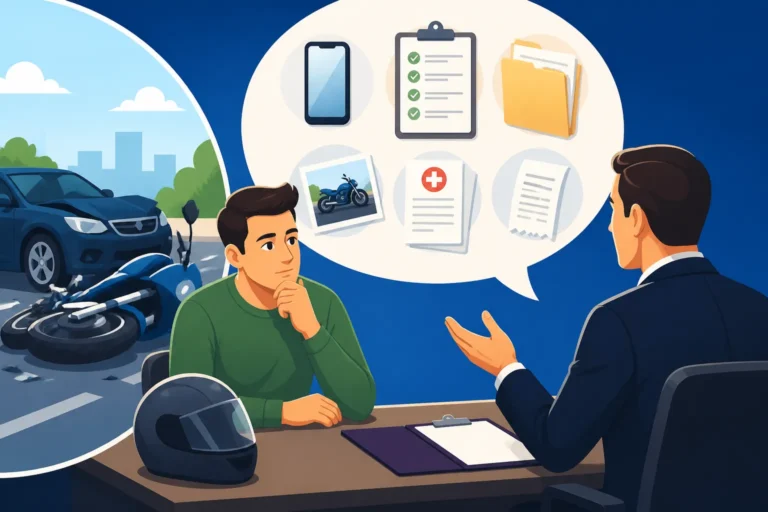
One of the first things a motorcycle accident lawyer will do is launch a comprehensive investigation into your accident. This often starts long before you'd even think to collect evidence. They’ll gather police reports, witness statements, accident scene photos, and traffic camera footage. They might even visit the accident site themselves to look for crucial details, like skid marks, road conditions, or potential hazards that could have contributed to the crash. This thorough approach helps to build a strong foundation for your claim, leaving little room for the insurance company to dispute the facts. Understanding How Lawyers Investigate Motorcycle Accidents is key to seeing the value they add.
Furthermore, your attorney will ensure that all necessary documents are collected, including medical records, bills, lost wage statements, and property damage estimates. They'll also handle all communication with the insurance companies, preventing you from accidentally saying something that could harm your case. This includes declining requests for recorded statements and direct negotiations, channeling all information through their office. This early, proactive stance is critical in establishing the narrative of the accident and protecting your rights from the very beginning.
Strategic Communication and Information Control
Insurance adjusters are experts at asking open-ended questions designed to elicit information that can be used to their advantage. When you have a lawyer, all communication with the at-fault party's insurance company is routed through them. This means your lawyer controls the flow of information, ensuring that only relevant, factual details are shared. They will present your case in a clear, concise, and compelling manner, emphasizing the other driver's negligence and the full extent of your damages.
Your lawyer also understands the legal deadlines and procedures involved in a motorcycle accident claim, such as the statute of limitations. Missing these crucial deadlines can result in your case being dismissed, regardless of how strong your claim might be. They’ll also ensure proper legal notices are sent and all paperwork is filed correctly, preventing the insurance company from finding procedural loopholes to deny your claim. This strategic control of information and process is invaluable in protecting your interests. Many riders find excellent legal support through services like LegalMatch, which connects them with qualified attorneys who understand these intricate legal dance steps.
Valuing Your Claim: The Lawyer's Edge
Determining the true value of a motorcycle accident claim is far more complex than simply tallying medical bills. Insurance companies will always try to downplay the long-term impact of your injuries and the non-economic damages you’ve suffered. This is where a skilled attorney's expertise truly shines, as they can accurately assess all aspects of your losses and aggressively pursue fair compensation.
Comprehensive Damage Assessment
A key part of your lawyer's role is to conduct a comprehensive assessment of all your damages, both economic and non-economic. Economic damages are quantifiable losses, such as past and future medical expenses, lost wages, and property damage. This includes not just the immediate emergency room visit and bike repairs, but also ongoing physical therapy, medications, future surgeries, and any loss of future earning capacity if your injuries prevent you from returning to your previous job or working at full capacity. For instance, if you're a skilled mechanic and a hand injury from the crash prevents you from fine motor tasks, your lawyer will factor in the long-term impact on your livelihood. You might find this deeply explained in a guide like Types of Damages in a Motorcycle Accident Claim.
Non-economic damages are often harder to quantify but are equally, if not more, impactful on your life. These include pain and suffering, emotional distress, loss of enjoyment of life, and disfigurement. If you were an avid motorcyclist who now suffers from chronic pain that prevents you from riding, that's a significant loss of enjoyment. Your lawyer will work with you, your doctors, and potentially mental health professionals to document these intangible losses, ensuring they are properly valued in your claim. This holistic approach ensures no stone is left unturned when calculating what you are truly owed.
Expert Witnesses and Evidence Presentation
Insurance companies often try to argue that your injuries aren't as severe as you claim or that they weren't directly caused by the accident. A good attorney anticipates these arguments and prepares to counter them with strong, credible evidence and expert testimony. They might engage medical specialists, accident reconstructionists, or vocational experts to bolster your case. An accident reconstructionist, for example, can analyze physical evidence from the scene, vehicle damage, and even witness accounts to create a detailed scientific explanation of how the accident occurred and who was at fault, which is crucial for How Fault Is Determined in Motorcycle Accidents.
These experts provide unbiased, professional opinions that carry significant weight, both in negotiations and, if necessary, in court. Their testimony can help establish the full extent of your injuries, the necessary course of treatment, the long-term prognosis, and the causal link between the accident and your suffering. Furthermore, your lawyer will meticulously organize and present all evidence—medical records, bills, photos, videos, and witness statements—in a clear and compelling package that leaves little doubt about the merits of your claim. They understand How Motorcycle Accident Settlements Are Calculated and what it takes to justify a higher payout.
Negotiation Strategies: From Demand to Settlement
Once all damages are assessed and evidence is compiled, the real negotiation begins. This isn't just about haggling over numbers; it's a strategic process where your lawyer leverages their knowledge and experience to achieve the best possible outcome for you.
Crafting a Powerful Demand Letter
The demand letter is often the first formal communication from your lawyer to the insurance company after a thorough investigation. It's a comprehensive document that outlines the facts of the accident, establishes liability, details the full extent of your injuries and damages (economic and non-economic), and concludes with a demand for a specific settlement amount. This isn't just a simple letter; it's a meticulously crafted legal argument supported by all the evidence gathered.
A well-prepared demand letter serves several purposes. Firstly, it clearly communicates your lawyer's assessment of the case's value and their intention to pursue full compensation. Secondly, it provides the insurance company with all the information they need to evaluate the claim properly, often prompting them to take the claim more seriously than if it came directly from an unrepresented individual. Thirdly, it sets the stage for negotiations, establishing a starting point from which your attorney will work. This is a critical step, and understanding How to Write a Motorcycle Accident Demand Letter shows just how much thought goes into it.
Navigating Counteroffers and Impasse
Once the demand letter is sent, the insurance company will typically respond with a counteroffer, which is almost always lower than your initial demand. This is a standard part of the negotiation process, and your lawyer is prepared for it. They will analyze the counteroffer, considering the insurer's reasoning (which often involves disputing fault, injury severity, or the necessity of treatment) and compare it to the true value of your claim. They'll then advise you on whether to accept, reject, or make another counteroffer.
Negotiations often involve multiple rounds of offers and counteroffers. Your lawyer will articulate why the insurance company's offer is insufficient, providing further evidence and legal arguments to support your position. They understand the tactics insurers use, such as trying to pin partial blame on the rider or minimizing future medical costs, which are essentially How Insurers Lowball Motorcycle Riders. If an impasse is reached, where both sides are unwilling to budge, your lawyer might suggest alternative dispute resolution methods like mediation or arbitration, or prepare to file a lawsuit to move the case forward. This systematic approach ensures that every offer is thoroughly evaluated and countered strategically.
| Aspect | Negotiating Alone with Insurance | Negotiating with a Lawyer |
|---|---|---|
| Expertise & Knowledge | Limited understanding of law & tactics | Deep legal knowledge, experience with insurer tactics |
| Information Control | Prone to accidental damaging statements | Lawyer controls communication, protects your interests |
| Claim Valuation | Often underestimates full scope of damages | Comprehensive assessment of all economic & non-economic damages |
| Evidence Gathering | May miss crucial evidence or misinterpret it | Thorough investigation, expert engagement |
| Negotiation Skills | Emotional, susceptible to pressure, lowball offers | Objective, strategic, assertive, resists pressure |
| Legal Deadlines | Risk of missing critical deadlines | Ensures all deadlines are met, proper procedures followed |
| Settlement Outcome | Often lower settlement, or claim denial | Statistically higher settlements, better chance of success |
| Stress & Time Commitment | High stress, significant time investment | Significantly reduced stress, lawyer handles burden |
Escalation: Preparing for Litigation
While most motorcycle accident claims settle out of court, there are times when an insurance company refuses to offer a fair settlement. In these situations, your lawyer is ready to escalate the matter by filing a lawsuit. This doesn't necessarily mean going to trial, but it signals to the insurance company that you are prepared to fight for your rights in court.
Filing a Lawsuit and Discovery
When negotiations reach a standstill, your attorney will typically advise filing a personal injury lawsuit against the at-fault driver. This initiates the formal litigation process. The lawsuit itself is a legal document filed with the court, officially starting your case within the judicial system. Once filed, the discovery phase begins. This is a crucial period where both sides exchange information and evidence.
During discovery, your lawyer will engage in various activities to uncover information from the opposing side. This can include:
- Interrogatories: Written questions that the at-fault driver must answer under oath.
- Requests for Production of Documents: Formal requests for relevant documents, such as the other driver's insurance policy, phone records, or vehicle maintenance logs.
- Depositions: Sworn, out-of-court testimonies from the at-fault driver, witnesses, or even their insurance adjusters. Your lawyer will meticulously prepare you for your own deposition and expertly question the opposing party and their witnesses to uncover facts and identify inconsistencies.
This exhaustive process helps build an even stronger case, often revealing details that were not available during initial investigations. It also puts significant pressure on the insurance company, as litigation is expensive and time-consuming for them as well. This deeper dive is often necessary when facing stubborn insurers and may even lead them to increase their settlement offers significantly once they realize the strength of your case and your willingness to go to court.
Mediation, Arbitration, and Trial Readiness
Even after a lawsuit is filed, there are still opportunities for resolution outside of a full trial. Many courts require or encourage mediation or arbitration as a way to resolve disputes before trial. In mediation, a neutral third party (the mediator) facilitates discussions between you, your lawyer, the at-fault driver, and their insurance company, helping everyone find common ground and reach a mutually agreeable settlement. The mediator doesn't make decisions but helps guide the parties towards a resolution.
Arbitration is more formal, where a neutral third party (the arbitrator) hears arguments and reviews evidence from both sides, then makes a binding or non-binding decision. Your lawyer will represent your interests vigorously in either of these settings, much like they would in a courtroom.
If mediation and arbitration fail, or if the case warrants it, your lawyer will meticulously prepare for trial. This involves organizing all evidence, preparing witnesses (including expert witnesses), drafting opening and closing statements, and anticipating the opposing side's arguments. Trial preparation is an arduous and complex process that requires extensive legal skill and experience. Knowing your lawyer is fully prepared for trial can be a powerful negotiating tool, often prompting insurance companies to settle rather than face the uncertainties and expenses of a jury verdict. This commitment to readiness is why When You Definitely Need an Attorney is so crucial, as an unrepresented individual would find this phase nearly impossible to navigate alone.
Protecting Your Rights Against Bad Faith Tactics
While many insurance companies operate within legal boundaries, some may engage in "bad faith" practices—actions that violate their contractual duties to policyholders or legal obligations to claimants. Recognizing these tactics and knowing how to respond is critical.
Recognizing Bad Faith Insurance Practices
Bad faith occurs when an insurance company acts unfairly or unreasonably in handling a claim. This is more than just offering a low settlement; it's a deliberate pattern of behavior designed to avoid paying a legitimate claim. Examples of bad faith tactics include:
- Unreasonable Delays: Intentionally dragging out the investigation, communication, or settlement process without valid reason.
- Failure to Investigate Properly: Not thoroughly examining the accident or your injuries, or ignoring crucial evidence that supports your claim.
- Misrepresenting Policy Terms: Lying about what your policy covers or what the at-fault driver's policy limits are.
- Denying a Claim Without a Valid Reason: Refusing to pay a claim that is clearly covered under the policy or for which there is strong evidence of liability.
- Threatening or Intimidating tactics: Trying to coerce you into accepting a low settlement or dropping your claim altogether.
- Refusing to Pay a Judgement: Failing to pay a court-ordered settlement or verdict.
These tactics are designed to wear you down, hoping you’ll give up or accept a settlement far below what you deserve. Having an experienced attorney like those you can find through services such as LegalMatch on your side is essential, as they can spot these practices immediately and take appropriate action. They understand the laws governing insurance conduct and can protect you from becoming a victim twice over.
Legal Recourse for Unfair Dealings
If an insurance company engages in bad faith, your lawyer can take legal action against them, often pursuing additional damages beyond your initial accident claim. This could involve filing a separate lawsuit specifically for bad faith. The potential for a bad faith lawsuit is a significant leverage point for your attorney, as these cases can lead to substantial penalties for the insurance company, including punitive damages, which are designed to punish the insurer for their egregious conduct.
State laws vary regarding bad faith claims, but generally, they require proof that the insurer acted knowingly and intentionally with malice or a reckless disregard for your rights. Your lawyer will meticulously document every instance of potential bad faith behavior, from delayed responses to unreasonable denials. They will collect all communications, internal memos, and adjusters' notes, often through the discovery process, to build a compelling case. This legal recourse provides a powerful deterrent against unfair practices and ensures that insurance companies are held accountable for their actions. It demonstrates that you have strong advocacy to ensure your rights are upheld, no matter how tough the insurance company tries to be.
Disclaimer
Please remember that this article provides general information and insights into how lawyers interact with insurance companies in motorcycle accident claims. It is not legal advice. Every accident and every claim is unique, and the information presented here may not apply to your specific situation. Laws regarding motorcycle accidents, insurance claims, and personal injury vary significantly by state. For personalized legal advice and to understand your rights and options, it is crucial to consult with a qualified and experienced motorcycle accident attorney in your jurisdiction.