How Lawyers Investigate Motorcycle Accidents
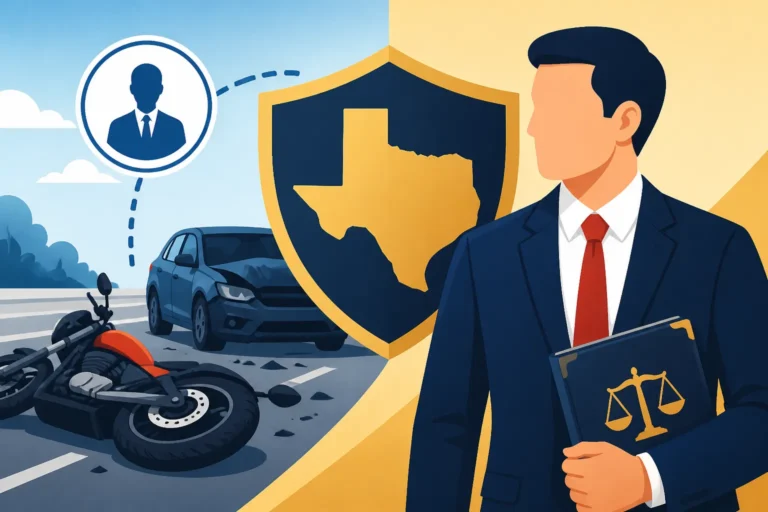
Riding a motorcycle offers unparalleled freedom, but the unfortunate reality is that accidents happen, often due to the negligence of other drivers. When you're lying in a hospital bed, or struggling with recovery, the last thing you want to think about is battling insurance companies or navigating complex legal procedures to prove your case. This guide will meticulously outline how experienced motorcycle accident lawyers investigate these incidents, turning your confusing ordeal into a structured pursuit of justice and fair compensation.
The Initial Intake and Comprehensive Case Assessment
The journey with a motorcycle accident lawyer begins with a deep, empathetic conversation. It's not just about facts; it's about understanding the human impact of your crash. Many riders feel isolated and unheard after an accident, and this first step is crucial for establishing trust and building the foundation of your claim.
Gathering Your Story and Initial Details
When you first sit down with a motorcycle accident lawyer, they aren't just looking for bullet points; they want the full narrative. They’ll ask you to recount every detail you remember about the accident itself, from the moments leading up to it, to the impact, and everything that happened immediately afterward. This includes specifics like the time of day, weather conditions, your direction of travel, and the actions of the other vehicles involved. They understand that trauma can affect memory, so they'll listen patiently and ask clarifying questions without judgment.
Beyond the crash, they'll delve into your injuries. This isn't just about what hurts; it's about how those injuries have impacted your daily life. Can you still work? Are you able to enjoy your hobbies? What are the immediate medical treatments you've received? These personal details are vital because they paint a comprehensive picture of your suffering and losses, which are critical for determining the full scope of damages later on. This initial conversation helps them grasp the unique challenges you're facing and begin to tailor a strategy specifically for your situation, rather than applying a generic template.
Preliminary Evidence Collection and Preservation
After hearing your story, your lawyer will immediately advise you on critical steps for preserving evidence, many of which you might not even realize are important. This often starts with simple things like ensuring your damaged motorcycle isn't prematurely salvaged or repaired, as the vehicle itself is a crucial piece of evidence. They'll also instruct you on what documents to gather: police reports, medical bills, diagnostic imaging (X-rays, MRIs), repair estimates, and any correspondence you've had with insurance companies.
A good lawyer understands the urgency of evidence preservation. They might advise you to keep a detailed journal of your pain, recovery, and daily struggles. This personal record can become powerful testimony later on. They'll also begin the process of sending out official requests for accident reports, traffic camera footage, and even medical records, often before you've fully recovered. Speed is of the essence, as many crucial pieces of evidence can be lost or overwritten if not secured promptly. This proactive approach ensures that no stone is left unturned and that the best possible foundation is laid for your claim.
Deep Dive into Accident Scene Evidence
The scene of a motorcycle accident holds a wealth of information, and a skilled lawyer knows exactly how to extract it. They go far beyond just glancing at a police report; they dissect every detail, seeking to reconstruct the events with precision and uncover any discrepancies or overlooked facts.
Analyzing Police Reports and Official Records
The police report is often the first official document generated after an accident, and while it's a critical starting point, it's not always the complete or even entirely accurate picture. Your lawyer will obtain the full police report, sometimes even the officer's field notes, and scrutinize every line. They look for key details like witness statements, citations issued, diagrams of the scene, and the officer's preliminary determination of fault. However, they also understand that police officers, despite their best intentions, can sometimes miss crucial details or be influenced by common biases against motorcyclists.
For instance, an officer might attribute fault solely based on initial appearances without fully understanding the dynamics of a motorcycle crash or traffic laws, especially regarding things like Lane Splitting and Motorcycle Accident Liability. Your lawyer will cross-reference the report's details with your testimony and other evidence. If the report contains errors or omissions that unfairly assign blame, they will work to gather additional evidence to challenge those findings. They might even reach out to the responding officers for clarification or to discuss their observations in greater detail, ensuring that the official record truly reflects what occurred.
Photographic and Video Evidence Scrutiny
In today's world, photographic and video evidence can be incredibly powerful, sometimes even undeniable. Your lawyer will tirelessly hunt for any visual documentation of the accident. This includes any photos or videos you or witnesses took at the scene, surveillance footage from nearby businesses or traffic cameras, and even dashcam footage from other vehicles. They know that a picture is worth a thousand words, and a video can be even more compelling, offering an objective viewpoint that written reports or conflicting testimonies might lack.
For example, a dashcam might clearly show a car making an unsafe lane change or turning left directly into your path, proving How Dashcam Footage Proves Fault. Your lawyer will know how to legally request this footage from businesses, municipalities, or even private citizens. They'll also analyze the metadata of photos to confirm timestamps and locations, ensuring their authenticity. If no direct footage exists, they might use aerial photography or satellite imagery to map out the accident scene, cross-referencing it with vehicle damage and debris fields to support their theory of how the collision happened.
Witness Identification and Interviews
Witnesses can provide invaluable third-party accounts, but simply having their names isn't enough. Your lawyer will actively seek out all potential witnesses, even those who might not have stayed at the scene. This can involve canvassing the area, reviewing police reports for contact information, or even placing advertisements. Once identified, they will conduct thorough interviews, taking detailed statements, and assessing the credibility of each witness. They'll ask open-ended questions to elicit detailed narratives, focusing on what the witness saw, heard, and any conditions they observed.
Consider a scenario where a driver claims they "didn't see the motorcycle." A witness who observed the motorcycle riding safely and visibly for a significant period before the crash can directly contradict that defense, helping to overcome the common "'I Didn't See the Motorcycle' Defense Explained." Your lawyer will also be adept at anticipating how insurance adjusters or defense attorneys might try to discredit witnesses and will work to bolster their reliability. They understand the importance of locking in witness statements early, before memories fade or details become muddled, ensuring a consistent and strong narrative.
Expert Analysis and Reconstruction
Sometimes, the evidence gathered from the scene and witnesses isn't enough to fully understand the intricate dynamics of a motorcycle crash. This is where specialized experts come into play, offering scientific and technical insights that can be pivotal in establishing fault and damages.
Accident Reconstruction Specialists
When the circumstances of a motorcycle accident are complex or disputed, your lawyer won't hesitate to bring in an accident reconstruction expert. These specialists are like forensic detectives for traffic collisions. They examine physical evidence such as skid marks, vehicle damage, debris patterns, and road conditions, combining this with scientific principles of physics, engineering, and kinematics to accurately determine vehicle speeds, angles of impact, and the sequence of events leading to the crash.
These experts can create sophisticated computer simulations or physical models that visually demonstrate how the accident unfolded, making it easier for a jury to understand complex technical details. For example, they can determine if a driver had sufficient time to see and react to your motorcycle, or if a particular maneuver was impossible given the speeds involved. This level of detailed analysis is crucial for How Accident Reconstruction Determines Fault and can decisively prove negligence when standard evidence is inconclusive. Their objective, data-driven findings can dismantle a defendant's arguments and solidify your case.
Medical Experts and Injury Documentation
The severity and long-term impact of your injuries are central to calculating your settlement. Your lawyer will work closely with medical professionals to thoroughly document every aspect of your injuries, treatment, and prognosis. This involves not just collecting medical records and bills, but often consulting with specialists—orthopedic surgeons, neurologists, physical therapists, and psychologists—to understand the full extent of your physical and emotional suffering. They might arrange for independent medical examinations (IMEs) if the insurance company tries to downplay your injuries.
They'll ensure that all your medical documentation is complete, consistent, and directly linked to the accident. This includes understanding potential future medical costs, ongoing rehabilitation, and any permanent impairments you might face. These medical experts can provide detailed reports and even testify in court, explaining complex medical conditions in understandable terms and directly linking your current and future health issues to the trauma of the accident. This meticulous documentation is essential for How to Document Injuries for a Claim and ensures that all your medical damages, both present and future, are fully accounted for in your claim.
Engineering and Product Defect Investigations
While many accidents are caused by driver error, sometimes a defect in a vehicle component can contribute to or even cause a crash. Your lawyer will consider this possibility, especially if the accident seems inexplicable or if there's evidence of a sudden malfunction. This could involve an issue with your motorcycle's brakes, tires, or steering, or even a defective component in the other driver's vehicle that led to their inability to avoid the collision.
In such cases, your attorney might engage an automotive engineering expert. This expert would meticulously examine the vehicles involved, looking for signs of mechanical failure, manufacturing defects, or improper repairs. They could analyze components like tires for tread separation, brakes for hydraulic failure, or even the motorcycle frame for structural integrity. If a defect is found, it can shift liability from a driver to a manufacturer or repair shop, potentially opening up additional avenues for compensation. Understanding Manufacturer Liability for Defective Parts is crucial, as this type of investigation requires a specific legal and technical approach.
Legal Framework and Liability Determination
A deep understanding of motorcycle accident fault laws is paramount. It’s not enough to simply know what happened; a lawyer must apply the applicable legal principles to your unique situation to effectively prove liability and navigate the complexities of the justice system.
Understanding State-Specific Motorcycle Laws
Motorcycle laws vary significantly from state to state, and these nuances can dramatically impact your claim. For instance, some states have universal helmet laws, while others only require helmets for riders under a certain age, or if they don't carry sufficient medical insurance. A lawyer must be acutely aware of these regulations. For example, in California, lane splitting is legal under specific conditions, whereas it's explicitly illegal in many other states. If you were lane splitting in California and an accident occurred, your lawyer would leverage their knowledge of Motorcycle Accident Fault Laws in California to defend your actions and establish the other driver's fault.
Beyond helmet use and lane splitting, states also differ in their "fault" systems. Some follow a pure comparative negligence model, others modified comparative negligence, and a few still use contributory negligence. Your lawyer's understanding of Comparative Negligence in Motorcycle Accidents is critical because if you are found even partially at fault, it could reduce or even completely bar your ability to recover damages, depending on the state's specific laws. They will analyze how your actions, if at all, might be viewed under your state’s specific legal framework, ensuring no legal technicality undermines your pursuit of justice.
Identifying All Potentially Liable Parties
Often, when you think about who is at fault in an accident, your mind immediately goes to the other driver. However, an experienced motorcycle accident lawyer knows that liability can be far more complex, potentially involving multiple parties. They will meticulously investigate to identify everyone who might bear responsibility for your injuries. This could include the driver of the other vehicle, but also their employer if they were on company time (e.g., a delivery driver).
Furthermore, as discussed, if a vehicle component failed, the manufacturer could be liable. If the accident was caused by a dangerous pothole or poorly maintained road, a government entity might be responsible. Even a poorly designed traffic signal or obscured signage could lead to municipal liability. Uncovering Third-Party Liability in Motorcycle Accidents can significantly increase the potential compensation available, especially if the primary at-fault driver has insufficient insurance coverage. Your lawyer will explore every avenue to ensure all responsible parties are held accountable.
Proving Negligence and Causation
At the heart of almost every personal injury claim, including motorcycle accidents, is the legal concept of negligence. To successfully win your case, your lawyer must prove four key elements: duty, breach, causation, and damages. The other driver had a duty to operate their vehicle safely and follow traffic laws. They breached that duty through their careless actions (e.g., distracted driving, speeding, failing to yield). This breach caused your accident and subsequent injuries, leading to your damages (medical bills, lost wages, pain and suffering).
Your lawyer will meticulously connect the dots, using all the evidence gathered—police reports, witness statements, accident reconstruction analysis, and medical records—to clearly demonstrate each of these elements. They'll show how the other driver's specific actions, such as running a red light or pulling out in front of you, directly resulted in your crash and injuries. This process of Proving Fault in a Motorcycle Accident is a legal art form, requiring a skilled attorney to present a compelling and irrefutable narrative that leaves no doubt about the other party’s responsibility.
Assessing Damages and Maximizing Compensation
After establishing fault, the next crucial step is accurately calculating the full extent of your losses. Many accident victims underestimate the true cost of their injuries, both immediate and long-term. A lawyer's role here is to ensure every single dollar you are owed is accounted for.
Calculating Economic Damages
Economic damages are the tangible, measurable financial losses you've incurred as a direct result of the motorcycle accident. These are relatively straightforward to quantify, but often far more extensive than people initially realize. Your lawyer will gather and organize all your medical bills, from emergency room visits and ambulance rides to specialist consultations, physical therapy, prescription medications, and even future medical treatments or surgeries. They'll also meticulously calculate your lost wages, including any bonuses, commissions, or benefits you missed out on due to being unable to work.
If your motorcycle was damaged, they'll seek compensation for repairs or its total replacement value. They'll also consider costs for rental vehicles while your bike is being fixed. For serious injuries, they will project future lost earning capacity if your ability to work is permanently impaired, or the cost of adaptive equipment and home modifications if needed. Documenting all these expenses thoroughly is key, as every receipt and invoice serves as proof of your financial losses, painting a clear picture of your Economic Damages Explained.
Valuing Non-Economic Damages
While economic damages cover your financial losses, non-economic damages address the intangible suffering you've endured. These are often harder to quantify but can represent a significant portion of your compensation. This category includes physical pain and suffering, emotional distress, mental anguish, loss of enjoyment of life, and even disfigurement or scarring. Imagine the physical agony of road rash and broken bones, the psychological trauma of reliving the crash, or the inability to ride your motorcycle or enjoy hobbies you once loved.
Your lawyer will use various methods, including the multiplier method, to assign a monetary value to these deeply personal losses. They will use your medical records, personal journal entries, and even testimony from friends and family to illustrate how your life has been negatively impacted. The goal is to articulate the profound changes and hardships you've faced since the accident, ensuring that the full scope of your Pain and Suffering Damages Explained is recognized and justly compensated.
Insurance Policy Review and Coverage Issues
Understanding the insurance landscape is critical for maximizing your payout. Your lawyer will meticulously investigate all available insurance policies, starting with the at-fault driver's liability insurance. However, they don't stop there. They'll also examine your own insurance policy for various coverages that could apply, such as uninsured/underinsured motorist (UM/UIM) coverage. This is incredibly important because many drivers carry only the minimum state-mandated liability coverage, which often isn't enough to cover severe motorcycle accident injuries.
If the at-fault driver's coverage is insufficient, your UM/UIM policy can step in to cover the difference, preventing you from being left with massive medical bills or lost income. Your lawyer will analyze the policy limits and terms, identifying all potential sources of recovery. This comprehensive review of How Insurance Policy Limits Affect Your Payout ensures that every possible avenue for compensation is explored, protecting you from financial hardship even if the negligent driver is underinsured or completely uninsured. This detailed investigation into insurance policies is a prime example of where expertise truly makes a difference.
Strategic Case Building and Negotiation
Once all the evidence is gathered and damages are assessed, your lawyer pivots to strategy, meticulously preparing your case for negotiation or, if necessary, trial. This phase involves shrewd legal maneuvering and constant communication with you.
Developing a Comprehensive Legal Strategy
With all the evidence, expert opinions, and damage assessments in hand, your motorcycle accident lawyer will develop a comprehensive legal strategy tailored specifically to your case. This isn't a one-size-fits-all approach; it's about anticipating the defense's arguments and crafting responses that strengthen your position. They'll consider every angle, from the strength of the evidence proving the other driver's fault to the unique legal precedents in your jurisdiction.
This strategy includes preparing responses to common insurance company tactics, such as trying to shift blame to you or downplay your injuries. For instance, if the insurance company tries to use the "helmet defense" to reduce your settlement because you weren't wearing one (in a state where it's not universally required, or if the helmet wouldn't have prevented the specific injury), your lawyer will be ready to counter these arguments. A clear, well-defined strategy is essential for guiding the entire legal process and ensuring your case is presented as powerfully as possible. It clarifies What a Motorcycle Accident Lawyer Does at every stage.
Preparing for Settlement Discussions
Most motorcycle accident claims are resolved through negotiation, not trial. Your lawyer will meticulously prepare for these discussions, typically starting with a detailed demand letter sent to the at-fault party's insurance company. This letter isn't just a request for money; it's a comprehensive package outlining the facts of the accident, presenting all the gathered evidence of liability, detailing the full extent of your injuries, and itemizing all your economic and non-economic damages. It effectively lays out why the insurance company should pay the amount demanded.
Following the demand letter, a series of negotiations will ensue. The insurance company will almost certainly make a low initial offer, and your lawyer is prepared for this. They will methodically counter, leveraging the strength of your evidence and their experience to justify your claim's true value. They understand the nuances of How to Negotiate a Motorcycle Accident Settlement, pushing back against unfair offers and protecting you from accepting less than you deserve. This back-and-forth requires patience, persistence, and a deep understanding of what your case is genuinely worth. Finding a lawyer through platforms like LegalMatch can connect you with professionals adept at this crucial negotiation phase.
Readiness for Litigation
While most cases settle, an effective motorcycle accident lawyer always prepares for the possibility of going to trial. This readiness is a powerful negotiating tool in itself; insurance companies are often more willing to offer a fair settlement if they know your lawyer is fully prepared to take the case to court and win. If settlement negotiations fail to produce a just outcome, your lawyer will advise you on the pros and cons of litigation.
If you decide to proceed, they will initiate a lawsuit and begin the formal discovery process, which involves exchanging information, taking depositions of witnesses and experts, and filing various motions with the court. Preparing for trial is an intensive process that includes organizing all evidence, preparing witnesses for testimony, and crafting compelling arguments for the judge and jury. Understanding When a Lawyer Recommends Going to Trial is a critical discussion you'll have with your attorney, as it involves greater time, expense, and the unpredictability of a jury verdict. Regardless of whether your case settles or goes to trial, your lawyer’s thorough investigative work forms the backbone of your claim, ensuring you have the strongest possible representation. Many excellent motorcycle accident lawyers who can handle these complexities can be found on LegalMatch, ready to guide you through this daunting process.
| Type of Evidence | How Lawyers Investigate/Utilize It | Why It's Crucial |
|---|---|---|
| Police Report | Analyze for facts, witness info, citations, and identify inconsistencies or biases. | Establishes initial narrative, identifies parties, and can be challenged if inaccurate to prevent unfair fault assignment. |
| Photos/Videos | Collect from scene, dashcams, surveillance; analyze metadata; identify key visual details. | Provides objective view of scene, vehicle damage, road conditions, and sequence of events, directly refuting conflicting claims. |
| Witness Statements | Identify, interview, take detailed statements, assess credibility, and prepare for testimony. | Offers third-party perspectives, corroborates your story, and helps counter defenses like "I didn't see them." |
| Medical Records | Gather all bills, diagnostic reports, treatment plans; consult specialists for prognosis. | Documents extent of injuries, proves causation, and forms basis for calculating economic and non-economic damages. |
| Accident Reconstruction | Engage experts to analyze physical evidence, create simulations, determine speeds/impacts. | Provides scientific proof of how accident occurred, crucial for complex cases and countering defense theories. |
| Vehicle Damage Reports | Examine for extent of damage, points of impact, and potential mechanical defects. | Corroborates accident dynamics, proves severity of impact, and can point to product liability issues. |
| Traffic/Weather Reports | Obtain official reports for conditions at the time of the crash. | Establishes environmental factors that may have contributed to or exacerbated the accident. |
Disclaimer
The information provided in this guide is intended for general informational purposes only and does not constitute legal advice. Every motorcycle accident claim is unique, and the outcome depends on specific facts, applicable laws, and individual circumstances. You should consult with a qualified motorcycle accident attorney to discuss your specific situation and receive personalized legal advice.