How Lawyers Prove Fault and Damages
Getting into a motorcycle accident is a terrifying experience, and dealing with the aftermath can feel like an impossible uphill battle. Beyond the pain of your injuries and the stress of property damage, you're immediately faced with the daunting task of proving what happened and who was responsible, all while battling insurance companies that often view riders with skepticism. This guide is here to walk you through exactly how experienced lawyers tackle these critical challenges, demonstrating how they build a solid case to prove fault and the full extent of your damages.
Understanding the Foundation: Proving Fault in Motorcycle Accidents
One of the first and most critical hurdles in any motorcycle accident claim is establishing who was at fault. It might seem obvious to you, the rider, but in the eyes of the law and, more importantly, the insurance companies, it's rarely straightforward. They're looking for any angle to minimize their payout, and that often means trying to shift blame onto the motorcyclist.
The Initial Burden of Proof for Negligence
In personal injury law, the person bringing the claim, or the plaintiff (that's you, the injured rider), generally bears the "burden of proof." This means you have to present enough evidence to convince the insurance company, or a jury if it goes to trial, that the other party was negligent and that their negligence directly caused your injuries and damages. Negligence essentially means they failed to exercise the reasonable care that a prudent person would have under similar circumstances. For instance, if a driver was distracted by their phone and veered into your lane, that's a clear failure of reasonable care.
This burden can feel incredibly heavy when you're recovering from serious injuries. You're trying to heal, deal with medical appointments, and possibly figure out how to make ends meet without an income, all while being expected to gather evidence. This is where a seasoned motorcycle accident attorney becomes invaluable. They understand the legal standards for proving negligence and can immediately start collecting the necessary evidence to establish a clear narrative. For a deeper dive into how responsibility is assigned, you might find our guide on How Fault Is Determined in Motorcycle Accidents helpful.
Overcoming Rider Bias and Stereotypes
Let's be real: motorcyclists often face an unfair bias. There's this pervasive, often subconscious, stereotype that riders are inherently reckless, always speeding, or just looking for trouble. This "rider bias" can be a massive obstacle, influencing everything from initial police reports to how an insurance adjuster perceives your claim. Drivers involved in accidents with motorcycles frequently use the "I didn't see them" defense, which further perpetuates the idea that riders appear out of nowhere, implying the rider is at fault rather than acknowledging a driver's inattention.
An attorney specializes in dismantling these preconceived notions. They do this by meticulously presenting facts and evidence that tell the true story, not the one based on stereotypes. This includes showing that you were obeying traffic laws, wearing appropriate safety gear, and riding defensively. They understand how to counter the arguments that insurance companies or opposing counsel will inevitably make, striving to ensure that you are seen as a responsible individual who was unjustly injured, not just "another biker." Understanding Rider Bias in Fault Determination is crucial for preparing your case.
Gathering and Preserving Critical Evidence
The strength of any motorcycle accident claim hinges on the evidence collected. Without it, your story, no matter how true, is just that – a story. Lawyers are masters at identifying, gathering, and preserving every piece of evidence that can support your case for fault and damages.
The Importance of Immediate Accident Scene Documentation
The moments immediately following an accident are chaotic, painful, and confusing, but they are also crucial for collecting evidence. What you do, or don't do, can significantly impact your claim. An attorney will emphasize the importance of documenting everything, even if you’re dazed. This includes taking photos and videos of the accident scene from multiple angles, capturing vehicle positions, damage to both vehicles, skid marks, road conditions, traffic signs, and any contributing factors like debris. If you were too injured to do this yourself, your attorney will work to secure photos taken by witnesses, police, or even bystanders.
Furthermore, they'll review the police report with a fine-tooth comb. While not always definitive, a police report can provide an initial assessment of fault, identify witnesses, and document traffic citations issued at the scene. They'll also seek out and interview any witnesses, as their unbiased accounts can be powerful in corroborating your version of events and countering adverse claims. Remember, every detail counts when you're trying to prove Proving Fault in a Motorcycle Accident.
Leveraging Expert Witnesses and Accident Reconstruction
Sometimes, the evidence isn't straightforward, or the accident's mechanics are complex. This is where expert witnesses become invaluable. An accident reconstruction expert, for instance, can analyze physical evidence like skid marks, vehicle damage, and police reports to recreate the accident sequence. They can determine vehicle speeds, points of impact, and even driver actions leading up to the crash. Their testimony, backed by scientific principles and data, can provide an objective, authoritative account of how the accident occurred, which can be critical when fault is disputed.
Similarly, other experts might be called upon, such as engineers who can testify about vehicle mechanics or safety features, or even human factors experts who can speak to driver perception and reaction times. These experts lend credibility and scientific weight to your claim, making it harder for the other side to simply dismiss your version of events. For complex cases, understanding How Accident Reconstruction Determines Fault can be a game-changer.
Digital Evidence and Surveillance Footage
In our increasingly connected world, digital evidence is becoming a cornerstone of many personal injury claims. Your attorney will explore every avenue for electronic data that could shed light on the accident. This might include requesting traffic camera footage from intersections, dashcam footage from nearby vehicles (including commercial trucks like those from FedEx or UPS, or even ride-share vehicles like Uber and Lyft), or surveillance video from nearby businesses or homes.
Beyond surveillance, digital footprints can also be used to establish negligence. For example, if a driver was texting or using a navigation app at the time of the crash, cell phone records can sometimes prove distracted driving. This type of evidence can be challenging to obtain, often requiring subpoenas and technical expertise, which is precisely why legal representation is so vital. It's about finding every piece of the puzzle, no matter how small, to build an irrefutable case. Many Common Causes of Motorcycle Accidents involve some form of digital proof, like cell phone records for distracted driving.
Establishing the Full Scope of Damages
Proving fault is one thing, but equally important is demonstrating the full extent of your injuries and losses. Motorcycle accidents often result in severe injuries and substantial financial burdens, and insurance companies are notorious for trying to minimize these figures. Your lawyer's job is to ensure every single one of your damages is accurately calculated and fiercely advocated for.
Documenting Economic Losses
Economic damages are the tangible, quantifiable losses you've incurred due to the accident. These are typically easier to calculate because they come with receipts, bills, or pay stubs. Your attorney will help you compile a comprehensive list of these losses, which often includes:
- Medical Expenses: This covers everything from emergency room visits, ambulance rides, and hospital stays to surgeries, physical therapy, prescription medications, and specialist consultations. It's not just what you've paid out-of-pocket, but the full cost of all medical care.
- Lost Wages: If your injuries prevented you from working, your attorney will calculate your lost income, including salary, hourly wages, commissions, bonuses, and even lost vacation or sick days. They'll obtain documentation from your employer to substantiate these losses.
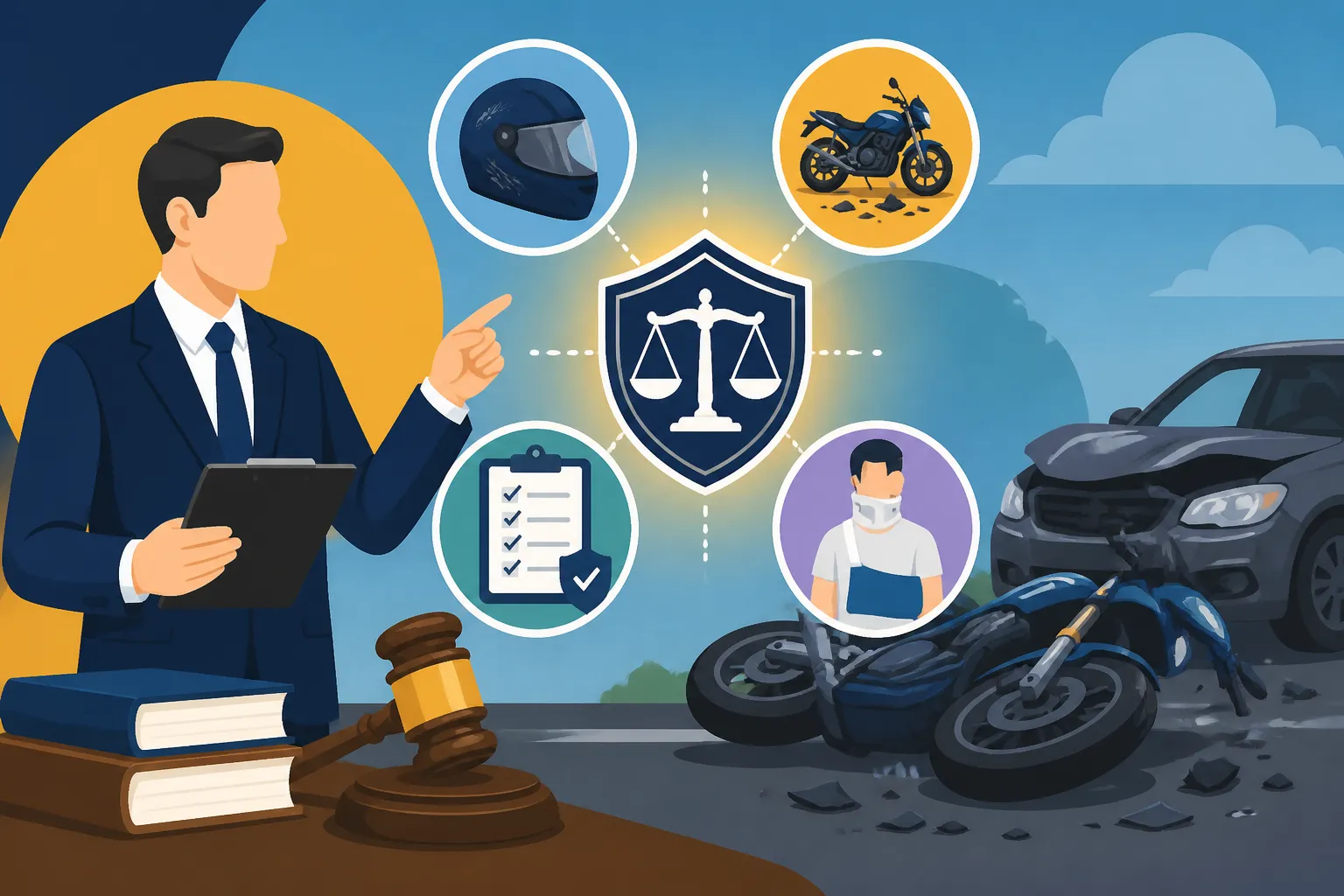
- Property Damage: This covers the cost to repair or replace your motorcycle, helmet, leathers, and any other gear damaged in the crash. Even small items can add up, and your lawyer will ensure these costs are included.
- Other Out-of-Pocket Expenses: This category can include seemingly minor costs that accumulate rapidly, such as transportation to medical appointments, childcare if you're unable to care for your children, home modifications for accessibility if you have a permanent disability, or even expenses for household tasks you can no longer perform.
Accurately documenting these figures is crucial, as they form the backbone of your financial recovery. For a complete understanding of what you can claim, refer to our guide on Types of Damages in a Motorcycle Accident Claim.
Valuing Non-Economic Damages like Pain and Suffering
This is where things get more complex. Non-economic damages refer to the intangible losses that don't have a direct bill or receipt but profoundly impact your life. The most common of these is "pain and suffering," but it also includes things like emotional distress, loss of enjoyment of life, disfigurement, and loss of consortium (the impact on your marital relationship). Assigning a monetary value to these deeply personal experiences is incredibly challenging.
Lawyers use several methods to calculate pain and suffering, often employing a "multiplier" method where your economic damages are multiplied by a certain factor (usually between 1.5 and 5, depending on the severity and permanence of your injuries). They also present compelling evidence of your suffering through medical records, detailed personal journals documenting your daily pain and limitations, testimony from friends and family, and even photographic evidence of your recovery. Their goal is to paint a vivid picture of how the accident has diminished your quality of life, allowing a jury or insurer to understand the true impact. For more insight, check out our article on Economic vs Non-Economic Damages Explained.
Addressing Future Medical Needs and Lost Earning Capacity
For severe motorcycle accident injuries, the impact isn't just immediate; it can last a lifetime. Your attorney will work with medical experts, like life care planners, to project your future medical needs. This can include future surgeries, ongoing physical therapy, long-term medication, assistive devices, home health care, or even potential psychological counseling to deal with trauma. These costs can be astronomical over a lifetime, and it's essential they are accurately accounted for in your claim.
Similarly, if your injuries have left you unable to return to your previous job, or have reduced your ability to earn at the same level, you have a claim for "lost earning capacity." An vocational expert might be called upon to assess your pre-accident earning potential versus your post-accident capacity, considering factors like education, experience, and transferable skills. This isn't just about the wages you've lost up to now, but the income you would have earned over the remainder of your working life. Proving these future damages requires sophisticated analysis and expert testimony. Learning How to Document Injuries for a Claim will be helpful in this regard.
Here's a quick overview of the main categories of damages a lawyer helps you prove:
| Type of Damage | Description | Examples | Documentation Needed |
|---|---|---|---|
| Economic Damages | Quantifiable financial losses incurred due to the accident. | Medical bills, lost wages, motorcycle repair/replacement, out-of-pocket costs. | Receipts, invoices, pay stubs, employment records, repair estimates. |
| Non-Economic Damages | Intangible losses that don't have a direct monetary value. | Pain and suffering, emotional distress, loss of enjoyment of life, disfigurement. | Medical records, pain journals, witness statements, psychological evaluations. |
| Future Damages | Projected costs and losses that will occur in the future due to the accident. | Future medical treatments, lost earning capacity, ongoing care. | Expert witness reports (medical, vocational, life care planning). |
The Role of Legal Expertise in Building a Strong Case
Even with compelling evidence, navigating the legal landscape and dealing with powerful insurance companies requires specialized knowledge and experience. A lawyer brings this expertise to the table, leveling the playing field.
Navigating Complex Legal Doctrines
Personal injury law is filled with nuances and complexities that can trip up even the most diligent individual. For instance, understanding the specific "statute of limitations" in your state is critical – this is the strict deadline by which you must file a lawsuit, or you lose your right to pursue compensation forever. Missing this deadline, even by a day, is catastrophic.
Furthermore, states have different rules regarding shared fault. Some states follow "pure comparative negligence," allowing you to recover even if you are 99% at fault, with your compensation reduced by your percentage of blame. Others use "modified comparative negligence" (like the 50% or 51% rule), where if you are found to be at or above a certain percentage of fault, you might recover nothing at all. Your lawyer understands these specific rules, like those found in Comparative Negligence in Motorcycle Accidents, and how they apply to your case, strategically presenting evidence to minimize any alleged fault on your part. They also handle unique situations, such as when Third-Party Liability in Motorcycle Accidents might be involved, meaning someone other than the other driver is partly responsible.
Negotiation Strategies with Insurance Companies
Insurance companies are not on your side. Their primary goal is to pay out as little as possible, and they have vast resources and experienced adjusters whose job it is to achieve that goal. They often employ tactics like delaying claims, making lowball offers, or subtly trying to get you to admit fault. Without legal representation, you're at a significant disadvantage.
An experienced motorcycle accident attorney knows these tactics inside and out. They handle all communication with the insurance adjusters, protecting you from saying anything that could jeopardize your claim. They prepare a strong "demand package" that details all your damages and provides supporting evidence, then negotiate aggressively on your behalf. They know the true value of your case and won't be swayed by low initial offers. Their ultimate aim is to secure a fair settlement that fully compensates you, potentially avoiding the need for a lengthy trial. If you're wondering when to get legal help, consider When to Hire a Motorcycle Accident Lawyer.
Presenting a Compelling Case: From Demand to Trial
The process of proving fault and damages culminates in presenting a compelling case, whether that's through detailed negotiations or, if necessary, in court.
Crafting a Detailed Demand Letter
Once your medical treatment is complete or you've reached "maximum medical improvement" (MMI), your lawyer will assemble a comprehensive demand letter. This document is the cornerstone of settlement negotiations. It meticulously outlines the facts of the accident, establishes the other driver's fault based on the collected evidence, details all your injuries, and itemizes every single economic and non-economic damage you've suffered. Crucially, it attaches all supporting documentation – medical bills, records, wage statements, accident reports, photos, and expert opinions.
The demand letter concludes with a specific amount of compensation requested, backed by the strength of your evidence. It's not just a request; it's a clear statement of your case's value and a preview of the strong evidence you're prepared to present if the case moves to litigation. A well-crafted demand letter often prompts insurance companies to take your claim seriously and engage in meaningful negotiation. For more details on what goes into this, see How to Negotiate a Motorcycle Accident Settlement.
Preparing for Litigation and Courtroom Presentation
While most motorcycle accident cases settle out of court, your lawyer will always prepare as if it's going to trial. This preparation is essential, as it often encourages the insurance company to offer a fair settlement rather than face the uncertainties and costs of a lawsuit. If settlement negotiations fail, your attorney will then file a lawsuit and guide you through the litigation process.
This involves various stages, including discovery (where both sides exchange information and evidence), depositions (where witnesses provide sworn testimony), and potentially mediation or arbitration to try and reach a resolution outside of a formal trial. If a trial becomes necessary, your lawyer will be your advocate in the courtroom. They will present your evidence, question witnesses, and make compelling arguments to a judge or jury, explaining how the other driver's negligence caused your injuries and why you deserve full compensation for your damages. Their ability to confidently and competently represent you in court is a significant leverage point throughout the entire claims process. To learn how lawyers interact with insurers, read How Lawyers Deal with Insurance Companies. If you're looking for legal assistance, a service like LegalMatch can help you find attorneys in your area who specialize in motorcycle accident claims, ensuring you connect with someone experienced in these crucial steps.
Disclaimer
Please remember that this information is for educational purposes only and not legal advice. Every motorcycle accident claim is unique, and the information presented here should not be taken as a substitute for professional legal counsel. You should consult with an experienced motorcycle accident attorney to discuss the specifics of your situation.