How Novelty Helmets Hurt Your Claim
Riding a motorcycle comes with an incredible sense of freedom, but it also carries inherent risks, which is why proper safety gear is non-negotiable. Unfortunately, many riders unknowingly compromise their safety and, crucially, their legal standing after an accident by opting for novelty helmets. These seemingly harmless pieces of headwear can seriously jeopardize your motorcycle accident claim, leaving you vulnerable and without the compensation you deserve for your injuries. This guide will meticulously explain what novelty helmets are, why they're so dangerous, and how their use can devastatingly impact your ability to recover damages after a crash.
Understanding What a Novelty Helmet Really Is
It’s easy to get caught up in the aesthetics of motorcycle gear. There’s a vast market for different styles, and sometimes, a helmet that looks cool or fits a certain biker image might not offer the protection you truly need. This is where the distinction between a legitimate, safety-certified helmet and a novelty helmet becomes critically important, especially when you're looking at protecting yourself, not just from impact, but from legal challenges after an accident.
The Difference Between DOT-Compliant and Novelty Helmets
When we talk about a "DOT-compliant" helmet, we're referring to headgear that meets the safety standards set by the U.S. Department of Transportation. Specifically, this means adherence to the Federal Motor Vehicle Safety Standard (FMVSS) 218. This standard dictates strict requirements for helmet performance, including impact attenuation (how well the helmet absorbs shock), penetration resistance, peripheral vision, and the strength of the chin strap retention system. A helmet that passes these rigorous tests will bear a DOT sticker on the back, a small but mighty indicator of its protective capabilities.
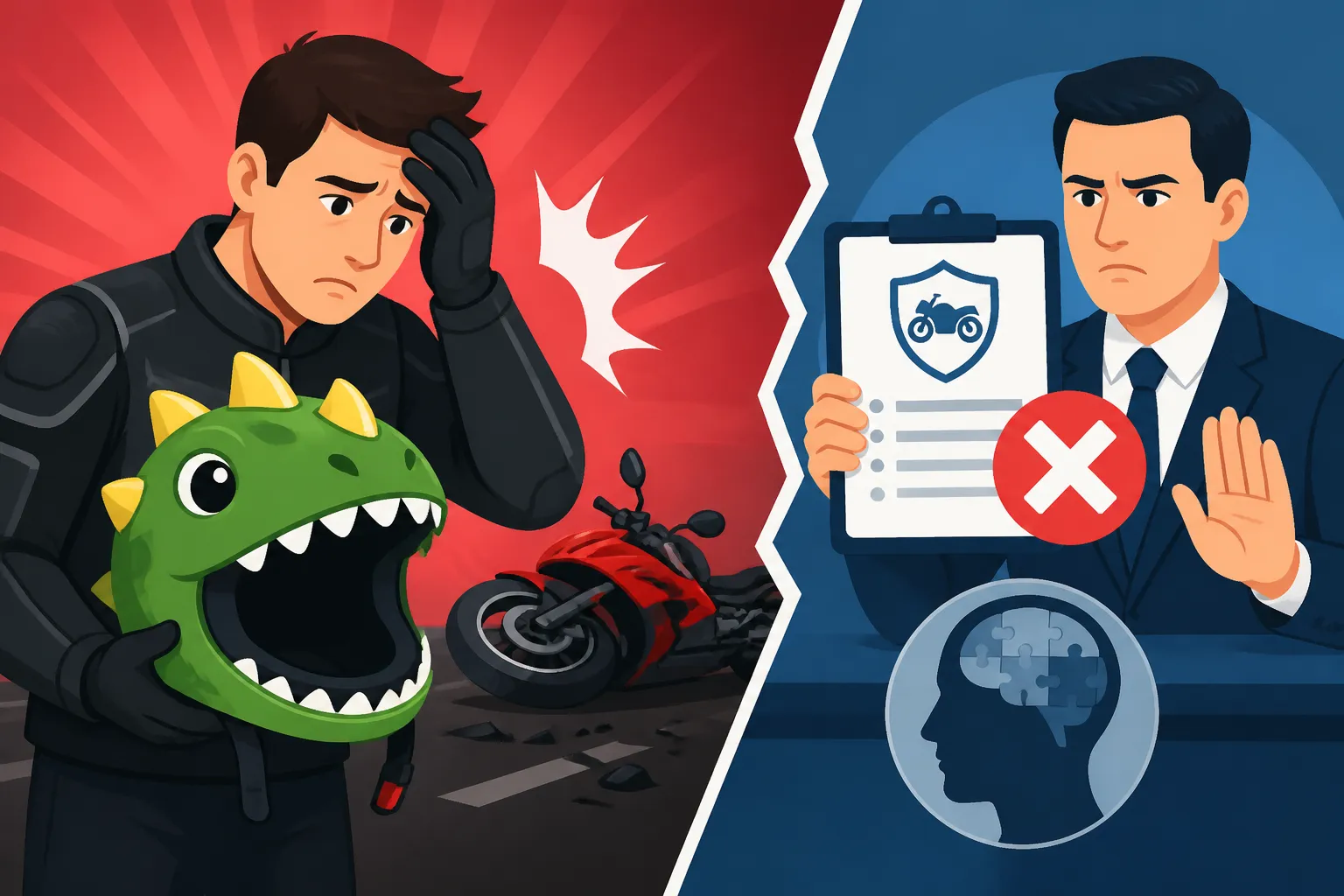
Novelty helmets, on the other hand, are designed purely for appearance. They might look like motorcycle helmets, but they intentionally, or sometimes unknowingly, bypass the stringent testing and design requirements of FMVSS 218. These helmets are often marketed as "for costume use only" or "not for motor vehicle use" in fine print, but many riders either miss these disclaimers or choose to ignore them. The core issue is that they lack the critical internal structure and materials needed to provide actual impact protection. They might offer a thin shell, but that shell usually isn't designed to distribute impact forces across a wide area or compress to absorb energy effectively. Knowing What Is a DOT-Compliant Helmet is the first step in ensuring your safety and protecting your legal rights.
Common Characteristics of Novelty Helmets
You can often spot a novelty helmet by a few tell-tale signs, even if they don't explicitly say "novelty." They are typically much lighter than DOT-approved helmets, a seemingly convenient feature that actually points to a critical lack of material. Their shells are usually very thin, sometimes made of cheap plastic or fiberglass that cracks or shatters rather than absorbing impact. A genuinely protective helmet will have a thick, dense layer of expanded polystyrene (EPS) foam inside its hard outer shell, specifically designed to crush and absorb energy during a crash. Novelty helmets either have a very thin, decorative foam liner or no functional impact-absorbing liner at all.
Another dead giveaway is the chin strap. DOT-compliant helmets feature a robust retention system designed to keep the helmet securely on your head during an impact. Novelty helmets often have flimsy straps that might not withstand the forces of a crash, leading to the helmet coming off when you need it most. Styles vary widely, from extremely shallow "brain buckets" that barely cover the top of your skull to "German" style helmets that prioritize a certain aesthetic over real protection. Many riders choose these thinking they're just as good, or perhaps they're unaware of the legal and safety differences. Unfortunately, as we'll explore, Novelty Helmets and Legal Risk extends far beyond just the immediate physical dangers.
The Immediate Safety Risks of Wearing a Novelty Helmet
Let’s be brutally honest: the most significant and immediate problem with novelty helmets isn't just their legal implications, it's the profound lack of actual protection they offer when you hit the pavement. When you're out on the open road, whether it's a casual Sunday ride through the countryside or navigating busy city streets like those in downtown Seattle, your helmet is your first and often last line of defense. A novelty helmet simply isn't built for that defense.
Lack of Impact Protection
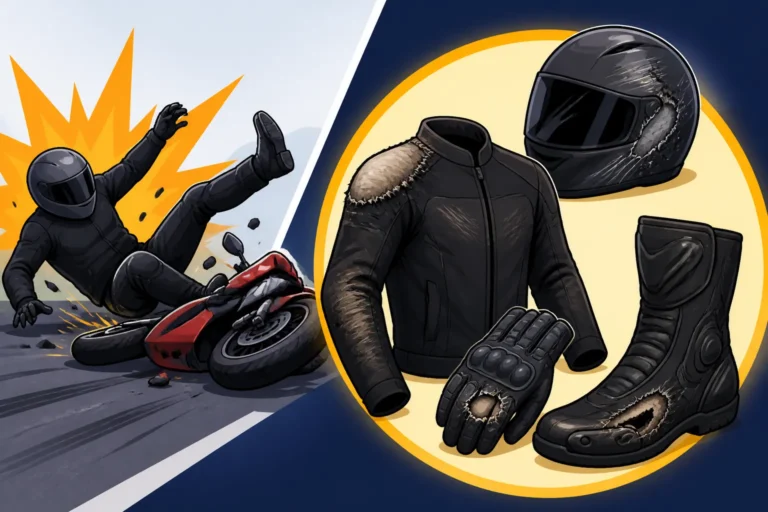
Imagine the unthinkable: you’re riding your Harley-Davidson and another vehicle pulls out in front of you without warning, leading to a collision. The moment your head makes contact with the road, another vehicle, or any solid object, a massive amount of kinetic energy needs to be managed. A DOT-compliant helmet works by having a rigid outer shell that distributes the impact force over a wider area, and an inner EPS foam liner that crushes and deforms, absorbing much of that energy before it reaches your brain. This controlled deformation is what prevents catastrophic injury.
A novelty helmet, with its thin shell and minimal or absent energy-absorbing liner, cannot perform this vital function. Instead, the force of the impact is transferred directly to your skull and brain. This can lead to a range of devastating consequences, from concussions to severe traumatic brain injuries (TBIs). Even a seemingly minor bump can become life-threatening because the helmet offers no real buffer. These injuries can result in long-term cognitive impairment, motor skill deficits, memory loss, and a dramatically reduced quality of life. The average settlement for a Motorcycle Traumatic Brain Injury: Claims and Compensation is often substantial precisely because of the profound and lasting impact these injuries have on a victim’s life, and a novelty helmet can complicate proving the extent of preventable damage.
Insufficient Penetration Resistance
Beyond blunt force trauma, there's another critical danger: penetration. Road debris, sharp edges of a vehicle, or even jagged pieces of your own motorcycle can become deadly projectiles in a crash. DOT standards require helmets to withstand penetration from a sharp object without the object reaching the wearer's head. This is tested by dropping a pointed striker onto the helmet. A compliant helmet will prevent the striker from piercing through to the head form.
Novelty helmets, with their flimsy construction, offer next to no penetration resistance. A shard of metal, a broken piece of plastic, or even a sharp rock kicked up from the road could easily pierce the thin shell, leading to direct injury to your scalp, skull, or brain. This could result in deep lacerations, skull fractures, or even foreign objects embedding in brain tissue. The resulting medical emergencies are not only life-threatening but can also lead to complex surgical procedures, prolonged recovery, and permanent disabilities. This stark reality underscores why relying on anything less than a DOT-certified helmet is a gamble you absolutely cannot afford to take, especially when your well-being and future legal claims are on the line.
How Novelty Helmets Undermine Your Accident Claim
This is where the rubber meets the road, not just physically, but legally. Even if another driver is clearly at fault for your motorcycle accident, the use of a novelty helmet can give insurance companies and their legal teams a powerful weapon to diminish or even deny your compensation. It's a harsh reality that many riders don't consider until it's too late.
The "Helmet Defense" and Comparative Negligence
In many states, insurance companies will deploy what's known as the "helmet defense" when a rider was wearing a non-DOT compliant helmet. The argument is simple yet insidious: had you been wearing a proper, DOT-approved helmet, your head injuries would have been less severe, or perhaps avoided entirely. They will then attempt to argue that you contributed to the severity of your own injuries by choosing inadequate safety gear. This isn't about whether you caused the accident; it's about whether you worsened your injuries.
This defense ties directly into the legal principle of comparative negligence. Most states follow some form of comparative negligence, which allows accident victims to recover damages even if they were partially at fault for their injuries, but their compensation is reduced by their percentage of fault. For example, in a state like California, which uses pure comparative negligence, if a jury determines you were 20% responsible for the severity of your head injury because you wore a novelty helmet, your overall settlement could be reduced by that 20%. In modified comparative negligence states, like Texas or Ohio, if your fault for your injuries reaches a certain threshold (often 50% or 51%), you might be completely barred from recovery. This means that a significant portion of your medical bills, lost wages, and pain and suffering could go uncompensated. Understanding How Comparative Negligence Reduces Your Payout is crucial, as the helmet defense is a prime example of how your actions can be used against you.
Proving Causation and Injury Severity
After a motorcycle crash, you need to prove two main things to get compensation: that the other driver caused the accident, and that the accident caused your injuries (and the extent of those injuries). When you're wearing a novelty helmet, proving the latter becomes incredibly difficult, especially for head injuries. The insurance company's defense will argue that even if their client caused the collision, they aren't responsible for the aggravated head injuries that a DOT helmet would have prevented.
This shifts the burden of proof onto you to demonstrate that your injuries would have been just as severe even with a DOT-compliant helmet, which is almost always an uphill battle. Expert medical witnesses might be called to testify on both sides, debating the hypothetical outcome. For serious injuries like a Motorcycle Spinal Cord Injury: Claims and Compensation that might also involve head trauma, the complexity multiplies. This battle over causation can significantly delay your claim, increase legal costs, and ultimately result in a lower settlement offer, as the insurer has leverage to argue that they shouldn't pay for damages that could have been mitigated.
Insurance Company Tactics and Rider Bias
Let's face it: there's already a pervasive stereotype against motorcyclists. Many non-riders and even some insurance adjusters harbor biases, perceiving motorcyclists as reckless thrill-seekers. When you present a claim and it's discovered you were wearing a novelty helmet, it unfortunately plays right into this negative perception. Insurance companies are skilled at exploiting such details to their advantage. They can use the fact that you weren't wearing a proper helmet to suggest you were generally irresponsible or disregarded safety, thereby trying to paint you as less credible or more at fault, not just for your injuries, but sometimes even for the accident itself.
This plays into the broader issue of Rider Bias in Fault Determination, where accident claims involving motorcycles often face greater scrutiny. An adjuster might offer a much lower initial settlement, knowing they have the "novelty helmet" card to play if you push back. They might even try to deny your claim outright for head injuries, arguing you assumed the risk. This tactic forces you into a weaker negotiating position, potentially leading you to accept a settlement far below what you truly deserve just to avoid a protracted legal battle.
Legal Implications and State-Specific Nuances
The legal landscape surrounding motorcycle helmets is anything but uniform across the United States. While the immediate physical dangers of novelty helmets are universal, how their use impacts your legal claim can vary significantly depending on where your accident occurred. Understanding these state-specific nuances is crucial for any rider.
Helmet Laws and Enforcement
First, let's briefly touch on the different types of helmet laws. Some states, like California, have "universal helmet laws," requiring all riders, regardless of age, to wear a DOT-compliant helmet. Other states, such as Texas or Florida, have "partial helmet laws," typically requiring helmets for riders under a certain age (e.g., 21) or those without sufficient insurance coverage. Then there are a few states that have no specific helmet law for adult riders, though this is becoming increasingly rare. You can dive deeper into these variations with guides like Motorcycle Helmet Laws by State or Universal vs Partial Helmet Laws Explained.
Regardless of the specifics of the helmet law in your state, the use of a novelty helmet almost always presents a problem. Even in states where an adult rider might legally ride without a helmet, if they choose to wear one, it's generally expected to be a protective helmet. If you're in a universal helmet law state and wearing a novelty helmet, you're not only breaking the law but also providing irrefutable evidence that you failed to comply with safety regulations, making the "helmet defense" exceptionally strong against you. In partial helmet law states, if you fall under the age group requiring a helmet, a novelty helmet is equally problematic. Even where adult helmets aren't explicitly mandated, if you sustain a head injury and were wearing a novelty helmet, an insurance company will argue that you were negligent in protecting yourself.
The Burden of Proof and Expert Testimony
When the "helmet defense" is raised by the opposing side, the burden often shifts to you to prove that the novelty helmet did not contribute to the severity of your head injuries, or that a DOT-compliant helmet would not have made a difference. This is an incredibly challenging feat. It typically requires retaining expensive expert witnesses, such as accident reconstructionists and biomechanical engineers.
These experts would need to analyze the accident dynamics, the forces involved, and the specific design flaws of your novelty helmet versus the protective capabilities of a DOT-compliant helmet. They would then offer opinions on whether a different helmet would have prevented or lessened your injuries. This process is not only costly but can be very time-consuming and complex. The defense, in turn, will bring their own experts to counter your arguments. This expert battle significantly adds to the litigation process and, even if you win, the legal fees and time spent can be substantial, ultimately reducing your net settlement amount. Without strong evidence and expert testimony, your claim for head injuries, especially severe ones, can be drastically reduced or even denied.
Protecting Your Claim: Why DOT-Compliant Gear Matters
After understanding the severe risks, both physical and legal, associated with novelty helmets, the path forward becomes clear. Protecting yourself and your future accident claim starts long before you ever hit the road. It begins with making informed choices about your gear.
Prioritizing Safety and Compliance
The single most effective way to protect yourself from both injury and legal complications is to always wear a DOT-compliant helmet. This isn't just about adhering to the law; it's about making a conscious decision to prioritize your safety. When shopping for a helmet, always look for the DOT sticker on the back. Beyond that, consider certifications from other reputable international standards bodies, such as Snell or ECE, which often exceed DOT requirements. These helmets offer superior protection, giving you the best chance of walking away from a crash with minimal head injury.
Investing in a quality, full-face helmet that meets these standards is an investment in your life and your legal future. You might find a wide range of DOT-approved helmets at retailers like Cycle Gear, offering various styles, features, and price points. Don't compromise on safety for the sake of aesthetics or a slightly lower price tag. Think of your helmet as the most important piece of insurance you can buy, literally. This commitment to proper gear not only safeguards your physical well-being but also strengthens your position immensely if you ever find yourself in an accident claim, helping you avoid the dreaded "helmet defense." Make sure you know How to Choose a DOT-Approved Helmet.
Documenting Your Compliant Gear
Even with a top-of-the-line DOT-certified helmet, it’s a good practice to take steps to document your gear. Keep your receipts of purchase, as these can prove when and where you bought your helmet, and importantly, that it was a recognized, compliant brand. Before hitting the road, take clear photos of your helmet, showing the DOT certification sticker and the overall condition of the helmet. If you ever have the misfortune of being involved in an accident, these photos, along with the damaged helmet itself, can serve as crucial evidence.
Your damaged, DOT-compliant helmet becomes a physical testament to the forces involved in the crash and how its design performed its duty in protecting your head. This can be invaluable in countering any claims from insurance companies that you were negligent or that your injuries would have been worse without the helmet. Your legal team can use this evidence to demonstrate that you took all reasonable precautions, thereby bolstering your claim for damages. Remember, your Protective Gear as Evidence in a Claim can speak volumes about your commitment to safety and the severity of the impact you endured.
DOT-Compliant vs. Novelty Helmets: A Quick Comparison
To help clarify the fundamental differences, here's a side-by-side comparison of DOT-compliant helmets and novelty helmets:
| Feature | DOT-Compliant Helmet | Novelty Helmet | Impact on Claim |
|---|---|---|---|
| Certification | Meets FMVSS 218; bears DOT sticker (and often Snell/ECE) | No official safety certification; often states "not for motor vehicle use" | Stronger claim; demonstrates responsible rider behavior |
| Outer Shell | Rigid, multi-layered (e.g., fiberglass, carbon fiber) designed to distribute impact | Thin, often single-layer plastic or fiberglass; cracks easily | Weaker claim; perceived negligence for head injuries |
| Energy-Absorbing Liner | Thick EPS (expanded polystyrene) foam designed to crush and absorb impact | Minimal or no functional EPS liner; decorative padding only | Weaker claim; easier for defense to argue preventable injuries |
| Chin Strap System | Robust, tested retention system to keep helmet secure during impact | Flimsy, easily detachable; often fails in a crash | Weaker claim; perceived negligence if helmet comes off |
| Weight | Heavier, due to protective materials and layers | Lighter, due to lack of protective materials | Not directly claimed, but indicates quality of protection. |
| Head Injury Risk | Significantly lower risk of severe head injury | High risk of severe head injury (TBI, fractures, etc.) | Complicates causation; opens door for "helmet defense" |
| Legal Standing | Complies with laws (where applicable); stronger position in accident claims | Violates laws (where applicable); weakens legal standing, invites comparative negligence | Significantly reduces potential settlement for head injuries |
Disclaimer
This article provides general information and is not intended as legal advice. Motorcycle accident claims are complex, and the laws regarding helmet use and liability vary by state. It is always recommended to consult with a qualified legal professional to discuss the specifics of your situation after a motorcycle accident.