Are Novelty Helmets Legal to Ride In
It's a classic dilemma for many riders: you want a helmet that looks great, perhaps a sleek, low-profile design that perfectly matches your bike and personal style. But you also know that helmets are about safety, and sometimes, those "cool" novelty helmets raise serious questions about legality and protection. Many riders feel caught between personal expression and practical safety, unsure if their chosen headgear could land them in legal trouble or, worse, compromise their well-being and their motorcycle accident claim. This guide is here to clear up the confusion about novelty helmets, their legal standing, and most importantly, how they might impact you after an accident.
What Exactly is a Novelty Helmet
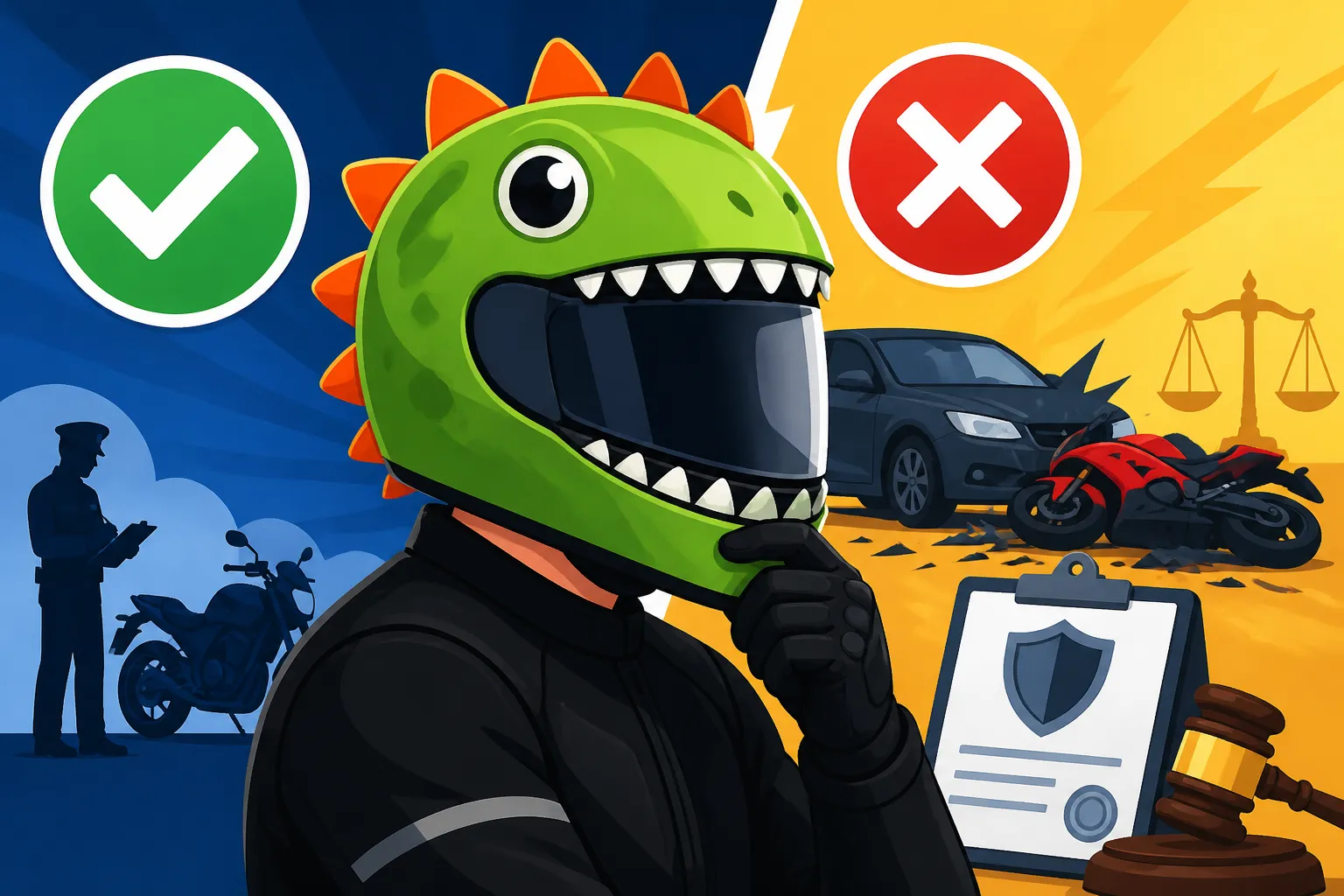
Before we dive into the legality, let's get clear on what a "novelty helmet" actually is, because the term itself can be a bit misleading. You see, when we talk about a novelty helmet, we're generally referring to headgear that is designed to resemble a motorcycle helmet but does not meet the safety standards set by the U.S. Department of Transportation (DOT). These helmets are often marketed for their minimalist design, light weight, and aesthetic appeal, offering riders a specific look or style.
The Appearance Versus Protection Divide
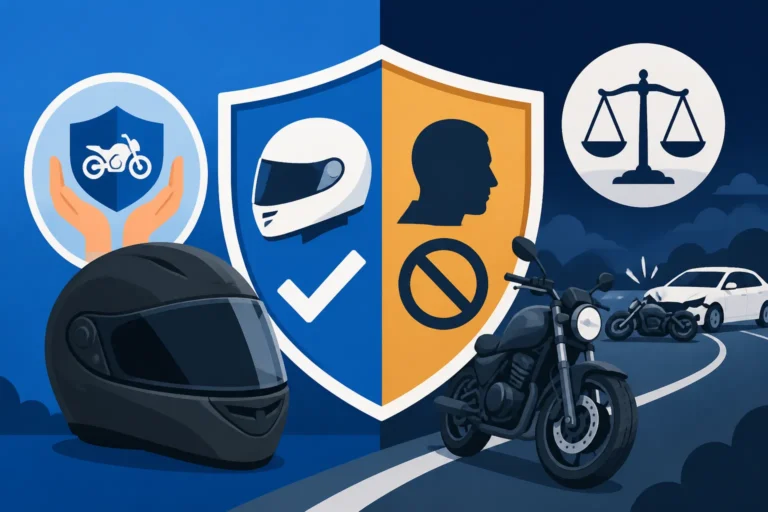
The biggest difference between a true motorcycle helmet and a novelty helmet is right there in its construction. A DOT-compliant helmet, for example, undergoes rigorous testing to ensure it can absorb impact, resist penetration, and stay securely on your head during a crash. It's built with multiple layers, including a sturdy outer shell, an impact-absorbing liner made of expanded polystyrene (EPS), comfort padding, and a robust retention system (chin strap). These layers work together to distribute force and protect your skull and brain.
Novelty helmets, on the other hand, typically feature a very thin plastic shell, little to no impact-absorbing foam, and a flimsy chin strap. They are essentially decorative items. While they might feel comfortable and light, giving you that open-air sensation without violating the letter of the law in states with "helmet laws," they offer almost no protection in the event of an impact. Think of it like wearing a baseball cap instead of a hard hat on a construction site; it covers your head, but it certainly won't protect you from a falling beam. The goal of a novelty helmet is entirely different from a safety helmet. It’s about fashion or a particular aesthetic, not about preserving your life or minimizing injury.
Identifying a DOT-Compliant Helmet
So, how can you tell the difference? The easiest way is to look for the DOT certification sticker on the back of the helmet. This sticker isn't just a label; it's a declaration that the helmet meets Federal Motor Vehicle Safety Standard (FMVSS) 218. A genuine DOT sticker will have "DOT" followed by the manufacturer's name, model designation, and usually the letters "FMVSS No. 218" and the month and year of manufacture. It will be permanently affixed, not a flimsy sticker that can be easily peeled off. Sometimes, unscrupulous manufacturers will try to mimic these stickers, so it's wise to be vigilant.
A quick physical check can also reveal a lot. DOT-compliant helmets tend to be thicker and heavier than novelty helmets due to the essential protective layers inside. If a helmet feels unusually light, thin, or flimsy, especially if it doesn't offer proper ear coverage or a substantial chin strap, it's highly likely to be a novelty helmet, regardless of what sticker might be on it. When you're browsing for gear, say at a store like Cycle Gear, make sure to ask the staff to point out helmets that are specifically DOT certified and explain the safety features. Always prioritize safety over superficial style.
The Legality of Novelty Helmets on Public Roads
This is where things get really interesting, and often confusing for riders. The legality of wearing a novelty helmet on public roads isn't a simple yes or no answer across the board. It heavily depends on the specific motorcycle helmet laws by state, as well as federal standards.
Federal Standards Versus State Laws
At a federal level, the U.S. Department of Transportation (DOT) sets safety standards for motorcycle helmets sold in the U.S. All helmets manufactured or imported for sale in the U.S. must meet FMVSS 218 to be legally marketed as motorcycle helmets. This is crucial: the DOT doesn't necessarily prohibit the wearing of non-compliant helmets, but it prohibits manufacturers from labeling or selling them as motorcycle helmets if they don't meet the standard. This distinction is often where the confusion arises.
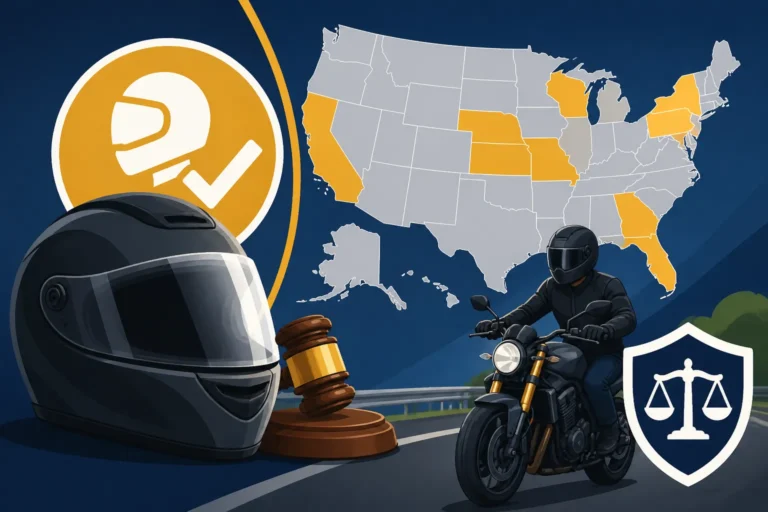
Individual states, however, have their own helmet laws that dictate who must wear a helmet and what type of helmet is acceptable. Some states have "universal helmet laws," requiring all riders and passengers to wear a helmet regardless of age or experience. States like California and New York fall into this category. In these states, if you're required to wear a helmet, it must be DOT-compliant. Wearing a novelty helmet in such a state is essentially the same as not wearing a helmet at all in the eyes of the law, and you could face fines, points on your license, or even your bike being impounded.
Other states have "partial helmet laws," where only certain riders (e.g., those under 18 or 21, or those without sufficient insurance) are required to wear helmets. Florida, for example, allows riders over 21 to ride without a helmet if they carry at least $10,000 in medical benefits. If you're in a state with a partial law and you are required to wear a helmet, that helmet must still be DOT-compliant. If you're not required to wear one, then technically, wearing a novelty helmet might not get you a ticket for not wearing a helmet. However, it still leaves you incredibly vulnerable.
Finally, a few states have no helmet law at all for adults, like Illinois or Iowa. In these places, while you might not face legal repercussions for wearing a novelty helmet from a "helmet law" perspective, the implications for your safety and any potential accident claim remain dire.
Penalties for Non-Compliance
Let's say you're riding through a state like Virginia, which has a universal helmet law, and you're pulled over wearing a novelty helmet. You're likely to receive a citation for not wearing a DOT-compliant helmet. The penalties can vary but often include fines, which can range from under $100 to several hundred dollars, depending on the jurisdiction. In some cases, repeated offenses could lead to more serious consequences.
Moreover, if you're involved in an accident while wearing a novelty helmet, the legal ramifications extend far beyond a simple traffic ticket. Even if you believe the accident wasn't your fault, wearing a non-compliant helmet can introduce significant challenges to your personal injury claim. This brings us to the crucial point of how the helmet defense affects your accident claim, which we'll explore in the next section. It's a risk that far outweighs the perceived aesthetic benefits.
How Novelty Helmets Impact Your Accident Claim
This is perhaps the most critical reason why riders should deeply consider the true implications of novelty helmets. Beyond the immediate safety risks, wearing a non-DOT compliant helmet can severely undermine your ability to recover damages after a motorcycle accident, even if another driver was clearly at fault. Insurance companies and defense attorneys are always looking for ways to reduce their payout, and your choice of helmet can be a powerful weapon against you.
The "Helmet Defense" and Comparative Negligence
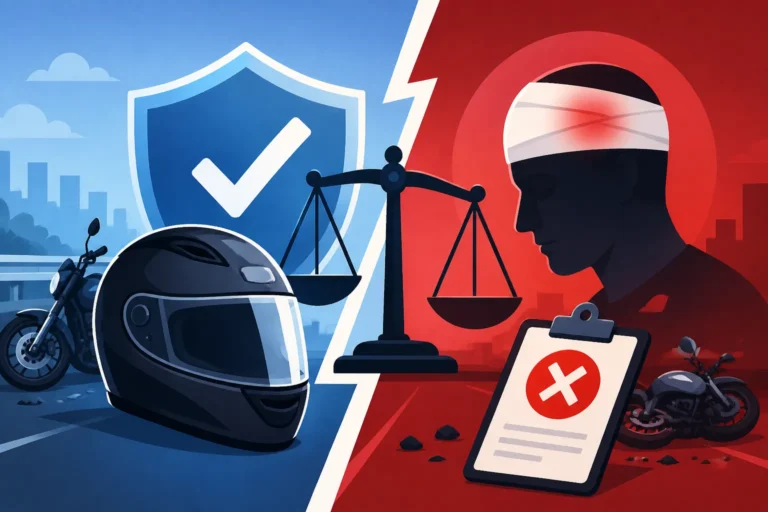
In many states, if you're involved in an accident, your ability to recover damages can be reduced if you were found to be partially at fault. This concept is called comparative negligence. While wearing a novelty helmet doesn't cause an accident, it can be used by the opposing side to argue that your injuries, especially head injuries, were made worse because you weren't wearing a proper, DOT-compliant helmet. This is known as the "helmet defense."
Imagine a scenario: you're riding in Oregon, a state with a universal helmet law. Another driver makes an unsafe lane change and cuts you off, causing you to crash. You suffer a traumatic brain injury (TBI). If you were wearing a novelty helmet, the defense will argue that while their client caused the collision, your TBI would have been less severe, or perhaps avoided entirely, had you been wearing a DOT-approved helmet. They'll claim you contributed to the severity of your own injuries.
Here’s a practical look at how this might play out:
| Aspect | DOT-Compliant Helmet | Novelty Helmet |
|---|---|---|
| Protection | Designed to absorb and distribute impact force, significantly reducing head injury risk. | Offers minimal to no impact protection; primarily decorative. |
| Legality | Required by law in universal helmet states; meets federal safety standards. | Illegal for use on public roads where helmet laws exist and require DOT compliance. |
| Injury Severity | More likely to mitigate head trauma; evidence supports your claim for medical costs. | Head injuries potentially exacerbated; defense argues for reduced damages. |
| Insurance Claims | Strengthens your position; less room for defense to argue contributory negligence for head injuries. | Opens the door for the "helmet defense," potentially reducing your settlement significantly. |
| Legal Standing | Demonstrates compliance with safety laws; supports your responsibility as a rider. | Can be seen as negligent behavior; may imply disregard for personal safety. |
Even in states where helmet use is optional for adults, like Florida for riders over 21 with specific insurance coverage, the helmet defense can still be invoked. The argument shifts from "you broke the law" to "you failed to mitigate your damages." Essentially, they'll argue that any reasonable person would wear a safety-approved helmet to protect themselves, and by choosing not to, you knowingly accepted a higher risk of injury, thereby reducing the value of your claim. This tactic can drastically reduce your potential settlement for a TBI or other head-related injuries.
Economic and Non-Economic Damages at Risk
When your claim is hit by the helmet defense, it impacts both your economic and non-economic damages.
- Economic Damages: These are quantifiable losses like medical bills, lost wages, and future medical costs. If a novelty helmet is successfully used against you, the defense might argue that a portion of your expensive TBI treatment or lost earning capacity could have been avoided. For instance, if your medical bills are $200,000 for a severe head injury, and the defense convinces a jury that 30% of that cost was due to wearing a novelty helmet, your recoverable economic damages could be reduced by $60,000.
- Non-Economic Damages: This category includes pain and suffering, emotional distress, and loss of enjoyment of life. These are often a significant portion of a motorcycle accident settlement, especially for severe, life-altering injuries. If the defense successfully minimizes the perceived severity of your injuries by blaming your helmet choice, your compensation for pain and suffering could be substantially lower. It’s harder to claim full compensation for debilitating chronic headaches or severe cognitive impairment if the defense successfully argues that these would have been less severe with a proper helmet.
The bottom line is, while the initial cost of a quality DOT-approved helmet might seem higher than a novelty one, the potential financial cost after an accident involving a non-compliant helmet can be astronomical. It's truly a case where penny-wise can be pound-foolish.
Making the Smart Choice for Safety and Your Wallet
Given the serious implications for both your safety and your financial recovery after an accident, choosing a proper helmet isn't just a recommendation—it's a critical decision that every rider needs to make with clear understanding.
Prioritizing Safety Standards
Your first priority when selecting a helmet should always be safety. This means choosing a helmet that is certified by the U.S. Department of Transportation (DOT) at minimum. Beyond DOT, many riders also opt for helmets that meet even more stringent safety standards, such as those set by Snell or ECE (Economic Commission for Europe). These certifications often involve even more rigorous testing protocols and can offer an additional layer of confidence in your head protection. For instance, a Snell-certified helmet usually has a thicker liner and a more robust shell designed to withstand multiple impacts, though it's important to remember that Snell is a voluntary standard primarily for racing, whereas DOT is the minimum legal requirement for street use.
When you're shopping, whether online or at a physical store, always verify the certifications. Don't just take a sticker at face value; check if the helmet is from a reputable brand known for safety. Stores like Cycle Gear carry a wide range of DOT, Snell, and ECE-certified helmets, and their staff can help you understand the differences and find the best fit for your head shape and riding style. A properly fitting helmet is just as important as its safety rating, as a loose helmet can shift during an impact, compromising its protective capabilities. Don't be afraid to try on several helmets and spend time in the store to ensure a snug, comfortable fit that won't move around on your head.
Strengthening Your Accident Claim
Wearing a DOT-compliant helmet is one of the easiest and most impactful ways to protect your interests should you ever be involved in a motorcycle accident. By complying with DOT Helmet Requirements Explained, you immediately remove a significant weapon from the defense's arsenal – the "helmet defense." This prevents them from easily arguing that your injuries were made worse by your own negligence in choosing inadequate head protection. This isn't just about avoiding a ticket; it's about safeguarding your right to full compensation for your medical expenses, lost income, pain, and suffering.
Think about it: if you're seriously injured, facing mounting medical bills and unable to work, the last thing you want is for an insurance company to argue that you're partly to blame for the severity of your head trauma because you chose a helmet that prioritized looks over protection. By simply wearing a helmet that meets legal and safety standards, you demonstrate a commitment to your own safety, which can reflect positively on your overall claim. It shows you were a responsible rider, adhering to the rules, and doing everything you could to protect yourself on the road. This can make a huge difference in How Helmet Laws Affect Your Accident Claim and ultimately, How Not Wearing a Helmet Affects Your Settlement. Documenting that you wore a compliant helmet, perhaps by taking photos of it after the accident or noting its brand and certifications in your accident report, can be crucial evidence.
Ultimately, the choice of helmet is yours, but making an informed decision means understanding the profound difference between a decorative piece and a life-saving piece of gear. When you weigh the momentary aesthetic appeal of a novelty helmet against the potential for devastating, uncompensated injuries and legal battles, the choice becomes clear. Protect your head, protect your claim, and ride safe.
Disclaimer
The information provided in this guide is for general informational purposes only and does not constitute legal advice. Motorcycle accident laws vary significantly by state, and the specifics of any accident claim are unique. It is highly recommended to consult with a qualified legal professional for advice regarding your individual situation.