Motorcycle Helmet Law in Pennsylvania
Riding a motorcycle in Pennsylvania offers an incredible sense of freedom, but navigating the state's specific helmet laws can be confusing, especially after an unexpected accident. Many riders are left wondering if their compliance, or lack thereof, with these laws will jeopardize their ability to recover damages and get the compensation they desperately need. This comprehensive guide will break down Pennsylvania's motorcycle helmet regulations, explain how they can affect your personal injury claim, and provide crucial advice for protecting your rights.
Understanding Pennsylvania's Motorcycle Helmet Law
Pennsylvania has a unique approach to motorcycle helmet laws, setting it apart from states with either universal helmet mandates or no laws at all. It’s not as simple as just wearing one or not; there are specific criteria that determine whether a helmet is legally required for you as a rider or your passenger. Understanding these nuances is critical, not just for staying safe on the road, but also for safeguarding your interests should an accident occur.
The Basics of the Law: Who Needs a Helmet and When
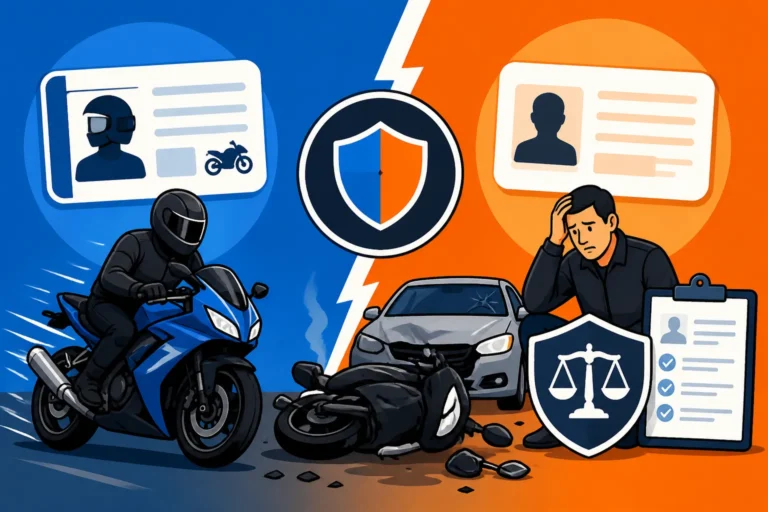
At its core, Pennsylvania's helmet law, specifically Pennsylvania Vehicle Code Title 75, Section 3525, dictates that all operators and passengers under the age of 21 must wear a helmet. This is a non-negotiable rule designed to protect younger, potentially less experienced riders and passengers who are statistically at higher risk for severe head injuries. If you’re pulling out of your driveway in Philadelphia or cruising through the scenic roads of the Pennsylvania Wilds, and you or your passenger are under 21, that helmet needs to be securely fastened.
Beyond age, the law also considers a rider's experience level. Even if you're over 21, you're required to wear a helmet unless you meet specific experience criteria. This often means you must have either two years of riding experience or have completed a motorcycle safety course approved by the Pennsylvania Department of Transportation (PennDOT) or the Motorcycle Safety Foundation (MSF). This clause acknowledges that new riders, regardless of age, benefit significantly from the added protection a helmet provides. Imagine a scenario where a 22-year-old just got their first motorcycle endorsement after passing the MSF course. While they might feel confident, the law recognizes they are still building real-world experience.
Finally, there's a critical insurance component often overlooked. For those over 21 with two years of experience or who have completed a safety course, they must also have an applicable financial responsibility (insurance) for their motorcycle that covers potential injuries. This ensures that if they choose to ride without a helmet and are injured, there's at least some financial safety net in place, reducing the burden on public resources. It's not just about personal choice; it's about being prepared for the inherent risks of motorcycling.
Exemptions and Specific Conditions
The law's exemptions are where things get a bit more complex. If you are 21 years of age or older and have either two full years of riding experience OR have completed an approved motorcycle safety course, you are generally exempt from the mandatory helmet requirement. This means you have the option to ride without a helmet. However, this freedom comes with a significant caveat related to insurance.
To qualify for this exemption, you must also be covered by an insurance policy that provides at least $15,000 in first-party medical benefits. This medical coverage is crucial because, in the event of an accident, it's designed to cover your immediate medical expenses up to that limit. This condition serves as a balance: the state grants experienced adult riders the choice, but asks them to take personal financial responsibility for potential head injuries. This isn't just an arbitrary rule; it's a practical measure that acknowledges the severe financial implications of a traumatic brain injury (TBI) without a helmet. Many riders, even those exempt, choose to wear helmets for the sheer peace of mind and safety, especially when shopping for new gear at places like Cycle Gear, which offers a wide selection of DOT-compliant options.
What about passengers? The rules for passengers mirror those for operators. If your passenger is under 21, they must wear a helmet. If they are 21 or older, they are subject to the same experience and insurance criteria as the operator to ride without a helmet. So, if you're an experienced rider over 21, but your friend riding pillion is 19, that friend absolutely needs a helmet. It's your responsibility as the operator to ensure your passenger complies with the law.
What Counts as a DOT-Compliant Helmet
When the law talks about "helmets," it's not just any head covering. It specifically refers to helmets that meet the safety standards set by the U.S. Department of Transportation (DOT). A DOT-compliant helmet has been tested to withstand certain impacts and offers a specific level of protection. This is incredibly important because not all helmets are created equal, and some seemingly protective gear offers little real-world safety.
You can usually identify a DOT-compliant helmet by looking for the "DOT" sticker on the back. However, beware of novelty helmets. These might look cool, but they are often thinly disguised plastic shells with minimal or no protective padding. They are not DOT-compliant and will not provide the necessary protection in an accident. More importantly, riding with a novelty helmet where a DOT helmet is required is essentially the same as riding without a helmet in the eyes of the law and can have severe consequences for your well-being and your motorcycle accident claim. For more information on what to look for, check out our guide on what is a DOT-compliant helmet.
The standards are rigorous for a reason. During an accident, a DOT-compliant helmet is designed to absorb impact energy, distributing the force over a larger area and slowing down the movement of your head. This significantly reduces the risk and severity of head and brain injuries. When you're out buying a new helmet, whether at a local shop or an online retailer like RevZilla, always prioritize the DOT certification over aesthetics or price alone. Your brain isn't worth cutting corners on safety.
How Pennsylvania Helmet Laws Impact Your Accident Claim
Even if you believe the other driver was 100% at fault for your motorcycle accident, Pennsylvania's helmet law can still play a significant role in your ability to recover full compensation for your injuries. Insurance companies are always looking for ways to reduce payouts, and your helmet use (or non-use) is often one of the first things they investigate, particularly if you suffered a head injury.
The "Helmet Defense" in Pennsylvania
One of the most common tactics insurance companies employ is what's known as the "helmet defense." This is where the at-fault driver's insurance company argues that your injuries, particularly head injuries, would have been less severe or even avoided if you had been wearing a DOT-compliant helmet, even if you weren't legally required to wear one in Pennsylvania. The argument essentially shifts some of the blame for the extent of your injuries onto you, regardless of who caused the initial collision. This tactic can significantly reduce your potential settlement. For a deeper dive into this, you might want to read our article on The Helmet Defense Explained.
Let's imagine you're an experienced rider over 21, cruising through rural Lancaster County without a helmet, legally. A distracted driver suddenly pulls out in front of you, causing a collision. You suffer a severe concussion and facial fractures. The other driver's insurance company might concede their client was at fault for the crash itself, but then argue that your concussion would have been mild or non-existent had you been wearing a helmet. They aren't saying you caused the crash, but they are arguing you contributed to the severity of your injuries.
This defense isn't always successful, and it certainly doesn't excuse the other driver's negligence. However, it can introduce doubt in the minds of a jury or give the insurance company leverage during settlement negotiations. They'll try to argue that a portion of your medical bills and pain and suffering related to the head injury should not be covered by them because of your choice not to wear a helmet, even if that choice was legal.
Mitigating Damages and Comparative Negligence
The concept behind the helmet defense ties directly into Pennsylvania's legal principle of comparative negligence. In states like Pennsylvania, which follow a modified comparative negligence rule (specifically, the 51% rule), you can still recover damages even if you are found partially at fault for an accident, as long as your fault doesn't exceed 50%. However, your recovery amount will be reduced by your percentage of fault.
While not wearing a helmet doesn't make you "at fault" for causing the accident, it can be argued that it contributes to the severity of your injuries, which falls under the legal principle of "mitigation of damages." This principle states that injured parties have a duty to take reasonable steps to minimize their damages. If a jury or insurance adjuster believes that wearing a helmet would have significantly lessened your head injuries, they might assign a percentage of fault for those specific injuries to you. Our article on how helmet use affects comparative negligence provides more detailed scenarios.
For example, if the jury determines you were 0% at fault for causing the initial crash, but 20% responsible for the extent of your head injury because you chose not to wear a helmet, your total compensation for head-related damages might be reduced by 20%. This can be a substantial amount, especially if you're dealing with a traumatic brain injury or severe facial trauma. This also highlights the importance of understanding who is at fault in a motorcycle accident.
| Factor | Helmet Required? (PA Law) | Impact on Accident Claim |
|---|---|---|
| Rider/Passenger Under 21 | YES | Non-compliance can significantly reduce settlement for head injuries, even if not at fault for crash. Considered negligence per se. |
| Rider/Passenger 21+ with < 2 Yrs Exp. | YES | Same as above. Non-compliance is a serious issue for claims involving head injuries. |
| Rider/Passenger 21+ with > 2 Yrs Exp. OR Safety Course + Insurance | NO | While not legally required, lack of helmet can still be used in "helmet defense" to argue for reduced damages for head injuries. |
| DOT-Compliant Helmet | YES (if required) | Demonstrates compliance and reduces effectiveness of helmet defense. Provides stronger protection for your head and your claim. |
| Novelty Helmet | NO (not compliant) | Treated similarly to not wearing a helmet if a DOT-compliant helmet was required. Provides little protection and weakens your claim. |
Proving Helmet Use and Its Importance
If you were wearing a helmet at the time of your accident, proving it is paramount. Insurance companies, unfortunately, often harbor biases against motorcyclists and might attempt to claim you weren't wearing one or that it wasn't DOT-compliant. This is why immediate action and thorough documentation are absolutely crucial after a crash. We've compiled detailed steps on how to prove you wore a helmet.
Your helmet, even if damaged, is a critical piece of evidence. Do not discard it. A damaged helmet can vividly demonstrate the force of impact and the protection it provided, potentially preventing more severe injury. Take photographs of your helmet at the scene, showing it on your head or near your body. Get detailed pictures of any damage to the helmet itself. This physical evidence can be far more persuasive than your word alone.
Witness statements can also be vital. If any bystanders saw you wearing your helmet before or immediately after the crash, their testimony can corroborate your account. Additionally, police reports often include notes about whether a helmet was worn. While a police report can hurt your claim if it states you weren't wearing a helmet, if it confirms helmet use, it can be a strong piece of evidence in your favor. Medical records detailing the type of head injury, or lack thereof, can also support the argument that your helmet provided crucial protection.
Navigating the Legal Complexities of Helmet Law After a Crash
Dealing with the aftermath of a motorcycle accident is already overwhelming, especially when you're recovering from injuries. Adding the complexities of helmet laws and how they might affect your claim can feel like an insurmountable challenge. Understanding who bears the burden of proof and when helmet non-use truly matters is vital for protecting your legal rights.
The Burden of Proof: Who Has to Prove What
In Pennsylvania, if the opposing insurance company wants to use your helmet non-use against you, they typically bear the burden of proving two things. First, they must prove that you were not wearing a DOT-compliant helmet at the time of the accident. This isn't always easy for them, especially if there's conflicting testimony or if the helmet was removed by first responders. Second, and crucially, they must also prove that your injuries, specifically head and neck injuries, would have been prevented or significantly reduced if you had been wearing a compliant helmet. This usually requires expert medical testimony or accident reconstruction.
This means the insurance company can't just wave their hands and say, "You weren't wearing a helmet, so you get less." They have to present compelling evidence that there's a direct causal link between your lack of a helmet and the severity of your injuries. This often involves engaging medical experts who can testify about the mechanics of your head injury and how a helmet would have altered the outcome. For riders involved in serious incidents, knowing the common causes of motorcycle accidents can also help in refuting baseless claims of fault or contributing negligence.
It's a tough burden for them to meet, and a knowledgeable motorcycle accident attorney can often challenge their experts and arguments effectively. This is why even if you believe you weren't legally required to wear a helmet, it's still wise to consult with an attorney to understand the nuances of this defense and how it might be applied to your specific case.
When Helmet Non-Use May Not Be Used Against You
While the helmet defense is a common tactic, there are situations where it might not apply or can be successfully countered. The most straightforward scenario is if your injuries are not head or neck-related. If you sustained a broken leg, severe road rash on your arm, or a spinal cord injury not involving your head, the argument that a helmet would have prevented these specific injuries simply doesn't hold water. In such cases, the helmet defense would likely be irrelevant to those particular damages.
Furthermore, if the at-fault driver's actions were particularly egregious, such as drunk driving or extreme reckless driving, the focus often remains squarely on their negligence. While the helmet defense might still be raised, a jury may be less sympathetic to it when confronted with clear evidence of severe misconduct by the defendant. How drunk driving affects a motorcycle claim is a complex issue, but it usually shifts significant liability to the impaired driver.
There's also the element of whether the accident was even survivable, helmet or not. In truly catastrophic collisions, where the impact forces were so immense that even the best helmet wouldn't have prevented severe or fatal head injuries, the helmet defense becomes much weaker. An accident reconstruction expert could be instrumental in demonstrating this. Ultimately, the question isn't just if you wore a helmet, but whether the helmet would have made a difference in the specific injuries you sustained.
Steps to Protect Your Claim Regarding Helmet Use
After an accident, the steps you take can profoundly affect your claim, especially concerning helmet use. First and foremost, always prioritize medical attention. Your health is paramount. Once you're safe, if you were wearing a helmet, make sure it's documented. Take photos of yourself at the scene with the helmet on if possible and safe to do so. Photograph the helmet itself, particularly any damage it sustained. Do not clean or repair the helmet; preserve it as evidence.
Exchange information with all parties involved and gather contact details for any witnesses. If the police respond, make sure they note in their report whether you were wearing a helmet. If the report incorrectly states you weren't wearing one, or doesn't mention it, address this with the investigating officer as soon as possible. Our guide on what to do immediately after a motorcycle accident outlines critical steps.
Most importantly, avoid discussing fault or your helmet use with anyone other than your attorney. Insurance adjusters are trained to elicit information that can be used against you. A simple, "I'm not sure if it would have helped," can be twisted into an admission. Remember, Pennsylvania's law allows experienced adult riders to choose, but insurance companies will still try to exploit that choice. It is crucial to consult with an attorney specializing in motorcycle accidents as soon as possible. They can help you understand the types of damages in a motorcycle accident claim and fight back against the helmet defense, ensuring your rights are protected.
Beyond Helmets: Other Protective Gear and Your Claim
While Pennsylvania's helmet laws are a primary focus for accident claims involving head injuries, the reality is that a motorcycle accident can cause a myriad of injuries to your entire body. Wearing other protective gear, though often not legally mandated, plays a crucial role not only in your physical safety but also in the strength and value of your personal injury claim.
The Value of Full Riding Gear
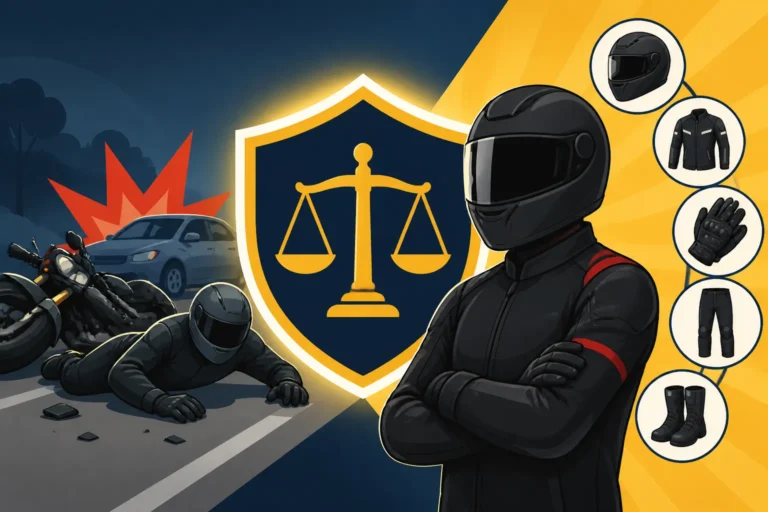
Think about full riding gear — a quality motorcycle jacket, durable gloves, sturdy riding pants, and proper boots — as your second line of defense after a helmet. While Pennsylvania doesn't have specific laws mandating most of this gear (beyond, in some cases, eye protection if your bike doesn't have a windshield), wearing it dramatically reduces the severity of common motorcycle injuries like road rash, broken bones, and abrasions. For instance, a quality leather or armored textile jacket can mean the difference between minor scrapes and third-degree road rash requiring extensive skin grafts.
Consider the common injuries suffered in motorcycle crashes: Road rash injuries and claims are frequent, but a good jacket and pants, perhaps from a brand like Cycle Gear, can significantly mitigate the damage. Imagine sliding across asphalt; thick, abrasion-resistant gear takes the brunt of the impact, protecting your skin, muscles, and bones. Without it, you're looking at painful debridement, infection risk, and potentially long-term scarring and nerve damage. The less severe your injuries, the quicker your recovery, and the less ammunition the insurance company has to argue that your injuries were exacerbated by your own negligence. Our article on Motorcycle Safety Gear and Legal Protection offers more insight into this.
Furthermore, proper gear can prevent injuries that might otherwise be severe. Sturdy boots protect your ankles and feet from crushing injuries, while armored gloves can prevent broken fingers and severe hand abrasions. While it might not be a legal requirement, investing in quality gear is an investment in your health and, indirectly, in the strength of any future accident claim.
Documenting Gear Damage as Evidence
Just like your helmet, your other damaged riding gear can serve as powerful physical evidence in your accident claim. After an accident, preserve all your damaged gear – jacket, pants, gloves, boots – no matter how torn or scuffed they appear. Take clear, detailed photographs of the damage to each item. Show how the fabric tore, the armor broke, or the leather was scraped. This isn't just about showing your personal property loss; it's about demonstrating the force of the impact and the protection the gear provided.
Imagine showing a jury a heavily scuffed and torn riding jacket versus a pristine, undamaged jacket. The damaged jacket visually communicates the intensity of the collision and, crucially, that you were wearing protection. This evidence can help counter arguments from the defense that you weren't taking reasonable precautions or that your injuries were entirely your fault. It provides a tangible illustration of how the gear absorbed kinetic energy that would have otherwise been transferred to your body.
Photographs and physical preservation of damaged gear can strengthen your claim for property damage as well as bolster your injury claim by showing you acted responsibly. It helps tell the story of the crash and validates the seriousness of the event. When you're dealing with the types of damages in a motorcycle accident claim, every piece of evidence matters, and your protective gear can be surprisingly impactful.
Disclaimer
Please remember that this article provides general information and should not be considered legal advice. Motorcycle accident laws are complex and vary by jurisdiction. For advice specific to your situation, it is crucial to consult with a qualified attorney in Pennsylvania.