Motorcycle Equipment Laws You Should Know
Navigating the labyrinth of motorcycle equipment laws can feel like a frustrating puzzle. You want to make sure your ride is legal, safe, and won't cause you headaches down the road, especially if you ever find yourself in an accident. This comprehensive guide is designed to cut through the confusion, helping you understand the essential motorcycle equipment laws you should know across various states, ensuring your bike is always compliant and you're prepared for whatever the open road throws your way.
The Patchwork of State-Specific Equipment Laws
One of the biggest challenges for motorcyclists, especially those who love to travel, is the sheer variety of equipment laws from one state to the next. What's perfectly legal and standard in California might raise an eyebrow or even earn you a ticket in Texas or Florida. It’s not just about common sense; it's about knowing the specific letter of the law in each jurisdiction you ride through. This patchwork of regulations often stems from different legislative priorities, safety studies, and even historical precedents, creating a complex environment for riders to master.
Mandatory Equipment for Safe Operation
Let's start with the non-negotiables, the foundational pieces of equipment that are almost universally required, albeit with slight variations in specifics. These are the items designed to ensure your basic safety and visibility on the road.
Every motorcycle needs a functional headlight. In most states, your headlight must be on at all times, even during daylight hours, for increased visibility to other drivers. Some states, like California, allow headlight modulators, which flash the headlight at varying intensities, as long as they comply with federal regulations. You'll also need a functioning taillight, clearly visible from the rear, and a brake light that illuminates brightly when you apply the brakes. These aren't just for you; they're crucial for other drivers to see you, especially when slowing down or stopping. Without proper lighting, you could be setting yourself up for a rear-end collision, and if you are involved in a crash, questions about your visibility could impact who is at fault in a motorcycle accident.
Mirrors are another critical piece of equipment. While some states require two mirrors, others might only mandate one, typically on the left side. However, regardless of the legal minimum, having two mirrors is always a good idea for maximum situational awareness. The law often specifies that these mirrors must provide a clear view of the roadway for a certain distance behind you, usually around 200 feet. This isn't just about avoiding a ticket; it's about spotting that car in your blind spot before you make a lane change. When shopping for replacements or upgrades at a place like Cycle Gear, always double-check the product specifications to ensure they meet your state's visibility requirements.
Turn signals, while often a rider's first line of communication with other drivers, aren't universally required on all motorcycles, especially older models. However, if your motorcycle was manufactured after a certain year (often the early 1970s), turn signals are almost always mandatory. They must be clearly visible from both front and rear, and typically amber or red for the rear, and amber or white for the front. Even if your bike doesn't legally require them, using hand signals when your turn signals aren't functional or present is crucial. However, relying solely on hand signals can make you less predictable to drivers accustomed to automatic signals, increasing your risk.
Brakes are perhaps the most essential safety feature. All motorcycles are required to have at least two independent brake systems, one for the front wheel and one for the rear. These must be in good working order, capable of stopping the motorcycle safely and efficiently. Regular maintenance, including checking brake fluid levels, pad wear, and line integrity, isn't just a recommendation; it's a legal and safety imperative. Similarly, your tires need to be up to snuff. Laws typically dictate minimum tread depth, often 2/32nds of an inch, and prohibit tires with visible cuts, bulges, or other damage. Using tires designed specifically for motorcycles is also usually a legal and safety requirement.
Finally, a horn is a small but mighty piece of equipment that's almost always mandatory. It must be audible for a certain distance, typically 200 feet, and capable of emitting a clear, distinctive sound. A working horn can be your best friend when you need to alert an inattentive driver or pedestrian to your presence, potentially preventing an accident.
State Variations and Their Impact
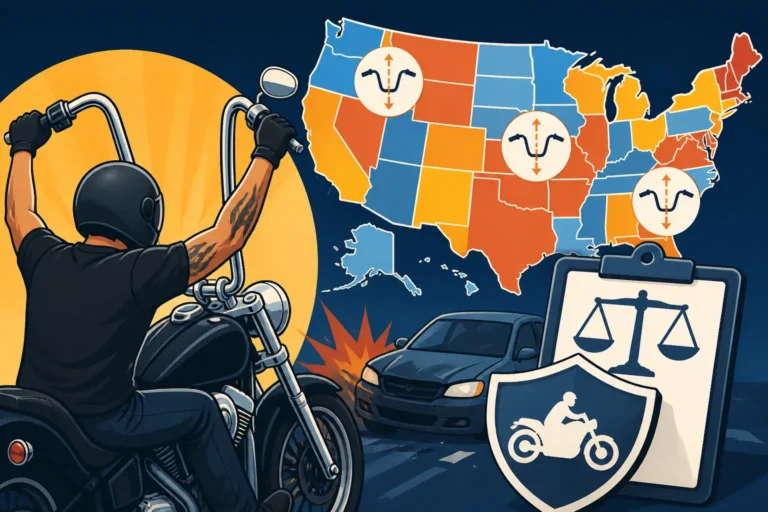
Beyond these basic requirements, the laws start to diverge significantly, creating potential pitfalls for unsuspecting riders. For example, while most states have pretty standard rules for lights and brakes, things like handlebar height can vary wildly. What's perfectly fine in Arizona might be illegal in Pennsylvania, where handlebars cannot be higher than the operator's shoulder. This means a rider from Arizona touring through the Northeast could unexpectedly face a citation.
These variations can extend to other areas too. Some states have specific rules about modified frames or extended forks, while others are more lenient. Even something as seemingly minor as the color of reflective tape on your helmet or bike can be regulated. Riders need to be acutely aware of these distinctions, especially when planning long trips that cross multiple state lines. It's not uncommon for a rider to be pulled over for an equipment violation that is entirely legal in their home state, simply because they've crossed into another jurisdiction. This not only leads to frustrating tickets but can also introduce complications if you're involved in a crash in a state where your equipment is deemed non-compliant.
Beyond the Basics: Specific Equipment Regulations
While the fundamental safety equipment is paramount, several other regulations often trip up motorcyclists. These often relate to customization trends or unique state-specific safety concerns, making them especially important to understand.
Handlebar Height Laws
One of the most common and often debated motorcycle equipment laws revolves around handlebar height. As briefly mentioned, some states impose strict limits on how high your handlebars can be. The rationale often cited by lawmakers is rider control and safety. Extremely high handlebars can make it more difficult for a rider to steer effectively, react quickly to hazards, and maintain balance, especially at lower speeds or during evasive maneuvers.
For instance, states like Pennsylvania and New Jersey have laws stating that handlebars cannot be higher than the operator's shoulder. This isn't just a vague guideline; it's often a measurement taken from a seated position. Violations can lead to fines and, more critically, could be used against you in the event of an accident. Imagine you're riding through rural Pennsylvania with ape-hanger handlebars that are perfectly legal in your home state of Ohio. If you get into a crash, even if the other driver was clearly at fault, their insurance company might try to argue that your illegal handlebar height contributed to your inability to react or control the bike, complicating your personal injury claim. This specific regulation is covered in more detail in our article on Motorcycle Handlebar Height Laws.
Exhaust and Noise Regulations
Ah, the sweet rumble of a custom exhaust! For many riders, upgrading their exhaust system is a rite of passage, a way to personalize their bike and make their presence known. However, this is another area where laws can be surprisingly stringent and widely enforced. Most states and even many local municipalities have specific decibel limits for motorcycle exhaust systems. These limits are often designed to prevent excessive noise pollution and can be quite low, sometimes around 80-92 decibels when measured under specific conditions.
The Environmental Protection Agency (EPA) also sets federal standards for new motorcycles, but aftermarket exhausts are a different beast. Many aftermarket systems, while sounding fantastic, exceed legal noise limits right off the shelf. If you've ever purchased a "race-only" or "not for highway use" exhaust from a brand like Vance & Hines or Two Brothers, you know exactly what we're talking about. Riding with an excessively loud exhaust can lead to tickets and potential difficulties if you are involved in a collision. Insurance adjusters and opposing counsel might try to argue that your loud exhaust contributed to the accident by startling another driver or that your overall non-compliance indicates a disregard for safety, potentially affecting how insurance companies assign blame to riders. You can dive deeper into these specific rules by reading our guide on Motorcycle Exhaust and Noise Laws.
Eye Protection Requirements
Visibility isn't just about being seen; it's also about you seeing clearly. Many states have specific laws regarding eye protection. In general, if your motorcycle doesn't have a windshield that provides adequate protection from wind and debris, you are required to wear some form of eye protection. This could be goggles, a face shield integrated into your helmet, or impact-resistant glasses.
The key here is "adequate protection." Simple sunglasses often won't cut it, as they don't always protect against flying debris or strong winds that can cause your eyes to water and impair your vision. The aim is to ensure your vision remains unobstructed and uncompromised, especially at speed. Some states even specify that eye protection must meet certain safety standards, such as those set by ANSI (American National Standards Institute) like Z87.1. Failing to wear proper eye protection can be a safety hazard and, just like other equipment violations, could be used to challenge your claim if an accident occurs. Our dedicated article on Eye Protection Requirements by State offers a detailed breakdown of what's mandated where.
The Importance of Compliance for Your Claim
Beyond the immediate concerns of safety and avoiding tickets, understanding and adhering to motorcycle equipment laws has significant implications if you're ever involved in an accident and need to file a claim. Insurance companies and legal teams will scrutinize every detail, and any non-compliance can be a point of contention.
How Equipment Violations Affect Fault
It's a frustrating reality that motorcyclists often face an uphill battle when it comes to fault determination after a crash. There's a persistent, unfair bias against riders, and any deviation from legal requirements can be seized upon by the other side. Let's say you were involved in a collision where a car turned left in front of you, a common and dangerous scenario. While the other driver's failure to yield would be the primary cause, if your motorcycle had illegally high handlebars or an exhaust system exceeding decibel limits, the opposing counsel or insurance company might attempt to argue that these factors impaired your ability to react or contributed to the accident in some way.
Even if your non-compliant equipment didn't directly cause the crash, it can complicate proving fault in a motorcycle accident. They might claim that your high handlebars reduced your control, or your loud exhaust startled the other driver, making them brake unexpectedly. This can lead to allegations of comparative negligence in motorcycle accidents, where both parties are assigned a percentage of fault. If you are found even partially at fault, your potential settlement could be significantly reduced. This is a critical aspect of shared fault in motorcycle accidents that riders must be aware of.
Insurance Company Scrutiny
Insurance companies, at their core, are businesses. Their goal is to minimize payouts. When a motorcycle accident claim comes across their desk, adjusters are trained to look for any reason to reduce the value of that claim. Non-compliant equipment is a golden ticket for them. They'll argue that because you weren't operating a "street-legal" vehicle, or because you failed to meet specific safety standards, you somehow contributed to your own injuries or the severity of the accident. This is part of the broader issue of how insurance companies assign blame to riders, often leaning on stereotypes and minor infractions to weaken a claim.
Imagine you had an aftermarket LED headlight that, while bright, wasn't DOT-approved, and the accident happened at night. Even if the other driver pulled out directly in front of you, the insurance company might suggest your headlight wasn't legally compliant or properly diffused, causing glare or not being recognized as a motorcycle light, thereby making you less visible. Even if this is a flimsy argument, it creates doubt and gives them leverage to offer a lower settlement amount. This directly impacts how fault affects your settlement, potentially leaving you with less compensation for your injuries and damages.
Staying Compliant and Documenting It
So, what's a rider to do? The best defense is a good offense: proactive compliance. Start by thoroughly researching the specific motorcycle equipment laws in your state and any states you plan to ride through. Websites for your state's Department of Motor Vehicles (DMV) or Department of Transportation (DOT) are excellent resources. Local law enforcement websites might also provide clarity.
When you purchase aftermarket parts, whether it's a new exhaust from Cycle Gear or a custom lighting kit, always verify that they are DOT-compliant or meet state-specific regulations. Don't assume. Many reputable retailers will clearly state if a product is not street legal.
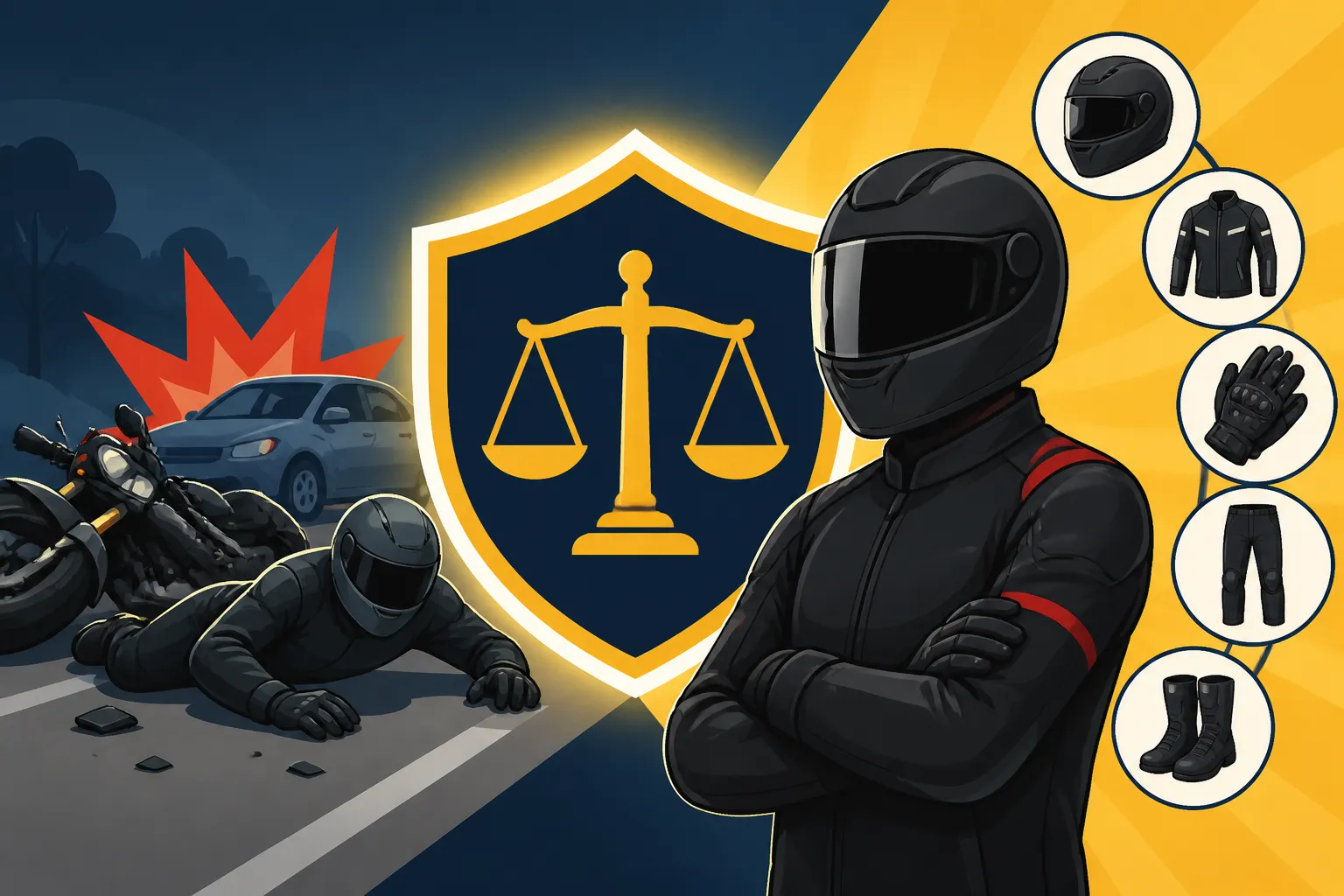
Regular pre-ride checks are also crucial. Make sure all your lights are working, your horn is functional, mirrors are properly adjusted, and brakes are responsive. Keep records of maintenance and any upgrades that demonstrate your commitment to safe and legal operation. If, heaven forbid, you are involved in a crash, documenting the scene to prove fault should include clear photos of your motorcycle, demonstrating that all your equipment was in good working order and compliant with the law. This can be powerful evidence to counter any claims of non-compliance later on. Wearing all your Motorcycle Safety Gear and Legal Protection can also bolster your position significantly.
Key Motorcycle Equipment Laws to Remember
To help you keep track, here's a general overview of some common motorcycle equipment requirements. Remember, these are general guidelines, and specific laws can vary significantly by state. Always check your local regulations.
| Equipment Type | General Requirement | Common State Variations / Remarks |
|---|---|---|
| Headlights | At least one, white, functional, often required to be on at all times. | Some states allow headlight modulators. May require DOT approval. |
| Taillights | At least one, red, functional. Visible from a specified distance (e.g., 500 ft). | Must illuminate with license plate light. Integrated turn signals may be restricted. |
| Brake Lights | At least one, red, illuminates when brakes applied. Brighter than taillight. | Must be clearly visible. Some states allow modulating brake lights. |
| Mirrors | Minimum one or two, providing clear rearward view. | Specified field of view (e.g., 200 ft behind). Must be securely mounted. |
| Turn Signals | Required on bikes manufactured after a certain year (e.g., 1972). Amber/Red rear, Amber/White front. | Not always required on older bikes, but recommended. Must be visible. |
| Horn | Must be audible for a specified distance (e.g., 200 ft). | Cannot be an air horn or excessively loud. |
| Brakes | Two independent systems (front/rear), in good working order. | ABS often recommended but not mandated. Must stop effectively. |
| Tires | Minimum tread depth (e.g., 2/32"). No visible damage. Motorcycle-specific tires. | Prohibits retreaded or "not for highway use" tires. |
| Handlebar Height | Varies widely. Often "no higher than rider's shoulder" or a specific height limit. | Strict in states like PA, NJ. Less strict in others. Always check. |
| Exhaust System | Must be muffled. Often has decibel limits. | Aftermarket exhausts frequently violate noise limits. Catalytic converters may be required. |
| Eye Protection | Required if no adequate windshield. Must be impact-resistant. | Goggles, face shield, or safety glasses often specified. |
Disclaimer
This article is for general informational purposes only and does not constitute professional advice. Laws and regulations vary by location and change over time. Consult a qualified professional for guidance on your specific situation.