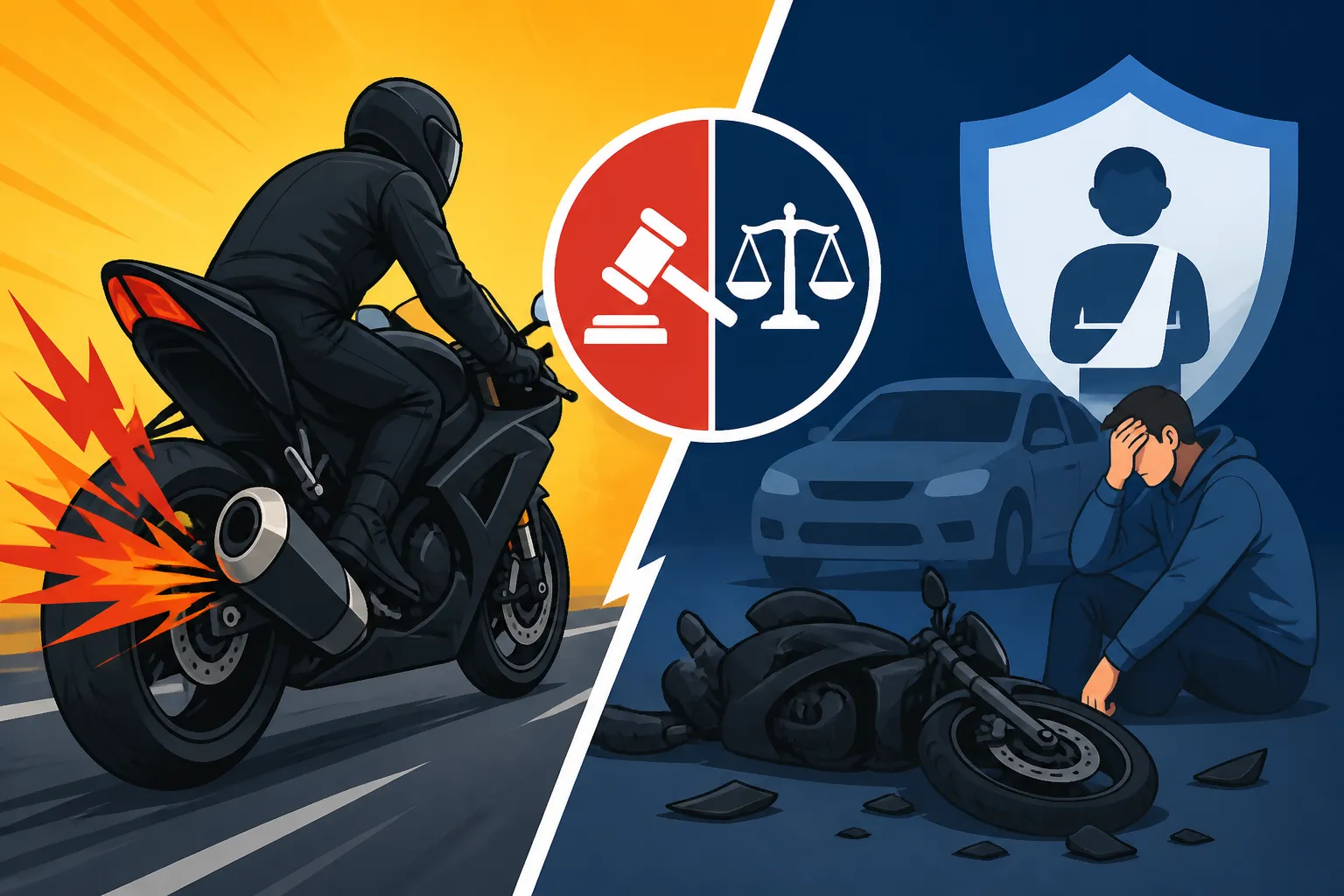
Are Loud Exhausts Illegal for Motorcycles
There's a persistent hum in the motorcycle community, and it's not just the rumble of engines; it's the question of whether that glorious, guttural roar from your exhaust is actually, well, legal. Many riders upgrade their pipes seeking that signature sound and enhanced performance, only to find themselves pulling over for a police officer with a decibel meter. This guide cuts through the noise, detailing the complex and often frustrating landscape of motorcycle exhaust laws across the country, so you can ride with confidence and keep your hard-earned cash in your wallet.
The Complexities of Motorcycle Exhaust Laws
It might feel like a wild west scenario out there when it comes to exhaust noise, but the reality is a patchwork of regulations that can leave even seasoned riders scratching their heads. Unlike a universal speed limit, there isn't one simple federal rule that dictates how loud your motorcycle can be. Instead, we're dealing with a multi-layered legal puzzle involving federal guidelines, state statutes, and even local city ordinances.
Federal Regulations vs. State Statutes
At the federal level, the Environmental Protection Agency (EPA) does have regulations concerning motorcycle noise, but these primarily apply to new motorcycles at the point of manufacture. When a brand-new bike rolls off the assembly line and into a dealership, it has to meet certain noise emission standards. However, once that bike is sold and hits the road, the federal oversight largely steps back, leaving the regulation of aftermarket exhausts and modifications to individual states and municipalities.
This is where the real complexity begins for riders. A state might have a general law against "excessive" or "unnecessary" noise, while others have very specific decibel limits. For instance, California has historically been one of the stricter states, with laws requiring that all aftermarket exhausts sold or installed in the state meet specific sound limits and labeling requirements, often based on SAE J2825 testing standards. Many aftermarket exhaust manufacturers now produce options that are California Air Resources Board (CARB) compliant, but it’s crucial to verify before you buy. You might walk into a store like Cycle Gear and see a huge array of exhausts, some clearly marked for "closed course competition only," and others that claim to be street legal. It’s always on the rider to know what’s permissible in their riding area.
Decibel Limits and Measurement Challenges
Many states and cities have attempted to quantify "loud" by setting specific decibel (dB) limits. These limits often hover around 80 to 92 dB, measured under specific conditions. For example, some jurisdictions mandate a "stationary test" where the microphone is placed a certain distance from the exhaust outlet, and the engine is revved to a particular RPM (often half of the maximum rated RPM). Other tests might involve "drive-by" measurements at specific speeds.
The biggest challenge with decibel limits, however, is the actual enforcement on the street. It's incredibly difficult for a police officer to accurately measure a motorcycle's decibel level during a routine traffic stop. Factors like ambient noise, the reflective surfaces of buildings, the type of decibel meter used, and the methodology of the officer can all skew readings. Because of these measurement difficulties, many jurisdictions rely more on subjective "excessive noise" provisions rather than strict decibel limits, which can be a double-edged sword for riders. On one hand, it avoids potentially inaccurate roadside testing; on the other, it leaves enforcement open to the individual officer's discretion and perception.
State-Specific Exhaust Laws and What Riders Need to Know
Given the lack of a uniform federal standard, understanding the laws in your specific state, and even the cities you frequent, is paramount. What's perfectly legal in one state could land you a ticket the moment you cross state lines.
States with Strict Enforcement
Certain states and their major cities are known for taking a stricter stance on motorcycle exhaust noise. California, as mentioned, is a prime example. Riders there must ensure their aftermarket exhaust systems bear a label indicating compliance with noise emission standards. If an officer determines your exhaust is too loud without the proper labeling, you could face a "fix-it ticket" or a fine. Similarly, states like New York have had long-standing debates and efforts to enforce stricter exhaust noise limits, often targeting modified systems. The intent behind these laws is typically to reduce noise pollution in residential areas and improve quality of life for non-riders.
It's not just about the decibel reading; it's also about the perception. In densely populated areas, a loud exhaust is more likely to draw negative attention and, consequently, law enforcement scrutiny. Even if your exhaust technically falls within a vague decibel limit, if a local ordinance prohibits "excessive or unusual noise," you could still be cited. This often comes down to an officer's interpretation of what constitutes a public disturbance.
States with More Lenient Approaches or Loopholes
Conversely, some states adopt a more general approach, focusing on terms like "muffler required" or "preventing excessive or unusual noise." For example, many states simply require a functional muffler and prohibit modifications that increase noise beyond the original factory equipment. This can create a bit of a gray area. If your aftermarket exhaust is "EPA compliant" or carries some form of certification, but is still significantly louder than stock, you might find yourself in a situation where an officer could still issue a citation based on a subjective "excessive noise" standard.
Take states like Arizona or Nevada, popular for scenic rides and large motorcycle rallies. While they have general vehicle equipment laws, enforcement of specific decibel limits might be less common or focus more on egregious violations. However, this doesn't mean you have a free pass to run straight pipes. Most states still require a muffler, and removing baffles or catalytic converters designed to reduce noise will almost certainly put you in violation, regardless of specific decibel numbers. It's a fine line, and often, the interpretation comes down to common sense and courtesy.
Local Ordinances and City Rules
Beyond state laws, it's critical to remember that local municipalities often have their own noise ordinances. A city might implement stricter rules, especially in commercial districts, near hospitals, or residential zones, than the broader state law. For example, cities in Oregon might have different noise limits than Portland itself, which tends to be more proactive in addressing urban noise concerns.
When attending large motorcycle events, like the Sturgis Motorcycle Rally in South Dakota, local authorities often issue warnings or have specific enforcement plans regarding exhaust noise, even if the surrounding state laws are generally more relaxed. These local rules can change, so it's always a good idea to check specific city or county websites if you're planning a trip or frequently ride in a particular area. Ignorance of these hyper-local laws is rarely an acceptable defense when you're facing a ticket.
The "Excessive Noise" Loophole and Subjectivity
One of the most frustrating aspects for riders is the subjective nature of what constitutes "excessive noise." While some states try to pin it down with decibel levels, many still use vague language that leaves much to interpretation by law enforcement.
What Constitutes "Excessive Noise"?
"Excessive noise" can be a nebulous term. Is it a loud idle? A booming acceleration? The rumble at cruising speed? Often, it's in the ear of the beholder, or more specifically, the ear of the police officer. What one officer might deem acceptable, another might consider a public nuisance. This subjectivity can lead to inconsistencies in enforcement, where riders feel unfairly targeted. The perception of Rider Bias in Fault Determination isn't just limited to accidents; it can extend to how officers view modifications like loud exhausts.
This is why many riders find themselves in a bind. They've invested in a reputable aftermarket exhaust system, perhaps from a well-known manufacturer like Vance & Hines or Cobra, which they believe is "street legal" based on the manufacturer's claims. Yet, they still get pulled over. The key is that "street legal" might mean it technically meets a certain state requirement for sale, but it could still be considered "excessive" under a local ordinance or an officer's subjective judgment. It's a loophole that benefits neither the rider seeking clarity nor the officer trying to enforce safety and community standards.
Aftermarket Exhausts and Compliance
Choosing an aftermarket exhaust system involves more than just aesthetics and sound. It requires careful consideration of legal compliance. Manufacturers often provide information about whether their exhausts meet specific EPA or CARB standards. When you're browsing at Cycle Gear or online, look for these certifications. An exhaust system might have removable baffles, which allow you to adjust the sound level. While removing baffles often creates a louder, more aggressive sound, it almost invariably pushes the exhaust beyond legal limits in most jurisdictions.
Here's a quick reference table for general muffler requirements:
| State Law Category | Common Characteristics | Enforcement Example | Rider Responsibility |
|---|---|---|---|
| Decibel Limit Specific | Sets a numerical dB limit (e.g., 80-92 dB), often with specific testing procedures. | California, Maine, Colorado (some cities) | Research exact dB limits, ensure exhaust is compliant and labeled. |
| "Excessive Noise" | Vague language; prohibits "unnecessary," "unusual," or "excessive" noise. | Texas, Florida, Arizona, Ohio (many cities) | Be mindful of noise level; discretion of officer applies; avoid obvious loudness. |
| Muffler Required | Requires a functional muffler; prohibits modifications that increase noise beyond stock. | Most states have this baseline, e.g., Pennsylvania, Illinois | Always have a working muffler; avoid straight pipes or baffle removal. |
| EPA/CARB Compliant | Mandates specific labeling and testing for aftermarket parts, often for sale/installation. | California (most stringent), New York | Verify certifications (e.g., J2825, CARB EO) for purchased exhausts. |
Remember, even if your exhaust is compliant, if you ride aggressively and draw undue attention, an officer might still find a reason to pull you over, even if it's for something else, and then address the noise. Being a courteous rider, even with a deep rumble, can go a long way in avoiding unnecessary interactions with law enforcement.
How Exhaust Legality Impacts Your Accident Claim
This is where the rubber meets the road, so to speak, in terms of your overall well-being as a rider. While an illegal exhaust might seem like a minor infraction, it could potentially complicate things if you're involved in a motorcycle accident and need to file a claim. Insurance companies and opposing counsel are always looking for ways to reduce payouts, and any perceived violation on your part could be used against you.
The "Helmet Defense" Parallel
Consider the "helmet defense." In some states, if you weren't wearing a helmet during a crash, and you suffer a head injury, the other side's insurance company might argue that your injuries would have been less severe if you had been wearing one. This argument, known as The Helmet Defense Explained, can potentially reduce the amount of damages you can recover, even if the other driver was clearly at fault. The legality of Motorcycle Helmet Laws by State plays a huge role here.
While less direct, a loud, illegal exhaust could, in a twisted way, be used in a similar fashion. The argument wouldn't be that the exhaust caused the accident, but rather that it demonstrates a general disregard for traffic laws or an irresponsible attitude. While this is a weak argument for direct causation, an aggressive insurance company might try to sow doubt about your credibility or character as a rider. They might argue that your illegal modifications contributed to some form of contributory negligence, even if it was just by drawing attention or making it harder for other drivers to correctly assess your approach. This isn't a direct parallel, but it highlights how insurers look for any deviation from legal requirements to undermine your claim.
Contributory Negligence and Sound
In an accident claim, fault is paramount. If you're hit by a negligent driver, you want to ensure they are held fully accountable. However, if you have an illegally loud exhaust, the opposing side could potentially argue that your vehicle was not compliant with state or local vehicle equipment laws. While it's highly unlikely that a loud exhaust would be considered the proximate cause of most accidents (unless perhaps it startled another driver into an erratic maneuver, which is hard to prove), it could become a minor factor in states that apply Comparative Negligence in Motorcycle Accidents rules.
For example, if you were involved in an accident with a car driver who claimed they "didn't see" you, and you also had an illegally loud exhaust, their attorney could try to use the exhaust violation as part of a broader narrative to paint you as a reckless rider or someone who disregards rules. Even if the court doesn't find the exhaust directly contributed to the crash, the mere fact of a violation could potentially be used to argue When a Rider Is Partially at Fault, thereby reducing your overall settlement. While the primary focus will always be on the direct causes of the accident, like Motorcycle Accidents Caused by Left-Turn Collisions or Motorcycle Accidents Caused by Distracted Driving, an illegal exhaust can still be an unwanted complication. Therefore, understanding How Traffic Violations Affect Fault is crucial.
Documenting Compliance to Protect Yourself
The best defense is a good offense, and that means riding legally and documenting everything. If you're concerned about your exhaust, there are steps you can take:
- Choose Wisely: When purchasing an aftermarket exhaust, especially from retailers like
Cycle Gear, ask about its compliance with state and federal noise regulations. Look for labels or documentation that certify its legality. Many reputable manufacturers explicitly state if their products are EPA or CARB compliant. - Keep Documentation: If your exhaust came with compliance certifications or sound test results, keep copies with your motorcycle's important papers. This can be valuable if you're ever questioned by law enforcement or need to prove compliance in an accident claim.
- Know Your Local Laws: Before modifying your bike, thoroughly research the Motorcycle Equipment Laws You Should Know in your state and local municipality. What's legal in rural Nevada might not fly in downtown San Francisco.
- Consider Professional Installation: Having your exhaust installed by a reputable shop might provide an additional layer of assurance, as they often have knowledge of local regulations.
- Use a Sound Meter (for awareness): While not a certified measurement, a consumer-grade sound meter app on your phone or a dedicated device can give you a rough idea of your bike's decibel output. This is more for your personal awareness than legal proof, but it can help you avoid being egregiously loud.
Ultimately, riding a motorcycle with an illegally loud exhaust might lead to a ticket, but in the unfortunate event of a crash, it could open a small window for the at-fault driver's insurance company to chip away at your claim. While the legal impact of a loud exhaust on your accident claim might not be as significant as, say, riding without a helmet or speeding, it's still an avoidable complication that could put you in a less favorable position. Stay informed, ride responsibly, and make sure your bike is as legally sound as it is mechanically.
Disclaimer
Please remember that this information is intended for general guidance and informational purposes only, and does not constitute legal advice. Motorcycle laws, including those pertaining to exhaust noise, vary significantly by state and local jurisdiction and are subject to change. For specific advice regarding your situation, please consult with a qualified legal professional in your area.