Motorcycle Helmet Laws by State
Riding a motorcycle offers unparalleled freedom, but it also comes with a unique set of responsibilities and legal complexities. One of the most confusing aspects for riders, especially when crossing state lines or dealing with the aftermath of an accident, is understanding the intricate web of motorcycle helmet laws. It's frustrating to try and piece together exactly what's required, and even more so when you realize these laws can significantly impact your legal standing if you're ever involved in a crash. This comprehensive guide is here to untangle those complexities, walking you through the various state laws, their direct implications on your accident claim, and how to protect yourself on and off the road.
Understanding the Patchwork of Motorcycle Helmet Laws Across the U.S.
The United States doesn't have a single, uniform motorcycle helmet law. Instead, each state has the authority to set its own regulations, creating a complex and often confusing system for riders. This patchwork approach means what's perfectly legal in one state could lead to a ticket or worse in another. It's not just about avoiding a fine; these laws play a crucial role in your safety and can have profound implications for any personal injury claim should you be involved in an unfortunate incident.
Universal Helmet Laws: What They Entail
Universal helmet laws are the most straightforward: they require all riders, regardless of age or experience, to wear a DOT-compliant helmet whenever they operate or are a passenger on a motorcycle. These laws are typically implemented with the primary goal of reducing head injuries and fatalities in motorcycle accidents. For example, states like California and New York enforce universal helmet laws. If you're riding through one of these states, even if your home state has different rules, you're expected to comply.
The logic behind these laws is simple: a helmet provides the most critical protection for the rider's most vulnerable body part – the head. While it might feel restrictive to some, studies consistently show a significant reduction in severe head trauma and fatalities in states with universal helmet mandates. For riders, this means not only a higher degree of physical safety but also a clearer legal standing if a crash occurs. If you're always wearing a helmet, you're always in compliance, eliminating one potential argument against you in a claim.
Partial Helmet Laws: Age and Insurance Specifics
More than half of U.S. states operate under some form of partial helmet law. These regulations typically mandate helmet use for specific groups of riders, most commonly those under a certain age (e.g., under 18 or 21). However, some states introduce additional criteria, such as requiring helmets for riders who do not carry a certain level of medical or personal injury protection insurance. This creates a nuanced legal landscape where compliance isn't always as simple as putting on a helmet before every ride.
Take Florida, for example. In Florida, riders 21 and older are generally exempt from wearing a helmet if they have an insurance policy providing at least $10,000 in medical benefits. If you don't meet that insurance threshold, or if you're under 21, a helmet is legally required. Similarly, in Texas, riders over 21 can ride without a helmet if they have completed an approved motorcycle safety course and carry sufficient medical insurance coverage. These conditions mean riders need to be intimately familiar with both their state's laws and their own insurance policies. This added layer of complexity can be a real headache, especially if you're traveling across different states with varying partial laws. It's essential to understand these specifics because ignorance of the law is rarely an excuse, especially when your safety and potential accident claim are on the line.
States with No Mandatory Helmet Law
While increasingly rare, a few states still do not have a statewide mandatory helmet law for all adult riders. These states, such as Iowa and New Hampshire, leave the decision to wear a helmet entirely up to the adult rider. Even in these states, however, riders under a certain age (usually 18) are typically still required to wear helmets. The absence of a universal helmet law doesn't mean helmets are discouraged; rather, it reflects a legislative decision to prioritize individual liberty over mandatory safety measures for adult riders.
It's a common misconception that "no helmet law" means no consequences. While you won't get a ticket for not wearing one as an adult in these states, the potential ramifications in an accident claim can be severe. Insurance adjusters and opposing legal teams will often argue that if you sustained a head injury, it was exacerbated by your choice not to wear a helmet, even if legally permissible. This could significantly reduce any settlement you might receive. Even in states where riding without a helmet is technically legal for you, it's a critical safety choice with major personal and financial implications.
The Impact of Helmet Laws on Your Accident Claim
When you're involved in a motorcycle accident, the legal implications extend far beyond the immediate crash scene. One of the most significant factors that can influence your claim, particularly for head injuries, is whether you were complying with your state's helmet laws at the time of the incident. Insurance companies are always looking for ways to minimize their payout, and your helmet use (or lack thereof) provides them with a powerful tool to do just that.
The Helmet Defense Explained
The "helmet defense," also known as the "comparative fault" or "avoidable consequences" defense, is a legal strategy often employed by insurance companies and opposing attorneys. If you weren't wearing a helmet as required by law (or even if not required, but you sustained a head injury that a helmet would have likely prevented or lessened), they will argue that your injuries, specifically those to your head, were either caused or made significantly worse by your own negligence. This argument doesn't necessarily dispute the other driver's fault in causing the accident itself, but it seeks to shift responsibility for the severity of your injuries onto you.
For example, imagine you're riding in a state with a universal helmet law, but you chose not to wear one. A car driver makes an illegal left turn, causing a collision. You suffer a traumatic brain injury. While the other driver is clearly at fault for the accident, their insurance company might argue that your brain injury would have been less severe, or perhaps even avoided, if you had been wearing a DOT-compliant helmet. This could lead to a substantial reduction in the compensation you receive for your medical bills, lost wages, and pain and suffering related to the head injury. They'll try to prove that you failed to mitigate your own damages, even if you were completely innocent in the cause of the crash. This is why understanding The Helmet Defense Explained is so crucial.
Comparative Negligence and Helmet Use
The concept of comparative negligence comes into play when both parties in an accident are found to share some degree of fault. Many states operate under a comparative negligence system, meaning that your compensation can be reduced by the percentage of fault assigned to you. When it comes to helmet use, if a jury or insurance adjuster determines that your failure to wear a legally required helmet contributed to the severity of your injuries, they might assign you a percentage of fault for those specific injuries.
For instance, if you're in a state like California, which uses a "pure comparative negligence" rule, and you were found 20% responsible for the extent of your head injuries because you weren't wearing your helmet as required, your total damages award for those head injuries could be reduced by 20%. Other states have "modified comparative negligence" rules, often with a 50% or 51% bar. This means if you're found 50% or more at fault (depending on the state) for any part of your injuries, you might be barred from recovering any damages at all related to those injuries. It's a harsh reality that can feel incredibly unfair, especially when another driver's negligence caused the initial crash. This is a complex area, and understanding Comparative Negligence in Motorcycle Accidents is vital for any rider.
How Helmet Use Affects Settlement Amounts
Ultimately, your helmet use can have a direct and significant impact on the financial settlement you receive after a motorcycle accident. When insurance companies evaluate your claim, they consider all factors that could reduce their liability. If you were found to be non-compliant with helmet laws, or even if you were legally allowed to ride without a helmet but sustained a head injury, the defense will use this to argue for a lower settlement.
The reduction can come in several forms:
- Reduced Payout for Head Injuries: This is the most direct impact. Compensation for medical treatments, rehabilitation, lost income due to head injury, and pain and suffering related to head trauma will likely be significantly diminished.
- Overall Claim Devaluation: The helmet defense can cast a negative light on your entire claim, potentially influencing how the insurer views other aspects of your injuries or damages, even those not related to your head. They might try to portray you as a reckless rider.
- Prolonged Negotiations: Disagreements over helmet use and its contribution to injuries can lead to drawn-out negotiations, delaying your access to much-needed funds. Insurers know this is a strong negotiation tactic.
- Increased Litigation Risk: If a satisfactory settlement cannot be reached, the case might proceed to trial, adding stress, time, and potentially higher legal costs.
Even if you were partially at fault for the crash itself, wearing a helmet ensures that the opposing side cannot easily claim you exacerbated your head injuries through negligence. It removes a powerful argument from their arsenal and strengthens your position for a fair settlement. Investing in a quality, DOT-compliant helmet from a reputable retailer like Cycle Gear is not just about physical protection; it's about financial and legal protection too.
Navigating Specific State Helmet Laws
Given the variety of helmet laws across the U.S., it's incredibly important to know the specific rules for the states you ride in, or where an accident might occur. Misunderstanding these laws can lead to tickets, fines, and severely compromise your injury claim. Let's delve into a few examples to illustrate the nuances.
Helmet Laws in California: A Universal Approach
California stands as a clear example of a state with a universal helmet law. Since January 1, 1992, all motorcyclists and passengers, regardless of age, are required to wear a safety helmet that complies with federal standards (DOT-compliant) whenever they ride on a public roadway. This rule is absolute, with no exceptions for age, insurance coverage, or rider experience. The law, found in California Vehicle Code Section 27803, is strictly enforced by the California Highway Patrol and local law enforcement agencies.
This universal requirement means that if you're involved in a motorcycle accident anywhere in California and you were not wearing a helmet, you are immediately in violation of the law. Even if another driver was 100% at fault for causing the collision, your personal injury claim could face serious challenges. Insurance adjusters will inevitably use your non-compliance as a key element of their "helmet defense," arguing that any head or brain injuries you sustained were a direct result of your failure to wear a helmet, even if the crash itself was not your fault. This can significantly reduce your potential compensation for medical expenses, lost wages, and pain and suffering related to those specific injuries. For any rider in California, wearing a helmet isn't just a recommendation; it's a legal mandate that can profoundly affect your financial recovery after a crash.
Texas Helmet Law and Its Exceptions
Texas operates under a partial helmet law, which can be a source of confusion for many riders. Under Texas Transportation Code Chapter 661, motorcyclists and passengers are generally required to wear a helmet. However, there are two key exceptions for riders who are 21 years of age or older:
- Completion of a Motorcycle Safety Course: If you have successfully completed a motorcycle operator training and safety course approved by the Texas Department of Public Safety.
- Medical Insurance Coverage: If you are covered by an insurance policy that provides at least $10,000 for medical benefits.
If you meet both of these criteria and are 21 or older, you are legally permitted to ride without a helmet in Texas. If you are under 21, or if you don't meet both exceptions, you must wear a DOT-compliant helmet. This system requires riders to be proactive about their safety course completion and insurance coverage if they choose to ride helmet-free.
The implications for an accident claim are clear: if you are over 21 and meet both exceptions, the opposing side cannot legally use your lack of helmet as a defense for contributing to your head injuries. You were in compliance. However, if you are over 21 but only meet one of the exceptions (or neither), your failure to wear a helmet could be used against you, similar to the universal law states. This emphasizes the importance of knowing Motorcycle Accident Fault Laws in Texas and ensuring you meet all criteria if you decide to ride without a helmet.
Florida's Helmet Law: Insurance as a Factor
Florida's motorcycle helmet law (Florida Statute § 316.211) is another example of a partial law that hinges significantly on insurance coverage. Similar to Texas, riders 21 years of age or older are not required to wear a helmet if they are covered by an insurance policy that provides at least $10,000 in medical benefits for injuries incurred in a motorcycle accident. If you are under 21, or if you do not carry this specified amount of medical insurance, you must wear a DOT-compliant helmet.
This law highlights how insurance isn't just for covering damages to others; it can directly impact your legal obligations regarding safety gear. Riders in Florida often face the difficult choice: wear a helmet, or ensure they have adequate medical coverage if they choose to ride without one. This decision carries considerable weight in the event of a crash. If you're involved in an accident in Florida and weren't wearing a helmet, and the opposing side can prove you didn't have the requisite insurance coverage, your claim for head injuries could be severely challenged. The defense will argue you were in violation of the law and failed to mitigate your damages, even if the other driver caused the accident. This interaction between insurance and safety equipment is a crucial element of Florida's regulatory landscape.
Other Notable State Laws and Nuances
Many other states have their own specific quirks. Pennsylvania, for instance, allows riders over 21 to ride without a helmet if they have been licensed for at least two years or have completed a motorcycle safety course. Michigan also exempts riders over 21 if they have an approved motorcycle endorsement for at least two years and maintain at least $20,000 in first-party medical benefits. These variations mean that a rider from, say, New Hampshire (which has a partial law for those under 18 only) visiting Michigan needs to be fully aware of Michigan's stricter requirements.
Understanding these state-specific details is paramount. It's not just about avoiding a ticket; it's about protecting yourself physically and legally. Always consult the specific laws of the state you are riding in, and if in doubt, err on the side of caution and wear a DOT-compliant helmet.
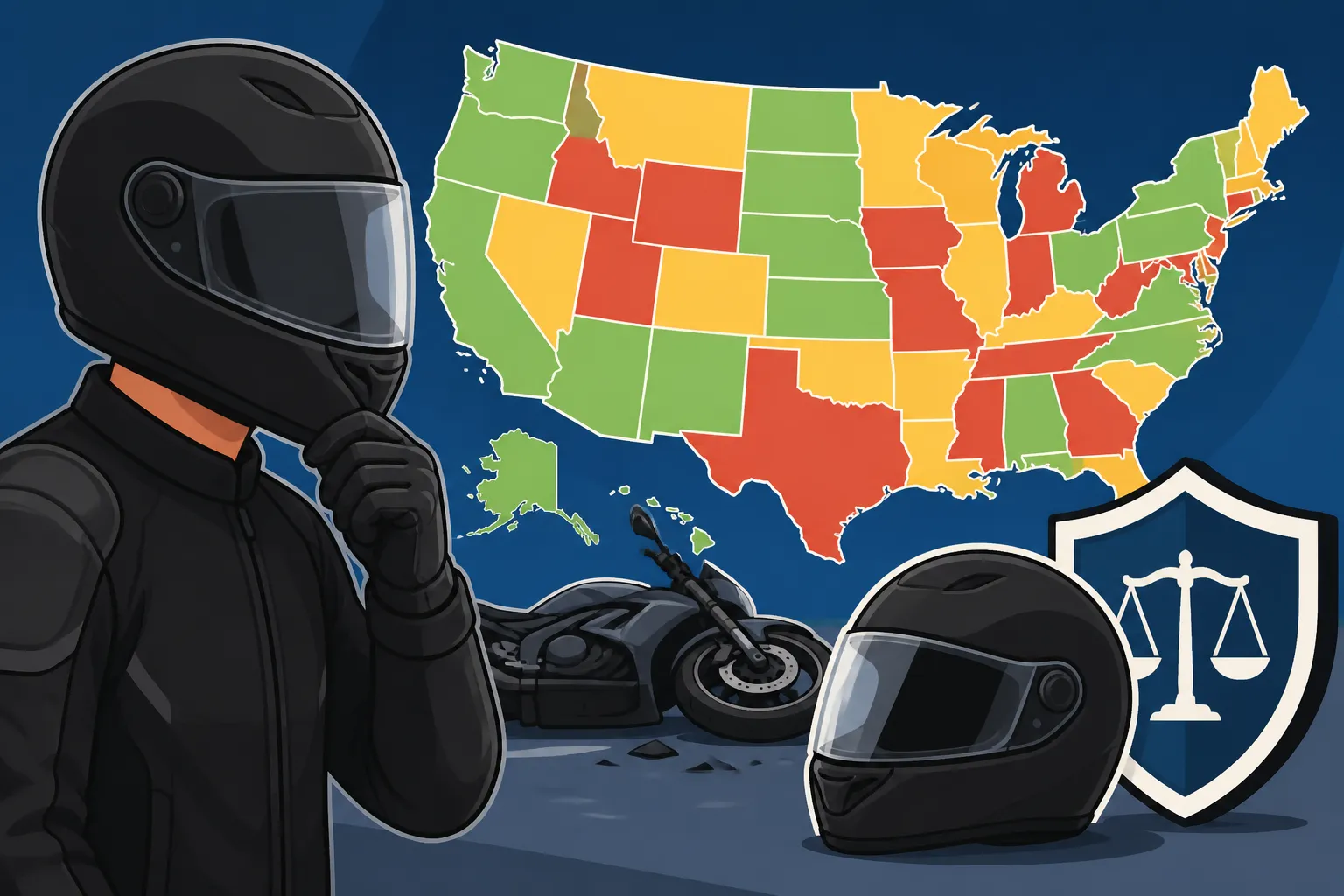
Here's a simplified overview of current helmet law categories in the U.S. Keep in mind that specific age cutoffs and insurance requirements can vary greatly within "partial" states, so always verify the exact statute for your location or travel plans.
| Helmet Law Category | Description | Example States | Key Legal Implication in a Claim |
|---|---|---|---|
| Universal | All riders (driver and passenger), regardless of age or experience, must wear a DOT-compliant helmet. | California, New York, Georgia, Maryland, Oregon, Washington | Non-compliance is a clear violation, highly detrimental to head injury claims. |
| Partial | Helmet required for riders under a certain age (e.g., 18 or 21), or for riders without specific insurance coverage, or who haven't completed a safety course. | Texas, Florida, Arizona, Michigan, Pennsylvania, Ohio, Colorado | Non-compliance if required is detrimental. Compliance when not required means no "helmet defense" can be used against you. |
| No Law (for Adults) | No statewide helmet law for adult riders (usually 18+). Helmets still recommended for safety. | Iowa, Illinois, New Hampshire (minor exceptions apply) | Legally permissible not to wear one, but still a strong argument for "avoidable consequences" if head injuries occur. |
DOT-Compliant Helmets and Their Importance
It's not enough to simply wear a helmet; it has to be the right kind of helmet. For legal compliance and, more importantly, for your safety, your helmet must meet the standards set by the U.S. Department of Transportation (DOT). This isn't just bureaucracy; it's about ensuring your helmet can actually perform its job when it matters most.
What Makes a Helmet DOT-Compliant
A DOT-compliant helmet means the helmet has met the safety standards outlined in Federal Motor Vehicle Safety Standard (FMVSS) 218. These standards dictate everything from impact attenuation (how well it absorbs shock) to penetration resistance and retention system strength (how well the strap stays put). When a helmet passes these rigorous tests, it's allowed to carry a "DOT" certification sticker on the back. This sticker is your assurance that the helmet offers a minimum level of protection.
Key features of a DOT-compliant helmet typically include:
- Sturdy Outer Shell: Made from materials like fiberglass, carbon fiber, or polycarbonate, designed to resist abrasion and distribute impact forces.
- Impact-Absorbing Liner: Usually made of expanded polystyrene (EPS) foam, this is the crucial layer that crushes on impact to absorb energy and protect your brain.
- Comfort Padding: Interior padding for comfort and a snug fit.
- Strong Chin Strap and Retention System: Designed to keep the helmet securely on your head during a crash.
- Minimum Thickness: Generally, a DOT helmet will feel substantial, with at least one inch of crushable foam.
When you're shopping for a helmet, whether in-store or online at places like Cycle Gear, always look for this DOT sticker. It's not just a decal; it's proof that the manufacturer certifies the helmet meets federal safety standards. Choosing a helmet that meets these standards is a critical step in both protecting your head and strengthening your position in an accident claim.
The Dangers of Novelty Helmets
On the opposite end of the spectrum from DOT-compliant helmets are "novelty" helmets. These are typically thin, lightweight helmets often designed more for style or aesthetic appeal than for actual protection. They often resemble old-school helmets but lack the crucial internal padding and construction necessary to meet federal safety standards. They might be comfortable and stylish, but they offer virtually no real protection in a crash.
The dangers of novelty helmets are twofold:
- Zero Protection: In the event of an impact, these helmets offer negligible protection against head trauma. Their thin shells and lack of proper EPS foam mean that the force of a collision is transmitted directly to your skull, leading to severe or fatal head injuries.
- Legal Vulnerability: Even if your state has a partial helmet law and you choose to wear a novelty helmet, it's highly likely that this will be considered non-compliant by law enforcement and, more critically, by insurance companies and the courts. If you sustain a head injury while wearing a novelty helmet, the opposing side will argue you were effectively riding without a helmet from a safety standpoint, severely undermining your injury claim. They can argue that you failed to meet the spirit, if not the letter, of the law, and certainly failed to mitigate your damages. This is a topic often explored when discussing Novelty Helmets and Legal Risk.
It's a costly mistake to prioritize aesthetics over safety and legal compliance. Always choose a helmet that bears the DOT certification.
How to Spot a Fake DOT Sticker
Unfortunately, the market isn't always honest. Some manufacturers of non-compliant novelty helmets will attempt to mislead consumers by applying fake or counterfeit DOT stickers. It’s important to know how to identify these fakes to ensure you're getting genuine protection.
Here are a few tips for spotting a fake DOT sticker:
- Weight and Bulk: A real DOT-compliant helmet will feel substantial and have a thick inner liner, usually at least an inch thick. If it feels extremely light and thin, it’s likely not DOT compliant, regardless of the sticker.
- No Rivets: Many fake helmets have decorative rivets on the outer shell, which are often used to attach chin straps or visors. Genuine DOT helmets typically have smooth shells, as any rivets could compromise the structural integrity during an impact.
- Graphics and Finish: While not a definitive indicator, many novelty helmets have very elaborate or low-quality graphics. DOT-compliant helmets often have a more subdued finish, focusing on safety over flashy designs.
- The Sticker Itself: Examine the DOT sticker carefully. It should clearly state "DOT FMVSS No. 218" and include the manufacturer's name or brand, and the model name or number. Sometimes, fake stickers might have blurry text, incorrect font, or an odd placement. Some legitimate manufacturers also include an "SNELL" or "ECE" certification, which are even more stringent safety standards, alongside the DOT sticker. This indicates an even higher level of protection.
When in doubt, purchase your helmet from a reputable dealer like Cycle Gear or directly from well-known brands such as Shoei, Arai, Bell, or HJC. They are committed to selling certified safety gear.
Beyond Helmets: Other Mandatory Motorcycle Gear and Equipment
While helmets often get the most attention when discussing motorcycle laws and accident claims, they are just one piece of the larger safety puzzle. Many states also have laws regarding other essential riding gear and motorcycle equipment. Compliance with these additional requirements further protects you on the road and can strengthen your legal position if you're ever involved in an accident.
Eye Protection Requirements
Almost every state mandates some form of eye protection for motorcyclists, even those with no universal helmet law. This is for obvious safety reasons: protecting your eyes from wind, dust, insects, road debris, and precipitation is crucial for maintaining clear vision and control of your bike.
Common forms of legally acceptable eye protection include:
- Face Shields: Integrated into full-face or modular helmets, providing comprehensive protection.
- Goggles: Designed specifically for motorcycle use, these offer a tight seal against the elements.
- Eyeglasses/Sunglasses: While better than nothing, ordinary eyeglasses or sunglasses may not provide sufficient protection against high-speed impacts or wind buffeting, and some states specify that they aren't enough on their own.
Check your state's specific requirements. For instance, in many states, if your helmet doesn't have a face shield, you'll need to wear goggles or a protective face shield that is attached to your helmet. Failure to wear appropriate eye protection can result in a ticket, but more importantly, it can lead to vision impairment during a critical moment, potentially contributing to an accident or worsening its outcome. If an accident does occur and you sustain an eye injury that could have been prevented by proper eye protection, the opposing side could argue that you failed to mitigate your injuries. You can find a wide range of DOT-compliant helmets with integrated face shields, and separate riding goggles at stores like Cycle Gear.
Headlights, Mirrors, and Other Equipment Laws
Beyond personal safety gear, motorcycles are subject to numerous equipment laws designed to ensure visibility and safe operation. These laws vary by state but typically cover:
- Headlights: Most states require at least one headlight, which must be on at all times, even during daylight hours. This "daytime running light" requirement significantly increases a motorcycle's visibility to other drivers, addressing the common "I didn't see the motorcycle" defense.
- Taillights and Brake Lights: Essential for signaling your presence and braking to traffic behind you.
- Turn Signals: Required in most states to indicate your intentions to change lanes or turn.
- Mirrors: Typically, at least one rearview mirror (often two) is required for riders to see traffic behind them. Some states specify the minimum surface area for mirrors.
- Mufflers/Exhaust Systems: Many states have regulations on motorcycle exhaust noise levels. While not directly related to accident causation, non-compliant exhaust systems can lead to tickets and might be used by an opposing party to paint you as a "reckless" rider.
- Handlebar Height: Some states impose limits on how high handlebars can extend, usually relative to the rider's shoulders or the seat height, to ensure proper control.
Ensuring your motorcycle is fully compliant with these equipment laws is not only a matter of legal obligation but also a crucial aspect of proactive safety. A non-functional headlight or a missing mirror can directly contribute to an accident or make it harder to avoid one. Furthermore, if you're involved in a collision and your bike was found to be non-compliant with equipment laws, it could open another avenue for the opposing side to argue for your partial fault, impacting your ability to recover full damages for injuries or Motorcycle Accident Liability: A Complete Guide.
How Proper Gear Reinforces Your Claim
Wearing a DOT-compliant helmet and all other legally required safety gear doesn't just protect your body; it also provides significant legal advantages in the aftermath of an accident. When you've done everything right, it becomes much harder for insurance companies or opposing attorneys to blame you or reduce your compensation.
Here's how proper gear reinforces your claim:
- Counters the "Helmet Defense": If you were wearing a legal helmet and appropriate eye protection, the defense cannot use your lack of these items to argue that your injuries were your fault or exacerbated by your negligence. This removes a major tactic from their playbook.
- Demonstrates Responsible Riding: Adhering to all safety gear requirements portrays you as a responsible and careful rider. This positive perception can subtly influence how adjusters, judges, or juries view your case, making them more likely to side with you.
- Evidence of Injury Severity: Damage to your high-quality riding gear – a cracked helmet, scuffed jacket, torn riding pants – can serve as compelling physical evidence of the severity of the impact. This helps corroborate your injury claims and counters any attempts to downplay the force of the collision.
- Maximizes Compensation: By mitigating potential arguments against you, proper gear helps ensure you can pursue maximum compensation for all your damages, including medical expenses, lost wages, pain and suffering, and property damage. Without these counter-arguments, the focus remains squarely on the other driver's fault.
In essence, every piece of quality riding gear you wear is an investment in both your physical well-being and the strength of any future accident claim.
Protecting Yourself and Your Rights After a Crash
Even if you're the most diligent rider, fully compliant with every helmet and gear law, accidents can still happen. What you do immediately after a crash, and in the days and weeks that follow, is critical to protecting your rights and ensuring a fair outcome for your injury claim.
Documenting Helmet Use
Proving you were wearing a DOT-compliant helmet and other required gear at the time of an accident is paramount, especially if there's a dispute over fault or injury severity. The moments immediately following a crash are chaotic, but capturing evidence is crucial.
Here's how to document your helmet use:
- Photographs at the Scene: If you are physically able, take clear photos of your helmet (and other gear) at the accident scene. Capture its position relative to your body or bike, and any visible damage it sustained. Get multiple angles.
- Photos of Damage: Document any cracks, scuffs, or abrasions on your helmet. This damage is not only proof of wear but also evidence of the impact's force, which can support your injury claims.
- Witness Statements: If there are witnesses, ask them to confirm that you were wearing your helmet. Get their contact information.
- Police Report: Ensure the police report accurately reflects that you were wearing a helmet. If it doesn't, or if it states otherwise inaccurately, you may need to learn How to Correct a Wrong Police Report.
- Preserve the Helmet: Do not discard your damaged helmet. It is crucial evidence. Keep it in a safe place. Your attorney may want to examine it or have an expert analyze its damage to demonstrate the force of impact and how it protected you. The same goes for other damaged gear.
- Medical Records: Ensure medical personnel note that you were wearing a helmet when they assess you at the scene or in the emergency room.
Thorough documentation can dismantle the "helmet defense" before it even gains traction, allowing your claim to focus on the other driver's negligence.
When Helmet Non-Use Cannot Be Used Against You
While the "helmet defense" is a powerful tool for insurance companies, it's not always an automatic win for them. There are specific circumstances where the defense might not apply or might be successfully challenged:
- No Causal Link: The defense must prove a direct causal link between your failure to wear a helmet and the severity of your head injuries. If your injuries are entirely unrelated to your head (e.g., a broken leg, road rash on your arm), then your helmet use (or lack thereof) is irrelevant to those specific damages.
- Lack of Evidence: If the defense cannot provide credible evidence that a helmet would have prevented or reduced your specific head injury, their argument weakens significantly. This might involve expert testimony on biomechanics or injury causation.
- Pre-Existing Conditions: If you have a pre-existing head injury or condition, the defense cannot solely attribute your current injury to not wearing a helmet without demonstrating an exacerbation. This can be complex, and The Eggshell Skull Rule Explained often comes into play.
- State Law Prohibitions: A few states have specific legal statutes that prevent evidence of helmet non-use from being admitted in civil personal injury lawsuits, even if it was illegal to ride without one. However, these states are rare, and this is typically an exception to the general rule.
It's important to remember that challenging the helmet defense requires a deep understanding of state laws and personal injury litigation. This is rarely something you can effectively do on your own.
The Role of an Attorney in Helmet Law Disputes
Navigating the complexities of motorcycle helmet laws and their impact on your accident claim is incredibly challenging, especially when you're recovering from injuries. This is where an experienced motorcycle accident attorney becomes an invaluable asset. They understand the nuances of state-specific helmet laws, the tactics insurance companies employ, and how to effectively counter the "helmet defense."
An attorney can:
- Interpret State Laws: Provide clarity on the exact helmet laws applicable to your situation and whether you were in compliance. They can explain how Motorcycle Accident Fault Laws in Florida or any other state might apply.
- Gather Evidence: Help you meticulously collect and preserve evidence of helmet use, including photos, witness statements, and medical records.
- Counter Defense Arguments: Skillfully argue against claims that your helmet non-use contributed to your injuries, potentially utilizing expert witnesses to demonstrate the true cause and extent of your damages.
- Negotiate with Insurers: Deal directly with insurance adjusters, who are often biased against motorcyclists, and ensure your rights are protected throughout the negotiation process. They know how to handle How Insurers Use Rider Stereotypes Against You.
- Represent You in Court: If a fair settlement cannot be reached, they are prepared to take your case to trial, presenting a compelling argument on your behalf.
- Maximize Your Settlement: By effectively fighting off defense tactics and proving the full extent of your damages, an attorney can significantly increase the compensation you receive for your injuries, medical bills, lost wages, pain and suffering, and property damage.
Trying to handle these disputes alone puts you at a severe disadvantage against well-funded insurance companies. An attorney levels the playing field, ensuring that your choice of helmet (or lack thereof) doesn't unfairly derail your pursuit of justice. It's often one of the best investments you can make after a crash to protect your future. For more on this, consider when you Do You Need a Motorcycle Accident Lawyer.
Disclaimer
The information provided in this guide is for general informational purposes only and does not constitute legal advice. Motorcycle laws are complex and vary by jurisdiction. You should consult with a qualified legal professional for advice regarding your specific situation.