How to Prove You Wore a Helmet
It's incredibly frustrating when you've done everything right – you put on your helmet, hit the road, and then an accident happens, only for the insurance company to try and use the "helmet defense" against you. They'll imply or outright claim you weren't wearing it, or that it wasn't properly secured, all to minimize their payout. This guide is here to walk you through exactly how to prove you were wearing your helmet after a motorcycle accident, giving you the tools to fight back against these unfair tactics.
The Frustrating Reality of the Helmet Defense
As riders, we already face an uphill battle. There's a persistent, unfair stereotype that we're reckless and always at fault, and insurance companies know how to exploit that. The "helmet defense" is a prime example of them trying to chip away at your legitimate claim, even when you've followed the rules and protected yourself. It’s infuriating, but understanding their playbook is the first step in dismantling it.
Why Insurers Question Helmet Use
Let's be blunt: insurance companies are in the business of making money, and paying out less on claims helps their bottom line. When a motorcycle accident claim comes across their desk, especially one involving head injuries, their first instinct might be to look for any loophole to reduce their liability. The "helmet defense" is one of their most powerful tools. They argue that if you weren't wearing a helmet, or if it wasn't DOT-compliant, your injuries—particularly head injuries—are either entirely your fault or significantly worsened by your own negligence. This argument can severely impact your ability to recover damages, even if the other driver was clearly responsible for the collision. It's a tactic to shift blame and save themselves money, regardless of the truth.
They often rely on the public perception of motorcyclists, trying to paint a picture of irresponsibility. This inherent bias can be incredibly difficult to overcome without solid evidence. The insurer might even send out an adjuster to the scene who is specifically looking for an unhelmeted rider or a helmet that looks like it flew off easily. It’s not just about whether you wore one, but proving that it was properly used and contributed to reducing your injuries, not causing them.
The Impact on Your Motorcycle Accident Claim
The implications of the helmet defense, if successful, can be devastating to your motorcycle accident claim. If the insurance company can convince a court or an adjuster that your head injuries would have been less severe or even avoided entirely had you worn a helmet, or a proper one, your compensation can be significantly reduced. This often falls under the legal principle of Comparative Negligence in Motorcycle Accidents, where your own actions contribute to your damages.
For example, imagine you suffer a traumatic brain injury. If the defense successfully argues you weren't wearing a helmet, they might claim that 50% of your medical costs and pain and suffering related to the TBI are your responsibility. This could halve your payout for those specific damages. Some states might even have stricter laws. So, while the other driver might be 100% at fault for causing the crash, the "helmet defense" allows them to reduce the amount they owe you for certain injuries. This can lead to a drastically How Not Wearing a Helmet Affects Your Settlement and leave you shouldering substantial medical bills and lost income that rightfully belong to the at-fault party.
Immediate Steps to Document Helmet Use After a Crash
The moments immediately following an accident are chaotic, but they are also crucial for gathering evidence. What you do or don't do in those first minutes and hours can significantly impact your ability to prove helmet use later on. It’s like setting the foundation for your entire case.
At the Accident Scene: First-Hand Evidence
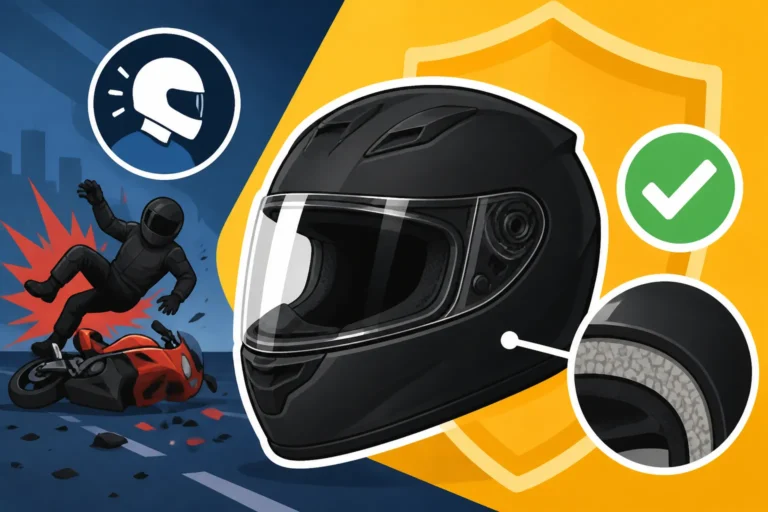
Right after the dust settles, assuming you are physically able, your priority should be documenting everything. This means taking photos and notes, and securing your helmet. Don't let anyone move your helmet unless absolutely necessary for your safety or to clear the road. If it's lying on the ground near you, snap photos of its location relative to your bike and your body. Get close-ups of any damage it sustained, clearly showing scuffs, cracks, or impact points. This visible damage is undeniable proof that the helmet was involved in the impact and, by extension, that you were wearing it. If possible, take a quick selfie or ask someone to photograph you with the helmet on or immediately after removal, if that's how emergency personnel found you.
Remember, the police report is a critical piece of evidence. When officers arrive, clearly state that you were wearing a helmet. Show them the helmet and its damage. Make sure this information is recorded in the official How Police Reports Establish Fault. Even a brief mention like "rider was wearing a helmet" can be incredibly helpful down the line. If paramedics are on the scene, tell them too. Consistency in your statements right from the start establishes a strong narrative. Don't hesitate to point out debris from your helmet, or even where your helmet landed if it came off. These details are vital for later accident reconstruction.
Reporting to Authorities and Medical Personnel
When the police and emergency medical technicians (EMTs) arrive, take a moment to clearly and calmly state that you were wearing your helmet at the time of the crash. This seemingly small detail can be incredibly important. Police officers, while focused on assessing the overall scene, will often note details about protective gear in their reports. If they see a damaged helmet near you, they should record it. If they don't ask, make sure to tell them. Showing them the helmet and pointing out any damage can reinforce your statement. This detail can be vital when it comes to Motorcycle Accident Evidence for Proving Fault.
Similarly, when EMTs or hospital staff attend to you, mention your helmet. They will document your injuries, and if your head injuries are minimal compared to other parts of your body, or if there are specific marks consistent with helmet impact, they might note that you were wearing protective headgear. These medical records, with their objective observations, can serve as powerful evidence that supports your claim of helmet use. For instance, a doctor might note "abrasions consistent with helmet friction" or "lack of significant scalp lacerations despite high impact," indirectly corroborating your statement. Your consistent declaration across multiple official channels helps to establish an undeniable record that you were indeed wearing your helmet.
Gathering Strong Evidence Post-Accident
After the immediate chaos subsides, the work of building your case truly begins. This phase is all about collecting and organizing concrete proof that corroborates your account. Don't underestimate the power of thorough documentation.
Visual Proof: Photos and Videos
In today's world, visual evidence is king. You should have photos not just of the accident scene, but specifically focusing on your helmet. Get clear, high-resolution pictures of the helmet itself, showing all angles, especially any areas of impact, cracks, scuffs, or distortions. These images can vividly illustrate that the helmet took the brunt of a blow, protecting your head. If the helmet came off, photos of where it landed relative to your motorcycle and body are also critical. Take pictures of the interior too, showing the padding and retention system, to demonstrate it was a legitimate, functional helmet.
Beyond the immediate crash scene, think about what else might exist. Do you have photos or videos of yourself riding before the accident where you're clearly wearing that specific helmet? Social media posts, dashcam footage, or even security camera footage from a nearby business could capture you on your bike, helmet securely on your head. Many riders use cameras for safety; if you or another rider had a camera, that footage is gold. Dashcam footage is particularly useful for showing how the accident occurred and can indirectly prove you were wearing your helmet if it's visible in the frames leading up to the impact. The more visual proof you can compile, the harder it will be for an insurance company to dispute your claim.
Witness Testimonies and Affidavits
The human element of proof, through witness statements, can be incredibly persuasive. Think about anyone who might have seen you before or during the accident. This could include other riders you were with, friends or family who saw you leave, or even bystanders at the accident scene. How Witnesses Affect Motorcycle Fault can’t be overstated. Their independent recollections can confirm that you were wearing your helmet and that it appeared to be properly secured.
It’s crucial to gather their contact information at the scene or soon after. Ask them to write down what they saw, specifically noting your helmet use. A sworn affidavit from a credible witness, detailing that they observed you wearing your helmet, can hold significant weight. For example, a fellow rider might state, "I saw John put on his full-face Scorpion helmet right before we pulled out of the coffee shop, and he was still wearing it just before the crash." Even a passerby who saw the aftermath and noted your helmet nearby can be helpful. These third-party accounts provide objective support for your claim and make it much harder for the insurance company to dismiss your assertion as merely self-serving.
Helmet Documentation and Purchase Records
Having official records related to your helmet can provide irrefutable proof. This includes your original purchase receipt, credit card statements showing the purchase, or even online order history from a retailer like Cycle Gear. These documents verify that you owned a helmet, when you bought it, and often, what type it was (e.g., a specific brand and model, ideally a DOT-compliant one). If you no longer have the physical receipt, check your email for confirmation messages or your bank/credit card statements. Most major retailers keep detailed online purchase histories, so checking your account with a place like Cycle Gear, RevZilla, or J&P Cycles could yield the necessary digital receipts.
Furthermore, if your helmet was replaced after the accident, keep the receipt for the new helmet and any records pertaining to the disposal of the damaged one. The fact that you replaced a damaged helmet after the incident reinforces the idea that you were indeed wearing one. This documentation proves not only that you owned a helmet, but that it was a recent purchase, suggesting it was likely in use and readily available for your ride. These details transform your word into verifiable facts, solidifying your argument against any "helmet defense."
Leveraging Expert Opinions and Accident Reconstruction
When the facts surrounding helmet use are disputed, bringing in experts can make all the difference. These professionals have the knowledge and tools to analyze the physical evidence and provide objective conclusions that a layperson simply cannot. Their testimony can be a game-changer in a complex case.
Accident Reconstruction Specialists
An accident reconstruction specialist is like a detective for car and motorcycle crashes. They use scientific principles, physics, and detailed analysis of the accident scene to piece together exactly what happened. This includes examining skid marks, vehicle damage, and, crucially for your case, the position and condition of your helmet and its relationship to your head injuries. If your helmet shows impact damage consistent with the crash, an expert can often determine that it was indeed on your head at the moment of impact.
They can analyze the forces involved, the trajectory of your body, and the specific marks on your helmet to conclude that it functioned as intended, absorbing energy and protecting your skull. For example, if your helmet has a deep gouge on the top, but your scalp is miraculously intact beneath it, an expert can testify that the helmet prevented a severe head injury. This kind of specialized analysis can decisively prove How Accident Reconstruction Determines Fault, and by extension, that your helmet was in use. It moves the discussion from speculative arguments by the insurance company to undeniable scientific fact.
Medical Records and Injury Patterns
Your medical records are powerful allies in proving helmet use. Doctors and medical professionals document everything from initial observations at the scene or emergency room to detailed notes throughout your treatment. If you were wearing a helmet, this might be noted in various ways. For example, paramedics might record "patient wearing helmet upon arrival" or "helmet removed by EMTs." Doctors examining you for head injuries will look for specific patterns of trauma. If you have facial abrasions or jaw injuries, but a relatively uninjured skull, it's strong circumstantial evidence that a helmet protected the top and back of your head.
Furthermore, medical experts can testify about the absence of certain severe head injuries that would almost certainly have occurred had you not been wearing a helmet in an accident of that magnitude. They might explain how the type of injury you sustained is consistent with helmet use, perhaps noting helmet-related abrasions or compression marks on your scalp or face, even if minor. This medical testimony can validate that your helmet absorbed significant impact, preventing far more catastrophic injuries, and thus, that it was clearly in place and functioning during the crash.
Legal Strategies to Counter the Helmet Defense
Even with strong evidence, insurance companies can be tenacious. That's why having a solid legal strategy is paramount. Knowing the laws in your state and having experienced representation can protect your rights and ensure your evidence is presented effectively.
Understanding State-Specific Helmet Laws
It’s absolutely vital to understand the Motorcycle Helmet Laws by State where your accident occurred. Some states have universal helmet laws, requiring all riders to wear a helmet, while others have partial laws, typically requiring helmets for riders under a certain age (e.g., 21). A handful of states have no helmet laws at all for adult riders. This distinction matters greatly because it dictates whether not wearing a helmet was even illegal in the first place, and how strictly the "helmet defense" can be applied.
For instance, in California, which has a universal helmet law, not wearing a helmet is a violation. If you sustain a head injury without one, the insurance company will aggressively use this fact. However, even in a state with a universal law, the defense still has to prove that your failure to wear a helmet caused or worsened your specific head injuries. It's not an automatic bar to recovery for all damages. In states with partial or no helmet laws for adults, the defense has a much tougher time arguing negligence, as you weren't breaking any law. Understanding these nuances is key to countering the "helmet defense," which we've explored in depth in The Helmet Defense Explained.
The Role of an Experienced Motorcycle Accident Attorney
Let's be real: trying to navigate the aftermath of a serious motorcycle accident and fight an insurance company's tactics on your own is an overwhelming burden, especially when you're recovering from injuries. This is precisely why asking, "Do You Need a Motorcycle Accident Lawyer" usually leads to a resounding "yes." An experienced motorcycle accident attorney understands the unique challenges riders face, including the inherent Rider Bias in Fault Determination that often leads insurers to blame riders.
Your lawyer will be adept at gathering all the necessary evidence, from police reports and medical records to witness statements and even accident reconstruction expert testimony, to prove you were wearing your helmet. They know how to challenge the insurance company's assumptions and fight against their attempts to reduce your settlement. They'll also understand the specific helmet laws in your state and how to apply them to your case. More than just collecting documents, they negotiate fiercely on your behalf, often leading to a significantly better outcome than you could achieve alone. They are your shield against these unfair tactics, ensuring your voice is heard and your rights are protected.
What to Do if You Truly Weren't Wearing a Helmet
While this guide focuses on proving helmet use, it's important to address the reality that sometimes, for various reasons, a rider might not have been wearing a helmet. It's a tough situation, and it doesn't mean you automatically lose your entire claim, but it does make things significantly more challenging. Honesty, even when it’s uncomfortable, is always the best policy.
Understanding the Legal Ramifications
If you weren't wearing a helmet in a state with a universal helmet law, you were technically in violation of the law. This fact will be a major point of contention for the opposing insurance company. They will almost certainly use it as a primary argument to reduce or deny compensation for any head injuries you sustained. They will claim that had you been wearing a helmet, your head injuries would have been less severe or prevented altogether. This is the core of the helmet defense, and it's particularly potent when a law was violated.
Even in states with partial helmet laws where you might have been legally allowed not to wear one (for example, if you're over 21), an insurance company can still argue that your choice not to wear a helmet contributed to the severity of your head injuries. This is a common tactic to invoke principles of Contributory vs Comparative Negligence Explained, trying to reduce their financial responsibility. It's a difficult position to be in, and the legal ramifications can significantly complicate your personal injury claim.
Still Seeking Compensation for Other Injuries
Even if you weren't wearing a helmet, and even if it impacts your ability to recover for head injuries, it does not automatically bar you from recovering compensation for all of your injuries. Remember, the other driver's negligence may still be the primary cause of the accident itself, and thus, your other injuries. For instance, if you suffered road rash, broken bones, or internal injuries, these damages are largely independent of whether you wore a helmet.
The legal principle of comparative negligence still applies here: you can still seek compensation for damages that were directly caused by the other driver's fault, regardless of your helmet use. The focus shifts to proving that the other driver was negligent and that their actions directly led to your non-head-related injuries and property damage. An attorney can help you separate these damages, ensuring you fight for every bit of compensation you're entitled to. Don't let the helmet issue intimidate you into abandoning your entire claim; you might still have a strong case for many of your losses.
| Type of Evidence | Description | Strength in Proving Helmet Use |
|---|---|---|
| Photos/Videos | Immediate pictures of damaged helmet at scene, helmet on your head (if possible), or pre-accident photos/dashcam footage of you riding with it. | High: Direct visual proof of helmet's presence and involvement in impact. |
| Witness Testimony | Statements from bystanders, fellow riders, friends, or family who saw you wearing the helmet before or after the crash. | Moderate-High: Independent verification adds credibility. |
| Police Report | Officer's notation in the official accident report stating helmet was worn or found on scene. | High: Official documentation from an objective authority. |
| Medical Records | Doctor's or EMT's notes about helmet use, helmet-related abrasions, or the absence of certain head injuries consistent with helmet protection. | High: Professional observations supporting helmet's presence and protective function. |
| Purchase Records | Receipts, credit card statements, or online order history (e.g., from Cycle Gear) proving recent helmet purchase. | Moderate: Proves ownership, implies use, especially if helmet matches damaged one. |
| Accident Reconstruction | Expert analysis of impact marks, helmet damage, and trajectory to confirm helmet was worn during impact. | Very High: Scientific, objective proof from a specialized expert. |
Disclaimer
Please remember that this article provides general information and should not be considered legal advice. Motorcycle accident laws vary significantly by state, and the specifics of your case are unique. For personalized legal guidance regarding your motorcycle accident claim, it is essential to consult with a qualified personal injury attorney in your jurisdiction.