Helmet Laws and Out-of-State Riders
Hitting the open road on your motorcycle is one of life's great freedoms, but that freedom comes with responsibilities, especially when you cross state lines. One of the most perplexing issues riders face is understanding how helmet laws change from one state to another, and how those differences impact you as an out-of-state rider, particularly if you're involved in an accident. This comprehensive guide will demystify the complexities of helmet laws for riders traveling across state borders, ensuring you're informed and prepared for any situation.
Understanding the Landscape of Motorcycle Helmet Laws
Navigating the diverse legal landscape of motorcycle helmet laws in the United States can feel like a minefield. What's perfectly legal in your home state might land you a ticket, or worse, compromise your accident claim in another. It's not just about wearing a helmet; it's about wearing the right helmet in the right place according to local statutes. The core issue for out-of-state riders often boils down to a fundamental question: does my home state's law follow me, or do I have to abide by the laws of the state I'm visiting? The short answer is almost always the latter. When you ride into a new state, you are generally expected to adhere to that state's traffic and safety regulations, including their specific helmet requirements.
Universal vs. Partial Helmet Laws
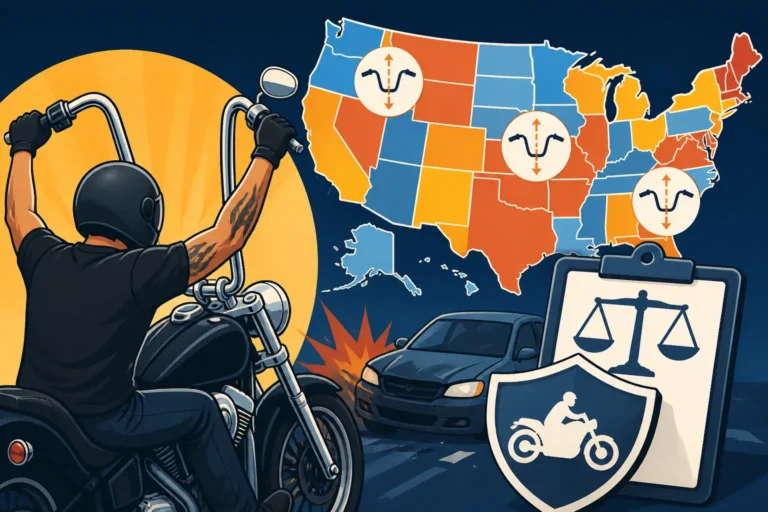
The first step in understanding the patchwork of regulations is recognizing the two main categories of helmet laws: universal and partial. A "universal" helmet law, sometimes referred to as a mandatory helmet law, means that all motorcycle riders and passengers, regardless of age or experience, are legally required to wear a helmet at all times when operating or riding on a motorcycle. These states leave no room for ambiguity; if you're on a bike, you need a lid. States like California, New York, and Oregon fall into this category, aiming for maximum safety and injury prevention across the board. The goal is to reduce head injuries, which are statistically among the most severe and costly in motorcycle accidents.
On the other hand, "partial" helmet laws are far more common and introduce more nuances. These laws typically mandate helmet use only for specific groups of riders. The most frequent restriction is age-based, requiring riders under a certain age (often 18 or 21) to wear a helmet. Some states, like Texas and Florida, also include additional criteria, such as requiring all riders to wear a helmet unless they have specific health insurance coverage or have completed a certified safety course. These partial laws reflect a balance between personal freedom and public safety, but they can be a real headache for out-of-state riders who might not fit neatly into these categories or are unaware of the specific stipulations. You can delve deeper into the specifics of Universal vs Partial Helmet Laws Explained to get a clearer picture of how these different approaches are implemented across the country.
The Role of Insurance and Reciprocity
Beyond the basic requirement of wearing a helmet, insurance plays a significant, though often misunderstood, role, especially for out-of-state riders. In states with partial helmet laws, your home state insurance policy might not necessarily satisfy the requirements of the host state. For example, if you're from a state with no helmet law and travel to Florida, where riders 21 and older can ride without a helmet if they carry at least $10,000 in medical insurance benefits, your basic liability policy might not cover that specific medical benefit requirement. This could put you in a precarious legal position, potentially leading to fines or complications if you're involved in an accident without meeting the host state's insurance mandate.
Reciprocity, or the idea that states recognize each other's laws, generally applies to things like driver's licenses or vehicle registrations. However, it's rarely a blanket acceptance for safety equipment laws. When it comes to helmet requirements, states typically prioritize their own public safety concerns over accommodating every visitor's home state laws. This means that while your motorcycle endorsement from Arizona is valid in Georgia, you must still comply with Georgia's requirement for all riders and passengers to wear a helmet. This lack of reciprocity for safety gear is precisely why understanding Motorcycle Helmet Laws by State before your trip is not just good practice, but a critical safeguard for your ride and your wallet.
The "Home State Rule" and Its Limitations for Riders
It's a common misconception among travelers that if something is legal in their home state, it's legal everywhere they go. For motorcyclists, this "home state rule" can be a dangerous assumption, especially regarding helmet laws. While your driver's license, vehicle registration, and often your insurance policy generally carry over, the specific traffic laws and safety equipment mandates of the state you are physically riding in almost always take precedence. The limitations of the home state rule are particularly stark for helmet laws because they are fundamentally about immediate public safety and reducing the severity of injuries on local roads.
When Your Home State Law Might Apply
While generally not applicable to the act of wearing a helmet, your home state's laws and policies can indirectly influence your situation, particularly regarding insurance coverage after an incident. For instance, if you have a robust motorcycle insurance policy in your home state, it might offer better medical benefits or uninsured/underinsured motorist coverage that could be crucial if you're injured in another state, regardless of that state's specific helmet laws. However, this is about financial protection, not about legal compliance on the road.
There are also very rare and specific legal contexts where a court might consider your home state's laws, primarily when it comes to the interpretation of insurance contracts or multi-state legal disputes, but this is far outside the scope of day-to-day riding decisions. In the immediate aftermath of an accident, local law enforcement and first responders will assess your compliance with the laws of the state where the incident occurred. Your home state's legal framework offers little to no defense against a citation for non-compliance with the host state's helmet law.
When the Host State Law Takes Precedence
For helmet laws, the rule is clear: when you cross a state line, you are subject to the traffic and safety laws of the state you are entering. This is not just a suggestion; it's a legal expectation. Imagine riding from Iowa, where there is no universal helmet law for adults, into neighboring Illinois, which has a universal helmet law for all riders. If you, an adult from Iowa, are riding helmet-free and stopped by Illinois State Police, you will likely receive a citation for violating Illinois's helmet law. It doesn't matter that it's legal in Iowa; you're on Illinois asphalt.
This adherence to host state law is critical for safety and liability. Law enforcement agencies, from the California Highway Patrol to the Florida Highway Safety and Motor Vehicles, are responsible for enforcing their state's laws. They aren't going to pull out a map and check your driver's license state to see if you're exempt. The presumption is that anyone operating a vehicle on their roads is aware of and complies with their regulations. This principle underlines why careful planning and research are essential for any out-of-state motorcycle trip.
Exceptions and Interpretations
While the host state rule is generally absolute for helmet laws, there aren't many "exceptions" in the sense of riders being exempted from wearing a helmet. Instead, interpretations often revolve around the type of helmet required or specific conditions for exemption within a partial law state. For example, some states with partial laws might exempt riders in enclosed sidecars or those on specific types of three-wheeled vehicles. These are specific statutory details within a state's law, not an exception granted to an out-of-state rider based on their home state.
Another area of "interpretation" can arise regarding what constitutes a legally compliant helmet. Most states require helmets to be federally approved, meaning they must meet Department of Transportation (DOT) standards. This is where things like novelty helmets can become problematic. If your helmet doesn't bear the DOT certification sticker, even if you're in a state that requires helmets, your helmet might be deemed non-compliant, leading to a citation. Reputable retailers, such as Cycle Gear, specifically market and sell DOT-approved helmets, making it easier for riders to ensure compliance wherever they ride. This strict adherence to DOT standards is a widespread expectation, and out-of-state riders often assume their helmet is fine without checking if it meets local legal definitions.
Navigating Different Helmet Law Classifications
The variance in helmet laws across the U.S. can be overwhelming. As an out-of-state rider, it's not enough to know there are different laws; you need to understand the practical implications of each type. This knowledge isn't just for avoiding tickets; it's crucial for your safety and protecting any potential claim after an accident. Each state has its own unique legislative history and public policy decisions that shape its helmet laws, creating a mosaic of regulations that demand attention from transient riders.
States with Universal Helmet Laws
In states with universal helmet laws, the expectation is straightforward: everyone on a motorcycle, passenger included, must wear a helmet. This applies to tourists, visitors, and residents alike. There are no age-based exemptions or special conditions based on insurance coverage. If you're riding through a state like Washington, California, or New York, you simply put on your DOT-compliant helmet, and you're good to go. These laws are typically strictly enforced, and violations can result in fines and points on your driving record, even if you're from out of state.
The rationale behind these laws is simple: helmets save lives and reduce serious injuries. When a state adopts a universal law, it's often a direct response to data showing a high incidence of severe head trauma in motorcycle accidents. For an out-of-state rider, these states actually simplify compliance because the rule is absolute. There's no need to wonder if your age or insurance status matters. Just wear the helmet. However, failing to do so can have severe repercussions for your safety and your legal standing should an accident occur. These states generally experience lower rates of head injuries and fatalities among motorcyclists compared to states with less stringent laws.
States with Partial Helmet Laws
Partial helmet law states present the most complexity for out-of-state riders. Here, the rules are conditional.
Many states, like Florida and Texas, have age-based requirements, typically mandating helmets for riders under 21. If you're over 21, you might be able to ride without a helmet, but often with an additional caveat. In Florida, for example, riders 21 and older can legally ride without a helmet if they carry at least $10,000 in medical insurance benefits. Texas has a similar provision, requiring riders over 21 to have completed an approved motorcycle safety course or carry medical insurance.
This is where out-of-state riders often get tripped up. Your home state insurance might not explicitly state it covers you for $10,000 in medical benefits specifically for a motorcycle accident in another state. While your policy likely has medical payments coverage, verifying it meets another state's specific statutory minimum for helmet exemption is crucial. Furthermore, an approved motorcycle safety course from your home state should be recognized, but it's wise to carry proof. Failing to meet these specific conditions, even if you're over 21, means you are legally required to wear a helmet in those states. This nuanced approach in partial law states often leads to higher rates of non-compliance and, consequently, a greater risk of severe injury.
States with No Helmet Law
A handful of states, such as Iowa, New Hampshire, and Illinois (for riders over 18), essentially have no universal or partial helmet laws for adult riders. This means that, for adult residents and visitors, helmet use is a matter of personal choice. While these states offer the ultimate freedom for riders who prefer the wind in their hair, it's vital to consider the immense risks involved. The absence of a helmet law does not negate the devastating consequences of head injuries in a crash. Even if you're used to riding helmet-free in one of these states, it's critical to remember that if you cross into a state with even a partial helmet law, you must comply.
For instance, riding from New Hampshire into Massachusetts, where all riders must wear helmets, immediately changes your legal obligation. Many seasoned riders, even those from "no helmet law" states, choose to wear a DOT-approved helmet purely for safety reasons. It's a personal choice that could literally save your life. Stores like Cycle Gear consistently advocate for helmet use, regardless of local laws, due to the proven safety benefits. Even if the law doesn't require it, common sense and a commitment to personal safety often do. The lack of a law also means that if you are involved in an accident, your choice not to wear a helmet might be used against you by the at-fault party's insurance company, arguing you failed to mitigate your potential injuries.
Impact on Accident Claims for Out-of-State Riders
Beyond traffic tickets, the biggest concern for out-of-state riders involved in a crash while not complying with a host state's helmet law is the potential impact on their injury claim. Insurance companies and defense attorneys are constantly looking for ways to reduce payouts, and a rider's failure to adhere to safety laws is often a prime target. Even if the other driver was clearly at fault, your settlement could be significantly reduced if you weren't wearing a legally required helmet. This area is where the distinct legal frameworks of states regarding comparative negligence become particularly relevant.
The Helmet Defense and Comparative Negligence
The "helmet defense" is a legal strategy used by at-fault parties to argue that a motorcyclist's injuries, particularly head injuries, would have been less severe or entirely avoided had they been wearing a helmet. This defense can be particularly potent in states that apply some form of comparative negligence. In a comparative negligence state, if you are found partially at fault for your injuries (even if not for the accident itself), your compensation can be reduced by your percentage of fault. For example, if you're involved in a crash in a universal helmet law state like California, and it's determined the other driver was 100% at fault for the collision, but you weren't wearing a helmet, the defense might argue that you are 20% responsible for the severity of your head injuries. This means any compensation for those specific head injuries could be reduced by 20%.
This isn't just theoretical; it plays out in courtrooms regularly. Even in a state like Florida, which uses pure comparative negligence, where your recovery is simply reduced by your percentage of fault, failing to wear a helmet when required could drastically impact your net settlement. The principle here is that individuals have a duty to mitigate their damages, and wearing a legally required safety device like a helmet is seen as a basic step in that duty. Understanding How Helmet Laws Affect Your Accident Claim is crucial for protecting your legal rights and potential compensation after a crash.
Proving Compliance and Mitigating Damages
If you were wearing a helmet, proving compliance is vital. For out-of-state riders, this means not only wearing a helmet but ensuring it meets the host state's standards, which typically means it's DOT-compliant. After an accident, preserve your helmet, even if it's damaged. The condition of your helmet can be evidence of both compliance and the severity of the impact. Take photos of your helmet at the scene. If your helmet is destroyed, gather any receipts or documentation that proves you owned and regularly wore a DOT-compliant helmet.
In cases where an out-of-state rider wasn't wearing a required helmet, the challenge becomes mitigating the damage to their claim. This often involves demonstrating that the helmet wouldn't have prevented the specific injuries sustained, or that the other driver's negligence was so egregious that it overshadows the helmet non-compliance. This is an uphill battle and highlights the importance of legal counsel who understands motorcycle accident dynamics and the nuances of helmet defense. Insurance adjusters, regardless of where you're from, are trained to spot any perceived lapse in safety measures to reduce their company's liability. A comprehensive guide on The Helmet Defense Explained can offer more insights into how these arguments are structured.
Practical Steps for Out-of-State Riders
For any motorcyclist planning a road trip that crosses state lines, proactive preparation is your best defense against legal troubles and potential complications after a crash. Thinking ahead about helmet laws for out-of-state riders is not just about staying out of trouble; it's about making sure your journey is as safe and worry-free as possible. Don't let the excitement of the open road overshadow the necessity of due diligence.
Researching Laws Before You Ride
The golden rule for any out-of-state rider is simple: know before you go. Before you even fire up your engine, take a few minutes to research the motorcycle helmet laws of every state you plan to ride through. State Department of Motor Vehicles (DMV) websites or official state government transportation pages are excellent, reliable sources for this information. Look for specific requirements related to age, insurance, or any other conditions that might apply to adults. Don't rely solely on word-of-mouth or outdated online forums. Laws can change, so always seek the most current information.
A quick search for "motorcycle helmet laws [state name]" will usually get you accurate results. For example, if you're riding from Alabama (which has a universal helmet law) to Mississippi (which also has a universal helmet law), you know you're good. But if you're going from Arizona (partial law for under 18) to California (universal law), you need to be aware of that change. Creating a simple itinerary that lists the helmet law for each state can be incredibly helpful. This little bit of homework can prevent a significant headache, whether it's a traffic stop or a far more serious accident claim.
Ensuring Your Helmet is DOT Compliant
Regardless of whether a state has universal, partial, or no helmet law, if you do wear a helmet, it's critical that it is DOT-compliant. The Department of Transportation (DOT) sets minimum safety standards for helmets sold in the U.S. A DOT-compliant helmet is designed to protect your head in a crash, significantly reducing the risk of severe injury. You can identify a DOT-compliant helmet by looking for the "DOT" sticker on the back, usually near the rim. Be wary of novelty helmets that don't meet these standards, as they offer little to no real protection and are often illegal in states requiring helmets.
Even in states where helmets aren't legally mandated, wearing a DOT-compliant helmet is a wise personal safety choice. It's also a strong legal defense if an insurance company tries to argue your injuries were exacerbated by inadequate head protection. Many reputable motorcycle gear retailers, like Cycle Gear, exclusively sell helmets that meet or exceed DOT standards, ensuring that what you buy provides actual protection. Always verify the DOT sticker, as some fake stickers do exist. Look for a robust chin strap, a sturdy outer shell, and an inner liner designed for impact absorption – these are all hallmarks of a safe, compliant helmet.
Documentation and Best Practices
Carrying documentation is another crucial best practice for out-of-state riders. If you're riding in a partial helmet law state that offers an exemption based on age, insurance, or a safety course, carry proof of meeting those conditions. This could mean a copy of your insurance policy highlighting medical benefits, your motorcycle safety course completion certificate, or a state-issued ID proving your age. While law enforcement can often verify some of this, having it readily available can expedite a traffic stop and prevent misunderstandings.
Beyond legal documentation, always remember general accident best practices. If you're involved in a crash, seek medical attention immediately, even if you feel okay. Document the scene with photos, including your helmet if you were wearing one. Exchange information with other parties, and get contact details for any witnesses. And critically, never admit fault at the scene. These steps are universal and paramount for protecting your health and any potential injury claim, regardless of where the accident occurred or what helmet laws apply. For a comprehensive checklist, consider reviewing What to Do Immediately After a Motorcycle Accident.
Specific State Examples and Common Scenarios
Let's dive into some real-world examples to illustrate how these varying helmet laws impact out-of-state riders. Understanding specific state requirements and common scenarios can help you prepare mentally and practically for your next motorcycle adventure. The goal is to anticipate potential issues before they become actual problems, ensuring that your ride is remembered for its scenic beauty, not for legal entanglements.
Riding in Universal Law States
Imagine a rider from Iowa, where adult helmet use is optional, decides to take a scenic ride through Colorado. Colorado is a universal helmet law state, meaning all riders and passengers must wear a DOT-compliant helmet. The Iowa rider, accustomed to riding helmet-free, might cross the border without putting on their helmet. If stopped by the Colorado State Patrol, they will receive a citation for violating Colorado's helmet law. Their Iowa residency or the legality of riding without a helmet in Iowa offers no defense.
Now, consider a worse scenario: that same helmet-free Iowa rider is involved in a collision in Denver, caused by a distracted driver. Even if the distracted driver is 100% at fault for the accident, the insurance company for the at-fault driver will likely invoke the helmet defense. They'll argue that because the Iowa rider was not wearing a legally required helmet, their head injuries were either caused or significantly worsened by that non-compliance. In Colorado, which uses a modified comparative negligence rule (the "50% rule"), if a jury assigns any fault to the rider for their injuries due to not wearing a helmet, it could reduce their total compensation, even if the primary fault for the crash rests with the other driver. This is a critical point that emphasizes how How Comparative Negligence Reduces Your Payout can severely impact a claim, even when the rider isn't at fault for the collision itself.
Riding in Partial Law States
Consider a 25-year-old rider from Massachusetts, a universal helmet law state, who travels to Texas, a partial helmet law state. In Texas, riders 21 and older can ride without a helmet if they have completed an approved motorcycle safety course or carry at least $10,000 in medical insurance. The Massachusetts rider, always wearing a helmet out of habit and state law, decides to try riding helmet-free in Texas, assuming they're over 21, so it's fine. However, they might not have proof of a safety course or specifically $10,000 in medical coverage on their policy that satisfies the Texas statute.
If this rider is then involved in an accident in Texas while helmet-free, they could face the same helmet defense arguments. The defense would contend that despite being over 21, they failed to meet the specific conditions for exemption in Texas. Therefore, they were legally required to wear a helmet, and their failure to do so contributed to their head injuries. Even if their Massachusetts insurance policy would cover them for medical expenses, if it doesn't explicitly meet the Texas minimum for helmet exemption, they are essentially in violation. This highlights the precise nature of these laws and why general assumptions can be costly. This is distinct from, for example, Motorcycle Accident Fault Laws in Texas which deal with liability for the crash itself, not necessarily the specific safety gear compliance.
Handling Disputed Claims
Disputed claims for out-of-state riders often arise when helmet non-compliance is alleged. If you, as an out-of-state rider, were involved in an accident and cited for not wearing a helmet when required, the other driver's insurance company will almost certainly use this against you. They will argue your injuries are partly your fault. This makes proving your case much more challenging. You might need expert testimony from an accident reconstructionist or a medical professional to argue that the helmet would not have prevented or lessened your specific injuries.
Having legal representation with experience in motorcycle accidents and specific state laws is invaluable in these situations. An attorney can help navigate the complexities of comparative negligence, challenge the helmet defense, and work to maximize your settlement. They understand how insurance companies use rider stereotypes and legal loopholes to their advantage. Remember, simply being an out-of-state rider doesn't grant you immunity from local laws, and ignorance is rarely a successful legal defense.
Disclaimer
The information provided in this guide is for general informational purposes only and does not constitute legal advice. Motorcycle accident laws, including helmet laws, vary significantly by state and are subject to change. Always consult with a qualified legal professional for advice regarding your specific situation and jurisdiction. Riding a motorcycle carries inherent risks; always prioritize safety and comply with all applicable laws.