How Missing Gear Affects Your Claim
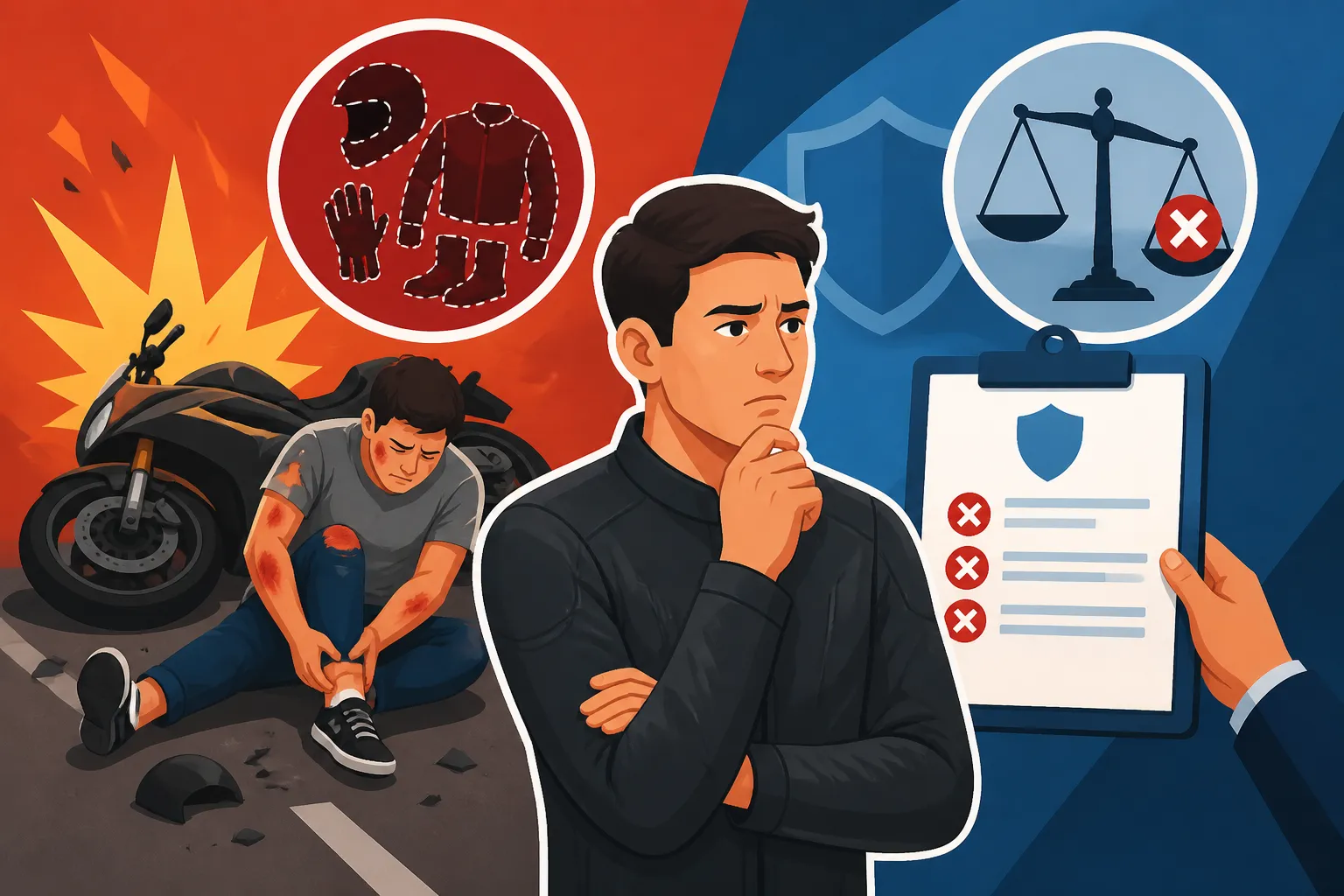
You've been in a motorcycle accident, and among the whirlwind of emotions, pain, and logistical nightmares, a nagging worry sets in: "I wasn't wearing all my gear." Maybe it was just a short ride, a quick hop to the store, and you skipped the heavy jacket, or perhaps you weren't wearing a DOT-compliant helmet. This situation is unfortunately common, and it brings a huge wave of anxiety about your claim. Will the insurance company use it against you? Can you still recover damages for your injuries if you weren't fully geared up? These are valid concerns, and this guide is here to unravel the complex ways missing motorcycle gear can impact your personal injury claim, offering clarity and actionable insights.
Understanding the "Helmet Defense" and Its Broad Implications
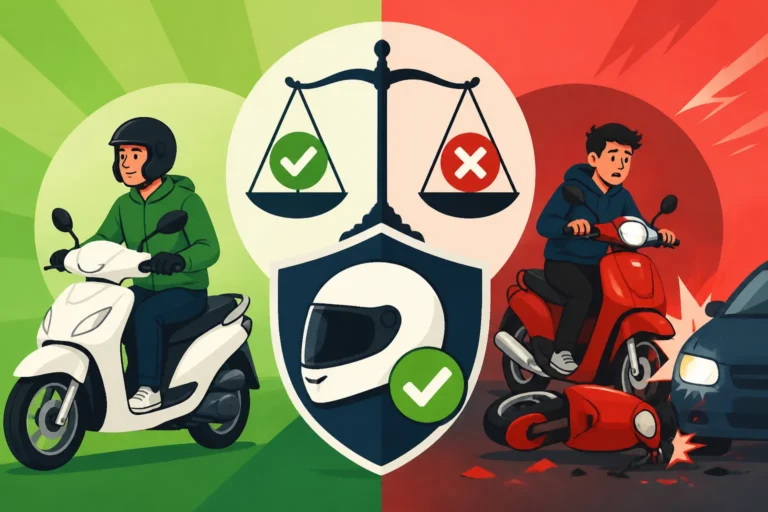
One of the first things an insurance adjuster or defense attorney will look for in a motorcycle accident claim is whether the rider was wearing a helmet. If not, they'll likely invoke what's commonly known as the "helmet defense." This isn't just a legal maneuver; it's a powerful narrative tool designed to minimize the at-fault party's liability by shifting some of the blame onto the injured rider.
What is the Helmet Defense?
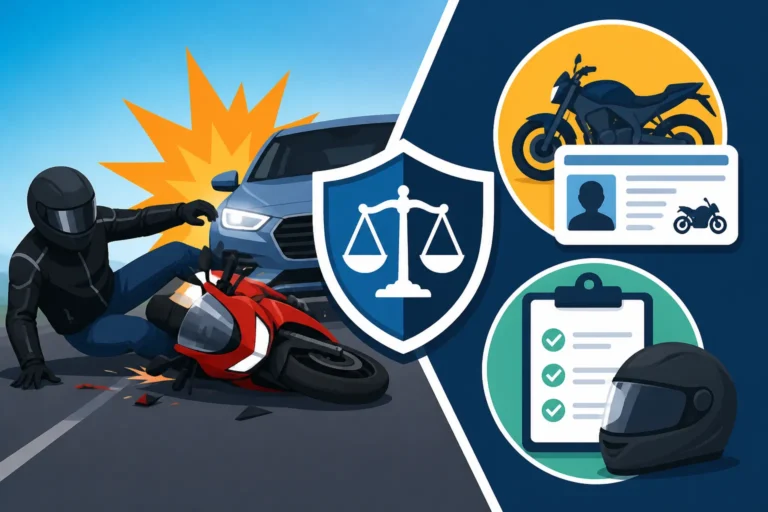
At its core, the helmet defense argues that if you had been wearing an appropriate, DOT-compliant helmet, your head injuries would have been less severe, or perhaps even entirely prevented. The logic, from the defense's perspective, is straightforward: you contributed to the extent of your own injuries by failing to wear available safety equipment. They are essentially saying, "Yes, our client caused the accident, but your injuries are worse because you weren't protected." This argument is especially prevalent in claims involving traumatic brain injuries (TBIs), concussions, or other head-related trauma.
It's a frustrating position to be in because it almost feels like victim-blaming. You were minding your own business, riding your bike, and someone else's negligence caused the crash. Yet, suddenly, your gear choices become a focal point, sometimes overshadowing the at-fault driver's actions. This defense forces a difficult conversation about personal responsibility for injury mitigation, even when someone else clearly initiated the crash.
How State Helmet Laws Influence the Defense
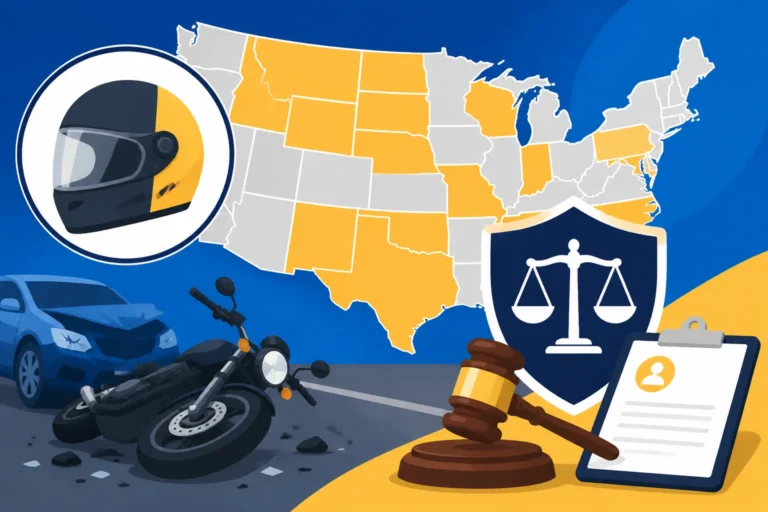
The efficacy and legal standing of the helmet defense heavily depend on the specific motorcycle helmet laws of the state where the accident occurred. There's a wide spectrum of laws across the country, which can make things incredibly confusing for riders.
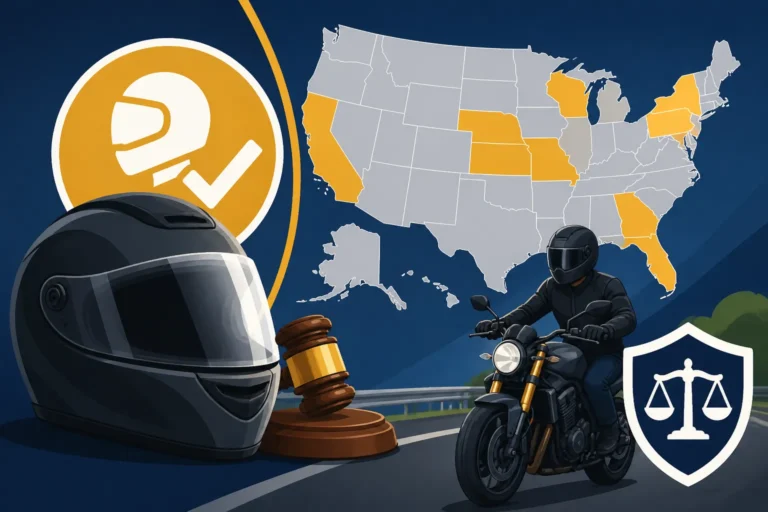
Some states, like California and Washington, have what are known as "Universal Helmet Laws". This means all riders, regardless of age, are legally required to wear a helmet. In these states, if you weren't wearing a helmet, you were not only violating the law but also providing the defense with a very strong argument. It becomes much easier for them to argue that your injuries are partially your own fault because you failed to comply with a clear safety statute. The argument often takes the form of saying you were negligent for not following the law.
Other states, like Florida or Texas, have "Partial Helmet Laws" that typically require helmets for riders under a certain age (often 21) or those without specific insurance coverage. If you're an adult rider over 21 in Florida with proper medical coverage, you might legally be able to ride without a helmet. Even if it's legal, the helmet defense can still be raised in civil court. The defense will argue that common sense dictates helmet use for safety, regardless of the law, and your failure to wear one still contributed to your injuries. This highlights how legal requirements and civil liability can operate on different, albeit related, tracks.
Then, there are a handful of states, such as Iowa and New Hampshire, with virtually no helmet laws for adult riders. Even in these "no helmet law" states, the defense can still attempt to use your lack of a helmet to reduce damages. They'll shift from arguing a legal violation to a general failure to exercise reasonable care for your own safety. This demonstrates that even without a specific law, the principle of mitigating your own damages can still be brought into play. Understanding "Motorcycle Helmet Laws by State" is crucial for every rider, not just for avoiding tickets, but for protecting their future claims.
Impact on Damages and Comparative Negligence
When the helmet defense is successfully applied, it typically leads to a reduction in the compensation you receive for your injuries. This is often framed within the legal doctrine of comparative negligence, which assigns a percentage of fault to each party involved in an accident. If the court or insurance company determines that your failure to wear a helmet contributed, say, 20% to the severity of your head injury, then your total compensation for that injury could be reduced by 20%.
For example, if you sustained a severe traumatic brain injury (TBI) and your total damages (medical bills, lost wages, pain and suffering) are valued at $500,000, but the defense convinces a jury that 30% of those damages could have been avoided with a helmet, your payout might be reduced by $150,000. This is a significant cut, and it's why this defense is so aggressively pursued by insurance companies. The concept of "How Comparative Negligence Reduces Your Payout" is central to understanding this aspect of your claim. This is a tough pill to swallow, especially when you're already dealing with devastating injuries.
Beyond the Helmet: Other Missing Gear and Your Claim
While the helmet defense is arguably the most common and impactful, the absence of other protective motorcycle gear can also be used by the defense to diminish your claim. Many riders, especially for shorter trips, might skip a full suit in favor of lighter clothing, only to find themselves incredibly vulnerable in a crash.
Eye Protection, Gloves, and Boots
It's not just about helmets. Many states have specific requirements for eye protection, especially if your motorcycle doesn't have a windshield. If you weren't wearing goggles or a face shield, and you suffer severe eye or facial lacerations in an accident, the defense could argue that proper eye protection would have prevented or lessened those injuries. While the impact might not be as dramatic as a TBI claim, it can still chip away at your compensation for specific injuries.
Similarly, gloves and sturdy boots are designed to protect extremities that are often the first to make contact with the road in a fall. If you're wearing regular sneakers and sustain a broken ankle or severe foot lacerations, or if you're riding with bare hands and suffer road rash and fractures on your palms, the defense might argue that these injuries were exacerbated by your choice of footwear or hand protection. While less common than the helmet defense, these arguments can still be raised, particularly if the injuries are severe and directly related to the unprotected body part.
Protective Jackets and Pants: The Road Rash Factor
Let's talk about road rash – one of the most common and excruciating motorcycle accident injuries. Road rash occurs when your skin slides across asphalt or concrete, essentially sanding it off. Wearing dedicated motorcycle jackets and pants made from abrasion-resistant materials like leather or specialized textiles (often reinforced with armor from brands like Cycle Gear or Dainese) is crucial for preventing or minimizing this type of injury. These materials are designed to slide, not shred, protecting your skin beneath.
If you're involved in an accident while wearing jeans and a t-shirt, and you suffer extensive third-degree road rash requiring skin grafts, the defense will likely argue that proper protective clothing would have significantly reduced the severity of your "Road Rash Injuries and Claims". They might contend that a portion of your medical expenses, pain and suffering, and even lost wages from a lengthy recovery could have been avoided if you had worn appropriate gear. This argument, while focused on a different type of injury than head trauma, is structurally similar to the helmet defense: your choices contributed to the extent of your own harm.
Equipment Laws and Their Influence Beyond Protection
Beyond personal protective gear, there are also laws governing the equipment on your motorcycle itself – things like working headlights, turn signals, mirrors, or even appropriate handlebar height. While these aren't "missing gear" in the sense of personal apparel, a violation of these equipment laws could potentially be used by the defense to suggest general negligence on your part.
For instance, if your motorcycle's headlight wasn't functioning and the accident occurred at night, the defense might argue that you were harder to see, thus contributing to the accident itself, rather than just the severity of your injuries. This argument might not directly reduce your injury damages based on mitigation but could impact the overall determination of "How Fault Is Determined in Motorcycle Accidents". It's a subtle but important distinction. Keeping your bike in top condition and compliant with all "Motorcycle Equipment Laws You Should Know" is not just about safety, but also about protecting your legal standing.
How Insurance Companies Exploit Missing Gear
Insurance companies are not in the business of paying out maximum settlements; their goal is to minimize their financial liability. When a motorcycle accident occurs, especially one involving significant injuries, they will deploy various strategies to reduce the amount they have to pay. Missing gear provides them with potent ammunition.
The "Rider Bias" Narrative
One of the most insidious tactics is playing into the "rider bias" that unfortunately exists in society. There's a persistent stereotype that motorcyclists are inherently reckless, thrill-seeking, or irresponsible. When a rider is found to be missing protective gear, it can, in the eyes of an uninformed jury or an insurance adjuster, feed directly into this negative stereotype.
The defense attorney might paint a picture of a rider who disregarded their own safety, implying that someone who doesn't wear full gear is perhaps also someone who takes unnecessary risks on the road. While this is an unfair generalization and has nothing to do with the actual cause of the accident, it's a powerful psychological tool. It helps to shift the focus away from the at-fault driver's negligence and onto the rider's perceived irresponsibility. This is precisely why it's vital to challenge "How Insurers Use Rider Stereotypes Against You" and focus the narrative on the facts of the collision.
Reducing Settlement Offers
The most direct impact of missing gear on your claim is that it gives the insurance company a strong bargaining chip to offer you a significantly lower settlement. When you or your attorney present your damages, the adjuster will quickly counter with an argument about your lack of gear. They'll state, often quite firmly, that a portion of your medical bills, pain and suffering, and lost wages are directly attributable to your failure to wear a helmet, jacket, or other protective items.
This isn't just a casual observation; it's a calculated negotiation tactic. They know that if the case goes to trial, a jury might be swayed by the helmet defense and reduce your award. Therefore, they will use this leverage to push for a lower out-of-court settlement, hoping you'll accept it rather than risk a jury trial with an uncertain outcome. Learning "How to Handle a Lowball Settlement Offer" becomes incredibly important in these scenarios, as does understanding "How Insurers Lowball Motorcycle Riders". It's a classic insurance tactic: find any reason to diminish the claim's value.
Shifting Blame and Attributing Fault
Ultimately, the goal of using missing gear as a defense is to shift blame and attribute a percentage of fault to the injured rider. Even if the other driver was clearly negligent – perhaps they made a "Left-Turn Motorcycle Accidents Explained" error or "Motorcycle Accidents Caused by Distracted Driving" – the defense will argue that the rider's injuries are partly their own fault.
This partial fault for injuries directly impacts the overall value of the claim due to comparative negligence rules, as discussed earlier. It's a way for the at-fault party to reduce their financial responsibility without necessarily denying their primary role in causing the accident. This distinction is critical: the defense isn't always saying you caused the crash, but rather that you contributed to the severity of your injuries, which still has a very tangible financial impact on your compensation.
State-Specific Nuances for Gear Laws and Claims
As we touched upon earlier, the state where your accident occurs plays a massive role in how missing gear affects your claim. It's not a uniform landscape across the U.S. Each state has its own legislative approach to motorcycle safety, and these laws directly influence how civil courts and insurance adjusters view your gear choices.
States with No Helmet Laws: A False Sense of Security?
Imagine you're riding through Iowa or New Hampshire, states known for having very permissive helmet laws for adult riders. You're legally riding without a helmet, enjoying the open air. Then, an accident happens. Even though you were perfectly within your legal rights to ride helmetless, this doesn't automatically protect your civil claim from the helmet defense.
In these states, the argument shifts from a "violation of law" to a "failure to exercise reasonable care for your own safety." The defense might introduce expert testimony to demonstrate the universally accepted protective benefits of helmets, even without a specific state mandate. They'll argue that any prudent person would wear a helmet, regardless of the law, and your failure to do so shows a disregard for your own well-being, thus contributing to your injuries. So, while you avoid a ticket, you might not avoid a reduction in your settlement for head injuries. It’s a harsh reality that legal compliance doesn't always equate to protection in a civil liability case.
States with Universal Helmet Laws: A Clearer Picture
In contrast, states with universal helmet laws, like "Motorcycle Helmet Law in California" or "Motorcycle Helmet Law in Washington", present a much clearer, albeit tougher, situation for a helmetless rider. If you're involved in an accident in one of these states without a helmet, you're not only dealing with potential injury but also a direct violation of state law.
This legal violation provides the defense with a strong, unambiguous basis for their helmet defense. It's less about arguing "reasonable care" and more about pointing to a statutory requirement that was ignored. This makes it significantly harder to fight against the defense's arguments that your injuries were exacerbated by your own actions. The legal framework here is quite unforgiving, underlining the importance of compliance for both safety and legal protection.
The Burden of Proof for the Defense
It's important to remember that the burden of proof usually falls on the defense to establish that your missing gear actually contributed to your injuries. It’s not enough for them to simply point out that you weren't wearing a helmet or a jacket. They must demonstrate a causal link between the absence of that gear and the severity of your specific injuries.
For instance, if you weren't wearing a helmet but suffered only a broken leg and road rash, the defense would have a hard time arguing that the lack of a helmet contributed to your broken leg. However, they could argue that the lack of a protective jacket contributed to the severity of your road rash. This nuanced approach to causation is where an experienced motorcycle accident attorney can make a significant difference, challenging the defense to prove their claims with concrete evidence and medical expert testimony rather than just speculation or stereotypes.
Mitigating the Impact of Missing Gear on Your Claim
Even if you weren't wearing all your gear, your claim isn't automatically doomed. There are strategies and legal principles that can help mitigate the negative impact of missing gear on your potential settlement or award. It often comes down to proving causation and focusing on the at-fault driver's primary responsibility.
Proving Causation is Key to Countering the Defense
The most critical aspect of countering the missing gear defense is to challenge the causal link between the lack of gear and the specific injuries. The defense must prove that your injuries would have been less severe if you had worn the gear. This isn't always an easy task for them, especially for non-head injuries.
For example, if you were riding without a helmet and sustained a fractured collarbone, it would be difficult for the defense to argue that a helmet would have prevented that specific injury. Helmets protect the head, not the collarbone. Similarly, if your primary injury is a "Motorcycle Spinal Cord Injury" or a "Motorcycle Broken Bones" in your lower body, the absence of a jacket or gloves may not be directly relevant to those particular injuries. Your legal team will meticulously analyze your injuries and medical records to identify which injuries, if any, could realistically be attributed to missing gear and which are undeniably a direct result of the collision itself.
The Role of Expert Testimony
When causation is disputed, particularly for head injuries, expert testimony becomes invaluable. An accident reconstruction expert can analyze the dynamics of the crash and potentially demonstrate that even with a helmet, certain forces or impacts were so severe that the injury might still have occurred or would have been only marginally less severe.
Medical experts, such as neurologists or trauma surgeons, can also provide testimony. They can explain the nature of your injuries, their severity, and whether a helmet or other gear would have truly made a significant difference. For instance, in a catastrophic, high-speed collision, even the best helmet might not prevent a severe TBI, although it might lessen its impact. These experts can help decouple the injury from the absence of gear, focusing instead on the sheer force of the impact caused by the at-fault driver.
Focusing on the Driver's Primary Fault
Regardless of your gear choices, the central question in any personal injury claim remains: who caused the accident? Your claim for damages originates from the negligence of the other driver. Even if the defense successfully argues that your injuries were exacerbated by missing gear, it doesn't absolve the other driver of their primary responsibility for causing the collision in the first place.
Your legal strategy should always emphasize the actions of the at-fault driver. Did they run a stop sign? Were they "Motorcycle Accidents Caused by Distracted Driving"? Did they make an "Unsafe Lane Changes Motorcycle Accident"? These are the questions that establish liability. While your gear choices might affect the amount of damages you recover, they rarely negate the other driver's fault in causing the crash itself. An experienced attorney will make sure the spotlight stays firmly on the defendant's negligence and how it initiated the sequence of events that led to your injuries. This focus is paramount to ensuring you still get fair compensation.
Documentation and Legal Strategy
Navigating a motorcycle accident claim, especially one complicated by missing gear, requires meticulous documentation and a robust legal strategy. You might feel overwhelmed, but collecting the right information and seeking professional help can significantly impact your recovery.
Documenting Your Injuries and Treatment Thoroughly
Even if you weren't wearing every piece of gear, impeccable documentation of your injuries and subsequent medical treatment is non-negotiable. This is the bedrock of your personal injury claim.
- Medical Records: Every doctor's visit, every hospital stay, every prescription, every therapy session must be documented. These records prove the extent and severity of your injuries, the treatments you've undergone, and the associated costs. Gaps in treatment can be used by the defense to argue your injuries aren't as severe as claimed.
- Photos and Videos: Take photos of your injuries as they heal. Document road rash, bruising, scars, and any visible limitations. Keep a journal detailing your pain levels, how your injuries affect your daily life, and any emotional distress you experience. This comprehensive approach helps quantify your "Pain and Suffering Damages Explained" and other non-economic losses.
- Lost Wages and Future Costs: Keep records of all lost income, and if your injuries lead to long-term disability or reduced earning capacity, gather documentation to support these claims. Also, keep track of any out-of-pocket expenses related to your recovery, like transportation to appointments or adaptive equipment. The more detailed your records, the stronger your case. Remember, "How to Document Injuries for a Claim" is an ongoing process, not just a one-time event immediately after the crash.
The Critical Role of a Motorcycle Accident Attorney
Let's be blunt: if you're dealing with serious injuries and the added complexity of missing gear, trying to handle your claim alone against a determined insurance company is an uphill battle. This is precisely when "Do You Need a Motorcycle Accident Lawyer" becomes not just a question, but a necessity.
An attorney experienced in motorcycle accidents understands the nuances of the helmet defense and other similar arguments. They know how to challenge causation, gather expert testimony, and strategically focus on the at-fault driver's negligence. They can protect you from manipulative tactics and ensure that your rights are upheld. Furthermore, they can help you understand the specific "Motorcycle Accident Fault Laws in Texas" or whatever state you're in, and how those apply to your situation. An attorney acts as your advocate, allowing you to focus on your recovery while they handle the legal complexities and fight for your rightful compensation. They are adept at navigating "How Lawyers Deal with Insurance Companies" and know precisely what evidence is needed to counter their lowball offers.
Understanding Your State's Comparative Negligence Rules
Every state has laws regarding how fault is distributed in an accident and how that impacts your ability to recover damages. These are generally categorized as contributory or comparative negligence.
- Pure Comparative Negligence: In states like California, even if you are found 99% at fault, you can still recover damages for the 1% of fault attributed to the other party. If your missing gear leads to you being found 20% at fault for your injuries, your total award will be reduced by that 20%, but you can still recover the remaining 80%.
- Modified Comparative Negligence: Many states, including Texas and Georgia, use a modified comparative negligence rule, typically with a 50% or 51% bar. For example, under a 51% rule, if you are found to be 51% or more at fault for your injuries, you are completely barred from recovering any damages. If you are 50% or less at fault, your damages are reduced by your percentage of fault. This threshold is incredibly important, as falling on the wrong side of it can mean receiving nothing.
Understanding "Pure vs Modified Comparative Negligence" is crucial because it directly dictates how much, if any, compensation you can expect if some fault for your injuries is assigned due to missing gear. Your attorney will analyze the specifics of your case within your state's legal framework to provide realistic expectations and develop the best strategy.
Here’s a quick overview of how different types of missing gear might influence a claim, though every case is unique:
| Missing Gear Type | Common Injury Risk | Potential Defense Argument | Impact on Claim Value (General) |
|---|---|---|---|
| Helmet (Non-DOT or Absent) | Head Trauma, Traumatic Brain Injury (TBI) | Injuries would be less severe or avoided with compliant helmet | Significant reduction, especially for head injury claims |
| Eye Protection (Absent or Improper) | Eye injuries, Facial Lacerations, Impaired Vision | Direct causation for specific eye/face injuries | Moderate reduction for facial/eye injuries |
| Protective Jacket/Pants (e.g., street clothes vs. abrasion-resistant) | Severe Road Rash, Abrasions, Friction Burns | Severity of skin injuries due to lack of abrasion resistance | Moderate reduction for skin/soft tissue injuries requiring extensive treatment |
| Gloves (Absent) | Hand/Wrist Fractures, Lacerations, Road Rash | Lack of protection for hands in a fall; exacerbates hand injuries | Minor to moderate reduction for hand injuries |
| Boots (e.g., sneakers vs. sturdy riding boots) | Foot/Ankle Fractures, Crushing Injuries | Vulnerability of feet/ankles without sturdy protection | Minor to moderate reduction for foot/ankle injuries |
No rider wants to be in a position where their gear choices are scrutinized after an accident. While the absence of certain protective equipment can complicate your claim, it doesn't necessarily mean you're out of luck. The key is understanding the specific laws in your state, the arguments the defense will likely make, and how to effectively counter them by focusing on causation and the at-fault driver's negligence. Always prioritize your safety with proper gear from reputable places like Cycle Gear, but if an accident does occur, know that a skilled legal team can still fight for your rights.
Disclaimer
Please remember that this article provides general information and insights into how missing motorcycle gear can affect a personal injury claim. This information is not legal advice and should not be taken as such. Laws vary significantly by jurisdiction, and the specifics of your accident are unique. It is crucial to consult with a qualified motorcycle accident attorney in your state to discuss your individual situation and receive personalized legal guidance.