States with Partial Helmet Laws
It can be incredibly confusing trying to keep track of motorcycle helmet laws, especially when you're crossing state lines. One minute you might be legally cruising with the wind in your hair, and the next you could be facing a fine or, even worse, putting your post-accident claim at risk. This guide will walk you through the nuances of states with partial helmet laws, helping you understand what they mean for your safety and your legal standing.
Understanding the Landscape of Motorcycle Helmet Laws
Navigating the rules and regulations surrounding motorcycle helmets across the United States can feel like a game of legal roulette. It’s not simply a matter of "helmet or no helmet" – there's a spectrum, and understanding where each state falls is crucial for every rider, whether you’re a local veteran or just passing through.
Defining Universal vs. Partial vs. No Helmet Laws
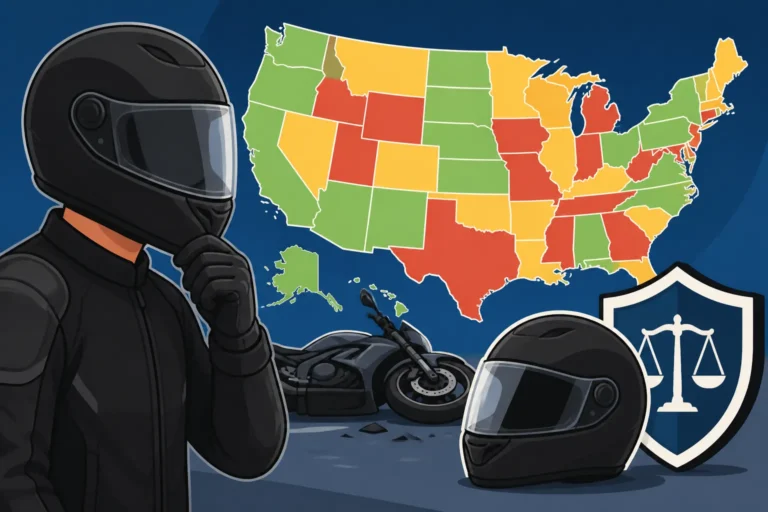
Let’s clear up the definitions first, because the terms themselves can be a bit opaque. Essentially, there are three main categories of helmet laws in the U.S.:
- Universal Helmet Laws: These are the most straightforward. In states with universal helmet laws, all riders, regardless of age or experience, are legally required to wear a DOT-approved motorcycle helmet at all times when operating or riding as a passenger on a motorcycle. States like California and New York fall into this category. The logic here is maximum safety for everyone on two wheels. You can read more about Motorcycle Helmet Laws by State to get a full picture.
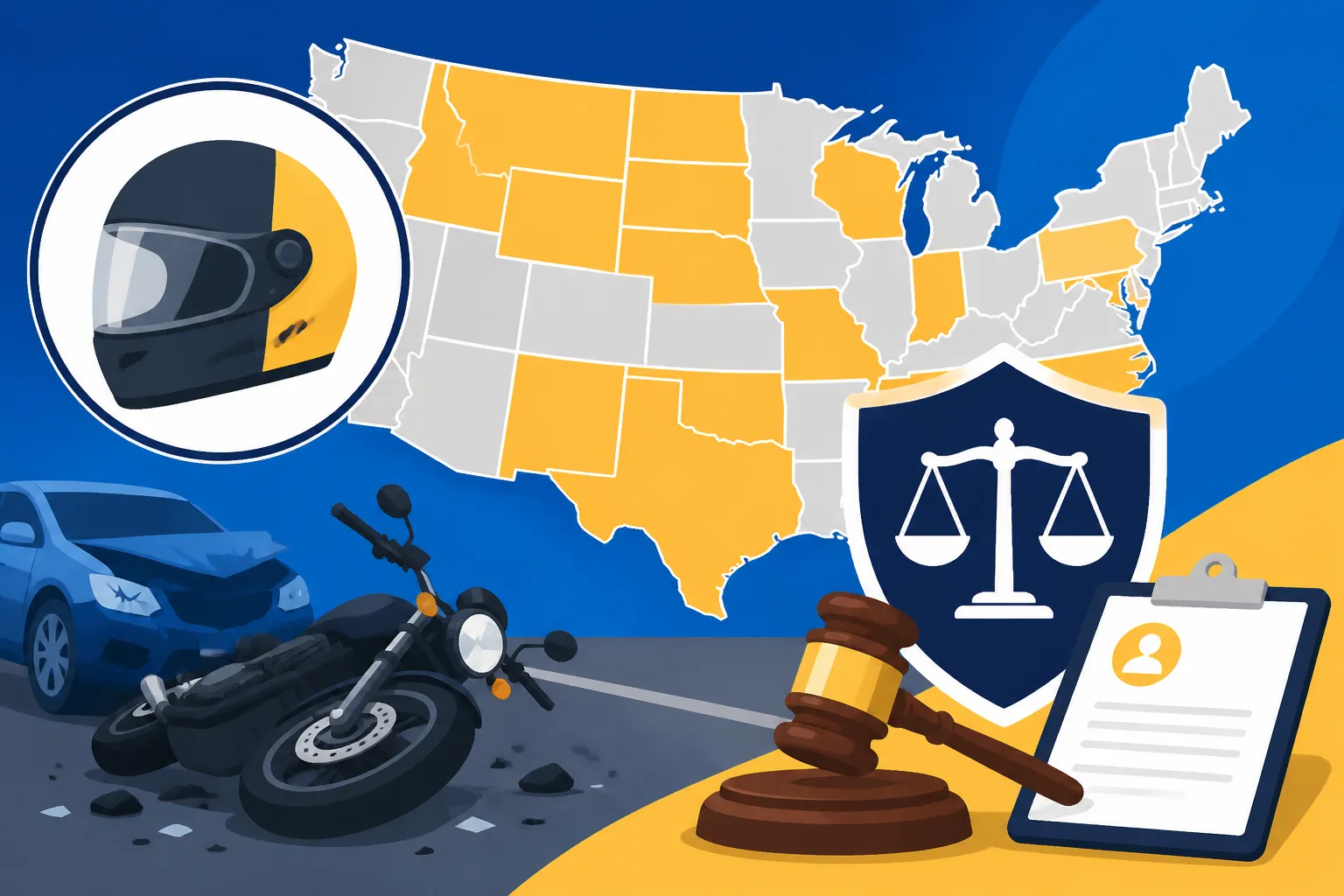
- Partial Helmet Laws: This is where things get a bit more intricate. States with partial helmet laws require some riders to wear helmets, but not all. The exemption usually hinges on specific criteria, most commonly age or proof of adequate insurance coverage. For example, a state might require all riders under 21 to wear a helmet, but allow those 21 and older to ride without one if they meet certain conditions. These laws are the focus of our discussion today, and they present unique challenges and considerations for riders.
- No Helmet Laws: As the name suggests, a few states have no mandatory helmet law for adult riders. New Hampshire, for instance, famously allows adult riders to choose whether or not to wear a helmet. While this offers maximum freedom, it also comes with increased risks and potential complications in the event of an accident, especially regarding personal injury claims.
The Rationale Behind Partial Laws
You might wonder why some states opt for partial helmet laws instead of a universal mandate or no law at all. The reasoning is often a complex blend of public safety concerns, individual liberty arguments, and lobbying efforts.
On one hand, proponents of partial laws recognize the proven safety benefits of helmets, particularly for younger, less experienced riders who may be at a higher risk of severe injury. By mandating helmets for those under a certain age, these states aim to reduce the most vulnerable demographic's risk of head trauma. On the other hand, there's often a strong contingent of riders and advocacy groups who argue for individual choice, believing that adults should have the autonomy to decide whether to wear a helmet, provided they understand and accept the risks. Legislators sometimes land on partial laws as a compromise, balancing these competing interests. The requirements, such as carrying higher levels of medical insurance, are often an attempt to mitigate the financial burden on the state should an unhelmeted rider be involved in a serious crash and incur significant medical costs. It's a tricky tightrope to walk, trying to protect citizens without infringing too much on perceived freedoms.
States with Prominent Partial Helmet Laws
When you're out on the open road, it's easy to assume that helmet laws are more or less the same everywhere. But that's a dangerous assumption to make. Partial helmet laws are diverse, with each state having its own specific twist, typically revolving around age or insurance requirements. It's truly a patchwork, and knowing the specifics of where you're riding is vital.
Common Age-Based Restrictions
Many states with partial helmet laws focus on age as the primary determinant for helmet use. The most common stipulation is that riders under a certain age must wear a helmet, while those over that age have the option to ride without one, often with additional conditions.
For example, a common age threshold is 21. In states like Florida, all riders and passengers under the age of 21 are required to wear a helmet. Once you hit 21, however, you can legally choose to ride without a helmet – if you meet other requirements, which we’ll discuss shortly. Texas operates similarly, mandating helmets for riders under 21. The idea here is that younger riders might lack the experience or judgment to fully appreciate the risks involved, so the law steps in to offer an extra layer of protection. This can be a huge point of confusion, especially for visitors or those who move between states. Imagine being 20 and riding through Florida, then turning 21 mid-trip – suddenly, the law changes for you! Always double-check the local DMV or traffic laws.
Insurance-Based Exemptions
Beyond age, the other significant factor in many partial helmet law states is insurance. This is where things can get particularly intricate. For adult riders (typically those 21 and older) who wish to ride without a helmet, many states require proof of substantial medical insurance coverage. The reasoning is simple: if you choose to forgo a helmet and suffer a head injury, the state doesn't want to be left footing a massive medical bill.
Florida is a prime example of this. If you’re 21 or older, you can ride helmet-free, but you must carry an insurance policy providing at least $10,000 in medical benefits for injuries sustained in a motorcycle crash. Arizona also has a partial helmet law, requiring helmets for riders under 18, but adults can ride without one. However, some localities within Arizona might have different stipulations, so always check local ordinances. Similarly, states like Texas allow riders 21 and older to ride without a helmet if they have completed an approved motorcycle safety course and carry adequate medical insurance. The exact amount and type of insurance can vary, making it essential to confirm the specifics for each state. This isn't just about avoiding a ticket; it's about making sure you're covered if the unthinkable happens. Not having the correct insurance could leave you financially devastated, regardless of who was at fault in an accident. You can explore this further by learning more about Motorcycle Helmet Laws by State.
States with Specific Partial Laws
Let's look at a few examples to highlight the variations:
| State | Helmet Requirement | Specific Exemption Conditions (for adults) |
|---|---|---|
| Florida | Mandatory for riders/passengers under 21. | Riders 21+ may ride without a helmet if they carry an insurance policy providing at least $10,000 in medical benefits. |
| Texas | Mandatory for riders/passengers under 21. | Riders 21+ may ride without a helmet if they have completed an approved motorcycle safety course and carry adequate medical insurance. |
| Arizona | Mandatory for riders/passengers under 18. | Riders 18+ may ride without a helmet. (Note: Some cities may have additional local ordinances.) |
| Kentucky | Mandatory for riders/passengers under 21. | Riders 21+ may ride without a helmet. |
| New Hampshire | No mandatory helmet law for adults. | All riders under 18 must wear a helmet. (Often seen as a "no helmet law" state due to adult exemptions, but still has a partial requirement for minors.) |
This table illustrates that while there are common themes like age, the specifics of exemptions and additional requirements like insurance or safety courses can differ significantly. When planning a trip or just heading out for a ride, it’s always best practice to confirm the exact laws for your location. This vigilance can save you a lot of headache, and potentially a lot more.
Key Exemptions and Requirements within Partial Helmet Laws
Riding a motorcycle offers an unparalleled sense of freedom, but that freedom often comes with a detailed rulebook, especially when it comes to partial helmet laws. These laws are rarely as simple as "yes or no" and often involve specific criteria that riders must meet to be exempt from helmet use. Understanding these nuances isn't just about staying legal; it's about protecting yourself and your interests should an accident occur.
Age-Specific Requirements and Enforcement
The most common characteristic of partial helmet laws is the age-based mandate. As we’ve discussed, many states require riders and passengers under a certain age – often 18 or 21 – to wear a helmet, while older riders might have the option to forgo one. This isn't just a suggestion; it's a legal requirement that carries real consequences.
For instance, in states like Florida or Texas, if you're 20 years old and riding without a helmet, you could face a significant fine, points on your license, and potentially even have your motorcycle impounded. Law enforcement officers are generally well-versed in these age restrictions and will enforce them strictly. The rationale, again, is often based on the perceived vulnerability and lack of experience in younger riders. The state aims to protect those most at risk of severe brain injury. It’s important to remember that these age requirements apply regardless of your riding experience or how long you’ve been on two wheels. If you're a young rider in one of these states, your safest and most compliant bet is always to wear a DOT-approved helmet. This also helps to avoid any discussions about Rider Bias in Fault Determination should an accident happen.
The Role of Insurance Coverage for Helmet Exemptions
For adult riders (typically 21 and older) in partial helmet law states, the ability to ride without a helmet is almost always contingent upon carrying specific, often higher-than-minimum, medical insurance coverage. This isn't merely about having any insurance; it's about having enough to cover potential catastrophic injuries.
Let's take Florida as an example again. If you're 21 or older and choose not to wear a helmet, you must carry at least $10,000 in medical benefits. This isn't for your bike, or for damage to another vehicle; this is specifically to cover your own medical bills in the event of an injury. If you don’t have this specific coverage and you’re found riding without a helmet, you can be ticketed, and your ability to claim damages after an accident could be severely impacted. The insurance companies will look at every detail to avoid paying out, and an unmet legal requirement is a big red flag for them. Many riders might mistakenly believe their regular health insurance or basic motorcycle liability policy covers them, but it’s crucial to verify that your policy meets the state’s specific medical benefits requirement for helmet exemption. Always check with your insurance provider to ensure compliance. You might even find it prudent to invest in comprehensive gear from stores like Cycle Gear, not just for safety but for the peace of mind that you're doing everything you can to protect yourself.
Other Gear Requirements
While helmets often steal the spotlight, many states with partial helmet laws also have other specific gear requirements that apply to all riders, or to those who choose not to wear a helmet. These typically include eye protection and, less commonly, specific footwear or clothing.
Most states, regardless of their helmet laws, mandate that riders use eye protection if their motorcycle isn't equipped with a windshield. This is a non-negotiable safety measure, as debris, insects, or even strong winds can impair a rider’s vision, leading to dangerous situations. This could include goggles, a face shield on a helmet, or eyeglasses. Beyond eye protection, some states might also recommend or require certain types of footwear that cover the ankles, or long-sleeved shirts and pants, particularly for new riders or during safety courses. While not wearing these items might not result in a ticket in all jurisdictions, they can significantly impact the severity of injuries like road rash in an accident. Always remember that Motorcycle Safety Gear and Legal Protection go hand in hand. Even if the law doesn't explicitly demand it, investing in quality riding jackets, pants, gloves, and boots from reputable retailers like Cycle Gear can make a world of difference in protecting you from the road and bolstering your position should you ever need to make a claim.
Navigating Partial Helmet Laws as an Out-of-State Rider
Hitting the road on your motorcycle for a long trip across state lines is one of life’s great pleasures. But that joy can quickly turn into a headache, or worse, if you’re not aware of the varying motorcycle laws, especially partial helmet laws. What's perfectly legal in your home state might land you a ticket, or even complicate your recovery after an accident, just a few miles down the highway.
Understanding Reciprocity for Out-of-State Riders
One common misconception is that if you're legal in your home state, you're legal everywhere. Unfortunately, that's rarely the case with helmet laws. When you ride into another state, you generally become subject to that state's laws, regardless of what your driver's license or motorcycle endorsement says. This principle is often called "lex loci delicti commissi" in legal circles, meaning the law of the place where the wrong was committed applies.
For riders coming from a universal helmet law state (like California) into a partial helmet law state (like Florida), this might mean you could legally shed your helmet if you meet the age and insurance requirements. Conversely, if you're from a "no helmet law" state (like Iowa) and ride into a partial helmet law state, you might find yourself needing to put a helmet on if you're under the age limit or don't have the requisite medical insurance. It's a critical detail that many riders overlook, leading to unexpected fines or legal complications. Before any road trip, it's prudent to research the specific Motorcycle Helmet Laws by State for every state you plan to traverse. A quick search can save you a world of trouble and keep your adventure on track.
The Importance of Knowing Local Laws
Beyond state-level partial helmet laws, it’s also important to be aware that some local jurisdictions—cities or counties—might have their own specific ordinances that are stricter than the state law. While this is less common for helmet laws than for, say, noise ordinances, it's not unheard of and highlights the importance of truly knowing where you stand.
Imagine you're an adult riding helmet-free in a partial helmet law state like Arizona, where adults generally don't need helmets. You're cruising through a picturesque small town, enjoying the scenery, only to be pulled over because that particular town has a local ordinance mandating helmets for all riders within its city limits. It's a frustrating scenario, but it happens. While most states prioritize state law over local ordinances for traffic safety, it's always best to be informed. A good practice before entering any new region is to briefly check their local department of transportation or city government websites for specific motorcycle regulations. Being prepared means you can focus on the ride, not on potential legal entanglements. Plus, when it comes to personal injury claims, demonstrating adherence to all applicable laws—state and local—can only strengthen your case and prevent insurance companies from trying to shift blame or reduce your settlement.
How Partial Helmet Laws Affect Your Accident Claim
This is where the rubber truly meets the road, so to speak. Beyond the immediate legal ramifications of getting a ticket, the decision to ride with or without a helmet in a partial helmet law state can have profound, long-lasting consequences for any personal injury claim you might need to make after an accident. Insurance companies are always looking for ways to minimize their payouts, and your helmet use – or lack thereof – is often one of the first things they'll scrutinize.
The "Helmet Defense" in Partial Law States
The "helmet defense" is a legal strategy commonly employed by the at-fault driver's insurance company. Essentially, they argue that even if their insured driver caused the accident, your injuries (especially head injuries) would have been less severe, or perhaps entirely avoided, had you been wearing a helmet. This argument is used to reduce the amount of compensation you can receive, claiming that you contributed to your own damages.
In states with partial helmet laws, this defense becomes particularly complex. If you were legally riding without a helmet (i.e., you were over the age limit and met all insurance requirements), the defense still tries to argue that your choice contributed to your injuries. However, the legal weight of this argument can vary significantly by state. Some states may allow this defense, while others might limit its application only to head injuries, or even disallow it if your non-use of a helmet was legal according to state statutes. This is a critical area where consulting with an experienced motorcycle accident attorney can make all the difference. They can help counter these arguments and protect your right to full compensation. Understanding The Helmet Defense Explained is key to preparing for this common tactic.
How Comparative Negligence Applies
The concept of comparative negligence plays a huge role in how the helmet defense affects your claim in partial helmet law states. Comparative negligence laws are designed to allocate fault and damages when more than one party is responsible for an accident.
Most states follow some form of comparative negligence. For instance, if you are found to be 20% at fault for an accident (perhaps you were speeding slightly), and your damages are $100,000, your award would be reduced by 20% to $80,000. Now, factor in the helmet defense. If the insurance company successfully argues that your decision not to wear a helmet, though legal, contributed 10% to the severity of your head injuries, your overall compensation could be further reduced. This means that even if the other driver was 90% at fault for the crash itself, your total payout might be significantly less due to the helmet factor. The calculations can get incredibly complicated, often involving expert medical testimony about what injuries would or would not have occurred with a helmet. This is why it's so important to understand How Helmet Use Affects Comparative Negligence and to have someone on your side who can fight these reductions.
Can You Still Recover If You Weren't Wearing a Helmet
This is the burning question for many riders who find themselves in an accident in a partial helmet law state without a helmet on. The short answer is: yes, you generally can still recover damages, but your recovery might be reduced.
If you were legally riding without a helmet (meaning you met all age and insurance requirements), it does not automatically bar you from receiving compensation. The core principle of personal injury law is that the at-fault party is responsible for the damages they cause. However, as discussed with the helmet defense and comparative negligence, the value of your claim could be negatively impacted. For instance, while you might receive full compensation for your broken leg or road rash, the portion of your claim related to a traumatic brain injury (TBI) could be reduced if the defense can prove that a helmet would have lessened or prevented that specific injury. It's a nuanced battle. If you were illegally riding without a helmet (e.g., you were under the age requirement or lacked the necessary insurance), the situation becomes much more challenging. Not only could you face criminal penalties for violating the law, but your non-compliance could be used very effectively by the defense to significantly reduce your settlement, or even deny portions of it altogether. This is why it is critical to understand How Not Wearing a Helmet Affects Your Settlement and seek legal advice immediately after an accident.
Why Riding with Full Gear Matters, Regardless of the Law
When you’re a motorcyclist, you know there’s a distinct feeling of freedom that comes with the wind rushing past you. For many, riding without a helmet in a state where it’s legal is part of that experience. However, when we talk about safety and your potential recovery after an accident, the letter of the law is often just the bare minimum. True protection, and indeed, a stronger legal position, often comes from going above and beyond those minimums.
Beyond the Law: Maximizing Your Protection
Think of helmet laws as the legal floor, not the safety ceiling. While partial helmet laws might permit you to ride without a helmet under specific circumstances, they don't erase the statistical reality that helmets, especially full-face, DOT-approved helmets, drastically reduce the risk of head injury in a crash. Studies by organizations like the National Highway Traffic Safety Administration (NHTSA) consistently show that helmets are about 37 percent effective in preventing motorcycle fatalities and 67 percent effective in preventing brain injuries.
But maximizing your protection goes beyond just a helmet. It encompasses a full suite of protective gear:
- Armored Jackets and Pants: These aren't just for looking cool; they're designed with abrasion-resistant materials like leather or ballistic nylon, often with CE-rated armor at impact points (shoulders, elbows, knees). They are your primary defense against road rash, which can be devastating.
- Gloves: Proper riding gloves protect your hands from abrasions and impact, but also improve grip and reduce fatigue.
- Boots: Over-the-ankle boots protect your feet and ankles from impact and crushing injuries.
Choosing quality gear from trusted brands like Cycle Gear isn't an indulgence; it's a strategic investment in your well-being. Even in states with partial helmet laws, equipping yourself with a full array of protective gear can significantly mitigate injuries and contribute to a more positive outcome, both physically and legally, if you're ever involved in a crash. This proactive approach shows you take safety seriously, which can be a subtle but powerful advantage in any claim.
The Impact of Gear on Injury Severity and Claims
This is where the choice to wear full gear truly pays off, both for your body and for your potential accident claim. When you're involved in a motorcycle accident, the severity of your injuries directly correlates with the amount of medical treatment you'll need, the lost wages you'll incur, and ultimately, the value of your settlement.
Imagine two scenarios in a partial helmet law state like Texas. In the first, an adult rider, legally helmet-free, is hit by a negligent driver. They sustain severe head trauma and extensive road rash because they were only wearing a t-shirt and jeans. In the second, an adult rider, also hit by a negligent driver, was wearing a full-face helmet, armored jacket and pants, and sturdy boots. While they might still break a bone or suffer a concussion, their head injury would likely be less severe, and the road rash might be minimal or non-existent thanks to their gear.
In a legal claim, the insurance company for the at-fault driver will assess the nature and extent of your injuries. If you've taken every reasonable precaution by wearing appropriate safety gear, it becomes much harder for them to argue that you contributed to your own injuries by being negligent. Your choice of quality gear provides tangible evidence that you were acting responsibly. This strengthens your claim for all damages, including medical bills, lost wages, and pain and suffering. It underscores the point that while Motorcycle Gear Laws and Requirements might be minimal, going beyond them is a wise decision for every single ride. It not only protects your body but also fortifies your position in the aftermath of a crash.
What to Do After a Motorcycle Accident
Even with the best gear and adherence to all laws, accidents can happen. Knowing what steps to take immediately after a motorcycle accident can significantly impact your recovery and the strength of any potential claim.
Your immediate safety and health are paramount. Always move yourself and your motorcycle to a safe location if possible, away from traffic. The first step, without question, is to seek medical attention, even if you feel fine. Adrenaline can mask pain, and some serious injuries, like internal bleeding or Motorcycle Traumatic Brain Injury: Claims and Compensation, might not be immediately apparent. Delayed treatment can not only jeopardize your health but also allow insurance companies to argue that your injuries weren’t serious or weren’t caused by the accident.
After ensuring your safety and calling for emergency services, it's crucial to gather as much information as possible from the scene. This includes contact and insurance details from all involved parties, witness statements, and photographs of the accident scene, vehicle damage, and your injuries. Do not admit fault or make any definitive statements about the accident to anyone other than the police. For a comprehensive guide on initial actions, refer to What to Do Immediately After a Motorcycle Accident.
Once you've received medical care and documented the scene, consider consulting with an attorney. An attorney experienced in motorcycle accidents can help you navigate the complexities of partial helmet laws, the helmet defense, and comparative negligence. They will protect your rights, ensure proper documentation, and help you understand How Fault Affects Your Settlement. Even if you think your case is straightforward, a lawyer can maximize your potential recovery and handle the negotiations with insurance companies, which can be notoriously challenging for unrepresented individuals. This is especially true if you're dealing with serious injuries like Motorcycle Spinal Cord Injury: Claims and Compensation or significant Motorcycle Broken Bones: Claims and Compensation.
Disclaimer
Please remember that the information provided in this article is for general informational purposes only and does not constitute legal advice. Motorcycle laws, including helmet laws, vary by state and can change. It is crucial to consult with a qualified legal professional for advice regarding your individual situation and to verify current laws in your specific jurisdiction. Riding a motorcycle carries inherent risks, and adherence to safety guidelines and protective gear is always recommended.