States with Universal Helmet Laws
Navigating the open road on two wheels is an exhilarating experience, a feeling of freedom that few other modes of transportation can match. However, with that freedom comes a unique set of challenges, especially when it comes to safety and the laws governing motorcycle riding. One of the most frequently discussed — and sometimes frustrating — topics among riders is helmet laws. Specifically, understanding the nuances of universal helmet laws can feel like deciphering a complex legal map, leaving many wondering exactly where they stand if an accident occurs. This guide is designed to cut through that confusion, providing a comprehensive look at states with universal helmet laws, what they entail, and how they can impact you, the rider, particularly in the unfortunate event of a motorcycle accident.
Understanding Universal Helmet Laws for Motorcyclists
When we talk about motorcycle helmet laws, it's not a one-size-fits-all situation across the United States. Each state has the autonomy to set its own regulations, leading to a patchwork of rules that can be incredibly confusing, especially for riders traveling cross-country. For many, the distinction between different types of helmet laws is murky, but it's a critical difference, particularly regarding personal safety and potential legal ramifications after a crash.
Defining "Universal" in Helmet Legislation
At its core, a "universal" helmet law mandates that all motorcycle riders and their passengers, regardless of age or experience, must wear a protective helmet whenever operating or riding on a motorcycle on public roadways. There are no exceptions for age, insurance coverage, or rider training. If you're on a bike and it's on a public road, your head needs to be covered by a helmet. This might seem straightforward, but it often contrasts sharply with other state laws, which we'll discuss later. The intent behind universal laws is clear: to maximize rider safety and reduce head injuries, which are statistically among the most severe and life-altering consequences of a motorcycle accident. When a state adopts such a law, it's making a strong statement about the perceived risk and the necessity of this fundamental piece of safety equipment.
Historical Context and Evolution of Helmet Laws
The push for motorcycle helmet laws really gained traction in the 1960s. Before then, helmet use was largely a personal choice. However, as motorcycle fatalities and severe head injuries climbed, safety advocates and lawmakers began to take notice. The federal government, through the Highway Safety Act of 1966, incentivized states to enact helmet laws by linking highway funding to compliance. This led to a rapid adoption of universal helmet laws across most states by the early 1970s.
However, this widespread adoption faced significant pushback from rider rights groups who viewed mandatory helmet laws as an infringement on personal liberty. Throughout the 1970s and 80s, many states repealed or modified their universal laws, often shifting to "partial" laws that only required helmets for younger riders. The landscape has continued to evolve, with some states reverting to universal laws and others maintaining partial or no-helmet mandates. This history of legislative seesawing highlights the ongoing tension between public safety concerns and individual freedoms, a debate that continues to shape Motorcycle Helmet Laws by State.
The Rationale Behind Universal Helmet Requirements
The primary motivation behind universal helmet laws is public health and safety. The data is overwhelmingly clear: helmets save lives and prevent devastating injuries. Studies from organizations like the National Highway Traffic Safety Administration (NHTSA) consistently demonstrate that helmets are about 37% effective in preventing fatalities for motorcycle riders and about 41% effective for motorcycle passengers. They significantly reduce the risk of head injury and traumatic brain injury, which can lead to lifelong disabilities, astronomical medical costs, and profound loss of quality of life.
From a societal perspective, these laws aim to reduce the burden on healthcare systems and public resources. A rider who suffers a severe head injury without a helmet often requires extensive, long-term medical care, rehabilitation, and potentially public assistance. By mandating helmet use, states seek to mitigate these personal and societal costs. While riders might feel the imposition on their freedom, the legislative rationale often prioritizes the collective good, especially considering the often-catastrophic nature of Common Causes of Motorcycle Accidents.
A Comprehensive Look at States with Universal Helmet Laws
Understanding which states fall under the "universal" category is paramount for any rider, whether you're a local enthusiast or planning a cross-country adventure. The rules can change abruptly as you cross state lines, and ignorance of the law is never a valid defense. Knowing these states ensures you're always riding legally and, more importantly, safely.
Listing the Universal Helmet Law States
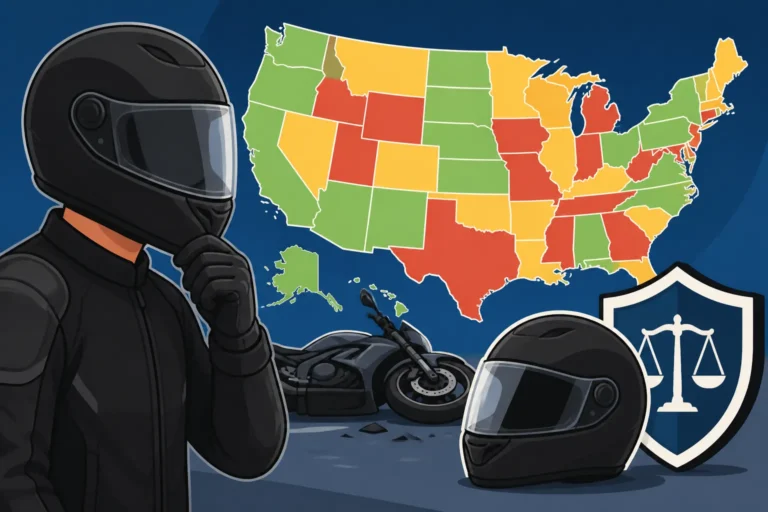
A significant number of states have universal helmet laws. These are states where every single rider and passenger, without exception, is legally required to wear a DOT-compliant helmet. It's a non-negotiable safety measure.
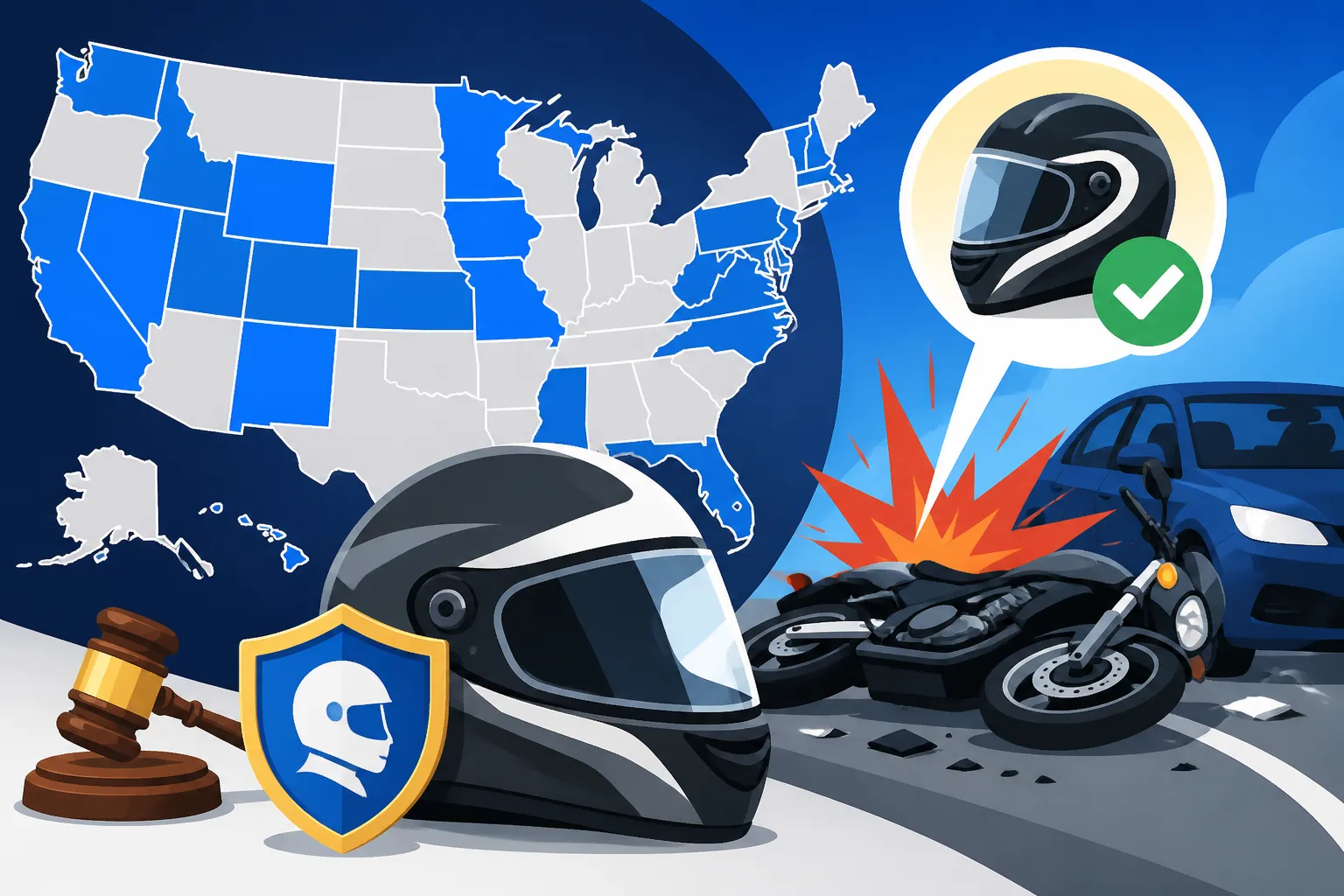
Here's a breakdown of states currently enforcing universal helmet laws:
| State | Universal Helmet Law | Key Features/Notes |
|---|---|---|
| Alabama | Yes | All riders and passengers must wear helmets. |
| California | Yes | All riders and passengers must wear helmets. California was the first state to adopt a universal helmet law. |
| Georgia | Yes | All riders and passengers must wear helmets. |
| Louisiana | Yes | All riders and passengers must wear helmets. |
| Maryland | Yes | All riders and passengers must wear helmets. |
| Massachusetts | Yes | All riders and passengers must wear helmets. |
| Mississippi | Yes | All riders and passengers must wear helmets. |
| Missouri | Yes | All riders and passengers must wear helmets. (Changed from partial to universal in 2020) |
| Nebraska | Yes | All riders and passengers must wear helmets. |
| Nevada | Yes | All riders and passengers must wear helmets. |
| New Jersey | Yes | All riders and passengers must wear helmets. |
| New York | Yes | All riders and passengers must wear helmets. |
| North Carolina | Yes | All riders and passengers must wear helmets. |
| Oregon | Yes | All riders and passengers must wear helmets. |
| Tennessee | Yes | All riders and passengers must wear helmets. |
| Vermont | Yes | All riders and passengers must wear helmets. |
| Virginia | Yes | All riders and passengers must wear helmets. |
| Washington | Yes | All riders and passengers must wear helmets. |
| West Virginia | Yes | All riders and passengers must wear helmets. |
| District of Columbia | Yes | All riders and passengers must wear helmets. |
It's crucial to remember that laws can change, so always double-check the current regulations for any state you plan to ride in. A quick search before a trip can save you a headache, or worse. For anyone needing to ensure they're compliant, stores like Cycle Gear offer a wide selection of DOT-approved helmets.
Specifics and Nuances within Universal Law States
Even within states classified as having "universal" helmet laws, there can be subtle nuances or specific interpretations that riders should be aware of. For example, while California's universal helmet law is straightforward – every rider and passenger must wear one – some states might have specific requirements regarding the type of helmet. Most universal laws generally specify that helmets must be "DOT-compliant," meaning they meet the safety standards set by the U.S. Department of Transportation. This means things like novelty helmets, which don't offer adequate protection, are not considered legal.
In New York, for instance, the universal helmet law has been in place for decades and is strictly enforced. It applies not just to traditional motorcycles but often extends to other two-wheeled vehicles like motor-driven cycles or mopeds depending on their classification and speed capabilities. Understanding these specific requirements, such as what constitutes a What Is a DOT-Compliant Helmet, is vital not only for avoiding a citation but for your actual safety. The authorities in these states often have clear guidelines and enforcement strategies, ensuring that the spirit of the law, which is rider protection, is upheld.
How Out-of-State Riders Are Affected
This is where things can get particularly tricky. You might live in a state with a partial helmet law, or even no helmet law, and then plan a riding trip through several states that have universal mandates. As an out-of-state rider, you are generally subject to the helmet laws of the state you are currently riding in, not your home state. This is a common principle of interstate travel: when you enter a new jurisdiction, you abide by its rules.
Imagine you're from Florida, which has a partial helmet law, and you decide to take a scenic ride up the East Coast. As soon as you cross into Georgia, you are subject to Georgia's universal helmet law. Fail to wear a helmet, and you could face a citation, a fine, and potentially even have your motorcycle impounded in some extreme cases. Moreover, if you're involved in an accident, your non-compliance could significantly complicate your insurance claim or legal standing, as we'll explore in How Helmet Laws Affect Your Accident Claim. It's always best practice to research the helmet laws of all states on your route before embarking on a journey.
The Profound Impact on Rider Safety and Accident Claims
The link between helmet use and safety is undeniable, but the implications extend far beyond just preventing injuries at the scene of a crash. For motorcyclists, helmet laws, particularly universal ones, play a significant role in how accident claims are handled, from initial fault determination to the final settlement amount.
Statistical Evidence of Enhanced Safety
The data unequivocally supports the efficacy of helmets in mitigating severe injuries and fatalities. Multiple large-scale studies have consistently shown that universal helmet laws lead to a noticeable reduction in both deaths and serious head trauma among motorcyclists. For example, states that have repealed universal helmet laws have often seen a subsequent increase in motorcycle fatalities and head injuries. The Centers for Disease Control and Prevention (CDC) estimates that helmets saved over 1,800 lives in a single year, and nearly twice as many could have been saved if all motorcyclists had worn helmets.
Beyond fatalities, helmets dramatically reduce the severity of injuries. A rider wearing a helmet in a crash is less likely to suffer a traumatic brain injury (TBI), facial fractures, or other critical head and neck injuries compared to an unhelmeted rider. This isn't just about survival; it's about the quality of life after a crash. Reduced injury severity means less time in hospitals, fewer rehabilitation needs, and a greater chance of returning to pre-accident physical and cognitive function. These statistics are the bedrock upon which universal helmet laws are built and vigorously defended by safety advocates.
The "Helmet Defense" and Its Legal Implications
This is a critical concept for any motorcyclist to understand, especially in a personal injury claim after an accident. The "helmet defense" is often invoked by the at-fault driver's insurance company or defense attorney. It argues that even if their client was negligent, your injuries would have been less severe – or perhaps entirely avoided – had you been wearing a helmet, or a proper helmet, at the time of the crash. This defense aims to reduce the amount of compensation you receive, claiming that your own actions (or lack thereof) contributed to your injuries.
In states with universal helmet laws, the helmet defense might seem less applicable since you were legally required to wear one. However, it can still come into play if the defense argues you weren't wearing a DOT-compliant helmet, or that the helmet you were wearing was improperly fitted or damaged prior to the accident. If you're in a state with a partial or no-helmet law, and you chose not to wear a helmet, this defense becomes a much more formidable challenge to your claim. Understanding The Helmet Defense Explained is vital because it directly attacks the value of your injury claim by shifting some blame for the extent of your injuries onto you.
How Helmet Use Affects Comparative Negligence
The concept of comparative negligence directly ties into the helmet defense and is a major factor in determining your ultimate settlement amount. Most states operate under some form of comparative negligence, which means that if you are found partially at fault for an accident or for the extent of your injuries, your recoverable damages can be reduced proportionally.
For example, if you're in a universal helmet law state like California, and you were involved in a crash where the other driver was clearly at fault (e.g., they made an illegal left turn in front of you), but it's discovered you weren't wearing a helmet at all, or perhaps a non-compliant novelty helmet, the defense might argue that 20% of your head injury damages are attributable to your failure to wear a proper helmet. If your total damages were $100,000, your award could be reduced by $20,000. This is how How Helmet Use Affects Comparative Negligence works in practice. Even if the other driver was 100% at fault for causing the accident, if you are found comparatively negligent for the severity of your injuries, your compensation will suffer. This is a powerful tool for insurance companies to reduce their payouts, highlighting the importance of always complying with helmet laws.
Navigating an Accident Claim in a Universal Helmet Law State
Getting into a motorcycle accident is a terrifying and disorienting experience, no matter where it happens. But when it occurs in a state with universal helmet laws, the legal landscape for your injury claim can have distinct features you need to be aware of. Your actions immediately following the crash, and in the days and weeks after, are crucial.
Documenting Helmet Use as Crucial Evidence
In any motorcycle accident claim, evidence is king. If you were wearing a helmet, especially in a universal helmet law state, documenting this fact immediately after the accident is paramount. This isn't just about avoiding a ticket; it's about protecting your injury claim. Take photos of yourself at the scene, still wearing your helmet if possible, or with the helmet next to you. Document any visible damage to the helmet, as this can serve as powerful proof that it absorbed impact forces that otherwise would have affected your head directly. A damaged helmet is often concrete evidence of the protective role it played.
Make sure to tell emergency responders and police officers that you were wearing a helmet. Their official reports can be vital. Keep the damaged helmet; do not discard it. It becomes a critical piece of physical evidence. Insurance adjusters will scrutinize every detail, and the presence and condition of your helmet can make a significant difference in how they assess your injuries and, consequently, your settlement. This diligence in documenting your gear is a key part of How to Prove You Wore a Helmet.
The Role of Law Enforcement and Accident Reports
When law enforcement arrives at the scene of a motorcycle accident, their primary role is to secure the area, attend to injuries, and gather information for an official accident report. This report is incredibly important for your insurance claim and any potential lawsuit. In a universal helmet law state, officers will almost certainly note whether you were wearing a helmet, and if not, they may issue a citation. This citation, while a separate legal matter, can definitely be used by the defense in your civil claim to argue comparative negligence for your injuries.
However, if the report accurately reflects that you were wearing a DOT-compliant helmet, it provides a strong foundation for your claim. It verifies compliance with the law and counters any potential "helmet defense" arguments. It’s important to review the police report for accuracy once it's available. If you believe there's an error regarding your helmet use or any other detail, you should take steps to correct it. Remember, these reports are often the first piece of evidence an insurance company sees.
Maximizing Your Claim Even with Helmet Use Mandates
Even with universal helmet laws in place, maximizing your accident claim still requires a proactive and strategic approach. Just because you wore your helmet doesn't automatically guarantee a fair settlement. Insurance companies will still look for ways to minimize their payout. This means:
- Seek Immediate Medical Attention: Your health is paramount. Even if you feel okay, get checked out. Some serious injuries, like Motorcycle Traumatic Brain Injury Claims and Compensation, have delayed symptoms. Medical records are the backbone of any personal injury claim.
- Document Everything: Keep detailed records of all medical appointments, treatments, medications, and expenses. Track lost wages and any other financial impacts.
- Preserve Evidence: As mentioned, keep your helmet and any other damaged gear (e.g., jacket, boots). Take extensive photos of the accident scene, vehicle damage, and your injuries.
- Avoid Admitting Fault: Never apologize or admit fault at the scene. Stick to the facts.
- Consult with an Attorney: An experienced motorcycle accident attorney understands the complexities of helmet laws and how insurance companies try to use them against riders. They can help prove fault, quantify your damages, and negotiate with insurers. They are adept at handling How Accident Reconstruction Determines Fault which can be crucial in proving the other driver's liability.
In essence, while complying with universal helmet laws protects your head, it also strengthens your legal standing. But it's just one piece of the puzzle in ensuring you receive the full and fair compensation you deserve after a traumatic event.
Distinguishing Universal Laws from Partial and No-Helmet Laws
To truly appreciate the landscape of motorcycle helmet legislation, it’s helpful to understand the spectrum of laws that exist beyond the universal mandate. This broader perspective highlights why certain states have chosen different paths and the potential consequences for riders in each scenario.
Partial Helmet Laws: Age and Insurance Requirements
Many states operate under what are known as "partial" helmet laws. These laws do not require all riders to wear helmets but instead have specific criteria that mandate helmet use. The most common criteria include:
- Age: Riders and/or passengers under a certain age (most commonly 18 or 21) are required to wear helmets. Once they pass that age threshold, helmet use becomes optional, often with certain stipulations.
- Insurance Coverage: In some partial law states, riders over the mandatory age can legally ride without a helmet if they carry a certain amount of medical insurance coverage (e.g., at least $10,000-$25,000 for medical benefits). This is an attempt to ensure that if an unhelmeted rider is injured, the financial burden doesn't fall entirely on public healthcare systems.
Examples of States with Partial Helmet Laws include Florida, Texas, Arizona, and Pennsylvania. In these states, a seasoned rider over 21 with adequate medical insurance might choose to ride without a helmet, while a younger rider or one without sufficient insurance would be legally required to wear one. This creates a nuanced environment where different riders on the same road might be subject to different rules. The rationale here is often a compromise between individual liberty and public safety, allowing experienced, financially responsible adults more personal choice while still protecting vulnerable populations.
The Landscape of States with No Helmet Laws
Believe it or not, a few states in the U.S. currently have no motorcycle helmet laws whatsoever, for any age group. This means that, legally speaking, riders and passengers of any age can choose whether or not to wear a helmet. These states include Iowa, Illinois, and New Hampshire. While this offers the ultimate in rider choice, it also means these riders face the highest risk of severe head injuries in an accident.
For riders who prioritize personal freedom above all else, these states might seem like a haven. However, it's crucial to weigh the perceived freedom against the very real and well-documented risks. The arguments against mandatory helmet laws in these states often center on individual autonomy and the idea that adults should be free to make their own choices, even if those choices carry risks. Yet, the absence of such laws often leads to higher rates of fatalities and severe injuries, which can indirectly impact healthcare costs and insurance premiums for all residents, not just riders.
Why These Legislative Differences Exist
The varied landscape of helmet laws across the country is a complex tapestry woven from several threads:
- Political Climate and Advocacy: Strong lobbying efforts from motorcycle rights organizations (like ABATE or the Motorcycle Riders Foundation) often advocate for less restrictive helmet laws, emphasizing rider choice. On the other hand, public health organizations and safety advocates (like the Governors Highway Safety Association or the American Medical Association) push for universal mandates, citing injury prevention statistics.
- Historical Precedent: As mentioned earlier, the history of federal incentives and subsequent state-level repeals has shaped today's laws. Some states have simply never reverted to universal laws after initial repeals, while others have enacted them more recently based on new data or changing political will (like Missouri in 2020).
- Cultural Attitudes: The perception of motorcycling within a state's culture can also play a role. In states where motorcycling is deeply ingrained as a symbol of freedom, resistance to mandatory helmet laws can be stronger.
- Economic Factors: The impact of unhelmeted crashes on state healthcare systems and insurance rates is a factor, though it's often balanced against the economic impact of rider tourism and the desire to avoid deterring riders.
Ultimately, the differences in Universal vs Partial Helmet Laws Explained reflect a continuous balancing act between individual rights, public safety, and economic considerations. For riders, understanding this dynamic is key to making informed decisions about their safety gear and being prepared for the legal realities of riding across state lines. Whether you ride in a universal, partial, or no-helmet state, prioritizing your safety with proper gear from reliable sources like Cycle Gear is always the smartest move.
Disclaimer
This article is for general informational purposes only and does not constitute professional advice. Laws and regulations vary by location and change over time. Consult a qualified professional for guidance on your specific situation.