How Riding Unlicensed Affects Your Claim
Getting into a motorcycle accident is a terrifying experience, and it can be even more overwhelming if you realize you were riding without a valid license or endorsement at the time. The immediate fear isn't just about your injuries, but also about whether your lack of proper licensing will completely derail any chance of getting compensation for your medical bills, lost wages, and damaged bike. This guide aims to clear up the confusion and provide a realistic understanding of how riding unlicensed can impact your motorcycle accident claim.
The Legal Landscape: Understanding License Requirements and Accident Claims
It's easy to assume that if you're riding a motorcycle without the correct license, you automatically forfeit all your rights after an accident. However, the legal reality is often more nuanced, depending on where the accident happened and the specific circumstances. While riding unlicensed is certainly a traffic violation with its own set of consequences, it doesn't always automatically bar you from recovering damages in a civil personal injury claim.
The Basic Requirement of a Motorcycle Endorsement
Let's start with the basics. Every state in the U.S. requires motorcycle riders to have a specific motorcycle endorsement on their driver's license or a standalone motorcycle license. This isn't just a formality; it's designed to ensure riders have demonstrated a basic level of skill and knowledge of motorcycle operation and road safety. For instance, in states like California, you must pass a written knowledge test and a skills test (or complete a certified training course) to get your M1 endorsement. Similarly, Texas and Florida have their own specific requirements, often including an approved rider education course. These laws are in place to promote safety, and failing to adhere to them means you're breaking the law, which can lead to fines, points on your license, or even impoundment of your bike.
Distinguishing Traffic Violations from Civil Liability
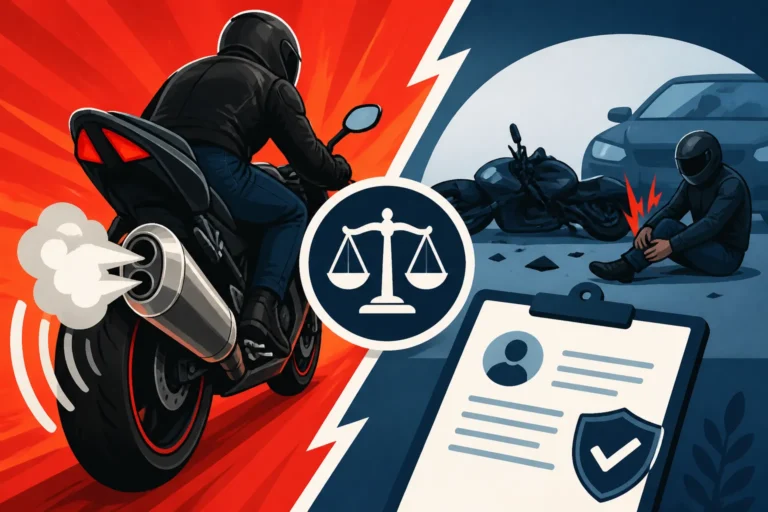
This is a critical distinction many riders struggle with. Riding without a license is a traffic infraction, a criminal offense, or a quasi-criminal offense depending on the jurisdiction. The state can penalize you for it. However, a personal injury claim after an accident falls under civil law. In a civil claim, the core question is who was at fault for causing the accident and, as a result, who is liable for the damages incurred.
Think of it this way: if you're driving a car with an expired registration and another driver blows through a red light and hits you, your expired registration didn't cause the accident. The other driver's negligence did. While you might get a ticket for the registration, it doesn't automatically mean you can't sue the red-light runner for damages. The same principle often applies to motorcycle licensing. The lack of a license, by itself, usually needs to be directly linked to the cause of the accident for it to significantly impact your civil claim.
State-Specific Nuances for Unlicensed Riders
The way your lack of a license affects your claim can vary significantly from state to state. Some states operate under a pure comparative negligence rule, others modified comparative negligence, and a few have contributory negligence. These rules determine how shared fault impacts your ability to recover. For example, in a pure comparative negligence state like California, even if you are found 90% at fault (perhaps because your lack of experience contributed to an evasive maneuver), you could still recover 10% of your damages. In a modified comparative negligence state like Texas or Ohio, if you are found to be 51% or more at fault, you might be completely barred from recovering anything.
Some states might view riding without a license as evidence of negligence, allowing the defense to argue that your lack of proper training contributed to the accident. Other states, particularly those that strictly separate negligence from causation, might argue that the lack of a license is irrelevant if the other driver's actions were the direct cause. It's a complex area where local legal knowledge becomes invaluable, highlighting why it's so important to understand the Motorcycle Accident Fault Laws in California or your specific state.
Here's a general overview of how different states might consider an unlicensed rider's status in a civil claim, though specifics always depend on the individual case and local statutes:
| Factor | Potential Impact in a Civil Claim (General) |
|---|---|
| Traffic Violation | Almost always results in a separate ticket/fine; does not automatically negate civil claim. |
| Evidence of Negligence | In some states, it can be introduced by the defense to argue you were less skilled or reckless, contributing to the accident. |
| Causation | Crucial: Must be a direct link between the lack of license (e.g., resulting poor riding skills) and the cause of the accident. If no link, often irrelevant. |
| Comparative Negligence Implications | If linked to causation, it can reduce your percentage of recovery. |
| Insurance Policy Voidance | Could potentially affect your own policy's coverage if "lawful operation" is a condition, but less likely to bar recovery from an at-fault driver's policy. |
How Insurance Companies View Unlicensed Riders
Insurance companies are profit-driven entities, and their primary goal after an accident is to pay out as little as possible. When they discover a rider was operating a motorcycle without a valid license, it's often seen as a golden opportunity to deny or significantly reduce the claim.
The Insurer's Immediate Red Flag
As soon as an insurance adjuster learns you were riding without a license, expect them to latch onto it. They will immediately flag this information and use it as leverage. Their argument will often be twofold: first, that your lack of a license proves you were unqualified to operate the vehicle, making you inherently negligent; and second, that this negligence directly contributed to the accident or the severity of your injuries. This plays into the negative stereotypes often unfairly associated with motorcyclists, allowing the insurance company to easily How Insurance Companies Assign Blame to Riders.
They might suggest that because you weren't properly licensed, you lacked the necessary training and experience to react safely in an emergency, or that you were simply acting irresponsibly. This tactic aims to shift blame away from their insured driver and onto you, thereby reducing their liability.
Arguments Used to Minimize Your Claim
Insurance adjusters are skilled negotiators, and they will employ various arguments to minimize your payout. They might contend that:
- Contributory Negligence: They'll argue your unlicensed status makes you partially or wholly at fault for the accident. For instance, if you swerved to avoid an obstacle but perhaps didn't execute the maneuver perfectly, they might claim that a licensed, experienced rider would have handled it better, thereby linking your lack of license to the accident's cause. This is a common tactic, especially in states with strict Comparative Negligence in Motorcycle Accidents laws.
- Increased Risk of Injury: Even if they can't pin the cause of the accident on your unlicensed status, they might argue it contributed to your injuries. For example, they might claim that because you weren't properly trained, you didn't brace for impact correctly or were positioned poorly on the bike, leading to more severe injuries than a licensed rider might have sustained. They might also try to imply that an unlicensed rider is less likely to have invested in proper safety gear, though this isn't necessarily true. Many riders who purchase high-quality protective gear from places like Cycle Gear understand its importance, regardless of their license status.
- Breach of Policy Terms: If you are trying to claim damages through your own insurance policy (e.g., for uninsured motorist coverage, if the other driver fled or was uninsured), your insurer might argue that riding without a license constitutes a breach of your policy's terms and conditions, which often require the insured vehicle to be operated legally. This is less common for third-party claims against the at-fault driver's insurance but something to be aware of regarding your own coverage.
Your Own Insurance Coverage Implications
While an at-fault driver's insurance company will certainly try to use your unlicensed status against you, what about your own insurance? If you have your own motorcycle insurance policy, it usually comes with a clause requiring the vehicle to be operated lawfully. This means if you were riding without a valid license, your own policy could potentially deny coverage for certain aspects of your claim, such as medical payments (MedPay) or collision coverage for your bike.
This situation varies by policy and state law. Some policies might still provide coverage, while others might deny it entirely, especially if the lack of a license is directly linked to an increased risk as per their underwriting. It's crucial to review your specific policy documents and understand what constitutes "lawful operation." Even if you were responsible enough to purchase gear from Cycle Gear to protect yourself, the legal technicalities of your insurance policy can still be a significant hurdle.
The Impact on Proving Fault and Damages
The core of any personal injury claim is proving fault and then proving the extent of your damages. When you're an unlicensed rider, both these elements can become significantly more challenging.
The Nexus Requirement: Causation is Key
The most important legal principle here is causation. For your lack of a motorcycle license to legally diminish your claim, the opposing party (the at-fault driver's insurance company or their attorney) must establish a direct link, or "nexus," between your unlicensed status and the actual cause of the accident. It's not enough for them to simply say, "You didn't have a license, therefore you're at fault." They must demonstrate how your lack of a license directly contributed to the collision.
For example, if the other driver was making an illegal left turn and pulled directly into your path, causing a Motorcycle Accidents Caused by Left-Turn Collisions, your license status likely had no bearing on their negligent action. The accident would have happened regardless of whether you had an M1 endorsement. However, if they can show that your lack of training led to you panicking, braking incorrectly, or making an unsafe maneuver that worsened or caused the collision, then a causal link could be established. This is a tough hurdle for the defense, but they will absolutely try to clear it.
Damage Mitigation and the "Helmet Defense" Parallel
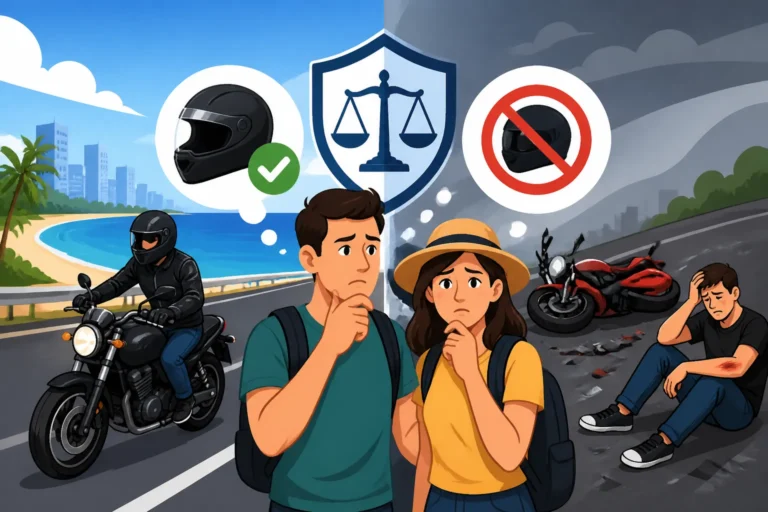
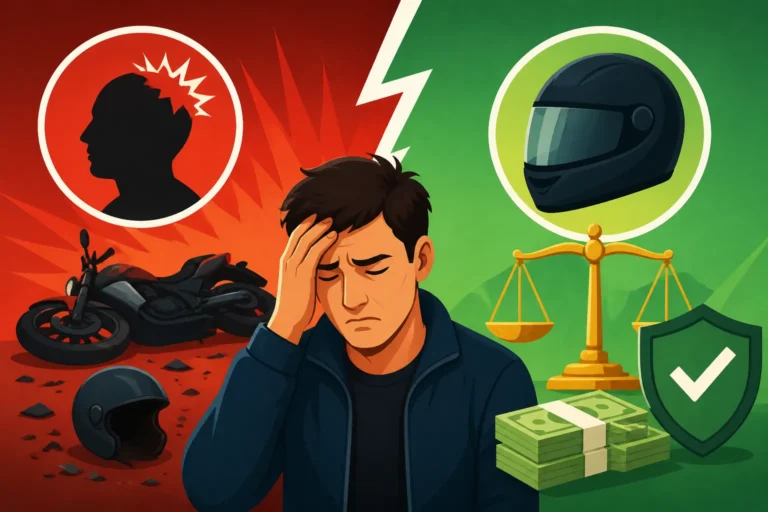
A useful parallel to understand here is the "helmet defense." In many states, even if a motorcycle helmet law exists, not wearing a helmet doesn't automatically mean you can't recover damages. However, the defense might argue that your injuries, particularly head injuries, would have been less severe if you had worn a helmet. This is known as the helmet defense, and it aims to reduce the amount of compensation you can claim for those specific injuries. For more on this, you can look into How Helmet Laws Affect Your Accident Claim.
Similarly, with an unlicensed rider, the defense might attempt to argue that your injuries were exacerbated by your lack of proper training, which they'll infer from your unlicensed status. While wearing protective gear, even if you bought it from a specialist like Cycle Gear, is always a smart choice, the lack of a license can still complicate the narrative. It might not prevent you from claiming medical expenses for a broken leg, but they might try to argue your recovery was longer or more complicated due to a perceived lack of experience, if they can draw a causal link.
The Role of an Attorney in Countering the Defense
This is where a skilled personal injury attorney specializing in motorcycle accidents becomes your most valuable asset. They understand these nuanced legal arguments and know how to counter the insurance company's tactics. An experienced attorney will work diligently to:
- Separate the violation from the cause: They will emphasize that the traffic violation (riding unlicensed) is separate from the cause of the accident. They'll focus on the other driver's negligence and how it was the direct and proximate cause of the collision and your injuries.
- Focus on the other driver's actions: They will gather evidence to highlight the other driver's failures – running a stop sign, distracted driving, unsafe lane changes – as the true Common Causes of Motorcycle Accidents. This shifts the narrative back to the primary negligence.
- Minimize the impact of your license status: If the defense successfully introduces your unlicensed status as a factor, your attorney will work to minimize the percentage of fault assigned to you. They will argue that even if you were unlicensed, your actions were reasonable under the circumstances, and the primary cause still rests with the other driver.
Navigating Your Claim Even Without a License
While navigating a motorcycle accident claim as an unlicensed rider presents unique challenges, it is absolutely still possible to recover compensation. The key is to be strategic, thorough, and seek professional guidance.
Immediate Steps After the Accident
Even if you're worried about your license status, your first priority after any motorcycle accident must be your safety and health.
- Seek Medical Attention Immediately: Your health comes first. Get checked out by paramedics or go to an emergency room, even if you feel fine. Some serious injuries, like internal bleeding or a Motorcycle Accident Traumatic Brain Injuries, might not be immediately apparent. Gaps in medical treatment can severely hurt your claim later on.
- Call the Police: A police report documents the scene and can establish initial facts. While the officer might cite you for riding unlicensed, the report will also detail the other driver's actions and potential citations. This helps establish who is at fault in a motorcycle accident.
- Gather Evidence: If you are physically able, take photos and videos of everything: the accident scene, vehicle damage, road conditions, traffic signs, and any visible injuries. Get contact information from witnesses. Do not admit fault to anyone at the scene, including the police or the other driver. You can find more detail on this in What to Do Immediately After a Motorcycle Accident.
- Do Not Discuss Your License Status with the Other Driver or Their Insurer: You are not legally obligated to provide this information to them. Let your attorney handle all communication.
Gathering Evidence of the Other Driver's Fault
Because the insurance company will likely try to use your unlicensed status against you, it becomes even more critical to build an ironclad case proving the other driver's fault. This means focusing intensely on evidence such as:
- Witness Statements: Independent witnesses who saw the accident unfold can be incredibly powerful. Their unbiased accounts can confirm the other driver's negligence, regardless of your license status.
- Dashcam or Surveillance Footage: If any nearby businesses have surveillance cameras or if the other vehicle had a dashcam, this footage can be crucial in objectively demonstrating how the accident occurred and who was at fault.
- Police Report: While it might mention your unlicensed status, it should also detail the other driver's infractions. Your attorney can work to ensure the police report accurately reflects the sequence of events and the other driver's role.
- Accident Reconstruction: In serious cases, an accident reconstruction expert can analyze physical evidence (skid marks, vehicle damage, debris) to scientifically determine the cause and sequence of events, proving the other driver's liability.
- Traffic Laws Violated: Clearly identify and document which traffic laws the other driver violated, such as speeding, running a red light, or Motorcycle Accidents Caused by Distracted Driving.
Why Legal Representation Becomes Even More Crucial
If you're an unlicensed rider involved in an accident, trying to navigate the complex legal and insurance landscape on your own is like riding a motorcycle blindfolded – incredibly risky. The stakes are high, and the insurance companies will not hesitate to exploit your vulnerable position.
This is precisely why hiring a motorcycle accident lawyer is not just recommended, but often essential. A skilled attorney understands the intricate laws surrounding Motorcycle Accident Liability: A Complete Guide and how an unlicensed status might be handled in your specific state. They can:
- Protect Your Rights: They will act as your shield, handling all communications with insurance companies and preventing them from taking advantage of you or coercing you into making statements that could harm your claim.
- Build a Strong Case: They know what evidence is needed to prove the other driver's negligence and will meticulously gather everything necessary, from police reports and witness statements to medical records and accident reconstruction analyses. They are experts at Proving Fault in a Motorcycle Accident.
- Counter Defense Arguments: Your attorney is prepared for the "unlicensed rider" defense and knows how to effectively argue that your lack of a license did not cause the accident, focusing instead on the other driver's actions.
- Maximize Your Settlement: By effectively negotiating with insurers and, if necessary, taking your case to court, an attorney can significantly increase your chances of obtaining a fair settlement that covers all your Types of Damages in a Motorcycle Accident Claim, including medical bills, lost wages, pain and suffering, and property damage. Without a lawyer, you are at a severe disadvantage. If you're wondering Do You Need a Motorcycle Accident Lawyer, in this scenario, the answer is a resounding yes.
Disclaimer
Please remember that this article provides general information and insights into motorcycle accident claims and is not legal advice. Laws vary significantly by jurisdiction, and the specifics of your case will always dictate the outcome. It is crucial to consult with a qualified motorcycle accident attorney in your state to discuss your particular situation and receive personalized legal guidance.