How Helmet Laws Affect Tourists and Visitors
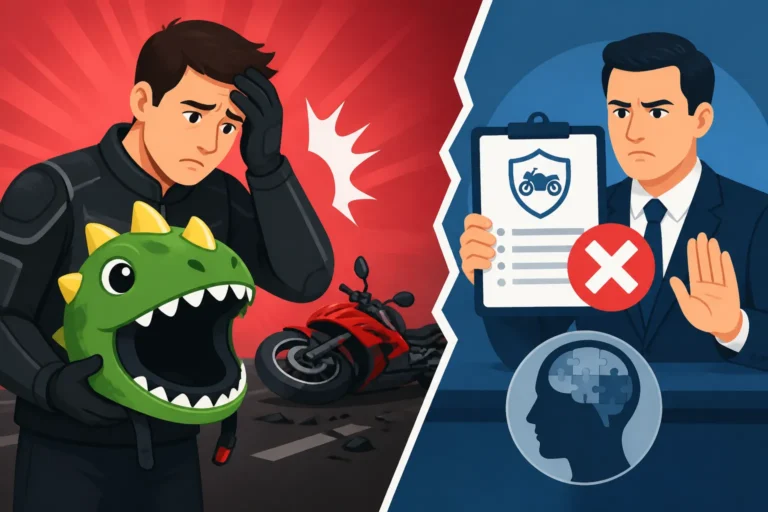
Riding your motorcycle on vacation or just passing through a new state can be an exhilarating experience, offering freedom and new scenery. But what happens if you're involved in an accident and you're unsure about the helmet laws of that particular area? The confusion about different state regulations, especially as a visitor, can turn an already traumatic event into a legal nightmare. This guide will meticulously break down how helmet laws affect tourists and visitors after a motorcycle accident, helping you understand your rights and the potential implications for your claim.
Understanding Helmet Laws Across State Lines for Visiting Riders
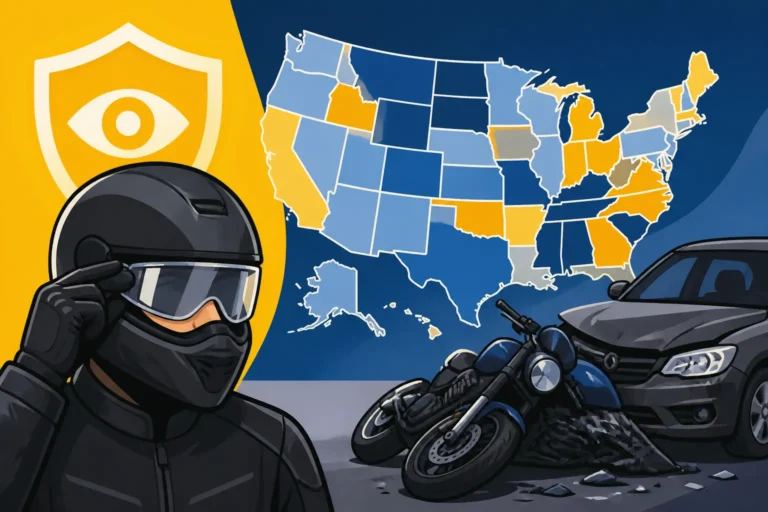
It's a common scenario: you’re from a state with no helmet law for adults, say Iowa or Illinois, and you decide to take that dream ride through California or New York. The open road calls, the wind in your hair feels amazing… until an unexpected incident occurs. Suddenly, the specific rules of the state you’re visiting, not your home state, become critically important. The legal landscape for motorcyclists is a patchwork quilt across the United States, with each state having its own distinct regulations regarding helmet use, eye protection, and other essential gear. For tourists and visitors, this variability can be a significant source of anxiety and legal vulnerability.
Universal vs. Partial Helmet Laws for Visitors
When you're a tourist, you're generally subject to the laws of the state you are physically in at the time of the accident. This isn't just about traffic tickets; it directly impacts any potential personal injury claim. States like California, Georgia, and New York have what are known as "universal helmet laws," meaning all riders, regardless of age, must wear a DOT-compliant helmet at all times. If you're visiting one of these states and get into an accident without wearing a helmet, even if your home state doesn't require one, you are in violation of local law.
Conversely, many states operate under "partial helmet laws." These often require helmets only for younger riders, typically those under 18 or 21, or for riders without sufficient insurance coverage. For example, in Texas, riders over 21 are exempt from wearing a helmet if they have completed a motorcycle safety course or are covered by a certain level of health insurance. Florida also has partial helmet laws, allowing riders over 21 to ride without a helmet if they have at least $10,000 in medical insurance. This nuance means that while you might be legally riding helmet-free in Florida, if you then cross into Georgia and have an accident without a helmet, you're suddenly in a very different legal position. It's not about where your license is from; it's about where the rubber meets the road.
The Impact of Your Home State's Laws vs. Host State's Laws
One of the biggest misunderstandings for visiting riders is the belief that their home state’s laws somehow travel with them. Unfortunately, this is not the case for motorcycle helmet laws. When you’re riding through, say, Arizona, you must comply with Arizona's helmet laws, not the laws of your home state like New Hampshire, which famously has no helmet law for adults. This is a crucial distinction, especially if a crash occurs. The legal implications for your personal injury claim will almost certainly be assessed based on the laws of the jurisdiction where the accident happened.
For instance, imagine a rider from New Hampshire, accustomed to riding helmet-free, takes a cross-country trip and has an accident in California. Even if they have a pristine driving record and were obeying all other traffic laws, the fact that they weren't wearing a helmet in a universal helmet law state immediately opens the door for the defense to argue contributory or comparative negligence. This means even if the other driver was clearly at fault, your recovery could be significantly reduced or even barred entirely if the court determines your lack of a helmet contributed to the severity of your injuries. Understanding these stark differences is paramount for any rider venturing beyond their familiar territory. This is part of a larger conversation about Motorcycle Helmet Laws by State.
Common Misconceptions and Legal Traps
Many riders, especially those on extended trips, might assume that if they meet the helmet requirements of their home state, they’re covered everywhere. This is a dangerous misconception. Another common trap is relying on anecdotal evidence or outdated information from fellow riders. Laws change, and interpretations vary. Some riders might also think that if they're just passing through a state for a short time, enforcement will be lax. While that might sometimes be true for minor traffic infractions, in the event of an accident, every detail of compliance with local law will be scrutinized.
Consider a rider from Montana, where helmets are only required for those under 18, riding through Washington State. Washington has a universal helmet law. If that rider, being over 18, is involved in a collision with another vehicle and suffers a head injury while not wearing a helmet, the insurance company for the at-fault driver in Washington will almost certainly use their non-compliance as a defense. They'll argue that even if their client was negligent, the rider’s injuries would have been less severe had they been wearing a helmet, significantly impacting the potential settlement amount. This is often referred to as the "helmet defense," which we'll discuss further in the next section.
How Helmet Use Impacts a Claim as a Visitor
When you're dealing with the aftermath of a motorcycle accident, the last thing you want is for your injuries to be dismissed or your compensation reduced because of where you decided to ride. Yet, for visitors, the specific helmet laws of the accident state can directly affect how your injury claim is handled, particularly concerning shared fault and the extent of your damages.
The "Helmet Defense" for Out-of-State Riders
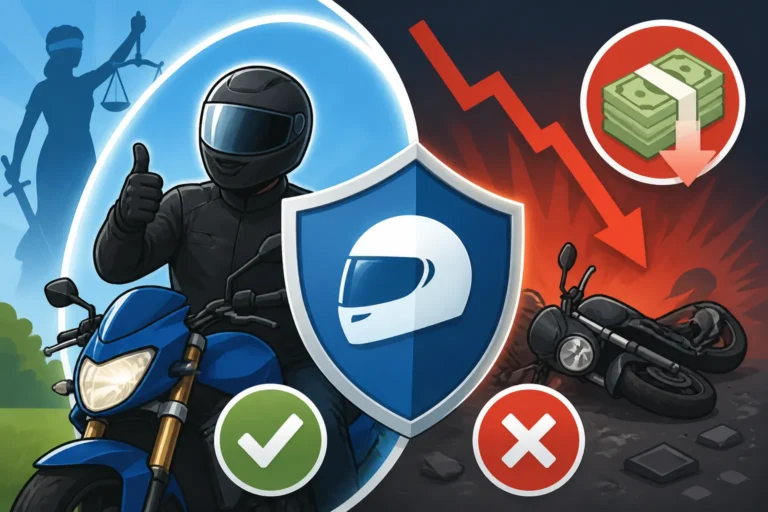
The "helmet defense," also known as the "helmet rule," is a legal argument frequently used by defense attorneys and insurance companies. It contends that even if their client was primarily at fault for the accident, the injured motorcyclist's failure to wear a helmet, where required by law, contributed to the severity of their head or brain injuries. This defense doesn't usually argue that the lack of a helmet caused the accident itself, but rather that it exacerbated the injuries suffered. This becomes especially potent when an out-of-state rider is involved, as they might genuinely be unaware of the local regulations.
For instance, if a tourist from South Carolina (where helmets are required for riders under 21) is riding through Pennsylvania (a universal helmet law state) without a helmet and sustains a serious traumatic brain injury after a car driver fails to yield, the car driver's insurance company, like GEICO or Progressive, will almost certainly invoke the helmet defense. They will bring in medical experts and accident reconstructionists to testify that a DOT-compliant helmet would have lessened the injury. The outcome can be a significant reduction in the compensation awarded for medical bills, lost wages, and pain and suffering. Understanding How Helmet Laws Affect Your Accident Claim is crucial.
Proving Helmet Use and Injury Mitigation
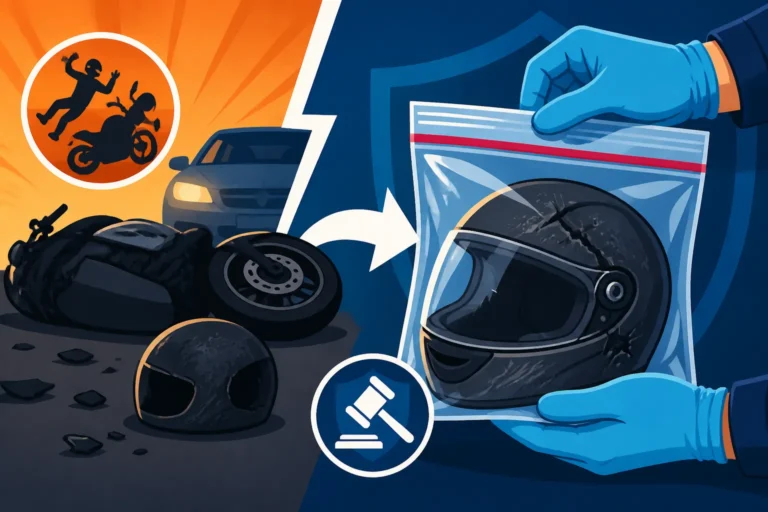
If you were wearing a helmet, even if you’re from out of state, proving this fact is vital to countering any helmet defense. It's not enough to simply state you had one on; you need evidence. This might include police reports noting helmet use, witness statements, photographs of the scene showing your helmet (even if damaged), or medical records that describe the helmet's condition or injury patterns consistent with helmet use. After a crash, your damaged helmet itself can be critical evidence. Do not discard it! It shows that you took reasonable precautions and that the helmet did its job in absorbing impact, thus mitigating what could have been even worse injuries.
Consider a rider from Texas, adhering to their state's partial helmet law by wearing a helmet because they haven't met the exemption criteria. They travel to California and are involved in an accident. If the other driver tries to argue the rider's helmet choice was insufficient, showing that the helmet was DOT-compliant and damaged in the crash can be powerful evidence. Medical professionals can also provide testimony on how injuries would have been far worse without the helmet. This helps reinforce that you acted responsibly and that the accident, not your gear choice, was the cause of your injuries. This is directly related to Motorcycle Safety Gear and Legal Protection.
Navigating Comparative Negligence as a Tourist
Most states in the U.S. follow some form of comparative negligence. This legal doctrine allows an injured party to recover damages even if they were partially at fault for an accident, but their compensation is reduced by their percentage of fault. For instance, if you are found 20% at fault, your $100,000 settlement would be reduced to $80,000. However, the specific rules of comparative negligence vary significantly by state. Some, like California, employ "pure comparative negligence," meaning you can recover even if you are 99% at fault. Others, like Texas or Ohio, use "modified comparative negligence" with a 51% bar rule, meaning you cannot recover anything if you are found 51% or more at fault.
For a tourist, this becomes a critical factor. If you're visiting a state with a strict modified comparative negligence rule and you weren't wearing a helmet in violation of that state's law, the defense could push for a high percentage of fault to be assigned to you. For example, in a state like South Carolina, if a jury determines your failure to wear a helmet contributed 51% to your head injuries, you could be barred from receiving any compensation, even if the other driver ran a red light. This is a harsh reality for many out-of-state riders who might not grasp the nuances of Comparative Negligence in Motorcycle Accidents.
State Helmet Law Type Description Impact on Tourist Accident Claim (No Helmet, Universal Law State) Impact on Tourist Accident Claim (No Helmet, Partial Law State, >Age Threshold)
:## Understanding the Impact of Texas Helmet Laws on Visitors
As a passionate advocate for motorcycle culture and safety, I’ve seen firsthand how a moment of pure riding joy can turn into immense stress when an accident occurs, especially when you’re far from home. If you're visiting Texas and get into a motorcycle accident, the state's helmet laws can have significant ramifications for your injury claim. It’s not just about getting a ticket; it's about potentially affecting your financial recovery for medical bills, lost wages, and pain and suffering. Navigating these laws as an out-of-state rider adds layers of complexity that many simply don't anticipate.
Texas, much like other states, has specific laws dictating helmet use, and these apply to everyone riding within its borders, regardless of where your license was issued or your bike is registered. So, if you're planning a scenic ride through the Hill Country or cruising along the Gulf Coast, you need to be acutely aware of what Texas law requires of you.
Overview of Texas Motorcycle Helmet Laws
Texas has what is often referred to as a "partial" helmet law, but it's crucial to understand the specifics. This isn't a free-for-all; there are distinct conditions under which a rider might be exempt from wearing a helmet. For those visiting, simply assuming you're covered by your home state's rules can lead to serious legal and financial headaches.
Who Must Wear a Helmet in Texas
Under Texas law, all motorcycle operators and passengers are generally required to wear a helmet. However, there are specific exemptions. Riders who are 21 years of age or older may ride without a helmet if they can provide proof of successfully completing a motorcycle operator training and safety course (like the Motorcycle Safety Foundation Basic RiderCourse) or if they carry an insurance policy that provides at least $10,000 in medical benefits for injuries incurred in a motorcycle accident.
This means that if you're under 21, you must wear a helmet, no exceptions. If you're 21 or older, you still need to meet one of those two criteria. This isn’t something you just "hope for" if pulled over; you need to have the documentation to back it up. For visitors, this can be particularly tricky. You might have taken a safety course years ago, but do you have physical proof of completion easily accessible? Is your current insurance policy explicitly covering $10,000 in medical benefits for a motorcycle accident in Texas? These are not minor details; they are legally binding requirements that could dictate the legality of your helmet choice and, by extension, the strength of your accident claim.
Legal Penalties for Non-Compliance
If you're caught riding without a helmet in Texas and do not meet the legal exemptions, you could face a citation and a fine of up to $200. While a fine might seem like a small inconvenience during a road trip, it’s often just the tip of the iceberg. The real problem arises if you're involved in an accident. A traffic citation for a helmet violation can be used as evidence against you in a personal injury claim, suggesting that you were negligent or acted carelessly. This can significantly complicate your ability to recover full compensation for your injuries, even if the other driver was clearly at fault.
Think about it: if the police report notes a helmet violation, that immediately gives the opposing insurance company, say, State Farm or Allstate, a foothold to argue that you contributed to your injuries. It can paint you in a less favorable light, regardless of the circumstances of the crash itself. This is why understanding Motorcycle Accident Fault Laws in Texas is critical, as any perceived fault on your part can be used to reduce your payout.
How Not Wearing a Helmet Affects a Motorcycle Accident Claim in Texas
The ramifications of not wearing a helmet, or not meeting the exemptions, go far beyond a simple fine in Texas. In the unfortunate event of a crash, your helmet status can become a central point of contention, directly influencing how much compensation you can receive.
The Helmet Defense and Injury Mitigation
In Texas, like many other states, insurance companies and defense attorneys often employ what's known as the "helmet defense." This argument asserts that even if the other driver was primarily at fault for the accident, your decision not to wear a helmet (or not to meet the legal exemptions for doing so) contributed to the severity of your head or brain injuries. They don't usually claim that the lack of a helmet caused the accident itself, but rather that it worsened the outcome for you.
Imagine you're visiting Austin, enjoying the live music scene, and on your way back, a distracted driver swerves into your lane, causing a collision. You suffer a severe head injury. If you weren't wearing a helmet and couldn't prove one of the exemptions, the defense would likely argue that a helmet would have either prevented or significantly reduced the severity of your injury. They might present expert medical testimony or accident reconstruction analysis to support this claim. This legal maneuver aims to shift some of the responsibility for your injuries onto you, thereby reducing the amount of damages the at-fault party has to pay. This directly relates to How the Helmet Defense Reduces Settlements.
Texas's Modified Comparative Negligence Rule
Texas operates under a modified comparative negligence rule, specifically the "51% bar rule." This means that you can only recover damages if you are found to be 50% or less at fault for the accident. If your fault is determined to be 51% or more, you are completely barred from recovering any compensation. This is incredibly important for out-of-state riders navigating Texas helmet laws.
If you weren't wearing a helmet and didn't meet the exemptions, and you sustain a head injury, a jury or an insurance adjuster might assign a percentage of fault to you for contributing to your own injuries. For example, if the other driver was 70% at fault for the collision itself, but your failure to wear a helmet is deemed to contribute 30% to the severity of your head injury, your total fault could potentially be pushed to a level that significantly reduces or even bars your recovery under Texas's 51% rule. This is a severe consequence that can leave accident victims with astronomical medical bills and no recourse. For more on this, you can look into How Comparative Negligence Reduces Your Payout.
Impact on Damages and Settlement Value
The "helmet defense" and Texas's comparative negligence laws can drastically reduce the value of your motorcycle accident claim. When negotiating with insurance companies, they will use any non-compliance with helmet laws as leverage to offer a lower settlement. They know that if the case goes to trial, a jury might be less sympathetic to a rider who wasn't following the law, especially if the injuries could have been lessened by a helmet.
This isn't just about head injuries either. While the primary focus of the helmet defense is on head trauma, its psychological impact on a jury or adjuster can subtly influence how they view your entire claim. Even if you have other injuries, like road rash or a broken leg, the perceived "negligence" regarding helmet use can make it harder to get full compensation for all your damages, including pain and suffering, lost wages, and property damage to your bike. A lower settlement means less money to cover your mounting medical expenses and recovery costs. This emphasizes why understanding How Fault Affects Your Settlement is so vital.
Protecting Your Claim as a Visitor in Texas
Being prepared is always the best defense, especially when you're a visitor riding in an unfamiliar state. Knowing the law and taking proactive steps can make a monumental difference if you're ever involved in a motorcycle accident in Texas.
Researching Laws Before You Ride
The absolute best way to protect yourself is to do your homework before you even hit the road in Texas. Don't just assume the laws are the same as back home. A quick search for "Motorcycle Helmet Law in Texas" will give you the most current information. If you're 21 or older and plan to ride without a helmet, ensure you meet one of the exemptions. That means having documented proof of a motorcycle safety course completion (which you might have gotten through a place like Harley-Davidson Riding Academy or a local community college) or verifying that your health insurance policy explicitly provides at least $10,000 in medical coverage for motorcycle accident injuries. Carry this documentation with you at all times.
It’s also wise to check other basic motorcycle equipment laws. For instance, do you need eye protection? Are there specific requirements for handlebars or exhaust systems? A comprehensive pre-ride check, not just of your bike but of the local laws, is a small effort that can prevent huge problems. Investing in quality gear, even if not legally mandated in all situations, such as a full-face helmet available at stores like Cycle Gear, can also bolster your defense should an accident occur. It shows intent to ride safely and mitigate risks.
Documenting Compliance and Incident Details
If you are involved in an accident, your actions immediately afterward are critically important. Even if you were wearing a helmet, ensure the police report accurately reflects this. If it was damaged, take photos of your helmet at the scene. This visual evidence can be crucial later. Gather witness statements that can confirm you were wearing appropriate gear. Document your injuries thoroughly, as well as the scene of the accident. Take pictures of everything – your bike, the other vehicles, road conditions, traffic signs, and any visible injuries.
For visitors, exchanging information with the other parties involved and getting the police report number are vital. Don't hesitate to take notes on everything you remember about the incident. Your ability to recall details might fade quickly due to shock or injury. The more information you can provide to law enforcement and, subsequently, your attorney, the better equipped they will be to fight on your behalf. Remember, What to Do Immediately After a Motorcycle Accident can significantly impact your claim.
Why Legal Counsel is Crucial for Out-of-State Crashes
Dealing with a motorcycle accident is stressful enough, but when you're a visitor in Texas, the complications multiply exponentially. You're dealing with unfamiliar laws, potentially different court systems, and the logistics of managing a claim from a distance. This is precisely why hiring an experienced Texas motorcycle accident attorney is not just helpful but often essential. An attorney who specializes in motorcycle accidents in Texas will understand the nuances of the state's helmet laws, comparative negligence rules, and how local juries tend to view these cases.
They can navigate the legal landscape, counter the helmet defense effectively, and ensure that your rights as an injured rider are protected. They can gather necessary evidence, communicate with insurance companies (who often try to take advantage of out-of-state victims), and help you get the fair compensation you deserve. Don't assume your home state attorney can seamlessly handle a case in Texas; local expertise truly matters. Having someone on your side who understands the local legal environment can be the difference between a successful claim and one that leaves you with nothing. This is particularly relevant when considering Do You Need a Motorcycle Accident Lawyer in such a complex situation.
Disclaimer
Please remember that this article provides general information and is not intended as legal advice. Laws are complex and constantly evolving, and every accident scenario is unique. If you have been involved in a motorcycle accident in Texas or any other state, it is highly recommended that you consult with a qualified attorney to discuss your specific situation and understand your legal rights and options.