Handlebar Height Limits by State
Riding a motorcycle offers an unparalleled sense of freedom, but that freedom comes with a maze of regulations that can feel confusing, frustrating, and sometimes, downright arbitrary. One such area that often leaves riders scratching their heads concerns handlebar height limits. You might love the look of a certain bar setup, but unknowingly, you could be setting yourself up for a ticket, or worse, jeopardizing your legal standing after an accident. This comprehensive guide will demystify the varying state laws on handlebar height, explain why these rules exist, and detail how non-compliance could impact your ride and your claim.
Navigating the Varied Landscape of Handlebar Height Laws
It seems like such a specific detail, doesn't it? Just how high your handlebars sit above your seat or shoulders. Yet, virtually every state in the U.S. has some kind of regulation concerning this, even if it's just a general safety clause. The challenge for riders is that these laws aren't uniform. What's perfectly legal in one state could land you a citation the moment you cross state lines. It’s enough to make you wonder if anyone truly understands all the nuances.
The Fundamental Reasons Behind Height Restrictions
When you're out on the open road, the last thing you want to worry about is whether your ape hangers are too tall. But these laws, as annoying as they can be, stem from concerns about rider safety and control. Think about it: if your hands are stretched too high, it fundamentally changes your riding posture and how effectively you can steer, brake, and react to sudden hazards.
The primary argument for handlebar height restrictions is related to maintaining proper control. When your hands are too high, it can make it harder to quickly turn the handlebars, especially in an emergency maneuver like swerving to avoid a deer or an unexpected pothole. Your arm leverage is reduced, and rapid, precise movements become significantly more challenging. Furthermore, reaching for controls like turn signals, horn, or even the brake and clutch levers can become awkward and slow if your arms are excessively extended. This slight delay, or the need to shift your weight or balance, could be the difference between a near miss and a serious accident. It's all about ensuring that a rider can maintain full, uninhibited control over their machine at all times.
State-Specific Regulations and the Common 15-Inch Rule
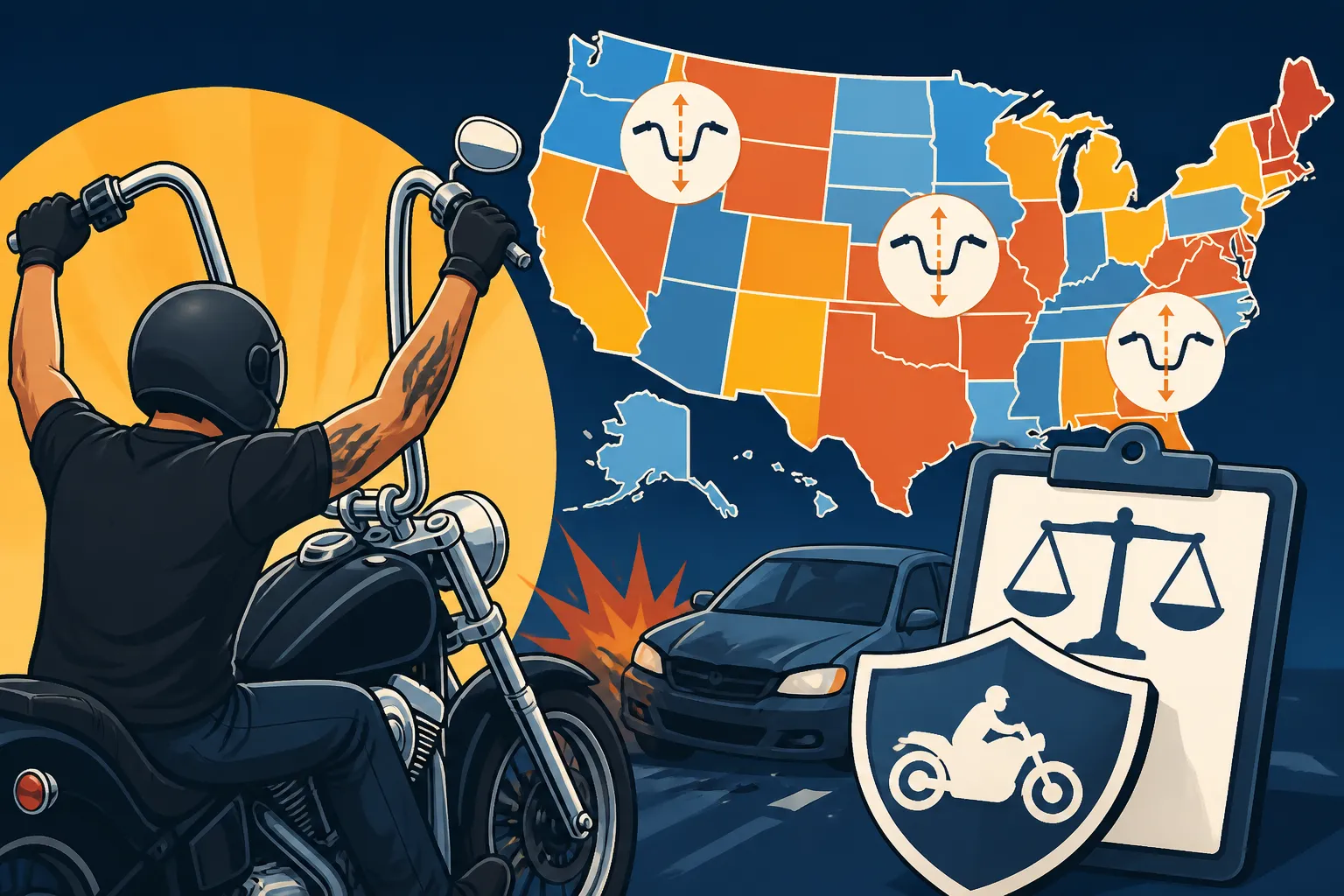
While the exact wording and measurement points can differ, a common theme across many states is a limit of 15 inches. This often refers to the grips or the highest point of the handlebar, measured from the top of the seat. Other states might phrase it as "no higher than the rider's shoulders when seated on the motorcycle." These subtle differences are crucial. For example, a 15-inch measurement from the seat might allow for taller bars for a shorter rider, while a shoulder-height rule would apply universally, regardless of the rider's stature.
Let's look at a few examples:
- California: Known for its motorcycle culture, California law specifies that handlebars cannot be higher than 6 inches above the operator's shoulders when seated. This is a common and relatively strict interpretation.
- Texas: In Texas, handlebars are generally not permitted to be higher than 15 inches above the seat of the motorcycle. This offers a different measuring point than California's shoulder height.
- Florida: Florida's law is similar to Texas, stating that handlebars cannot be more than 15 inches above the portion of the seat occupied by the operator.
- New York: Another state with a 15-inch limit above the seat.
- Pennsylvania: Pennsylvania also adheres to the 15-inch rule above the seat level.
- Ohio: Ohio's law typically states that handlebars cannot be higher than the top of the operator's shoulders when seated.
- States with No Explicit Height Law: Some states, like Iowa, New Hampshire, and Wyoming, do not have specific handlebar height restrictions. However, general safety clauses about operating a vehicle safely still apply, meaning excessively high or unsafe handlebars could still lead to a citation for reckless operation.
It's vital to check the specific regulations for your home state and any states you plan to ride through. Ignorance of the law is rarely an excuse when dealing with law enforcement or, later, with insurance adjusters.
Here's a simplified table summarizing common handlebar height limits in various states. Remember, these are general guidelines, and it's always best to consult your state's specific vehicle code.
| State | Common Handlebar Height Rule | Measurement Reference |
|---|---|---|
| California | No higher than 6 inches above the operator's shoulders | Shoulder height |
| Texas | No higher than 15 inches above the seat | Top of the seat |
| Florida | No higher than 15 inches above the seat | Top of the seat |
| New York | No higher than 15 inches above the seat | Top of the seat |
| Pennsylvania | No higher than 15 inches above the seat | Top of the seat |
| Ohio | No higher than the top of the operator's shoulders | Shoulder height |
| Arizona | No higher than the top of the operator's shoulders | Shoulder height |
| Illinois | No higher than 15 inches above the seat | Top of the seat |
| Michigan | No higher than 15 inches above the seat | Top of the seat |
| Washington | No higher than 30 inches above the seat | Top of the seat (more lenient) |
| Massachusetts | No higher than 15 inches above the seat | Top of the seat |
| Georgia | No specific limit, but general safe operation laws apply | N/A |
| Iowa | No specific limit, but general safe operation laws apply | N/A |
The Tangible Safety Implications of Handlebar Height
Beyond simply avoiding a ticket, there are genuine, practical safety reasons why handlebar height is regulated. It’s not just about aesthetics; it profoundly affects how you interact with your bike and the road around you. You might think "it feels fine to me," but in a split-second emergency, those few extra inches could make a huge difference in your ability to react effectively.
Rider Control, Comfort, and Reaction Time
Imagine driving a car with your hands at 12 and 6 o'clock on the steering wheel, arms fully extended. Now imagine having to make a sharp turn or slam on the brakes. It would be incredibly difficult and uncomfortable, right? The same principle applies, perhaps even more acutely, to motorcycles. When handlebars are too high, your arms are often locked or overextended, which severely compromises your ability to apply quick, forceful input to the steering. This isn't just about steering input; it also affects your ability to smoothly operate the clutch and front brake. If your wrists are at an unnatural angle, or your grip is compromised by stretching, precise modulation becomes a struggle.
Proper ergonomics are key to safe and comfortable riding. If your handlebars force an awkward posture, it can lead to fatigue in your shoulders, back, and arms over longer rides. This fatigue isn't just uncomfortable; it directly impairs your concentration and reaction time. A rider who is constantly fighting discomfort is a rider who is less aware of their surroundings and slower to respond to unexpected events. For instance, if you suddenly encounter sand or gravel on the road, needing to make a quick adjustment can be hampered by an uncomfortable or overly stretched riding position. This also links back to broader concerns about rider safety and legal protection, as maintaining proper control can often prevent an accident or mitigate its severity.
Visibility, Both for You and Other Drivers
While often overlooked, handlebar height can also play a role in visibility. For the rider, excessively high handlebars might obstruct your view of the road directly in front of your wheel, especially on uneven terrain or when navigating tight turns. This isn't usually a major factor, but every little bit of obstruction can matter.
More significantly, high handlebars can subtly affect how other drivers perceive you. Motorcycles already struggle with being seen by other motorists, a common factor in many crashes, including those caused by Left-Turn Motorcycle Accidents Explained. While handlebars aren't the primary factor in visibility, the overall profile of your bike and your posture on it can influence how quickly and clearly drivers in cages spot you. A rider hunched over or stretched uncomfortably might present a less visible or less predictable silhouette. When you combine this with other factors that make motorcycles less noticeable, like their smaller front profile, any impediment to clear vision or natural posture can increase risk.
Understanding the Legal Consequences of Non-Compliant Handlebars
So, you’ve heard about the laws and the safety arguments. But what really happens if you get caught with handlebars that are too high? The consequences can range from inconvenient to severely detrimental, especially if you find yourself in the unfortunate position of being involved in a motorcycle accident. It's not just about a simple traffic ticket; non-compliance can have far-reaching implications.
Fines, Citations, and Vehicle Impoundment
The most immediate consequence of having illegal handlebars is, of course, a traffic stop and a citation. The specific fine amount will vary by state and municipality, but it can be a decent chunk of change that you'd rather spend on gas or new gear. Beyond the fine, you might also incur points on your driving record, which can lead to increased insurance premiums.
In some jurisdictions, the penalties can be much more severe. Depending on how far out of compliance your handlebars are, or if combined with other violations, an officer might deem your motorcycle unsafe to operate. This could lead to your bike being impounded, leaving you stranded and facing towing and storage fees on top of the initial fine. Imagine you're on a cross-country trip from California to Florida, enjoying the ride through Texas, only to be pulled over in a small town where the officer takes a strict stance on the 15-inch rule. Not only do you get a ticket, but your bike might be impounded, disrupting your entire trip and costing you a fortune to get it released and made compliant. It's a hassle that no rider wants to face.
The Impact on Your Motorcycle Accident Claim and Liability
This is where the rubber truly meets the road, so to speak, when it comes to non-compliant handlebars. If you're involved in a crash and your handlebars are found to be illegal, it can severely undermine your ability to recover damages, even if the other driver was primarily at fault. Insurance companies and defense attorneys are always looking for ways to reduce their payout, and any deviation from legal requirements gives them ammunition.
They might argue that your illegal handlebar height contributed to the accident by impairing your control or reaction time. This is often referred to as the "helmet defense" parallel, where, even if a head injury was unrelated to helmet use, insurers might argue that the lack of a helmet implies a general disregard for safety. Similarly, with handlebars, they could claim that if your handlebars were compliant, you might have been able to avoid the accident entirely, or at least mitigate its severity. This brings in the concept of Comparative Negligence in Motorcycle Accidents. In states with comparative negligence laws, your compensation can be reduced by your percentage of fault. If the court or jury decides your illegal handlebars made you 10% or 20% at fault for not being able to react properly, your settlement could be significantly diminished.
For example, if you are hit by a distracted driver who clearly ran a red light, but your handlebars are 8 inches too high, the other side's legal team might argue that your impaired control contributed to your injuries. They might claim that if your handlebars were legal, you would have had better maneuverability to swerve or brake more effectively, thereby reducing the impact or even avoiding the crash. This argument, while potentially specious if the other driver was clearly negligent, is something you'd have to actively fight against. Proving fault in a motorcycle accident is already complex, and introducing questions about your vehicle's compliance only makes it harder to Maximize Your Motorcycle Accident Settlement. Therefore, adhering to Motorcycle Gear Laws and Requirements is not just about avoiding tickets, but about protecting your legal rights should the unthinkable happen.
Practical Steps for Measuring and Ensuring Handlebar Compliance
Given the variability and the potential consequences, it’s not enough to simply guess whether your handlebars are legal. You need to know how to measure them accurately and what options you have if they're not compliant. This proactive approach can save you a lot of headache and heartache down the road.
Accurate Measurement Techniques for Different Handlebar Styles
The key to compliance is knowing how to measure your handlebars correctly, as the method can depend on the specific state law.
-
"Above the Seat" Measurement: This is the most common method.
- How to do it: Sit on your motorcycle in your normal riding position. Have a friend hold a level across the top of your seat at its highest point. Then, measure vertically from the bottom of the level to the highest point of your handlebars (usually the grips). Alternatively, you can measure from the lowest point of your seat's scoop to the highest point of the handlebars. It's crucial to be consistent and to use the interpretation that your state's vehicle code specifies.
- Example: If your state says "15 inches above the seat," and you measure 17 inches from the top of your seat to the top of your grips, your handlebars are technically illegal.
-
"Above the Shoulders" Measurement: This method is more subjective but focuses on ergonomics.
- How to do it: Sit on your motorcycle in your natural riding posture. Have a friend observe your shoulders and the highest point of your handlebars. The grips should not extend above your shoulders. For a more precise measurement, you might need to use a plumb bob or a straight edge held horizontally across your shoulders while you're seated, and then measure the vertical distance to the top of the grips.
- Example: California's "6 inches above the shoulders" rule means that the top of your grips cannot be more than 6 inches higher than the top of your shoulders when you're seated on the bike.
Always err on the side of caution. If you're close to the limit, it might be worth considering a slightly shorter bar setup. When purchasing new handlebars, especially from places like Cycle Gear, make sure to ask about their measurements and consider the applicable laws for your region. Many reputable brands offer detailed specifications, including rise, pull-back, and width, which can help you determine the total height.
Balancing Personal Style with Legal Requirements
Motorcycle customization is a huge part of the rider culture. From the roar of your exhaust to the gleam of your chrome, every choice reflects your personal style. Handlebars are a significant part of that aesthetic, and many riders love the aggressive look of ape hangers or other high-rise bars. The good news is that you don't necessarily have to sacrifice style for safety or legality.
It's about finding that sweet spot. There are countless handlebar styles available that provide both comfort, control, and compliance with state laws. You might find that a slightly lower ape hanger or a different style of drag bar still gives you the look you want without putting you at risk. Many aftermarket parts suppliers, including popular ones like Cycle Gear, offer a wide range of handlebar options. When shopping, pay close attention to the "rise" measurement, as this will be the most critical factor for height regulations. You can often achieve a similar visual effect with bars that have a good rise but keep the grips below the legal threshold.
Before making any significant modifications to your bike, always verify your local and state laws. A quick call to your local Department of Motor Vehicles or state police highway patrol office can often clarify any ambiguities. Ultimately, being informed and proactive means you can enjoy your ride, express your style, and keep yourself on the right side of the law – and in a much stronger position if you ever need to pursue a motorcycle accident claim.
Disclaimer
The information provided in this article is for general informational purposes only and does not constitute legal advice. Motorcycle laws, including those concerning handlebar height, can change and vary significantly by jurisdiction. It is essential to consult with local law enforcement or a qualified legal professional for advice regarding your specific situation and jurisdiction. This content is not intended to create, and receipt of it does not constitute, an attorney-client relationship.