How to Spot a Fake DOT Helmet Sticker
It’s a frustrating reality when you’re out there riding, doing everything you can to stay safe, wearing your gear, and then you hear stories about riders unknowingly buying helmets that offer little to no real protection. The market is unfortunately flooded with helmets that look the part but don't meet essential safety standards. This guide is all about empowering you to spot those deceptive "DOT" stickers and ensure your lid truly has your back.
The Critical Importance of a Genuine DOT Certification
When you invest in a motorcycle helmet, you're not just buying a piece of headwear; you're investing in your safety. The Department of Transportation (DOT) certification isn't just a stamp of approval; it's a testament to a helmet's ability to withstand certain impacts and protect your most vital organ. Without it, you're essentially riding with a false sense of security.
What DOT Certification Really Means for Riders
The DOT certification, specifically referring to Federal Motor Vehicle Safety Standard (FMVSS) 218, is a self-certification process for manufacturers that mandates specific performance criteria for motorcycle helmets sold in the United States. This isn't just about the helmet looking like it can protect you; it's about rigorous testing. Helmets must pass tests for impact attenuation (how well it absorbs shock), penetration resistance (how well it stops sharp objects), and retention system effectiveness (how well the chin strap stays fastened).
A genuine DOT-certified helmet has an energy-absorbing foam liner – usually Expanded Polystyrene (EPS) – that is at least one inch thick, a sturdy outer shell, and a reliable chin strap system. Many riders mistakenly believe that any helmet with a sticker saying "DOT" is safe, but that's where the danger lies. A compliant helmet has been designed and tested to meet these crucial standards, giving you a legitimate layer of defense in an accident. If you're wondering, "What Is a DOT-Compliant Helmet?", it's one that adheres to these federal safety benchmarks, unlike many flimsy, untested alternatives.
Legal Ramifications of Non-Compliant Helmets
Beyond the obvious safety concerns, riding with a non-DOT-compliant helmet can have serious legal consequences, especially if you're involved in an accident. Many states, like California, have Motorcycle Helmet Laws by State that mandate all riders wear a helmet that meets DOT standards. If you're pulled over wearing a non-compliant helmet, you could face fines, just as if you weren't wearing a helmet at all.
Even more significantly, if you suffer injuries in a crash while wearing a fake DOT helmet, the opposing insurance company or defense counsel might try to use this against you. They could argue that your injuries would have been less severe had you been wearing a properly certified helmet, potentially reducing your compensation through what's known as The Helmet Defense Explained. This legal strategy can significantly impact How Helmet Laws Affect Your Accident Claim and your ability to recover damages for medical bills, lost wages, and pain and suffering. It's a cruel twist of fate when you thought you were doing the right thing, only to have your efforts undermined by a fraudulent label. The best way to protect yourself, both physically and legally, is to ensure your helmet is genuinely DOT certified.
Common Red Flags of a Fake DOT Sticker
Spotting a fake DOT sticker often comes down to paying close attention to details that manufacturers of legitimate helmets wouldn't overlook. It's about looking beyond the simple letters and understanding what they truly represent.
Visual Cues and Placement Anomalies
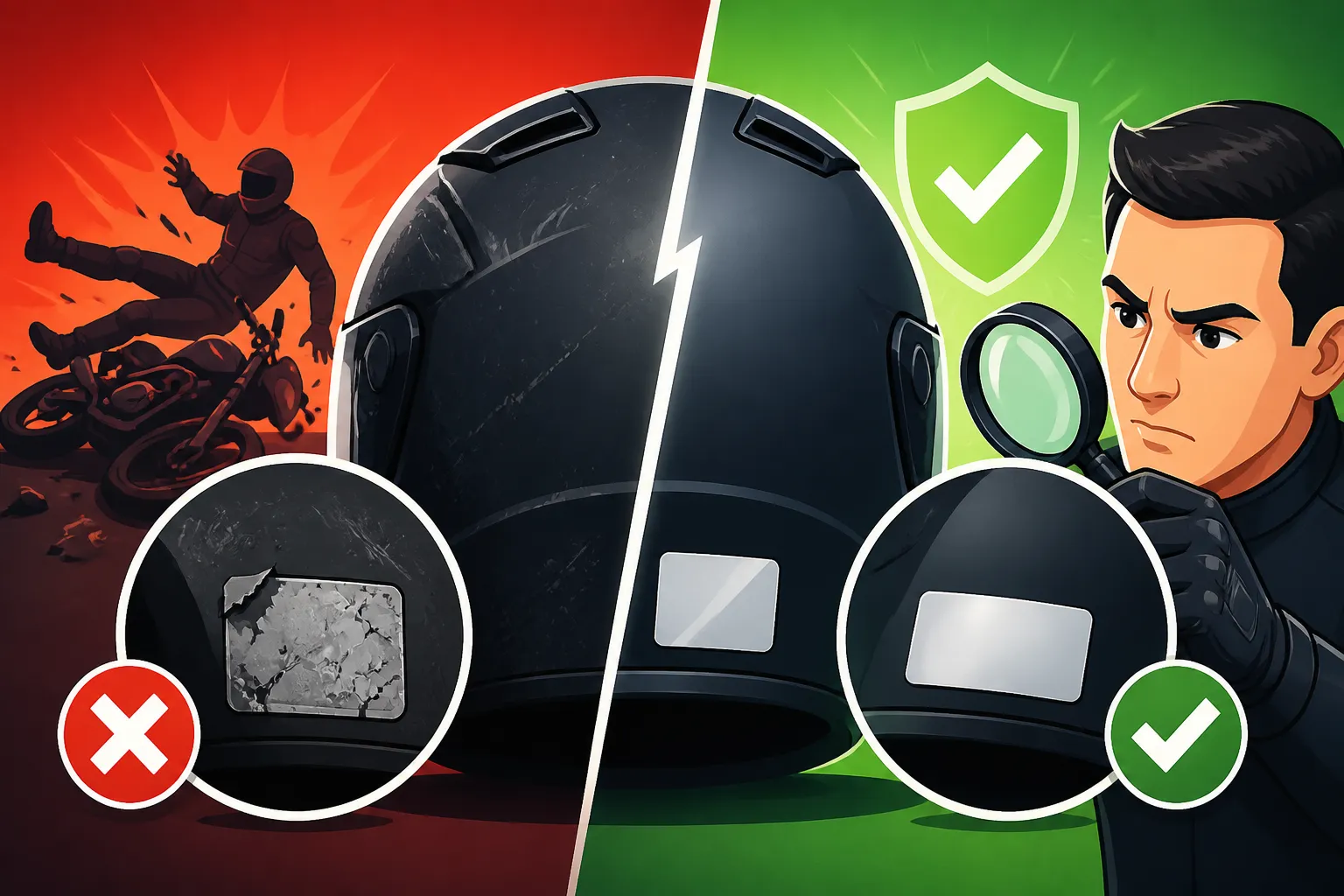
First and foremost, inspect the sticker itself. A genuine DOT sticker is typically a permanent decal, often under a clear coat or molded into the helmet's finish on the back. It shouldn't look like an afterthought, or something that could easily peel off. If the sticker is flimsy, bubbling, faded, or appears to be just slapped on with minimal adhesive, that's a huge red flag. Real DOT decals are designed to be durable, surviving years of sun, rain, and road grime.
The actual text on the sticker also holds clues. The letters "DOT" should be precisely 1/8 inch tall, a specific requirement of FMVSS 218. Below "DOT," you'll usually find the manufacturer's name or brand, the model designation, and the size of the helmet. All of this information should be clearly printed and legible. Any blurred text, misspellings, or inconsistent sizing could indicate a counterfeit. For instance, a common giveaway is if the "DOT" is accompanied by a series of numbers and letters, but they seem randomly generated or don't correspond to any known manufacturer or model. Sometimes you'll see a sticker that combines "DOT" with other certifications like "ECE" (European standard) or "Snell" (a private, voluntary standard). While a helmet can be certified by multiple organizations, if the combination looks off, or if it says something like "DOT/Snell" but lacks a separate, distinct Snell certification sticker inside the helmet, it's worth a second look. Reputable retailers like Cycle Gear make it a point to clearly label all certifications, ensuring transparency for the buyer.
The Infamous "Novelty Helmet" Trap
One of the biggest culprits behind fake DOT stickers is the "novelty helmet" market. These helmets are designed purely for aesthetics, often mimicking classic styles or having unique custom paint jobs, but they are absolutely not intended for crash protection. They are usually incredibly lightweight and made from thin, fragile plastic with minimal to no actual energy-absorbing liner. When you pick up a novelty helmet, it often feels like a toy, almost shockingly light compared to a real protective helmet.
These novelty helmets frequently bear fake DOT stickers to trick unsuspecting buyers into thinking they are street-legal and safe. In reality, they offer virtually no protection in a crash and riding with one is akin to riding without a helmet entirely. Not only do they put your life at extreme risk, but wearing one where helmet laws apply can also lead to legal trouble, and certainly complicate things if you're involved in an accident, as discussed when exploring Novelty Helmets and Legal Risk. The rule of thumb is: if it feels too light to offer serious protection, and the DOT sticker seems too good to be true, it probably is. Always aim for helmets that are built for safety first, even if it means a little extra weight and a less "cool" aesthetic. Your brain is worth it.
Deeper Dive: Beyond the Sticker to Helmet Construction
The sticker is just the first line of defense. To truly verify a helmet's authenticity and safety, you need to examine its fundamental construction. A genuine DOT-compliant helmet is a complex piece of engineering, designed to distribute and absorb impact forces.
Weight and Shell Integrity
A quick way to get a general sense of a helmet's legitimacy is its weight. A real DOT-certified helmet will have a noticeable heft to it, due to the substantial materials used in its construction. This isn't to say heavier is always better, but extremely light helmets often signal a lack of proper protective layers. The outer shell should feel rigid and solid. Manufacturers use materials like fiberglass, polycarbonate, or carbon fiber, which are chosen for their ability to resist penetration and spread impact forces over a larger area.
Contrast this with the flimsy, thin plastic shells found on many novelty helmets. If you can easily flex or deform the shell with moderate pressure, or if it feels brittle, it's highly unlikely to meet DOT standards. The shell is the first line of defense, and its integrity is non-negotiable for real-world crash protection. This aspect is crucial for Motorcycle Safety Gear and Legal Protection, ensuring that your gear actually performs as intended when it counts most.
Inner Lining and Energy Absorption Layers
The real hero inside a DOT-certified helmet is the Expanded Polystyrene (EPS) foam liner. This is the thick, often multi-density, styrofoam-like material directly beneath the comfort padding. Its sole purpose is to crush and deform upon impact, absorbing and dispersing kinetic energy that would otherwise be transmitted directly to your brain. A genuine EPS liner is typically at least one inch thick, firm, and consistent in density.
In contrast, a fake or novelty helmet might have a very thin, soft, or poorly constructed liner, sometimes less than half an inch thick, or made of a material that offers minimal energy absorption. If you can press your thumb into the foam and it squishes easily without resistance, that's a major red flag. It should feel firm, not squishy like a pillow. The comfort padding inside is important for fit and feel, but it's the EPS layer that does the life-saving work. Before you finalize your purchase, gently press on the inner lining to assess its thickness and firmness. This small inspection can reveal a lot about the helmet's true protective capabilities.
Chin Strap and Retention System
The retention system—primarily the chin strap and its buckle—is just as crucial as the shell and liner. What good is a protective helmet if it flies off your head in a crash? A DOT-certified helmet will have a strong, securely anchored chin strap, typically with a robust D-ring closure or a high-quality quick-release buckle. The strap itself should be wide, durable, and firmly attached to the helmet shell, usually with sturdy rivets or strong stitching that goes deep into the shell's structure.
Examine how the strap is connected. If it looks like it's merely glued on, or if the stitching appears weak and could easily unravel, then it's a poor retention system. Flimsy plastic buckles or straps that feel thin and easily stretched are also tell-tale signs of a non-compliant helmet. A common test is to pull firmly on the strap. It should feel secure and unyielding. You don’t want to be in a situation where your helmet comes off in an accident; the consequences can be catastrophic, leading to severe brain injuries that could have been prevented. Remember, your helmet's purpose is to stay on and protect your head, and a strong chin strap is vital to that function.
What to Do If You Suspect a Fake and Where to Buy Safely
Discovering you might have a fake DOT sticker on your helmet can be alarming, but it’s a situation that calls for action, not panic. Taking the right steps can help ensure your safety and prevent others from falling victim to deceptive products.
Verifying Certification and Reporting Suspect Helmets
If you have any doubts about your helmet, the first step is to try and verify its authenticity. Start by checking the manufacturer's official website. Many reputable helmet brands will list their DOT-certified models and even provide ways to check serial numbers or batch codes to confirm legitimacy. Some may even have specific guides on how to spot counterfeits of their own products. For example, if you own a HJC or Shoei helmet, their websites are excellent resources. If you can't find clear verification, or if the helmet's characteristics (weight, liner, strap) align with the red flags mentioned earlier, it’s safer to assume it’s not genuinely DOT-compliant.
If you confirm or strongly suspect you have a fake, it's important to report it. You can contact the National Highway Traffic Safety Administration (NHTSA), which oversees DOT standards. Providing details about where you purchased the helmet and any identifying marks can help them investigate and take action against unscrupulous sellers. You can also report it to the online marketplace or retailer if you bought it there, as they usually have policies against selling counterfeit or unsafe products. While this won't undo your purchase, it can help prevent others from being duped. This is especially critical because How Not Wearing a Helmet Affects Your Settlement can be severe, and unknowingly wearing a fake helmet can be just as detrimental as wearing none at all from a legal perspective.
Reputable Retailers and Smart Shopping
The absolute best way to ensure you're buying a genuine DOT-certified helmet is to purchase from reputable, authorized retailers. Avoid street vendors, flea markets, or unfamiliar online sellers offering "too good to be true" deals. These are often hotbeds for counterfeit products.
Big-name motorcycle gear shops, both online and brick-and-mortar, are typically trustworthy. Stores like Cycle Gear, RevZilla, or your local authorized dealership for brands like Bell, Arai, or Shoei, will only stock helmets that meet DOT standards (and often ECE or Snell as well). They have a reputation to uphold and a commitment to rider safety. Visiting a physical store also allows you to try on the helmet, feel its weight, inspect the shell, and examine the inner liner and strap system firsthand. Don't be shy about asking questions about certifications and testing. Knowledgeable staff can often provide peace of mind and help you find the right fit and protection level. Investing in your safety by buying from a trusted source is always worth the price.
Here's a quick comparison to help you distinguish between genuine and fake helmets:
| Feature | Genuine DOT-Certified Helmet | Fake/Novelty Helmet |
|---|---|---|
| DOT Sticker Appearance | Permanent decal, often clear-coated, crisp, specific 1/8" DOT font height, legible text. | Flimsy, easily peeling sticker, faded/blurry text, incorrect font size, misspellings. |
| Placement | Usually on the back of the helmet, sometimes molded into the shell. | Can be anywhere, often looks like an afterthought. |
| Overall Weight | Noticeable, substantial heft due to protective materials. | Extremely lightweight, feels flimsy like a toy. |
| Outer Shell | Rigid, thick, made of fiberglass, polycarbonate, or carbon fiber; difficult to flex. | Thin, flexible plastic; easily deformable. |
| EPS Liner (Inside) | Thick (at least 1 inch), firm, multi-density foam, designed for impact absorption. | Thin, soft, squishy, or missing foam; offers minimal to no impact protection. |
| Chin Strap System | Wide, durable strap securely riveted, robust D-ring or high-quality quick-release buckle. | Thin, weak strap, poor stitching/attachment, flimsy plastic buckles, easily stretched. |
| Price | Generally in a reasonable range for safety gear; "deals" are rarely extreme. | Often very cheap; "too good to be true" pricing. |
| Internal Certification | May have additional internal stickers (e.g., Snell, ECE) from testing agencies. | Rarely has additional internal certifications, or they may also be fake. |
Remember, your helmet is the single most important piece of safety gear you wear. Understanding Why Full-Face Helmets Protect Your Claim goes hand-in-hand with ensuring that helmet is genuinely certified to protect you. Take the time to scrutinize any helmet before purchase, and always prioritize safety over style or a cheap price.
Disclaimer
The information provided in this article is for general informational purposes only and does not constitute legal, medical, or professional advice. Motorcycle accident laws and helmet regulations vary by jurisdiction, and this content should not be used as a substitute for consulting with a qualified legal professional or a medical expert regarding your specific situation. Always seek the advice of a competent attorney for legal matters or a healthcare provider for health concerns.