Does Not Wearing a Helmet Affect a Claim in Massachusetts
Riding a motorcycle in Massachusetts offers an incredible sense of freedom, but it also comes with unique risks. If you've been involved in an accident, the physical and emotional toll is immense, and then the worry sets in: "Will not wearing a helmet ruin my chances of getting a fair settlement?" This is a deeply frustrating question many riders face, especially when dealing with injuries and mounting medical bills. This comprehensive guide will meticulously break down how Massachusetts' specific helmet laws interact with motorcycle accident claims, helping you understand your rights and the potential challenges ahead.
Understanding Massachusetts Motorcycle Helmet Laws
First things first, let's get a clear picture of what the Bay State expects from its riders when it comes to head protection. This isn't just about safety; it's about legal compliance that can have serious implications for your future.
The Universal Helmet Mandate in Massachusetts
Massachusetts has what's known as a universal helmet law. This means it's not a suggestion or a recommendation; it's a legal requirement for every single person on a motorcycle. Whether you're the rider or a passenger, and regardless of your age, you must wear a helmet. This isn't like some states where only younger riders or those without sufficient insurance are mandated to wear one. Here in Massachusetts, specifically under Massachusetts General Laws Chapter 90, Section 7, the rule is clear: no helmet, no ride.
This universal mandate is pretty strict, and for good reason—it's designed to protect everyone on two wheels. Imagine you're cruising through the Berkshires, enjoying the scenery, and you decide to leave your helmet at home. If you're pulled over, you're looking at a fine. More critically, if an accident occurs, the legal ramifications extend far beyond a simple traffic ticket. The state has decided that the risk of head injury is so severe that it warrants this blanket rule. It's a proactive measure, but it does mean that if you're not compliant, it can create an uphill battle if you're ever in a collision.
What Constitutes a DOT-Compliant Helmet?
It's not enough to simply have a helmet; it has to be the right kind of helmet. In Massachusetts, your helmet must be approved by the Department of Transportation (DOT). What does "DOT-compliant" actually mean? It means the helmet meets the safety standards outlined in Federal Motor Vehicle Safety Standard (FMVSS) 218. When you're shopping for a helmet, look for the DOT sticker on the back. This isn't just a decal; it signifies that the manufacturer has certified the helmet meets certain performance requirements for impact absorption, penetration resistance, and retention system effectiveness.
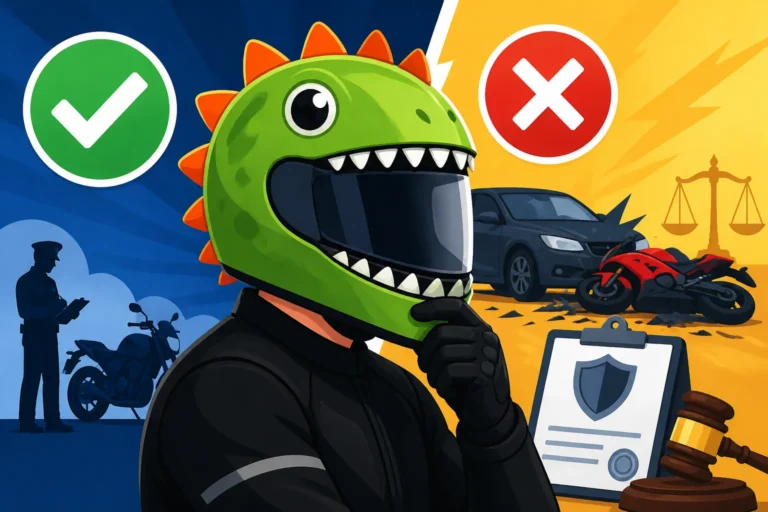
Many riders, especially newer ones, might be tempted by cheaper or flashier "novelty helmets." These helmets often don't meet DOT standards and are primarily designed for aesthetics, not protection. They might look cool, but they offer virtually no real safety in an accident. An insurance company or opposing legal team will quickly point out if your helmet isn't DOT-compliant, treating it much like not wearing a helmet at all when it comes to assessing head injuries. Brands like Bell, Shoei, and Arai are known for producing DOT-compliant helmets that also often meet higher safety ratings from organizations like Snell or ECE. While Snell and ECE are voluntary, they generally exceed DOT requirements, offering an even greater margin of safety. When you visit a retailer like Cycle Gear, the staff can usually guide you through the various certifications and help you choose a helmet that provides both maximum protection and legal compliance.
How Not Wearing a Helmet Can Impact Your Accident Claim
This is where the rubber meets the road, so to speak. Even if another driver was clearly at fault for your motorcycle accident, your decision not to wear a helmet, or to wear one that wasn't DOT-compliant, can complicate your claim significantly. Insurance companies are always looking for ways to reduce payouts, and this is a common strategy they employ.
The Concept of Comparative Negligence
Massachusetts operates under a "modified comparative negligence" rule, specifically the 51% bar rule. What this means is that if you are found to be 51% or more at fault for the accident, you are completely barred from recovering any damages from the other party. If you are found to be 50% or less at fault, your recoverable damages are reduced by your percentage of fault. For example, if your damages are $100,000 and you're found 20% at fault, you can only recover $80,000.
The "helmet defense" ties directly into this. While not wearing a helmet doesn't make you at fault for the actual collision (e.g., for a driver turning left in front of you), it can be argued that it contributed to the severity of your injuries. This argument typically applies to head injuries, not necessarily to a broken leg or road rash on your arm. The other driver's insurance company will argue that your head injuries would have been less severe, or perhaps even avoided altogether, had you been wearing a proper helmet. If this argument is successful, it could increase your comparative negligence percentage, thereby reducing your overall payout. Understanding How Comparative Negligence Reduces Your Payout is crucial for any rider facing this situation.
The "Helmet Defense" in Action
When you're dealing with an insurance company like Liberty Mutual or Progressive, they are experts at finding loopholes. The "helmet defense" is one of their go-to strategies against unhelmeted riders. They'll argue that your specific head injuries, such as a traumatic brain injury (TBI) or a severe concussion, were either entirely preventable or significantly worsened by your failure to wear a helmet. This isn't about whether you caused the accident; it's about whether you contributed to your own injuries.
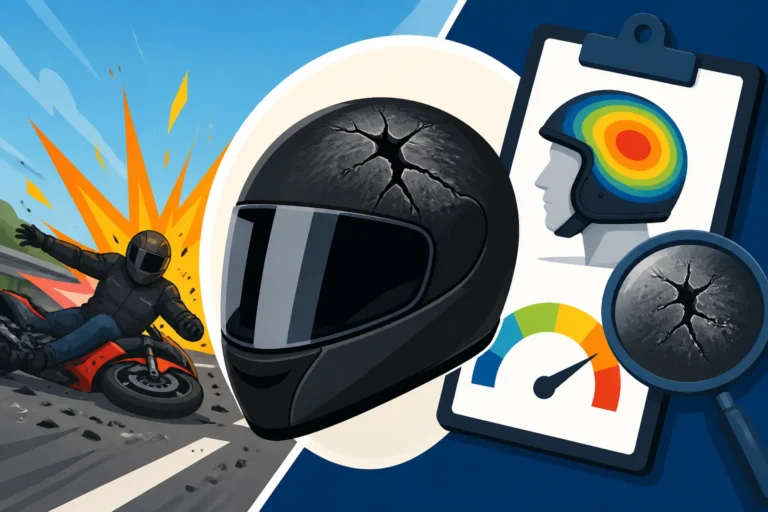
For instance, if you suffered road rash and a broken arm, but no head injury, the helmet defense would likely not apply to those specific damages. However, if you sustained a serious head injury, the defense will claim that you failed to mitigate your damages by not wearing legally required protective gear. They might present medical expert testimony suggesting that a DOT-compliant helmet would have absorbed much of the impact, leading to a less severe outcome. This is a tough pill to swallow, especially when you're already in pain and facing significant medical bills. They're essentially shifting some of the blame for your injury severity back onto you, even if the other driver was clearly the negligent party. Many insurance companies have specific protocols for dealing with unhelmeted riders, making it an immediate red flag for them to try and reduce their liability.
Proving the Causal Link to Injuries
The burden of proof in the helmet defense lies with the defendant (the at-fault driver or their insurance company). They can't just say, "You weren't wearing a helmet." They have to prove that your lack of a helmet directly caused or exacerbated the specific head injuries you sustained. This is a critical distinction. It means they need to present evidence, often in the form of expert medical testimony and accident reconstruction analysis, to show a direct causal link.
For example, if you sustained a severe concussion, the defense's medical expert might testify that, based on the forces involved in the accident, a DOT-compliant helmet would have prevented or significantly reduced the severity of that specific concussion. However, your legal team can counter this by arguing that even with a helmet, the injury would have occurred, or by challenging the expert's methodology. This is where cases often become very complex, requiring detailed medical records, impact analyses, and sometimes even the involvement of an accident reconstruction expert to thoroughly demonstrate or dispute the causal connection. The legal battle often centers on this intricate connection, making the question of How Not Wearing a Helmet Affects Your Settlement far from simple.
Navigating Your Claim with a Helmet Violation
So, you were in an accident in Massachusetts, and you weren't wearing a DOT-compliant helmet. Don't despair entirely. While it undeniably adds a layer of complexity, it doesn't automatically mean your claim is worthless. There are still avenues to pursue compensation, though you'll need a strategic approach.
Documenting Non-Head Injuries and Other Damages
Even if the "helmet defense" is successfully levied against your head injury claims, it doesn't invalidate all your damages. It's crucial to meticulously document every single injury you sustained, not just those related to your head. Did you suffer severe road rash on your arms and legs? Were there broken bones in your extremities? Perhaps internal injuries or soft tissue damage in your back and neck? These types of injuries, and the medical expenses, lost wages, and pain and suffering associated with them, are generally not affected by your helmet use.
Take photos of all your injuries as they heal, keep a detailed journal of your pain and recovery, and ensure all your medical appointments are attended and documented. These efforts will help you build a strong case for damages that are entirely separate from any head injury claims. Your focus here is on demonstrating the full scope of the harm caused by the other driver's negligence, irrespective of helmet use. Detailed record-keeping of your medical bills and ongoing treatment for these non-head injuries is paramount. For a deeper understanding, check out our guide on How to Document Injuries for a Claim.
Strengthening Your Case Against the At-Fault Driver
Regardless of your helmet use, the primary focus of your claim remains proving the other driver's fault. Even if you made a mistake by not wearing a helmet, their negligent actions were still the direct cause of the collision. Did they run a red light? Were they distracted by their phone? Did they make an unsafe lane change? Gathering robust evidence to establish their negligence is critical.
This involves collecting the police report, speaking with any witnesses at the scene, securing dashcam or surveillance footage, and documenting the accident scene with photos and videos. If the other driver was clearly driving recklessly or under the influence, their liability is undeniable, and this will be the cornerstone of your claim. Your ability to prove the other driver's fault is the strongest counter to any attempt by the insurance company to minimize their responsibility due to your helmet situation. Understanding Who Is at Fault in a Motorcycle Accident and gathering all possible Motorcycle Accident Evidence for Proving Fault can significantly bolster your position.
The Role of Legal Representation
Facing an accident claim, especially one complicated by a helmet law violation, can feel overwhelming. This is precisely why having an experienced motorcycle accident lawyer on your side is invaluable. A skilled attorney understands the nuances of Massachusetts' comparative negligence laws and how the "helmet defense" is typically applied by insurance companies. They can strategically counter these arguments.
Your lawyer can work with medical experts to testify that your head injuries, given the circumstances of the crash, would likely have been severe even with a helmet, or that certain injuries are entirely unrelated to helmet use. They can also focus heavily on proving the other driver's negligence, shifting the narrative back to their culpability. Furthermore, an attorney can help you navigate negotiations with insurance adjusters who might try to exploit your lack of a helmet to offer a drastically low settlement. They're your advocate, ensuring your rights are protected and that you receive fair compensation for all applicable damages. If you're wondering Do You Need a Motorcycle Accident Lawyer in this complex scenario, the answer is almost always yes.
Beyond the Claim: Why Helmets Are Essential
While this discussion has focused heavily on the legal and financial implications, it's vital to step back and remember the overarching reason for helmet laws in the first place: your safety. Legal battles are stressful, but recovering from a severe head injury is a lifelong struggle.
Prioritizing Your Safety
The most compelling reason to wear a DOT-compliant helmet every single time you ride isn't about avoiding fines or strengthening a potential accident claim; it's about protecting your brain, your life, and your future. Motorcycle accidents, even at low speeds, can result in devastating head trauma. A quality helmet is your first and best line of defense against concussions, skull fractures, and traumatic brain injuries (TBIs). Brands like HJC, Scorpion, and Icon offer a wide range of helmets that meet or exceed safety standards, providing excellent protection.
Think of it as an investment in yourself. When you visit a specialty store like Cycle Gear, you can find knowledgeable staff who will help you select a helmet that fits correctly, is comfortable, and meets all legal and safety requirements. Beyond helmets, consider investing in other protective gear too: armored jackets, gloves, sturdy boots, and riding pants. While not all are legally mandated in Massachusetts, they can significantly reduce other injuries like severe road rash, broken bones, and nerve damage. Embracing Motorcycle Safety Gear and Legal Protection is a holistic approach to riding responsibly and protecting yourself, both on the road and in a potential legal battle.
Understanding the Long-Term Impact of Head Injuries
Even a "mild" concussion can have long-lasting effects that disrupt your life. Symptoms like chronic headaches, memory problems, difficulty concentrating, mood swings, and light sensitivity can persist for months or even years after the initial injury. More severe TBIs can lead to permanent cognitive impairments, physical disabilities, personality changes, and a complete loss of independence.
These long-term effects don't just impact you; they affect your family, your career, and your overall quality of life. The financial costs of long-term rehabilitation, specialized care, and lost earning capacity can be astronomical. No settlement, no matter how substantial, can truly compensate for the profound loss of your cognitive function or physical abilities. While we've discussed how Motorcycle Accident Traumatic Brain Injuries affect claims, it's the personal toll that truly drives home the importance of prevention. Protecting your head means protecting your future, your livelihood, and your ability to enjoy life to the fullest.
Here's a quick look at how helmet use can factor into your claim in Massachusetts:
| Scenario | Massachusetts Helmet Law Adherence | Potential Impact on Head Injury Claim | Potential Impact on Non-Head Injury Claim |
|---|---|---|---|
| Wearing DOT-Compliant Helmet | Compliant (Universal Law) | Minimal (focus on other driver's fault) | Minimal |
| Not Wearing Any Helmet | Non-Compliant | Significant reduction possible | Minimal |
| Wearing Novelty Helmet | Non-Compliant (not DOT-approved) | Significant reduction possible | Minimal |
Disclaimer
Please remember that this article provides general information and is not legal advice. Motorcycle accident claims are highly fact-specific and subject to the laws of Massachusetts. If you've been in an accident, it's crucial to consult with a qualified personal injury attorney in your state to discuss your specific situation and understand your legal options.