Helmet Laws and Insurance Requirements
Riding a motorcycle offers unparalleled freedom, but it also comes with a unique set of responsibilities and legal intricacies, especially when an accident occurs. One of the most perplexing areas for many riders involves helmet laws and how they intersect with your insurance coverage and potential accident claim. The stress of dealing with injuries and vehicle damage is compounded by the fear that a simple choice about headgear could jeopardize your entire recovery. This guide will meticulously break down the critical relationship between helmet laws, protective gear, and your insurance requirements, offering clarity and practical advice.
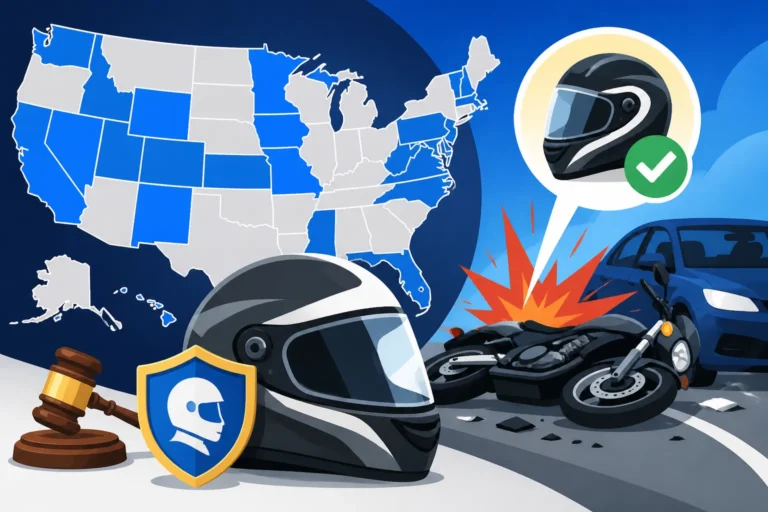
Understanding Motorcycle Helmet Laws by State
The patchwork of motorcycle helmet laws across the United States is a constant source of confusion for riders, particularly those who travel across state lines. What’s legal in one state might be a violation in another, and this inconsistency can have profound implications far beyond just a traffic ticket if you’re involved in a crash. It's not just about the law; it's about how those laws are used against you in the aftermath.
Universal Helmet Laws: The "All Riders" Rule
Some states, like California, Oregon, Georgia, and New York, maintain what are known as universal helmet laws. This means that every single person on a motorcycle, regardless of age, experience, or insurance status, is legally required to wear a helmet at all times. There are no exceptions for adult riders who might feel they are competent enough to make their own choices. These laws are often rooted in public health initiatives, aiming to reduce fatalities and severe head injuries, which are statistically much higher in helmetless crashes.
For riders navigating these states, the message is clear: wear a helmet, always. Even if you're just cruising down to the corner store, forgetting your helmet could lead to a citation. More importantly, if an accident happens, the very fact that you were not wearing a helmet, even if the crash wasn't your fault, could introduce a complex legal hurdle. Insurance adjusters and opposing counsel are quick to seize on any deviation from the law to minimize their payout. Understanding these strict mandates is the first step in protecting yourself on all fronts. To delve deeper into these specific requirements, you can read more about Motorcycle Helmet Laws by State.
Partial Helmet Laws: Age and Experience Factors
Many states opt for partial helmet laws, which are a bit more nuanced. In these states, like Florida, Michigan, and Texas, certain riders may be exempt from wearing a helmet, typically based on age or proof of adequate insurance coverage. For example, Florida requires riders under 21 to wear a helmet, but riders 21 and older can ride without one if they carry at least $10,000 in medical benefits insurance. Similarly, Texas requires helmets for riders under 21, and those 21 and older must complete a safety course or carry sufficient medical insurance to ride helmet-free.
This approach creates a grey area, offering a perceived freedom while simultaneously placing the onus on the rider to know and adhere to specific insurance thresholds. The temptation to ride helmet-free on a beautiful day can be strong, but the administrative burden of ensuring your insurance policy meets the precise legal requirement for your state is often overlooked until it's too late. If you’re involved in a collision and haven’t met these specific insurance criteria, even if you’re over 21, you could still face legal and financial repercussions, complicating your claim significantly. These laws introduce conditional freedom, and those conditions are crucial to grasp. You can learn more about the differences between Universal vs Partial Helmet Laws Explained.
States with No Helmet Law: Freedom Comes with Risk
While increasingly rare, a few states, such as New Hampshire and Iowa, have no universal or partial helmet law for adult riders. This means that, legally speaking, adult motorcyclists in these states can choose whether or not to wear a helmet without fear of a ticket. This "live free or die" approach is often celebrated by a segment of the riding community who value personal choice above all else. However, it's crucial to understand that "no law" doesn't mean "no consequences."
Even in states with no helmet law, the absence of a helmet can still be a significant factor if you're involved in an accident. While you won't be cited for a helmet violation, the other driver's insurance company may still argue that your injuries, particularly head injuries, would have been less severe had you been wearing a helmet. This is where the concept of the "helmet defense" can still come into play, regardless of the explicit legal requirement. It's a sobering reminder that legal freedom doesn't absolve you of the practical realities and potential financial burdens of a severe injury.
The Interplay of Helmet Laws and Insurance Coverage
Understanding how helmet laws affect your insurance coverage is paramount, as it directly impacts your financial recovery after a crash. Many riders assume that if they have insurance, they're fully covered, but the reality is far more intricate. Your compliance with state helmet laws, or lack thereof, can become a critical leverage point for insurance companies.
Basic Coverage and Helmet Compliance
When you purchase motorcycle insurance, you expect it to protect you in an accident. However, your adherence to helmet laws can directly influence how an insurer processes your claim for medical expenses, lost wages, and other damages. In states with universal helmet laws, if you weren't wearing a helmet and sustained a head injury, the insurance company might argue that you contributed to the severity of your injuries by not following the law. This argument, often referred to as the "helmet defense," can be a powerful tool for insurers to reduce their payout.
Even if the other driver was clearly at fault for the accident, the insurer could contend that your injuries would have been less severe, and thus less costly, if you had worn a helmet. This doesn't mean your claim will be denied outright, but it can lead to a significant reduction in your settlement offer. Imagine being hit by a distracted driver on Main Street, suffering a concussion, only for their insurance, like a representative from Progressive or Geico, to claim your compensation should be cut because you weren't wearing a helmet, even though they admit their driver was at fault. This kind of tactic is a frustrating reality for many riders. Find out more about How Helmet Laws Affect Your Accident Claim.
Uninsured/Underinsured Motorist Coverage and Helmet Use
Uninsured/Underinsured Motorist (UM/UIM) coverage is a lifesaver if the at-fault driver has no insurance or insufficient coverage to pay for your damages. However, even with this crucial protection, helmet non-compliance can still create complications. If you have UM/UIM coverage and were not wearing a helmet in a state where it's legally required, your own insurance company might try to apply the helmet defense against you. They could argue that because you weren't compliant with the law, they should not be fully responsible for the full extent of your head-related injuries.
This can feel like a betrayal, as you've paid premiums for this very protection. The insurer's job is to minimize their payouts, and they will use every legal avenue available, including your adherence to safety regulations. It highlights the importance of not only having comprehensive insurance but also understanding the nuances of how your actions on the road, including helmet use, can impact its effectiveness. Being hit by an uninsured driver is bad enough; having your own policy then dispute your claim because of a helmet choice adds insult to injury.
Policy Exclusions and Helmet Non-Compliance
While less common for standard liability and collision coverage, some specialized motorcycle insurance policies might include specific clauses or exclusions related to helmet use, particularly in states with partial or no helmet laws. For instance, if a state allows riders over 21 to ride without a helmet if they have a certain amount of medical benefits coverage, a policy might explicitly state that if you choose to ride helmet-free without meeting that specific medical coverage threshold, certain injury benefits might be limited or even denied.
It's a rare but critical detail that emphasizes the need to thoroughly read your policy, not just assume. Insurance companies are businesses, and their policies are contracts designed to define the limits of their liability. If you're considering riding helmet-free in a state where it's conditionally legal, ensure your insurance policy fully aligns with those conditions. A quick call to your insurance provider (e.g., Dairyland or Harley-Davidson Insurance) to clarify these details before an incident occurs can save you immense grief and financial hardship down the line.
How Not Wearing a Helmet Impacts Your Claim
The question of whether or not you were wearing a helmet, especially a DOT-compliant one, becomes a cornerstone of many motorcycle accident claims. Even if the other driver was entirely at fault, your helmet use, or lack thereof, can dramatically influence the outcome of your personal injury claim. It's a frustrating reality that motorcyclists often face a higher burden of proof and scrutiny due to stereotypes and the inherent vulnerability of riding.
The "Helmet Defense" Explained
The "helmet defense" is a legal strategy commonly employed by defense attorneys and insurance companies. It argues that a motorcyclist’s injuries, particularly head injuries, were either caused or exacerbated by their failure to wear a helmet, or to wear one that met legal standards. This defense is rooted in the concept of contributory or comparative negligence, depending on the state's laws. Essentially, it seeks to shift some degree of fault for your injuries, if not the accident itself, onto you, the rider.
Imagine you're hit by a car that ran a red light. You suffer a traumatic brain injury (TBI) because you weren't wearing a helmet in a state with a universal helmet law. The other driver's insurance will readily concede their driver ran the light, but then they'll argue that if you'd worn a proper helmet, your TBI might have been a minor concussion, or even avoided entirely. This doesn't excuse their driver's negligence, but it directly attacks the damages you can claim for your head injury. It's a tactic designed to reduce the financial compensation they owe. This defense is explored in detail in The Helmet Defense Explained.
Comparative Negligence and Reduced Payouts
Most states follow some form of comparative negligence. This legal doctrine allows an injured party to recover damages even if they were partially at fault for an accident or their injuries, but their compensation is reduced by their percentage of fault. If a jury or insurance adjuster determines that your failure to wear a helmet contributed 20% to the severity of your head injuries, then your compensation for those specific injuries could be reduced by 20%.
For example, if your medical bills for a TBI are $100,000, and a court assigns 20% comparative negligence for not wearing a helmet, you might only recover $80,000 for those specific damages. This can become even more complex when considering non-economic damages like pain and suffering. The psychological toll of a TBI is immense, and reducing compensation for such profound suffering due to a helmet choice can feel incredibly unfair. This demonstrates how not wearing a helmet, even if it didn't cause the crash, can reduce your overall settlement. Read more about How Comparative Negligence Reduces Your Payout and How Helmet Use Affects Comparative Negligence.
Proving Causation: When Non-Use Matters
For the helmet defense to be effective, the defense must typically prove a causal link between the lack of a helmet and the specific injuries sustained. It's not enough to simply say, "they weren't wearing a helmet." They must demonstrate that because you weren't wearing a helmet, you suffered these particular injuries that you wouldn't have otherwise. This often involves expert testimony from accident reconstructionists and medical professionals who can analyze the crash dynamics and injury mechanisms.
For instance, if you suffered a broken leg in a crash while not wearing a helmet, the helmet defense is unlikely to reduce your claim for the leg injury, as a helmet wouldn't have prevented it. However, if you suffered facial lacerations and a fractured jaw, then a full-face helmet likely would have prevented or significantly reduced those injuries. This is why immediate medical documentation and detailed accident reports are so vital. They help establish which injuries are directly related to the crash impact versus those that might have been mitigated by proper gear. This complex area is why many ask, Do You Have to Wear a Helmet to Recover Damages?
Types of Helmets and Their Legal and Insurance Implications
It's not just whether you wear a helmet, but what kind of helmet you choose that can have significant legal and insurance implications. All helmets are not created equal, and understanding the differences can be crucial for both your safety and your potential accident claim.
DOT-Compliant Helmets: The Standard You Need
The U.S. Department of Transportation (DOT) sets minimum performance standards for motorcycle helmets. A helmet that is "DOT-compliant" has been tested and certified to meet these federal safety standards. This means it offers a certain level of protection against impact and penetration. In virtually all states with helmet laws, whether universal or partial, the law specifies that riders must wear a helmet that meets DOT standards.
Wearing a DOT-compliant helmet is crucial. Not only does it significantly increase your protection in a crash, but it also provides a strong legal defense against the "helmet defense." If you were wearing a DOT-approved helmet, even if you still suffered a head injury, it becomes much harder for an insurance company to argue that your choice of headgear contributed to your injuries. They can't claim you contributed to your harm by neglecting a reasonable safety measure if you were following the standard. Many reputable brands like Shoei, Arai, and Bell consistently produce DOT-compliant helmets. Check out What Is a DOT-Compliant Helmet for more information.
Novelty Helmets: Legal Risks and Claim Disadvantages
Novelty helmets, often characterized by their thin shells, minimal padding, and lack of a DOT sticker, are designed for aesthetic appeal rather than safety. They typically do not meet DOT standards and offer little to no protection in a crash. While they might look cool, wearing a novelty helmet carries significant legal and financial risks. In states with helmet laws, wearing a novelty helmet is often considered the same as wearing no helmet at all, meaning you could be cited for a violation.
Beyond the ticket, if you're involved in an accident while wearing a novelty helmet and sustain a head injury, the helmet defense becomes incredibly potent. Insurance companies and defense lawyers will argue that your choice of an unprotective helmet is direct evidence of your contribution to the severity of your injuries. This can severely reduce any compensation you might be entitled to, turning a fashion choice into a costly liability. It’s a harsh lesson, but one that underscores the importance of legitimate safety gear. The dangers of these helmets are further detailed in Novelty Helmets and Legal Risk. When you're shopping for new gear at a store like Cycle Gear, always look for that DOT certification sticker.
Full-Face vs. Open-Face: Protection Beyond the Law
While DOT compliance is the legal baseline, the type of DOT-compliant helmet you choose can also factor into an injury claim, particularly regarding facial injuries. Full-face helmets offer the most comprehensive protection, covering the entire head, including the chin and face. Open-face helmets, while DOT-compliant, leave the face exposed.
If you're in an accident and suffer facial fractures, road rash on your chin, or dental injuries while wearing an open-face helmet, a defense attorney might still attempt to argue that a full-face helmet would have prevented or reduced those specific injuries. While this argument might not be as strong as the one against wearing no helmet or a novelty helmet, it can still complicate aspects of your claim related to facial trauma. It emphasizes that while the law sets a minimum, choosing gear that offers maximum protection, beyond just meeting legal requirements, is always the smartest move for both your well-being and your legal standing.
Beyond Helmets: Other Gear and Insurance Considerations
While helmets are often at the forefront of discussions about motorcycle safety and accident claims, other protective gear also plays a crucial role. Just like helmets, jackets, gloves, boots, and eye protection can significantly reduce injury severity and, by extension, influence your post-accident insurance claim.
Eye Protection Requirements
Many states, even those with more lenient helmet laws, have specific requirements for eye protection. This usually means wearing a face shield on your helmet, goggles, or a windshield that meets certain height and width specifications. The reason is simple: clear vision is paramount for safe riding. Road debris, insects, wind, and rain can impair a rider's vision instantly, leading to dangerous situations.
If you're involved in an accident and were not wearing legally required eye protection, and it can be argued that obscured vision contributed to the crash or exacerbated your injuries (for example, if debris entered your eye causing a momentary lapse in control), it could complicate your claim. While less frequently used than the helmet defense, an insurer might try to argue that your non-compliance with eye protection laws contributed to the incident or your subsequent injuries. Investing in a quality helmet with an integrated face shield or dedicated riding goggles from a store like Cycle Gear is a simple step that offers both safety and legal protection.
Protective Clothing and Injury Mitigation
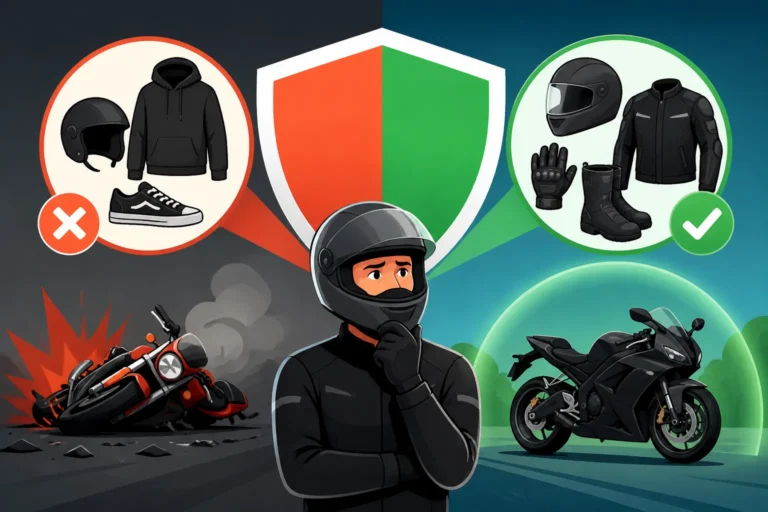
Beyond head and eye protection, wearing appropriate protective clothing—such as armored jackets, riding pants, and sturdy boots—is critical for mitigating injuries like road rash, fractures, and internal trauma. While most states don't legally mandate specific protective clothing beyond helmets and eye protection, the absence of such gear can still be relevant in an accident claim.
Imagine a scenario where you're wearing only a t-shirt and shorts, and you suffer severe road rash and deep abrasions requiring multiple skin grafts and extensive hospitalization. An insurance company might argue that while the other driver was at fault, your decision not to wear protective clothing contributed to the extent of your injuries. They might not deny your claim entirely, but they could attempt to reduce the compensation for those specific injuries, citing your lack of reasonable self-preservation. While there isn't a "jacket defense" in the same vein as a helmet defense, the overall context of your protective gear can still influence how injury severity and damages are viewed. This is why understanding Motorcycle Gear Laws and Requirements is so important.
Motorcycle Equipment Laws You Should Know
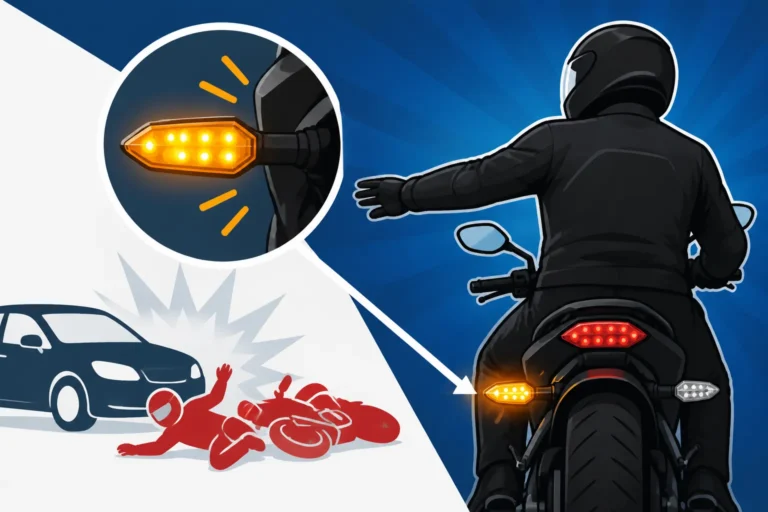
It’s not just about what you wear, but also the condition and legality of your motorcycle itself. States have various equipment laws covering everything from mirrors, turn signals, and headlights to exhaust noise levels and handlebar height. For instance, most states require two mirrors, a working headlight that is on at all times, and functional turn signals. Exceeding specific handlebar height limits or having excessively loud aftermarket exhausts can also lead to citations.
If your motorcycle was not compliant with these equipment laws and it can be argued that the non-compliance contributed to the accident, your liability could be affected. For example, if your turn signal wasn't working and a collision occurred during a turn, the other driver's attorney might argue your faulty equipment contributed to the crash. While these factors relate more to fault for the accident itself rather than just injury severity, they can still significantly complicate your claim and potentially reduce your payout. Ensuring your bike is always in top legal and mechanical condition is another layer of self-protection.
Navigating the Aftermath: Proving Your Case
When the unthinkable happens, and you’re involved in a motorcycle accident, the steps you take immediately afterward can be just as crucial as the protective gear you wore. Proving your compliance with helmet and gear laws, and establishing the other party’s fault, is essential for a successful claim.
Documenting Helmet Use and Scene
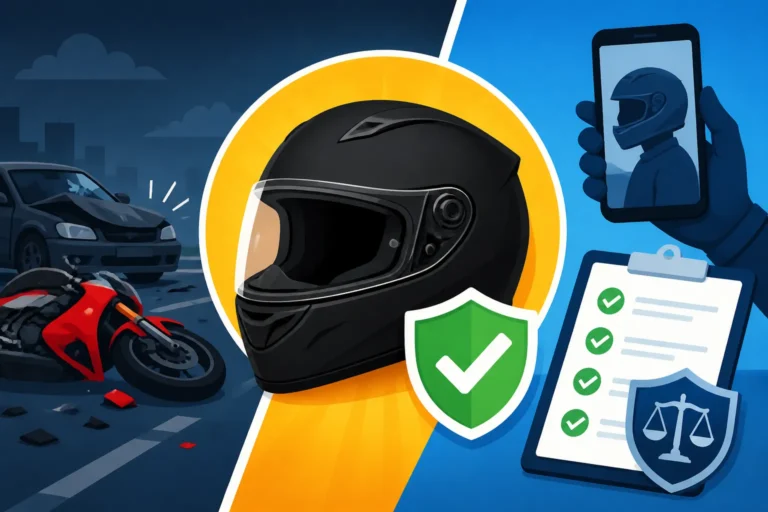
Immediately after a motorcycle accident, if you are able, documenting the scene is critical. This includes taking photos of your helmet, especially if it's damaged. Keep your helmet as evidence; do not throw it away, even if it appears destroyed. Photos showing you wearing a DOT-compliant helmet at the scene, or photos of the damaged helmet, can be powerful evidence to counter the helmet defense. It definitively shows you were adhering to safety standards. Also, capture wider shots of the accident scene, vehicle positions, road conditions, and any visible injuries.
It's also important to gather contact information from any witnesses. An impartial witness stating that you were wearing a helmet, or that the other driver was clearly distracted, can corroborate your account and bolster your claim. Even if emergency responders remove your helmet, ensure it is mentioned in the police report. The more evidence you have that you followed the rules and wore appropriate gear, the stronger your position will be against an insurance company trying to diminish your injuries. This level of detail in documentation helps in Proving Fault in a Motorcycle Accident.
Seeking Medical Attention Immediately
After any motorcycle accident, your health is the absolute priority. Seek immediate medical attention, even if you feel fine. Adrenaline can mask injuries, and some severe conditions, like a traumatic brain injury or internal bleeding, may not manifest symptoms for hours or even days. A delay in seeking medical care can be used by insurance companies to argue that your injuries weren't serious or weren't directly caused by the accident.
Comprehensive medical records are indispensable for your claim. They document the full extent of your injuries, the treatments you received, and the progression of your recovery. These records also help establish a direct link between the accident and your injuries, making it much harder for an insurance company to assert that your injuries were pre-existing or somehow unrelated. Your medical journey, from the emergency room visit to ongoing physical therapy, forms the backbone of your damages claim.
When to Contact an Attorney
Navigating the complexities of helmet laws, insurance policies, and comparative negligence in the wake of a motorcycle accident is an enormous burden, especially when you're recovering from injuries. This is precisely why contacting an experienced motorcycle accident attorney as soon as possible is highly recommended. An attorney understands the nuances of state helmet laws, how insurance companies operate, and the specific strategies they use to deny or reduce claims.
They can help you gather crucial evidence, communicate with insurance adjusters on your behalf (preventing you from inadvertently saying something that could harm your case), and build a compelling case to maximize your compensation. They will fight against tactics like the helmet defense and ensure that your rights are protected. Don't let the fear of legal costs deter you; most motorcycle accident attorneys work on a contingency fee basis, meaning they only get paid if they win your case. An attorney's expertise is invaluable in understanding Motorcycle Accident Liability: A Complete Guide and ensuring you receive a fair settlement.
Here's a quick reference table outlining common helmet law types and their potential insurance impact:
| Helmet Law Type | Description | Typical Age Requirement | Insurance Impact on Claim |
|---|---|---|---|
| Universal | All riders must wear a DOT-compliant helmet. | All ages | Non-compliance can lead to the "helmet defense," potentially reducing compensation for head injuries, even if the rider was not at fault for the crash. |
| Partial (e.g., Age) | Helmets required for riders under a certain age (e.g., 18 or 21). | Under 18/21 | Riders over the age limit may ride without a helmet, but if they sustain a head injury, the helmet defense could still be attempted to argue injury severity could have been reduced. Non-compliance if under age limit same as Universal. |
| Partial (e.g., Insurance) | Helmets required unless riders meet specific insurance thresholds (e.g., $10K medical). | Often 21+ | Failure to meet the specific insurance threshold while riding without a helmet can result in legal penalties and a strong "helmet defense" argument against head injury claims. |
| None | No legal requirement for adult riders to wear a helmet. | N/A (adults only) | While no ticket for non-compliance, insurance companies can still use the "helmet defense" to argue that head injuries would have been less severe if a helmet had been worn, potentially reducing damages. |
Disclaimer
Please remember that this information is for educational purposes only and should not be considered legal advice. Motorcycle laws, including helmet laws and insurance regulations, vary significantly by state and can change over time. It is always recommended to consult with a qualified legal professional regarding your specific situation and to ensure you are compliant with all local laws and insurance policy requirements.