Do You Have to Wear a Helmet to Recover Damages
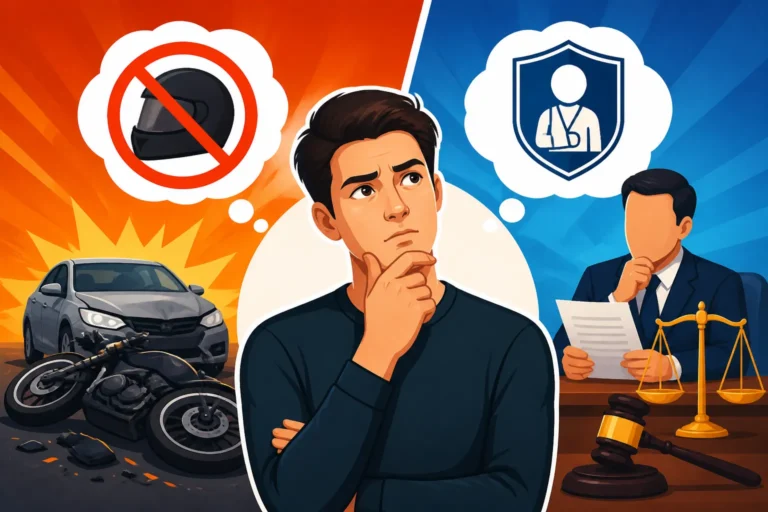
Riding a motorcycle offers unparalleled freedom, but it also comes with unique risks. One of the most significant concerns for many riders, especially after an accident, is whether not wearing a helmet will automatically jeopardize their chances of recovering damages. It's a frustrating question that causes a lot of anxiety, making you wonder if you're penalized even when another driver is clearly at fault. This comprehensive guide will meticulously break down how motorcycle helmet laws impact your ability to seek compensation after a crash, examining state regulations, insurance company tactics, and what you can do to protect your claim.
Understanding Motorcycle Helmet Laws Across the States
When you're out on the open road, the rules about helmets aren't uniform across the country. It's a patchwork quilt of regulations, and what's perfectly legal in one state could leave you facing fines and complications in another. This variance is often a major source of confusion for riders, especially when they travel or if they're trying to understand their rights after a crash. Knowing your state's specific helmet laws is absolutely foundational, not just for safety, but for protecting any potential claim you might have.
Universal Helmet Laws Explained
Some states take a "no exceptions" approach when it comes to head protection. These are what we call universal helmet laws, and they mandate that all riders, regardless of age or experience, must wear a DOT-compliant helmet every single time they throw a leg over their bike. States like California, Georgia, and New York are prime examples of this. The reasoning behind these laws is purely rooted in safety: to minimize serious head injuries and fatalities in motorcycle accidents.
If you ride in a state with universal helmet laws, you're expected to wear a helmet, full stop. There's no age cutoff where you suddenly become exempt, nor are there insurance loopholes. For example, if you're cruising down the Pacific Coast Highway in California, a helmet is a non-negotiable part of your gear. Failure to comply means not only a potential traffic citation but also a significant hurdle if you're later involved in a crash and sustained head injuries. Insurers will certainly highlight your non-compliance as a factor, even if the other driver was clearly at fault.
Partial Helmet Laws
Then there's the more common scenario: partial helmet laws. These are a bit more nuanced and often introduce age restrictions or other specific criteria. For instance, many states, including Texas, Florida, and Pennsylvania, require helmets only for riders under a certain age (often 18 or 21). However, some of these partial laws also include an interesting twist: adult riders (over the age limit) can often forgo a helmet if they carry a certain amount of medical insurance coverage.
This "over 21 with insurance" clause can be a real double-edged sword. While it offers adults the choice to ride without a helmet, it places a significant responsibility on them to understand their insurance policy inside and out. If you're riding helmetless in a state like Florida, you might be legally compliant, but if your insurance falls short of the statutory requirements, you could find yourself in legal hot water after an accident. This complexity can be incredibly frustrating, especially for riders who believe they are following the rules.
States with No Helmet Law
It might come as a surprise, but a handful of states actually have no explicit helmet law for adult motorcyclists. These are increasingly rare, but states such as Iowa, Illinois, and New Hampshire, for example, have historically taken a stance that allows adult riders to make their own choices about helmet use. In these states, the decision to wear a helmet is left entirely to the individual rider's discretion, and there's no legal mandate to cover your head.
While this might sound like ultimate freedom, it doesn't mean you're immune to the consequences of not wearing one. From a safety perspective, the risks of severe head injury are dramatically higher. From a legal standpoint, even in states with no helmet law, an insurance company or opposing counsel might still try to argue that your decision not to wear a helmet contributed to the severity of your head injuries, potentially reducing your claim through what's known as the "helmet defense." This subtle but critical point is often overlooked, leading to further complications down the road.
The "Helmet Defense" and How Insurers Use It
The aftermath of a motorcycle accident is often a chaotic and distressing time. While you're focused on healing and making sense of what happened, the insurance companies are already working to protect their bottom line. One of the most common tactics they employ against injured riders, especially if a helmet wasn't worn or wasn't DOT-compliant, is the "helmet defense." This strategy can feel like a direct attack on your choices and can significantly complicate your ability to recover full damages.
What is the Helmet Defense?
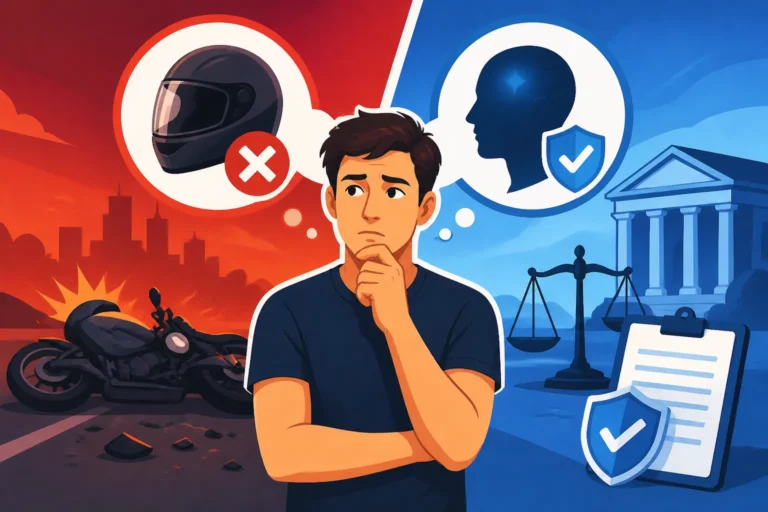
At its core, the helmet defense is a legal strategy used by insurance companies and at-fault drivers to argue that your injuries, particularly head injuries, would have been less severe—or even avoided entirely—had you been wearing a proper helmet. It's an attempt to shift some of the blame for your injury severity from the negligent driver to your own actions. This defense doesn't necessarily argue that you caused the accident, but rather that you contributed to the extent of your injuries.
Imagine this scenario: You're riding in a state with a partial helmet law, over 21, with the required insurance, so you're legally riding without a helmet. A distracted driver suddenly makes an illegal U-turn, causing a collision. You suffer a traumatic brain injury. The at-fault driver's insurance company, perhaps like a major carrier such as Geico or Progressive, will almost certainly invoke the helmet defense. They will argue that while their insured caused the crash, your TBI could have been mitigated or prevented had you been wearing a DOT-approved helmet. This argument directly impacts your potential settlement for head injuries, relying on principles of comparative or contributory negligence, which we'll dive into more deeply in the section on how fault is determined in motorcycle accidents.
How Insurers Exploit Non-Compliance
Insurers are experts at finding any angle to reduce payouts. If you weren't wearing a helmet when the law required it, or if you were wearing a "novelty" helmet that offers little to no real protection and isn't DOT-compliant, you can bet they'll seize on it. They’ll scrutinize every detail, from the type of helmet you were wearing (or not wearing) to the specifics of your head injuries.
Consider a rider in a state like Texas, over 21, who chose not to wear a helmet but didn't have the required medical insurance. An accident occurs, and they suffer facial fractures and a concussion. The other driver's insurance company will immediately highlight the lack of a helmet and the absence of the required insurance. They'll claim that because you weren't compliant with the spirit of the law, or even the letter, you are partially responsible for the severity of your injuries. Similarly, if you were wearing a novelty helmet – one that might look cool but lacks proper safety certifications – they'll argue it offered no effective protection, essentially treating you as if you weren't wearing a helmet at all. They might even bring in their own "experts" to testify about the specific forces involved and how a proper helmet would have changed the outcome, all to reduce your potential compensation.
The Burden of Proof for the Defense
It's crucial to understand that the helmet defense isn't a guaranteed win for the insurance company. They can't just assert that your injuries would have been less severe. They have the burden of proof to demonstrate a direct, causal link between your failure to wear a proper helmet and the specific head injuries you sustained. This means they need to present compelling evidence.
Typically, this involves hiring their own medical experts and accident reconstruction specialists. These experts will attempt to prove that, given the dynamics of the crash, a DOT-compliant helmet would have prevented or significantly reduced your particular head injury. For example, they might analyze the impact points and argue that a certain type of helmet would have absorbed the energy that caused your skull fracture. This process can be incredibly complex and often requires sophisticated scientific analysis. If they can't establish this direct link – if, for instance, your head injury was due to crushing forces that a helmet couldn't reasonably protect against – their defense may falter. However, even if their argument is weak, the mere fact that they raise the defense can create significant delays and stress during the claims process, making it essential to have strong representation.
Impact on Your Motorcycle Accident Claim and Settlement
When you're dealing with the aftermath of a motorcycle accident, every detail can influence your ability to secure a fair settlement. The question of whether you wore a helmet, and its compliance, is one of those details that can carry substantial weight. It directly interacts with state-specific legal doctrines that determine how fault and damages are allocated, potentially cutting into the compensation you desperately need for medical bills, lost wages, and pain and suffering.
Reduction in Damages Based on Negligence
The legal concept that often intersects with the helmet defense is comparative negligence or, in some states, contributory negligence. Most states operate under some form of comparative negligence. This means that if you are found to be partially at fault for the severity of your injuries (even if not for the cause of the accident itself), your total awarded damages can be reduced by your percentage of fault. For example, in states like California, which uses a "pure comparative negligence" rule, if a jury decides your head injuries would have been 20% less severe had you worn a helmet, a $100,000 settlement could be reduced by $20,000.
Other states, such as Texas and Florida, follow a "modified comparative negligence" rule (typically the 51% rule). This means you can only recover damages if you are found to be 50% or less at fault for your injuries. If the helmet defense pushes your "fault" for injury severity to 51% or higher, you could be barred from recovery entirely. The stakes are incredibly high. Even more stringent are the few states that still adhere to "contributory negligence," such as North Carolina. In these states, if you are found even 1% at fault for contributing to your injuries (e.g., by not wearing a helmet), you could be completely barred from recovering any damages at all. This makes understanding your state's specific laws absolutely critical for your motorcycle accident liability.
Head Injuries and the Helmet Defense
Unsurprisingly, the helmet defense is most powerfully applied when you've sustained head injuries. These can range from concussions and traumatic brain injuries (TBIs) to skull fractures and severe lacerations. If you weren't wearing a DOT-compliant helmet, the insurance company will vehemently argue that these specific injuries could have been avoided or significantly lessened. They'll often try to paint a picture that your choices directly led to the most debilitating and expensive aspects of your medical care.
They might present medical literature showing the effectiveness of helmets in preventing or reducing the severity of various head traumas. This is why thorough medical documentation is paramount. Your doctors' notes, imaging results, and expert opinions on the nature and cause of your injuries become critical pieces of evidence. It's not just about proving the injury itself, but also understanding the biomechanics of how it occurred and whether a helmet truly would have changed the outcome in your specific situation. This complex interplay of medical facts and legal arguments directly impacts the value of your claim, especially concerning future medical costs and pain and suffering related to brain injuries.
Non-Head Injuries and the Helmet Defense
What about injuries that aren't to your head? Does not wearing a helmet affect claims for things like severe road rash, broken bones in your arms or legs, or spinal injuries? Generally, the helmet defense is much weaker, and often inapplicable, to non-head injuries. It's difficult for an insurer to logically argue that wearing a helmet would have prevented a fractured femur or a severe case of road rash on your arms.
However, some aggressive insurance companies might still try to use your helmet non-compliance to argue a broader sense of overall negligence or disregard for your own safety. They might suggest that because you weren't wearing a helmet, you were generally more reckless, or that your failure to wear one indicates a pattern of not taking appropriate safety precautions, which could impact other aspects of your injury claim. For instance, they might try to link a lack of full protective gear (like a proper riding jacket or durable gloves, easily found at a store like Cycle Gear) to the severity of your road rash, even if the primary argument is about the helmet. While this is a harder sell for them, it highlights how insurance companies assign blame to riders and scrutinize every detail to minimize their payout. This is why documenting all your injuries comprehensively, and having a clear narrative for how they occurred, is vital.
Proving You Wore a Helmet or Countering the Defense
When an insurance company or opposing counsel raises the "helmet defense," it can feel like you're suddenly on trial for your choices rather than focusing on the at-fault driver's negligence. However, you are not without recourse. There are clear strategies and types of evidence you can use to either prove you were wearing a proper helmet or to effectively counter the defense's claims, protecting your right to recover damages.
Evidence to Prove Helmet Use
If you were wearing a helmet, your first priority is to gather clear, undeniable evidence to prove it. This can dismantle the helmet defense before it even gains traction.
- Police Reports and Witness Statements: The official police report from the scene is often the first document consulted. If the responding officer noted that you were wearing a helmet, or if witnesses at the scene can corroborate this, it's powerful evidence. This is why accurate documentation at the scene is crucial.
- Photos and Videos: In today's world, almost everyone has a smartphone. Did anyone take photos or videos at the accident scene? Did you have a helmet camera? Footage showing you wearing your helmet, or even photos of your damaged helmet lying near your bike, can be irrefutable proof. Even photos from before the ride, showing you geared up, can help.
- Medical Records: Early medical records might contain notes from EMTs or emergency room staff about whether a helmet was removed or present.
- Purchase Receipts and Helmet Condition: Keeping receipts for your DOT-compliant helmet from a reputable retailer, like Cycle Gear, can help establish it was a legitimate safety device. The condition of the helmet after the crash itself can also be evidence; a cracked or heavily scraped helmet indicates it absorbed impact, doing its job. This supports your claim that you were taking appropriate safety measures.
Challenging the Causal Link
Even if you weren't wearing a helmet, or if its compliance is questioned, the helmet defense can still be challenged. The key here is to attack the causal link that the insurance company tries to establish between non-helmet use and your specific head injuries.
- Medical Expert Testimony: This is often the most effective way to counter the defense. Your own medical experts can testify that, given the specific forces involved in the accident, your head injuries would have occurred even if you had been wearing a helmet. For instance, if you suffered a severe crush injury to your head from being run over by a vehicle, a helmet, while offering some protection, might not have fundamentally altered the outcome. They can explain how the nature of the impact (e.g., severe blunt force, compression) was such that even the best helmet couldn't prevent the injury.
- Accident Reconstruction: An accident reconstruction expert can analyze the crash dynamics, vehicle speeds, impact points, and how your body moved during the collision. They might be able to demonstrate that the mechanism of your head injury wasn't due to a direct impact on the unprotected skull, but rather from acceleration/deceleration forces (like whiplash leading to a brain injury) or other factors that a helmet wouldn't mitigate. This often involves looking at how fault is determined in motorcycle accidents from a scientific perspective.
- Argument of Irrelevance: For non-head injuries, your legal team can argue that the helmet defense is completely irrelevant. Whether you wore a helmet has no bearing on a broken leg or road rash on your arm. The defense's attempt to use it in such cases is often an improper tactic to prejudice the jury against you.
The "Eggshell Skull" Rule and Pre-Existing Conditions
A lesser-known but powerful legal principle that can sometimes work in your favor is the "eggshell skull" rule, also known as the "thin skull" rule. This doctrine states that a negligent defendant "takes their victim as they find them." In simpler terms, if a driver's negligence causes an injury, they are liable for all the resulting damages, even if the victim had a pre-existing condition that made them unusually susceptible to injury.
For example, if you had a pre-existing neurological condition that made you more prone to concussion, and a minor head impact (even without a helmet) exacerbates that condition, the at-fault driver could still be held fully responsible for the extent of your injuries. The argument would be that while you may have been more vulnerable, the negligent driver still caused the impact that triggered or worsened your condition. This rule can limit the effectiveness of the helmet defense by preventing the defense from arguing that a "normal" person wouldn't have been as severely injured, thus allowing you to recover damages fully for your specific, personal harm. This is a complex area, and understanding how pre-existing conditions affect claims requires careful legal analysis.
The Importance of DOT-Compliant Helmets and Other Gear
Beyond the legal implications and the potential reduction in damages, choosing the right helmet and wearing appropriate gear is fundamentally about your safety. It's an investment in your well-being, and it often provides tangible evidence that strengthens your claim by demonstrating a commitment to safety, both before and after a crash.
What Makes a Helmet DOT-Compliant?
The term "DOT-compliant" isn't just a label; it refers to helmets that meet the minimum safety standards set by the U.S. Department of Transportation's Federal Motor Vehicle Safety Standard (FMVSS) 218. These standards require helmets to have certain features, such as a thick inner liner, a sturdy outer shell, and a secure retention system, designed to absorb impact and protect your head.
You can usually spot a DOT-compliant helmet by looking for the "DOT" sticker on the back. However, be wary of "novelty" helmets that might have fake DOT stickers. These helmets often lack the critical protective layers and materials necessary to meet safety standards. They might look cool, but they offer minimal protection in a crash and can severely undermine any legal claim you might have, as they are essentially treated as if you weren't wearing a helmet at all. Beyond DOT, other certifications like Snell and ECE exist, which often indicate even higher levels of safety testing, but DOT is the legal minimum. Always choose a helmet from a reputable brand like Bell, Shoei, or HJC, available at stores such as Cycle Gear, to ensure it meets the necessary safety benchmarks.
Beyond the Helmet: Other Essential Protective Gear
While the helmet is paramount for head protection, a complete set of riding gear provides a comprehensive safety net. Wearing a full complement of protective equipment demonstrates a rider's dedication to safety and can significantly reduce the severity of injuries in a crash, which in turn can strengthen your injury claim by showing proactive mitigation of risk.
- Riding Jackets: A sturdy riding jacket, typically made of leather or reinforced textile, offers abrasion resistance against road rash and often includes armor in key impact areas like shoulders and elbows.
- Gloves: Proper motorcycle gloves protect your hands from abrasions and impact, a common injury point when riders instinctively put their hands out during a fall.
- Riding Pants: Specially designed motorcycle pants, often armored, protect your hips and knees, which are highly vulnerable in a slide.
- Sturdy Boots: Over-the-ankle boots protect your feet and ankles from crushing injuries and abrasions.
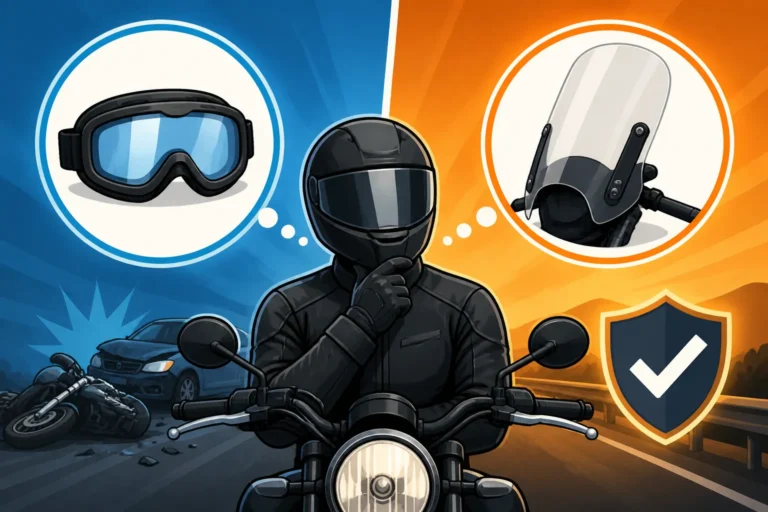
- Eye Protection: Goggles or a helmet visor are crucial for protecting your eyes from wind, debris, and insects, which can cause distractions and impair vision, potentially leading to an accident.
Wearing all this gear, often referred to as "all the gear, all the time" (ATGATT), not only safeguards you physically but also creates a positive impression if your case ever goes to court. It shows you were a responsible rider, which can counter any narrative an insurance company might try to build about rider recklessness. You can find a vast array of high-quality protective gear at stores like Cycle Gear, ensuring you're as protected as possible every time you hit the road.
How Gear Damage Supports Your Claim
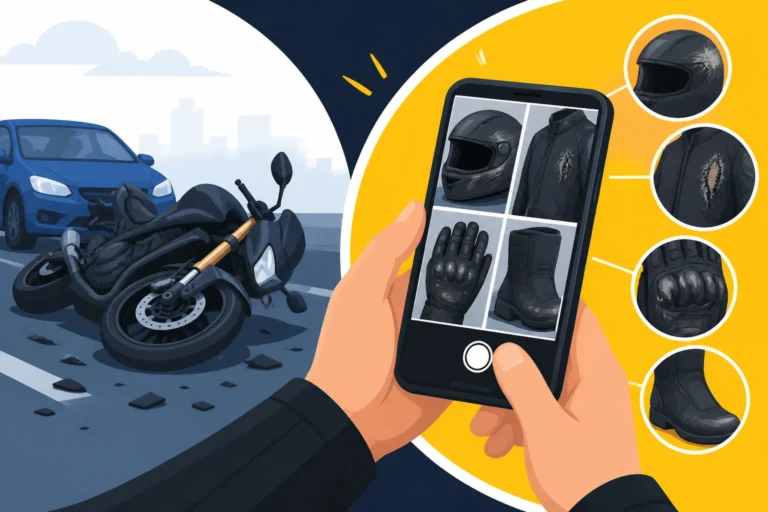
Your damaged gear isn't just a collection of ruined items; it's tangible evidence that tells a story about your accident. A cracked helmet, a scuffed jacket with torn seams, shredded gloves, or deeply scraped boots provide powerful physical proof of the impact forces involved in your crash.
- Demonstrating Impact Severity: The extent of the damage to your gear can graphically illustrate the violence of the collision. A severely damaged helmet, for instance, confirms a significant head impact and validates the potential for serious head injuries, even if you were wearing one. This can directly support your claim for higher damages by showing the sheer force you endured.
- Corroborating Injury Claims: If your jacket is torn and your arm has severe road rash, the two pieces of evidence reinforce each other. The damaged gear shows the physical interaction with the road, and your injuries are the direct result. This can make it harder for an insurance company to downplay the extent of your injuries or argue that they were pre-existing or less severe.
- Countering Rider Bias: Unfortunately, there's often a bias against motorcyclists. Presenting evidence of extensive gear damage can help counter the stereotype that riders are inherently reckless. It shows you took precautions, and despite those precautions, the accident still resulted in significant damage and injury.
Therefore, it's absolutely crucial to preserve your damaged gear after an accident. Take detailed photos of it, and if possible, store it securely. Your legal team can use this physical evidence to strengthen your case and demonstrate the true impact of the crash.
Navigating the Legal Landscape After a Crash Without a Helmet
The moments and days following a motorcycle accident are critical. If you weren't wearing a helmet, or if there's any ambiguity about it, you need to be particularly careful about how you proceed. The legal and insurance systems are complex, and subtle missteps can severely compromise your claim. Knowing how different entities will perceive your situation can help you protect your rights.
The Role of the Police Report
The police report is often the first official document detailing your accident, and it carries significant weight with insurance companies and in court. If the responding officer notes in their report that you were not wearing a helmet, or that your helmet was not DOT-compliant, it immediately creates a red flag for insurers. This notation can influence how the accident is initially perceived, potentially introducing a bias against you, regardless of who caused the crash.
For example, an officer might record, "Rider was not wearing a helmet at the time of the collision," even if your state has partial helmet laws and you were legally exempt. This single sentence can be used by the other driver's insurance company to suggest negligence on your part regarding injury mitigation. If you believe the police report contains factual errors or misrepresentations regarding your helmet use (e.g., you were wearing a helmet, or you were compliant with the law), it's crucial to address it promptly. Your attorney might be able to help you submit a request to correct the report, which can be a vital step in protecting your claim. Understanding how police reports establish fault is often the first step in any accident claim.
Dealing with Insurance Adjusters
Insurance adjusters are trained professionals whose primary goal is to minimize their company's payout. If you were involved in a crash without a helmet, expect them to latch onto this detail immediately. They will use it as a powerful tool to devalue your claim, even if it has no bearing on the cause of the accident or certain injuries.
They might phrase questions in a way that tries to elicit admissions of fault or regret. For instance, an adjuster might ask, "Don't you think your injuries would be less severe if you had worn a helmet?" or "Why did you choose not to wear head protection that day?" These questions are designed to get you to acknowledge some level of responsibility for your injuries. Never admit fault or make definitive statements about your injuries or helmet use directly to an insurance adjuster. Their job is not to help you; it's to find reasons to pay you less. Any statement you make can be used against you. It's always best to direct all communication through an attorney, especially if there's any question about your helmet status or if fault is disputed.
When to Hire an Attorney
Given the complexities surrounding helmet laws and the aggressive tactics of insurance companies, seeking legal counsel after a motorcycle accident, especially if you weren't wearing a helmet, is almost always a wise decision.
An experienced motorcycle accident attorney understands the nuances of state helmet laws, comparative negligence doctrines, and how to effectively counter the "helmet defense." They can:
- Investigate the Facts: An attorney will conduct a thorough investigation, gathering evidence, interviewing witnesses, and reviewing police reports to ensure all facts are accurate and in your favor.
- Hire Experts: They can bring in medical experts and accident reconstruction specialists to challenge the causal link between helmet non-use and your injuries, as discussed previously.
- Negotiate with Insurers: Attorneys are skilled negotiators who know how to stand up to insurance companies, prevent them from lowballing your settlement, and ensure you are fairly compensated for all your damages – including medical expenses, lost wages, pain, and suffering. They understand the strategies insurers use to assign blame to riders.
- Navigate the Legal System: If a fair settlement cannot be reached, they are prepared to take your case to court, where they can present a compelling argument to a judge or jury.
Even if you believe the other driver was 100% at fault and you followed all helmet laws, the specialized nature of motorcycle accidents means having an advocate who understands rider bias and the specific challenges faced by motorcyclists is invaluable. A consultation is typically free, and most motorcycle accident lawyers work on a contingency fee basis, meaning they only get paid if you win your case, making quality legal representation accessible. This is why understanding whether you need a motorcycle accident lawyer is a crucial decision to make early in the process.
State-Specific Nuances for Helmet Laws and Claims
The legal landscape concerning motorcycle helmet laws and their impact on accident claims is not a one-size-fits-all situation. Each state has its own specific regulations and legal doctrines (like comparative or contributory negligence) that interact with the "helmet defense." This means that what might be a minor issue in one state could completely bar your claim in another. It's important to understand these local variations.
Here's a brief overview of how helmet laws and their impact on claims can vary by state:
| State | Helmet Law Type | Helmet Requirement Notes | How Non-Use Typically Affects Claims | Negligence Rule Applied |
|---|---|---|---|---|
| California | Universal | All riders and passengers must wear a DOT-compliant helmet. | Failure to wear a helmet can be used by the defense to argue for a reduction in damages for head injuries under pure comparative negligence, but not typically for other injuries. | Pure Comparative Negligence: Damages are reduced by your percentage of fault (for injuries), no matter how high. Even if 99% responsible for injury severity, you can still recover 1% of damages. |
| Texas | Partial | Required for riders under 21, or riders 21+ unless they complete a safety course AND carry $10,000 in medical insurance. | If not compliant (e.g., no helmet and no insurance for 21+), the helmet defense can be used to reduce damages for head injuries. | Modified Comparative Negligence (51% Rule): Damages are reduced by your percentage of fault. If you are found 51% or more at fault (including for injury severity due to helmet non-use), you are barred from recovery. |
| Florida | Partial | Required for riders under 21. Riders 21+ can ride helmetless IF they carry at least $10,000 in medical insurance. | Similar to Texas, if a rider 21+ doesn't meet the insurance requirement, the helmet defense can significantly impact compensation for head injuries under modified comparative negligence. | Modified Comparative Negligence (51% Rule): Like Texas, if found 51% or more at fault for injury severity, recovery is barred. |
| New York | Universal | All riders and passengers must wear a DOT-compliant helmet. | Non-use can lead to significant reductions in compensation for head injuries. The argument is often more straightforward due to the universal law. | Pure Comparative Negligence: Damages reduced by percentage of fault, with no bar on recovery based on fault percentage. |
| Pennsylvania | Partial | Required for riders under 21. Riders 21+ who have had their license for 2 years AND complete a safety course can choose not to wear a helmet. (Note: PA repealed its full repeal of helmet law in 2003, reverted to partial) | If the conditions for riding helmetless are not met, the helmet defense can be employed to reduce damages for head injuries. | Modified Comparative Negligence (51% Rule): If found 51% or more at fault for injury severity, recovery is barred. |
| Illinois | No Helmet Law (for adults) | No helmet required for riders 18+. Riders under 18 must wear a helmet. | While not legally required for adults, the "helmet defense" can still be raised by insurers using common law principles to argue for reduction in head injury damages, although it might be a more challenging argument for the defense to win without a statutory requirement. | Modified Comparative Negligence (51% Rule): If found 51% or more at fault for injury severity, recovery is barred. |
This table provides a snapshot, but it's crucial to remember that legal interpretations can be complex and vary based on the specific facts of a case. For instance, even in "no helmet law" states, insurers might still try to use the argument that your actions (not wearing a helmet) contributed to your injury severity. This is why if you've been in a motorcycle accident and have questions about whether you have to wear a helmet to recover damages, it is imperative to consult with a local attorney who specializes in motorcycle accident claims. They can provide advice specific to your state's laws and the details of your situation.
Disclaimer
This article is for general informational purposes only and does not constitute professional advice. Laws and regulations vary by location and change over time. Consult a qualified professional for guidance on your specific situation.