How California’s Universal Helmet Law Works
Riding a motorcycle in California offers some of the most stunning scenery and incredible roads in the world, but it also comes with a unique set of rules that can sometimes feel confusing, especially when it comes to safety gear. Many riders might wonder if the rumors about strict helmet laws are true, or if there are exceptions for older, more experienced riders. This guide is here to clear up all that uncertainty, diving deep into how California's universal helmet law works, what it means for every rider, and why adhering to it is crucial not just for your safety, but for your legal standing after an accident.
Understanding California's Universal Helmet Law
California's approach to motorcycle helmets is one of the strictest in the nation, and for good reason. The state has long prioritized rider safety, leading to legislation that aims to protect everyone on two wheels. When we talk about a "universal" helmet law, it means exactly that: it applies to everyone, without exception.
What "Universal" Really Means for Riders
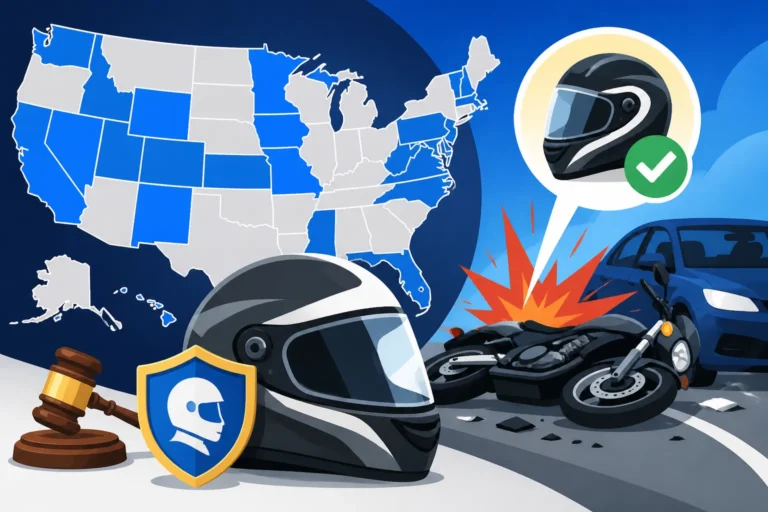
In the context of motorcycle safety, "universal" isn't just a fancy word; it's a fundamental principle. It means that if you're operating a motorcycle, motor-driven cycle, or motorized bicycle on any public street, road, or highway in California, you—and any passenger you might have—must wear a safety helmet. There are no age exemptions, no experience level waivers, and no loopholes for short rides. This isn't like some other states where riders over a certain age or with specific insurance coverage might be exempt. Nope, in California, if you're on a bike, your head needs to be protected.
This universal mandate dates back to January 1, 1992, when California enacted Vehicle Code (CVC) 27803. Before that, there were partial helmet laws, usually only requiring helmets for younger riders. But the data consistently showed the devastating impact of head injuries in motorcycle accidents, prompting the state to take a more comprehensive stance. This makes California distinct from states with "Partial Helmet Laws", where requirements might only apply to riders under 18 or 21, or states with "No Helmet Law" at all for adults. The intent behind California's law is crystal clear: to minimize fatalities and serious head trauma across the entire riding population.
The Specifics of the Law: What You Need to Know
Let's get down to the brass tacks of CVC 27803. The law clearly states that both the operator and any passenger on a motorcycle or motor-driven cycle must wear a safety helmet meeting specific federal standards. This means if you're cruising down the Pacific Coast Highway with a buddy on the back, both of you need to be properly helmeted. It's not just the rider who carries the responsibility; it extends to anyone riding along.
Furthermore, the law isn't just about throwing any helmet on your head. It specifies that the helmet must be "a safety helmet of a type approved by the Department of Transportation (DOT)." We'll dive into what "DOT-approved" truly means in the next section, but for now, know that compliance goes beyond merely wearing something on your head. It has to be the right kind of something. Beyond the helmet, CVC 27803 also mandates that riders and passengers use "eye protection of a type approved by the Department of Motor Vehicles." This usually means a face shield attached to your helmet or a pair of goggles. Sun shades, regular eyeglasses, or sunglasses are generally not considered sufficient unless they also meet specific impact-resistance standards. The goal here is to prevent debris, wind, or insects from impairing your vision, which can be just as dangerous as a head injury in certain situations. Imagine hitting a bee at 60 mph without eye protection – it's not just painful, it's a serious safety hazard.
What Constitutes a Legal Helmet in California
So, we know you have to wear a helmet, but what kind of helmet satisfies the law? This isn't a suggestion, it's a legal requirement that directly impacts your safety and your potential legal standing after an accident. Understanding "DOT Helmet Requirements Explained" is absolutely critical for every California rider.
DOT Compliance: Your Helmet's Gold Standard
When the law talks about a "safety helmet of a type approved by the Department of Transportation," it's referring to helmets that meet Federal Motor Vehicle Safety Standard (FMVSS) 218. This is the baseline standard for motorcycle helmets sold in the U.S. Why is this standard important? Because DOT certification means the helmet has been tested to ensure it can withstand certain impacts, has a minimum field of vision, and meets other critical safety benchmarks. It's not just a sticker; it's a promise of a certain level of protection.
How do you know if your helmet is DOT compliant? It's usually pretty straightforward. Look for a "DOT" sticker on the back of the helmet. This sticker isn't just for show; it's an official certification. Below the DOT symbol, you'll typically find additional information like the manufacturer's name or brand, the model, and the size. Be wary of novelty helmets – those thin, usually unlined helmets that offer minimal protection. These are often sold as "for appearance only" and explicitly state they are not DOT compliant. While they might look cool to some, they offer virtually no real protection in a crash and are illegal to wear on California roads. Wearing a "Novelty Helmet and Legal Risk" can mean fines, but more importantly, a significantly higher risk of severe or fatal head injuries.
When shopping for a helmet, whether at a local shop or online, always verify its DOT compliance. Reputable retailers like Cycle Gear will clearly label their helmets with this information, ensuring you're buying a product that meets legal and safety standards.
Beyond DOT: The Role of Snell and ECE Certifications
While DOT certification is the legal minimum for riding in California, many riders choose helmets that also carry additional certifications like Snell or ECE. These certifications represent even more rigorous testing and often indicate a higher level of protective capability.
- Snell Memorial Foundation (Snell): This is a private, non-profit organization that has been establishing helmet safety standards for decades. Snell testing is often more stringent than DOT, involving multiple impacts to the same spot, and different types of impact surfaces. Many track riders and serious street riders opt for Snell-certified helmets because of this enhanced protection. A Snell sticker will typically be found inside the helmet.
- Economic Commission for Europe (ECE): ECE 22.05 (or its newer version, ECE 22.06) is the standard required for helmets sold in over 50 countries, primarily in Europe. ECE standards focus on impact absorption and shell rigidity, among other things. Helmets with ECE certification are widely respected globally for their safety.
It's important to remember that while Snell and ECE offer superior protection, they are in addition to, not a replacement for, DOT compliance in the U.S. If a helmet has a Snell or ECE sticker but not a DOT sticker, it's technically not legal for street use in California, even if it offers fantastic protection. Always ensure the DOT sticker is present.
Choosing a helmet isn't just about legality; it's about life and limb. A full-face helmet, for instance, offers significantly more protection than an open-face helmet, covering your chin and jaw, areas highly susceptible to injury in a motorcycle crash. While the law doesn't specify what type of DOT-approved helmet you must wear, opting for a full-face helmet is always a wise choice, as it provides comprehensive protection, potentially preventing severe facial injuries in addition to head trauma.
| Certification | Legal Requirement in CA | Primary Focus | Testing Rigor | Typical Location of Sticker |
|---|---|---|---|---|
| DOT FMVSS 218 | Yes, mandatory | Minimum safety for U.S. roads | Baseline | Exterior rear of helmet |
| Snell M2020 | Optional (higher std) | Enhanced impact resistance, multiple impacts | Very high | Interior of helmet |
| ECE 22.06 | Optional (higher std) | Impact absorption, shell rigidity, global standard | High | Interior of helmet |
The Consequences of Non-Compliance
Ignoring California's universal helmet law carries risks that go far beyond a simple ticket. The implications can be significant, affecting your wallet, your driving record, and potentially the outcome of any legal action following an accident.
Penalties for Riding Without a Helmet
If you're caught riding without a DOT-compliant helmet in California, you're looking at more than just a stern lecture. The primary penalty is typically a traffic citation and a fine. While the exact amount can vary by county and specific circumstances, you can generally expect a fine that can easily run into the hundreds of dollars, plus court fees and administrative costs. This isn't merely a slap on the wrist; it's a financial hit that could have been easily avoided.
What's more, riding without a helmet is generally considered a moving violation, which means points can be assessed against your driving record. Accumulating too many points can lead to increased insurance premiums, or even the suspension of your motorcycle endorsement or driver's license. For many riders, the freedom of the open road is priceless, and having that freedom curtailed because of a simple violation is a tough pill to swallow. Officers have the authority to pull you over solely for this offense, as it's a primary violation of the Vehicle Code. This means they don't need another reason to stop you; the absence of a legal helmet is enough.
How Not Wearing a Helmet Affects Your Accident Claim
This is where the stakes get incredibly high. Beyond the immediate penalties, the decision not to wear a helmet can have devastating consequences if you're involved in a motorcycle accident. Even if another driver was clearly at fault, your helmet non-compliance could be used against you, potentially reducing the compensation you receive for your injuries. This concept is often referred to as the "helmet defense."
California operates under a "pure comparative negligence" system, which means that even if you're found partially at fault for an accident, you can still recover damages, but your payout will be reduced by your percentage of fault. For example, if a car driver failed to yield and hit you, but you weren't wearing a helmet and suffered a severe head injury, the defense (often the other driver's insurance company) might argue that your injuries were made worse, or even entirely caused, by your failure to wear a helmet. This is known as "How the Helmet Defense Reduces Settlements". If the court or jury agrees that your head injury damages are 30% attributable to not wearing a helmet, your compensation for those specific injuries could be reduced by 30%.
It's crucial to understand that not wearing a helmet typically only impacts claims related to head injuries. If you suffered a broken leg, road rash on your arm, or other injuries not directly tied to head trauma, the absence of a helmet generally shouldn't affect compensation for those specific damages. However, insurers are notoriously aggressive. They might try to argue that your overall recklessness in not wearing a helmet indicates a broader disregard for safety, subtly influencing the perception of your claim. This is why having strong evidence that directly links your injuries to the accident itself, and not to your helmet choice, is paramount. This can be a complex legal battle, underscoring the importance of seeking legal counsel who understands how to counter such defenses and how "How Insurance Companies Assign Blame to Riders" unfairly.
The bottom line is that while you might feel invincible on your bike, neglecting the universal helmet law creates an unnecessary vulnerability that insurance companies and opposing legal teams are eager to exploit. This is one of the most significant ways "How Helmet Laws Affect Your Accident Claim" directly.
Practical Advice for California Riders
Now that we’ve covered the legalities and potential pitfalls, let’s talk about how you can easily stay compliant and, more importantly, stay safe on California's roads. It's not just about avoiding a ticket; it's about enjoying your ride with peace of mind.
Choosing the Right Helmet for Safety and Legality
Selecting a helmet might seem simple, but it’s a decision that profoundly impacts your safety and compliance with California’s stringent laws. The most crucial factor, as we've discussed, is ensuring it's DOT-compliant. Always double-check for that official DOT sticker. Beyond that, consider additional certifications like Snell or ECE for enhanced protection. Many riders find that investing in a helmet with these higher standards is well worth the cost for the added peace of mind.
When you're at a retailer like Cycle Gear, take your time. Don't just grab the first one that looks good.
Here's a quick checklist for choosing:
- Fit is King: A helmet should fit snugly all around your head, with no pressure points. It shouldn't move independently of your head when you try to rotate it. If it’s too loose, it won’t protect you effectively in a crash. If it’s too tight, it will be uncomfortable and distracting on long rides. Many shops will help measure your head and guide you through the sizing process.
- Field of Vision: Ensure the helmet offers an unobstructed view, especially peripherally. This is vital for seeing other vehicles, road hazards, and maintaining awareness.
- Ventilation: Good airflow can make a huge difference in comfort, especially during California’s hot summers.
- Helmet Type: While not legally mandated, full-face helmets offer the most comprehensive protection. They safeguard your chin, jaw, and face from impact and road abrasion, which can prevent horrific facial injuries in a crash. Open-face helmets are legal if DOT-approved, but remember to pair them with approved eye protection.
- Condition: Helmets have a lifespan, typically 3-5 years, or immediately after a significant impact, even if it looks fine. The protective materials degrade over time. If your helmet has been in a crash, replace it, no matter how minor the impact seemed.
Remember, a helmet is not just a piece of gear; it's your primary line of defense. Investing in a high-quality, properly fitting, and legally compliant helmet is one of the smartest decisions any rider can make.
Protecting Yourself Beyond the Helmet
While the helmet is legally mandatory and critically important for head protection, it’s only one part of the safety equation. "Motorcycle Safety Gear and Legal Protection" extends to a whole suite of gear designed to protect your entire body. Road rash, broken bones, and other severe injuries are all "Common Motorcycle Accident Injuries" that can be mitigated with the right gear.
Consider these essential items for every ride:
- Jackets: A good motorcycle jacket, made from leather or abrasion-resistant textiles like Cordura, offers vital protection for your torso and arms. Look for jackets with CE-approved armor in the elbows, shoulders, and back. This armor is designed to absorb impact energy and prevent fractures.
- Gloves: In almost any fall, your hands are likely to hit the ground first. Protective gloves, often made of leather with reinforced palms and knuckle protection, can prevent severe cuts, abrasions, and fractures to your hands and wrists.
- Pants: Regular jeans offer almost no protection against abrasion. Dedicated motorcycle pants, either leather or reinforced textile, are essential for protecting your legs and hips from "Road Rash Injuries and Claims". Many come with knee and hip armor.
- Boots: Sturdy, over-the-ankle motorcycle boots protect your feet and ankles from crushing injuries and hyperextension. They should have good grip and provide ankle support.
Beyond the obvious physical protection, wearing full gear can also indirectly support your position in a legal claim. It demonstrates that you are a responsible rider who takes safety seriously, which can subtly counter any attempts by an insurance company to paint you as reckless. While not legally mandated like helmets, wearing comprehensive safety gear is a commitment to your own well-being and can significantly reduce the severity of injuries, thus strengthening your position should you ever need to pursue a claim. Taking photos of your damaged gear after a crash can even serve as powerful evidence of the impact's force and the protection it provided.
Disclaimer
Please remember that this article provides general information and is not a substitute for legal advice. Laws can change, and individual circumstances vary. If you have been involved in a motorcycle accident or have specific legal questions, it is highly recommended to consult with a qualified legal professional in your jurisdiction.