How Florida’s Helmet Law Works
Navigating the road on two wheels in Florida offers unparalleled freedom, but the rules around helmet use can feel like a tangled mess of confusion for many riders. It’s easy to get conflicting information or misunderstand the nuances, especially when it comes to how a helmet — or lack thereof — might impact you after an accident. This comprehensive guide will untangle Florida’s helmet laws, clarify who needs to wear one, what insurance considerations are involved, and most importantly, how your choices on head protection can profoundly affect any motorcycle accident claim you might face.
Understanding Florida's Motorcycle Helmet Law
Florida stands out among many states for its distinctive approach to motorcycle helmet legislation. Unlike states with strict universal helmet laws, Florida has what's often referred to as a "partial" helmet law. This distinction is crucial for every rider to grasp, not just for compliance but for their own safety and legal protection.
Universal vs Partial Helmet Laws
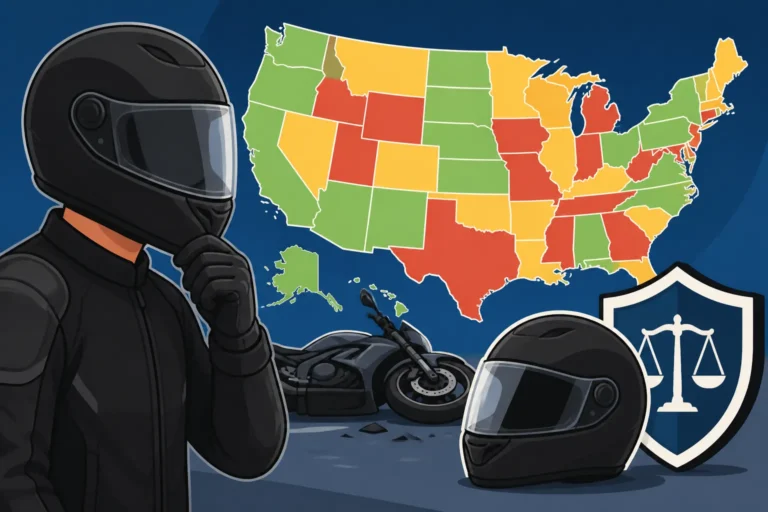
To really get a handle on Florida's situation, it helps to understand the two main types of helmet laws in the U.S. states. A "universal helmet law" mandates that all motorcycle riders, regardless of age or experience, must wear a helmet. States like California and Georgia have universal laws, meaning every single person on a motorcycle has to strap on a DOT-compliant helmet, no exceptions. The reasoning is clear: helmets save lives and reduce severe injuries.
Florida, on the other hand, operates under a "partial helmet law." This means that while some riders are legally required to wear a helmet, others are not, depending on specific criteria. It's a system that tries to balance individual liberty with public safety concerns, but it often leads to misunderstandings that can have serious consequences. For a broader perspective on the varying rules across the country, you might want to look into Motorcycle Helmet Laws by State.
The "Over 21" Exemption and Insurance Requirement
Here’s the heart of Florida’s helmet law: if you are 21 years of age or older, you are not legally required to wear a helmet, provided you have an insurance policy that provides at least $10,000 in medical benefits for injuries incurred in a motorcycle accident. This is the critical piece of the puzzle. It's not just about your age; it's about demonstrating financial responsibility for potential medical costs if things go sideways.
So, if you're cruising down A1A in Miami-Dade County, enjoying the ocean breeze without a helmet, you absolutely need that specific insurance coverage. Without it, you're not just risking your head, you're breaking the law, and that could lead to fines and other penalties. This insurance mandate is designed to ensure that if you are injured in a crash, there’s at least some financial safety net in place to cover your immediate medical bills, rather than having those costs fall entirely on public services or leaving you with insurmountable debt. It's a nuanced rule that tries to prevent riders from becoming a burden on the healthcare system if they choose to ride without the added protection of a helmet.
Passenger Helmet Requirements
The helmet law in Florida isn't just about the driver; it also extends to passengers. The same rules apply: if your passenger is under 21, they must wear a DOT-compliant helmet. If your passenger is 21 or older, they are also exempt from wearing a helmet, but only if the rider (or the passenger themselves) has that minimum $10,000 medical benefits insurance coverage.
This means you, as the operator, are generally responsible for ensuring your passenger complies with the law. Imagine taking a friend for a ride along the scenic Tamiami Trail. If your friend is 20 and doesn't have a helmet, you're both in violation. Even if they are over 21, if neither of you has the requisite insurance, you're still not compliant. It's vital to have these conversations and confirm compliance before hitting the road, both for safety and legal reasons.
Why Florida's Helmet Law Changed
Florida’s current helmet law, specifically the 21-and-over exemption, isn’t as old as you might think. For many years, Florida had a universal helmet law, requiring all riders to wear helmets. However, in 2000, that changed. The move to a partial helmet law was controversial, sparking debates about personal freedom versus public health and safety.
Impact on Rider Safety and Statistics
When the law changed, many safety advocates warned of dire consequences, and unfortunately, some of those predictions came true. Studies and statistics consistently show a correlation between helmet use and reduced severity of injuries, especially head trauma, and fatalities. After the 2000 amendment, Florida saw an increase in both motorcycle fatalities and head injuries among riders who chose not to wear helmets. This data underscores the inherent risks involved in riding without a helmet, even if it's legal for you.
For example, data from the National Highway Traffic Safety Administration (NHTSA) often highlights states with universal helmet laws as having significantly lower fatality rates per registered motorcycle than states with partial or no helmet laws. While the law grants a choice, the physical realities of a crash haven't changed. Serious injuries like traumatic brain injuries (TBIs) and spinal cord injuries are far more common and severe without proper head protection. To understand more about serious injuries, you can check out Motorcycle Accident Traumatic Brain Injuries and Spinal Cord Injuries from Motorcycle Accidents.
The Insurance Mandate: What It Means
The $10,000 medical benefits insurance requirement for riders 21 and over is not just a casual suggestion; it’s a legal necessity that replaces the helmet mandate for those specific riders. This insurance acts as a first line of defense against the astronomical costs of emergency medical care following a serious motorcycle accident. Think about it: an ambulance ride alone can cost thousands, not to mention emergency room visits, diagnostics like CT scans, surgeries, and extended hospital stays. That $10,000 might sound like a lot, but in the context of a severe injury, it can be quickly exhausted.
This specific coverage is distinct from your typical liability insurance, which covers damages you might cause to others. This is your medical benefit. If you don't have this, and you're pulled over without a helmet, you could face penalties. Moreover, if you're involved in an accident and don't have the required insurance, even if you were otherwise riding legally without a helmet, you could face additional legal troubles and significant financial burden for your injuries. It’s a serious requirement that many riders often overlook or misunderstand until it's too late.
Navigating the Law and Your Safety
Beyond simply knowing the law, responsible riding in Florida involves making informed decisions about your safety gear and understanding the practical implications of those choices. The law provides certain freedoms, but smart riders know that safety always comes first.
Choosing the Right Helmet
Even if you're over 21 and have the required insurance, choosing to wear a helmet is always the smartest decision. But it's not just about wearing any helmet; it's about wearing the right helmet. In the U.S., a helmet must be DOT-compliant, meaning it meets the safety standards set by the Department of Transportation. Look for the DOT sticker on the back of the helmet.
Beyond DOT compliance, consider the level of protection. Full-face helmets offer the most comprehensive protection, covering your chin and face in addition to your skull. Modular helmets provide flexibility, while open-face or half-helmets offer less protection but are popular for those seeking more airflow. Brands like Shoei, Arai, and Bell are well-regarded for their safety features and quality construction, and you can find a wide range of options at retailers like Cycle Gear. Always ensure the helmet fits snugly, is comfortable, and doesn't obstruct your vision. This choice isn't just about legality; it's about drastically reducing your risk of life-altering injuries.
Other Essential Gear in Florida
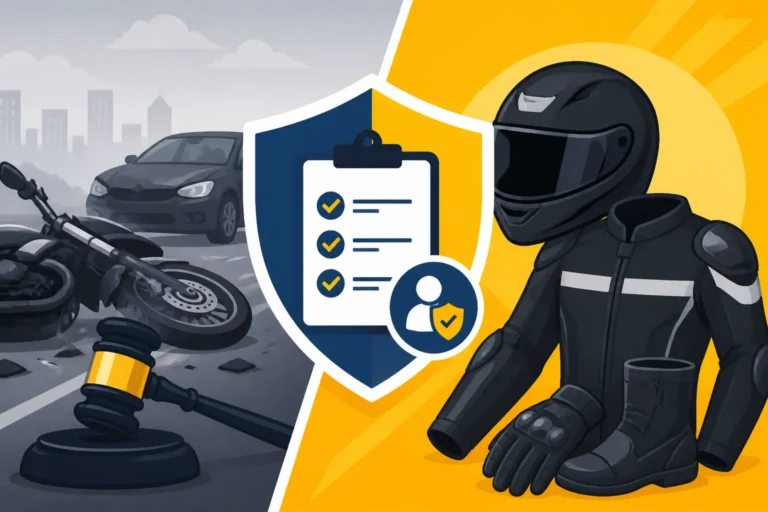
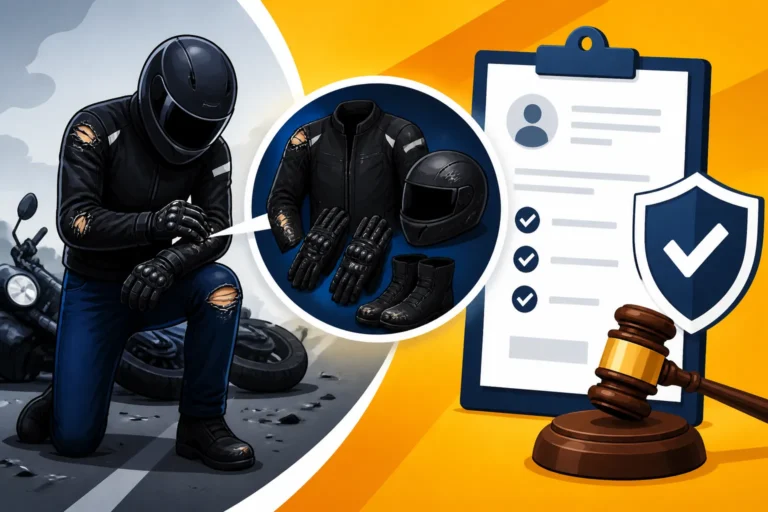
While helmets are often the focus, a comprehensive approach to rider safety involves much more. Road rash is an incredibly common and painful injury in motorcycle accidents, often requiring extensive medical treatment and leaving permanent scarring. Proper riding gear, sometimes referred to as "all the gear, all the time" (ATGATT), can prevent or minimize these injuries.
This includes:
- Armored Jackets: Made from abrasion-resistant materials like leather or textile with CE-rated armor in the shoulders, elbows, and back.
- Riding Pants: Similar materials, often with knee and hip armor. Jeans, while common, offer almost no protection against asphalt.
- Gloves: To protect your hands, which are often the first thing to hit the ground.
- Over-the-Ankle Boots: To protect your feet and ankles from impact and crushing injuries.
Investing in quality gear from reputable brands, available at places like Cycle Gear, is an investment in your well-being. While Florida doesn't legally mandate most of this gear, choosing to wear it significantly increases your chances of walking away from an accident with minor scrapes instead of severe, debilitating injuries. Think of it as your second skin – it's there to absorb the impact and abrasion that your body would otherwise endure. You can learn more about how gear choices can affect your claim in Motorcycle Safety Gear and Legal Protection.
Potential Legal Ramifications of Non-Compliance
If you're under 21 and caught riding without a helmet in Florida, or if you're over 21 without the required $10,000 medical benefits insurance and no helmet, you're breaking the law. This can lead to:
- Traffic Citations: Fines and points on your driving record.
- Impoundment: In some cases, your motorcycle could be impounded.
- Insurance Issues: Your insurance provider might deny coverage or increase your premiums due to non-compliance.
- Increased Liability in Accidents: While not directly fault-determining, non-compliance can significantly complicate accident claims, as discussed below.
It’s not just about the immediate penalty from a police officer. These ramifications can follow you, impacting your driving record, insurance rates, and financial stability. It's a risk that's simply not worth taking.
How Not Wearing a Helmet Affects a Motorcycle Accident Claim in Florida
This is where the rubber meets the road, so to speak, for motorcycle accident claims in Florida. While the law gives adult riders a choice regarding helmets, that choice can have serious, often detrimental, implications if you're involved in a crash. Insurance companies and opposing legal teams are acutely aware of Florida’s helmet laws and will use every angle to minimize their payout.
The Helmet Defense in Florida
The "helmet defense" is a tactic commonly employed by insurance companies and at-fault drivers in motorcycle accident claims, especially in states like Florida with partial helmet laws. Essentially, it argues that even if the other driver was primarily at fault for the accident, your injuries (especially head injuries) would have been less severe, or perhaps even avoided, had you been wearing a helmet.
This defense isn't about proving who caused the crash; it's about proving the extent of your damages. If an insurer can successfully argue that your lack of a helmet contributed to the severity of your head injury, they can reduce the amount of compensation they owe you for medical bills, lost wages, and pain and suffering related to that specific injury. This defense can be a powerful tool for the defense, significantly impacting your settlement. Understanding how this tactic is used is crucial, as highlighted in The Helmet Defense Explained.
Comparative Negligence and Settlement Impact
Florida operates under a "pure comparative negligence" system. This means that even if you are partially at fault for an accident, you can still recover damages, but your compensation will be reduced by your percentage of fault. For example, if you sustain $100,000 in damages but are found 20% at fault, you would only recover $80,000.
The helmet defense often ties into comparative negligence. While not wearing a helmet doesn't usually make you at fault for causing the accident itself, it can be argued that you are comparatively negligent for your injuries. If the defense successfully argues that not wearing a helmet contributed, say, 30% to the severity of your head injury, then your compensation for that specific injury could be reduced by that 30%. This can drastically reduce your overall payout. You can explore this further in How Comparative Negligence Reduces Your Payout.
Imagine a scenario: You're riding in Orlando, over 21, without a helmet and with the proper insurance. A distracted driver makes an illegal U-turn, causing you to collide. You suffer a severe traumatic brain injury. While the other driver is clearly at fault for the collision, their insurance company, perhaps GEICO or Progressive, will likely argue that your head injury would have been much less severe if you had been wearing a DOT-approved helmet. If a jury agrees and assigns 25% of the blame for the severity of your injury to your choice not to wear a helmet, your compensation for that TBI could be cut by 25%. This is a critical distinction that many riders fail to appreciate. Even if you were not at fault for the accident itself, your actions regarding protective gear can affect the value of your injury claim.
Proving Your Injuries and Damages
When you're involved in a motorcycle accident, documenting everything is paramount, regardless of helmet use. This includes:
- Medical Records: Seeking immediate medical attention is vital, even if you feel okay. Gaps in treatment can be used by insurers to argue your injuries aren't severe or were caused by something else.
- Photos and Videos: Document the accident scene, vehicle damage, and importantly, your injuries as they heal.
- Witness Statements: Eyewitnesses can corroborate your account of the accident and potentially testify about your helmet use (or lack thereof) at the scene.
- Personal Journal: Keep a detailed record of your pain levels, limitations, and how your injuries affect your daily life. This helps document non-economic damages like pain and suffering.
If you weren't wearing a helmet, documenting all other aspects of the crash and your injuries becomes even more crucial to counter potential helmet defense arguments. You need to show that even with a helmet, certain injuries were inevitable, or that the other driver's egregious actions were the primary cause of all your damages. This requires meticulous record-keeping and often the expertise of an accident reconstruction expert or medical professionals who can provide detailed opinions on injury causation and severity. For more on documenting your injuries, see How to Document Injuries for a Claim and Types of Damages in a Motorcycle Accident Claim.
Ultimately, while Florida’s helmet law grants adult riders a choice, that choice comes with significant responsibilities and potential consequences, especially in the unfortunate event of an accident. Prioritizing safety by wearing a DOT-compliant helmet, regardless of age or legal requirements, remains the most prudent decision for any rider.
| Florida Helmet Law Overview | Under 21 | 21 and Older | Passengers |
|---|---|---|---|
| Helmet Required? | Yes | No (with conditions) | Same as Rider |
| Insurance Required? | No (for helmet exemption) | Yes ($10,000 medical benefits) | Yes (if rider is exempt) |
| DOT-Compliant Helmet | Yes | Recommended (if worn) | Yes (if required) |
| Legal Ramifications | Fines, points | Fines, points, potential claim reduction | Fines, points (for rider) |
Disclaimer
Please remember that this article provides general information and should not be considered legal advice. Motorcycle laws, insurance requirements, and accident claims are complex and can vary based on specific circumstances and local jurisdiction. If you have been involved in a motorcycle accident, it is always recommended to consult with a qualified legal professional to discuss your individual situation.