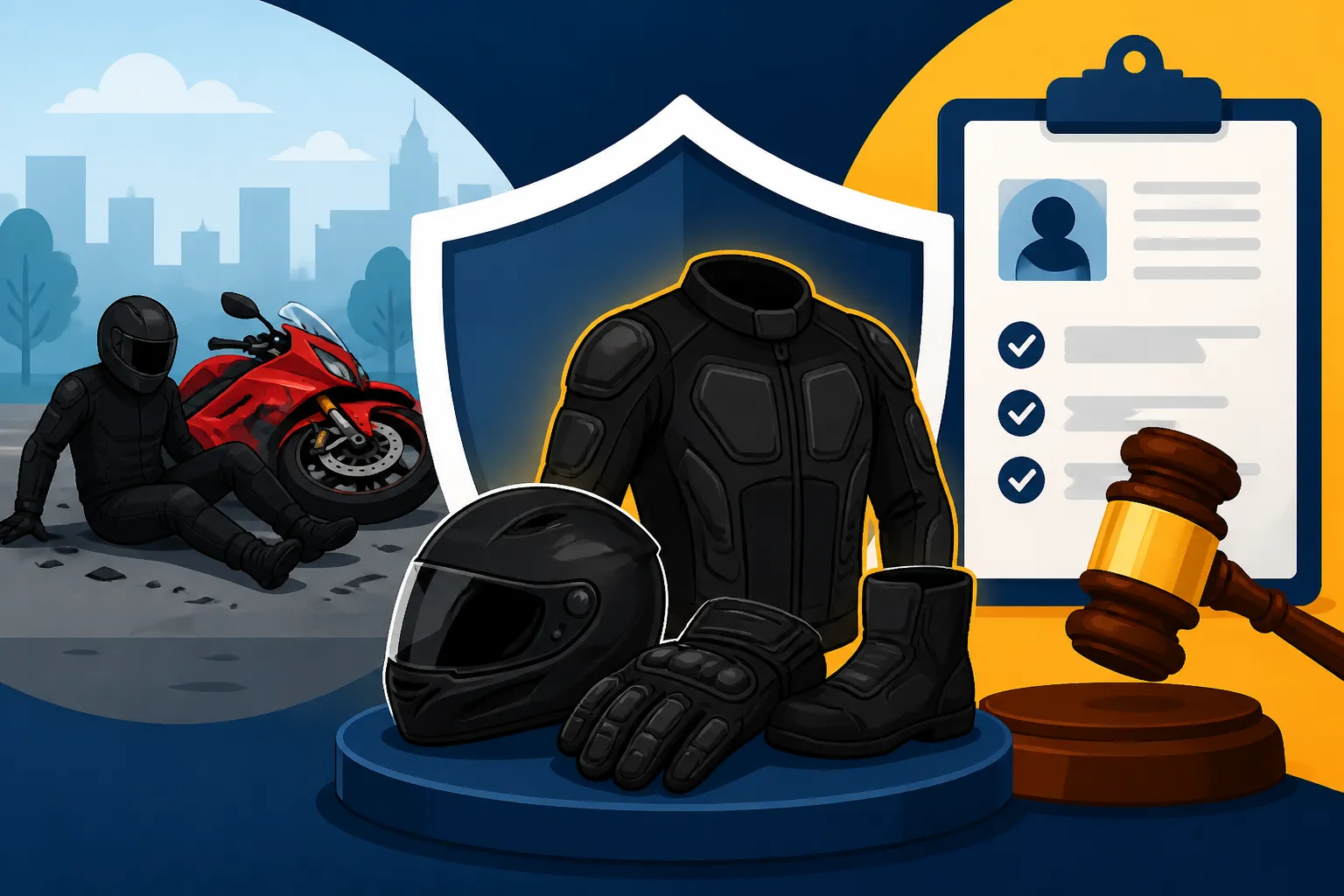
Protective Gear as Evidence in a Claim
Riding a motorcycle comes with an inherent thrill, but it also carries the sobering reality of what can happen when things go wrong. After the shock and pain of an accident, you’re left not only with physical injuries but also the daunting task of navigating an insurance claim. A key piece of evidence often overlooked, yet incredibly powerful, is your protective gear, which can speak volumes about what happened and how you were impacted. This guide will walk you through how your motorcycle gear acts as undeniable proof in your accident claim.
The Unseen Witness: How Your Gear Tells a Story
When you’re involved in a motorcycle accident, there’s often a scramble for blame, and unfortunately, riders frequently face unfair biases. That's why every piece of evidence matters, and sometimes, the silent witnesses — your helmet, jacket, boots, and gloves — can be the most compelling. They don't just protect you; they document the physics of the crash and the severity of the impact, offering irrefutable insights that eyewitness accounts or even police reports might miss.
Visual Evidence of Impact and Injury Prevention
Think of your gear as a crash data recorder for your body. The scuffs, tears, gouges, and abrasions on your helmet, jacket, or pants aren't just cosmetic damage; they are precise markers of impact points and the forces involved. A deep scrape on the side of your helmet tells a story of a head impact, clearly demonstrating where your skull would have otherwise met the pavement. Similarly, the shredded elbow of a riding jacket or the scuffed toe of a boot shows where your body slid, confirming the dynamics of the fall and, crucially, how the gear prevented more severe road rash or broken bones.
Insurance adjusters, and even jurors, can visually comprehend the severity of an impact when they see a cracked helmet or a thoroughly abraded leather jacket. It's much harder for them to minimize your injuries when the physical evidence of impact is laid bare. This visual proof directly contradicts any attempt by the defense to suggest your injuries were minor or that you weren't truly hit with significant force. When you're trying to demonstrate the true extent of your injuries and the pain and suffering you endured, this kind of evidence is golden.
Documenting Gear Damage for Your Claim
As soon as you can safely do so after an accident, or have someone do it for you, it is absolutely critical to meticulously document the damage to your protective gear. Don't just toss it in a corner or, worse, throw it away. Each item should be photographed from multiple angles, highlighting every tear, scuff, and break. Make sure these photos are clear, well-lit, and include close-ups of specific damage points. It’s also wise to include something for scale, like a ruler or a coin, to give a sense of the size of the damage.
Beyond photos, consider creating a detailed written inventory of each damaged item. Note the brand, model, approximate age, and original purchase price. Describe the damage in objective terms: "full-face helmet, noticeable crack on the left temple, deep gouges on the chin bar." This meticulous approach helps create a narrative that is hard to dispute. This detailed record becomes an integral part of your claim and helps prove the immediate aftermath of the incident. For more advice on gathering evidence, check out our guide on how to document the scene to prove fault.
Countering the "Rider Error" Narrative
Unfortunately, there's a pervasive stereotype that motorcyclists are reckless, and insurance companies often try to use this bias to assign partial or even full fault to the rider. They might suggest you were speeding, performing an unsafe maneuver, or simply "should have seen" the other vehicle. However, well-documented gear damage can be a powerful tool to counter these unfair accusations.
If your gear shows scuff marks consistent with a low-side slide caused by a car cutting you off, it helps confirm your version of events. If the impact points on your helmet or jacket align with where the other vehicle struck your bike, it reinforces that you were hit, rather than simply losing control. This tangible proof helps shift the narrative away from generalized rider blame and towards the specific, often negligent, actions of the other driver. It’s about letting the physical evidence speak for your safety precautions and the external forces that led to the crash.
Types of Protective Gear and Their Evidentiary Value
Every piece of gear you wear serves a purpose, not just in protecting your body, but also in providing evidence for your claim. The more complete your protective ensemble, the more comprehensive the story it can tell. From head to toe, each item contributes to building a stronger case.
Helmets: The Foremost Protector and Its Proof
Your helmet is arguably the most critical piece of motorcycle safety gear, and its condition after an accident is paramount evidence. A helmet, designed to absorb and dissipate impact energy, will often show clear signs of trauma even if your head appears fine. Any crack, dent, scrape, or scuff mark on your helmet proves that your head sustained an impact. Without it, you could be dealing with a traumatic brain injury instead of a concussion. This directly demonstrates the severity of the crash and, more importantly, what would have happened if you hadn't been wearing it.
Furthermore, the type of helmet you wear also plays a role. A DOT-compliant helmet, for example, signals that you were adhering to safety standards, which can be crucial when insurance companies try to employ the "helmet defense" to reduce your settlement. Understanding what is a DOT-compliant helmet can help you ensure your gear meets legal and safety requirements. Even if your helmet looks structurally intact, internal foam compression can occur, rendering it unsafe for future use and indicating significant force. Keeping the damaged helmet, rather than discarding it, allows experts to inspect it and provide expert testimony on the force of the impact and the protection it afforded you.
Jackets, Pants, and Riding Suits: Abrasion Resistance and Impact Absorption
Beyond your helmet, your riding jacket, pants, and full riding suit are invaluable. These garments are specifically designed with abrasion-resistant materials like leather, Cordura, or Kevlar, and often include CE-rated armor in critical areas like shoulders, elbows, hips, and knees. When these materials are torn, scuffed, or melted from friction with the road, it's undeniable proof of impact and slide.
Imagine a scenario where an adjuster tries to downplay your road rash or soft tissue injuries. A photograph of a perfectly intact street jacket wouldn't help your case, but seeing a quality riding jacket, perhaps from a brand like Cycle Gear, with a gaping hole at the elbow or shredded material along the hip, tells a completely different story. It shows that you took precautions, and despite those precautions, the forces were still immense. The damage to the armor inserts can indicate direct impact, protecting your joints. This evidence validates your need for medical treatment for road rash, bruising, and potential fractures, tying directly to your injury claims.
Gloves, Boots, and Other Accessories: Comprehensive Protection Details
Don't underestimate the evidentiary power of your gloves, boots, and even back protectors or armored vests. Riders instinctively put their hands out to break a fall, making gloves highly susceptible to damage. Scrapes, tears, or burst seams on your riding gloves indicate hand impact, protecting against broken fingers or severe road rash on palms. Similarly, scuffed or torn riding boots protect your feet and ankles, which are vulnerable in a crash. Damage to boots clearly shows where your lower extremities hit the ground or were crushed.
A damaged back protector, often worn as part of a jacket or separately, demonstrates a significant impact to your spine or back, which could otherwise lead to devastating spinal cord injuries. These smaller, often overlooked, pieces of gear complete the picture of your overall protection and the impact points your body sustained. Presenting a full suite of damaged gear shows a jury or adjuster that you were a responsible rider who took safety seriously, which can subtly, yet powerfully, influence their perception of your claim.
The "Helmet Defense" and How Your Gear Fights Back
One of the most frustrating tactics insurance companies employ is the "helmet defense." This is where they argue that even if the other driver was at fault, your injuries would have been less severe, or even avoided, if you had worn a helmet, or a better helmet. This tactic aims to reduce your settlement amount by shifting some of the blame for your injuries back to you. However, your actual gear can be your strongest ally in fighting this unfair defense.
Understanding the Helmet Defense
The helmet defense is an affirmative defense, meaning the insurance company or the at-fault driver has the burden of proving that your failure to wear a helmet (or a DOT-compliant helmet) caused or worsened your head injuries. This isn't just about whether you wore one; it's about whether the absence or inadequacy of a helmet directly contributed to the specific injuries you sustained. States have different laws regarding motorcycle helmets, with some having universal helmet laws, and others having partial or no helmet laws. For instance, knowing the specifics of your state's laws, like the Motorcycle Helmet Law in California, is vital.
Even in states with partial or no helmet laws, insurance adjusters might still try to argue that a reasonable person would wear a helmet and that your decision not to was negligent. This argument often overlooks the primary cause of the accident – the other driver’s negligence – and focuses solely on mitigating their payout. This is where your actual gear, or the specific circumstances of the accident, can dismantle their argument.
Proving DOT Compliance and Proper Use
If you were wearing a helmet, proving it was DOT-compliant and worn correctly is crucial. The DOT certification sticker is the primary visual indicator. Take clear photos of this sticker on your helmet. It shows you met the minimum safety standards set by the Department of Transportation. Furthermore, providing receipts of purchase for your helmet from reputable retailers, like Cycle Gear, can help establish its quality and compliance.
Beyond compliance, demonstrating proper use is key. A helmet that flew off during the impact might suggest it wasn't buckled correctly, which an insurer could use against you. Documenting that your helmet was securely fastened – perhaps even showing damage to the strap or buckle – confirms you were using it as intended. This evidence discredits any attempt by the defense to claim your helmet was insufficient or improperly worn, reinforcing your responsible behavior and protecting your claim from undue reduction.
How Gear Minimizes Injury Claims Disputes
Wearing appropriate gear not only protects you physically but also strategically minimizes disputes regarding your injuries and their severity. When an insurance company sees that you were fully geared up – helmet, armored jacket, riding pants, gloves, and boots – it's much harder for them to argue that your injuries were self-inflicted due to negligence, or that you exaggerated the severity of your pain and suffering.
Consider two riders: one wearing a t-shirt, jeans, and a novelty helmet, and another in full leathers with a DOT-approved full-face helmet. If both suffer road rash and a concussion in similar accidents, the second rider’s claim will inherently carry more weight. The damaged gear serves as a visible testament to the forces involved and the fact that, despite taking all reasonable precautions, you still sustained significant injuries. This foresight in wearing proper gear can significantly impact how insurance companies assign blame to riders and how they evaluate your overall settlement. It creates a stronger factual basis for all your injury claims, including long-term effects of motorcycle injuries and how injury severity affects compensation.
Preserving Your Gear as Crucial Evidence
The moments, days, and weeks following a motorcycle accident are chaotic, painful, and confusing. However, your actions during this critical time can significantly impact the strength of your personal injury claim. One of the most important things you can do, once your immediate medical needs are addressed, is to meticulously preserve your damaged protective gear. This isn't just about keeping souvenirs; it's about safeguarding vital evidence that could be the difference between a fair settlement and a denied claim.
Immediate Steps After an Accident
First and foremost, your safety and medical treatment are paramount. Once you're in a safe location and have received necessary medical attention, turn your focus to evidence preservation. If you're physically able, and it's safe to do so, immediately start taking photos of your damaged gear at the scene. Get wide shots showing the gear on or near your motorcycle, and then detailed close-ups of every scuff, tear, and crack. If you're being transported to a hospital, ask a trusted friend, family member, or even a police officer to carefully collect and secure your gear.
Do NOT wash or clean your gear. Dirt, blood, scuff marks, and even debris from the road or the other vehicle can contain valuable forensic information. Don't try to repair it. The gear needs to remain in its post-accident condition. Store it in a safe, dry place where it won't be further damaged or lost. Consider putting each item in a separate, clear plastic bag (unsealed, to prevent mildew) and labeling it with the date and location of the accident. This careful preservation ensures that vital evidence is available for inspection by experts later on.
Storage and Documentation Best Practices
Once the immediate aftermath settles, establish a formal system for documenting and storing your damaged gear. Create a dedicated folder, physical or digital, for all information related to your gear. This should include:
- Detailed Photographs: As mentioned, high-resolution photos of every angle and damage point.
- Video Footage: A short video walkthrough, narrating the damage to each item, can also be powerful.
- Purchase Receipts: Dig up receipts for your helmet, jacket, pants, boots, and gloves. These prove ownership, age, and value, which is important for property damage claims. If you bought your gear at a place like Cycle Gear, their digital receipts might be accessible.
- Product Information: Keep any tags, instruction manuals, or product brochures that came with your gear, especially for your helmet, as these often contain safety ratings and compliance information.
- Written Log: A journal or detailed note explaining where and when each item was damaged, correlating it with the accident.
Store the physical gear itself in a cool, dry place, away from direct sunlight or extreme temperatures. A sturdy box in a closet or garage is often sufficient. Ensure it's easily accessible but protected from accidental disposal or further damage. This diligent documentation becomes part of the wider evidence package that supports your case, including medical records and witness statements.
Working with Experts: Accident Reconstruction and Biomechanics
Your damaged gear can become a critical piece of evidence for accident reconstruction experts and biomechanical engineers. These specialists can examine the wear patterns, impact points, and material failure on your helmet, leathers, or boots to:
- Determine Impact Angles and Forces: They can analyze the direction and intensity of the forces applied to your body, corroborating your account of the crash. For example, specific scuff marks might confirm a left-turn motorcycle accident or a rear-end collision.
- Reconstruct the Sequence of Events: The damage patterns on your gear, combined with vehicle damage and scene evidence, can help reconstruct the precise sequence of events leading to your injuries.
- Validate Injury Mechanisms: Biomechanical experts can use the gear damage to explain how your body moved during the crash and how specific injuries occurred, strengthening your claim for damages like spinal cord injuries or traumatic brain injuries.
- Counter Defense Arguments: If the defense tries to argue that your head injuries weren't severe or that the helmet was defective, an expert can use the helmet's damage to show how it performed its job effectively, absorbing significant force.
Engaging with experts who can interpret this specialized evidence is often facilitated by a skilled motorcycle accident lawyer. They understand when and how to bring in these professionals to strengthen your case and how to incorporate their findings into your overall legal strategy.
Maximizing Your Claim with Gear-Related Evidence
The ultimate goal after an accident is to receive fair compensation for all your losses, both economic and non-economic. Your protective gear, with its silent testimony of impact and protection, plays a significant role in achieving this. By effectively leveraging the evidence provided by your damaged gear, you can strengthen your position, make a more compelling case, and ultimately maximize your motorcycle accident settlement.
Demonstrating the Extent of Damages
When you present a claim, the insurance company will look for ways to minimize the damages. Your gear provides undeniable proof of the physical toll of the accident. The cost to replace your high-quality helmet, specialized riding suit, or custom boots from a brand like Cycle Gear is a direct economic damage. More importantly, the condition of that gear demonstrates the severity of the impact.
Consider a rider whose expensive, full-face helmet is cracked and scuffed beyond repair. This visibly damaged item serves as compelling evidence that a significant force acted upon the rider's head. It allows your legal team to argue for appropriate compensation for head and neck injuries, even if initial medical scans don't immediately reveal complex issues. Similarly, deeply abraded riding pants and a ruined jacket can underscore the severity of road rash and other soft tissue injuries, proving that even with protection, your body absorbed tremendous impact. This helps in securing compensation for various types of damages in a motorcycle accident claim, including medical expenses and property damage.
Supporting Pain and Suffering Claims
"Pain and suffering" are non-economic damages that are often difficult to quantify but are a substantial part of many motorcycle accident claims. While medical records document your physical injuries and treatment, your damaged gear helps illustrate the trauma leading to that pain and suffering.
Imagine explaining to a jury that you suffered debilitating road rash. Now, picture showing them your ruined leather jacket, with huge sections scoured away, and your gloves with the palms shredded. This visual evidence of what your body would have endured without that protection, and what it did endure even with it, adds a powerful emotional and factual layer to your pain and suffering claims. It makes it easier for a jury or adjuster to understand the immense forces involved, the fear you experienced, and the painful recovery you faced, validating your emotional distress damages and enhancing the perceived value of your non-economic losses.
Calculating Replacement Costs and Depreciation
Don't forget that your damaged gear itself has a monetary value. You are entitled to compensation for the cost of replacing your protective equipment. This isn't just about the helmet; it includes your jacket, pants, gloves, boots, and any other specialized gear that was damaged in the crash. It's helpful to provide original purchase receipts or, if those aren't available, research the current retail price of comparable new gear.
Insurance companies might try to argue for a depreciated value, claiming your old gear wasn't worth its new price. However, a good motorcycle accident lawyer can argue that quality riding gear, especially items from reputable brands, retains its protective value until compromised in an accident. The purpose of replacing it isn't just about its aesthetic value, but its safety function. Therefore, you need new gear that offers the same level of protection. Including these replacement costs in your demand letter adds to the overall value of your settlement, ensuring you are made whole for all your losses, not just medical bills. This plays a direct role in how motorcycle accident settlements are calculated.
| Type of Gear | Common Damage After Crash | Evidentiary Value | Key Claim Impact |
|---|---|---|---|
| Helmet | Cracks, deep scuffs, internal foam compression, strap damage | Proves head impact, force absorbed, prevented severe TBI. Shows compliance (DOT sticker). | Supports TBI claims, disproves helmet defense, justifies replacement. |
| Jacket | Tears, abrasions, scuffs, melted material, armor displacement/cracks | Proves torso/arm impact, prevented road rash, protected joints. | Supports road rash/fracture claims, demonstrates accident severity. |
| Pants | Tears, abrasions, scuffs, melted material, armor displacement/cracks | Proves leg/hip impact, prevented road rash, protected joints. | Supports road rash/fracture claims, demonstrates accident severity. |
| Gloves | Rips, tears, scuffs, knuckle damage, burst seams | Proves hand impact, prevented broken fingers/severe road rash on palms. | Supports hand/wrist injury claims, shows natural reflex to brace impact. |
| Boots | Scuffs, crushed toes/ankles, sole separation, tears | Proves foot/ankle impact, prevented fractures. | Supports foot/ankle injury claims, shows direct impact points. |
| Back Protector | Cracks, deformities, impact marks | Proves spine/back impact, prevented severe spinal injury. | Supports back/spinal injury claims, reinforces serious force involved. |
Disclaimer
Please remember that this article provides general information and insights into how protective gear can serve as evidence in a motorcycle accident claim. It is not a substitute for legal advice. Laws regarding personal injury claims, comparative negligence, and evidence can vary significantly by state and jurisdiction. After any motorcycle accident, it is always recommended to consult with an experienced motorcycle accident attorney who can provide advice tailored to your specific situation and help you navigate the complexities of your claim.