Does Not Wearing a Helmet Affect a Claim in Georgia
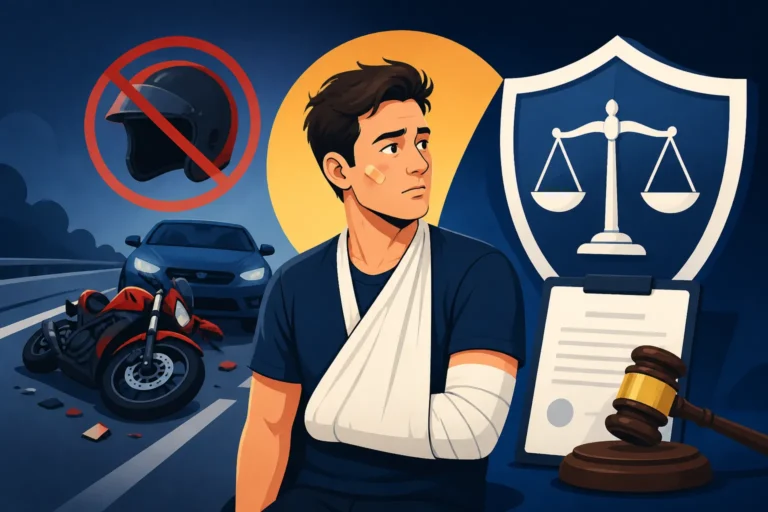
Riding a motorcycle in Georgia offers some of the most scenic routes and fantastic weather, but with the freedom of the open road comes a serious concern: what happens if you're involved in an accident? It's a gut-wrenching thought for any rider, but even more so if you weren't wearing a helmet at the time. Many riders in Georgia worry that if they weren't fully compliant with helmet laws, their entire claim might be thrown out the window. This guide will walk you through the specifics of Georgia's helmet laws and, more importantly, how not wearing a helmet can impact your motorcycle accident claim, helping you understand the complex legal landscape and what steps you can take.
Understanding Georgia's Universal Helmet Law
Let's cut right to it: Georgia has what's known as a universal helmet law. This means that if you're operating or riding as a passenger on a motorcycle in the state, you are legally required to wear a helmet, regardless of your age. This isn't one of those laws with exceptions for riders over 21 or anything like that – it applies to absolutely everyone on two wheels.
Who Must Wear a Helmet
The Georgia law, specifically O.C.G.A. § 40-6-315, states clearly that "no person shall operate or ride upon a motorcycle unless he or she is wearing protective headgear which complies with standards established by the Commissioner of Public Safety." This isn't just about the driver; it includes any passenger you might have on your bike. So, whether you're cruising solo down I-75 through Atlanta or taking a scenic tour with a friend along the twists and turns of Highway 19, everyone on that motorcycle needs to have a helmet on. This universal requirement is quite common, shared by many states aiming to minimize head injuries in crashes.
It's easy to forget or sometimes choose not to wear a helmet, especially on short rides or when the weather is beautiful, but the law in Georgia is unwavering. The intent behind such a strict law is purely safety-focused, recognizing the immense vulnerability of motorcyclists in traffic. Unfortunately, this safety measure can become a legal hurdle if an accident occurs, even if your choice to forgo a helmet had absolutely no bearing on the cause of the crash itself.
What Constitutes a Legal Helmet
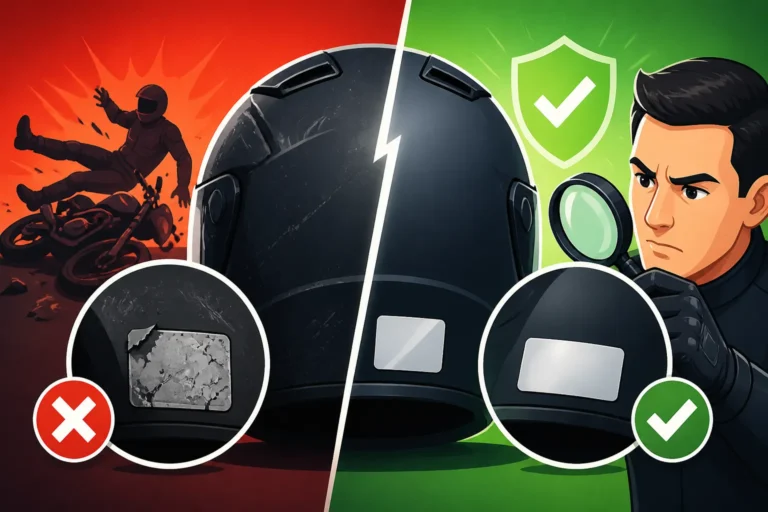
It’s not enough to just wear any helmet; it needs to be a legal helmet. The law specifies "protective headgear which complies with standards established by the Commissioner of Public Safety." In plain terms, this means your helmet must be approved by the U.S. Department of Transportation (DOT). You'll usually find a "DOT" sticker on the back of any compliant helmet. This sticker isn't just a label; it signifies that the helmet has met rigorous safety standards designed to protect your head in a crash.
Many riders, perhaps unknowingly, opt for novelty helmets or those that look cool but lack the proper DOT certification. These non-compliant helmets, while offering some protection, often don't meet the structural integrity and impact absorption standards necessary for serious protection. If you're wearing a helmet that doesn't have that crucial DOT certification, legally, it's almost as if you weren't wearing a helmet at all in the eyes of the law and insurance companies. This distinction is vital for your safety, of course, but also for your potential legal claim down the line. When you're looking for new gear at places like Cycle Gear, always double-check for that DOT sticker to ensure you're compliant and as safe as possible.
The "Helmet Defense" in Motorcycle Accident Claims
Now, let's get to the crux of the matter: how not wearing a helmet can impact your claim. It's not as simple as "no helmet, no claim." Instead, insurance companies and opposing attorneys will often try to use what's known as the "helmet defense." This strategy aims to reduce or even eliminate the compensation you receive by arguing that your injuries, particularly head injuries, would have been less severe or avoided entirely had you been wearing a proper helmet.
How Insurance Companies Use Non-Compliance
Insurance adjusters are trained to minimize payouts. When they see a motorcycle accident where the rider wasn't wearing a helmet (or was wearing a non-DOT compliant one), it's like a red flag to a bull. They will almost certainly argue that your non-compliance contributed to your injuries. This argument typically centers around the idea of "mitigation of damages" – meaning you had a duty to take reasonable steps to prevent or lessen your injuries, and wearing a helmet is considered one such step.
For instance, if you suffered a traumatic brain injury (TBI) in a crash, an insurance company like Geico or Progressive might argue that while their insured driver was at fault for the collision, your TBI wouldn't have been as severe, or perhaps wouldn't have occurred at all, if you had been wearing a DOT-approved helmet. They're not denying their driver caused the accident, but they are trying to shift some of the responsibility for the extent of your injuries onto you. This can significantly reduce the amount they are willing to offer in a settlement, especially for non-economic damages like pain and suffering. They might say, "Sure, our driver was negligent, but you were negligent too by not wearing a helmet, and that negligence exacerbated your injuries." This is where the concept of comparative negligence really comes into play.
Causation and Injury Severity
The key to the helmet defense is causation. The other side needs to prove that your failure to wear a helmet actually caused or worsened your specific injuries. This isn't always easy for them, but it's a battle you need to be prepared for. If you suffered a broken leg or road rash, for example, the argument that a helmet would have prevented those injuries simply doesn't hold water. A helmet protects your head, not your extremities. However, if you suffered a head injury, things get much more complicated.
The defense will often bring in expert witnesses, such as accident reconstructionists or medical professionals, to testify that the forces involved in the crash, combined with the lack of head protection, directly led to or exacerbated your brain injury. They might present studies on helmet effectiveness or conduct detailed analyses of the impact points. Countering this often requires your own expert witnesses who can demonstrate that even with a helmet, a similar head injury might have occurred due to the severity of the impact, or that the head injury was secondary to other forces not mitigated by a helmet. This legal back-and-forth illustrates why determining who is at fault in a motorcycle accident can be so challenging, especially when multiple factors are involved.
Comparative Negligence and Your Claim in Georgia
Georgia operates under a modified comparative negligence system, which is crucial to understand when dealing with the helmet defense. This system directly impacts how your compensation might be reduced if you are found partially at fault for your injuries, even if not for the accident itself.
Georgia's 50% Bar Rule
In Georgia, the modified comparative negligence rule means that you can still recover damages even if you were partially at fault for the accident, as long as your fault is less than 50%. If a jury or insurance adjuster determines you were 50% or more at fault, you cannot recover any damages at all. This is often referred to as the "50% bar rule."
Now, how does this relate to not wearing a helmet? While not wearing a helmet doesn't usually make you at fault for causing the accident, it can be argued that you were partially at fault for your injuries. Let's say the other driver clearly ran a red light and hit you. They are 100% at fault for the collision. However, if you weren't wearing a helmet and suffered a severe head injury, the defense might argue you were, say, 20% responsible for the extent of your head injury because you didn't mitigate your damages. This 20% "fault" for your injury could then be subtracted from your total potential settlement. If your total damages were $100,000, that 20% reduction would mean you only receive $80,000. It's a subtle but significant distinction, where negligence isn't about causing the crash, but about contributing to your own harm.
Impact on Total Damages and Payouts
The impact on your total damages can be substantial. If the helmet defense is successful, not only can it reduce your overall settlement amount, but it can also make the negotiation process much harder. Insurance companies will leverage this argument to offer a lower initial settlement, knowing that you might be hesitant to go to trial where a jury could also reduce your award.
Consider a scenario where a motorist makes an unsafe lane change and cuts you off, causing you to crash. Let's say the medical bills alone for your head injury are $50,000, and your pain and suffering are valued at another $100,000, for a total of $150,000. If the defense successfully argues that your failure to wear a helmet contributed 30% to the severity of your head injuries, your $150,000 claim could be reduced by $45,000, leaving you with $105,000. This is how comparative negligence reduces your payout, even when the other driver is clearly liable for the collision itself. This is why understanding how insurance companies assign blame to riders is so critical.
Table: Georgia Helmet Law & Claim Impact Overview
| Aspect | Description | Impact on Claim Without Helmet (Head Injury) |
|---|---|---|
| Helmet Law in Georgia | Universal Law: All riders/passengers must wear DOT-compliant helmets. | Non-compliance can be used by the defense as evidence of negligence for your injuries. |
| Type of Helmet Required | DOT-compliant protective headgear. | Wearing a non-DOT helmet is treated similarly to not wearing one at all. |
| Legal Principle Applied | Modified Comparative Negligence (50% Bar Rule). | Your "fault" for contributing to your own injuries (due to no helmet) can reduce your total compensation. If 50% or more, no recovery. |
| Burden of Proof (Defense) | Defense must prove helmet non-use caused or worsened specific injuries. | Strongest for head injuries; weaker for other injuries like road rash or broken bones. |
| Potential Outcome | Reduced settlement/verdict due to attributed "fault" for injuries. | Lower compensation for medical bills, lost wages, and pain and suffering related to head injuries. |
| Mitigation of Damages | Legal duty to minimize harm after an incident. | Not wearing a helmet can be argued as a failure to mitigate damages, impacting injury-related compensation. |
Proving Causation: The Expert Battleground
When you're dealing with a motorcycle accident claim where a helmet wasn't worn, the battle often boils down to causation. It's not enough for the other side to simply point out that you weren't wearing a helmet. They have to demonstrate, usually through expert testimony, a direct link between that fact and the specific injuries you sustained.
Medical Experts and Accident Reconstruction
This is where the professionals come in. Insurance companies, knowing the stakes, will often hire their own medical experts and accident reconstructionists. A medical expert might review your medical records and state that, based on the type of head injury you sustained, a DOT-compliant helmet would have significantly reduced its severity or prevented it altogether. They'll cite biomechanical studies, injury thresholds, and their professional experience to support this claim.
Similarly, an accident reconstruction expert can analyze the dynamics of the crash – the speeds, angles of impact, and forces involved. They might use computer simulations or physical models to show how your head struck a surface and the protection a helmet would have offered at that specific moment. Their testimony aims to create a clear, undeniable line from your decision to ride without a helmet directly to the severity of your current head trauma. This detailed analysis is often critical when fault is disputed in a motorcycle crash.
Distinguishing Head Injuries from Other Injuries
It's critical to understand that the helmet defense is primarily (and often exclusively) effective for head injuries. If you suffered a broken arm, a shattered ankle, or severe road rash, the absence of a helmet is generally irrelevant to those particular injuries. A helmet wouldn't have prevented those types of harm.
However, if you have a traumatic brain injury (TBI), skull fracture, or other head-related trauma, the defense will focus intensely on this. Your legal team would need to counter these arguments. For example, they might argue that the impact was so severe that even a helmet wouldn't have prevented the TBI, or that the TBI was secondary to rapid deceleration forces rather than direct head impact. This is a complex area, and it underscores why documenting injuries for a claim with meticulous detail, including seeking immediate treatment, is paramount. If you suffered a spinal cord injury from a motorcycle accident, the helmet defense might try to link it, but it’s a much harder argument for them to make than with a direct head injury.
Strategies to Counter the Helmet Defense
Facing the helmet defense can feel overwhelming, but it's not a lost cause. There are effective strategies to challenge these arguments and protect your right to compensation. The core idea is to shift the focus back to the at-fault driver's negligence and to demonstrate that your non-compliance either didn't cause or exacerbate your injuries, or that the driver's negligence was so egregious that it far outweighs any alleged contributory negligence on your part.
Emphasizing the Other Driver's Negligence
The absolute strongest counter-argument is to powerfully emphasize the other driver's fault for the actual cause of the accident. Whether they were distracted driving, speeding, failed to yield, or made an unsafe lane change, the primary focus should be on their actions that led to the collision. Your lack of a helmet didn't make them run that stop sign or pull out in front of you.
Your legal strategy should involve meticulously gathering evidence to prove the other driver's culpability. This includes police reports, witness statements, traffic camera footage, and accident reconstruction evidence focusing on how the collision occurred. If you can clearly establish that the other driver's actions were the direct and overwhelming cause of the crash, it makes their argument about your helmet use seem less significant in comparison. For instance, if you were involved in a left-turn motorcycle accident where the driver clearly failed to see you and turned into your path, that initial negligence is far more significant than the helmet issue.
The Role of Expert Witnesses and Evidence
Just as the defense will use experts, your legal team will need to bring in their own. Your medical experts can provide testimony explaining the nature of your head injuries, whether they are typical of a helmeted or unhelmeted impact, and whether the severity was truly impacted by helmet use or by other factors. They might argue that the forces involved were so extreme that even a helmet wouldn't have prevented the injury, or that the injury was due to rotational forces that helmets aren't designed to fully protect against.
An accident reconstruction expert on your side can offer alternative theories about the impact dynamics or challenge the defense's methodology. They might highlight the primary impact points on your motorcycle and body that weren't related to your head, or demonstrate that the driver's speed and impact force were the overwhelming factors. Additionally, preserving evidence like the condition of your motorcycle and the accident scene photos can be crucial. Even if you weren't wearing a helmet, documenting the scene to prove fault is still vital.
Legal Counsel is Crucial
Navigating the complexities of Georgia's helmet laws and comparative negligence rules, especially when an insurance company is actively trying to devalue your claim, is incredibly difficult to do on your own. This is where experienced legal counsel becomes indispensable. A skilled motorcycle accident attorney understands these specific defenses and has strategies to counter them effectively.
They can:
- Investigate the accident thoroughly to establish the other driver's clear negligence.
- Gather and present strong evidence to support your version of events and injuries.
- Work with medical and accident reconstruction experts to provide compelling testimony that refutes the helmet defense.
- Negotiate with insurance companies, armed with the legal knowledge to push back against lowball offers that leverage your helmet non-compliance.
- Represent you in court, if necessary, to argue your case before a judge and jury.
While it might seem daunting to hire a lawyer, especially if you're worried about costs, most reputable motorcycle accident attorneys work on a contingency fee basis. This means they only get paid if you win your case, and their fees come directly from your settlement or award. This arrangement makes quality legal representation accessible, regardless of your current financial situation. If you're wondering how motorcycle accident lawyers get paid, a contingency fee agreement is usually the answer.
Final Thoughts on Helmet Use and Your Claim
Being involved in a motorcycle accident is traumatic enough, but facing an uphill battle with insurance companies because you weren't wearing a helmet in Georgia adds another layer of stress. While Georgia's universal helmet law means that not wearing one is a violation, it doesn't automatically mean your injury claim is worthless. The critical factor is whether the absence of a helmet can be proven to have directly caused or worsened your specific injuries, particularly head injuries.
Even if you weren't wearing a helmet, you still have rights, and the at-fault driver is still responsible for their negligence in causing the collision. The insurance company's job is to minimize their payout, and they will use every tool available, including the helmet defense. Don't let their tactics deter you from seeking the compensation you deserve for your medical bills, lost wages, pain, and suffering. A seasoned legal professional can help you navigate these choppy waters, ensuring your case is presented as strongly as possible, regardless of the challenges.
Disclaimer
Please remember that this article provides general information and insights into Georgia's motorcycle helmet laws and their potential impact on accident claims. It is not intended as legal advice. Laws can change, and the application of laws depends heavily on the specific facts and circumstances of each case. If you have been involved in a motorcycle accident, especially if you were not wearing a helmet, it is crucial to consult with a qualified attorney in Georgia to discuss your individual situation and receive personalized legal guidance.