Is Lane Splitting Legal in California
Riding a motorcycle in California offers a sense of freedom that's hard to match, but it also comes with a unique set of rules, particularly around navigating traffic. Many riders and drivers alike are often confused about the legality of lane splitting, wondering if it's truly allowed or just a common but risky practice. This guide aims to clear up that confusion, diving deep into California's specific laws and guidelines, so you can ride confidently and safely.
Understanding Lane Splitting in California's Legal Landscape
The question of whether lane splitting is legal often sparks debate, especially outside of California. For riders here, it's not just legal, it's a recognized and regulated practice, though it comes with critical nuances that every motorcyclist should understand. This isn't just about avoiding a ticket; it's about staying safe and protecting yourself in case of an accident.
What Exactly is Lane Splitting?
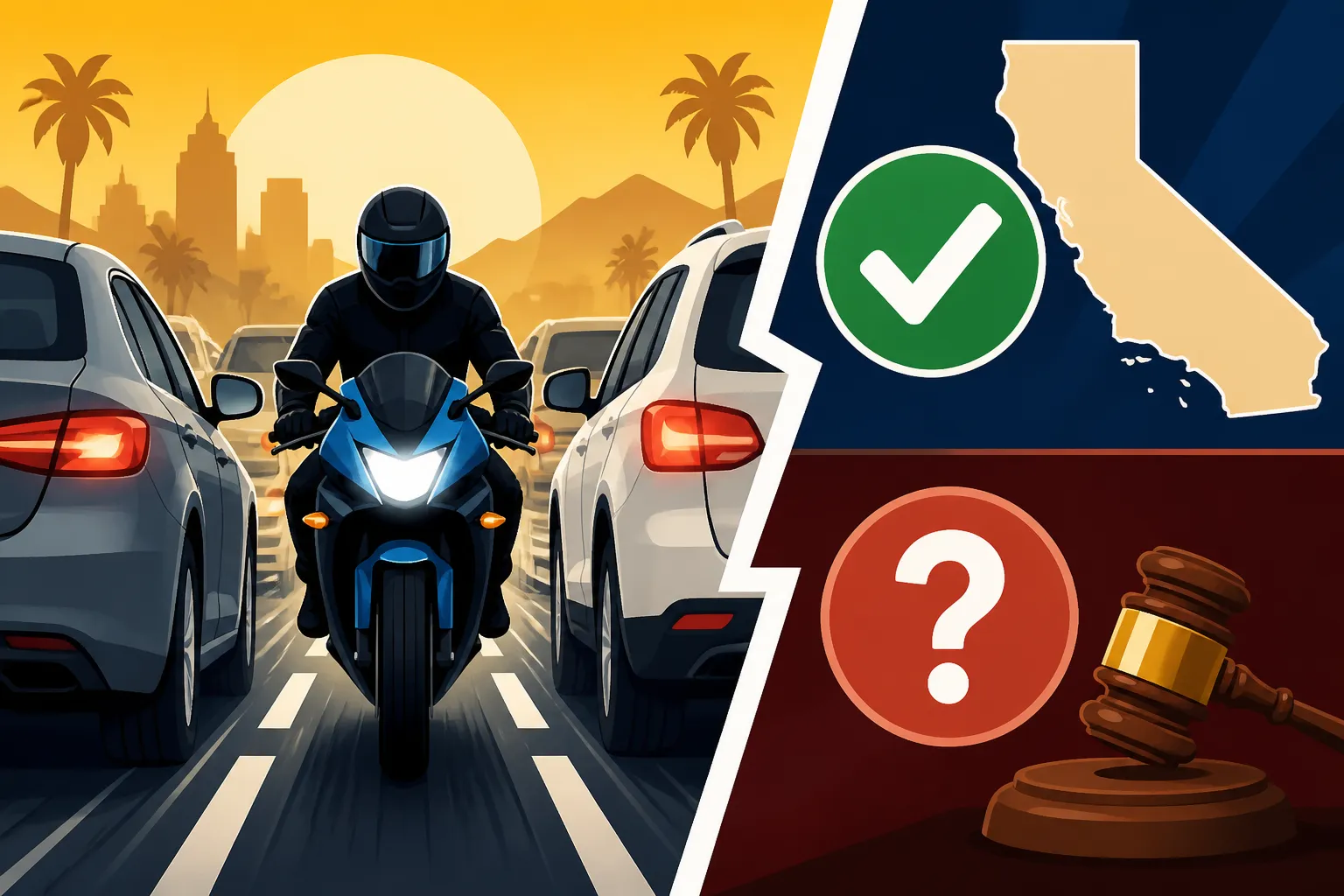
Let's get down to basics. Lane splitting, often informally referred to as lane sharing or filtering, is the act of a motorcyclist riding between lanes of stopped or slowly moving traffic traveling in the same direction. Imagine you're stuck on the 405 in Los Angeles during rush hour, and you see motorcycles zipping carefully between the stationary cars – that's lane splitting in action. The primary goal for many riders is to bypass congestion, reduce travel time, and, arguably, increase visibility by moving out of potential rear-end collision zones.
It's important to differentiate lane splitting from other similar-sounding actions. Lane filtering is essentially a slower, more cautious form of lane splitting, often occurring at intersections when traffic is completely stopped or barely moving. While some might use the terms interchangeably, the core principle is the same: moving between lanes of traffic. What it's not is riding on the shoulder, darting through parking lots, or cutting across lanes in a dangerous manner. Those actions are generally illegal and incredibly risky, regardless of what state you're in. The focus here is strictly on the legal act of moving between established traffic lanes.
California's Unique Position on Lane Splitting
California holds a distinct position in the United States when it comes to lane splitting. It is currently the only state where lane splitting is explicitly legal and defined in the Vehicle Code. This wasn't always the case, and its journey to legal clarity is quite interesting. For many years, lane splitting wasn't explicitly forbidden or allowed, existing in a kind of legal gray area. Riders did it, police sometimes ticketed for it under general unsafe driving clauses, and everyone was pretty much left guessing.
This ambiguity led to considerable confusion and inconsistent enforcement. Recognizing the need for clarity, California became the first state to formalize the practice. In 2016, Assembly Bill 51 (AB 51) was signed into law, adding Section 21658.1 to the California Vehicle Code (CVC). This section explicitly states: "A person riding a motorcycle may operate a motorcycle between lanes of traffic moving in the same direction." This was a huge win for motorcycle advocates and riders, finally giving legal certainty to a long-standing practice.
However, the law itself doesn't provide specific rules like speed limits or conditions for safe lane splitting; it merely permits the act. This is where the California Highway Patrol (CHP) guidelines come into play, which we'll discuss in the next section. It's crucial for riders to understand that while the act itself is legal, how you perform it can still lead to legal ramifications or, more importantly, put you at risk.
Official Guidelines and Safety Considerations
While the law itself provides the green light for lane splitting, the real-world application requires careful adherence to safety guidelines. These aren't just suggestions; they are the benchmarks by which your actions will be judged, especially if an accident occurs.
California Highway Patrol (CHP) Guidelines
Because the explicit law in CVC 21658.1 doesn't specify how to lane split safely, the California Highway Patrol (CHP) stepped in to provide guidelines. It's vital to understand that these CHP guidelines are not laws themselves. You won't get a ticket specifically for violating a CHP guideline. However, they are considered best practices for safe operation and can significantly impact how police and insurance companies view your actions in the event of a crash. When asked, "Who Is at Fault in a Lane Splitting Motorcycle Accident?", these guidelines will be heavily scrutinized.
The main tenets of the CHP's advice emphasize common sense and safety:
- Speed Differential: The most critical guideline is that motorcyclists should not lane split at a speed more than 10 mph faster than the surrounding traffic. If traffic is moving at 20 mph, you shouldn't be splitting at 31 mph. The idea is to maintain a relatively low speed difference to allow for quick reactions.
- Overall Speed Limit: Riders should not lane split when traffic is moving at speeds exceeding 30 mph. Above this speed, the risks associated with sudden movements, unforeseen hazards, and the closing speed between vehicles escalate dramatically, making it extremely dangerous.
- Safe and Prudent Manner: The law specifies that lane splitting must be done in a "safe and prudent manner." This is subjective but generally means you shouldn't be weaving erratically, cutting off cars, or startling other drivers.
- Conditions Matter: Lane splitting should only be done between lanes of traffic. It's not for riding on the shoulder, median, or between cars in a single lane (which would be considered unsafe maneuvering). Avoid splitting near freeway exits or entrances where drivers are likely to make sudden movements.
Ignoring these guidelines doesn't just put you at risk; it creates a situation where you could be found partially or wholly responsible if an incident occurs.
The Fine Line Between Legal and Reckless
This is where things get tricky. Yes, lane splitting is legal in California, but its legality doesn't grant immunity from the consequences of unsafe riding. Imagine a scenario where you're lane splitting on a busy freeway, perhaps I-5 near San Clemente, exceeding the 30 mph guideline and zooming past cars at 60 mph while traffic is doing 40 mph. If a car suddenly merges into your path, even if they didn't signal, your excessive speed and speed differential could be deemed reckless.
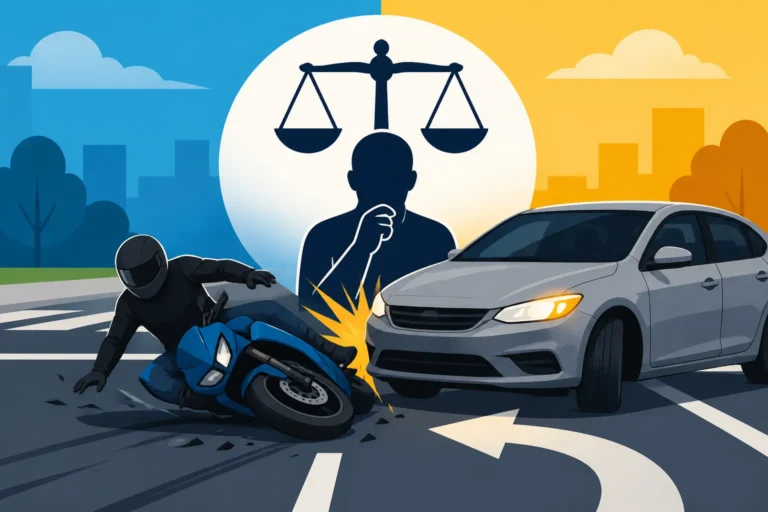
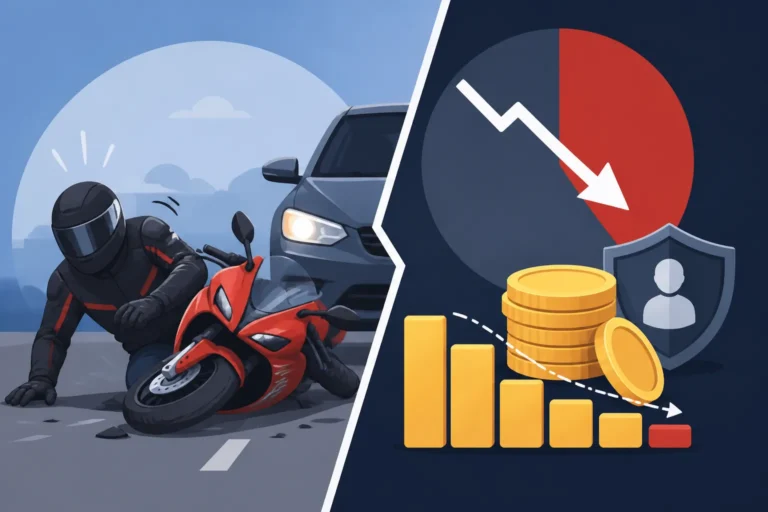
In such a case, even if the driver of the car is cited for an unsafe lane change, you might still face a citation for reckless driving or another traffic violation. More importantly, in the eyes of insurance adjusters and potentially a court, your actions could be viewed as contributing to the accident. California operates under a system of pure comparative negligence. This means that even if another driver is mostly at fault, if your actions (like unsafe lane splitting) contributed to the crash, your recoverable damages could be reduced by your percentage of fault. This is a crucial concept to understand when considering your potential settlement. For more details, explore our guide on "Comparative Negligence in Motorcycle Accidents".
It's a continuous balance. A responsible rider understands that the legal right to lane split comes with a huge responsibility to do so safely. The law permits the act, but it doesn't excuse negligence. If you're involved in a crash, how you were lane splitting will be a central point of the investigation into "How Fault Is Determined in Motorcycle Accidents".
The Impact of Lane Splitting on Accident Liability
While California's law on lane splitting provides a clear legal framework, it doesn't automatically absolve a rider of fault in an accident. The practical implications for liability can be complex, especially when insurance companies and legal teams get involved.
How Lane Splitting Affects Fault Determination
The question often arises: "If lane splitting is legal, why would I be at fault?" The answer lies in the "safe and prudent" clause of the law and the CHP guidelines. When an accident occurs during lane splitting, the legality of the act itself is usually not the issue. Instead, the focus shifts to how the lane splitting was performed.
For instance, if a motorcyclist is lane splitting responsibly, adhering to speed limits and differentials, and a distracted driver suddenly swerves into their path without looking, the driver is likely to be found primarily at fault. However, if that same motorcyclist was speeding at 70 mph between lanes of traffic moving at 30 mph, their actions could be considered a significant contributing factor to the collision. This is where the intricacies of "Lane Splitting and Motorcycle Accident Liability" come into play.
Insurance companies are particularly adept at finding any reason to reduce payouts. If you were lane splitting outside of the CHP guidelines, they will almost certainly use that information to argue that you were partially, if not entirely, responsible for the crash. They might claim your excessive speed made it impossible for the other driver to see you or react in time, even if the other driver was also negligent. This often leads to a complex negotiation where both parties' actions are meticulously dissected.
Common Scenarios and Shared Fault
Let's consider a few hypothetical scenarios to illustrate how fault can be assigned:
- Scenario 1: Driver Changes Lanes Unexpectedly. You're lane splitting cautiously, keeping your speed differential low, between two lanes of traffic moving at 15 mph. A car in the left lane suddenly decides to merge right without signaling, directly into your path, causing a collision. In this case, the driver's unsafe lane change is a clear violation, and they would likely bear the majority of the fault. Your adherence to safe lane splitting practices would strengthen your position.
- Scenario 2: High-Speed Splitter. Traffic is heavy but moving at 40 mph. You decide to lane split at 60 mph, weaving through the gaps. A driver in front suddenly brakes hard. You have insufficient time to react due to your excessive speed and collide with the car. Here, even if the driver's sudden brake was somewhat unexpected, your violation of the 30 mph lane splitting rule and the large speed differential would make you heavily, if not entirely, at fault.
- Scenario 3: The "I Didn't See You" Defense. This is a common defense drivers use after hitting a motorcycle. It's often heard after incidents like "Left-Turn Motorcycle Accidents Explained" or during lane splitting crashes. If you were adhering to all safety guidelines, especially regarding speed and visibility, it becomes much harder for the other driver to successfully argue they "didn't see" you. However, if you were speeding or behaving erratically, their claim of not seeing you might hold more weight, or at least shift some fault onto you for not making yourself more visible or predictable.
In many lane splitting accidents, fault can be shared. For instance, if a driver makes an unsafe lane change and the motorcyclist was exceeding the 10 mph speed differential, both parties could be found partially at fault. California's pure comparative negligence system allows you to recover damages even if you are 99% at fault, but your recovery will be reduced by your percentage of fault. This is why it's incredibly important to gather strong evidence, such as "How Dashcam Footage Proves Fault," and understand "Shared Fault in Motorcycle Accidents."
Practical Advice for California Riders
Knowing the law is one thing, but applying it safely and protecting yourself after an incident is another. As a California rider, your approach to lane splitting needs to be informed and proactive.
Best Practices for Safe Lane Splitting
Being a safe lane splitter isn't just about following the minimum legal requirements; it's about adopting a mindset of extreme caution and defensive riding.
- Strictly Adhere to CHP Guidelines: Even though they're not law, treat the 10 mph speed differential and 30 mph overall speed limit as your personal commandments. These aren't arbitrary numbers; they are based on safety studies and significantly reduce your risk of a severe collision. Remember, the faster you go, the less time you have to react to sudden lane changes, opening car doors, or other hazards.
- Maintain Situational Awareness: This cannot be stressed enough. Always be looking several cars ahead, monitoring brake lights, turn signals, and driver behavior. Are drivers looking in their mirrors? Are they talking on their phones? Are their wheels turned? Assume no one sees you, and be prepared for sudden movements from any vehicle. This constant vigilance is critical for your safety.
- Choose Your Lanes Wisely: Lane splitting is generally safest between the two leftmost lanes, as drivers in these lanes are often more attentive to fast-moving traffic. Avoid splitting next to exit or entrance ramps, where vehicles are more likely to make unpredictable movements.
- Be Visible: While lane splitting can increase your visibility by placing you out of a car's direct rear-view mirror, you still need to actively work to be seen. Wear bright, contrasting motorcycle gear. Consider reflective elements, especially at night. You might even give a gentle blip of the throttle as you approach a car to make your presence known, though be cautious not to startle drivers. For further insights on how protective gear can safeguard you, check out "Motorcycle Safety Gear and Legal Protection."
- Look for Escape Routes: Always have an exit strategy. As you move between cars, identify potential spaces you could swerve into if a vehicle suddenly moves into your path. This constant mental mapping is a hallmark of defensive riding.
- Avoid Distractions: Put your phone away. Focus entirely on the road and the surrounding traffic. Any momentary lapse in attention could have severe consequences.
Remember, the goal isn't just to be right in an accident, but to avoid the accident altogether.
What to Do After a Lane Splitting Accident
Even with the most diligent riding, accidents can happen. If you find yourself involved in a crash while lane splitting, especially on a busy freeway like the I-80 in the East Bay, your actions immediately afterward are critical for your health and any potential legal claim. Knowing "What to Do After a Motorcycle Accident" is paramount.
- Prioritize Safety and Seek Medical Attention: Your well-being is the absolute first concern. If you're able, move yourself and your motorcycle to a safe location if it doesn't pose a further risk. Immediately call 911 for emergency services, even if you feel okay. Adrenaline can mask serious injuries. Getting checked out by paramedics is essential, not just for your health but also to create an official record of your injuries.
- Call the Police: Always report the accident to the police. A police report, while not always definitive on fault, will document the basic facts of the incident, including the location, time, and involved parties. It will also record details like whether you were lane splitting and if any citations were issued. Understanding "How Police Reports Establish Fault" is key here.
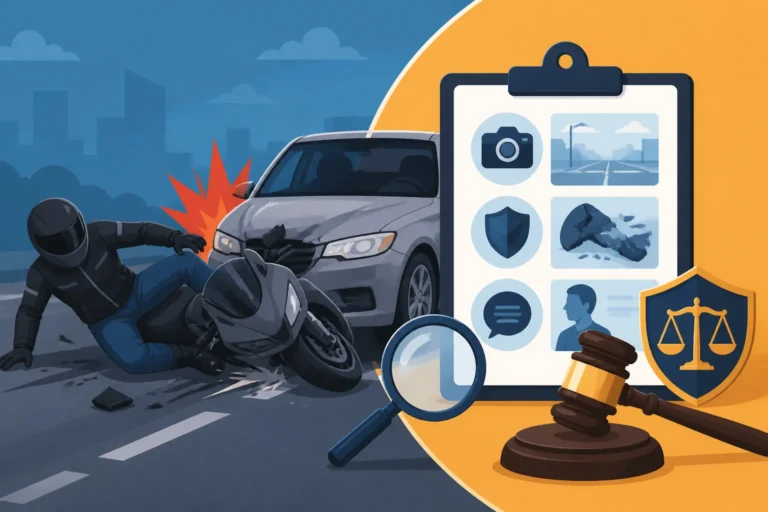
- Gather Evidence: If it's safe to do so, document the scene extensively. Take photos and videos from multiple angles, showing the position of your motorcycle and the other vehicle(s), road conditions, traffic signs, skid marks, and any debris. Capture photos of your injuries and damaged gear. This visual evidence can be incredibly powerful in proving what happened. For example, photos of a scuff mark on a car's passenger side could help prove you were legitimately lane splitting between lanes. Our article on "How to Document the Scene to Prove Fault" offers more guidance.
- Collect Information: Exchange insurance and contact information with all involved drivers. Get names and badge numbers of responding officers. Crucially, ask for contact information from any witnesses. Independent witnesses can corroborate your story and counter biased accounts, as discussed in "How Witnesses Affect Motorcycle Fault."
- Avoid Admitting Fault: Never apologize or admit fault at the scene, even casually. Stick to the facts. Let the investigation determine liability. Anything you say can and will be used by insurance companies to minimize your claim.
- Consult a Legal Professional: Due to the complexities of lane splitting liability and comparative negligence, it's highly advisable to speak with a motorcycle accident lawyer as soon as possible. They can help you navigate the insurance claims process, understand your rights, and build a strong case to prove fault and recover damages. They understand the nuances of "How to Prove Fault in a Lane Splitting Crash" and can protect you from lowball settlement offers.
By following these steps, you not only protect yourself physically but also lay the groundwork for a successful claim should you need to pursue compensation.
California Lane Splitting Guidelines at a Glance
| Guideline Aspect | Recommendation | Importance |
|---|---|---|
| Speed Differential | Do not exceed 10 mph over the speed of surrounding traffic. | Reduces reaction time, prevents alarming other drivers. |
| Overall Speed Limit | Do not lane split when traffic is moving faster than 30 mph. | Risk exponentially increases above this speed due to closing distances. |
| Manner of Operation | Must be done in a "safe and prudent manner." | Avoids reckless driving citations; crucial for fault determination in accidents. |
| Location of Splitting | Only between established lanes of traffic. Avoid shoulders, medians, or sidewalks. | Prevents tickets for illegal maneuvers; minimizes unexpected vehicle interactions. |
| Situational Awareness | Constantly monitor surrounding traffic, look for open doors, sudden braking. | Essential for anticipating hazards and reacting quickly to prevent collisions. |
| Visibility | Wear bright gear, consider reflective elements, assume you are not seen. | Helps other drivers spot you, especially in variable lighting conditions. |
| Escape Routes | Always plan for an emergency exit path between vehicles. | Enables quick evasive action if a driver suddenly moves into your path. |
Disclaimer
The information provided in this guide is for general informational purposes only and does not constitute legal advice. Motorcycle accident laws and regulations can be complex and vary by jurisdiction. It is highly recommended to consult with a qualified legal professional for advice regarding your specific situation. Reliance on any information provided in this article is solely at your own risk.