What a Motorcycle Accident Lawyer Does
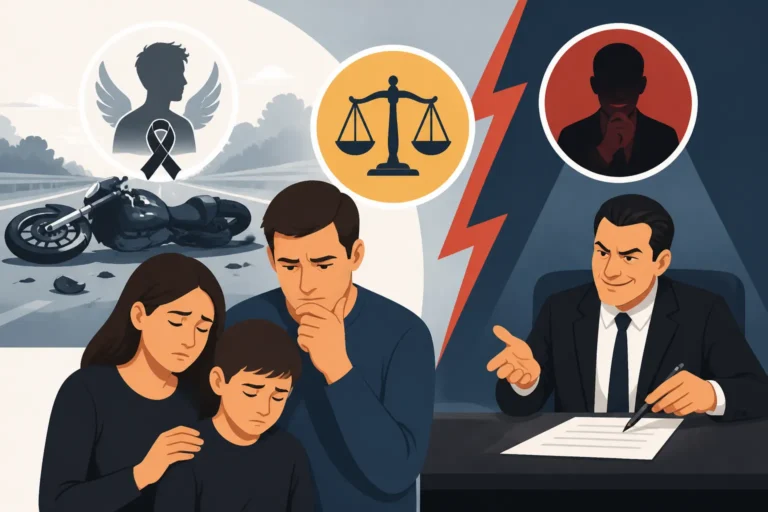
After a motorcycle accident, the world often feels like it's spinning out of control. You're likely dealing with painful injuries, a damaged bike, overwhelming medical bills, and constant calls from insurance adjusters who seem to twist your words. It’s an incredibly frustrating and confusing time, and many riders feel alone in trying to navigate the complex aftermath. This guide is here to shed light on exactly what a motorcycle accident lawyer does, demystifying their role and showing how they can be your staunchest advocate when you need it most.
Understanding the Immediate Aftermath and Why a Lawyer Matters
When the dust settles after a motorcycle crash, a whirlwind of immediate challenges emerges. You’re not just recovering physically; you’re also grappling with bureaucratic hurdles and a legal system that isn't always on your side. This initial phase is critical, and how you handle it can profoundly impact the outcome of your claim.
Navigating Initial Chaos and Information Overload
Imagine yourself lying on the asphalt, adrenaline coursing through your veins, your bike a twisted mess nearby. In the moments, hours, and days following such a traumatic event, you're expected to somehow remember every detail, track every expense, and understand every legal nuance, all while in pain or under medication. It's an impossible ask for anyone, let alone someone who's just experienced a serious accident.
A motorcycle accident lawyer steps into this chaos to create order. They become your central point of contact, alleviating the immense burden of managing paperwork, phone calls, and legal deadlines. Instead of you sifting through hospital bills, police reports, and insurance correspondence, your lawyer takes on that responsibility. They explain things in plain English, helping you understand the complex legal landscape without jargon. For instance, knowing what steps to take after a motorcycle accident is crucial, and a lawyer can guide you through each one, ensuring you don't inadvertently jeopardize your claim during this vulnerable period. They can also advise on things like preserving evidence at the scene, which many people don't think about when they're in shock.
Protecting Your Rights from the Start
It's a harsh truth, but after an accident, insurance companies, even your own, aren't necessarily looking out for your best interests. Their primary goal is often to minimize their payout, and they employ various tactics to achieve this. This is where the protective role of a motorcycle accident lawyer becomes indispensable right from the outset.
From the moment you engage them, a lawyer acts as a buffer between you and these powerful entities. They’ll advise you on what not to say to insurance adjusters, preventing you from making statements that could be misinterpreted or used against you later. For example, admitting even partial fault or downplaying your injuries can severely undermine your claim. Your lawyer will ensure all communication with insurers goes through them, safeguarding your rights and ensuring you don't fall victim to subtle questioning designed to trap you. They understand how insurance companies assign blame to riders and can proactively combat any unfair assumptions or biases. In many states, riders unfortunately face a societal stereotype that they are reckless, and insurers often try to capitalize on this. A lawyer understands this bias and works to ensure it doesn't taint your case.
In-Depth Accident Investigation and Evidence Gathering
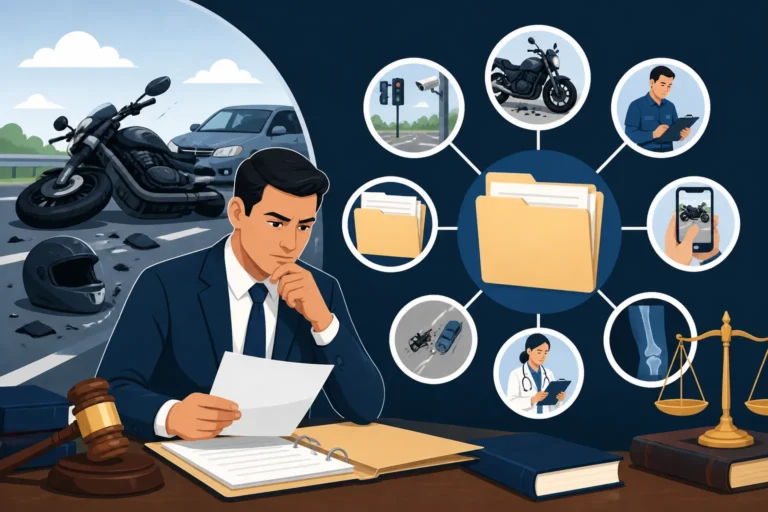
One of the most critical roles a motorcycle accident lawyer plays is that of a meticulous investigator. They don't just take your word for it; they actively seek out, collect, and analyze every piece of information to build the strongest possible case for you. This comprehensive approach is vital because proving fault and the extent of your damages requires robust, undeniable evidence.
Reconstructing the Scene and Identifying Fault
A motorcycle accident isn't just a random event; it's a sequence of actions and conditions that lead to a specific outcome. Pinpointing who is at fault in a motorcycle accident is often complex, especially when multiple vehicles or confusing circumstances are involved. Your lawyer will dive deep into the incident, often working to virtually "reconstruct" what happened. This isn't just about reading the police report; it's about understanding the physics, the timing, and the perspectives of everyone involved.
They'll scrutinize every detail: skid marks on the road, vehicle damage, traffic light sequencing, weather conditions, and road hazards. For example, if you were involved in a common scenario like a left-turn motorcycle accident, your lawyer understands the specific legal precedents and challenges involved in proving the other driver's negligence. They might even visit the accident scene themselves, perhaps weeks after the crash, to assess the layout, visibility, and traffic patterns, looking for anything missed in the initial chaos. This detailed approach to how fault is determined in motorcycle accidents is what allows them to build a compelling narrative of liability.
Collecting and Preserving Crucial Evidence
The strength of any personal injury claim rests squarely on the evidence presented. Unfortunately, crucial evidence can disappear quickly – surveillance footage gets overwritten, witnesses move or forget details, and physical evidence is cleared from the road. A proactive lawyer understands this urgency and acts swiftly to secure everything that could bolster your case.
This includes obtaining the official police accident report, witness statements, photographs and videos from the scene, and any available traffic camera or dashcam footage. They will also collect your medical records and bills, employment records to document lost wages, and repair estimates for your motorcycle. They'll know exactly what type of motorcycle accident evidence for proving fault is most compelling, whether it's a timestamped photo of a debris field or a witness account of the other driver texting. For cases involving a negligent third-party, such as a company whose driver caused the crash, they will also gather information about that entity. This exhaustive collection ensures that no stone is left unturned and that your claim is supported by a mountain of verifiable facts, rather than just assumptions.
Working with Experts to Strengthen Your Case
Sometimes, the intricacies of an accident or injury extend beyond what a legal team can interpret alone. This is when a motorcycle accident lawyer draws upon a network of specialized experts to provide authoritative insights that can be pivotal to your case. These professionals offer objective analysis that can validate your claims and counter defense arguments.
Accident reconstructionists, for example, can use scientific principles to recreate the crash dynamics, illustrating vehicle speeds, points of impact, and driver actions. Their testimony can be invaluable in cases where fault is heavily disputed, such as complex multi-vehicle accidents or scenarios involving unclear liability. Medical experts, including specialists like orthopedic surgeons, neurologists, or pain management doctors, can provide detailed reports on your injuries, treatment, prognosis, and potential long-term disabilities. They can explain how a traumatic brain injury or spinal cord injury will impact your life for years to come, providing the necessary medical foundation for your damages claim. Economic experts can project future lost earnings and medical expenses, ensuring your settlement reflects the true cost of your injuries over your lifetime. By collaborating with these professionals, your lawyer builds a case that is not only legally sound but also scientifically and medically defensible, demonstrating the full scope of your losses.
Handling Insurance Companies and Their Tactics
Dealing with insurance companies after a motorcycle accident can feel like navigating a minefield. They are sophisticated organizations with extensive resources dedicated to protecting their bottom line. A motorcycle accident lawyer serves as your shield and sword in this arena, understanding their tactics and knowing how to counter them effectively.
Communicating with Adjusters on Your Behalf
One of the first and most immediate benefits of hiring a lawyer is putting an end to those incessant, often harassing phone calls from insurance adjusters. These adjusters are highly trained negotiators whose job is to get you to settle for the lowest possible amount, or even admit fault, whether or not it's true. They can be incredibly polite and seem genuinely concerned, but every question they ask is designed to gather information that can potentially be used against you.
Your lawyer will take over all communication with the insurance companies. This means you no longer have to worry about accidentally saying something that could harm your claim. When an adjuster calls, you simply direct them to your legal representation. Your lawyer will know exactly what information to provide and, more importantly, what information to withhold. They understand the nuances of how insurance companies assign blame to riders and can preemptively address common biases. This crucial step protects you from early settlement traps and ensures that all information exchanged is done strategically and in your best interest.
Countering Lowball Offers and Denial Strategies
It’s almost a guarantee that the first offer you receive from an insurance company, if any, will be a lowball offer. They do this because they know many people are desperate for quick cash after an accident and might not understand the full value of their claim. They also might deny your claim outright, citing various reasons from alleged rider fault to "pre-existing conditions."
A motorcycle accident lawyer is prepared for these tactics. They will systematically dismantle lowball offers by presenting a comprehensive accounting of all your damages – not just obvious medical bills but also lost wages, future medical needs, pain and suffering, and property damage. They understand the intricacies of how motorcycle accident settlements are calculated. If the insurance company denies your claim, your lawyer will meticulously review the stated reasons and provide evidence to rebut each point. They are adept at negotiating forcefully, backing their demands with solid evidence and legal arguments. This isn't just about haggling; it's about demonstrating the true value of your claim and forcing the insurer to acknowledge their liability. They know the average motorcycle accident settlement amounts for various injuries and will fight to ensure you receive fair compensation.
Navigating Policy Limits and Coverage Issues
Understanding the various insurance policies at play – your own, the at-fault driver's, and potentially others – can be incredibly confusing. Each policy has its own limits, deductibles, and specific clauses that can impact your recovery. An experienced motorcycle accident lawyer is well-versed in insurance law and can skillfully navigate these complexities.
They will identify all potential sources of recovery, including the at-fault driver’s liability insurance, your uninsured/underinsured motorist (UM/UIM) coverage, and even personal injury protection (PIP) or medical payments (MedPay) coverage. If the at-fault driver's insurance policy limits are insufficient to cover your severe injuries, your lawyer will explore every avenue, including your own UM/UIM policy, which is designed precisely for such situations. They will ensure all claims are filed correctly and within the strict deadlines imposed by each policy and state law. This includes handling situations where the other driver might be underinsured, which can dramatically affect your payout. This deep knowledge of insurance coverage is crucial for maximizing your motorcycle accident settlement, ensuring you don't leave any potential compensation on the table.
Accurately Valuing Your Damages
One of the most profound benefits of having a motorcycle accident lawyer is their ability to accurately assess the full scope of your damages. It’s not just about the immediate costs; it’s about understanding the long-term financial, physical, and emotional impact of your injuries. Without this comprehensive valuation, you risk settling for far less than you deserve.
Calculating Economic Damages: Beyond Just Medical Bills
Economic damages are the tangible, quantifiable financial losses you've incurred or will incur as a direct result of your motorcycle accident. While medical bills are a significant component, a thorough lawyer knows there's much more to factor in. This includes the obvious, like emergency room visits, hospital stays, doctor appointments, prescription medications, and physical therapy. However, it also extends to less obvious but equally important costs.
Your lawyer will meticulously compile all your medical expenses, including future treatments, surgeries, and rehabilitation that you might need for years to come. They will also account for lost wages, not just from the time you've already missed from work but also potential future lost earning capacity if your injuries prevent you from returning to your previous job or working at the same level. This calculation can be especially complex for self-employed riders or those with variable income. Beyond that, property damage to your motorcycle, gear, and any other personal items destroyed in the crash will be included. Transportation costs to medical appointments, home modifications for accessibility if you have a permanent disability, and even childcare expenses if your injuries prevent you from caring for your children can all be categorized as economic damages. A skilled attorney will gather all the necessary documentation – pay stubs, tax returns, medical bills, expert opinions – to build a robust case for these calculable losses, ensuring that types of damages in a motorcycle accident claim cover all your financial hardships.
Assessing Non-Economic Damages: The Invisible Toll
While economic damages cover your financial losses, non-economic damages address the profound, often invisible, suffering you endure after a serious motorcycle accident. These are subjective and harder to quantify, but they are absolutely critical for a fair settlement. This category includes pain and suffering damages, emotional distress, loss of enjoyment of life, and disfigurement.
Think about the chronic pain you might live with daily, the emotional trauma of reliving the crash, or the anxiety that prevents you from riding again. These are very real consequences. Your lawyer will help you articulate these experiences, often encouraging you to keep an injury journal to document your physical pain, emotional struggles, and how your daily life has changed. They understand how pain and suffering in motorcycle settlements are valued, often using the multiplier method to arrive at a fair figure based on the severity and longevity of your injuries. They’ll also factor in things like loss of consortium if your injuries have impacted your relationship with your spouse, or the psychological impact of visible scarring or permanent disability. Proving these non-economic damages requires compelling evidence beyond receipts – it requires a clear narrative of how your life has been irrevocably altered, which a skilled lawyer is expert at crafting.
Projecting Future Costs and Long-Term Impact
Many serious motorcycle accident injuries, such as a traumatic brain injury or spinal cord injury, have long-term or even lifelong consequences. It’s not enough to cover the bills you’ve received so far; a truly comprehensive claim must anticipate and account for future medical care, rehabilitation, and living adjustments. This foresight is crucial because once you settle your claim, you generally cannot seek further compensation.
Your lawyer will work with medical and economic experts to project these future costs. This might include ongoing physical therapy, medications, potential future surgeries, psychological counseling, specialized equipment (like wheelchairs or prosthetics), in-home care, and even vocational retraining if you can no longer perform your job. They understand that a significant injury can mean years, even decades, of continued care and financial strain. They will also consider the impact on your overall quality of life and earning potential over your lifetime. For example, if you're a young rider who suffered a permanent disability, the financial impact will be vastly different than for someone nearing retirement. By meticulously detailing these long-term effects, your lawyer ensures that your settlement reflects the true, enduring cost of your injuries, providing you with the financial security you'll need for the rest of your life.
Navigating the Complex Legal Process
The legal system is a maze of rules, procedures, and deadlines that can be utterly overwhelming for someone without specialized training. A motorcycle accident lawyer acts as your guide and navigator, ensuring your case moves forward correctly and efficiently, from the initial filings to potential trial.
Understanding Pleadings, Discovery, and Motions
Once negotiations with insurance companies reach an impasse, or if the case is particularly complex, your lawyer may advise filing a personal injury lawsuit. This initiates the formal legal process, beginning with "pleadings," where your lawyer files a complaint outlining your claims against the at-fault party, and the defendant files their response. This is just the beginning of a structured, often lengthy, process.
Following pleadings, the "discovery" phase begins, which is essentially an evidence-gathering process between both parties. This is a critical stage where your lawyer will:
- Send Interrogatories: Written questions sent to the other party, requiring sworn written answers. Your lawyer crafts these to extract key information, such as how the other driver claims the accident happened, their driving history, or details about their insurance.
- Request for Production of Documents: Formal requests for relevant documents from the other party, such as vehicle maintenance records, phone records (to prove distracted driving), or internal communications if a company is involved.
- Take Depositions: Sworn out-of-court testimonies from witnesses and the parties involved. Your lawyer will prepare you extensively for your deposition and will skillfully question the defendant and any defense witnesses to uncover facts and lock in testimony.
- File Motions: Formal requests to the court for a specific action, such as compelling the other side to produce documents or to exclude certain evidence.
Throughout this process, your lawyer ensures all filings are accurate, timely, and strategically positioned to strengthen your case. They understand the specific deadlines set by the statute of limitations, ensuring your claim is filed before it's too late. This meticulous handling of the legal machinery is crucial to building a strong foundation for your claim.
Mediation, Arbitration, and Settlement Conferences
Not every lawsuit goes to trial. In fact, most personal injury cases resolve before reaching a courtroom. Motorcycle accident lawyers are skilled at navigating various alternative dispute resolution (ADR) methods, which are designed to facilitate settlements outside of trial. These can be less formal, less expensive, and quicker ways to resolve a case.
- Mediation: This involves a neutral third-party mediator who facilitates discussions between you and the defendant (or their insurance company). The mediator doesn't make decisions but helps both sides understand the strengths and weaknesses of their cases and explore potential compromises. Your lawyer will prepare you for mediation, present your case effectively, and engage in strategic negotiations to push for a fair settlement.
- Arbitration: Similar to mediation, but the arbitrator (or a panel of arbitrators) hears evidence from both sides and makes a binding or non-binding decision. This is more formal than mediation but less so than a trial. Your lawyer will present your case in a mini-trial format, making legal arguments and presenting evidence.
- Settlement Conferences: These are often court-ordered meetings where both parties and their lawyers meet, sometimes with a judge or court-appointed facilitator, to discuss settlement possibilities.
Your lawyer’s experience in these forums is invaluable. They know when to push, when to concede a minor point for a greater gain, and when to hold firm. Their goal is always to secure the best possible outcome for you, whether that's through a negotiated settlement or by preparing for the possibility of a trial.
Preparing for Trial: When Litigation Becomes Necessary
While many cases settle, a motorcycle accident lawyer must always be prepared to take your case to trial if a fair settlement cannot be reached. This readiness to litigate often gives them leverage in negotiations, showing the insurance company they are serious about fighting for your rights. Trial preparation is an exhaustive process that involves months of work.
Your lawyer will meticulously organize all the evidence gathered during discovery, lining up witness testimonies, expert reports, and exhibits (like photos, videos, and accident reconstruction animations). They will develop a compelling trial strategy, outlining the narrative of your case, preparing opening and closing statements, and anticipating the defense's arguments. They will prepare you for what to expect on the stand, rehearsing your testimony and ensuring you understand the questioning process. This also includes preparing other witnesses, such as medical professionals or accident reconstructionists, to testify effectively. The goal is to present a clear, persuasive case to a jury, demonstrating the defendant's fault and the full extent of your damages. While the prospect of a trial can be daunting for clients, knowing your lawyer is fully equipped and ready for the courtroom can provide immense peace of mind.
Representing You in Negotiations and Litigation
At the core of what a motorcycle accident lawyer does is the role of a steadfast representative. Whether it's through intense negotiations behind closed doors or battling in a courtroom, they are your voice and your advocate, tirelessly working to secure the compensation you deserve.
Crafting Compelling Demand Letters
One of the first significant steps in seeking compensation after gathering all evidence and understanding the full scope of your damages is sending a formal demand letter to the at-fault party's insurance company. This isn't just a simple request for money; it's a meticulously crafted document that serves as a powerful argument for your claim.
Your lawyer will draft this demand letter, detailing the facts of the accident, clearly establishing the other party's liability, and thoroughly outlining all your economic and non-economic damages. This means including a summary of your injuries, medical treatments, lost wages, pain and suffering, and future anticipated costs. Each claim for damages will be backed by supporting evidence, such as police reports, medical records, bills, expert opinions, and photographs. The letter will conclude with a specific settlement demand amount, which your lawyer will have calculated to be fair and reasonable, taking into account all your losses. The precision and comprehensiveness of this demand letter are critical; it sets the tone for negotiations and demonstrates to the insurance company that you have a strong, well-documented case, signaling that they are dealing with a serious claimant who has professional representation.
Aggressive Settlement Negotiations
Once the demand letter is submitted, the negotiation process truly begins. This is where your motorcycle accident lawyer's experience and strategic prowess come to the forefront. Insurance adjusters are professional negotiators, and without an equally skilled counterpart, you could easily be outmaneuvered.
Your lawyer will engage in back-and-forth discussions with the insurance company, presenting facts, rebutting their arguments, and relentlessly advocating for your best interests. They understand the nuances of settlement psychology – when to hold firm, when to offer a concession, and when to escalate the pressure. For example, if the insurer tries to use a minor traffic violation on your part to reduce your payout, your lawyer will be prepared to argue against it, potentially citing state-specific comparative negligence laws. If the insurance company makes a lowball settlement offer, your lawyer will explain why it’s insufficient, backed by the detailed evidence they've compiled. They will draw upon their knowledge of similar cases and typical settlement values to ensure the offer accurately reflects your damages. This process can be lengthy and challenging, but your lawyer’s steadfast commitment ensures you’re not forced into accepting a less-than-fair settlement out of desperation or inexperience. This is how to negotiate a motorcycle accident settlement effectively, by having an expert on your side.
Courtroom Representation and Advocacy
If negotiations fail and a fair settlement cannot be reached, your motorcycle accident lawyer is prepared to take your case to court. Representing you in litigation is perhaps the most demanding aspect of their role, requiring extensive legal knowledge, compelling advocacy skills, and a deep understanding of courtroom procedure.
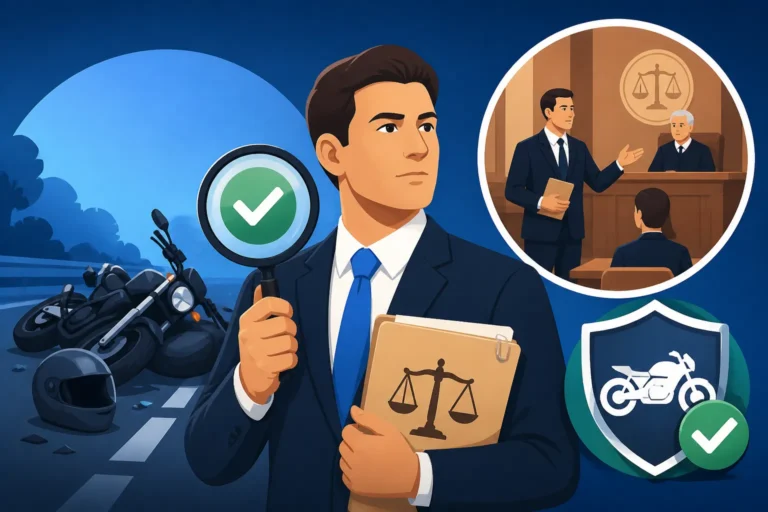
In court, your lawyer will act as your unwavering advocate. They will present your case to a judge and jury, delivering opening statements that outline your claims, calling witnesses (including medical experts and accident reconstructionists) to testify, and cross-examining the defendant's witnesses to expose weaknesses in their defense. They will introduce physical evidence, medical records, and expert reports to support your claims of fault and damages. Throughout the trial, they will make legal arguments, respond to the other side's motions, and work to counter any attempts by the defense to discredit your testimony or downplay your injuries. Finally, they will deliver a powerful closing argument, summarizing the evidence and persuading the jury to rule in your favor. This comprehensive courtroom representation ensures that your story is heard, your rights are protected, and you have the best possible chance of receiving justice and full compensation for your losses.
Addressing Specific Challenges in Motorcycle Accident Claims
Motorcycle accident claims are often inherently more challenging than typical car accidents. There are unique biases and complexities that specifically target riders, making legal representation even more crucial. A seasoned motorcycle accident lawyer understands these unique hurdles and knows how to overcome them.
Overcoming Rider Bias and Stereotypes
Perhaps one of the most frustrating aspects for riders after an accident is the pervasive societal bias that often assumes the motorcyclist was somehow at fault, or was engaging in risky behavior. Phrases like "They were probably speeding" or "Motorcycles are dangerous" are unfortunately common, and these stereotypes can subtly influence police officers, insurance adjusters, and even jury members.
Your motorcycle accident lawyer is acutely aware of this rider bias in fault determination and will work diligently to dismantle it. They will emphasize your responsible riding habits, your defensive driving training, and your adherence to traffic laws. They will present evidence that clearly shows the other driver's negligence, such as distracted driving or failure to yield, rather than letting preconceived notions about motorcyclists dictate the narrative. They can highlight how the "I didn't see the motorcycle" defense explained by drivers often points to their inattention, not the rider's actions. Your lawyer will humanize you, the rider, ensuring that your character and credibility are not unfairly attacked. This focused approach helps to ensure that your case is judged on the facts, not on unfair stereotypes, giving you a fair shot at justice.
Dealing with Comparative Negligence and Shared Fault
In many states, if you are found to be partially at fault for an accident, your compensation can be reduced or even entirely barred. This concept is known as comparative negligence or contributory negligence, and it's a common defense tactic used by insurance companies to reduce their payout. For example, if you were slightly speeding, even if the car turned directly in front of you, the insurance company might try to assign you a percentage of fault.
Your lawyer's expertise in this area is invaluable. They understand the specific comparative negligence laws in your state (e.g., pure comparative fault, modified comparative fault with a 50% bar, or 51% bar rule). They will fight vigorously to minimize any assigned fault on your part. This might involve demonstrating that even if you committed a minor infraction, it did not contribute significantly to the accident, or that the other driver's negligence was the primary cause. They can present expert testimony or accident reconstruction reports to clearly illustrate the sequence of events and the true allocation of fault. For instance, in a lane splitting and motorcycle accident liability scenario, your lawyer will know the specific laws and precedents that apply in your state and argue accordingly. Their goal is to ensure that even if some shared fault is acknowledged, it doesn't unfairly diminish your rightful compensation, ensuring that you can still recover if you were partly at fault.
Handling Uninsured or Underinsured Motorists
It's a terrifying reality that many drivers on the road carry little to no insurance, or their policy limits are simply too low to cover the severe injuries common in motorcycle accidents. If you're hit by an uninsured motorist (UM) or an underinsured motorist (UIM), you might feel like you're out of options.
This is precisely where your motorcycle accident lawyer becomes a lifesaver. They will meticulously review your own insurance policy to determine if you have UM/UIM coverage, which is designed to protect you in these very situations. If you do, your lawyer will pursue a claim against your own insurance company, acting as your advocate against them, just as they would with the at-fault driver's insurer. They understand how to stack UM/UIM coverage if you have multiple policies, effectively increasing the available compensation. If your own coverage is also limited, they can explore other avenues, such as personal assets of the at-fault driver, though this is often more challenging. Without a lawyer, many riders mistakenly believe they have no recourse in such circumstances and simply give up. A skilled lawyer, however, knows how to navigate these difficult situations to find every possible source of recovery for your injuries and losses.
Post-Settlement and Lien Resolution
After the intense journey of investigation, negotiation, and potentially litigation, reaching a settlement can feel like the finish line. However, the process isn't quite over. A motorcycle accident lawyer continues to serve you by ensuring that your settlement funds are properly managed and distributed, especially when it comes to resolving medical liens.
Distributing Settlement Funds and Understanding Deductions
Once a settlement is reached or a judgment is awarded, the funds typically go into a trust account managed by your lawyer. This is a crucial step because the full settlement amount isn't what you'll pocket immediately. There are several deductions and distributions that need to be made before you receive your net payout.
Your lawyer will provide you with a detailed breakdown of all these deductions, ensuring complete transparency. The primary deductions usually include:
- Attorney Fees: This is typically a contingency fee, meaning your lawyer takes a percentage of the final settlement, as agreed upon in your initial retainer agreement. They only get paid if you win.
- Case Costs: These are the expenses your lawyer fronted during the course of your case, such as filing fees, court reporter fees, expert witness fees, medical record acquisition costs, and investigation expenses.
- Medical Liens: Any outstanding medical bills that were deferred or paid by your health insurance might have a lien against your settlement, meaning they are legally entitled to be reimbursed from your payout.
Your lawyer ensures that all these deductions are accurate and legally permissible. They will clearly explain how attorney fees affect your net payout and how case costs come out of a settlement. Their meticulous handling of these financial aspects provides peace of mind, knowing that your funds are being managed responsibly and transparently according to legal requirements and your initial agreement.
Negotiating Medical Liens and Outstanding Bills
One of the most valuable services a motorcycle accident lawyer provides post-settlement is negotiating down medical liens. When you receive treatment for your injuries, your health insurance provider, Medicaid, or Medicare might pay for your care. However, they often have a right to be reimbursed from your personal injury settlement through a process called subrogation or by placing a medical lien.
Your lawyer will diligently identify all existing medical liens and outstanding bills. Then, using their negotiation skills, they will work directly with hospitals, healthcare providers, and insurance companies (including your own health insurer) to try and reduce these lien amounts. For example, if your health insurer paid $50,000 for your treatment, your lawyer might negotiate that amount down to $30,000 or even less. This is a complex process, as lienholders are often reluctant to reduce their claims, but a lawyer knows the legal arguments and leverage points to make a compelling case for a reduction. By successfully negotiating down these liens, your lawyer can significantly increase the amount of money you actually keep from your settlement. This can make a substantial difference in your final recovery, ensuring that medical providers are fairly compensated while maximizing your personal financial recovery.
| Aspect of Claim | Without a Lawyer (DIY) | With a Motorcycle Accident Lawyer |
|---|---|---|
| Initial Contact | Direct calls from aggressive insurance adjusters. | All communication handled by your lawyer; you avoid common traps. |
| Evidence Gathering | Reliance on police report; potential loss of crucial evidence. | Thorough investigation, expert engagement, rapid evidence preservation. |
| Fault Determination | Vulnerable to unfair blame; difficulty proving other driver's fault. | Strategic fault analysis, combatting rider bias, minimizing shared fault. |
| Damage Valuation | May overlook future costs, non-economic losses; lowball offers. | Comprehensive calculation of all economic and non-economic damages. |
| Negotiations | Directly negotiating with seasoned adjusters; often accepting low offers. | Aggressive negotiation, backed by evidence and legal precedent. |
| Legal Process | Confusing, overwhelming paperwork, missed deadlines, no court experience. | Seamless navigation of discovery, motions, mediation, and trial. |
| Trial Readiness | Unlikely to go to trial; no courtroom representation. | Fully prepared for trial; strong courtroom advocacy. |
| Post-Settlement | Managing complex medical liens and distributions alone. | Negotiation of medical liens, transparent fund distribution. |
| Peace of Mind | High stress, uncertainty, feeling taken advantage of. | Reduced stress, confidence in legal representation, focus on recovery. |
Disclaimer
Please remember, the information provided in this guide is for general informational purposes only and does not constitute legal advice. Every motorcycle accident claim is unique, and the laws governing personal injury claims vary significantly by state. It is crucial to consult with a qualified motorcycle accident lawyer to discuss the specifics of your situation and understand your legal rights and options. LegalMatch is a resource that can help you find appropriate legal counsel in your area.