Statute of Limitations for Motorcycle Claims in Virginia
Riding a motorcycle in Virginia offers some of the most breathtaking scenic routes, from the Blue Ridge Parkway to the coastal highways, but the open road can also unfortunately lead to unexpected accidents. When a crash happens, the physical and emotional toll is immediate, but what many riders don't realize until it's too late is the strict legal clock ticking down on their ability to seek justice and compensation. This guide will walk you through the critical "statute of limitations" in Virginia, helping you understand these vital deadlines and how to protect your motorcycle accident claim.
Understanding Virginia's Statute of Limitations for Motorcycle Accident Claims
Let's be real, after a motorcycle accident, the last thing on your mind is usually navigating complex legal jargon. You're probably dealing with injuries, property damage, and the sheer shock of it all. But understanding the statute of limitations in Virginia is absolutely crucial, because if you miss this window, your right to seek compensation for your injuries and losses can be lost forever, no matter how clear-cut your case might seem. It's essentially a legal deadline that dictates how long you have to file a lawsuit in court.
The Core Deadline for Personal Injury Claims
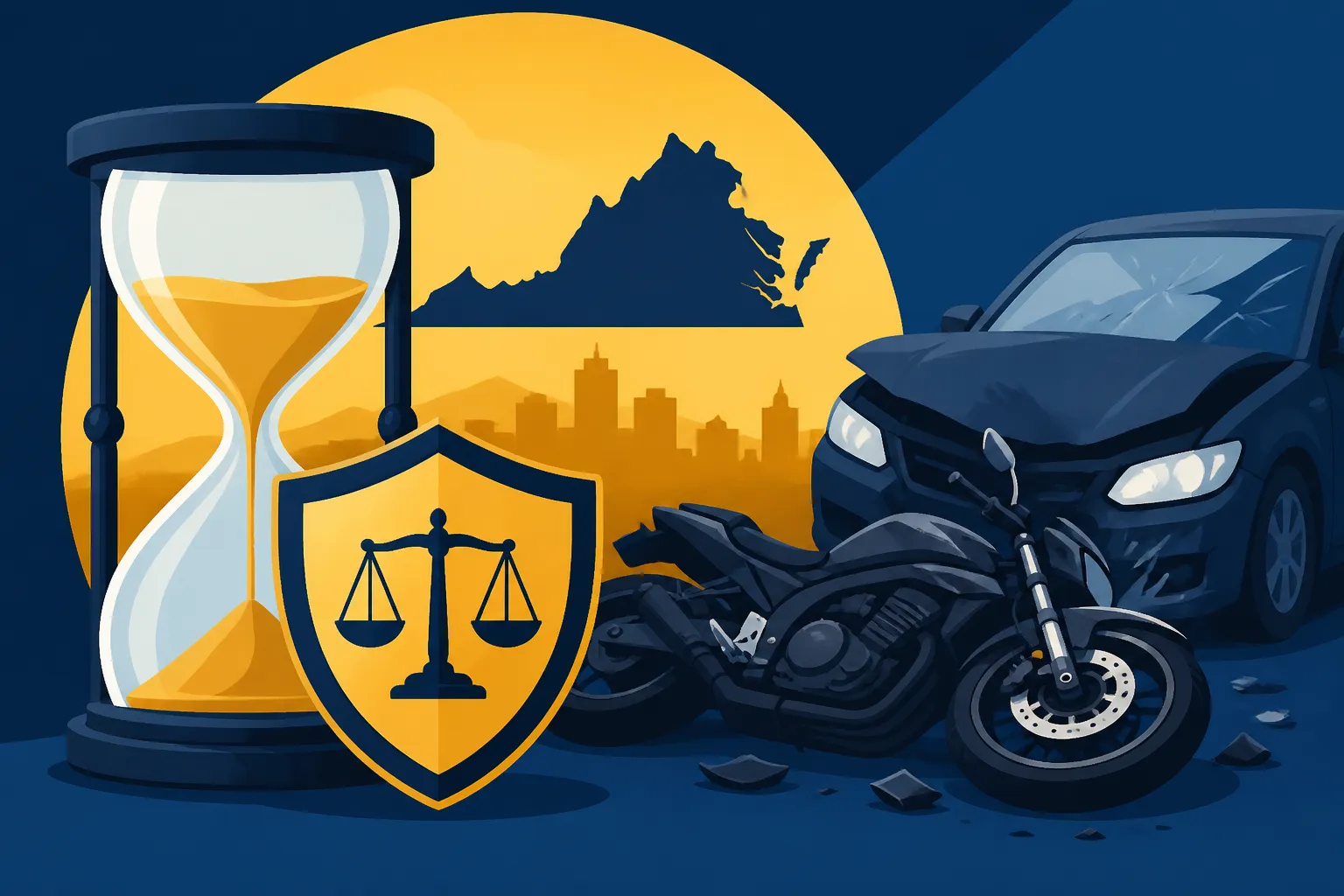
In Virginia, for most personal injury claims stemming from a motorcycle accident, you generally have two years from the date of the accident to file a lawsuit in civil court. This is codified under Virginia Code § 8.01-243. This two-year period might sound like a lot of time, but believe me, it flies by when you're focusing on recovery, medical appointments, and dealing with insurance adjusters. This deadline applies whether you suffered a traumatic brain injury, extensive road rash, or broken bones. It’s a hard and fast rule for injuries sustained by an individual.
Consider a scenario where you're involved in a collision with a distracted driver on I-64 near Richmond. You sustain a severe leg fracture and your bike is totaled. From the moment that accident occurs, the two-year clock starts ticking. If you wait until two years and one day to initiate a formal lawsuit, a Virginia court will almost certainly dismiss your case, regardless of the severity of your injuries or the clear fault of the other driver. It’s a harsh reality, but it’s the law.
Why This Deadline is Crucial for Riders
For us riders, this deadline isn't just a bureaucratic formality; it's the gateway to receiving the compensation you deserve for medical bills, lost wages, pain and suffering, and other damages. Motorcycle accidents often result in more severe injuries than car accidents, leading to extensive medical treatment and long recovery periods. The costs can pile up quickly, and the financial burden alone can be overwhelming.
The insurance companies, frankly, are not on your side. Their goal is to settle claims for as little as possible, and they know these deadlines like the back of their hand. If they see you're approaching the statute of limitations without legal representation, they might drag their feet, hoping you miss the deadline and lose your chance to sue. It’s a common tactic. If you're wondering, "When to Hire a Motorcycle Accident Lawyer," the answer is almost always as soon as possible after an accident, precisely because of these looming deadlines. A legal professional can manage this timeline for you and ensure all necessary filings are made on time.
What Happens If You Miss the Deadline
Missing the statute of limitations is like trying to board a flight after the gate has closed and the plane has left. There's simply no getting on. Once that two-year period passes for a personal injury claim in Virginia, you are generally barred from filing a lawsuit to recover damages related to your physical injuries. This means:
- No Compensation for Injuries: You lose your right to sue the at-fault driver for your medical expenses, lost income, emotional distress, or other injury-related costs.
- Insurance Companies Have No Incentive: The leverage you once had with insurance companies completely vanishes. They know you can no longer sue, so they have no reason to offer a fair settlement, or any settlement at all.
- Your Case is Dismissed: If you attempt to file a lawsuit after the deadline, the opposing party's attorney will file a motion to dismiss your case, and the court will almost certainly grant it.
Imagine you were involved in a severe crash in Roanoke and suffered a debilitating spinal cord injury. You spent months in recovery, then therapy, and you genuinely just weren't thinking about legal action. Two years and three months go by. Even with overwhelming evidence that the other driver was completely at fault, a Virginia court would likely throw out your case because you missed the statutory window. It's a heartbreaking reality that emphasizes the importance of acting promptly and understanding these critical timeframes.
Specific Scenarios and Exceptions to the Rule
While the two-year rule is the general standard, the law is rarely simple. There are several situations where the statute of limitations might be different or where the clock might "toll," meaning it pauses temporarily. These exceptions are complex and often require a deep understanding of Virginia's legal statutes.
Claims Involving Minors or Incapacitated Individuals
If the injured party is a minor (under 18 years old) or an individual deemed legally incapacitated at the time of the motorcycle accident, the two-year statute of limitations typically doesn't begin until they turn 18 or until their incapacity is resolved. This is known as "tolling" the statute. For example, if a 16-year-old passenger on a motorcycle is injured in a crash in Norfolk, their two-year clock to file a personal injury lawsuit wouldn't start until their 18th birthday. This means they would have until their 20th birthday to file.
However, even with this extended period, it's still best practice to address the claim sooner rather than later. Evidence can disappear, witnesses' memories fade, and delays can complicate the ability to secure a fair settlement. Parents or legal guardians can pursue a claim on behalf of a minor, and it's highly advisable to consult with an attorney immediately to protect the minor's future interests.
Wrongful Death Claims
Tragically, some motorcycle accidents result in fatalities. If a rider passes away due to their injuries from a motorcycle accident, the family may have a right to file a wrongful death claim. In Virginia, the statute of limitations for filing a wrongful death lawsuit is also generally two years from the date of death. This is outlined in Virginia Code § 8.01-244.
It's important to note that the clock starts ticking from the date of death, which might not always be the same as the date of the accident if the victim lingered for some time before succumbing to their injuries. Filing a wrongful death claim involves different types of damages than a personal injury claim, such as funeral expenses, loss of companionship, and loss of financial support. Understanding Wrongful Death Damages Explained is a critical step for families facing such a profound loss.
Claims Against Government Entities
This is where things get even trickier. If your motorcycle accident involves a government vehicle (e.g., a city bus, a police car) or is caused by a road hazard due to government negligence (like a massive pothole in a state-maintained road), the deadlines are much shorter and stricter. Under the Virginia Tort Claims Act, you typically have to provide notice of your claim to the appropriate government entity within a very limited timeframe—sometimes as short as six months for local government bodies (like a city or county) or one year for the Commonwealth of Virginia.
If you miss these initial notice deadlines, you could be barred from suing the government, regardless of the two-year general statute of limitations for filing the lawsuit itself. For instance, if you hit an unmarked construction trench on a state highway near Charlottesville and suffer injuries, you'd need to notify the Virginia Department of Transportation (VDOT) within that specific period, before you even get to the two-year filing deadline for the lawsuit. These claims are notoriously complex, and immediately consulting a legal professional is non-negotiable.
Property Damage Claims
Separate from personal injury, if your motorcycle was damaged or totaled in the accident, you also have a deadline for filing a claim for property damage. In Virginia, the statute of limitations for property damage claims is generally five years from the date of the accident. This is a significantly longer period than for personal injury, and it's outlined under Virginia Code § 8.01-243.
While this gives you more breathing room, it doesn't mean you should wait. The sooner you address property damage, the sooner you can get your bike repaired or replaced. However, it's essential not to sign any general releases with the insurance company that could inadvertently jeopardize your personal injury claim, especially if your injuries are still being assessed. Sometimes, property damage claims can be resolved quickly, but remember your injuries might not manifest fully for weeks or even months.
Here’s a quick overview of these deadlines in Virginia:
| Type of Claim | Statute of Limitations (Virginia) | Key Notes |
|---|---|---|
| Personal Injury | 2 years from the date of accident | Applies to injuries sustained by the rider or passenger. |
| Wrongful Death | 2 years from the date of death | Applies if the accident results in a fatality. |
| Property Damage | 5 years from the date of accident | Applies to damage to your motorcycle or other property. |
| Claims Against Government | Notice required within 6 months – 1 year | Strict notice requirements before filing a lawsuit; actual lawsuit deadline usually 2 years from the incident. |
| Minor/Incapacitated | 2 years from age 18 or resolution of incapacity | Clock for personal injury claims typically pauses until the individual is no longer a minor or incapacitated. |
Practical Steps to Protect Your Virginia Motorcycle Accident Claim
Navigating the aftermath of a motorcycle accident is tough enough without having to worry about missing critical legal deadlines. The best defense is a good offense, which means taking proactive steps right from the start.
Act Quickly After an Accident
The moments immediately following an accident are chaotic, but what you do (or don't do) can profoundly impact your ability to recover damages later. Your first priority should always be your safety and health. Seek medical attention immediately, even if you feel fine. Many serious injuries, like a concussion or internal bleeding, don't show symptoms right away. A gap in medical treatment can give insurance companies a reason to doubt the severity of your injuries later on. Remember, "What to Do Immediately After a Motorcycle Accident" involves securing your safety and contacting emergency services.
Beyond your health, document everything you can. This includes taking photos of the scene, your motorcycle, the other vehicles involved, and any visible injuries. Get contact information from witnesses and the other driver. Never admit fault at the scene, even if you're feeling shaken and unsure. Statements made in distress can be used against you.
Gathering and Preserving Evidence
Evidence is the backbone of any successful motorcycle accident claim. The more detailed and comprehensive your evidence, the stronger your position will be, especially when approaching the statute of limitations. This is a continuous process from the moment of the crash until your case is resolved.
- Medical Records: Keep meticulous records of all medical visits, treatments, prescriptions, and therapist appointments. These documents clearly How Medical Records Support Your Claim and demonstrate the extent of your injuries and the care required.
- Accident Report: Obtain a copy of the police accident report. While not always definitive on fault, it provides crucial details about the incident, vehicles, and parties involved.
- Photos and Videos: As mentioned, visuals from the scene are incredibly powerful. Photos of vehicle positioning, road conditions, skid marks, and property damage can be invaluable. If you or your bike had a dashcam, that footage could be definitive evidence to
Prove Fault in a Motorcycle Accident. - Witness Statements: Eyewitness accounts can corroborate your version of events. Gather contact information and any statements they might have made at the scene.
- Lost Wages Documentation: If you missed work, collect pay stubs, employment records, and a letter from your employer detailing your missed time and salary.
- Motorcycle Repair Estimates/Bills: Keep all documentation related to the damage and repair costs for your motorcycle.
Organizing this information is vital. It forms the basis of your claim and helps a legal professional assess your case and build a strategy.
The Role of Legal Counsel in Managing Deadlines
Honestly, trying to manage a serious motorcycle accident claim on your own while recovering from injuries is like trying to rebuild an engine blindfolded. It's incredibly difficult, fraught with potential errors, and you’re likely to miss crucial steps. This is precisely Why Hiring a Lawyer Early Helps Your Case.
A seasoned motorcycle accident attorney in Virginia will:
- Track Deadlines Meticulously: They understand the specific deadlines for various claims, including the general two-year personal injury statute of limitations and any shorter notice periods for government entities. They will ensure all necessary paperwork is filed correctly and on time with the appropriate courts, whether it's in Fairfax County, Virginia Beach, or anywhere else in the Commonwealth.
- Handle Communications: Your attorney will take over all communication with insurance companies, protecting you from adjusters who might try to trick you into statements that harm your claim. This is particularly important for How Insurance Companies Assign Blame to Riders.
- Gather Evidence: They have the resources to investigate the accident thoroughly, collect evidence, interview witnesses, and even reconstruct the accident if necessary. Services like LegalMatch can help you find experienced motorcycle accident attorneys in your area who specialize in these kinds of cases.
- Negotiate Settlements: Attorneys are skilled negotiators who know How to Maximize Your Motorcycle Accident Settlement by accurately valuing all your damages, including pain and suffering, and aggressively advocating for your rights.
- Prepare for Litigation: If a fair settlement cannot be reached, they are prepared to take your case to court, ensuring all legal requirements, including the statute of limitations, are met to pursue a lawsuit.
Don't let the legal deadlines catch you off guard. The sooner you consult with an attorney, the stronger your position will be to protect your rights and pursue the compensation you need to rebuild your life after a devastating motorcycle accident. Finding the right legal partner can make all the difference in your recovery journey.
Disclaimer
Please remember, this article provides general information and insights into Virginia's statute of limitations for motorcycle accident claims and should not be considered legal advice. Laws can change, and every case is unique. If you have been involved in a motorcycle accident, it is crucial to consult directly with a qualified Virginia personal injury attorney to discuss the specifics of your situation and understand the applicable laws and deadlines.