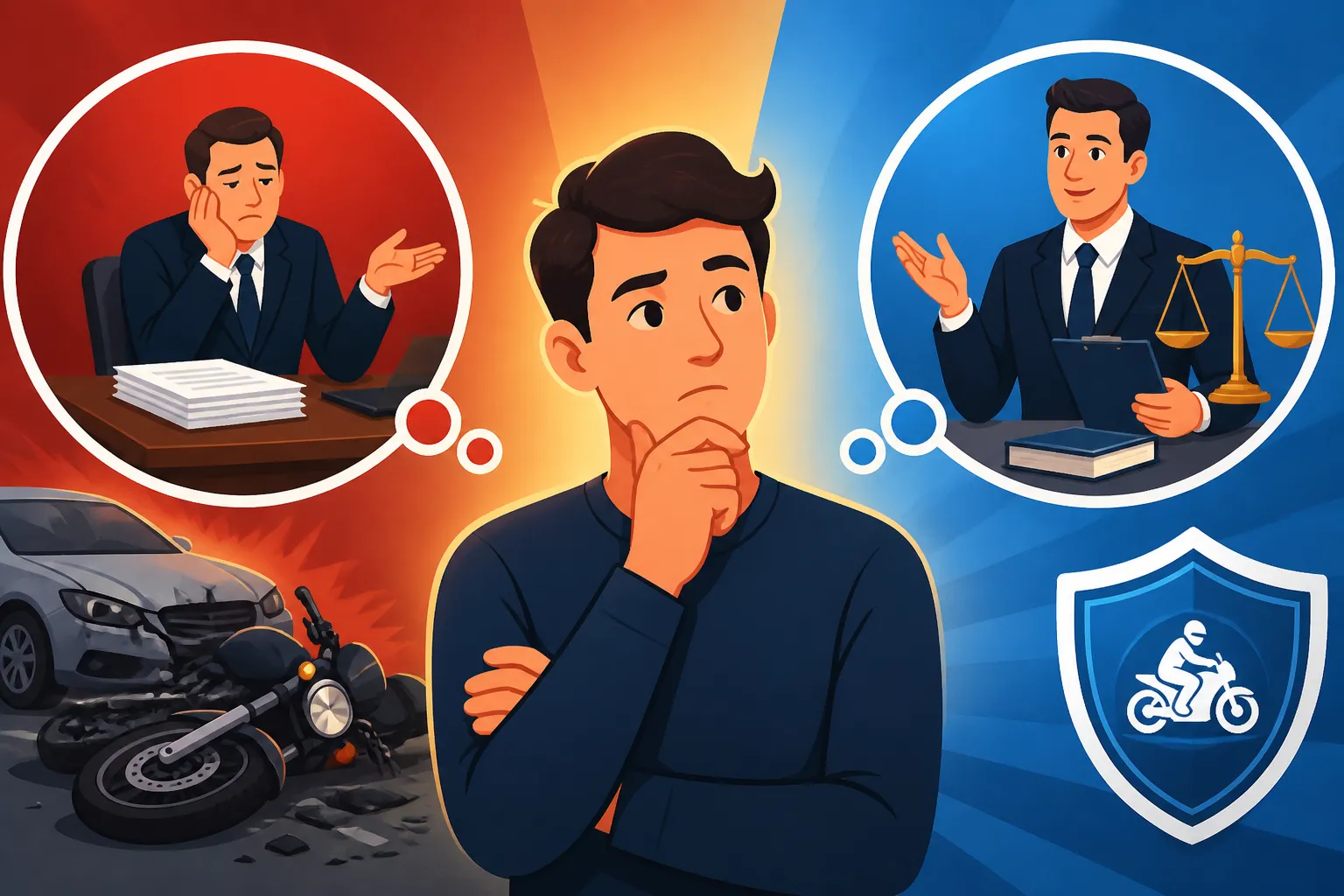
When to Get a Second Legal Opinion
Dealing with the aftermath of a motorcycle accident is an incredibly stressful and often confusing time. You're likely trying to heal, manage financial burdens, and navigate complex insurance claims, all while potentially feeling vulnerable. It's completely understandable to feel overwhelmed and unsure if the legal advice you've received is truly the best possible path for your recovery and future. This guide is designed to help you recognize when a second legal opinion isn't just an option, but a crucial step to ensure you're making the most informed decisions for your motorcycle accident claim.
Why a Second Opinion Matters in a Motorcycle Accident Claim
After a motorcycle crash, especially one involving serious injuries, your life can be turned upside down. You’ve likely consulted with an attorney, but what if something still doesn’t feel right? That nagging doubt is a sign you might need to explore further.
Overcoming Doubts and Gaining Clarity
Initial consultations with a lawyer can often feel rushed, leaving you with more questions than answers. It’s perfectly normal to have lingering uncertainties, especially when dealing with the life-altering consequences of a motorcycle accident. This isn't just about repairing your bike; it's about your physical and emotional health, your financial stability, and your long-term future. A second legal opinion offers a fresh set of eyes and a valuable opportunity to address any concerns that might have been overlooked or minimized during your initial discussions.
Consider this like seeking a second opinion from a medical specialist for a significant health issue. You wouldn't hesitate to get another doctor's perspective to confirm a diagnosis or explore alternative treatment options, would you? The stakes in a motorcycle accident claim are similarly high. You are striving to recover from potentially severe injuries, grappling with lost income, and facing a mountain of medical bills. Ensuring you have the clearest, most comprehensive understanding of your legal standing and potential outcomes is absolutely paramount for your peace of mind.
Sometimes, the first attorney you speak with might not possess the deep specialization in motorcycle accident law that your case demands, or they might simply have a different strategic approach. Understanding these subtle but significant differences can profoundly impact the trajectory and eventual outcome of your case. Seeking a second opinion is not a reflection of distrust; rather, it’s a proactive and empowering step toward making genuinely informed decisions during what is already an incredibly vulnerable and challenging time in your life.
The Benefit of a Fresh Perspective
Every legal professional brings their unique blend of experience, perspective, and strategic thinking to a case. What one attorney might perceive as a minor detail or an expected hurdle, another, perhaps with different expertise, might identify as a critical turning point or an untapped opportunity for your case. A fresh set of eyes is often invaluable, capable of spotting nuances, overlooked facts, or alternative interpretations that were not apparent in the initial assessment. This could range from identifying additional avenues for proving fault in a motorcycle accident to recognizing categories of damages that were initially missed.
Imagine your situation involves complex liability issues, such as a multi-vehicle pile-up on a busy freeway or a particularly nuanced scenario like a lane splitting accident in traffic. An attorney with deep specialization exclusively in motorcycle law might be uniquely positioned to uncover subtle legal arguments or identify specific pieces of available evidence that a more general personal injury lawyer might easily miss. This kind of specialized insight can dramatically re-evaluate the perceived strength and potential value of your claim, very often leading to a significantly better outcome.
Furthermore, different attorneys employ varying approaches to negotiation and litigation. One lawyer might prefer to lean heavily towards securing a quick settlement, while another might be thoroughly prepared to take your case to trial if that is what it takes to maximize your compensation. A second opinion can expose you to these diverse legal philosophies and strategies, thereby enabling you to choose the approach that most closely aligns with your personal goals, your tolerance for risk, and your desired outcome. This more holistic and comparative view helps to ensure that you are not just accepting any legal advice, but rather the most appropriate advice for your unique and specific situation.
Situations Warranting a Second Legal Opinion
Knowing when to seek a second opinion is crucial. Here are several common scenarios where reaching out to another attorney can make a significant difference.
Low Settlement Offers or Unfavorable Case Assessment
One of the most frequent catalysts for riders seeking a second legal opinion is the unsettling feeling that their current attorney has undervalued their case or presented a settlement offer that simply doesn’t seem fair or adequate. It's incredibly disheartening to receive a lowball offer, especially when you are grappling with severe injuries, extensive medical treatments, and substantial financial losses. If you've been told that your case holds limited value, or if an insurance company has aggressively tried to assign blame to the rider, it is absolutely essential to get another expert perspective.
Insurance companies are, by their very nature, profit-driven entities that are known for their tactics to minimize payouts. Occasionally, even your own attorney might implicitly or explicitly push for a quick resolution that, while convenient, might benefit their practice more than your long-term recovery. If you find yourself being pressured to accept an offer that barely covers your immediate medical bills and lost wages, let alone your enduring pain and suffering or future needs, that should be a blaring red flag. A second, independent attorney can meticulously review your complete medical records, all available accident evidence, and a comprehensive breakdown of your financial losses to provide an unbiased assessment of what your claim is truly worth. They might also possess a more thorough understanding of how to document injuries for a claim effectively and accurately calculate future medical costs, which are often substantial in serious motorcycle accidents.
For example, if you sustained a devastating traumatic brain injury (TBI) or a life-altering spinal cord injury, the scope of long-term care and the profound impact on your quality of life are immense. If your current lawyer seems to be inadequately accounting for these critical future needs, or if an average settlement for a TBI they presented seems woefully insufficient for your specific, complex circumstances, do not hesitate to seek clarity. You unquestionably deserve an attorney who is prepared to vigorously fight for every single penny you need for your complete recovery and future well-being. Getting a second legal opinion can significantly strengthen your position when you need to How to Handle a Lowball Settlement Offer.
Communication Issues or Lack of Responsiveness
A robust and effective attorney-client relationship is fundamentally built upon a bedrock of trust, transparent communication, and consistent responsiveness. If you frequently find yourself struggling to obtain updates on your case, if your phone calls or emails consistently go unreturned, or if you feel that your legitimate questions are being casually dismissed, then you are experiencing a serious and unacceptable problem. You are entrusting your entire legal future and potentially your financial stability to this individual, and if they cannot even manage to keep you adequately informed, how can you genuinely be confident that they are effectively advocating for your best interests? This pervasive silence and lack of engagement can quickly breed immense anxiety, leaving you feeling utterly isolated and abandoned within a legal process that is already inherently stressful and complex.
This isn’t merely about common courtesy; it’s directly about your fundamental right to understand the progression and intricacies of your own legal case. If your lawyer is consistently failing to explain complex legal strategies in terms that you can readily grasp, or is neglecting to provide detailed updates on the advancement of your case, you are essentially navigating a critical period of your life without a clear map or guide. You should always feel empowered and encouraged to ask pertinent questions and expect to receive clear, concise, and timely answers regarding critical deadlines, ongoing negotiations, and proposed next steps. A persistent lack of transparent and proactive communication can often be an early warning sign of either inefficient case management or, more worryingly, an attorney who is simply not prioritizing your specific claim with the attention and diligence it deserves.
Consider a hypothetical scenario where you have been patiently waiting for several weeks for a crucial update on settlement negotiations, or you feel deeply uncertain about the full implications of a particular legal document you've been asked to review and sign. If your repeated and earnest attempts to connect with your attorney or their assigned paralegal consistently go unacknowledged, it might be a definitive indication that it's time to seek a legal professional who places a significantly higher value on consistent client communication and engagement. A second legal opinion can offer not only an alternative strategic perspective but also a valuable benchmark for comparing the quality of client service you are currently receiving versus what you could potentially receive. Make sure you know Questions to Ask a Motorcycle Accident Attorney before you decide.
Disagreement on Strategy or Course of Action
It's not uncommon for a rider and their attorney to have differing perspectives on the most effective strategy for prosecuting a motorcycle accident case. Perhaps your current attorney is strongly inclined towards pursuing a swift settlement, whereas you firmly believe that your case possesses greater inherent value and are prepared to endure the additional time and effort required to go to trial. Alternatively, you might find yourself disagreeing on the criticality of certain pieces of evidence, or how best to challenge a police report that, in your view, unfairly assigns fault to you. While such disagreements are a natural part of any legal process, when these differences become fundamental to the core strategy, they can undeniably jeopardize your chances of achieving your desired outcome.
For instance, if your lawyer advises against pursuing a specific and potentially significant avenue of recovery, such as seeking punitive damages against a drunk driver who caused your accident, but you are steadfast in your belief that such action is warranted given the egregious circumstances of your crash, a second opinion can provide crucial validation for your concerns. Another attorney might not only confirm your instincts but also provide a more compelling explanation for why the initial advice was sound, or conversely, suggest an entirely new and more aggressive approach that resonates more deeply with your sense of justice. It’s fundamentally about ensuring that you are both comfortable with and fully confident in the chosen legal path.
It’s also possible that your attorney might be advocating for a course of action that feels prematurely rushed or inherently incomplete. For example, they might be pushing strongly to settle your case before you have reached maximum medical improvement (MMI), a critical milestone that could significantly impact the accurate calculation of your future medical costs and long-term care needs. If you perceive that your long-term health and well-being are being sidelined in favor of expediency, that is a profoundly critical moment to seek out an alternative professional viewpoint. Knowing When to Reject a Settlement Offer is paramount, and a second opinion can solidify your decision.
Feeling Uncomfortable or Lacking Trust
While perhaps less tangible than a concrete low offer or blatant communication lapses, a persistent gut feeling of discomfort or a pervasive lack of trust in your legal representation is an exceptionally valid and important reason to seek a second opinion. Legal cases, particularly those involving personal injury and profound life changes, are intensely personal endeavors, and you absolutely need to feel unwavering confidence that your chosen advocate genuinely has your best interests at the forefront of their efforts.
Trust issues can unfortunately arise from a multitude of sources. Perhaps your initial lawyer made promises that proved impossible to keep, or their general demeanor simply fails to inspire the necessary confidence. Sometimes, it’s a more subtle and insidious feeling, such as a sense that they do not truly comprehend the unique challenges, inherent biases, and unfair stereotypes that motorcycle riders frequently face in the legal system. If you find yourself constantly second-guessing their advice, feeling an underlying unease about their strategic approach, or experiencing a general lack of connection, it will undeniably be an arduous battle to move your case forward effectively.
Remember, you are engaging a professional service provider, and you possess every right to feel heard, respected, and competently represented. A strong, trusting attorney-client relationship is unequivocally vital for successfully navigating the often-labyrinthine complexities of a motorcycle accident claim. If that foundational trust is conspicuously absent, the entire process will feel like an uphill struggle. In such instances, a second opinion might be precisely what you need to find an attorney who not only fits your specific legal needs but also makes you feel genuinely secure and confident in their representation. These are often strong Signs You Need a Motorcycle Accident Lawyer.
Approaching Deadlines or Statute of Limitations
Time is frequently of the essence in personal injury claims, and this urgency is acutely amplified by the existence of strict legal deadlines, most notably the statute of limitations. If your current attorney appears to be consistently dragging their feet, or if you harbor genuine concerns that they might inadvertently miss a critical filing deadline, this constitutes an extremely urgent and compelling reason to seek a second legal opinion without delay. Missing the statute of limitations means that you could irrevocably forfeit your right to pursue any form of compensation, irrespective of the inherent merits or strength of your case.
Each state in the U.S. imposes its own specific timeframe for initiating a personal injury lawsuit, which can vary significantly, ranging anywhere from a single year to several years from the date of the incident. For instance, in states like California, the general personal injury statute of limitations is two years, but it is imperative to note that certain specific circumstances can introduce exceptions or modify this timeframe. If your current attorney is vague about these critically important dates, demonstrates a lack of organization, or exhibits any signs of complacency, another qualified legal professional can swiftly assess your current standing and ascertain whether your case can still be properly filed within the legal window.
Never allow procrastination or the unresponsiveness of your current legal counsel to jeopardize your fundamental ability to recover damages and seek justice. Even if the looming deadline appears to be relatively far off, unnecessary delays can severely complicate the crucial processes of evidence gathering, securing timely witness testimony, and maintaining the overall strength of your claim. A second lawyer can provide a clear explanation of The Statute of Limitations Explained for your particular state and help determine if there remains sufficient time to properly and effectively advance your claim.
How to Approach Getting a Second Opinion
Deciding to get a second opinion is a big step, but it's important to approach it systematically to get the best possible advice.
Gathering Your Case Documents
Before you even contemplate reaching out to a new attorney for a second opinion, it is absolutely imperative that you meticulously compile and organize all relevant documents pertaining to your motorcycle accident claim. This initial step is profoundly crucial because any new attorney you consult will require a comprehensive and detailed overview of your entire situation to provide truly informed and accurate advice. Without access to these essential documents, their legal advice will inevitably be based on incomplete information, which could potentially be misleading or even detrimental to your case.
Begin this critical task by formally requesting a complete copy of your entire case file from your current attorney. While some firms might initially express reluctance or impose a small administrative fee, you are, by law, absolutely entitled to your own file. This comprehensive collection of documents should include, but is not limited to, the official police report, all pertinent medical records and associated bills (both incurred and projected), any photographs taken at the accident scene, statements from witnesses, all correspondence and communications exchanged with insurance companies, any and all settlement offers you have received, and any legal filings or correspondence. Furthermore, do not overlook any personal notes or journals you may have kept detailing your injuries, treatment, pain levels, or recovery process, as these can provide invaluable personal context.
Having all your documentation thoroughly organized will not only create a strong and positive first impression on any prospective new attorney but will also significantly streamline their review process. It clearly demonstrates your seriousness and preparedness, enabling them to delve directly into the intricate details of your case without unnecessary delays. Think of this process as meticulously preparing your personal dossier, designed to present your story and the facts of your claim in the most compelling, complete, and coherent manner possible. This organized approach helps in understanding the full scope of Motorcycle Accident Evidence for Proving Fault.
Finding a Qualified Second Opinion Attorney
This crucial step isn't simply about locating any available lawyer; it is fundamentally about identifying a legal professional who possesses a distinct specialization in motorcycle accidents and can demonstrate a robust, proven track record of success in similar cases. Your objective is to find someone with extensive, specific experience in claims precisely like yours, an attorney who not only understands but can actively counteract the unique biases and unfair stereotypes often faced by motorcycle riders in the legal system. While general personal injury lawyers might be competent, a highly specialized attorney typically brings a significantly deeper level of insight, a more targeted skill set, and a broader network of resources to the table.
Begin your search by meticulously researching attorneys and law firms that explicitly focus on motorcycle accident claims within your specific geographical area. Look for firms that boast a wealth of positive client testimonials, maintain strong professional ratings, and provide transparent information regarding their specific experience and successful outcomes. Online platforms like LegalMatch can prove incredibly beneficial during this phase; they allow you to submit a concise overview of your case details and subsequently receive expressions of interest from qualified attorneys who are genuinely interested in reviewing your claim. This platform can effectively connect you with experienced legal professionals who truly understand and specialize in the complex nuances of motorcycle law.
When you are screening and evaluating potential attorneys, do not shy away from asking direct, pointed questions about their specific experience with cases that closely resemble yours, their documented success rates in these areas, and their typical strategic approaches to negotiation and litigation. This is your invaluable opportunity to critically compare their proposed methods and philosophies with those of your current attorney. Remember that many reputable personal injury attorneys generously offer free initial consultations for injury claims, so take full advantage of these opportunities to thoroughly gauge their expertise, assess their communication style, and determine their overall compatibility with your needs. This process is essentially How to Choose a Motorcycle Accident Attorney.
The Second Consultation Process
During your subsequent consultation with a new attorney, it is absolutely paramount to be completely open and forthright about your specific concerns and dissatisfactions with your current legal representation. Articulate clearly and precisely why you are seeking a second opinion, detailing the exact issues you are encountering, and explicitly stating what you genuinely hope to gain from this alternative legal perspective. Provide them with all the meticulously gathered documents you have compiled, and be fully prepared to recount the intricate details of your accident, your resulting injuries, and your recovery journey comprehensively. The more exhaustive and transparent the information you share, the more accurate, informed, and ultimately beneficial the advice you will receive.
Listen with acute attention to how this new attorney evaluates and dissects your case. Do they manage to identify new strengths or previously unnoticed weaknesses? Do they propose a distinctly different strategic approach for the negotiation phase or potential litigation? Pay very close attention to their communication style, their willingness to listen, and their overall responsiveness during this pivotal initial meeting. These elements serve as crucial indicators of what your future working relationship might entail should you decide to switch legal counsel. Be sure to inquire about their fee structure; it’s common for most dedicated motorcycle accident attorneys to operate on a contingency fee basis, meaning their payment is contingent upon the successful resolution of your case. Understanding How Contingency Fees Work is vital.
Crucially, do not feel pressured whatsoever to make an immediate decision on the spot. Take ample time to carefully digest all the new information, critically compare it with the advice and insights you've already received from your first attorney, and thoroughly weigh the potential pros and cons of making a switch. This includes considering factors such as potential delays, the logistical requirements of getting your current attorney to release your file, and any implications regarding attorney liens. This second consultation is conducted entirely for your benefit, so utilize it judiciously to gather as much insight and clarity as humanly possible, ultimately helping you understand what a motorcycle accident lawyer's role truly entails.
What to Expect From a Second Legal Opinion
Getting a second opinion isn't just about finding another lawyer; it's about gaining a clearer picture of your situation and making the most empowered decision.
Confirmation or Contradiction of Previous Advice
The most immediate and primary outcome of seeking a second legal opinion is often either a clear confirmation or a direct contradiction of the legal advice you have previously received. In some instances, the new attorney you consult will simply affirm that your current lawyer is competently navigating the correct course of action, and that their assessment or proposed strategic approach aligns perfectly with established legal standards and best practices. This confirmation, in itself, can bring an immense sense of peace and reassurance, effectively alleviating any lingering doubts you might have harbored and allowing you to proceed with newfound confidence in your ongoing claim.
However, in other scenarios, the second attorney might offer a vastly different or entirely novel perspective. They could potentially identify overlooked categories of damages, uncover new and compelling avenues for proving fault, or propose a significantly more aggressive and assertive negotiation strategy than initially presented. For example, if your initial attorney appeared to downplay or inadequately value your pain and suffering damages, a new lawyer might meticulously explain how to prove pain and suffering more effectively, thereby potentially increasing the overall monetary value of your case substantially. This kind of contradiction doesn't automatically imply that your first lawyer was incompetent; rather, it highlights the inherent diversity of approaches and interpretations that exist within the complex legal field.
It is critically important to remember that legal opinions are rarely absolute or purely black and white. There are often various shades of gray, and different attorneys, owing to their unique experiences and specializations, may weigh various factors and probabilities differently. The overarching goal of this process is to acquire a broader, more nuanced understanding of all your available options and to ensure, without a shadow of a doubt, that the legal advice you are ultimately following is truly the most advantageous and optimal for your unique and specific situation. This objective assessment from an independent third party can prove to be an invaluable asset. This step is key to knowing How to Maximize Your Motorcycle Accident Settlement.
Potential Impact on Your Claim and Timeline
Making the informed decision to act upon a second opinion and consequently switch legal representation can undoubtedly have a considerable impact on the overall trajectory and timeline of your motorcycle accident claim. While this change frequently leads to a more favorable and just outcome, it is also important to acknowledge that it can introduce some degree of delay. The new attorney will require a period of time to thoroughly familiarize themselves with your case, meticulously review all accumulated documents, and potentially re-engage with insurance companies or opposing legal counsel. This transitional period, although absolutely necessary for a smooth transfer, can naturally extend the overall timeline required to reach a final settlement or resolution for your claim. Understanding How Long Does a Motorcycle Settlement Take is key here.
Nevertheless, these potential delays are often a justified and worthwhile trade-off if the incoming attorney can genuinely increase your eventual settlement amount or provide a significantly more robust and effective defense of your legal rights. Consider it a strategic and calculated pause designed to allow for a thorough recalibration and to ensure that you are firmly established on the most optimal path forward, rather than continuing down a less advantageous one out of sheer expediency. This additional time might be strategically utilized to gather more substantial evidence, consult with specialized accident reconstruction experts, or simply to meticulously prepare a far stronger and more compelling demand letter.
It's also worth noting that specific states have distinct rules and regulations pertaining to switching attorneys, particularly concerning the allocation and handling of contingency fees when multiple legal professionals have contributed to a single case. It is absolutely essential to engage in a comprehensive discussion about these potential implications with your prospective new attorney to gain a clear understanding of how a switch might affect your ultimate net payout and the intricate distribution of legal fees. Platforms such as LegalMatch can be particularly useful in streamlining the often-complex process of identifying and connecting with a new attorney, potentially helping to minimize some of these inherent transitional delays.
Making an Informed Decision
Ultimately, the fundamental purpose of seeking a second legal opinion is to empower you, the injured rider, to make an exceptionally informed and confident decision regarding the future of your motorcycle accident claim. By undergoing this process, you will gain the distinct benefit of multiple professional perspectives, which can significantly aid you in carefully weighing the inherent risks and potential rewards associated with various available legal strategies. This isn't merely about the selection of a lawyer; it is about thoughtfully choosing the most effective advocate and the most appropriate legal strategy to ensure your comprehensive recovery and secure your future well-being.
Once you are equipped with all the comprehensive information, you will be in a much stronger position to decide whether to continue with your current attorney, now armed with new insights and targeted questions, or to make a decisive transition to a new and potentially more suitable legal team. This pivotal decision should be firmly anchored in a clear and nuanced understanding of your case's inherent strengths and weaknesses, a realistic assessment of the potential monetary value of your claim, and your absolute comfort level and trust in the chosen legal professional and their proposed approach.
Never underestimate the profound value of feeling genuinely confident and secure in your legal representation. A well-timed and thoughtfully considered second opinion can transform a pervasive feeling of uncertainty into a clear, actionable roadmap, ensuring that you are maximizing every possible chance for a fair, just, and deserved recovery after the trauma of your motorcycle accident. This is your future at stake, so ensure you are making the absolute best possible choices to protect it.
Disclaimer
Please remember that this article provides general information and insights into seeking a second legal opinion for a motorcycle accident claim. It is not legal advice. Every accident claim is unique, and the information provided here may not apply to your specific situation. Laws regarding personal injury and motorcycle accidents vary significantly by state and jurisdiction. For personalized legal guidance tailored to your circumstances, it is always recommended to consult directly with a qualified motorcycle accident attorney in your area.