Statute of Limitations for Motorcycle Claims in Texas
Riding a motorcycle in Texas offers unparalleled freedom, but if you've been involved in an accident, the aftermath can feel anything but liberating. Beyond the immediate shock, injuries, and property damage, a critical clock starts ticking, one that many riders are completely unaware of until it’s too late. This looming deadline, known as the statute of limitations, can make or break your ability to seek justice and compensation. This comprehensive guide will walk you through everything you need to know about the statute of limitations for motorcycle accident claims in Texas, ensuring you understand the crucial timeframes and how to protect your legal rights.
Understanding Texas Statute of Limitations for Motorcycle Accidents
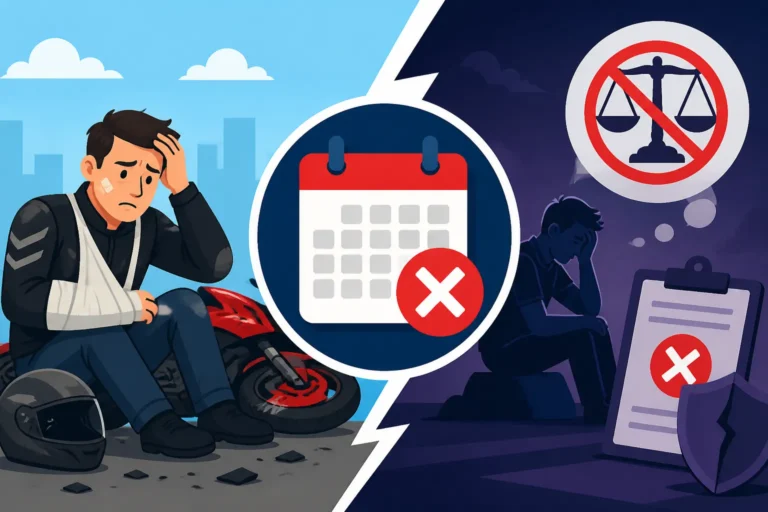
The statute of limitations is essentially a legal deadline that dictates how long you have to file a lawsuit after an incident. In Texas, like many other states, these deadlines are strictly enforced. If you miss this window, even by a single day, a court will almost certainly dismiss your case, regardless of how strong your evidence or how severe your injuries. It's not just a suggestion; it's a hard rule that protects defendants from having to face claims years or decades after an event, when evidence is scarce and memories have faded.
The Core Deadline for Personal Injury Claims
For most motorcycle accident claims in Texas involving personal injury, the statute of limitations is two years. This means you have exactly two years from the date of the accident to file a formal lawsuit in civil court. This two-year period covers a wide range of damages you might seek, from medical expenses and lost wages to pain and suffering.
Let's imagine you were cruising down I-35 in Austin, and a distracted driver suddenly merged into your lane, knocking you off your bike on January 15, 2023. Under Texas law, you would have until January 15, 2025, to file your personal injury lawsuit. If you wait until January 16, 2025, your claim would likely be barred, and you would lose your chance to recover damages, no matter how negligent the other driver was or how debilitating your injuries are. This can be a devastating blow to someone who is still recovering and dealing with ongoing medical treatments.
It’s crucial to understand that this deadline applies to filing a lawsuit, not simply reporting the accident to your insurance company or beginning negotiations. While prompt reporting and negotiation are always advisable, they don't stop the statute of limitations clock from running.
Wrongful Death Claims and Their Timeline
Sadly, some motorcycle accidents result in fatalities. In such heartbreaking cases, Texas law provides for wrongful death claims, allowing the deceased's family members (specifically the spouse, children, and parents) to seek compensation for their losses. For wrongful death claims arising from a motorcycle accident, the statute of limitations is also two years.
However, the clock for a wrongful death claim typically starts from the date of the deceased's passing, which might not always be the exact date of the accident itself. For instance, if a rider was critically injured on March 1, 2023, but tragically succumbed to their injuries in the hospital on March 15, 2023, the two-year clock for a wrongful death claim would generally begin on March 15, 2023. This distinction is vital for grieving families who are already navigating an incredibly difficult time. Understanding these precise timelines is key to preserving their legal rights.
Property Damage Claims
Motorcycle accidents often involve significant damage to the bike itself, not just injuries to the rider. If you're seeking compensation solely for property damage to your motorcycle, like repairs or replacement costs, Texas law provides a different, albeit similar, statute of limitations. For property damage claims, you generally have two years from the date of the accident to file a lawsuit.
It's important to note that if your claim involves both personal injury and property damage, both claims fall under the same two-year personal injury statute of limitations. You wouldn't file two separate lawsuits with two different deadlines. The claim encompassing both aspects would be filed within the two-year window from the date of the accident. Trying to parse out which damages fall under which deadline can be confusing, which is one reason why getting experienced legal guidance is so important.
What Happens If You Miss the Deadline?
Missing the statute of limitations deadline can have dire and irreversible consequences for your motorcycle accident claim. It's not a minor oversight; it's often the death knell for your ability to seek compensation.
The Harsh Reality of Missing the Statute
If you fail to file your lawsuit within the two-year period (or any applicable shorter period), the opposing party's legal team, typically the at-fault driver's insurance company, will almost certainly file a motion to dismiss your case. Courts in Texas are very strict about these deadlines. Unless a very specific legal exception applies, the judge will grant the dismissal, and your case will be thrown out. This means you lose all legal recourse, no matter how severe your injuries, how much your medical bills stack up, or how clear the other driver's fault was.
Consider a scenario where a rider in Dallas suffered a debilitating spinal cord injury due to a reckless driver. They spent months in rehabilitation and focused entirely on their recovery, putting off legal action. If they then try to file a lawsuit two years and one month after the crash, their opportunity to pursue compensation for substantial medical bills, lost income, and immense pain and suffering would be gone forever. This is a cruel reality, but it underscores the importance of acting promptly and understanding these deadlines. You don't want to be in a position where you're recovering physically but have no financial means to support that recovery because of a missed deadline.
The "Discovery Rule" Exception
While the two-year rule is generally rigid, Texas law does recognize certain exceptions. One common exception is the "discovery rule." This rule applies in situations where you couldn't have reasonably known about your injury or the cause of it at the time of the accident. In such cases, the statute of limitations may not begin to run until the date you discovered, or reasonably should have discovered, your injury.
For example, imagine you were in a seemingly minor motorcycle accident in Houston, and initially, you only felt some minor aches. Weeks or even months later, a persistent pain leads to a diagnosis of a serious internal injury, like a ruptured disc in your back, that medical professionals confirm was directly caused by the accident. If you couldn't have reasonably discovered this injury earlier, the two-year clock might start from the date of diagnosis, not the accident itself. However, applying the discovery rule is complex and highly fact-specific. You would need to demonstrate to the court why your injury was not immediately discoverable, and that you acted with reasonable diligence once you became aware of it. This isn't a loophole to simply delay, but a safeguard for genuinely latent injuries.
Tolling the Statute of Limitations
Beyond the discovery rule, there are other situations where the statute of limitations can be "tolled," meaning the clock is paused or delayed for a period. These are typically specific legal circumstances:
- Minors: If the injured party is a minor (under 18 years old) at the time of the accident, the statute of limitations for their personal injury claim generally does not begin to run until they turn 18. This means a child injured in a motorcycle accident when they were 10 years old would typically have until their 20th birthday to file a lawsuit. This allows parents to focus on their child's immediate recovery without the pressure of an imminent legal deadline.
- Mental Incapacity: If the injured party is of unsound mind or legally incapacitated at the time of the accident, the statute of limitations may be tolled until their mental capacity is restored. This applies to individuals who are unable to understand their legal rights or make decisions due to a mental condition.
- Defendant's Absence from Texas: If the at-fault party leaves the state of Texas after the accident and before a lawsuit can be filed, the time they are absent from the state may not count towards the two-year limitation period. This is to prevent defendants from simply fleeing to avoid facing legal action.
These tolling provisions are designed to ensure fairness, but they are not automatically applied. It often requires specific legal arguments and evidence to convince a court that the statute of limitations should be extended. This is yet another area where the guidance of a legal professional is invaluable.
Practical Steps to Protect Your Claim's Timeline
Navigating the aftermath of a motorcycle accident is overwhelming, but understanding and adhering to legal timelines is paramount. Taking proactive steps can make a significant difference in the outcome of your claim.
Act Quickly After a Motorcycle Accident
The importance of swift action cannot be overstated. Even with a two-year statute of limitations, delays can severely weaken your case. The sooner you act, the better your chances of preserving critical evidence and accurately documenting your injuries.
First and foremost, immediately after the accident, if you're able, you should call 911 and ensure a police report is filed. Then, seek medical attention right away, even if you feel fine. Adrenaline can mask pain, and some serious injuries, especially to the head or spine, may not manifest symptoms for hours or days. A delay in seeking medical care not only risks your health but can also be used by insurance companies to argue that your injuries weren't severe or weren't caused by the accident. Documenting the scene is also crucial; take photos of your bike, the other vehicle, road conditions, and any visible injuries. For more guidance on immediate actions, check out our guide on What to Do Immediately After a Motorcycle Accident.
Documenting Everything: Your Evidence Trail
A strong motorcycle accident claim is built on a solid foundation of evidence. The more thoroughly you document everything, the better equipped you'll be to prove your case and meet any legal deadlines.
Keep meticulous records of all medical appointments, treatments, medications, and any out-of-pocket expenses related to your injuries. Maintain a journal detailing your pain levels, limitations, and how the injuries are impacting your daily life. Gather copies of the police report, any traffic citations issued, and contact information for witnesses. If your motorcycle was damaged, get repair estimates or documentation of its total loss. All this information helps establish the facts of the accident, the extent of your injuries, and the date of injury for statute of limitations purposes. These details are critical, not just for building your case, but for ensuring you have a clear timeline that aligns with legal requirements.
The Role of Legal Counsel in Managing Deadlines
Given the complexities of statutes of limitations and the potential exceptions, working with a knowledgeable legal professional is almost always in your best interest. An experienced motorcycle accident attorney understands the specific deadlines applicable to your case, including any nuances related to governmental entities or latent injuries.
They will ensure all necessary paperwork is filed correctly and on time, preventing you from inadvertently missing a crucial deadline. An attorney can also evaluate whether any tolling provisions or the discovery rule might apply to your unique situation. This expertise is particularly valuable in states like Texas, where strict adherence to timelines is enforced. For individuals seeking to connect with qualified legal professionals, platforms like LegalMatch can be a useful resource, helping you find attorneys who specialize in motorcycle accident claims and understand these critical deadlines. Having an advocate who lives and breathes these rules allows you to focus on your recovery.
Specific Scenarios and Exceptions to the Rule
While the two-year statute of limitations is the general rule in Texas, specific circumstances can significantly alter this timeline. It’s vital to be aware of these exceptions, as they can either shorten or extend the period you have to file a claim.
Claims Against Governmental Entities
One of the most critical exceptions to the standard two-year rule involves claims against governmental entities. If your motorcycle accident was caused by the negligence of a state, county, or municipal entity in Texas – perhaps due to a poorly maintained road, a malfunctioning traffic light, or a government vehicle driver – you face a much shorter and stricter deadline.
In Texas, you typically have only six months (180 days) from the date of the accident to provide formal written notice of your claim to the appropriate government entity. This is often referred to as a "notice of claim" requirement. Failure to provide this notice within the specified timeframe can completely bar your ability to file a lawsuit, even if you eventually attempt to file within the two-year personal injury statute of limitations. This six-month window is incredibly brief, especially when dealing with severe injuries. For example, if you hit a massive pothole in San Antonio and were thrown from your bike, you would need to notify the city of San Antonio or the Texas Department of Transportation within 180 days. This incredibly short period is a prime example of why time is of the essence, and why promptly consulting an attorney is crucial, especially when there might be Government Liability for Road Hazards.
Claims Involving Minors or Incapacitated Individuals
As touched upon earlier, specific legal protections are in place for individuals who are not considered legally competent to pursue a claim on their own behalf. If the injured motorcycle rider is a minor (under 18 years of age) or is legally declared to be of unsound mind or incapacitated, the statute of limitations for their personal injury claim is generally tolled.
This means the two-year clock typically does not start running until the minor turns 18 or the incapacitated individual regains their mental capacity. This provision ensures that vulnerable individuals do not lose their right to seek compensation because they were unable to act during the standard limitation period. However, proving mental incapacity or ensuring proper legal representation for a minor still requires careful handling. A legal professional can guide guardians or family members through the process, ensuring the minor’s rights are protected until they can legally pursue their claim.
Out-of-State Accidents and Borrowing Statutes
While this guide focuses on Texas law, it's worth considering what happens if a Texas resident gets into a motorcycle accident in another state, or if an out-of-state resident has an accident in Texas. This brings up the concept of "borrowing statutes."
If a Texas resident is involved in an accident in a state with a shorter statute of limitations (e.g., some states have a one-year limit for certain claims), Texas's "borrowing statute" might apply. This means a Texas court could potentially "borrow" the shorter statute of limitations from the state where the accident occurred. Conversely, if an out-of-state resident crashes in Texas, Texas's two-year statute of limitations would generally apply to their claim filed in a Texas court. These situations involving multiple state laws can become highly complex, requiring an attorney with a deep understanding of conflict of laws. Such scenarios further highlight the importance of seeking legal advice tailored to the specific facts of your accident, especially if it crosses state lines.
| Claim Type | Texas Statute of Limitations | Starting Point of Clock | Key Exceptions/Notes |
|---|---|---|---|
| Personal Injury | 2 years | Date of Accident | Discovery Rule, Minors, Mental Incapacity |
| Wrongful Death | 2 years | Date of Deceased's Passing | Minors, Mental Incapacity |
| Property Damage | 2 years | Date of Accident | Often combined with personal injury claims |
| Claims Against Gov. Entities | 6 months | Date of Accident (for notice of claim) | Strict written notice requirement; failure to notify bars claim. |
| Product Liability (Defective Part) | 2 years | Date of Injury or Discovery of Defect | Varies; could be from date of injury or when defect was discovered or should have been discovered. |
Disclaimer
Please remember that this article provides general information and does not constitute legal advice. The laws surrounding motorcycle accident claims, including statutes of limitations, can be complex and are subject to change. Every case is unique, and the information presented here may not apply to your specific situation. It is essential to consult with a qualified motorcycle accident attorney in Texas to discuss the details of your claim and understand the applicable laws and deadlines. Relying solely on general information could jeopardize your legal rights.