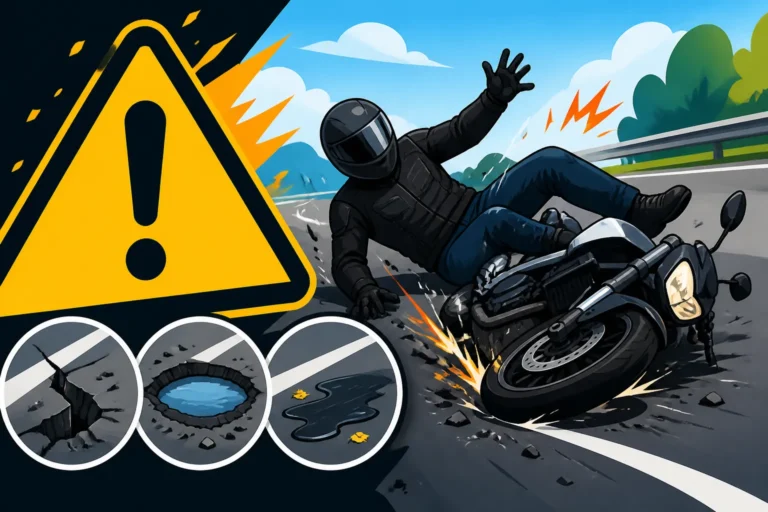
Who Is Liable for a Pothole Motorcycle Accident
Riding a motorcycle offers unparalleled freedom, but it also means being acutely aware of every ripple and crack in the road. There’s almost nothing more frustrating, or terrifying, than hitting a hidden pothole that sends you sprawling, especially when you know it could have been prevented. This guide is here to shed light on exactly who might be held responsible when a poorly maintained road leads to a devastating motorcycle accident, helping you understand your rights and the complexities involved.
The Hidden Danger of Potholes for Riders
For those of us on two wheels, a seemingly minor dip or crack in the pavement can quickly escalate into a life-threatening hazard. While a car might absorb a pothole with a jolt, a motorcycle reacts entirely differently, often with far more severe consequences. It’s a reality many drivers in larger vehicles simply don't grasp, making our frustration even greater when we’re left picking up the pieces.
Why Potholes Are More Dangerous for Motorcycles
Motorcycles, by their very design, are inherently less stable than four-wheeled vehicles. Our contact patch with the road is significantly smaller, and our balance is constantly being adjusted. When a wheel drops into a pothole, especially unexpectedly, it can instantly upset that delicate balance. The front wheel can get trapped, the suspension can bottom out violently, or the sudden jolt can throw the rider off course or even off the bike entirely. Imagine hitting a deep pothole while leaned into a curve – the results can be catastrophic, leading to a loss of control, a sudden crash, and often severe injuries like road rash, broken bones, or even traumatic brain injuries. It's not just about the impact; it's about the immediate and drastic change in the bike's dynamics that can overwhelm even the most experienced rider.
Unlike a car that has four points of contact and often heavier suspension to absorb the shock, a motorcycle rider feels the full force of the impact directly. This can lead to the front wheel "washing out," a tire losing air, or a rim bending, all of which contribute to an immediate and dangerous instability. This unique vulnerability is precisely why who is at fault in a motorcycle accident involving a road hazard can be such a critical and complex question.
Identifying What Constitutes a "Pothole" for Liability
When we talk about potholes, it’s easy to picture a small, circular divot. However, in the context of liability, the term "pothole" can encompass a much broader range of road defects. It's not just about the size of a crater; it's about any significant structural degradation of the road surface that poses an unreasonable risk to motorists, particularly motorcyclists. This can include large sections of crumbling asphalt, deep cracks that run across lanes, significant depressions in the road, or even raised sections of pavement where repairs have failed.
For instance, a section of road near an old industrial park might have continuous stretches of badly deteriorated pavement, not just isolated holes. Or perhaps a utility company performed work and the trench was improperly filled, leading to a long, uneven depression that acts like a continuous hazard. These are all variations of road hazards that can lead to a motorcycle accident. The key is that these are not minor imperfections that can be easily avoided; they are defects that compromise the safety of the roadway itself and could have been reasonably addressed by those responsible for maintenance. Understanding these broader definitions is crucial when gathering Motorcycle Accident Evidence for Proving Fault.
Understanding Government Liability for Road Hazards
The vast majority of roads we ride on are maintained by some level of government – federal, state, county, or municipal. This means that when a pothole causes an accident, one of these entities is often the first place to look for accountability. However, pursuing a claim against a government entity is usually a much different beast than dealing with a private individual or company, largely due to unique legal protections afforded to government bodies.
The Duty of Care for Government Entities
Generally speaking, governmental entities have a responsibility, or "duty of care," to maintain their roadways in a reasonably safe condition for public travel. This isn't an absolute guarantee against any imperfection, but it does mean they're expected to fix known hazards and conduct regular inspections and maintenance. In many states, this duty falls to departments like the state Department of Transportation (DOT), county public works departments, or city street maintenance crews. Their job is to ensure that the infrastructure we rely on daily doesn't become a deathtrap.
This duty of care often arises from statutes or common law, establishing that once a government entity undertakes to maintain a road, it must do so without creating unreasonably dangerous conditions or allowing known dangerous conditions to persist. If a major highway has a series of crumbling sections, for example, the state DOT in charge of that highway has a clear duty to address those issues. Similarly, a city responsible for its streets must respond to reports of significant potholes within a reasonable timeframe. It’s about reasonable care, not perfection, but "reasonable" can be a high bar when lives are at stake.
Proving Government Negligence: Notice is Key
Here’s where it gets tricky, and frankly, quite frustrating for injured riders. To hold a government entity liable for a pothole, you typically need to prove more than just the existence of the hazard. You usually need to prove that the government entity had "notice" of the dangerous condition. This is often the biggest hurdle to overcome.
There are two main types of notice:
- Actual Notice: This means the government body actually knew about the pothole. This could be proven if someone, like another concerned citizen or even one of their own employees, reported the pothole directly to the relevant department (e.g., calling the city's 311 service, filing an online report, or a maintenance crew noting it in a log). If you can show a documented report or work order related to that specific pothole before your accident, you're on much stronger ground.
- Constructive Notice: This means the government should have known about the pothole, even if no one formally reported it. This is harder to prove. It typically requires demonstrating that the pothole existed for such a length of time, or was so obvious and prominent, that a reasonable maintenance agency performing regular inspections would have discovered it. For example, if a giant, months-old crater in a heavily trafficked area caused your crash, you might argue constructive notice. Evidence here could include previous complaints from other citizens, news reports, or even expert testimony about standard road inspection schedules and how long such a defect would reasonably persist.
Many government entities are protected by "sovereign immunity" laws, which shield them from certain lawsuits unless specific conditions are met, such as the notice requirement. This means they are not treated like typical defendants in a personal injury case, making your claim inherently more challenging. This is a critical point when evaluating how fault is determined in motorcycle accidents.
The Specifics of Filing a Claim Against a Government Entity
Because of sovereign immunity, filing a claim against a government entity for a pothole motorcycle accident is highly specialized and subject to strict procedural rules and deadlines. You can’t just file a standard lawsuit right away; you typically must first file a formal "notice of claim" or "administrative claim."
Here's what makes this process unique:
- Short Deadlines: These deadlines are often much shorter than the standard statute of limitations for personal injury cases. For instance, in California, you generally only have six months from the date of the injury to file a claim against a public entity. Missing this deadline, even by a day, can permanently bar you from seeking compensation, regardless of the merits of your case. Other states have similar, unforgiving timelines. This is why quick action and knowing what to do immediately after a motorcycle accident are paramount.
- Specific Format and Content: The notice of claim usually needs to be in a very specific format and include detailed information about the accident, your injuries, and the amount of damages you are claiming. It's not a casual letter; it's a formal legal document.
- Governmental Response: Once filed, the government entity will review your claim. They might approve it (unlikely), deny it, or fail to respond within a certain period, which is often considered a denial. Only after a denial, or the expiration of the response period, can you typically proceed with filing a formal lawsuit in court.
Navigating these intricacies makes seeking professional legal advice almost essential. A lawyer experienced in suing a city for a dangerous road can help ensure you meet all deadlines and requirements, giving your claim the best possible chance.
Other Potential Liable Parties
While government entities are often the primary suspects when it comes to road hazards like potholes, they aren't always the only party that could be held responsible. Depending on the specific circumstances of your motorcycle accident, other individuals or companies might share or even bear full liability.
Construction Companies and Contractors
Sometimes, the dangerous pothole or road defect isn't just a result of general wear and tear or neglected maintenance; it's a direct consequence of recent roadwork. This is where private construction companies and contractors come into play. If a construction company was contracted by the city or state to perform repairs, resurfacing, or utility work, and their negligence leads to a road hazard, they could be held liable.
Consider a scenario where a utility company digs a trench to lay new pipes, and the road contractor they hire improperly backfills the trench. Over time, the unstable fill material settles, creating a significant depression or crumbling section of road – essentially, a man-made pothole. Or perhaps a construction crew leaves debris, tools, or improperly secured materials on the roadway after a shift, which then contributes to a hazard. In these cases, the private contractor has a duty to perform their work safely and ensure the road is left in a safe condition. Their failure to do so could make them liable for your injuries. Often, the contract between the government entity and the private company will outline these responsibilities, and examining these documents can be key to proving liability. This forms part of the broader discussion of Motorcycle Accident Liability: A Complete Guide.
Private Property Owners
Not all roads are public. Potholes can also exist on privately owned property, such as shopping mall parking lots, private access roads for businesses, or within gated communities or apartment complexes. In these situations, the liability shifts from a government entity to the private property owner or manager.
Private property owners have a legal obligation to maintain their premises, including any roads or parking areas, in a reasonably safe condition for visitors, known as "invitees." This means they must regularly inspect their property for hazards, fix any known issues within a reasonable timeframe, and warn visitors of dangers that cannot be immediately repaired. If you hit a huge pothole in a supermarket parking lot in Phoenix, Arizona, and suffer injuries, the owner of that supermarket or the property management company could be held responsible if they knew or should have known about the hazard and failed to address it. The legal principles here are similar to those in general premises liability cases, focusing on the owner's knowledge and action (or inaction) regarding the dangerous condition.
What to Do After a Pothole Motorcycle Accident
A motorcycle accident, especially one caused by a sudden, unexpected pothole, can be disorienting and terrifying. Your immediate priority is always your safety and health. However, what you do in the moments and days following the crash is absolutely critical for any potential injury claim. Gathering evidence and understanding your legal position can make all the difference in holding the responsible party accountable.
Documenting the Scene and the Pothole
Even in the chaos and pain, if you are able, documenting the scene is paramount. This isn't just about your bike; it's specifically about that hazardous pothole.
- Photos and Videos are Gold: Use your smartphone to take as many pictures and videos as possible. Focus on the pothole itself from multiple angles.
- Scale: Place an object next to or inside the pothole for scale – a shoe, a helmet, a water bottle, or even a measuring tape if you have one. This helps illustrate its true size and depth.
- Location: Take photos that show the pothole's location in relation to landmarks, intersections, or street signs. Capture wide shots and close-ups.
- Damage: Document any damage to your motorcycle and your gear that clearly resulted from the impact with the pothole.
- Road Conditions: Photograph the overall road conditions, weather, and lighting at the time of the crash.
- Witness Information: If anyone saw you crash, get their names and contact information. Their testimony can be invaluable, especially in corroborating the existence and nature of the pothole.
- Police Report: Even if no other vehicle was involved, call the police. A police report, while not always conclusive on fault, will officially document the accident, the location, and potentially the presence of the pothole. This can be crucial for an injury claim. How Police Reports Establish Fault
Collecting this detailed evidence right after the crash is one of the most effective ways to How to Document the Scene to Prove Fault and counter any claims that the pothole wasn't significant or didn't exist.
Seeking Medical Attention and Preserving Evidence
Your health is the top priority. Even if you feel shaken but not seriously injured, seek medical attention immediately. Adrenaline can mask pain, and some injuries, like concussions or internal bruising, might not be apparent right away.
- Medical Evaluation: Go to an urgent care center or emergency room as soon as possible. A medical professional can properly assess your injuries and create official medical records. Gaps in medical treatment can be used by insurance companies to argue that your injuries weren't serious or weren't caused by the accident.
- Keep Everything: Hold onto all medical records, bills, receipts for prescriptions, and any other expenses related to your injuries. This documentation will be vital for calculating your economic damages.
- Preserve Damaged Gear and Motorcycle: Do not throw away your damaged helmet, jacket, pants, or any other gear. These items can serve as powerful physical evidence, showing the force of impact and how they protected you (or failed to). Similarly, do not have your motorcycle immediately repaired or salvaged without proper documentation and assessment of the damage. Photographs of the damaged bike and repair estimates are crucial.
Understanding Shared Fault and Comparative Negligence
Even if a hazardous pothole was the primary cause of your motorcycle accident, insurance companies or government entities will often try to argue that you, the rider, bear some responsibility for the crash. This concept is known as shared fault or comparative negligence.
Most states follow some form of comparative negligence. This means that if you are found to be partially at fault, your recoverable damages will be reduced by your percentage of fault. For example, if your total damages are $100,000, but a jury finds you 20% at fault for riding too fast for the conditions or not paying close enough attention, your compensation could be reduced to $80,000.
Common arguments insurance adjusters might use to assign partial fault to a rider in a pothole accident include:
- Speeding: Alleging you were exceeding the speed limit or going too fast for the road conditions.
- Inattentive Riding: Claiming you weren't paying proper attention to the road or had ample opportunity to see and avoid the pothole.
- Improper Lane Position: Arguing you were in a lane position that made it harder to react to hazards.
- Lack of Control: Suggesting that even if the pothole was there, a more skilled or attentive rider would not have lost control.
It’s disheartening, but it’s a tactic. That's why understanding how fault is determined in motorcycle accidents, especially when the roadway itself is defective, is so important. Your ability to recover for your injuries, including how injury severity affects compensation, will depend heavily on effectively countering these arguments and proving the primary fault lies with the entity responsible for the road.
| Liable Party Type | Key Challenge in Proving Liability | Essential Evidence Needed |
|---|---|---|
| Government Entity | Proving "Notice" (actual or constructive) of the hazard. | Photos/videos of pothole, date-stamped reports to authorities, witness statements, expert testimony on inspection standards. |
| Construction Company | Proving their work created or contributed to the hazard. | Construction contracts, work orders, photos/videos of work site, expert opinion on construction practices. |
| Private Property Owner | Proving they knew or should have known about the hazard on their property. | Photos/videos of pothole on private property, past complaints to management, maintenance logs, witness statements. |
Conclusion
Navigating the aftermath of a motorcycle accident, particularly one caused by a treacherous pothole, is incredibly challenging. It's not just about the physical pain and the repair bills; it's about the deep frustration of knowing your crash could have been prevented if those responsible had simply maintained the roads we all share. Remember, you don't have to face this complex legal battle alone. Understanding the nuances of governmental immunity, notice requirements, and the various parties who might be liable is essential. Documenting everything, seeking medical care, and acting swiftly are your best defenses against powerful entities that often try to minimize their responsibility.
Disclaimer
Please note that this article provides general informational guidance and is not intended as legal advice. Laws regarding motorcycle accident liability, government claims, and personal injury vary significantly by state and jurisdiction. It is crucial to consult with a qualified attorney in your area for advice tailored to your specific situation.