Motorcycle Helmet Law in Florida
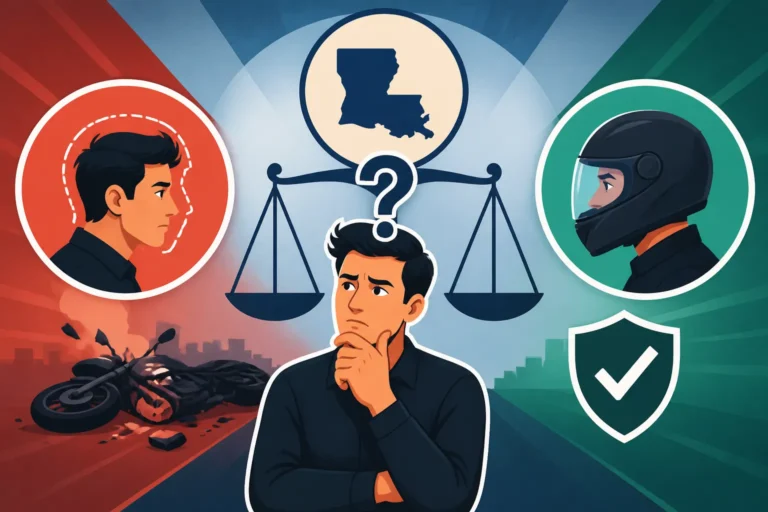
Riding the open roads of Florida on two wheels is a dream for many, but the Sunshine State's motorcycle helmet law often leaves riders scratching their heads. It's not a straightforward "wear it or don't" situation, and this ambiguity can lead to serious consequences, not just legally but financially after an accident. This comprehensive guide will demystify Florida's specific helmet regulations, clarify the crucial insurance requirements, and explain precisely how your helmet choice can impact a motorcycle accident claim in the event of a crash.
Deciphering Florida's Unique Motorcycle Helmet Law
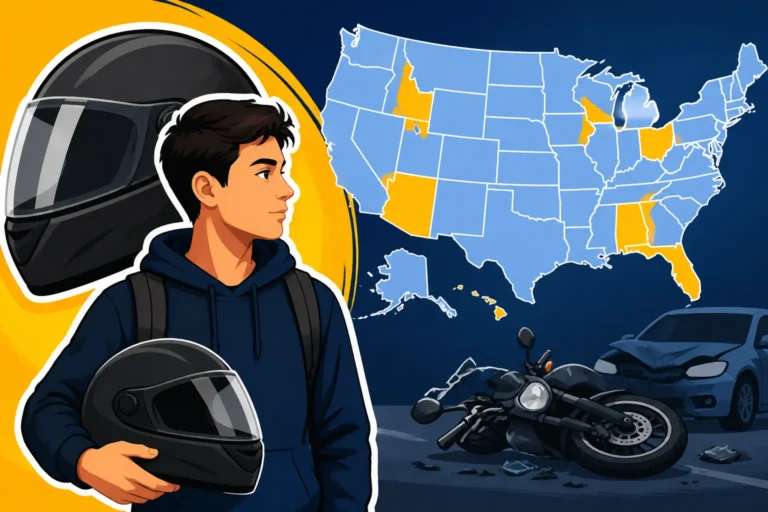
When you hear about helmet laws, you usually think of "universal" laws where everyone has to wear one, or "partial" laws where only young riders do. Florida, however, carves its own path, creating a system that’s a little more nuanced and, frankly, a bit confusing if you don't know the specifics. It's not as simple as asking "Is Lane Splitting Legal in California?" because helmet laws have a different kind of personal impact. The core of Florida's law allows some adult riders to forgo a helmet under certain conditions, which makes understanding it absolutely vital for every rider on Florida's roads.
The 21+ Age Exemption and Essential Insurance Coverage
Florida Statute 316.211 is the governing law, and it's where all the details lie. Unlike states with strict universal helmet laws, Florida offers an exemption for riders over a specific age. If you are 21 years old or older, you can legally ride a motorcycle without a helmet. Sounds great, right? But hold your horses, because there's a significant catch – and it’s one that many riders either misunderstand or overlook entirely.
To qualify for this helmet exemption, you absolutely must be covered by an insurance policy that provides at least $10,000 in medical benefits for injuries you might sustain in a motorcycle accident. This isn't just basic liability insurance; it's a specific personal injury protection (PIP) or medical payment coverage designed to ensure that if you crash and injure yourself while unhelmeted, there's some financial safety net for your medical bills. This requirement is in place because without a helmet, the risk of severe head injuries dramatically increases, and the state wants to ensure those costs aren't left entirely to public resources or your personal bankruptcy. So, while it's often categorized broadly under "partial helmet laws," Florida's law adds that critical insurance caveat that sets it apart.
Mandatory Helmet Use and the Rationale Behind It
For a large segment of Florida's riding population, helmets are not optional. If you are under 21 years of age, regardless of your insurance coverage, you are legally required to wear a DOT-compliant helmet at all times when operating or riding as a passenger on a motorcycle. There are no exceptions for younger riders. This aligns with safety recommendations and statistics, which consistently show that younger, less experienced riders are at a higher risk of severe injury or fatality in crashes.
Additionally, any rider aged 21 or older who does not carry the mandated $10,000 in medical benefits insurance coverage is also legally required to wear a helmet. This is a critical point that often trips people up. Just being over 21 isn't enough; you must have that specific insurance. The rationale is quite clear: if you choose to ride without a helmet and the increased protection it offers, the state insists that you have the financial means to cover the potentially devastating medical costs that could arise from a head injury. It's a pragmatic approach to public safety and healthcare economics. Understanding these nuances is crucial for staying on the right side of the law and, more importantly, protecting yourself. You can learn more about specific regulations in our guide to Motorcycle Helmet Laws by State.
The Critical Role of Insurance: Financial Responsibility
Let's be brutally honest: motorcycle accidents happen. And when they do, especially in Florida where helmets aren't always mandatory for adults, your insurance coverage transforms from a legal formality into your financial lifeline. That $10,000 medical benefits requirement for helmet-exempt riders isn't just a number; it's a foundational element of your financial responsibility on the road.
What the $10,000 Coverage Really Entails
This isn't your average liability coverage that pays for damages you cause to other people or their property. The $10,000 medical benefits coverage specifically applies to your injuries, regardless of who is at fault in a crash. It acts as a primary source of funds for immediate medical expenses, ambulance rides, emergency room visits, and potentially initial hospital stays. This specific coverage helps to ensure that if an adult rider chooses to ride without a helmet and sustains a head injury, there's at least a baseline of funds available to cover those initial, often astronomical, medical bills.
It's important to dig into your insurance policy and speak with your agent to confirm you have this specific coverage. Some standard motorcycle insurance policies might include Medical Payments (MedPay) coverage or Personal Injury Protection (PIP), but the details matter. You need to verify that it meets Florida's statutory requirement of $10,000 in medical benefits. Don't assume. Many riders find out too late, after an accident, that their policy didn't quite cover them in the way they thought it did, leaving them vulnerable to both legal penalties and devastating medical debt.
Consequences of Non-Compliance on the Road and After a Crash
Ignoring Florida's helmet law can lead to immediate legal trouble. If you're pulled over and found to be riding without a helmet when required (either because you're under 21 or over 21 but lack the $10,000 medical benefits coverage), you could face a citation, fines, and potentially points on your driving record. It’s a traffic violation, pure and simple.
However, the consequences become far more severe if you're involved in an actual motorcycle accident.
| Rider Age | Helmet Required? | Insurance Required? | Potential Post-Crash Impact (if unhelmeted) |
|---|---|---|---|
| Under 21 | Yes | N/A | Legal penalties, "helmet defense" on claim |
| 21+ | No (if insured) | Yes ($10k Med Benefits) | Claim impact may be reduced if compliant |
| 21+ | Yes (if uninsured) | No | Legal penalties, "helmet defense" on claim |
If you crash while unhelmeted and should have been wearing one due to your age or lack of insurance, you’re not only dealing with potential injuries but also with the legal ramifications of violating the law. This can complicate any personal injury claim you might pursue. Insurance adjusters and opposing legal teams will jump on any opportunity to reduce their payout, and violating a safety law, even if it wasn't the cause of the accident, can be used to argue that your injuries were made worse by your own actions. This brings us directly to the "helmet defense," a formidable obstacle in many motorcycle accident claims in Florida.
How Helmet Use Impacts Your Accident Claim in Florida
Beyond the immediate safety concerns and legal requirements, your decision regarding helmet use in Florida has profound implications for any personal injury claim you might need to pursue after a motorcycle accident. This is where the intricacies of Florida's law truly intersect with the often harsh realities of the legal system. Insurance companies are not your friends in these situations, and they will scrutinize every detail to minimize their payout.
The "Helmet Defense" and Comparative Negligence
Even if the other driver was clearly at fault, failing to wear a helmet when you should have – or even when you legally didn't have to – can be used against you. This is known as the "helmet defense." Essentially, the opposing party (usually the at-fault driver's insurance company) will argue that your head injuries, or the severity of those injuries, would have been significantly reduced or entirely prevented if you had been wearing a DOT-compliant helmet.
Florida operates under a "pure comparative negligence" system. This means that if you are found partially at fault for an accident, your total compensation for damages will be reduced by your percentage of fault. For example, if you sustain $100,000 in damages but are found 20% at fault, your recovery would be reduced to $80,000. The helmet defense fits into this because it doesn't necessarily argue you caused the accident, but rather that you contributed to the severity of your own injuries. If the defense successfully argues that your unhelmeted status was, say, 30% responsible for the extent of your head trauma, then your compensation for those specific head injuries could be reduced by that 30%, even if the other driver was 100% at fault for the crash itself. This is a critical point that can significantly reduce your payout. You can learn more about how this system works in our guide on How Comparative Negligence Reduces Your Payout.
This defense isn't limited to head injuries either. While less common, an aggressive defense might try to link other injuries, like road rash or facial trauma, to a lack of protective gear, extending the argument beyond just the helmet. This is why understanding Motorcycle Helmet Laws by State and their specific implications is so vital.
Documenting Helmet Use and Mitigating Damages
If you're involved in an accident, proving you were compliant with the helmet law or, even better, actively mitigating your potential injuries, becomes paramount.
- If you wore a helmet: Document it immediately. Take photos of your helmet, especially any damage it sustained, at the scene of the accident. This damage can be crucial evidence in demonstrating the impact force and how your helmet protected you. Your damaged helmet becomes a piece of evidence. Keep it. Don't throw it away. Our article on How to Prove You Wore a Helmet provides excellent tips on this.
- If you were over 21 and unhelmeted: Be prepared to prove you had the $10,000 medical benefits insurance at the time of the crash. Having proof readily available can help fend off an immediate "helmet defense" attack, though the defense may still argue your injuries would have been less severe even with the coverage.
- The Quality of Your Helmet Matters: Simply wearing "a helmet" isn't always enough. Insurance companies and defense attorneys will often scrutinize the type of helmet you were wearing. A cheap novelty helmet, which offers minimal protection, might be argued as nearly equivalent to wearing no helmet at all, even if it's technically on your head. This is why understanding DOT Helmet Requirements Explained is crucial. A DOT-compliant helmet, especially a full-face one, offers the best protection and strengthens your position against the "helmet defense." You can read more about this in Novelty Helmets and Legal Risk.
In essence, whether you're required to wear a helmet or choose to exercise your exemption, the choices you make before and immediately after an accident will significantly shape the trajectory and potential outcome of your claim.
Choosing the Right Gear and Staying Safe in Florida
Let's cut to the chase: while Florida's helmet law offers certain exemptions, safety should always be your top priority. The law is the minimum standard, not the optimal one. No one wants to be caught in a situation where they're battling for compensation while also recovering from severe injuries that could have been prevented. That's why smart gear choices and proactive safety measures are non-negotiable for any Florida rider.
Beyond the Law: Why Full Gear is Always Best
Even if you're over 21 and have the required $10,000 medical benefits insurance, choosing to ride without a helmet exposes you to significantly higher risks of traumatic brain injury (TBI), facial fractures, and other severe head trauma in a crash. It's a risk that many seasoned riders simply aren't willing to take, regardless of the law. A TBI can permanently alter your life, affecting everything from cognitive function to personality, and no amount of insurance money can truly compensate for that loss.
This isn't just about helmets, either. "All the gear, all the time" (ATGATT) is a mantra for a reason. Investing in quality protective gear, including a full-face helmet, a durable motorcycle jacket, riding pants, gloves, and sturdy boots, provides a comprehensive layer of protection. This gear acts as a second skin, designed to absorb impact, resist abrasion (hello, road rash!), and keep you as intact as possible if you go down. Reputable stores like Cycle Gear offer a wide selection of DOT-approved helmets and other essential riding apparel, ensuring you don't have to compromise on safety or quality.
Consider the benefits:
- Helmets: Full-face helmets offer the most comprehensive protection for your head and face, guarding against impacts, abrasions, and even airborne debris. Modular helmets also offer good protection with the convenience of an open face.
- Jackets & Pants: Made from leather or abrasion-resistant textiles, these protect against road rash, impacts, and weather. Brands often incorporate CE-rated armor in critical areas like elbows, shoulders, and knees.
- Gloves: Protect your hands, which are often the first point of contact in a fall.
- Boots: Protect ankles and feet from crushing injuries and abrasions.
Wearing full gear not only significantly reduces the severity of your injuries but can also bolster your position in an accident claim by demonstrating that you took reasonable steps to protect yourself. Our guide on Motorcycle Safety Gear and Legal Protection offers more insights into this.
Proactive Steps for Florida Riders
Being a responsible and safe rider in Florida involves more than just knowing the helmet law; it’s about making smart, proactive choices every time you throw a leg over your bike.
- Review Your Insurance Annually: Don't just set it and forget it. Periodically review your motorcycle insurance policy with your agent to ensure you have the appropriate coverage, especially the $10,000 medical benefits if you choose to ride without a helmet. Underinsurance can be a huge issue after a crash.
- Invest in Quality, DOT-Approved Helmets: Even if not legally required, a high-quality, DOT-certified full-face helmet is the single best investment you can make for your safety. When shopping, look for the DOT sticker and consider helmets that also meet Snell or ECE safety standards for even greater protection. You can find excellent options at stores like Cycle Gear.
- Wear Full Protective Gear: Make ATGATT your default. You never know when an accident might happen, and your gear is your last line of defense. The more protected you are, the less severe your injuries are likely to be, which translates to a quicker recovery and a stronger legal position if you need to file a claim.
- Continuous Rider Training: Even experienced riders can benefit from advanced riding courses. These courses hone your skills, improve your hazard perception, and teach you evasive maneuvers that could prevent an accident entirely. The better rider you are, the less likely you are to be involved in a crash, and if you are, the better equipped you'll be to handle it.
- Document Everything After a Crash: If the unthinkable happens, remember to document the scene thoroughly, including photos of your gear, your injuries, and the accident scene. This evidence is invaluable for proving fault in a motorcycle accident and supporting your claim. You should also know What to Do After a Motorcycle Accident to protect your rights.
Riding in Florida is an incredible experience, but it comes with unique legal responsibilities, particularly regarding helmet use and insurance. By fully understanding and adhering to these laws, and by always prioritizing safety with comprehensive gear, you can better protect yourself both on the road and in the challenging aftermath of an accident.
Disclaimer
The information provided in this article is intended for general informational purposes only and does not constitute legal advice. Motorcycle laws, including helmet and insurance requirements, can be complex and are subject to change. It is crucial to consult with a qualified legal professional for advice regarding your specific situation and to verify current laws and regulations in Florida or any other state.