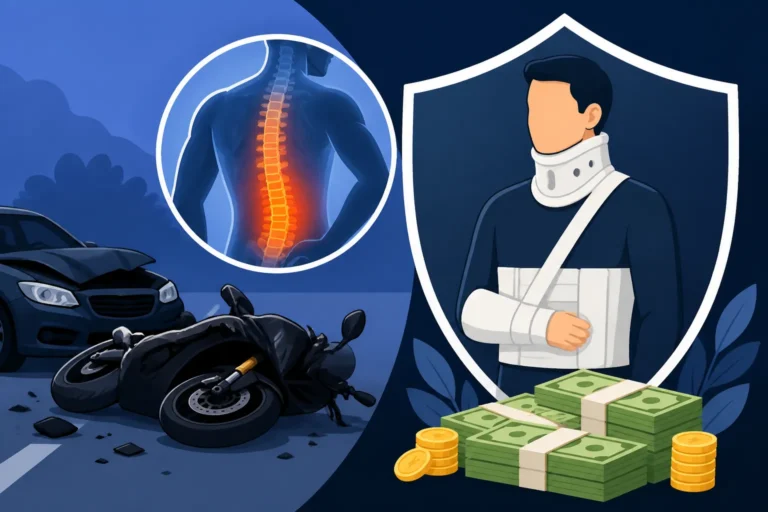
Lump-Sum vs Structured Settlements
After a motorcycle accident, dealing with your injuries, recovery, and the sheer disruption to your life is overwhelming. When a settlement is finally on the horizon, many riders face yet another critical decision: how to receive their compensation. This guide will meticulously break down the options of a lump-sum versus a structured settlement, helping you understand which path might be best for your unique situation as you navigate the complexities of financial recovery.
Understanding Lump-Sum Settlements
A lump-sum settlement is exactly what it sounds like: a single, large payment that covers all your damages from a motorcycle accident. Once you accept this payment, the case is officially closed, and you receive the entire agreed-upon amount at once. For many, this offers a sense of finality and immediate control over their future, especially after a long and arduous legal battle.
Immediate Access to Funds
One of the most compelling aspects of a lump-sum settlement is the immediate access it provides to a substantial amount of money. Imagine you've been out of work for months due to a serious spinal injury after a rear-end collision on I-95, and the medical bills are piling up. Receiving a single large payment can offer instant relief, allowing you to pay off outstanding medical debts, replace your damaged motorcycle, cover living expenses, and perhaps even invest in necessary home modifications without delay. This financial liquidity can be incredibly reassuring, especially when you're staring down significant short-term needs.
However, with this immediate access comes the immense responsibility of managing those funds wisely. There's no ongoing oversight from the insurance company or court once the check clears. This means every decision about spending, saving, and investing rests squarely on your shoulders. It's not uncommon for individuals, particularly those unaccustomed to managing large sums, to find themselves in a difficult position down the road if the money isn't managed effectively.
Complete Financial Control
With a lump-sum payout, you gain complete autonomy over your settlement money. This means you can decide how to allocate every dollar without external restrictions. Perhaps you want to pay off your mortgage, start a new business venture that accommodates your post-injury limitations, or create an emergency fund for unexpected future medical needs. The freedom to direct your funds as you see fit can be incredibly empowering, especially for riders who value independence.
This level of control also extends to investment opportunities. If you have financial literacy or access to trusted financial advisors, a lump sum allows you to invest the money according to your risk tolerance and financial goals, potentially growing your wealth over time. You might explore real estate, a diversified stock portfolio, or other investment vehicles. However, the flip side is that you also bear all the investment risk. Market fluctuations, poor investment choices, or even predatory financial advice could significantly diminish your settlement over time, leaving you vulnerable later. Understanding How Motorcycle Accident Settlements Are Calculated might give you an idea of the total amount you could be dealing with.
Potential Tax Implications
While personal injury settlements for physical injuries and medical expenses are generally not taxable under federal law, certain parts of a lump-sum settlement can be. For instance, any portion allocated to lost wages or punitive damages might be subject to income tax. If your settlement includes significant compensation for emotional distress not directly linked to a physical injury, that portion could also be taxable.
Navigating these tax complexities requires careful planning. It's crucial to consult with a tax professional who understands personal injury settlements before accepting any offer. They can help you structure the settlement language, where possible, to minimize your tax liability. Failing to account for taxes could mean that the net amount you receive is significantly less than you anticipated, leading to unpleasant surprises come tax season.
Understanding Structured Settlements
A structured settlement is an arrangement where, instead of a single payment, you receive your compensation through a series of periodic payments over an agreed-upon period. These payments can be for a fixed number of years, for your lifetime, or even for the lifetime of another beneficiary. They are typically funded through an annuity purchased by the insurance company, guaranteeing a steady income stream.
Guaranteed Future Income Through Annuities
The cornerstone of a structured settlement is the annuity, a financial product that provides a series of payments over time. Once the settlement agreement is finalized, the insurance company or defendant purchases an annuity from a life insurance company. This annuity then makes regular payments directly to you, the injured party. This setup creates a predictable and reliable income stream, which can be a huge comfort, particularly for those facing long-term medical needs or permanent disabilities.
For example, if you sustained a severe brain injury in a crash caused by a distracted driver, a structured settlement could ensure you receive funds every month or year for the rest of your life, covering ongoing medical care, living expenses, and other necessities. This removes the burden of managing a large sum of money and the fear of it running out prematurely. The payments are typically tax-free, including the interest earned on the annuity, making them a highly attractive option from a tax perspective.
Long-Term Financial Security
One of the primary benefits of a structured settlement is the long-term financial security it offers. Instead of worrying about managing a large sum, investing it wisely, and making it last for decades, a structured settlement essentially provides a financial "safety net." This can be particularly beneficial for individuals who have suffered catastrophic injuries, such as a spinal cord injury, which may require lifelong care, ongoing therapy, and adaptive equipment.
The predictability of regular payments can help you budget more effectively and reduces the temptation to overspend. It protects you from the risks of investment losses or poor financial decisions. This security allows you to focus on your recovery and rehabilitation without the added stress of financial management. It also provides peace of mind, knowing that funds will be there for your future needs, regardless of market downturns or personal financial missteps. For more on estimating long-term costs, see how Future Medical Costs Are Estimated.
Limited Flexibility
While structured settlements offer security, they also come with a significant trade-off: limited flexibility. Once the annuity is established, the payment schedule and amounts are generally fixed. This means you cannot typically access a large sum of money for an unexpected expense or a new investment opportunity that might arise. If you need a sudden influx of cash for a major medical procedure not fully covered, or if you decide to buy a new home, you might find yourself without the immediate capital.
There are companies that offer to buy structured settlement payments for a lump sum, but these transactions often come with steep discounts, meaning you receive far less than the actual value of your future payments. This lack of liquidity can be a serious drawback for some individuals, especially those with dynamic financial needs or entrepreneurial ambitions. It's a commitment to a long-term plan, and deviating from it can be costly.
Key Differences and Considerations
Choosing between a lump-sum and a structured settlement is a deeply personal decision with far-reaching consequences. It’s not just about the money; it’s about your future lifestyle, your financial temperament, and the nature of your injuries and ongoing needs. There are several critical distinctions that you need to weigh carefully.
Payment Schedule and Access to Funds
The most obvious difference lies in when and how you receive your money. With a lump-sum settlement, you get all your money at once. This means immediate liquidity, enabling you to pay off debts, make large purchases, or invest as you see fit right away. For someone facing significant, immediate expenses like extensive home modifications or a business investment, this can be crucial. Imagine a rider who needs a wheelchair-accessible vehicle and immediate modifications to their home after a severe crash – a lump sum makes these large, upfront expenditures possible without waiting.
In contrast, a structured settlement provides payments over time. This can be monthly, quarterly, or annually, tailored to your specific needs. While you don't get immediate access to the full amount, you gain a predictable income stream, which can be a lifeline for ongoing living expenses, future medical treatments, or replacing lost income over many years. This scheduled payment can prevent hasty spending and ensures you have funds for the long haul.
Financial Management and Risk
With a lump sum, you become the sole manager of a potentially large sum of money. This means you are responsible for budgeting, investing, and ensuring the money lasts. If you're financially savvy or have excellent financial advisors, you might be able to grow your settlement through investments. However, you also bear all the risks associated with market fluctuations, inflation, and poor investment decisions. There’s also the psychological pressure of managing such a large sum and the potential for premature depletion if not handled prudently.
Structured settlements, on the other hand, shift the investment and management burden to the annuity provider. The payments are guaranteed, regardless of market performance, offering a high degree of security. This removes the stress of financial management from your shoulders, allowing you to focus on recovery. The downside is that you forgo the potential for higher returns that might be achieved through aggressive investment strategies, and you have no control over how the principal is invested by the annuity company.
Tax Implications and Legal Protections
As mentioned, portions of a lump-sum settlement, like lost wages or punitive damages, can be taxable. It requires careful planning with a tax professional to ensure you don't face unexpected tax burdens. Additionally, a lump sum, once in your bank account, can be exposed to creditors or become part of your estate if not managed properly.
Structured settlements offer distinct tax advantages: the periodic payments, including the interest growth on the annuity, are typically tax-free. This means you receive the full benefit of each payment without a portion being siphoned off by taxes. Furthermore, structured settlements can offer better protection from creditors in some states, as the funds are generally held by the annuity issuer rather than being directly in your possession. This can be a significant benefit for long-term asset protection. The Taxes on Motorcycle Accident Settlements article provides more detail on this often-overlooked aspect.
Here's a quick comparison table to help visualize these differences:
| Feature | Lump-Sum Settlement | Structured Settlement |
|---|---|---|
| Payment Schedule | Single, large payment upfront | Periodic payments over time (e.g., monthly, annually) |
| Access to Funds | Immediate and full access | Scheduled, limited access at any given time |
| Financial Control | Complete control over funds and investments | Limited control; managed by annuity provider |
| Investment Risk | All investment risk (market fluctuations, poor decisions) | No investment risk for the recipient; guaranteed payments |
| Taxation (for qualified physical injury claims) | May be partially taxable (e.g., lost wages, punitive damages) | Generally tax-free (including interest earned) |
| Flexibility | High; funds can be used for any purpose | Low; payment schedule is fixed |
| Creditor Protection | Generally less protected once funds are received | Often more protected from creditors |
| Budgeting | Requires strict personal budgeting to last | Built-in budgeting; steady income stream |
Pros and Cons of Each Option
Deciding on the best settlement option can feel like a high-stakes gamble. Both lump-sum and structured settlements have distinct advantages and disadvantages that can profoundly impact your life after a motorcycle accident. It's essential to consider these carefully, looking at both the immediate and long-term implications.
Advantages and Disadvantages of a Lump-Sum
The allure of a lump sum is undeniable for many. The biggest pro is the absolute freedom and control it provides. You can use the money to pay off all your debts immediately – credit cards, medical bills, mortgage – and start fresh. You could invest in a business, buy a new home, or set up a trust for your children. This immediate financial power allows you to make significant life changes without delay. For example, if your crash left you with a permanent disability, you might need to quickly adapt your living space or purchase specialized equipment, and a lump sum makes that possible. For a deeper dive into the overall value of your claim, read about the Average Motorcycle Accident Settlement Amounts.
However, the cons are equally significant. The most prominent risk is mismanagement. Without financial discipline or expert guidance, a large sum can quickly dwindle. We’ve all heard stories of lottery winners who ended up bankrupt; the same can happen with a settlement. There's also the risk of poor investment choices, where market downturns or ill-advised ventures can erode your principal. Another major drawback is the lack of protection from creditors or even persuasive family members. Once the money is in your account, it's fair game unless properly protected through legal means. Moreover, if your injuries require lifelong care, you face the constant stress of ensuring the money lasts without running out.
Advantages and Disadvantages of a Structured Settlement
The primary advantage of a structured settlement is the security and stability it offers. Knowing you'll receive regular, tax-free payments for years or even for life provides immense peace of mind. This predictability can be invaluable, especially if you're facing ongoing medical expenses, require long-term care, or have lost your ability to work. It prevents the rapid depletion of funds and insulates you from market volatility. This can be particularly beneficial if you've suffered Catastrophic Motorcycle Injuries Explained, where needs will undoubtedly extend for decades. It's a way to ensure your future needs are met, come what may.
On the flip side, the major disadvantage is the lack of flexibility. Once the annuity is set up, you generally cannot access the principal for emergencies or unexpected opportunities. This can be incredibly frustrating if you suddenly need a large sum for a critical, uncovered medical procedure or a sudden major home repair. While some secondary markets exist for selling structured settlement payments, they typically involve selling at a significant discount, meaning you lose a substantial portion of your settlement's value. Inflation is another consideration; while payments are often set to increase over time to account for inflation, if they are not, the purchasing power of your fixed payments could decrease over decades.
Factors Influencing Your Decision
The choice between a lump-sum and a structured settlement is highly personal and should be based on your unique circumstances. There isn't a one-size-fits-all answer, and what works perfectly for one rider might be disastrous for another.
Severity and Long-Term Impact of Injuries
The nature and severity of your injuries are paramount. If you've suffered relatively minor injuries, like a broken bone or road rash, with a clear recovery timeline and minimal long-term impact, a lump sum might be perfectly appropriate. You might need to cover immediate medical bills, lost wages, and property damage, and a single payout could easily handle these needs. However, if you're facing a Traumatic Brain Injury from a Motorcycle Accident or a Spinal Cord Injury, which will likely result in permanent disability, chronic pain, and a lifetime of medical care, a structured settlement often makes more sense.
Consider the Long-Term Effects of Motorcycle Injuries. Will you need ongoing physical therapy, adaptive equipment, specialized nursing care, or home modifications for the rest of your life? A structured settlement can provide a steady, reliable stream of income to cover these predictable, lifelong expenses, taking the immense financial burden off your shoulders. This ensures that essential care is never compromised due to dwindling funds.
Your Personal Financial Literacy and Discipline
Be honest with yourself about your ability to manage a large sum of money. Do you have a strong track record of budgeting, saving, and making sound investment decisions? Do you work with a trusted financial advisor? If you are financially astute and disciplined, a lump sum offers the potential to grow your wealth, invest strategically, and achieve specific financial goals. You might have a clear plan to pay off debt, invest in a diversified portfolio, or even start a new business tailored to your new reality.
However, if you're prone to impulse spending, lack financial management experience, or are easily swayed by get-rich-quick schemes, a lump sum could be depleted far faster than you anticipate. In such cases, a structured settlement acts as a protective mechanism, ensuring you have a consistent income without the temptation or pressure to manage a large capital sum. It’s about understanding your own financial personality and tendencies.
Age and Life Expectancy
Your age and estimated life expectancy play a significant role in this decision. For younger riders with severe, lifelong injuries, a structured settlement can provide financial security for decades, ensuring they don't outlive their settlement funds. An annuity can be tailored to provide payments for the remainder of their life, offering unparalleled peace of mind. This long-term horizon makes the guaranteed, tax-free payments incredibly valuable over a long lifespan.
Conversely, for older riders with a shorter life expectancy, a lump sum might be more appealing. They might prefer to receive the full amount to settle their affairs, pay off their mortgage, or leave a direct inheritance to beneficiaries, rather than have payments cease upon their death. While annuities can be structured with guaranteed periods to ensure payments continue to beneficiaries even if the primary recipient passes away prematurely, a lump sum provides immediate control over the entire principal for estate planning purposes.
Making the Right Choice for Your Future
Choosing between a lump-sum and a structured settlement is one of the most significant financial decisions you'll make after a motorcycle accident. It truly shapes your financial future and your ability to recover and rebuild your life. Don't rush into this decision; give it the serious thought it deserves.
Consulting with Financial Professionals
This is not a decision you should make in isolation. Seriously consider engaging a qualified financial advisor, especially one with experience in personal injury settlements. They can help you analyze your current financial situation, project your future needs (including medical costs, living expenses, and potential loss of earning capacity), and understand the long-term implications of each option. They can construct hypothetical scenarios to illustrate how a lump sum might be invested and sustained versus the guaranteed income of a structured settlement.
A good financial advisor can also help you understand the potential for growth with a lump sum, as well as the risks involved. They can also explain how the annuity payments of a structured settlement are calculated and if they include inflation adjustments. Remember, their expertise is invaluable in creating a robust financial plan tailored to your post-accident life.
Seeking Legal Counsel for Settlement Structuring
Beyond a financial advisor, it's absolutely crucial to have an experienced motorcycle accident lawyer on your side. Not only will they help you navigate the entire settlement process, from establishing fault in your motorcycle accident to negotiating with insurance companies, but they can also guide you on the best way to receive your compensation. They understand the legal nuances of settlement agreements and can ensure that the terms are favorable to you, regardless of whether you choose a lump sum or a structured settlement. For instance, they'll know about the distinctions between taxable and non-taxable portions and can help draft the settlement language accordingly.
Your lawyer can also discuss how your choice might impact government benefits you might be receiving or be eligible for, such as Medicaid or SSI. In some cases, a carefully structured settlement or the use of a special needs trust can protect your eligibility for these vital programs, which a direct lump sum might jeopardize. This is where truly specialized knowledge in Motorcycle Accident Settlement Process Explained becomes indispensable.
Considering Personal Circumstances and Goals
Ultimately, this decision comes down to your unique personal circumstances, comfort level with financial management, and long-term goals.
- For the financially cautious or those with extensive lifelong needs: A structured settlement often provides unparalleled peace of mind. The guaranteed, tax-free income stream ensures that you won't outlive your funds and can focus entirely on your recovery and well-being without the added stress of managing a large investment portfolio. If you foresee significant, consistent medical expenses or cannot work, the stability is a huge advantage.
- For the financially savvy and disciplined, or those with specific large upfront needs: A lump sum offers freedom and the potential for greater growth. If you have a clear plan for immediate debt repayment, large purchases, or feel confident in your ability to invest wisely (with or without professional help), the immediate access to capital can be empowering. It allows for flexibility to respond to unforeseen needs or capitalize on investment opportunities.
Talk it through with your loved ones, your legal team, and your financial advisor. Weigh the pros and cons against your personality, your needs, and your vision for your future. There's no right or wrong answer, only the best answer for you.
Disclaimer
Please remember that this article provides general informational guidance based on current understanding. It is not legal or financial advice. Every motorcycle accident claim is unique, and the laws and financial implications can vary significantly based on your specific circumstances and jurisdiction. We strongly advise you to consult with a qualified attorney and a financial advisor to discuss your individual situation and make informed decisions regarding your motorcycle accident settlement.