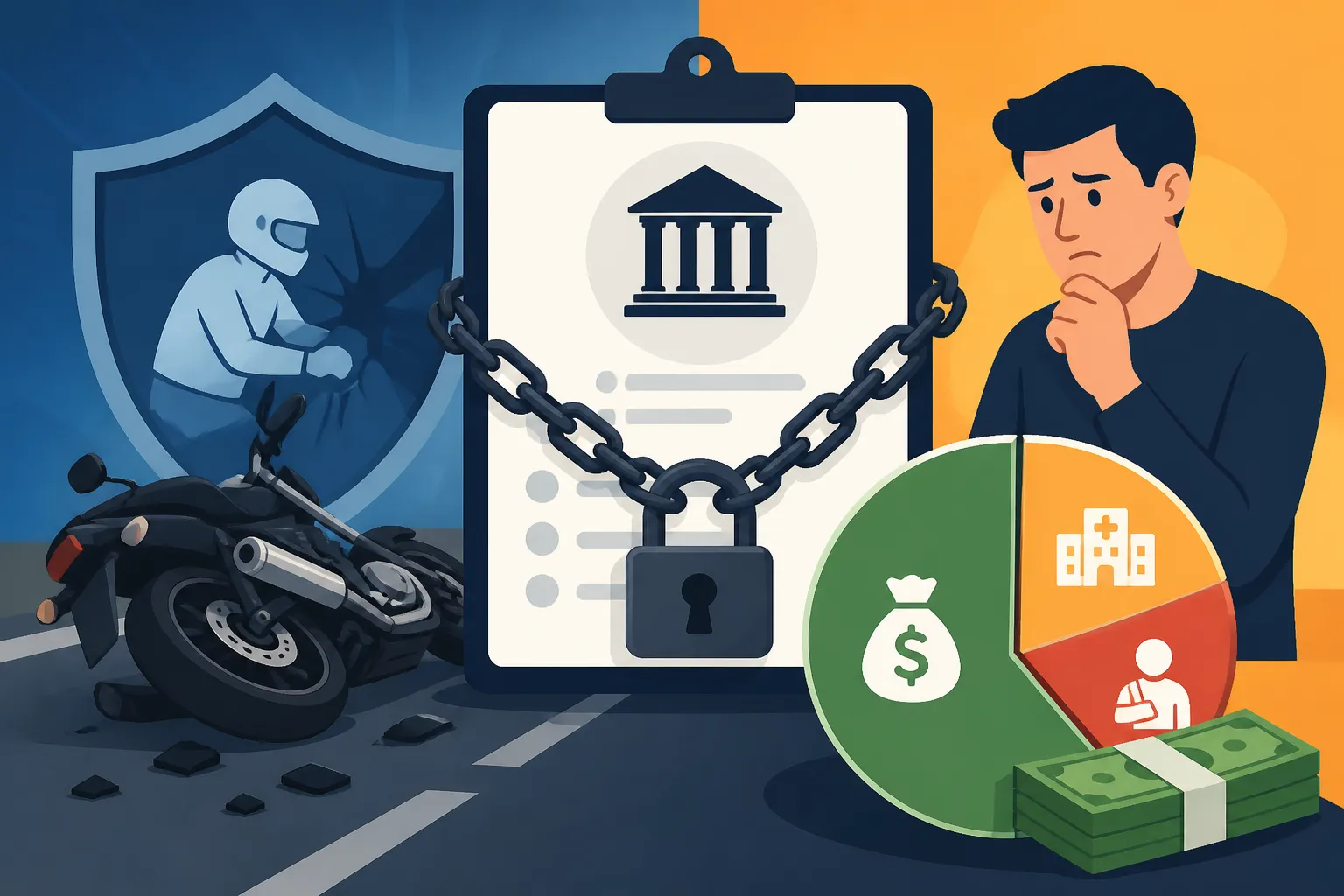
How Liens Affect Your Settlement
Riding a motorcycle offers unparalleled freedom, but the unfortunate reality is that accidents happen, often through no fault of our own. When you're recovering from injuries and trying to put your life back together, the last thing you want to worry about is understanding complex financial obligations that could eat into your much-needed settlement. It's frustrating to think you've secured a payout, only to realize a significant chunk might be earmarked for someone else. This comprehensive guide will explain exactly what liens are, how they work in the context of motorcycle accident claims, and what you can do to protect your financial recovery.
Understanding Liens in Personal Injury Claims
Imagine you've been in a motorcycle accident, perhaps a devastating Left-Turn Motorcycle Accidents Explained collision, and you're focusing on healing. You're incurring medical bills, missing work, and the stress is piling up. Eventually, a settlement is reached, offering a light at the end of the tunnel. But then, you hear about "liens" – a term that can make your heart sink, threatening to reduce the money you desperately need. It's a common and often unexpected hurdle for many accident victims, and understanding it is the first step in navigating this complex landscape.
What Exactly is a Lien
At its core, a lien is a legal right or claim against a property (or, in this case, your settlement proceeds) that is granted to another party until a debt or duty is satisfied. Think of it like this: if you owe someone money, they might have a legal right to get paid out of certain funds you receive. In the context of a motorcycle accident claim, these "someone elses" are often the healthcare providers, insurance companies, or even government entities that have provided services or payments related to your injuries before your settlement came through. It's their way of ensuring they get reimbursed for the resources they expended on your behalf.
For instance, if you went to an emergency room in Orange County, California, after a crash and didn't have upfront cash or insurance coverage immediately kicking in, the hospital might treat you based on a promise of payment later. That promise often takes the form of a lien against any future settlement you receive from the at-fault driver's insurance. It's a common practice that allows injured individuals to receive necessary care without immediate financial burden, but it comes with the understanding that those bills will eventually need to be paid when your case resolves.
Why Liens Are Common in Accident Cases
Liens are practically ubiquitous in personal injury cases, especially motorcycle accidents, due to the nature of how medical care and financial support are typically rendered after a traumatic event. When a rider is injured, immediate medical attention is paramount. Often, the injured party doesn't have the immediate funds or the ability to pay for extensive treatments, surgeries, or rehabilitation out of pocket. This is where various entities step in.
Hospitals, doctors, and other medical providers often treat patients on a "lien basis," meaning they agree to defer payment until the patient's personal injury claim settles. This arrangement is a lifeline for many, ensuring access to critical care regardless of current financial status. Similarly, health insurance companies, whether private plans like Blue Cross Blue Shield or government programs like Medicare and Medicaid, often pay for accident-related medical treatment upfront. However, their policies or federal law usually stipulate a "subrogation" clause, which is essentially another form of a lien. This clause grants them the right to seek reimbursement from any third-party settlement you receive, essentially saying, "We paid for your care, but if someone else is ultimately responsible, we want our money back." This system exists to prevent double recovery (where you'd get paid by both your insurer and the at-fault party) and to ensure that the responsible party ultimately bears the financial burden of the accident.
Common Types of Liens Affecting Motorcycle Accident Settlements
The world of liens can feel like a tangled web, with various entities all lining up to claim a piece of your hard-won settlement. Each type of lien has its own rules and implications, making it crucial to understand who might have a claim against your funds. It’s not just about what you paid out of pocket, but also what others paid on your behalf.
Medical Liens and Healthcare Providers
These are perhaps the most direct and frequently encountered liens. When you receive treatment from a hospital, emergency room, or a private doctor after a motorcycle crash, and your health insurance isn't covering it, or you don't have insurance, these providers might agree to treat you under a medical lien. This is often the case with specialized care like physical therapy, chiropractic treatment, or even surgical procedures. For example, if you shattered a bone in a crash and underwent surgery at a facility like Cedars-Sinai Medical Center in Los Angeles, they might place a lien on your eventual settlement for the cost of that surgery and associated hospital stays.
The provider essentially becomes a creditor, and the lien ensures they get paid directly from your settlement before you receive your portion. These liens can be incredibly helpful in allowing you to get immediate and necessary medical attention without upfront costs or credit concerns. However, it means those bills, which can easily run into the tens or even hundreds of thousands of dollars, will need to be satisfied from your settlement.
Health Insurance and ERISA Liens
If you have private health insurance, like through your employer or a plan you purchased, they likely paid for a good portion of your accident-related medical care. Most health insurance policies contain a subrogation clause, which gives the insurer the right to seek reimbursement for medical expenses they paid that were caused by a third party. This is not a lien in the traditional sense, but it acts very similarly – they have a claim on your settlement.
A particularly complex area here involves plans governed by the Employee Retirement Income Security Act (ERISA). ERISA plans are typically self-funded employer health plans, and federal law often gives them significant power to recover their payments, sometimes even overriding state laws that might otherwise protect a portion of your settlement. Navigating ERISA liens can be incredibly tricky, as these plans often assert a right to full reimbursement without much room for negotiation, potentially significantly reducing How Health Insurance Liens Reduce Your Your Payout. It's a significant reason why legal expertise is invaluable when dealing with these claims.
Medicaid and Medicare Liens
Government-funded healthcare programs like Medicaid and Medicare also have statutory rights to recover payments made for accident-related care. If you're a Medicare beneficiary or receive Medicaid benefits and they've covered your medical bills following a motorcycle accident, they will almost certainly place a lien on your settlement.
These liens are governed by strict federal regulations. For example, Medicare Secondary Payer (MSP) provisions require that Medicare be reimbursed if another payer (like an auto insurance company) is responsible for the medical costs. Unlike private health insurance liens, which sometimes can be negotiated down more easily, Medicare and Medicaid liens often follow very specific rules for reduction, though negotiation is still possible under certain circumstances. The process for identifying, reporting, and satisfying these government liens is highly regulated and requires careful attention to detail to avoid future penalties or issues with your benefits.
Workers' Compensation Liens
If your motorcycle accident occurred while you were working or performing duties for your employer, you might be eligible for workers' compensation benefits. Workers' comp typically covers medical treatment and a portion of lost wages. However, if you also pursue a personal injury claim against a third-party (e.g., the driver who hit you), the workers' compensation insurer will have a lien against your settlement for the benefits they paid out.
This prevents "double-dipping" – you can't recover for the same medical expenses and lost wages from both workers' compensation and your personal injury settlement. The workers' comp lien can be quite substantial, covering not just medical care but also disability payments. Negotiating these liens requires a deep understanding of state-specific workers' compensation laws and how they interact with personal injury claims.
Child Support and Government Liens
While less common in every accident case, other types of government liens can also attach to your settlement. For example, if you owe back child support, a state agency might place a lien on your settlement funds to ensure those overdue payments are made. Similarly, if you owe significant federal or state taxes, the IRS or state tax authorities could place a lien on your funds.
These types of liens highlight that a personal injury settlement is considered an asset, and like any other asset, it can be subject to various legal obligations. While your personal injury attorney's primary focus will be on the accident-related medical and insurance liens, they also need to be aware of any potential government or child support liens that could impact your final payout.
Attorney Liens
It might sound odd to think of your own attorney having a lien, but in most personal injury cases, especially those handled on a contingency fee basis, your attorney will have a lien on your settlement for their fees and any advanced case costs. This isn't usually something to "negotiate down" in the traditional sense, as it's part of your agreement, but it's a critical component that affects How Attorney Fees Affect Your Net Payout.
The contingency fee means your attorney doesn't get paid unless they recover money for you. Their lien ensures that when the settlement funds come in, their agreed-upon percentage (e.g., 33% or 40%) and any expenses they paid out-of-pocket (like filing fees, expert witness costs, deposition costs) are reimbursed directly from the gross settlement. This arrangement aligns your attorney's interests with yours – they only get paid if you win, motivating them to maximize your recovery.
The Direct Impact of Liens on Your Payout
Understanding the different types of liens is one thing, but seeing how they actually affect the money that ends up in your pocket is where the rubber meets the road. It’s a common and understandable source of frustration for injured riders: you’ve gone through a harrowing experience, fought for compensation, and now a significant portion of that settlement might go elsewhere.
Reducing Your Net Recovery
The most obvious and direct impact of liens is the reduction of your net recovery. Your gross settlement amount, while perhaps sounding impressive, is rarely the amount you actually take home. Before any money reaches your bank account, all valid liens must be satisfied. This means that the funds are first used to pay off medical providers, health insurers, government programs, and your attorney's fees and costs.
Let's imagine you secure a $100,000 settlement after a serious motorcycle accident. If your attorney's fees and costs amount to $35,000, and there are medical liens from the hospital for $20,000 and your health insurer for another $15,000, that’s $70,000 gone before you even see a dime. What's left, $30,000 in this hypothetical, is your actual net recovery. This figure can be a stark realization for many accident victims, highlighting why it’s so important to have a clear understanding of all potential deductions from the outset. It’s not just about winning the case, but about maximizing the portion you keep.
Delaying Your Settlement Funds
Another often overlooked impact of liens is the delay they can cause in receiving your settlement funds. Even after a settlement agreement is reached with the at-fault driver's insurance company, the process isn't over. Before the funds can be disbursed, your attorney must identify, verify, and often negotiate with all lienholders. This can be a painstaking process that involves:
- Gathering medical records and billing statements: To confirm the services rendered and the amounts charged.
- Communicating with multiple entities: Each lienholder has its own bureaucracy, paperwork, and response times. Getting a final, agreed-upon lien amount can take weeks or even months, especially with government entities like Medicare or Medicaid.
- Negotiating reductions: As discussed below, your attorney will often try to negotiate these liens down, which adds another layer of communication and back-and-forth.
Imagine you're facing overdue bills and needing to get back on your feet; these delays can be incredibly stressful. This is why the Settlement Timeline Step by Step often includes a significant period dedicated solely to lien resolution, even after the "big win" has been achieved.
The Negotiation Process with Lienholders
While liens are legal obligations, the amounts claimed are not always set in stone. This is where skilled negotiation comes into play, a critical service your attorney provides. Lienholders, particularly medical providers and private health insurers, are often willing to negotiate and reduce their demands, especially if it means receiving a guaranteed payment rather than risking nothing if the case goes to trial or doesn't settle favorably.
The negotiation leverage depends on several factors:
- Strength of your case: If your case is strong and liability is clear, lienholders might be less willing to reduce significantly. If there's some shared fault, or the case is complex, they might be more flexible.
- Total settlement amount: A smaller settlement might prompt lienholders to be more understanding about reductions to ensure you receive a fair portion.
- State laws: Some states have specific laws that cap or limit certain types of liens. For example, some states have hospital lien laws that dictate how much a hospital can recover.
- ERISA vs. non-ERISA: As mentioned, ERISA plans are often harder to negotiate with due to federal preemption, but even they can sometimes be persuaded to reduce their claims.
- Hardship: Demonstrating financial hardship or the extent of your ongoing medical needs can sometimes sway lienholders.
Your attorney's experience in these negotiations can significantly impact your final net payout. Their goal is to reduce the total amount of liens as much as possible, directly increasing the amount of money you keep.
Strategies for Addressing and Negotiating Liens
The thought of your settlement being chipped away by liens is disheartening, but you're not powerless. With the right approach and a knowledgeable legal team, you can strategically address these claims and work towards maximizing your ultimate recovery. It's about being proactive and informed, rather than just passively accepting every demand.
Identifying and Verifying Liens
The very first step in managing liens is to meticulously identify every potential lienholder and verify the legitimacy and accuracy of their claims. This isn't a task you want to leave to chance. Your personal injury attorney will be instrumental here, as they have the expertise and resources to conduct a thorough investigation. This process typically involves:
- Requesting all medical billing records: Your attorney will obtain detailed bills from every hospital, doctor, therapist, and pharmacy involved in your treatment. They'll scrutinize these for accuracy, looking for duplicate charges or treatments unrelated to your accident.
- Communicating with health insurance providers: This includes private insurers, Medicare, Medicaid, and workers' compensation carriers. Your attorney will formally notify them of the claim and request an itemized statement of all accident-related payments. They'll also verify if the plan is ERISA-governed, which impacts negotiation strategy.
- Checking for government and other liens: Your attorney will also investigate potential child support, tax, or other governmental liens that could attach to your settlement.
This comprehensive approach ensures that no lien goes unnoticed and that you're not paying for services you didn't receive or for items that aren't properly part of the accident claim. An organized table like this can help keep track:
| Lien Type | Who Holds the Lien | Typical Payout Priority | Potential for Reduction | Key Considerations |
|---|---|---|---|---|
| Medical Provider | Hospitals, Doctors, Therapists | Moderate to High | Good | Often negotiated based on volume, timely payment, and overall settlement. |
| Health Insurance (Non-ERISA) | Private Insurers | Moderate | Good | State anti-subrogation laws can limit recovery. Often reduced by a pro-rata share. |
| Health Insurance (ERISA) | Self-funded Employer Plans | High (Federal Law) | Difficult, but possible | Federal law often protects their right to full recovery. Complex negotiation. |
| Medicare | Federal Government | High (Federal Law) | Possible, with specific rules | Strict reporting requirements; formal reduction process. |
| Medicaid | State Government | High (State & Federal Law) | Possible, with specific rules | Varies by state; formal reduction process often tied to specific formulae. |
| Workers' Compensation | Workers' Comp Insurer | High | Good | State laws govern recovery for medical and indemnity payments. |
| Child Support/Tax | Government Agencies | High | Very Limited | Statutory obligations, typically non-negotiable on amount. |
| Attorney Fees & Costs | Your Law Firm | High | (Agreed in contract) | Contingency fee and case expenses per retainer agreement. |
Negotiating Lien Reductions
Once identified and verified, the next critical step is to negotiate down the amounts of these liens. This is a highly specialized skill that experienced personal injury attorneys hone over years of practice. The goal is to reduce the lien amounts as much as legally and ethically possible, thereby increasing your net take-home amount.
Strategies for negotiation can include:
- Challenging the Necessity of Treatment: In some cases, your attorney might argue that certain treatments weren't directly related to the accident or were excessive, though this is often difficult to prove without expert medical opinion.
- Pro-Rata Reduction (Common Law Fund Doctrine): In many jurisdictions, if your settlement is less than the full value of your damages, or if your attorney's efforts created the common fund (the settlement) from which the lienholder benefits, the lienholder may be legally or ethically obligated to reduce their claim proportionately. For example, if your attorney's fees are 33%, the lien might be reduced by 33%.
- Demonstrating Hardship: Presenting evidence of your financial hardship, ongoing medical needs, and the impact of your injuries on your future earning capacity can sometimes persuade lienholders to accept a lower amount.
- Direct Negotiation: Your attorney will engage directly with lienholders, making arguments based on legal precedent, fairness, and the practicality of avoiding prolonged disputes. They know the tactics and leverage points that work.
Successfully How to Negotiate Down Medical Liens can literally mean thousands, or even tens of thousands, more in your pocket. This is one of the most tangible benefits of having a seasoned legal professional on your side.
Protecting Your Settlement
Beyond negotiation, protecting your settlement involves ensuring that all legal and contractual obligations are met properly and that you aren't left vulnerable to future claims.
- No Double Recovery: The process of satisfying liens prevents "double recovery," where you'd be compensated twice for the same loss (e.g., medical bills paid by both your health insurance and the at-fault driver's insurance). This is a fundamental principle of personal injury law.
- Clear Releases: When a lien is satisfied, your attorney will ensure that a full and final release is obtained from the lienholder. This release is crucial; it confirms that the lien is extinguished and the lienholder cannot pursue you for further payment related to that specific debt. Without a proper release, you could face future collection attempts, even after your case is closed.
- Avoiding Future Penalties: Especially with government liens like Medicare or Medicaid, failing to properly resolve these liens can lead to severe consequences, including loss of future benefits or even legal action by the government. Your attorney navigates these complex federal requirements to ensure compliance.
By meticulously handling each lien, your legal team protects your financial future and ensures that the money you receive truly provides the recovery and relief you need.
The Critical Role of Your Legal Team
Dealing with the aftermath of a motorcycle accident is overwhelming enough. Trying to navigate the labyrinth of medical bills, insurance claims, and various liens on your own can feel impossible, especially when you're still recovering. This is precisely why having a dedicated and experienced legal team is not just helpful, but often essential to ensure you receive fair compensation and protect your settlement from unnecessary deductions.
Investigation and Communication with Lienholders
One of the most immediate and tangible benefits of hiring a motorcycle accident lawyer is their ability to take on the daunting task of identifying and communicating with all potential lienholders. As soon as you engage an attorney, they begin the process of gathering all relevant medical records, billing statements, and insurance policy details. They will send formal notices to all parties who might have a claim on your settlement, from emergency rooms to your private health insurance provider or even government programs.
This isn't just about sending letters; it involves persistent follow-up, understanding complex billing codes, and often clarifying discrepancies. For instance, a hospital bill might include charges for conditions not related to your accident, or an insurance company might claim reimbursement for services that were actually covered by another policy. Your attorney acts as a central point of contact, sifting through mountains of paperwork and jargon, allowing you to focus on your recovery. Without this dedicated effort, you might miss a crucial lien or mistakenly pay an inflated claim, significantly impacting What Affects Your Motorcycle Accident Payout.
Negotiation Expertise and Advocacy
Perhaps the most critical role your attorney plays in managing liens is their expertise in negotiation. Insurance adjusters and medical billing departments are sophisticated entities with their own interests. They often start with high demands, expecting to be negotiated down. Trying to do this yourself, especially while injured and without legal knowledge, puts you at a distinct disadvantage.
An experienced motorcycle accident lawyer knows the nuances of lien laws in your state, understands federal regulations like ERISA or Medicare Secondary Payer provisions, and has a proven track record of negotiating favorable reductions. They can leverage various strategies, such as the common fund doctrine, arguments about comparative negligence, or even highlighting the financial hardship you've endured. For example, in a state like California with its universal helmet law, even if you were partially at fault in an Motorcycle Accidents Caused by Rear-End Collisions, a skilled attorney can still effectively argue for lien reductions to ensure you recover as much as possible. This advocacy can lead to substantial savings, directly increasing your net settlement. Their goal isn't just to get a settlement, but to maximize How to Maximize Your Motorcycle Accident Settlement.
Ensuring Proper Disbursement
Once all liens have been identified, verified, and successfully negotiated, your attorney meticulously handles the disbursement of your settlement funds. This final step is crucial to ensure all parties are paid correctly, the liens are officially satisfied, and you receive your remaining funds without future complications.
This process involves:
- Preparing a detailed settlement statement: This document transparently breaks down the gross settlement amount, lists all deductions for attorney fees and costs, and itemizes each lien payment. This ensures you have a complete accounting of where every dollar from your settlement went.
- Issuing payments to lienholders: Your attorney will issue checks directly to each lienholder, ensuring they receive the agreed-upon amount. This often happens from a client trust account, maintaining strict ethical and financial standards.
- Obtaining lien releases: As mentioned earlier, your attorney will secure official lien releases from each party, confirming that their claim is satisfied and you are no longer responsible for that debt. This protects you from future collection attempts.
Ultimately, your attorney acts as your advocate and guardian throughout this complex financial journey. From the moment you hire them, they take on the burden of dealing with insurance companies and lienholders, allowing you to concentrate on what truly matters: your physical and emotional recovery. This comprehensive management of liens is a testament to why many injured riders choose to Do You Need a Motorcycle Accident Lawyer after a crash.
Disclaimer
Please remember that this article provides general informational guidance and is not a substitute for professional legal advice. Every motorcycle accident claim is unique, and the specifics of your situation, including state laws and policy details, can significantly impact how liens affect your settlement. We strongly recommend consulting with a qualified personal injury attorney to discuss your individual circumstances and receive tailored advice.