How Health Insurance Liens Reduce Your Payout
You've been through a devastating motorcycle accident, grappling with pain, recovery, and a pile of medical bills that seems to grow taller by the day. You're probably looking forward to the day your settlement comes through, hoping it will finally bring some relief. But then you hear about something called a "health insurance lien," and suddenly, it feels like another blow. This guide will help you understand exactly what a health insurance lien is, how it can reduce your motorcycle accident payout, and what steps you can take to protect your much-needed compensation.
Understanding Health Insurance Liens After a Motorcycle Accident
Dealing with the aftermath of a motorcycle accident is already a heavy burden. Beyond the physical recovery and the emotional toll, there's the relentless stream of medical bills. Most of us instinctively turn to our health insurance to cover these immediate costs, which is exactly what it's there for, right? However, what many riders don't realize is that while your health insurance pays these bills, they often expect to be repaid from any settlement you receive from the at-fault party. This expectation takes the form of a health insurance lien.
What Exactly Is a Health Insurance Lien?
At its core, a health insurance lien is a legal claim placed by your health insurance provider on any future settlement or judgment you might receive from the party responsible for your motorcycle accident injuries. Think of it like this: your health insurance steps in to cover your immediate medical expenses, like emergency room visits, surgeries, physical therapy, and prescription medications. They pay these bills under the assumption that if someone else was at fault for your injuries, that responsible party (or their insurance company) should ultimately bear the financial responsibility.
This concept is rooted in something called "subrogation." Subrogation is essentially the right of your insurer to "step into your shoes" and recover the money they paid out on your behalf from the at-fault party. So, while your health insurance provided crucial, timely payments for your care, they don't see it as a gift. They see it as an advance, and they want their money back once your personal injury claim settles. It can feel unfair, especially when you're already suffering, but it's a standard practice governed by contracts and state and federal laws.
How Health Insurance Liens Are Established
The process of establishing a health insurance lien typically begins when your insurer learns that your medical treatment stemmed from an accident caused by a third party. This often happens because hospitals or doctors’ offices will ask about the cause of your injury, and if it's an accident, your health insurance might automatically be notified. They might also find out when you submit claims for accident-related care or if you inform them directly.
Once aware, your health insurance provider will usually send you a "notice of lien" or a subrogation letter. This letter formally states their intention to recover the funds they've paid. The specifics of how these liens are asserted, and your rights regarding them, can vary significantly depending on the type of health insurance you have and the state you live in. For instance, private health insurance plans, especially those governed by federal ERISA law, often have very strong subrogation rights. Government-funded programs like Medicare and Medicaid also have specific regulations that dictate their right to reimbursement. Understanding these nuances is a big part of dealing with your overall motorcycle accident claim.
The Impact of Liens on Your Motorcycle Accident Payout
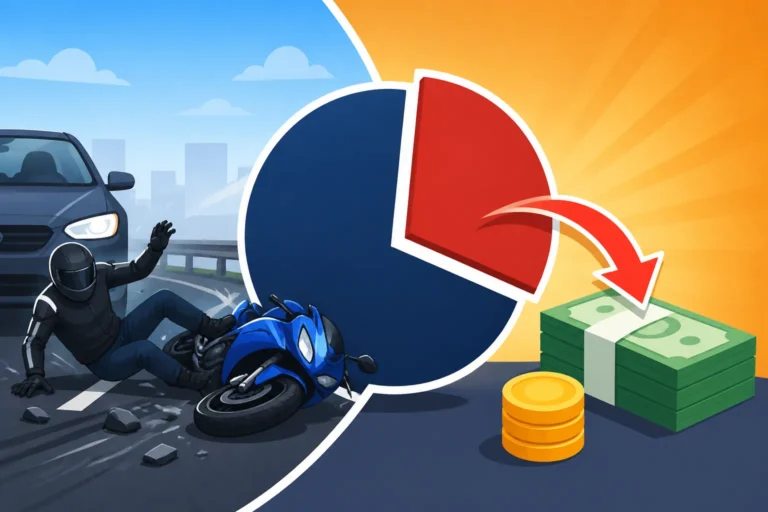
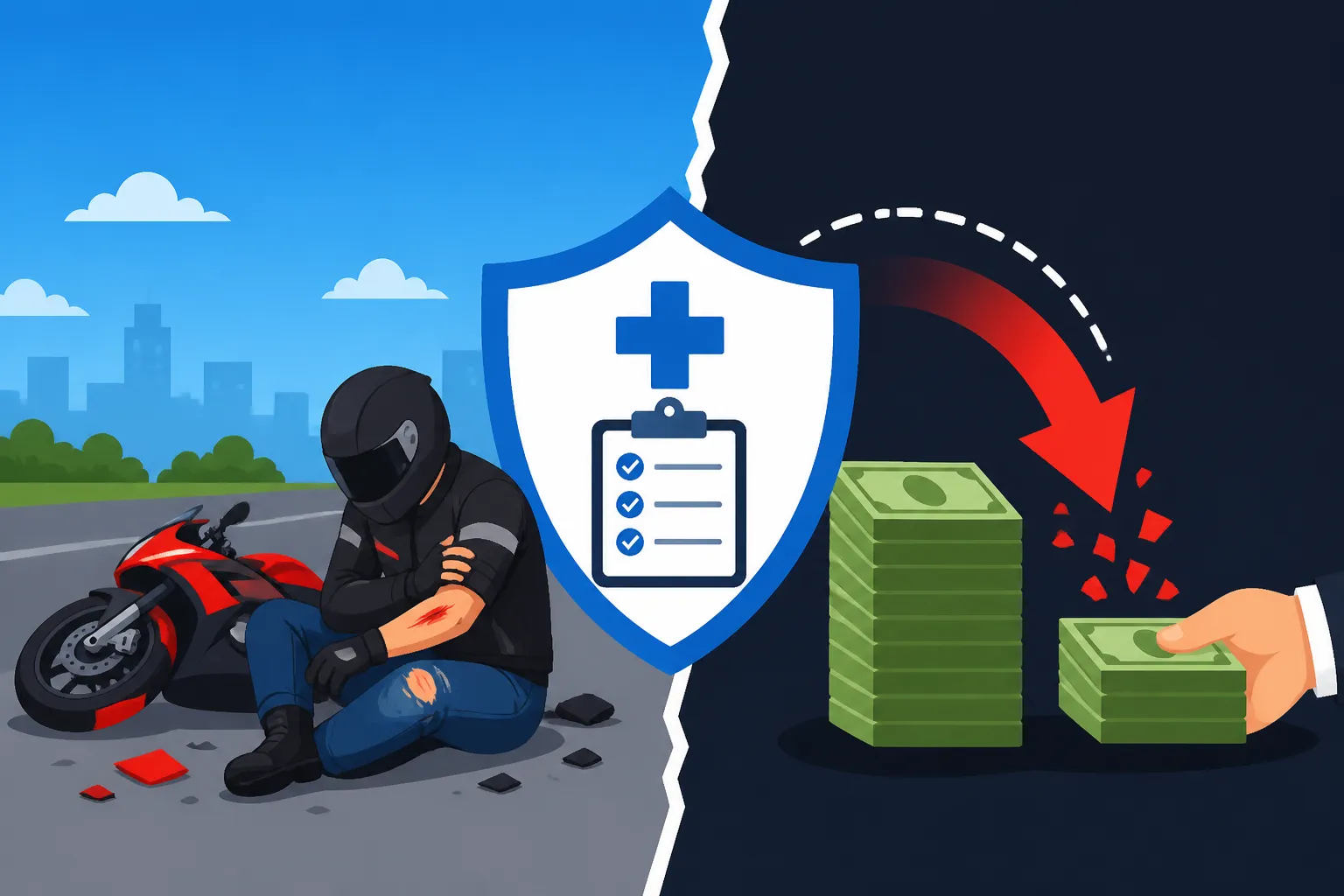
It’s easy to focus on the large dollar figures you hear about in motorcycle accident settlements. You might think, "Great, that money will cover everything!" But the reality is often more complex. Health insurance liens are one of the primary reasons your "gross" settlement amount, the total figure agreed upon, is rarely the "net" amount, the money you actually walk away with. These liens directly reduce the compensation you receive, making it crucial to understand how they work and how to manage them effectively.
Direct Reduction of Your Settlement Funds
When your motorcycle accident claim settles, the funds aren't just handed directly to you in full. Instead, there's typically a process where various parties with a legal claim on the money get paid first. Your health insurance lien is often at the top of that list, right alongside attorney fees and case expenses. This means that if your health insurance paid $50,000 for your medical treatment, and you reach a $200,000 settlement, that $50,000 (or a negotiated portion of it) will be deducted from the total before you ever see it.
This is a critical distinction between your gross settlement and your net payout. Imagine a scenario where you've been severely injured in a crash in Portland, Oregon, racking up significant hospital bills. Your health insurance, like Blue Cross Blue Shield, covers $75,000 in costs. After a lengthy negotiation, you secure a $250,000 settlement. If that $75,000 lien isn't reduced, your net payout instantly drops by that amount, before considering any legal fees. It's a rude awakening for many accident victims who are already expecting to face considerable out-of-pocket costs and other damages. This is why learning how to maximize your motorcycle accident settlement often involves understanding these deductions.
The Complication of Multiple Liens
To make matters even more complicated, it's not uncommon for motorcycle accident victims to face multiple liens on their settlement. This can happen for a variety of reasons. For example, you might have primary private health insurance, but if you're also on Medicare or Medicaid, those programs have their own subrogation rights. In some cases, hospitals themselves might place a "hospital lien" directly on your settlement if your health insurance didn't cover everything, or if you didn't have insurance at all.
Then there are other types of liens that can come into play. If your accident happened while you were working, your workers' compensation insurer will certainly assert a lien for any benefits they paid. In some states, even if you were partially at fault in a motorcycle accident, an at-fault driver's insurance might pay a portion of your medical bills under a Personal Injury Protection (PIP) policy, which they would then seek to recover. Each of these liens must be identified, verified, and addressed before your settlement can be fully disbursed. Dealing with this tangled web requires careful attention to detail and a clear understanding of the hierarchy of these claims, which can vary by state and the specific laws governing each type of payer.
| Lien Type | Who Holds the Lien | Typical Reimbursement Rights | Negotiation Flexibility |
|---|---|---|---|
| Private Health Insurance | Your health insurer | Contractual right to be repaid for medical costs. | Moderate |
| ERISA Plan | Employer-sponsored plan | Strong federal right to full reimbursement; harder to negotiate. | Limited |
| Medicare | Federal government | Statutory right to reimbursement via Medicare Secondary Payer Act. | Limited, but formulaic |
| Medicaid | State government | Statutory right to reimbursement; varies by state rules. | Moderate to High |
| Workers' Compensation | Employer's insurer | Statutory right for benefits paid due to work-related injury. | Moderate |
| Hospital Lien | Hospital/Medical provider | Statutory right to payment for services, direct from settlement. | Moderate |
Strategically Negotiating Down Medical Liens
It's natural to feel frustrated and overwhelmed when you discover a significant portion of your hard-won settlement could be swallowed by health insurance liens. However, it's crucial to understand that these liens are often not set in stone. In many cases, they are negotiable, and a skilled approach can significantly reduce the amount your health insurer demands, ultimately putting more money in your pocket. This process is a key part of how to negotiate a motorcycle accident settlement.
Why Negotiation Is Crucial
Think about it: your health insurance company has received a premium from you (or your employer) for your coverage. While they have a right to seek reimbursement for accident-related care from the at-fault party, they also have an incentive to be reasonable. Why? Because negotiating a lien often means receiving some money back rather than potentially no money back if the case is lost or the settlement is too small to cover everything. Also, they're often willing to reduce their claim as a courtesy, or in recognition of the fact that you, the injured party, also bore significant risk and costs (like attorney fees) to secure the settlement.
Many health insurers, especially private ones, will agree to reduce their lien, sometimes significantly, if approached correctly. This is particularly true if the settlement amount doesn't fully cover all your damages, or if there's a strong argument for shared fault in motorcycle accidents. For instance, if you were partially at fault according to California's comparative negligence laws, your overall recovery would already be reduced, giving a strong reason for the insurer to take less. Without proper negotiation, you could end up paying back the full amount, leaving you with far less than you anticipated to cover your ongoing needs, like future medical costs or lost earning capacity.
Tactics for Reducing Your Health Insurance Lien
Successfully reducing a health insurance lien often involves a combination of legal arguments and practical negotiation tactics. One common legal principle is the "made whole doctrine," which argues that your health insurer shouldn't be reimbursed until you, the injured party, have been "made whole" – meaning fully compensated for all your damages, including pain and suffering, lost wages, and out-of-pocket expenses. Another is the "common fund doctrine," which asserts that since the health insurer benefits from the attorney's efforts in securing the settlement, they should contribute a proportionate share of the attorney's fees and costs.
Beyond these legal doctrines, negotiation also involves pointing out any weaknesses in the subrogation claim itself or showing that the settlement amount is barely enough to cover your actual damages. For instance, you might argue that some of the medical bills listed on the lien weren't directly related to the accident, or that they represent charges that were inflated.
A critical piece of advice here: don't try to negotiate these liens on your own. Your personal injury attorney is your best ally in this fight. They have experience dealing with various health insurance companies like Anthem or Kaiser Permanente, understanding their subrogation departments, and knowing the specific state and federal laws that apply. They can present compelling arguments, back them up with legal precedents, and leverage their relationships to secure the best possible reduction for you. This is one of the key services a motorcycle accident lawyer provides, helping you protect your ultimate payout.
Navigating Different Types of Healthcare Payers and Their Liens
While the general concept of a health insurance lien remains the same, the specifics of negotiation and reimbursement can vary dramatically depending on the type of health insurance plan you have. It’s not a one-size-fits-all situation, and understanding these differences is crucial for effective lien reduction.
Private Health Insurance and ERISA Liens
If your health insurance is provided through a private company, such as UnitedHealthcare or Cigna, or through your employer, you're likely dealing with either a standard private plan or an ERISA (Employee Retirement Income Security Act) plan. ERISA plans, which are self-funded by employers, are particularly challenging. This is because federal ERISA law often preempts state laws that might otherwise protect you, giving these plans very strong rights to full reimbursement. They can be incredibly rigid and less willing to negotiate substantial reductions.
When facing an ERISA lien, your attorney will meticulously review the plan documents to identify any potential loopholes or ambiguities. While the "made whole" doctrine often doesn't apply to ERISA plans in the same way it does to other private plans, the "common fund doctrine" is frequently a valid argument. This means that if your attorney's efforts created the pool of money from which the ERISA plan will be reimbursed, they should pay their fair share of those legal fees and costs. It's a tough negotiation, but an experienced legal team understands how to approach these powerful plans.
Government-Funded Programs: Medicare and Medicaid
Dealing with government-funded health programs like Medicare and Medicaid involves a completely different set of rules. These programs have specific federal and state laws dictating their reimbursement rights, which are often non-negotiable in the traditional sense, but can be reduced under strict formulas.
-
Medicare Liens: The Medicare Secondary Payer Act is a federal law that requires Medicare to be repaid for any conditional payments they've made for accident-related care. Medicare expects to be reimbursed for every penny they paid if you receive a settlement. However, there's a formal process for calculating and resolving these liens. The Centers for Medicare & Medicaid Services (CMS) has a strict lien resolution process, and they typically reduce their claim by a pro-rata share of your attorney’s fees and costs. They also have a "self-procurement" rule, meaning if your settlement is too small to cover all your damages and their lien, there are specific reduction calculations. It’s a highly bureaucratic process that requires precise communication and adherence to strict deadlines, making it one of the reasons how long does a motorcycle settlement take can vary.
-
Medicaid Liens: Medicaid is a state and federally funded program, and its rules for reimbursement vary from state to state. While Medicaid also has a statutory right to be repaid, many state Medicaid programs are more flexible than Medicare or ERISA plans. They might have specific lien reduction policies based on a percentage, or they might be more receptive to arguments about the overall fairness of the net recovery for the injured party. For example, in states like New York or Florida, the specific Medicaid lien laws might allow for different negotiation strategies. Again, your attorney's knowledge of the specific state laws governing Medicaid is invaluable here.
Practical Steps to Protect Your Payout from Excessive Liens
Knowing about health insurance liens is one thing, but actively protecting your motorcycle accident payout from being unduly diminished by them is another. This requires a proactive and organized approach from the very beginning of your claim. Every step you take, or don't take, can impact your ability to negotiate these liens down.
Documenting Everything From the Start
The moment you're involved in a motorcycle accident, your life becomes a whirlwind of doctor's appointments, therapy sessions, and a seemingly endless stream of paperwork. While it's tempting to shove those bills and letters into a "to-deal-with-later" pile, thorough documentation is your best defense against excessive liens.
Keep meticulous records of everything:
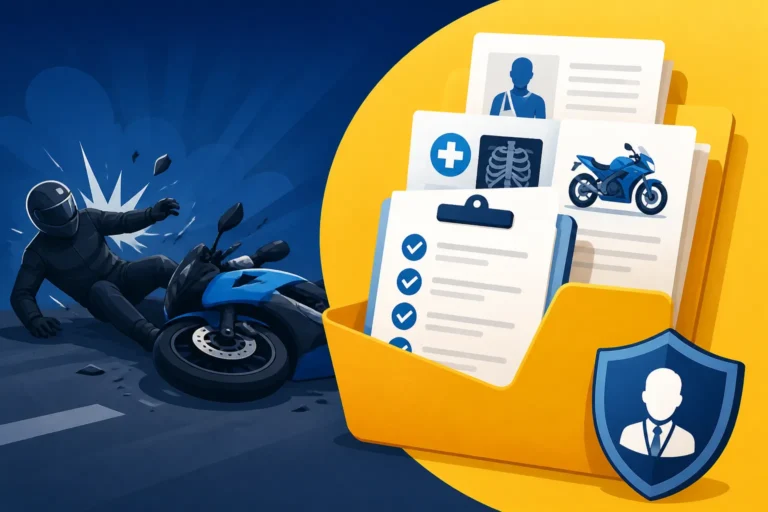
- All medical bills and statements: Even if your health insurance paid them, you need copies showing the initial charges and what your insurer covered. This is crucial for understanding how medical bills affect your settlement.
- Explanation of Benefits (EOB) statements: These are the documents your health insurer sends, detailing what services they paid for and how much.
- Correspondence from your health insurance company: Any letters or notices regarding subrogation, liens, or requests for accident details.
- Records of your injuries and treatment: Doctor's notes, diagnostic reports (X-rays, MRIs), physical therapy logs, and prescription receipts.
This comprehensive paper trail not only helps you and your attorney calculate your total damages, but it also allows them to meticulously review the lien claims. An attorney can then challenge any charges that aren't accident-related or identify potential overbilling, strengthening their hand in negotiations with the lienholder.
Seeking Professional Legal Guidance
Perhaps the single most important step you can take to protect your payout from excessive liens is to hire an experienced motorcycle accident lawyer. This isn't just about finding someone who knows how to deal with insurance companies; it's about finding someone who deeply understands the complex landscape of health insurance liens.
An attorney specializing in motorcycle accidents brings several invaluable advantages:
- Identification of Liens: They can proactively identify all potential lienholders, including private insurers, ERISA plans, Medicare, Medicaid, and hospitals, often before they formally assert their claims.
- Legal Expertise: They know the specific state and federal laws that govern each type of lien, allowing them to formulate the strongest arguments for reduction. This is especially vital when navigating complex areas like ERISA preemption or the specific requirements of the Medicare Secondary Payer Act.
- Negotiation Skills: They have established relationships and negotiation experience with the subrogation departments of major health insurance providers. They know what arguments resonate, what reductions are typically achievable, and when to push harder.
- Protection Against Errors: Lien calculations can be complex and sometimes contain errors. Your attorney will scrutinize every detail to ensure you're not paying back more than you legally owe.
- Maximizing Net Recovery: Ultimately, their goal is to maximize your net recovery, the amount of money you actually take home after all expenses and liens are paid. They will work to reduce not only the liens but also explain how attorney fees affect your net payout, ensuring you get the most out of your settlement.
Don't let the fear of legal costs deter you. Most motorcycle accident lawyers work on a contingency fee basis, meaning they only get paid if you win, and their fees come directly from the settlement. This means you won't pay anything upfront and you'll have an expert fighting for your best interests every step of the way. When to hire a motorcycle accident lawyer is often sooner rather than later, precisely because of these complex financial considerations.
Disclaimer
Please note that this article provides general information and does not constitute legal advice. Motorcycle accident claims, health insurance liens, and associated laws are complex and vary significantly by jurisdiction and individual circumstances. It is crucial to consult with a qualified personal injury attorney in your state for advice tailored to your specific situation.