Average Motorcycle Accident Settlement in Arizona
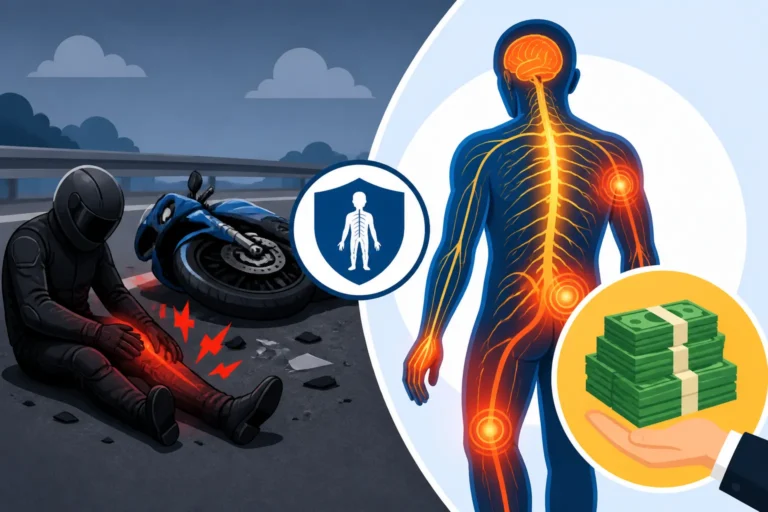
When you're reeling from a motorcycle accident in Arizona, one of the most pressing questions, after ensuring your health, is often, "What's my claim worth?" It's a completely natural concern. The truth is, there's no single, simple "average" motorcycle accident settlement in Arizona, and anyone who tells you differently is probably oversimplifying things. Every single crash is a unique nightmare, with its own specific circumstances, injuries, and financial fallout. This guide will help you understand the intricate factors that truly influence a motorcycle accident payout in the Grand Canyon State.
Understanding Motorcycle Accident Settlements in Arizona
Dealing with the aftermath of a motorcycle accident in Arizona can feel overwhelming, especially when you're trying to figure out what a "fair" settlement looks like. It's not like buying a new bike where there's a clear MSRP. A settlement is essentially a negotiated agreement between the injured party (you, the rider) and the at-fault party's insurance company to compensate you for your losses without going to court. These losses, legally known as "damages," are highly individualized.
The core idea is to make you whole again, as much as money possibly can, for all the pain, suffering, and financial burdens you've endured. This includes everything from the immediate costs of emergency care to the long-term impact on your quality of life. Understanding the various components that make up a settlement is the first crucial step in navigating this complex process.
What Damages Are Recoverable in Arizona
When pursuing a motorcycle accident claim in Arizona, you're generally looking to recover two broad categories of damages: economic and non-economic. These cover different aspects of your losses and together form the basis of your potential settlement value. It's not just about the bills you have in hand right now; it's about projecting future costs and acknowledging the intangible toll the accident has taken.
Economic damages are the measurable, quantifiable financial losses directly caused by the accident. Think of these as the expenses you can put a dollar figure on, supported by receipts, invoices, and pay stubs. This could include the ambulance ride from the scene of the accident near Camelback Mountain, the intensive care unit stay at Banner – University Medical Center Phoenix, and all the follow-up appointments with specialists. It also encompasses the wages you couldn't earn because you were recovering, whether it was a few weeks off work or a permanent reduction in your earning capacity.
On the other hand, non-economic damages are the subjective, less tangible losses that profoundly impact your life but don't come with a specific bill. These are often the hardest to quantify but can represent a significant portion of a motorcycle accident settlement. This category seeks to compensate you for the physical pain you've endured, the emotional distress from the trauma of the crash, and the loss of enjoyment of life because you can no longer do the things you loved, like riding your bike through Sedona or hiking with your family.
The Role of Insurance Policies
The insurance policies involved play a monumental role in determining the upper limit of any potential settlement. In Arizona, every driver is required to carry minimum liability insurance. As of early 2024, this includes $25,000 for bodily injury per person, $50,000 for bodily injury per accident, and $15,000 for property damage. However, let's be realistic: for severe motorcycle accidents, these minimums can be woefully inadequate given the serious nature of injuries often sustained by riders.
If the at-fault driver only carries the minimum coverage and your medical bills alone far exceed $25,000, you might find yourself in a challenging situation. This is where your own uninsured/underinsured motorist (UM/UIM) coverage becomes incredibly important. If you wisely invested in UM/UIM coverage on your own motorcycle policy, it can kick in to cover your damages once the at-fault driver's policy limits are exhausted. It's a safety net that many riders are thankful for when facing extensive losses after a crash on Arizona's roads.
Factors Influencing Your Payout in Arizona
While we'd all love a simple formula, the truth about motorcycle accident settlements is that they are influenced by a multitude of factors, all unique to your specific situation. These aren't just minor details; they can drastically sway the final number, making your settlement potentially higher or lower than what someone else received for what seemed like a similar incident. It's like comparing two custom choppers – they might look similar on the surface, but the details under the hood make all the difference.
Understanding these factors is crucial for anyone seeking a fair settlement. From the severity of your injuries to the nuances of Arizona's legal system, each element plays a critical part in shaping the outcome of your claim.
Injury Severity and Medical Treatment
The extent and nature of your injuries are, without a doubt, the primary driver of your settlement value. Motorcycle accidents, unfortunately, often lead to severe and life-altering injuries due to the lack of physical protection for the rider. We're talking about everything from severe road rash that requires skin grafts, to broken bones, internal organ damage, and devastating spinal cord or traumatic brain injuries.
The amount of medical care you receive, the duration of your recovery, and any long-term consequences will directly impact the economic and non-economic damages. For instance, a claim involving a broken leg that requires surgery and months of physical therapy will naturally yield a higher settlement than a case with only minor bruises and scrapes. Factors like future medical costs, ongoing rehabilitation needs, and the potential for permanent disability or disfigurement significantly increase the value of a claim. Documenting every medical visit, diagnosis, treatment, and medication is paramount to proving the full extent of your injuries and their financial impact. This thorough documentation is what helps substantiate both your current medical bills and projections for what you might need down the road.
Arizona's Pure Comparative Negligence Rule
Here's where Arizona's specific laws really come into play and can be a double-edged sword: the state follows a "pure comparative negligence" system. This means that even if you, as the motorcycle rider, were found to be partially at fault for the accident, you can still recover damages from the other party, but your total award will be reduced by your percentage of fault. For example, if a jury determines your total damages are $100,000, but you were 20% at fault for the crash, your settlement would be reduced by 20%, leaving you with $80,000.
This is a critical distinction, especially since there can often be an unfair bias against motorcyclists. Other drivers or even insurance adjusters might try to assign you some blame, perhaps by claiming you were speeding, lane splitting, or simply "hard to see." Under Arizona's rule, even if they manage to stick you with 99% of the fault, you could theoretically still recover 1% of your damages. This system is more forgiving than "modified comparative negligence" states, where if your fault exceeds a certain threshold (usually 50% or 51%), you recover nothing at all. Understanding how this aspect of Comparative Negligence in Motorcycle Accidents works in Arizona is vital for any rider pursuing a claim.
Lost Wages and Earning Capacity
Motorcycle accident injuries often mean time away from work, leading to lost income. This is a very tangible economic damage that can be included in your settlement. It’s not just about the paychecks you missed right after the accident; it also includes any accrued vacation time or sick leave you had to use. If your injuries are severe enough to prevent you from returning to your previous job, or if they limit your ability to earn as much as you did before, you can also claim damages for "loss of earning capacity."
This is a much more complex calculation, often requiring expert testimony from vocational specialists and economists. They assess your past earnings, your current limitations, and project your future income potential to determine the financial impact over your lifetime. For example, if you were a construction worker and can no longer perform physically demanding tasks, the loss of earning capacity could be substantial. This is why a comprehensive approach to documenting all financial losses, both immediate and projected, is key to maximizing your Average Motorcycle Accident Settlement Amounts.
Arizona's Legal Landscape: What You Need to Know
Navigating the legal aftermath of a motorcycle accident in Arizona requires a keen understanding of the state's specific laws. These aren't just abstract legal concepts; they are the very rules that dictate how your claim will proceed, how much time you have, and what obstacles you might face. Ignorance of these laws can severely jeopardize your ability to recover fair compensation, even if the other driver was clearly at fault.
From strict deadlines to the burden of proof, Arizona's legal framework will shape every step of your journey toward a settlement. It's not enough to simply know you've been wronged; you need to understand the playing field.
Statute of Limitations for Personal Injury Claims
Time is not on your side after a motorcycle accident in Arizona. The state has a strict deadline, known as the "statute of limitations," for filing a personal injury lawsuit. Generally, you have two years from the date of the accident to file a lawsuit in Arizona. If you miss this deadline, you will almost certainly lose your right to seek compensation in court, regardless of how strong your case might be.
While many claims are resolved through negotiation with insurance companies before a lawsuit is filed, this two-year window is the ultimate backstop. It dictates how long you have to investigate your claim, gather evidence, complete medical treatment, and attempt to negotiate a settlement. If negotiations are dragging on, or if the insurance company isn't offering a fair amount, your legal team needs to be prepared to file a lawsuit before that clock runs out. There are very limited exceptions to this rule, so it's best to act quickly and understand the Statute of Limitations for Motorcycle Claims in Arizona as soon as possible.
Proving Fault and Negligence
In any personal injury claim, including motorcycle accidents, you bear the burden of proving that the other party was at fault and that their negligence directly caused your injuries and damages. This is rarely a straightforward task, especially in motorcycle crashes where inherent biases against riders can exist. Simply stating "they hit me" isn't enough; you need concrete evidence.
This evidence can come in many forms: police reports, witness statements, photographs and videos from the scene, traffic camera footage, accident reconstruction expert analysis, and even your own detailed notes. For instance, if another driver made a dangerous left turn in front of you on a busy Phoenix street, you'd need to gather evidence that proves their failure to yield was the direct cause. The more compelling and comprehensive your evidence, the stronger your argument for full compensation will be, and the harder it will be for the insurance company to dispute their driver's liability. Knowing How Fault Is Determined in Motorcycle Accidents is a cornerstone of your case.
Rider Bias and Stereotypes
It's an unfortunate reality that motorcycle riders often face unfair bias, sometimes even from law enforcement, juries, and, most certainly, from insurance companies. The stereotype of the reckless biker can influence how an accident is perceived, even when the rider was completely blameless. Insurance adjusters are notorious for trying to exploit these biases, attempting to shift blame to the motorcyclist to reduce their payout.
They might suggest you were speeding, even if you weren't, or imply you were taking unnecessary risks. This is where having strong evidence and an advocate who understands these tactics is crucial. Your legal representative will work to dismantle these stereotypes and focus on the facts of the accident, ensuring that decisions are based on evidence, not prejudice. They can present a clear picture of your safe riding habits and demonstrate how the other party's negligence was the sole cause or primary contributing factor to the crash.
Estimating Your Motorcycle Accident Claim Value in Arizona
It’s natural to wonder, "What is my motorcycle accident case really worth in Arizona?" As much as we wish there was an online calculator that could give you an exact number, the reality is far more nuanced. While we can't give you a precise dollar figure without knowing every detail of your unique situation, we can help you understand how experienced legal professionals approach valuing these types of claims in Arizona. It’s a process that involves careful consideration of all your losses, both seen and unseen, and anticipating how an insurance company or a jury might view them.
The ultimate goal is to arrive at a figure that genuinely compensates you for every aspect of your suffering and financial burden, rather than just settling for a quick, low-ball offer from an insurer.
Components of a Comprehensive Claim Evaluation
Valuing a motorcycle accident claim is like putting together a complex puzzle, where each piece represents a different type of loss you've experienced. A thorough evaluation will meticulously account for every one of these components to build a robust demand for compensation. This isn't just about summing up bills; it’s about understanding the long-term ripple effects of your injuries.
Here's a breakdown of what goes into a comprehensive claim evaluation:
- Medical Expenses: This includes all past medical bills (emergency care, hospital stays, doctor visits, surgeries, medications, diagnostic tests) and estimated future medical expenses (rehabilitation, ongoing therapy, future surgeries, long-term care, adaptive equipment).
- Lost Wages: Calculation of income lost due to time off work, including salary, bonuses, commissions, and benefits. If self-employed, this might involve reviewing tax returns and business records.
- Loss of Earning Capacity: If your injuries prevent you from performing your previous job or reduce your ability to earn at the same level, an expert might assess this long-term financial impact.
- Property Damage: Costs to repair or replace your motorcycle, helmet, gear, and any other personal property damaged in the crash.
- Pain and Suffering: Compensation for physical pain, discomfort, and emotional distress (anxiety, depression, PTSD) caused by the accident and injuries. This is often the largest component of non-economic damages.
- Loss of Enjoyment of Life: Damages for the inability to participate in hobbies, recreational activities, or daily functions you enjoyed before the accident.
- Disfigurement or Scarring: Compensation for permanent physical changes, especially if they are visible or cause psychological distress.
Insurance companies will try to minimize these figures, so a detailed, evidence-backed compilation of all these elements is essential. This is how you really begin to understand How Motorcycle Accident Settlements Are Calculated and what contributes to the overall sum.
The Impact of Settlement Negotiations
Once all your damages are compiled and valued, the process moves into negotiation. This is often where the "average" settlement becomes a highly variable figure. Insurance companies are businesses, and their goal is to pay out as little as possible. They will start with a low offer, often attempting to settle quickly before you fully understand the extent of your injuries or the long-term impact on your life.
This is where having an experienced advocate by your side is invaluable. A skilled negotiator knows how to counter these lowball offers, present compelling evidence, and argue for the full and fair value of your claim. They understand the tactics insurers use, such as trying to pin partial fault on the rider or downplaying the severity of injuries. The negotiation process can involve several rounds of offers and counteroffers, and sometimes even mediation, before an agreeable settlement is reached. The strength of your evidence, the severity of your injuries, the clarity of fault, and the skill of your representative all play significant roles in the final negotiated amount. For serious injuries, understanding How to Maximize Your Motorcycle Accident Settlement through robust negotiation is critical.
Here’s a table that provides a very general idea of how different injury types can influence potential settlement ranges in Arizona, always keeping in mind that these are highly variable and depend on dozens of specific factors:
| Injury Type | Typical Severity | Potential Settlement Range (Highly Variable) | Key Factors Influencing Range |
|---|---|---|---|
| Minor Injuries (Bruises, Sprains) | Short-term pain, full recovery expected | $5,000 – $25,000 | Medical costs, lost wages, brief pain & suffering |
| Moderate Injuries (Fractures, Severe Road Rash) | Surgery/physical therapy, some lasting impact | $25,000 – $100,000 | Extensive medical treatment, significant lost wages, moderate pain & suffering, potential scarring |
| Severe Injuries (TBI, Spinal Cord Damage, Amputation) | Long-term/permanent disability, extensive care | $100,000 – $1,000,000+ | Lifelong medical care, loss of earning capacity, severe pain & suffering, impact on quality of life |
Disclaimer: These ranges are for informational purposes only and do not constitute legal advice or a guarantee of outcome. Every case is unique.
The Value of Professional Legal Guidance in Arizona
Given the complexities of Arizona's legal system, the potential biases against riders, and the insurance companies' vested interest in minimizing payouts, it becomes clear why professional legal guidance is not just helpful but often essential. Trying to navigate this labyrinth on your own, especially while recovering from serious injuries, is an immense burden. An experienced legal team can serve as your advocate, investigator, and negotiator, leveling the playing field against well-funded insurance corporations.
They can help you understand Motorcycle Accident Fault Laws in Arizona, gather crucial evidence, secure expert witnesses, calculate the true value of your damages (including those elusive non-economic ones), and handle all communications with insurance adjusters. They also ensure that deadlines, like the two-year statute of limitations, are met, protecting your right to pursue compensation. Ultimately, having skilled legal representation significantly increases your chances of securing a fair and just settlement that truly reflects the full scope of your losses in Arizona. Understanding Do You Need a Motorcycle Accident Lawyer can make all the difference in your recovery journey.
Disclaimer
Please note that this article provides general information and insights into motorcycle accident settlements in Arizona and does not constitute legal advice. Every accident case is unique, and the outcome depends on specific facts, applicable laws, and individual circumstances. For personalized legal guidance regarding your situation, it is crucial to consult with a qualified motorcycle accident attorney in Arizona.