Future Medical Costs Explained
When you've been in a motorcycle accident, the immediate aftermath is often a whirlwind of pain, hospital visits, and mounting medical bills. But what many riders don't fully grasp in the chaos is that the bills you see today are often just the tip of the iceberg. This guide is here to shed light on one of the most critical, yet frequently underestimated, components of any personal injury claim: future medical costs. We'll dive deep into what these expenses entail, how they're calculated, and why they are absolutely vital for your long-term well-being and financial recovery.
The Hidden Burden of Future Medical Costs After a Motorcycle Accident
It’s a harsh reality that a motorcycle crash can leave you with injuries that don't just heal up quickly with a few doctor visits and some pain meds. We're talking about injuries that can require years, or even a lifetime, of ongoing care. The initial medical bills, as overwhelming as they might seem, represent only a fraction of the true financial toll your recovery will demand. This is especially true given the severity of common motorcycle accident injuries.
Why Initial Bills Only Scratch the Surface
When you're first injured, the focus is rightly on acute treatment: emergency room visits, immediate surgeries, a short hospital stay, and perhaps some initial physical therapy. You get those bills, maybe from St. Joseph's Hospital or your local urgent care, and you might think that's the extent of it. But for many riders, especially those with serious injuries like fractures, spinal cord damage, or traumatic brain injuries, the journey to recovery is far from over when you leave the hospital.
Consider a rider who suffers a complex tibia-fibula fracture in a collision. Initially, they'll have surgery to stabilize the bone, followed by weeks or months of casting or bracing. The bills for the surgeon, anesthesiologist, hospital, and initial physical therapy sessions will pile up fast. However, that fracture might lead to long-term issues like arthritis, nerve damage, or chronic pain, necessitating future injections, additional surgeries years down the line, or even assistive devices. These are the future medical costs that aren't apparent in the first few months but are absolutely critical to factor into any comprehensive claim.
The Unique Vulnerabilities of Motorcycle Riders
Let's be honest, we all know the stereotypes and the inherent risks that come with riding. When a car or truck collides with a motorcycle, the rider almost always bears the brunt of the impact. Unlike occupants in a car, who are surrounded by a steel cage, airbags, and seatbelts, motorcyclists have very little protection. This often leads to more severe and debilitating injuries compared to those sustained in typical car accidents.
These severe injuries, such as extensive road rash requiring skin grafts, spinal injuries leading to paralysis, or devastating traumatic brain injuries, inherently come with higher long-term care needs. A rider with a severe spinal cord injury, for instance, won’t just have initial hospital costs; they will face a lifetime of specialized medical care, personal assistance, accessible housing modifications, and unique transportation needs. Recognizing this enhanced vulnerability is crucial when calculating "How Medical Bills Affect Your Settlement", as the anticipated future costs are often exponentially higher than what a car accident victim might incur.
Understanding What "Future Medical Costs" Actually Encompasses
It's easy to think of "medical costs" as just doctor visits and prescriptions. But when we talk about future medical costs in the context of a motorcycle accident claim, the scope broadens considerably. These are not just speculative expenses; they are reasonably anticipated costs for treatments, therapies, and care directly necessitated by your accident injuries.
Categories of Long-Term Care and Treatment
Future medical costs aren't a single line item. They encompass a vast array of potential needs that can arise long after the initial crisis has passed. Think of it as a mosaic of ongoing care that helps you manage pain, regain function, adapt to new limitations, or simply maintain your quality of life.
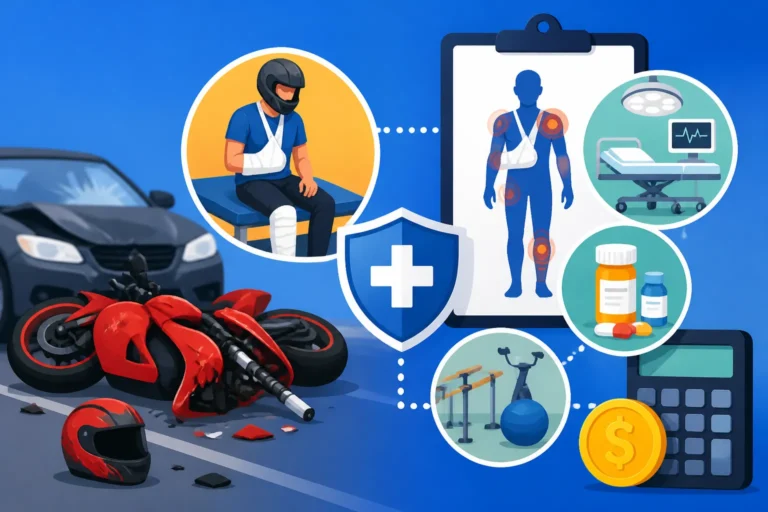
One major category is ongoing medical treatment. This could mean follow-up visits with specialists, such as orthopedic surgeons for a lingering knee injury, neurologists for a concussion, or pain management doctors for chronic back pain. These aren't one-off appointments; they might be quarterly, bi-annual, or even annual check-ups to monitor your condition and adjust treatment plans. Then there's the cost of prescription medications, which for chronic conditions, can add up significantly over months and years. Many riders also face a need for physical therapy, occupational therapy, or speech therapy that extends beyond what's covered in the first few weeks post-injury. For example, a rider with a complex shoulder injury might need several rounds of physical therapy over a few years, especially if they experience flare-ups or setbacks.
The Difference Between Expected and Contingent Future Needs
When evaluating future medical costs, it's helpful to distinguish between two types: those that are highly probable or certain, and those that are contingent upon future developments. Expected future needs are those medical services that medical professionals can confidently predict you will require. If a surgeon states that a knee injury from the accident will definitely require a knee replacement surgery in 5-7 years, that's an expected future medical cost. Similarly, if a neurologist confirms that a traumatic brain injury will necessitate ongoing cognitive therapy for the next decade, that falls into this category.
Contingent future needs, on the other hand, are potential medical services that might be required if certain complications arise or if your condition deteriorates. For instance, if you've had a spinal fusion, there's always a risk of adjacent segment disease requiring another surgery later on. Or, if a severe fracture has a high likelihood of developing post-traumatic arthritis, you might need future pain management or joint injections. While not guaranteed, these contingent needs are still valid considerations if backed by medical evidence showing a reasonable probability. Both types, when properly documented, form the basis of a strong claim for "How Future Medical Costs Are Estimated".
The Complex Process of Estimating and Proving Future Medical Expenses
Estimating future medical costs is far more intricate than simply tallying up past bills. It requires a detailed projection of a person’s long-term healthcare needs, often spanning decades. This is where specialized expertise becomes absolutely essential.
The Role of Medical Experts and Life Care Planners
To accurately project future medical costs, your legal team will typically rely on highly qualified professionals: medical experts and life care planners. A medical expert, often a treating physician or a physician specializing in the type of injury you sustained (e.g., an orthopedist for bone fractures, a neurologist for brain injuries), will provide testimony or reports on the long-term prognosis of your injuries. They can explain the potential for complications, the need for future surgeries, or the chronicity of pain.
A life care planner is a particularly crucial professional in severe injury cases, especially for those who have suffered "Catastrophic Motorcycle Injuries Explained". These specialists are typically registered nurses or other healthcare professionals with extensive training in rehabilitation and case management. They conduct a thorough assessment of your current and future medical, personal, and vocational needs. This involves reviewing all your medical records, interviewing you and your family, and consulting with your treating physicians. Based on this comprehensive evaluation, they develop a detailed document called a life care plan. This plan itemizes every single anticipated future cost, from medications and doctor visits to home healthcare, adaptive equipment, and even transportation for medical appointments, often projecting these costs over your remaining life expectancy.
Crucial Documentation and Evidence for Your Claim
The strength of your claim for future medical costs hinges entirely on thorough and credible documentation. You can't just guess; every projected expense needs to be backed by solid evidence. The foundation of this evidence is, of course, your medical records. This includes everything from emergency room reports, diagnostic imaging (X-rays, MRIs, CT scans), surgical reports, physical therapy notes, and prescriptions. These documents establish the nature and severity of your injuries and the treatment you've already received.
Beyond the medical records, detailed doctor's notes and expert reports from your treating physicians are paramount. These reports should clearly state the long-term prognosis, identify potential future complications, and recommend specific ongoing treatments or interventions. If a life care plan has been developed, this becomes a central piece of evidence, providing an itemized breakdown and justification for each future cost. Keeping a meticulous record of all your appointments, treatments, and even your daily struggles in an "How to Document Injuries for a Claim" journal can also provide invaluable narrative support for the professional assessments.
Reaching Maximum Medical Improvement (MMI) and Its Impact
The concept of "What Reaching MMI Means for Your Settlement" is a critical milestone in any personal injury claim, especially when assessing future medical costs. MMI refers to the point where your medical condition has stabilized, and further medical treatment is unlikely to significantly improve your condition. In other words, you’ve recovered as much as you possibly can through medical intervention.
It's at this point that doctors can most accurately determine what your permanent limitations, impairments, and ongoing care needs will be. Trying to settle your case before reaching MMI can be a huge mistake, as you might unknowingly forfeit compensation for future treatments that haven't yet been identified. For example, if you settle when you’re still in physical therapy for a knee injury, only to discover six months later that you require a total knee replacement, it will be incredibly difficult, if not impossible, to go back and claim those new, substantial costs. Waiting until MMI allows for a more accurate and comprehensive evaluation of your long-term medical outlook, which in turn leads to a more just settlement that truly covers your future needs.
Common Future Medical Needs in Motorcycle Accident Claims
Motorcycle accidents, unfortunately, often lead to a specific set of severe injuries that almost guarantee a need for future medical care. Understanding these common needs helps paint a clearer picture of what a comprehensive future medical costs claim might include.
Ongoing Rehabilitation and Therapy
For many motorcycle accident survivors, the road to recovery is a marathon, not a sprint. Intensive, long-term rehabilitation and various therapies are frequently required to help regain function, manage pain, and adapt to new physical limitations. This isn't just a few weeks of physical therapy; it can stretch for months or even years, becoming a regular part of life.
Physical therapy (PT) is often a cornerstone of this ongoing care, especially for injuries like broken bones, soft tissue damage, or neurological impairments. A rider recovering from multiple fractures might need PT to restore range of motion, strength, and balance, continuing long after the casts come off. Similarly, occupational therapy (OT) helps individuals relearn daily living activities, especially if injuries affect fine motor skills or mobility. If you can no longer grip a toothbrush or button your shirt, an OT helps you find adaptive strategies or tools. For those who have suffered "Motorcycle Traumatic Brain Injury: Claims and Compensation", cognitive therapy or speech therapy may be crucial for regaining lost cognitive functions or communication skills. These therapies aren't cheap, and when required consistently over a long period, their cumulative cost becomes a significant component of future medical damages.
Future Surgeries and Medical Procedures
It’s not uncommon for motorcycle accident injuries to necessitate not just one, but multiple surgeries or procedures over time. The initial surgery might stabilize a fracture, but hardware removal, corrective surgeries, or procedures to address complications can follow years later.
Consider a rider who suffers a severe disc herniation in their spine. The initial treatment might involve injections or a discectomy. However, over time, the damage could worsen, leading to the need for a spinal fusion or other more invasive procedures down the road. Similarly, victims of "Motorcycle Broken Bones: Claims and Compensation" might require follow-up surgeries to remove plates or screws, or to correct non-union of bones. Extensive scarring, especially from severe road rash or burns, might also require future reconstructive or cosmetic surgeries to improve function or appearance. These future surgical interventions can be incredibly expensive, encompassing surgeon fees, anesthesia, hospital stays, and post-operative care, all of which must be meticulously documented and estimated.
Adaptive Equipment, Medications, and Home Modifications
Beyond direct medical treatments, future medical costs also extend to the essential tools and environmental changes that enable an injured rider to live with their new reality. This is particularly relevant for those with severe, life-altering injuries.
For instance, a rider who suffers "Motorcycle Spinal Cord Injury: Claims and Compensation" may require a specialized wheelchair, accessible vehicle modifications, a shower chair, or even a sophisticated home automation system. These pieces of adaptive equipment are not luxuries; they are fundamental to maintaining independence and quality of life. The costs for these items, including their maintenance and eventual replacement, must be factored in. Additionally, many individuals require ongoing prescription medications for chronic pain, nerve damage, or other long-term conditions. Regular refills of powerful pain relievers, anti-inflammatories, or anti-spasmodics can become a significant monthly expense for years. Furthermore, home modifications – such as widening doorways for wheelchair access, installing ramps, or modifying bathrooms – can be substantial one-time costs. Even something like specialized dietary supplements or ongoing wound care supplies fall under this umbrella.
Here's a table summarizing common types of future medical costs:
| Category | Description | Examples |
|---|---|---|
| Ongoing Medical Treatment | Regular doctor visits, specialist consultations, diagnostic tests to monitor conditions. | Follow-up with neurologists, orthopedic specialists, pain management clinics. |
| Rehabilitation & Therapy | Continued physical, occupational, speech, or cognitive therapies to regain or maintain function. | Long-term PT for mobility, OT for daily tasks, cognitive therapy for TBI. |
| Future Surgeries/Procedures | Anticipated operations to correct complications, remove hardware, or address progressive degeneration. | Knee replacement, spinal fusion, skin graft revisions, corrective eye surgery. |
| Prescription Medications | Ongoing need for drugs to manage pain, nerve damage, or other chronic conditions. | Daily pain medication, anti-depressants, anti-spasmodics. |
| Adaptive Equipment | Devices that assist with mobility, daily living, or communication. | Wheelchairs, crutches, prosthetics, communication devices, specialized beds. |
| Home Modifications | Changes to living environment for accessibility. | Ramps, widened doorways, grab bars, roll-in showers, accessible kitchen. |
| Personal Care Assistance | Help with daily tasks like bathing, dressing, or feeding for those with severe disabilities. | Home health aides, skilled nursing care, in-home support. |
| Transportation | Costs associated with traveling to and from future medical appointments. | Specialized transport services, mileage reimbursement, accessible vehicle costs. |
| Vocational Rehabilitation | Programs to help injured individuals return to work or find new employment compatible with limitations. | Job retraining, ergonomic assessments, assistive technology for work. |
Navigating the Challenges of Proving Long-Term Medical Damages
Proving future medical costs isn't just about listing potential expenses; it's about making a compelling case that those costs are a direct and necessary consequence of the accident. Insurance companies are notoriously skeptical, and they will employ various tactics to minimize what they pay out.
Insurance Companies' Tactics to Downplay Future Needs
Insurance adjusters are trained to protect their company's bottom line, and that often means scrutinizing, disputing, or outright denying claims for future medical expenses. One common tactic is to argue that your current treatment is sufficient and that any future needs are speculative or unnecessary. They might challenge the need for ongoing physical therapy, suggesting you've reached "maximum recovery" prematurely, or they might question the necessity of a predicted future surgery, claiming it’s not directly linked to this accident.
They also frequently try to downplay the severity of "Common Motorcycle Accident Injuries", implying that a broken bone or a concussion isn't as debilitating as you claim, thereby reducing the perceived need for long-term care. Adjusters might point to any gaps in your medical treatment or delays in seeking certain therapies as evidence that your injuries aren't as severe as you portray. This is where detailed medical records, consistent treatment, and compelling expert testimony become your strongest defense against these calculated maneuvers.
Addressing Pre-Existing Conditions and Injury Causation
Another significant hurdle in proving future medical costs, and indeed, any injury claim, is the presence of pre-existing conditions. If you had a prior back injury, for example, the insurance company will almost certainly argue that your current back pain and any need for future spinal care are due to that old injury, not the motorcycle crash. They might try to say the accident merely aggravated an old injury, rather than caused a new one or significantly worsened an existing one.
This is a tactic commonly used by insurers to reduce their liability, and it can significantly impact "How Insurance Companies Assign Blame to Riders" and, consequently, your settlement. However, the law generally states that a negligent party "takes the victim as they find them." This means if the accident worsened a pre-existing condition, the at-fault driver is still liable for the aggravation of that condition and any new injuries. Proving this requires meticulous medical documentation that clearly distinguishes between the prior condition and the new or exacerbated injuries from the accident. Expert medical testimony is crucial here, as doctors can explain how the trauma of the motorcycle crash directly impacted your pre-existing condition and necessitated the new or intensified future care.
Strategies to Maximize Your Recovery for Future Medical Expenses
Given the complexities and the insurance company's resistance, simply hoping for the best isn't a viable strategy when it comes to claiming future medical costs. You need a proactive approach to ensure you receive the full compensation you deserve.
The Importance of a Detailed Life Care Plan
As discussed, a life care plan is your roadmap to proving and maximizing your claim for future medical expenses. It’s not just a list; it’s a comprehensive, professionally prepared document that projects all your anticipated medical and personal care needs over your lifetime as a result of the accident. This plan should include detailed costs for everything from routine follow-up doctor visits to potential future surgeries, medications, rehabilitation services, adaptive equipment, and even the cost of a home health aide if needed.
The real power of a life care plan lies in its credibility and specificity. Developed by a certified professional, it provides an objective, evidence-based assessment that is difficult for insurance companies to refute without their own equally qualified experts. Without a detailed life care plan, insurance companies can easily dismiss your estimates as speculative. With it, you present a clear, documented case for precisely "How Future Medical Costs Are Estimated" and how they will impact your long-term financial stability. This plan serves as a foundational piece of evidence in negotiations and, if necessary, in court.
Working with Legal Professionals to Strengthen Your Claim
Trying to navigate the labyrinth of future medical costs, insurance company tactics, and legal documentation on your own after a traumatic motorcycle accident is incredibly challenging, if not impossible. This is why having an experienced motorcycle accident attorney on your side is paramount. An attorney understands the nuances of personal injury law and the specific challenges faced by riders.
A skilled lawyer knows how to secure the necessary expert medical opinions and life care plans. They have a network of trusted medical experts and can present your case in a way that effectively counters the insurance company's attempts to minimize your injuries or shift blame. They will also be instrumental in explaining "Comparative Negligence in Motorcycle Accidents", should any fault be attributed to you, and how that might impact your overall payout, including future medical costs. Furthermore, your attorney will handle all communication and negotiations with the insurance company, allowing you to focus on your recovery. They know how to "How to Negotiate a Motorcycle Accident Settlement" to ensure that the compensation you receive accurately reflects the true, long-term impact of your injuries, including the full scope of your future medical needs. Their expertise can significantly increase your chances of securing a settlement that truly provides for your long-term care and financial well-being.
Disclaimer
Please remember that the information provided in this guide is intended for general informational purposes only and does not constitute legal advice. Every motorcycle accident claim is unique, and the specific laws and outcomes can vary significantly based on your individual circumstances and jurisdiction. We strongly recommend consulting with a qualified legal professional to discuss the specifics of your case and receive personalized advice.