How Much Compensation for Motorcycle Knee Injury
A debilitating motorcycle knee injury can instantly derail your life, leaving you in excruciating pain, facing endless medical appointments, and wondering how you'll ever get back to normal, let alone cover the mounting bills. It’s more than just a physical blow; it's a mental and financial challenge that feels overwhelming. This guide is here to break down exactly what goes into determining compensation for a motorcycle knee injury, helping you understand your rights and the potential value of your claim.
Understanding Motorcycle Knee Injuries
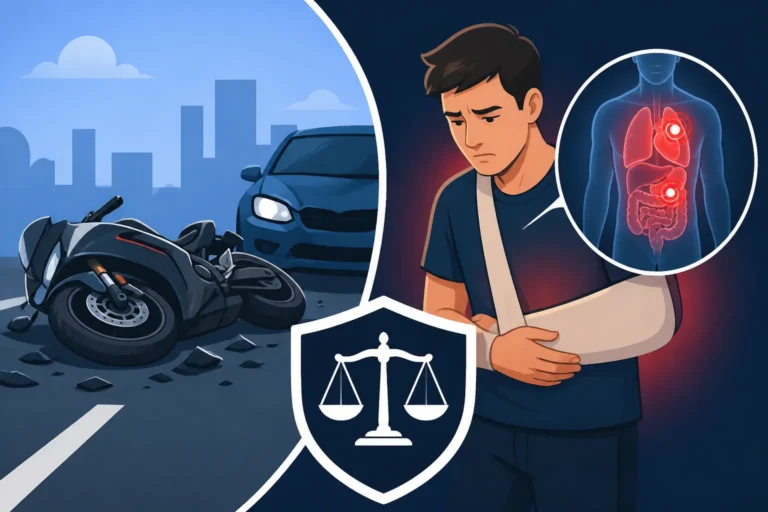
Knee injuries from motorcycle accidents are notoriously severe, often leaving riders with long-lasting pain, limited mobility, and a significantly altered quality of life. The unique vulnerability of motorcyclists means that even a low-speed impact can cause devastating damage to this complex joint.
Common Types of Knee Injuries
The knee is a marvel of biological engineering, but it's not built to withstand the forces of a motorcycle crash. When a rider is thrown from their bike, hits the pavement, or has their leg crushed between a vehicle and the ground, the knee is often the first point of serious impact or twisting force.
One of the most frequent and severe types of knee trauma is a fracture. This could be a broken patella (kneecap), which is incredibly painful and often requires surgery to repair with plates and screws. We also see tibial plateau fractures, which involve the top of the shin bone where it meets the knee joint. These are particularly concerning because they can disrupt the smooth cartilage surface, leading to early-onset arthritis. Femur fractures, especially those involving the distal end near the knee, are also common and require extensive recovery. Imagine being unable to put any weight on your leg for months, needing assistance for every basic movement – that’s the reality for many dealing with these fractures.
Beyond broken bones, ligament tears are incredibly common. The knee has four major ligaments: the anterior cruciate ligament (ACL), posterior cruciate ligament (PCL), medial collateral ligament (MCL), and lateral collateral ligament (LCL). A sudden twist or hyperextension, common in motorcycle dismounts or impacts, can easily tear one or more of these. An ACL tear, for instance, often requires reconstructive surgery and a lengthy rehabilitation period, sometimes a year or more, to regain stability and function. PCL tears, while less common, can be just as debilitating. Many riders also suffer meniscus tears, which involve the cartilage pads that cushion the knee joint. These can cause locking, clicking, and persistent pain, often necessitating arthroscopic surgery.
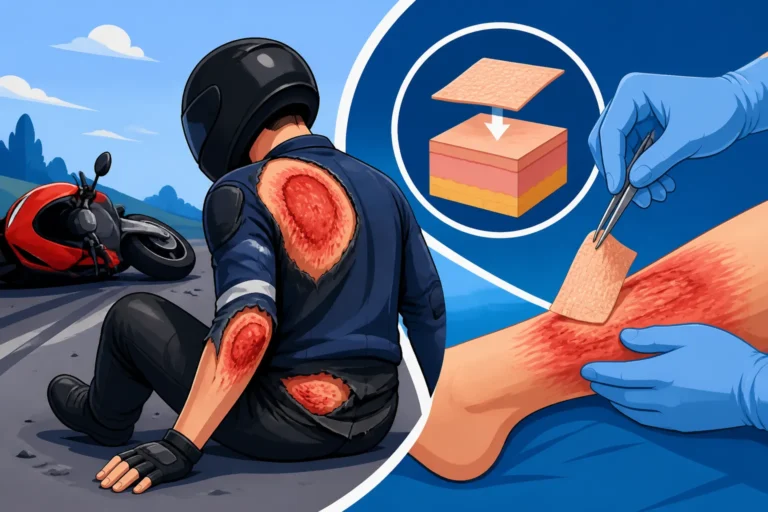
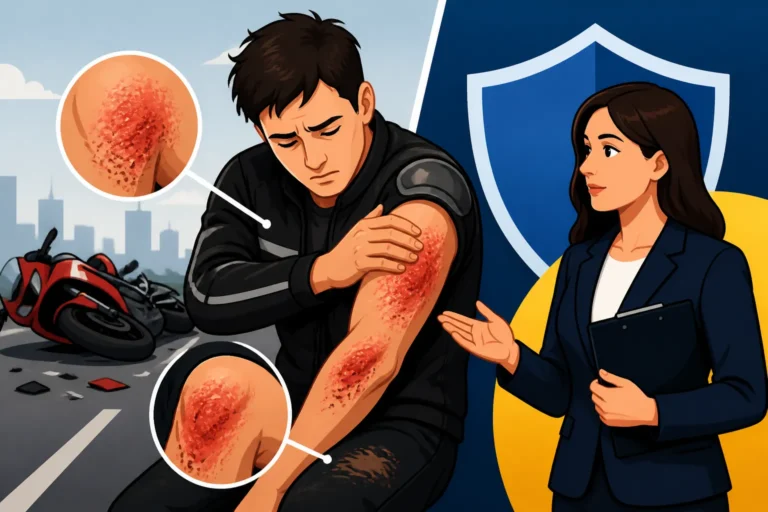
Finally, dislocations where the bones of the knee are forced out of alignment are excruciating and can damage surrounding nerves and blood vessels, leading to complications beyond the joint itself. And let's not forget deep road rash over the knee, which isn't just a skin wound. It can go deep into the tissues, sometimes exposing the joint itself, risking infection and requiring multiple debridement surgeries and potentially skin grafts. Each of these injuries carries its own unique set of challenges for recovery and, crucially, for your motorcycle accident claim.
Immediate and Long-Term Impact on Your Life
The immediate aftermath of a knee injury from a motorcycle accident is often dominated by intense pain and the shock of impaired mobility. You might go from being an active rider, enjoying the freedom of the open road, to being confined to a hospital bed or your couch, unable to bear weight or even bend your knee. Simple tasks like walking, climbing stairs, or even standing for short periods become monumental challenges. This isn't just an inconvenience; it can mean a complete disruption of your daily routine and your independence.
Looking further down the road, the long-term impact can be even more daunting. Many severe knee injuries, particularly fractures that affect the joint surface or extensive ligament damage, lead to post-traumatic arthritis. This means years or even decades after the accident, you could be dealing with chronic pain, stiffness, and further degradation of the joint, potentially necessitating a total knee replacement down the line. Imagine the mental toll of knowing that your once strong and agile knee will never be the same. The impact extends far beyond the physical. If your job involves standing, lifting, or walking – think construction, nursing, or even retail – you could be facing a significant loss of income or even a complete career change. Hobbies like hiking, cycling, playing sports, or even just riding your motorcycle become difficult or impossible, leading to a profound sense of loss and emotional distress. The chronic pain itself can lead to sleep disturbances, anxiety, and depression. It's a truly holistic injury, affecting your body, mind, and spirit, and all of these facets need to be thoroughly accounted for in your compensation claim.
Factors Influencing Your Knee Injury Compensation
When you're trying to figure out how much compensation you might receive for a motorcycle knee injury, it's not a simple one-size-fits-all calculation. Several critical factors come into play, each contributing to the overall value of your claim.
Severity of the Injury and Medical Treatment
This is arguably the most significant factor. The more severe your knee injury, the higher your potential compensation. A minor sprain that heals with a few weeks of rest is vastly different from a comminuted patella fracture requiring multiple surgeries, extensive physical therapy, and a potential future knee replacement. The type of injury dictates the scope of medical treatment needed, and those costs form a major part of your economic damages.
For instance, if you suffered an ACL tear, you'll have bills for the emergency room visit, MRI scans, consultations with orthopedic surgeons, the actual surgical procedure, anesthesia, post-operative medications, and months of physical therapy. These medical expenses can quickly climb into the tens of thousands, or even hundreds of thousands of dollars for complex injuries with long-term care needs. Comprehensive documentation of these expenses is crucial. This includes detailed medical records, diagnostic imaging reports (X-rays, MRIs, CT scans), and bills from every healthcare provider. The clearer the picture of your injury and its treatment, the stronger your case for compensation. Remember, maintaining consistent medical care and following your doctors' recommendations isn't just vital for your recovery; it also creates a clear, undeniable record for your claim. To learn more about how medical bills affect your settlement, you can read our guide on how medical bills affect your settlement.
Economic Damages: Tangible Losses
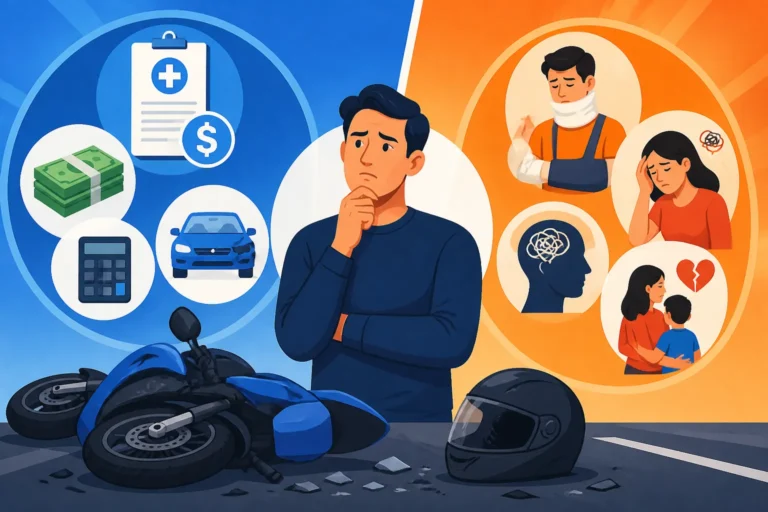
Economic damages are the straightforward, quantifiable financial losses you've incurred or will incur as a direct result of your motorcycle knee injury. These are the bills, the pay stubs, the receipts – the tangible impacts on your wallet.
The most obvious economic damage is medical expenses. This includes everything from the ambulance ride and emergency room visit right after the crash to specialist consultations, surgical fees, hospital stays, follow-up appointments, prescription medications, crutches, braces, and most significantly, ongoing physical therapy and rehabilitation. If your injury is severe enough to require future surgeries, long-term pain management, or even adaptive equipment for your home, these projected costs are also included.
Then there are lost wages. If your knee injury prevents you from working, you deserve to be compensated for the income you've lost. This isn't just about the weeks or months you were out of work immediately after the accident; it also includes any potential loss of future earning capacity if your injury leads to a permanent disability that limits your ability to perform your job or pursue promotions. For example, if you were a mechanic and now can't kneel or stand for long periods, your career trajectory might be permanently altered. Our guide on how lost wages are calculated can provide more detailed information on this complex area.
Don't forget property damage. Your motorcycle might be totaled, or it might need extensive repairs. Your helmet, riding jacket, boots, and other gear could also be damaged beyond repair. These are all part of your economic losses. These tangible damages are typically easier to prove with receipts, bills, and professional evaluations, forming the bedrock of your compensation claim.
Non-Economic Damages: Intangible Losses
While economic damages cover your direct financial losses, non-economic damages address the profound, often invisible, suffering you endure due to your knee injury. These are the "pain and suffering" aspects of your claim, and they are incredibly important for truly compensating you for what you've been through.
Pain and suffering is a broad category that encompasses the physical pain of the injury itself, the discomfort of medical treatments, and the ongoing chronic pain you might experience. But it's more than just physical sensation. It includes the emotional distress – the anxiety, fear, frustration, and even depression that can accompany a life-altering injury. Imagine the stress of facing multiple surgeries, the fear of never walking normally again, or the emotional toll of depending on others for basic needs. These are real, profound impacts.
Another significant component is the loss of enjoyment of life. Before the accident, perhaps you loved hiking, playing with your kids, dancing, or, of course, riding your motorcycle. If your knee injury prevents you from engaging in these activities, that loss significantly diminishes your quality of life. The ability to pursue your passions is a fundamental part of who you are, and when that's taken away, it deserves compensation.
Finally, scarring and disfigurement around the knee area, especially from surgical incisions or severe road rash, can also be a significant non-economic damage. This can lead to self-consciousness and psychological distress, affecting your confidence and social interactions.
These non-economic damages are subjective, making them more challenging to quantify than a stack of medical bills. However, they are a critical part of a fair settlement. Insurance companies often use formulas or multipliers based on your economic damages to calculate pain and suffering, but a skilled legal professional can argue for a higher amount based on the unique, personal impact your injury has had on your life. For a deeper dive, check out our piece on pain and suffering in motorcycle settlements.
The Role of Fault and Insurance in Your Claim
Even with a severe knee injury, securing compensation isn't guaranteed if fault isn't clear or if you encounter roadblocks from insurance companies. These two elements play a pivotal role in the success and value of your claim.
How Fault Affects Your Payout
Determining who is at fault in a motorcycle accident is paramount. If the other driver is entirely at fault, your path to compensation is generally clearer. However, what happens if you are found to share some of the blame? This is where the legal concept of comparative negligence comes into play. Most states follow some form of comparative negligence, which means your compensation can be reduced by your percentage of fault.
For example, in California, which follows a "pure comparative negligence" rule, even if you are deemed 90% at fault for an accident that caused your knee injury, you could still recover 10% of your damages. However, many other states, like Texas or Ohio, have "modified comparative negligence" rules, often employing a 50% or 51% bar. If you are found to be 50% or more at fault (or 51% or more, depending on the state), you might be completely barred from recovering any damages. Imagine sustaining a severe knee injury, only to find your payout drastically reduced or even eliminated because an insurance adjuster successfully argued you were partially to blame. This is why accurately establishing who is at fault in motorcycle accidents is absolutely crucial.
Insurance companies are notorious for trying to shift blame onto motorcyclists, often leveraging implicit "rider bias" or stereotypes. They might argue you were speeding, lane splitting illegally, or simply "hard to see." Every piece of evidence, from police reports to witness statements and accident reconstruction, will be scrutinized to assign fault. If you can clearly demonstrate that the other driver was solely responsible – perhaps they made a left-turn collision directly into your path, or failed to yield at an intersection – your claim for full compensation for your knee injury will be significantly stronger.
Dealing with Insurance Companies
Navigating the world of insurance claims after a motorcycle accident is rarely straightforward. Insurance companies, despite their friendly advertising, are businesses, and their primary goal is to pay out as little as possible. They have vast resources and experienced adjusters whose job it is to minimize your claim, not to ensure you receive fair compensation.
They might offer a quick, lowball settlement early on, hoping you'll accept it before fully understanding the extent of your knee injury and its long-term costs. They might pressure you to give recorded statements, which could be used against you later. They might delay the process, hoping you'll get frustrated and accept less. For instance, they might scrutinize your medical records, trying to link your knee injury to a pre-existing condition, even if it's unrelated, to reduce their liability.
Another crucial aspect is understanding insurance policy limits. Even if your damages for a severe knee injury are substantial – say, $500,000 – if the at-fault driver only has a minimum liability policy of $25,000, that's often the maximum you can recover from their insurance. This can be a devastating realization for injured riders. This is where your own uninsured/underinsured motorist (UM/UIM) coverage becomes a lifesaver. If you have this coverage, it can kick in to cover your damages beyond what the at-fault driver's policy provides. Understanding how insurance policy limits affect your payout is incredibly important. Without strong advocacy, either from yourself armed with knowledge or a dedicated legal professional, you risk leaving substantial money on the table that you desperately need for your recovery.
Maximizing Your Motorcycle Knee Injury Claim
When you're dealing with a serious knee injury from a motorcycle accident, every step you take in the aftermath can significantly impact your ability to receive fair compensation. It's not just about getting medical treatment; it's about meticulously building a case.
Documenting Everything
In the world of injury claims, the adage "if it's not documented, it didn't happen" often holds true. To maximize your compensation for a motorcycle knee injury, you need to create a comprehensive and irrefutable record of everything related to your accident and recovery.
Start at the scene, if possible and safe. Take copious photos and videos of the accident scene from multiple angles, showing vehicle positions, road conditions, traffic signs, and any visible debris. Crucially, photograph your motorcycle and your damaged riding gear, especially focusing on any tears or scuffs on your knee protection or pants, as this directly shows impact on your knee area. Also, document any visible injuries you have, even if they seem minor at the time.
From there, your medical records become your primary evidence. Ensure you seek immediate medical attention, even if you initially feel "fine" – adrenaline can mask pain. Follow every doctor's recommendation, attend all physical therapy sessions, and keep every single receipt and bill. Your detailed medical history, including diagnostic images like X-rays and MRIs showing the extent of your knee injury (fractures, ligament tears, etc.), is vital. If you experience gaps in treatment, insurance companies will often use that to argue your injuries weren't severe or weren't caused by the accident. Keeping a pain journal, noting your daily pain levels, mobility limitations, and how your knee injury impacts your daily life, can provide powerful, personal testimony to supplement objective medical records. This detailed approach is essential for demonstrating the full scope of your damages. For a comprehensive guide, check out our post on how to document injuries for a claim.
Seeking Legal Guidance
For many injured riders, the thought of taking on an insurance company while recovering from a severe knee injury is simply too much. This is precisely why seeking legal guidance from a qualified motorcycle accident lawyer is often the most critical step you can take to maximize your claim.
A lawyer specializing in motorcycle accidents brings invaluable expertise to the table. They understand the nuances of motorcycle accident liability, the specific challenges riders face (like rider bias), and the complex medical terminology associated with severe knee injuries. They can accurately assess the true value of your claim, accounting for not just current medical bills and lost wages, but also future medical needs, loss of earning capacity, and the extensive pain and suffering you've endured. This calculation often far exceeds what you might initially consider or what an insurance adjuster might offer.
Beyond valuation, a lawyer will handle all communication with the insurance companies, protecting you from common tactics designed to minimize your payout. They will gather all necessary evidence, including police reports, witness statements, medical records, and expert testimonies, to build a robust case proving the other driver's fault and the full extent of your damages. They can also connect you with medical specialists if needed. If negotiations fail, they are prepared to take your case to court, something individual claimants rarely have the capacity or knowledge to do. Studies often show that individuals represented by attorneys receive significantly higher settlements than those who try to negotiate on their own, even after legal fees. Deciding if you need a motorcycle accident lawyer is a personal choice, but for a severe knee injury, the benefits of professional representation are often undeniable.
Motorcycle Knee Injury Damages Overview
| Type of Damage | Description | Examples for a Knee Injury |
|---|---|---|
| Economic | Quantifiable financial losses, easily proven with documentation. | Medical Bills: ER visits, surgeries (ACL reconstruction, fracture repair), hospital stays, physical therapy, medications, crutches, braces, future knee replacements. Lost Wages: Income lost from time off work, reduced earning capacity due to permanent disability. Property Damage: Motorcycle repairs/replacement, damaged riding gear (helmet, jacket, specialized knee pads). |
| Non-Economic | Intangible losses related to pain, suffering, and emotional distress. More subjective to quantify. | Pain and Suffering: Chronic knee pain, discomfort during recovery, pain from physical therapy. Emotional Distress: Anxiety, depression, PTSD from the accident, frustration over mobility loss. Loss of Enjoyment of Life: Inability to ride, hike, play sports, or engage in hobbies. Scarring/Disfigurement: Visible surgical scars or road rash across the knee, leading to self-consciousness. |
| Punitive | Awarded in rare cases to punish egregious behavior and deter similar actions. | If the other driver was grossly negligent, like driving while severely intoxicated and causing your knee injury, punitive damages might be considered in some states. |
A motorcycle knee injury is a serious setback, both physically and financially. Understanding the different types of damages, how fault impacts your claim, and the tactics insurance companies employ is crucial for navigating the complex claims process. By meticulously documenting every aspect of your injury and recovery, and by considering the invaluable support of a skilled legal professional, you significantly improve your chances of securing the full and fair compensation you need to heal and move forward.
Disclaimer
Please remember that this article provides general information and insights into motorcycle accident claims and knee injury compensation. It is not intended as legal advice. Every accident and injury claim is unique, and the information presented here may not apply to your specific situation. Laws regarding personal injury and motorcycle accidents vary significantly by state. For personalized advice regarding your motorcycle accident claim and knee injury, it is always recommended to consult with a qualified personal injury attorney in your jurisdiction.