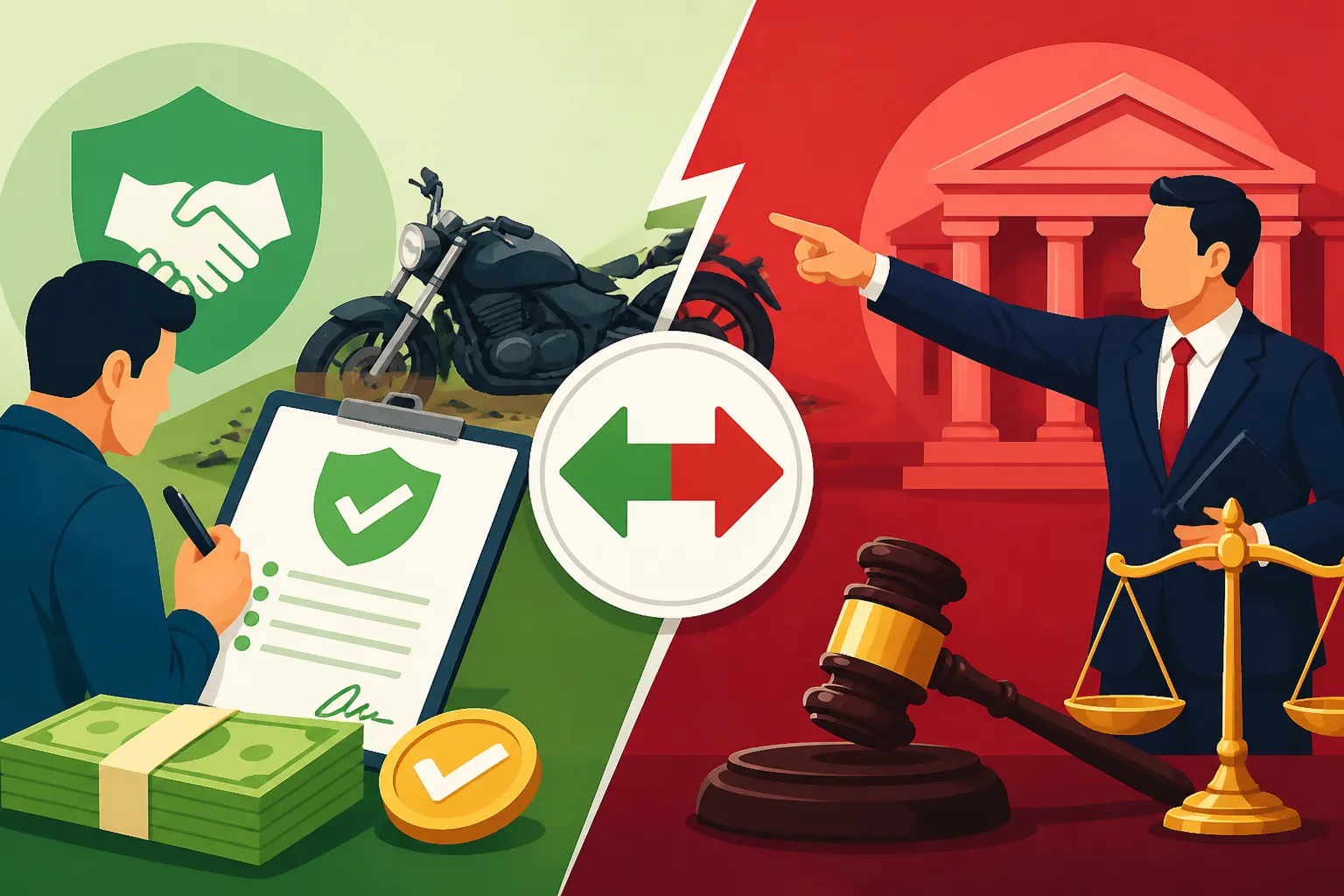
When to Escalate from Settlement to Lawsuit
It's incredibly frustrating when you're laid up after a motorcycle accident, dealing with pain, mounting medical bills, and lost income, only to have the at-fault driver's insurance company drag its feet or offer you a pittance. Many riders face this disheartening reality, feeling trapped between accepting an unfair settlement or navigating a complex legal system. This guide is here to help you understand when and how to consider taking that critical step of escalating your motorcycle accident claim from stalled settlement negotiations to a full-blown lawsuit, ensuring your rights and recovery are truly protected.
Why Settlement Negotiations Can Stall or Fail
When you're dealing with the aftermath of a motorcycle accident, the last thing you want is a drawn-out, contentious battle with insurance companies. Yet, for many riders, that's exactly what happens. Insurance adjusters, despite their polite demeanor, are ultimately looking out for their company's bottom line, which means minimizing payouts. This fundamental conflict of interest is often why negotiations can hit a wall, leaving you feeling frustrated and undervalued.
Lowball Offers and Insurer Tactics
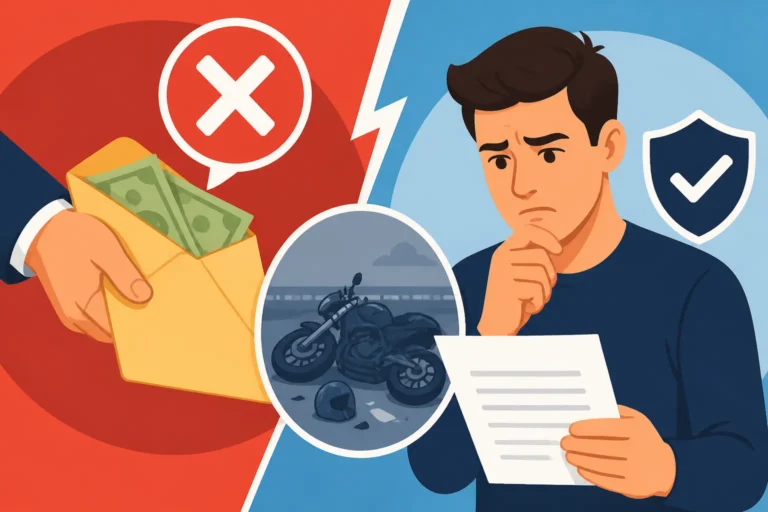
One of the most common frustrations riders face is receiving an initial settlement offer that feels insultingly low. You're dealing with physical pain, emotional distress, and significant financial burdens, only to be offered an amount that barely covers a fraction of your expenses. Companies like GEICO, State Farm, or Allstate are notorious for starting with lowball offers, especially if they sense you might be in a vulnerable position or unaware of your true claim's value.
They operate on the hope that you'll be desperate to resolve the situation and accept whatever is on the table, just to make the problem go away. They might delay communication, request excessive documentation, or even subtly suggest that you were partly to blame, even when the evidence clearly points otherwise. These tactics are designed to wear you down and push you toward a quick, cheap resolution that benefits them, not you. Understanding how insurance companies assign blame to riders is crucial here, as they often try to use stereotypes against motorcyclists.
Disputed Fault or Liability
Even in accidents that seem straightforward, the other driver's insurance company might fiercely dispute fault. They might argue that you were speeding, lane splitting, or otherwise negligent, attempting to shift some or all of the blame onto you. For instance, in a common scenario where a car makes a left turn in front of a motorcycle, the driver might claim they "didn't see" you, despite clear right-of-way rules. These kinds of disputes can bring settlement talks to a grinding halt because if fault is shared, your potential compensation can be significantly reduced under comparative negligence laws.
Imagine you're involved in a collision at an intersection where a car failed to yield. While you believe the driver is entirely at fault, their insurance company might point to a minor traffic infraction you committed hours earlier or claim you were riding too fast for conditions, even if untrue. This attempt to muddy the waters and introduce doubt about who is at fault in a motorcycle accident is a classic insurer strategy to reduce their payout obligation.
Undervalued Damages
Beyond fault, another major sticking point is often the valuation of your damages. While medical bills and property damage are relatively easy to quantify, insurance companies frequently undervalue the full scope of your losses, particularly non-economic damages. These include things like pain and suffering, emotional distress, loss of enjoyment of life, and the long-term impact of catastrophic injuries.
For example, a severe case of road rash might require multiple surgeries, skin grafts, and leave permanent scarring, but an insurer might only offer a fraction of what a fair settlement for road rash would entail, ignoring the ongoing physical discomfort, emotional trauma, and impact on your daily life. Similarly, if you suffered a traumatic brain injury (TBI), the long-term cognitive and emotional effects could be devastating, requiring extensive future medical care and therapies. Insurers are highly motivated to downplay these future costs and the true impact on your quality of life, which is a major factor in how motorcycle accident settlements are calculated.
Clear Signals It's Time to Consider a Lawsuit
Recognizing when settlement negotiations have truly run their course is a critical moment in your motorcycle accident claim. It's about understanding that continued negotiation might be futile and that a more assertive legal approach is necessary to secure the compensation you deserve. This decision isn't made lightly, but certain indicators strongly suggest that escalating to a lawsuit is your best path forward.
Reaching an Impasse in Negotiations
You've done everything right: you've collected evidence, documented your injuries, provided all necessary medical records, and your lawyer has sent a comprehensive demand letter detailing your damages. The insurance company has responded, perhaps with a counter-offer, but it's still far too low to cover your losses. You've gone back and forth, but they refuse to budge beyond a certain point, or their offers are only incrementally higher, still falling short of what is genuinely fair. This deadlock, often characterized by repeated low offers and a lack of meaningful engagement from the insurer, is a clear sign that you've reached an impasse.
At this stage, you've likely exhausted all reasonable avenues for negotiation. The insurer has made its stance clear, and they are unwilling to compromise further in an out-of-court setting. When this happens, it means the parties are simply too far apart in their valuations of the claim, and the only way to break that stalemate and move toward a fairer resolution is through the formal legal process of a lawsuit. Your lawyer will be able to tell you when to reject a settlement offer and when further negotiation would be unproductive.
Approaching the Statute of Limitations
Every state has a strict deadline, known as the statute of limitations, for filing a personal injury lawsuit. This is arguably the most critical deadline in your entire claim. Once this period expires, you generally lose your right to file a lawsuit, regardless of how strong your case might be or how severe your injuries. For example, in states like California, the statute of limitations for personal injury claims is typically two years from the date of the accident. If you don't file a lawsuit within that timeframe, your claim is essentially dead in the water.
As the statute of limitations draws near, if you haven't reached a fair settlement, your lawyer will advise you that it's time to file a lawsuit to preserve your legal rights. This isn't necessarily a declaration of war, but rather a necessary legal step to keep your options open. Filing a lawsuit gives you the power to compel discovery, which means you can legally demand evidence from the at-fault driver and their insurance company that they might otherwise withhold. It also pressures the insurer, as they now face the time, expense, and uncertainty of litigation. Understanding how long you have to file a claim is paramount.
Catastrophic Injuries and Complex Damages
Some motorcycle accidents result in injuries so severe they drastically alter a person's life forever. We're talking about things like spinal cord injuries leading to paralysis, severe traumatic brain injuries causing permanent cognitive impairment, or amputations. These types of catastrophic injuries involve not just immediate medical costs, but also a lifetime of future medical care, rehabilitation, lost earning capacity, home modifications, and profound emotional suffering. Trying to fully account for these complex, long-term damages through informal settlement negotiations is often impossible.
In such cases, the true value of your claim can easily exceed the at-fault driver's insurance policy limits, and the complexities involved in projecting future medical costs and lost wages often require expert testimony. A lawsuit allows for a thorough and detailed presentation of these damages, often utilizing medical experts, vocational rehabilitation specialists, and economists to paint a complete picture for a jury. When injuries are this severe, the goal is not just a quick payout, but truly comprehensive compensation to ensure your long-term well-being, which often means pursuing a lawsuit to maximize your motorcycle accident settlement.
The Process of Escalating to a Lawsuit
Deciding to escalate from settlement discussions to a formal lawsuit is a significant step, but it's often a necessary one to ensure justice. It changes the dynamic of your claim, moving it from informal back-and-forth directly with insurance adjusters to a structured legal proceeding overseen by the courts. Understanding this process can help demystify it and alleviate some of the natural apprehension you might feel.
Filing the Complaint
The first formal step in initiating a lawsuit is your attorney filing a "Complaint" with the appropriate civil court. This document legally notifies the court and the at-fault driver (now referred to as the "defendant") of your intention to sue. The Complaint outlines who you are (the "plaintiff"), who you are suing, the facts of the accident, the legal basis for your claim (e.g., negligence), and the specific damages you are seeking. It's a formal declaration of your case.
After the Complaint is filed, a legal process known as "service of process" occurs. This involves officially delivering a copy of the Complaint and a "Summons" to the defendant. The Summons informs them they are being sued and must respond to the court within a specific timeframe, typically 20 to 30 days, depending on the state. Their response, known as an "Answer," will either admit or deny the allegations made in your Complaint. This formal exchange officially commences the lawsuit.
Discovery Phase
Once the lawsuit is filed and the defendant has responded, the case enters the "discovery phase." This is an extensive, often lengthy period where both sides gather information, evidence, and testimony to prepare for trial or further settlement discussions. Think of it as peeling back every layer of the onion to uncover all relevant facts.
Discovery can involve several key components:
- Interrogatories: Written questions sent to the other party, which they must answer under oath. These often cover details about the accident, injuries, medical treatment, and financial losses.
- Requests for Production of Documents: Formal demands for specific documents, such as medical records, police reports, vehicle repair estimates, wage statements, and insurance policies. This is where evidence like a dashcam footage proving fault might be requested.
- Depositions: Oral testimonies taken under oath outside of court, usually in a lawyer's office, with a court reporter present to transcribe everything. You, the defendant, witnesses, and expert witnesses (like doctors or accident reconstructionists) might all be deposed. These are incredibly important for locking in testimony and assessing credibility.
- Requests for Admission: Formal requests asking the other party to admit or deny certain facts, which helps narrow down what issues are truly in dispute.
- Independent Medical Examinations (IMEs): The defendant's insurance company may request that you see a doctor of their choosing to evaluate your injuries. This is often a way for them to try and minimize the severity of your injuries.
The discovery phase is crucial because it allows both sides to understand the strengths and weaknesses of each other's case, which often leads to more realistic settlement discussions later on. This is where a skilled lawyer truly shines, meticulously preparing you and uncovering every piece of evidence to build a compelling case.
Mediation and Settlement Conferences
It's important to understand that even after a lawsuit is filed, most cases still settle before going to trial. The formal litigation process itself often creates new opportunities and incentives for settlement. Courts frequently mandate or encourage alternative dispute resolution methods, such as mediation or settlement conferences.
- Mediation: This involves a neutral third-party mediator, usually an experienced attorney or retired judge, who facilitates discussions between you and the defendant's legal team. The mediator doesn't make decisions but helps both sides explore compromises and reach a mutually agreeable settlement. It's confidential and can be incredibly effective, as both parties are often more willing to negotiate seriously when facing the costs and uncertainties of an impending trial. This is often the stage where you might discuss how to negotiate a motorcycle accident settlement with a fresh perspective.
- Settlement Conferences: These are usually ordered by the court and involve the judge presiding over the case, who will meet with both legal teams to explore settlement possibilities. The judge offers insights into the case's strengths and weaknesses, based on what they've seen during discovery, and encourages a resolution.
These opportunities for settlement post-filing are often more productive than pre-litigation negotiations because both sides have invested more time and money into the case, and the specter of trial is much closer.
Weighing the Pros and Cons of Litigation
Deciding whether to take your motorcycle accident claim to court is a monumental choice. It's not just about the money; it's about time, stress, and your mental well-being. A formal lawsuit can be a powerful tool to achieve justice, but it also comes with its own set of challenges. It's crucial to weigh these factors carefully with your attorney to make an informed decision.
Potential Benefits of Going to Court
Despite the daunting nature of a lawsuit, there are compelling reasons why it might be the right path for your claim, especially if you're not getting a fair shake through negotiations.
- Higher Potential Payout: Juries, unlike insurance adjusters, are not driven by company profits. They can be more sympathetic to a severely injured rider and are often willing to award significantly higher damages, especially for pain and suffering and future medical costs. If the at-fault driver's actions were particularly egregious (like drunk driving), a jury might even award punitive damages, which are designed to punish the wrongdoer and deter similar behavior. This is a key factor in how going to trial affects your payout.
- Full Compensation for All Damages: In a lawsuit, you can present a comprehensive case for all your damages, including the difficult-to-quantify ones. This includes economic damages like past and future medical expenses, lost wages, and loss of earning capacity, as well as non-economic damages such as emotional distress, loss of consortium, and reduced quality of life. An expert can testify on the long-term effects of a spinal cord injury or traumatic brain injury, ensuring these are fully acknowledged.
- Leveraging the Court's Power: Filing a lawsuit gives you legal power you don't have in informal negotiations. You can subpoena witnesses, demand specific documents, and force the other side to answer questions under oath during discovery. This can uncover critical evidence that an insurance company might have otherwise withheld, strengthening your case significantly.
- Justice and Accountability: For many riders, a lawsuit isn't just about money; it's about holding the responsible party accountable for their actions. It can provide a sense of closure and ensure that the negligent driver faces consequences for the harm they caused, potentially preventing similar accidents in the future.
Risks and Downsides of Litigation
While the potential benefits are significant, it's equally important to understand the inherent risks and downsides associated with filing a lawsuit.
- Time-Consuming Process: Litigation is not a quick fix. From filing the complaint to a potential trial and appeals, the process can take months, and often years, to resolve. This extended timeline can be emotionally and financially draining, especially when you're trying to recover from serious injuries. You might be waiting for your payout for a very long time.
- Increased Stress and Emotional Toll: Being involved in a lawsuit is inherently stressful. You'll undergo depositions, possibly an independent medical exam, and the constant back-and-forth of legal proceedings. Reliving the accident and detailing your injuries repeatedly can be emotionally taxing for you and your family.
- High Costs: Although most motorcycle accident lawyers work on a contingency fee basis (meaning they only get paid if you win), litigation involves significant "costs" that you might still be responsible for, win or lose. These can include court filing fees, deposition costs, expert witness fees (which can be very high), and investigative expenses. These costs can easily run into tens of thousands of dollars, and while many lawyers advance these, they are typically reimbursed from your settlement or award.
- Uncertain Outcome: A jury trial is inherently unpredictable. There's no guarantee of a favorable verdict, and even a strong case can be lost or result in a lower award than anticipated. Juries are composed of ordinary citizens who can be swayed by various factors, and the defense will do everything in its power to introduce doubt or diminish your credibility. The outcome is never certain, which adds a layer of risk to the entire process.
- Lack of Privacy: Unlike confidential settlement discussions, court proceedings are generally public record. Details about your accident, injuries, medical history, and financial losses can become part of the public domain.
Comparison: Settlement Negotiation vs. Formal Lawsuit
To help you visualize the differences, here's a quick comparison of what you can expect from each approach:
| Feature | Settlement Negotiation | Formal Lawsuit |
|---|---|---|
| Control | You and your lawyer have significant control over accepting/rejecting offers. | Control shifts to the court; judge/jury make final decisions. |
| Timeline | Generally faster, weeks to months for simple cases. | Much longer, often 1-3 years or more, due to discovery and court schedules. |
| Costs | Lower; primarily attorney fees (contingency) and basic administrative costs. | Significantly higher; more expert fees, court filings, depositions, potentially trial costs. |
| Privacy | Private discussions, confidential outcomes. | Public record; court documents and proceedings are accessible. |
| Stress Level | Manageable, though can be frustrating and uncertain. | High, due to uncertainty, time commitment, adversarial process, and public scrutiny. |
| Outcome Range | Limited by insurance policy limits and negotiation strength; predictable to an extent. | Potentially higher awards, including punitive damages in some cases; outcome highly uncertain. |
| Discovery | Informal exchange of information. | Formal, legally binding information gathering (depositions, interrogatories, etc.). |
| Decision Maker | You and the insurance company. | Judge and/or jury. |
The Indispensable Role of a Motorcycle Accident Lawyer
Navigating the complexities of a motorcycle accident claim, whether through settlement or litigation, is virtually impossible without experienced legal representation. A skilled motorcycle accident attorney is not just a legal advocate; they are your guide, protector, and strategist throughout this challenging journey.
Expert Guidance and Negotiation
A seasoned motorcycle accident lawyer understands the intricacies of personal injury law and the specific challenges faced by riders. They know how to accurately assess the full value of your claim, accounting for both present and future damages. They also recognize the insidious tactics insurance companies employ to devalue your claim and will not be intimidated by lowball offers or delay tactics. They know when to push harder, when to stand firm, and, most importantly, when to tell you that the insurer is simply not negotiating in good faith.
Your lawyer will meticulously prepare your case, gather all necessary evidence, and present it persuasively to the insurance company. They'll draft a powerful demand letter, citing relevant case law and statutes, and highlighting the full extent of your injuries and losses. This professional presentation often forces insurers to take your claim more seriously. They understand the language of the law and can counter unfair fault assignments, like those found in "I Didn't See the Motorcycle" Defense Explained, with solid evidence and legal arguments.
Trial Preparation and Representation
Should your case require escalation to a lawsuit, your attorney becomes your champion in the courtroom. From the moment the complaint is filed, they manage every aspect of the litigation. This includes drafting and filing all necessary legal documents, managing the intensive discovery process, preparing you for depositions, and engaging with expert witnesses (such as accident reconstructionists or medical specialists) to strengthen your case.
They are adept at handling all phases of trial preparation, from selecting a jury to crafting compelling opening and closing statements. Their experience in presenting evidence, cross-examining witnesses, and arguing legal points effectively in court is invaluable. When a lawyer recommends going to trial, it's not a decision made lightly; it's because they genuinely believe it offers the best chance for you to secure fair compensation that truly reflects the severity of your injuries and losses. They are prepared to fight for you every step of the way, ensuring your story is heard and understood by the judge and jury.
Disclaimer
Please remember that this information is intended for educational purposes only and does not constitute legal advice. Every motorcycle accident claim is unique, and the information provided here may not apply to your specific situation. It is crucial to consult with a qualified motorcycle accident attorney to discuss the details of your case and understand your legal options.