How to Know If an Offer Is Too Low
You've been through a harrowing experience, the kind no rider ever wants to face. After the shock, the pain, and the endless medical appointments following a motorcycle accident, the insurance company finally comes forward with a settlement offer. You open it, scan the numbers, and a sinking feeling hits you: it just doesn't feel right. This guide is here to equip you with the knowledge to identify a lowball offer and understand the true value of your motorcycle accident claim.
Understanding the Insurer's Mindset
When you receive a settlement offer from an insurance company, it's vital to remember that they are not on your side, no matter how friendly or sympathetic the adjuster sounds. Insurance companies are businesses, and their primary goal is to protect their bottom line, which often means paying out as little as possible on claims. They are masters of minimizing payouts, and they have sophisticated systems designed to do just that.
The Lowballing Tactic
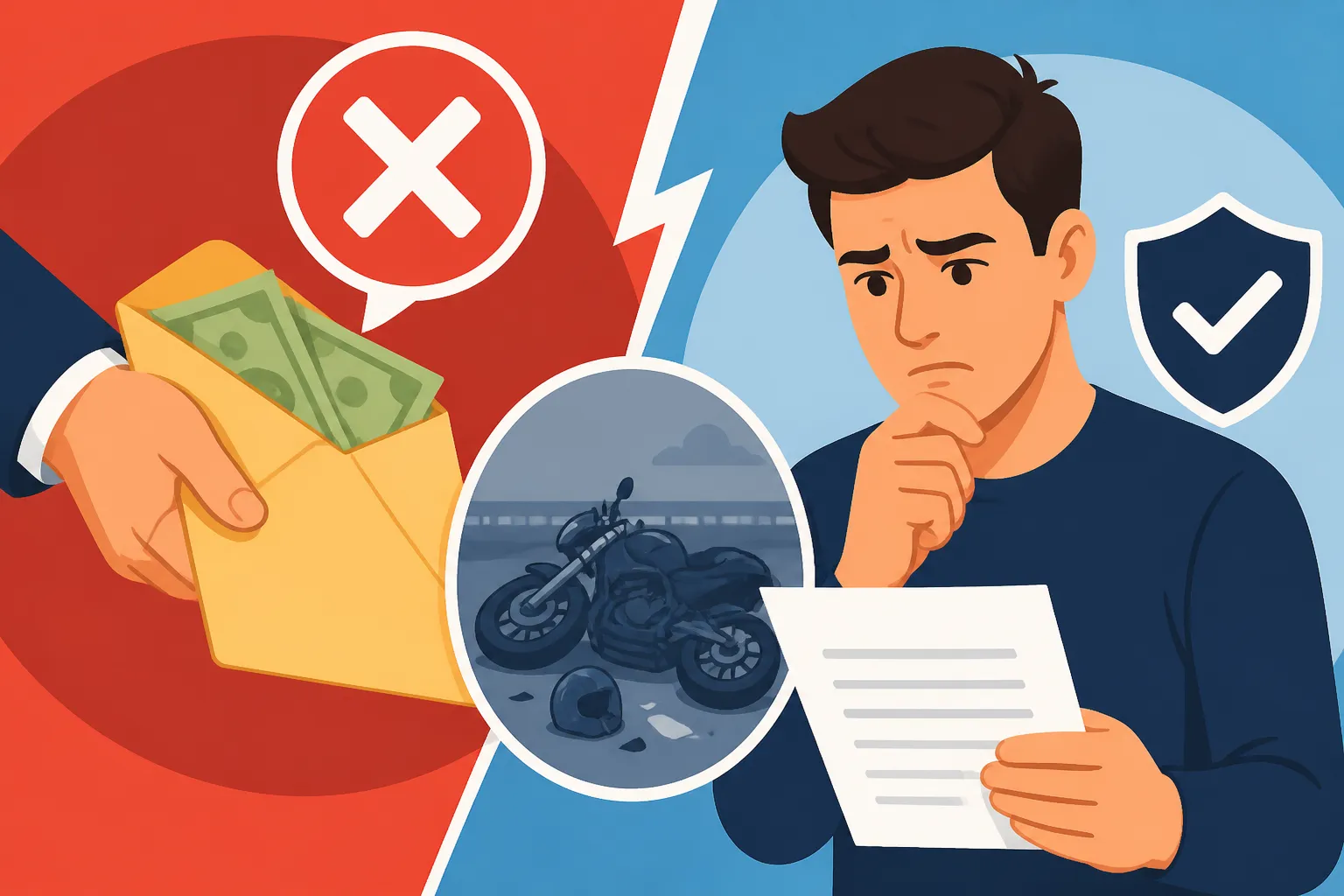
It's an unfortunate reality, but many insurance companies will start with a lowball offer, especially to unrepresented claimants. They do this for several reasons. Firstly, they're testing the waters to see if you're knowledgeable about your rights and the actual value of your claim. If you don't push back, they win. Secondly, they understand that accident victims are often under financial strain and emotional stress, making them more likely to accept a quick, albeit inadequate, offer to simply put the ordeal behind them. This initial offer is rarely, if ever, their best offer. They expect you to negotiate, and their first figure is simply a starting point in that negotiation.
How Insurers Value Motorcycle Claims
Insurance companies have complex algorithms and adjusters trained to assess claims, often from a perspective that minimizes their liability. They look at several factors when assigning a value to your motorcycle accident claim, but they'll often emphasize those that reduce the payout. They will meticulously scrutinize every detail: the police report, witness statements, your medical records, and even your riding history. They'll search for any evidence that might suggest you were partially at fault in the accident, which, depending on your state's laws on comparative negligence, could significantly reduce the amount they have to pay. For example, if they can argue you were speeding or that your actions contributed to the crash, even slightly, they'll use that against you. Understanding How Insurance Companies Assign Blame to Riders is crucial here, as they often leverage stereotypes against motorcyclists.
Common Red Flags in Initial Offers
Recognizing a lowball offer isn't always easy, especially when you're overwhelmed. However, there are some clear red flags that should immediately raise your suspicion. One of the biggest is an offer made very quickly after your accident, sometimes before you've even fully grasped the extent of your injuries or completed your medical treatment. This is a tactic to get you to settle before you know the true cost of your recovery. Another red flag is an offer that only seems to cover your immediate medical bills and perhaps property damage, completely ignoring your lost wages, future medical needs, or the immense pain and suffering you've endured. If the adjuster downplays your injuries, suggests you didn't need certain treatments, or implies that your claim is less significant than you feel it is, these are also strong indicators that they're trying to undervalue your experience. You should be especially wary if they try to get you to sign anything that releases them from further liability for your injuries, particularly early in your recovery process.
Calculating Your Damages: What Your Claim Is Really Worth
To truly know if an offer is too low, you need a clear understanding of what your motorcycle accident claim is actually worth. This isn't just about the bills you have in hand right now; it encompasses a wide range of losses, both tangible and intangible, that stem from the accident. Your claim's value should fully compensate you for all the harm you've suffered.
Economic Damages: The Tangible Losses
Economic damages are the easily quantifiable financial losses directly caused by your motorcycle accident. These are often the easiest to calculate because they come with receipts, bills, and wage statements.
- Medical Expenses: This is usually the largest component of economic damages. It includes everything from emergency room visits, ambulance rides, doctor consultations, diagnostic tests (X-rays, MRIs, CT scans), surgeries, physical therapy, prescription medications, and even future medical treatments or ongoing care that your doctor anticipates you'll need. Make sure to account for all follow-up appointments and potential specialist visits. For a deeper dive, check out How Medical Bills Affect Your Settlement.
- Lost Wages and Earning Capacity: If your injuries prevented you from working, you're entitled to compensation for your lost income. This isn't just for the time you've already missed; it also includes any future wages you might lose if your injuries prevent you from returning to your job at the same capacity, or if you have to take a lower-paying job due to disability. This is known as "loss of earning capacity" and can be a significant amount, especially for riders with severe or permanent injuries.
- Property Damage: This covers the cost to repair or replace your motorcycle, helmet, riding gear, and any other personal property damaged in the crash. Don't forget the value of your damaged gear; a quality helmet, jacket, and boots aren't cheap and can be fully reimbursed.
- Out-of-Pocket Expenses: Think about all the smaller costs that add up: transportation to medical appointments, childcare if you were unable to care for your children, modifications to your home or vehicle to accommodate a disability, or even hiring help for household chores you can no longer perform. These expenses might seem minor individually, but they contribute to your overall financial burden.
Non-Economic Damages: The Intangible Costs
While harder to put a specific dollar figure on, non-economic damages are often a very significant part of a motorcycle accident settlement, especially given the severity of injuries common in these crashes. These damages compensate you for the subjective, non-monetary losses you've experienced.
- Pain and Suffering: This refers to the physical pain and discomfort you've endured, from the moment of the crash through your recovery, and any chronic pain you might experience in the future. The intensity, duration, and impact on your daily life are all considered.
- Emotional Distress: Motorcycle accidents can be deeply traumatic. Many riders experience anxiety, depression, PTSD (Post-Traumatic Stress Disorder), fear of riding again, sleep disturbances, and other psychological impacts. These emotional tolls are very real and deserve compensation.
- Loss of Enjoyment of Life: This covers the inability to participate in hobbies, activities, or aspects of life that you once enjoyed due to your injuries. Maybe you can no longer ride your motorcycle, play with your kids, hike, or engage in sports. This loss of quality of life is a significant damage.
- Scarring and Disfigurement: Many motorcycle accidents result in severe road rash, fractures, or other injuries that leave permanent scars or disfigurement. The emotional and psychological impact of these visible injuries, especially on your self-esteem and social interactions, is compensable.
- Loss of Consortium: If your spouse has suffered due to your injuries – for example, loss of companionship, affection, or ability to perform household duties – they may have a claim for loss of consortium.
For a comprehensive breakdown of these types of losses, you might find our guide on Economic Damages Explained and Non-Economic Damages Explained helpful.
The Impact of Injury Severity and Long-Term Effects
The severity of your injuries is arguably the most significant factor influencing the value of your claim. A minor fender-bender with a few scrapes will naturally result in a much lower settlement than an accident causing a traumatic brain injury or spinal cord damage. Catastrophic injuries that lead to permanent disability, require lifelong care, or prevent you from ever working again will command the highest settlements. Insurers will look at how your injuries impact your entire life – not just the immediate aftermath, but years into the future. They will consider your prognosis, whether you've reached Maximum Medical Improvement (MMI), and the expert opinions of your doctors regarding long-term care needs. This is where Pain and Suffering in Motorcycle Settlements truly comes into play, as severe injuries dramatically increase this component.
Here's a simplified table illustrating how different factors contribute to your claim's overall value:
| Damage Category | Examples of Losses | Impact on Settlement Value |
|---|---|---|
| Economic | Medical bills (past & future), Lost wages (past & future), Property damage, Out-of-pocket expenses (e.g., transportation, home care) | Directly quantifiable; forms the base of the claim. Higher actual costs lead to higher value. |
| Non-Economic | Physical pain, Emotional distress, Mental anguish, Loss of enjoyment of life, Scarring/disfigurement, Loss of companionship/consortium (for spouse) | Subjective but often substantial. Directly proportional to injury severity, duration of suffering, and impact on daily life. |
| Injury Severity | Minor injuries (e.g., scrapes, bruises, mild whiplash) vs. Catastrophic injuries (e.g., TBI, spinal cord injury, amputation, multiple fractures) | The single most significant driver of settlement value. Severe, permanent injuries warrant much higher compensation. |
| Fault | Other driver 100% at fault vs. Shared fault (e.g., you were 20% responsible) | Your percentage of fault, if any, will directly reduce your payout in most states. |
| Evidence Quality | Detailed medical records, police reports, witness statements, accident reconstruction, photos/videos, expert testimony vs. Scanty, unorganized evidence | Strong, clear evidence substantiates all claims, leading to a higher, more defensible settlement. |
| Insurance Limits | Low bodily injury limits (e.g., $25k) vs. High limits (e.g., $250k or more) | Caps the maximum recovery from the at-fault driver's policy. Your own UM/UIM coverage can extend this. |
Factors That Reduce Your Potential Payout
Beyond the insurance company's inherent desire to minimize costs, several legitimate factors can actually reduce the maximum amount you can recover, even if your damages are extensive. Being aware of these can help you better assess any offer you receive.
Comparative Negligence and Shared Fault
One of the most impactful factors that can reduce your settlement is shared fault or "comparative negligence." This legal principle acknowledges that sometimes more than one party can contribute to an accident. For example, if the car driver pulled out in front of you (a Left-Turn Motorcycle Accident Explained scenario), but you were going slightly over the speed limit, a portion of the fault might be assigned to you.
Most states follow some form of comparative negligence. In states like California, which uses "pure comparative negligence," you can recover damages even if you are 99% at fault, though your payout will be reduced by your percentage of fault. So, if your damages are $100,000 but you are found 20% at fault, your recovery would be $80,000. Other states use "modified comparative negligence" rules, such as the "51% rule" or the "50% rule," where you can only recover if you are less than 51% or 50% at fault, respectively. If your fault exceeds that threshold, you might recover nothing. Insurance companies will aggressively try to pin some blame on you, knowing it directly reduces their payout. Understanding Comparative Negligence in Motorcycle Accidents is critical for every rider.
Insurance Policy Limits
Even if your damages are astronomical, your settlement is ultimately capped by the at-fault driver's insurance policy limits. For instance, if you suffer $500,000 in injuries but the at-fault driver only carries the state minimum of $25,000 in bodily injury liability coverage (which is common in many states like Florida), that $25,000 is often the maximum you can recover from their policy. This can be an incredibly frustrating reality for accident victims.
However, this isn't necessarily the absolute ceiling. Your own uninsured/underinsured motorist (UM/UIM) coverage on your motorcycle policy can kick in to cover the difference, up to your policy limits. This is why having robust UM/UIM coverage is so important. Without it, recovering damages beyond the at-fault driver's paltry limits can become a much more complex and often unrewarding endeavor, potentially requiring you to pursue the at-fault driver's personal assets – a path often fraught with difficulty. For more details, explore How Insurance Policy Limits Affect Your Payout.
Gaps in Medical Treatment or Poor Documentation
Insurance companies love to exploit any perceived weakness in your claim. A common tactic is to argue that gaps in your medical treatment indicate your injuries weren't severe or weren't caused by the accident. If you waited weeks to see a doctor after the crash, or if you skipped recommended physical therapy appointments, the insurer might claim that your injuries either healed on their own, weren't serious enough to warrant continuous care, or that a new injury occurred between treatments. This can significantly reduce the value of your claim, as they'll argue they shouldn't be responsible for damages stemming from these gaps.
Similarly, poor documentation can hurt your case. If you don't keep meticulous records of all medical appointments, bills, prescriptions, lost workdays, and even a pain journal detailing your daily struggles, it becomes harder to prove the full extent of your damages. The more thoroughly you document everything, the harder it is for the insurance company to dispute your losses.
Practical Steps When You Receive a Low Offer
Receiving a lowball offer can feel disheartening, but it's not the end of the road. It’s a call to action, signaling that you need to be strategic and prepared.
Never Accept the First Offer
This is perhaps the most important piece of advice: never accept the insurance company's initial settlement offer, especially if it arrives quickly or seems to undervalue your suffering. This first offer is almost always a lowball, designed to see if you'll cave under pressure. Accepting it too soon means you forfeit your right to seek additional compensation later, even if your injuries worsen or new complications arise. Remember, once you sign that release, there's no going back. Take your time, assess the offer against your actual losses, and prepare to negotiate. You can find more strategies in How to Negotiate a Motorcycle Accident Settlement.
Document Everything Meticulously
From the moment of your accident, documentation is your best friend. This includes:
- Medical Records: Keep every single record from every doctor, specialist, physical therapist, and hospital visit. This includes bills, diagnoses, treatment plans, and prognoses.
- Lost Wage Statements: Gather pay stubs, employment records, and a letter from your employer confirming your missed workdays and salary.
- Accident Photos and Videos: If you took photos at the scene of your Common Causes of Motorcycle Accidents, showing vehicle damage, road conditions, traffic signals, and your injuries, these are invaluable.
- Police Report: Obtain a copy of the official police report. While not always definitive, it provides an official account and often contains crucial details.
- A Pain Journal: Keep a daily diary detailing your pain levels, how your injuries impact your daily activities, your emotional state, and any limitations you face. This helps quantify your non-economic damages.
- Receipts for Out-of-Pocket Expenses: Document every dollar spent, from transportation to medical appointments to assistive devices.
The more comprehensive your documentation, the stronger your position when you challenge a low offer.
Seeking Professional Legal Advice
Perhaps the most impactful step you can take when faced with a low offer is to consult with an experienced motorcycle accident lawyer. Insurers often act differently when they know you have legal representation. They know a lawyer understands the intricacies of personal injury law, the true value of your damages, and is prepared to go to trial if necessary. A lawyer can:
- Evaluate Your Claim Accurately: They can calculate the full extent of your economic and non-economic damages, ensuring nothing is overlooked.
- Handle Negotiations: They are skilled negotiators who can counter the insurance company's tactics and fight for fair compensation.
- Gather Evidence: They can help you collect all necessary documentation, including expert witness testimony if needed, to strengthen your case.
- Protect Your Rights: They ensure you don't inadvertently say or do anything that could jeopardize your claim.
- Represent You in Court: If negotiations fail, they can file a lawsuit and represent you in court.
Many personal injury attorneys work on a contingency fee basis, meaning you don't pay anything upfront, and they only get paid if they win your case. This makes quality legal representation accessible to everyone, regardless of their financial situation. If you're wondering Do You Need a Motorcycle Accident Lawyer, especially after receiving a questionable offer, the answer is almost always yes. A lawyer's involvement typically leads to significantly higher settlements, even after their fees are factored in, as they help maximize your total recovery.
Disclaimer
The information provided in this guide is for informational purposes only and does not constitute legal advice. Every motorcycle accident claim is unique, and the value of your case depends on its specific facts and circumstances. It is highly recommended to consult with a qualified legal professional for advice regarding your individual situation.