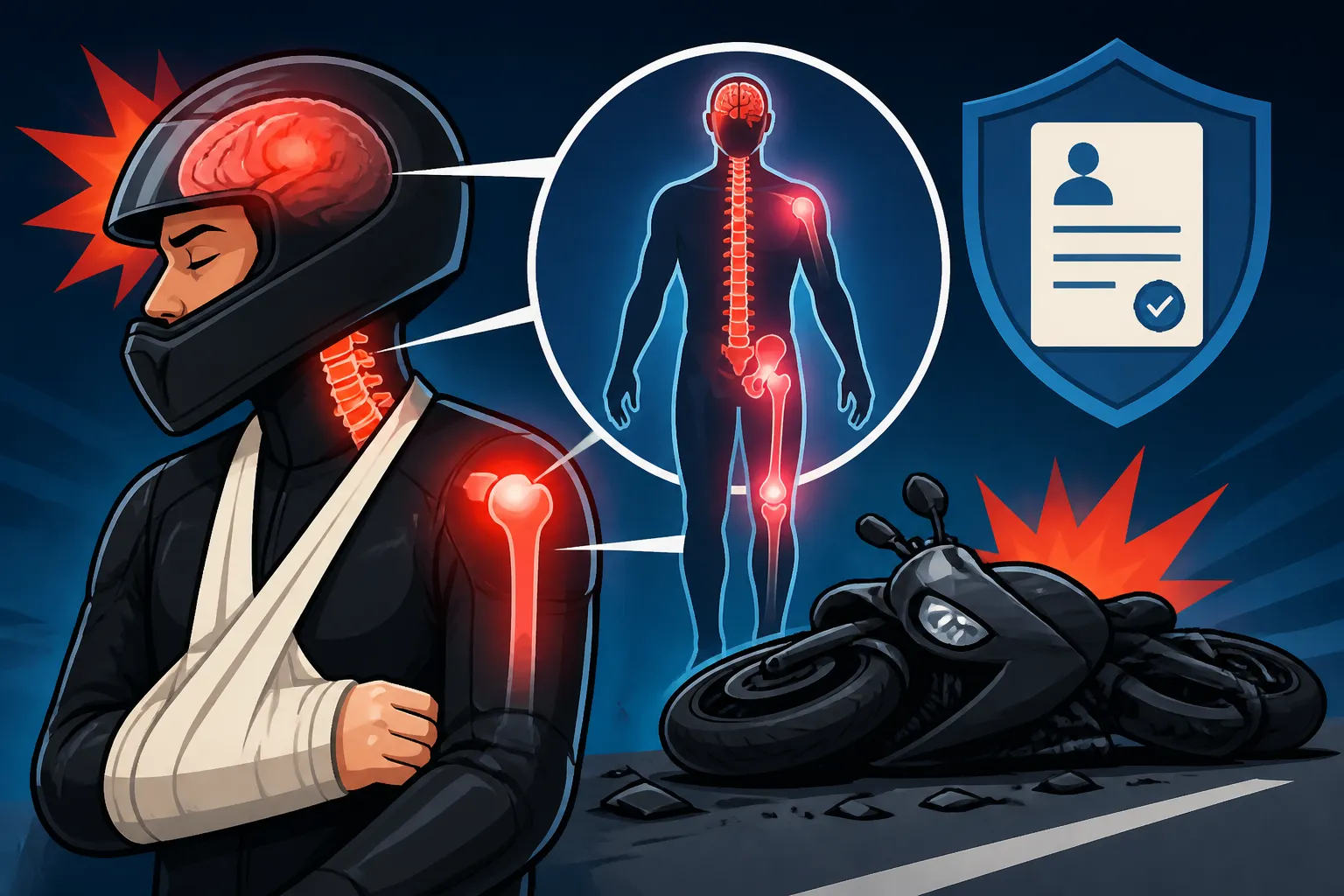
Catastrophic Motorcycle Injuries Explained
Experiencing a motorcycle accident is a terrifying ordeal, but when those crashes result in truly devastating, life-altering injuries, the impact can feel utterly insurmountable. You're not just dealing with physical pain; you're facing a future that looks starkly different from anything you ever imagined, filled with complex medical needs, overwhelming expenses, and profound emotional distress. This comprehensive guide is here to demystify what catastrophic motorcycle injuries mean, exploring their common forms, long-term consequences, and how they shape your journey toward recovery and compensation.
Understanding Catastrophic Injuries in a Motorcycle Accident Claim
Motorcycle accidents often result in severe injuries due to the lack of protective enclosure compared to a car. While any injury can be painful and disruptive, a "catastrophic injury" carries a specific legal and medical weight, signifying a permanent, debilitating impact on a person's life. It's a term that acknowledges the profound shift in your physical, emotional, and financial well-being.
What Defines a Catastrophic Injury?
Legally and medically, a catastrophic injury is generally understood as a severe injury to the brain, spinal cord, or other parts of the body that significantly alters a person's life, often resulting in permanent disability, chronic pain, or a drastic reduction in their ability to perform daily activities or maintain gainful employment. Think beyond a broken bone that heals fully. We're talking about injuries that require long-term medical care, extensive rehabilitation, and often, modifications to one's home and lifestyle. These aren't just injuries that heal over time; they're injuries that fundamentally change who you are and how you live. The term is crucial in personal injury claims because it helps convey the immense scale of damages incurred, pushing claims into a different league compared to those involving more temporary or less severe harm.
For example, a compound fracture that heals perfectly after surgery might be severe, but it’s not typically considered catastrophic. However, a spinal cord injury leading to paraplegia, or a traumatic brain injury that results in cognitive impairment and personality changes, unquestionably falls into the catastrophic category. The distinction lies in the permanency and the all-encompassing nature of the damage. Insurance companies, unfortunately, often try to downplay the severity of injuries, making it critical to clearly define and prove the catastrophic nature of your harm.
Why Motorcycles Lead to More Severe Injuries
It's an unfortunate truth that motorcyclists are inherently more vulnerable on the road. Unlike occupants of cars, trucks, or SUVs, riders lack the steel cage, airbags, and seatbelts that provide crucial protection in a collision. When a motorcycle is involved in a crash, especially with a larger vehicle, the rider is typically ejected from the bike, leading to direct impact with the road, other vehicles, or roadside objects. This exposure significantly increases the risk and severity of injuries sustained.
Consider a scenario where a driver fails to yield the right-of-way at an intersection, colliding with an oncoming motorcycle. In a car, the driver might suffer whiplash and bruising. The motorcyclist, however, could be thrown dozens of feet, sustaining multiple fractures, head trauma, and severe road rash. Even at relatively low speeds, the direct impact and lack of crumple zones mean that the rider's body bears the brunt of the kinetic energy. This inherent vulnerability is a major reason why motorcycle accidents frequently result in the types of catastrophic injuries we're discussing. It's not about reckless riding; it's about the fundamental physics of a collision when one party is almost entirely unprotected.
The Immediate Aftermath of a Catastrophic Accident
The moments, hours, and days following a catastrophic motorcycle accident are chaotic, traumatic, and utterly overwhelming. For the injured rider, it's a blur of pain, medical procedures, and a terrifying uncertainty about the future. For their loved ones, it's a desperate vigil at a hospital, grappling with medical jargon and the grim realities presented by doctors. The focus immediately shifts to life-saving measures, stabilization, and intensive care.
During this critical period, vital evidence can be lost if not secured promptly. While your absolute priority is your health, it's important for family members or trusted friends to understand the importance of immediate actions, such as preserving the damaged motorcycle and gear, documenting the accident scene if possible, and ensuring medical records are meticulously kept. From the emergency room to the intensive care unit, every medical assessment, diagnosis, and treatment plan becomes a crucial piece of the puzzle for your future claim. This initial phase sets the stage for everything that follows, from the long road to recovery to the complex process of seeking justice and compensation. Early documentation and medical attention are paramount, not just for your health but for establishing the full scope of your injuries.
Types of Catastrophic Injuries and Their Impact
When we talk about catastrophic injuries, we're not just talking about severe pain; we're talking about fundamental changes to how a person lives, moves, thinks, and interacts with the world. These injuries often require lifelong care and can profoundly impact a person's independence and quality of life.
Traumatic Brain Injuries (TBIs)
Traumatic Brain Injuries (TBIs) are tragically common in motorcycle accidents and are perhaps one of the most devastating forms of catastrophic harm. Even with a helmet, the sheer force of impact can cause the brain to violently collide with the inside of the skull, leading to bruising, swelling, bleeding, and tearing of brain tissue. A TBI can range from a mild concussion to a severe, life-altering injury. However, when we talk about catastrophic TBIs, we're discussing those that result in permanent neurological damage.
Imagine a rider, let's call him Mark, who was hit by a car that ran a stop sign. Mark was wearing a DOT-approved helmet, but the impact was so severe that he suffered a diffuse axonal injury (DAI), a type of TBI where nerve fibers throughout the brain are torn. Post-accident, Mark might struggle with memory loss, difficulty concentrating, changes in personality, speech impediments, and problems with motor skills. His wife, Sarah, might find that the "old Mark" is gone, replaced by someone who is easily agitated, confused, and unable to perform tasks he once found simple. These changes aren't just frustrating; they can render someone unable to work, maintain relationships, or even care for themselves independently. The costs associated with a TBI can be astronomical, covering everything from immediate neurosurgery to long-term cognitive therapy, speech therapy, and assistive living arrangements. The article "Motorcycle Accident Traumatic Brain Injuries" delves deeper into these specific challenges.
Spinal Cord Injuries (SCIs) and Paralysis
Another horrific consequence of severe motorcycle accidents can be a Spinal Cord Injury (SCI). The spinal cord is the body's central communication highway, transmitting signals between the brain and the rest of the body. When this delicate structure is damaged, often due to violent compression or severing during a crash, the consequences can be immediate and life-changing, leading to partial or complete paralysis below the point of injury.
Consider Maria, a seasoned rider, who was rear-ended by a distracted driver at a red light. The force of the impact caused her to be thrown forward, fracturing vertebrae in her neck and severely damaging her spinal cord. She awoke in the hospital to the crushing reality of being a quadriplegic, meaning she lost sensation and motor control in all four limbs. Maria's life, once active and independent, was instantly transformed. She now requires round-the-clock care, specialized medical equipment like a power wheelchair, and ongoing physical therapy just to maintain basic functions. The emotional toll is immense, grappling with the loss of autonomy and the constant physical challenges. Financial damages in cases like Maria's aren't merely about current medical bills; they encompass future medical care, home modifications, assistive technology, lost earning potential, and the profound emotional and psychological suffering for the rest of her life. Learning more about "Spinal Cord Injuries from Motorcycle Accidents" can illuminate the complexities of these devastating injuries.
Amputations and Severe Limb Loss
While perhaps less talked about than TBIs or SCIs, amputations and severe limb loss are undeniably catastrophic injuries frequently seen in motorcycle accidents. When a limb is crushed, severed, or so badly damaged that it cannot be saved, surgical amputation becomes necessary. This is not just a physical loss but an emotional and psychological one as well.
Imagine David, a young father, who was involved in a collision where a large commercial truck veered into his lane. His left leg was caught between the motorcycle and the truck, sustaining catastrophic crush injuries that necessitated an above-the-knee amputation. David's journey immediately became one of adapting to life with a prosthetic, enduring phantom limb pain, and undergoing intensive physical therapy to learn how to walk and navigate the world again. Beyond the physical challenges, there's the profound emotional impact – grappling with body image, loss of previous hobbies like hiking or sports, and the psychological adjustment to a completely new way of living. The cost of advanced prosthetics, which need to be replaced periodically and often come with substantial maintenance, along with rehabilitation and psychological counseling, constitutes a massive long-term financial burden. These are not temporary setbacks; they are permanent alterations that demand continuous adaptation and care.
Severe Burns and Disfigurement
Motorcycle accidents can also lead to severe burns and permanent disfigurement, especially if the bike catches fire or if the rider slides across abrasive surfaces at high speeds. While "road rash" is a common motorcycle injury, catastrophic burns go far beyond superficial scrapes. These involve deep tissue damage, often requiring multiple skin grafts, extensive surgeries, and long, painful recovery periods.
Consider Emily, who was thrown from her bike after being cut off by another driver. Her motorcycle skidded and ignited, engulfing her lower body in flames before first responders could extinguish them. Emily sustained third-degree burns across her legs and torso, requiring weeks in a burn unit, followed by numerous painful skin graft operations. Her recovery involved years of physical therapy to regain mobility, dealing with constant itching, scarring that limits movement, and a profound change in her physical appearance. The emotional trauma of such disfigurement, particularly for a young individual, can lead to severe depression, anxiety, and social withdrawal. These types of injuries require not only extensive medical intervention but also potentially cosmetic surgeries, specialized garments, and lifelong psychological support. The impact on self-esteem, relationships, and career can be immense, solidifying their status as catastrophic injuries.
The Long-Term Consequences of Catastrophic Injuries
The immediate medical crisis after a catastrophic motorcycle accident is just the beginning. The true measure of these injuries lies in their enduring impact on every facet of a survivor's life, shaping their future in ways most people can't imagine. It's a journey filled with hurdles, adjustments, and often, a profound sense of loss.
Permanent Disability and Loss of Function
One of the most heartbreaking long-term consequences of catastrophic motorcycle injuries is the onset of permanent disability and a significant loss of function. This isn't just about being unable to do certain things for a while; it's about a fundamental alteration of a person's physical and sometimes cognitive capabilities that will last for the remainder of their life. For riders who once thrived on physical independence and freedom, this can be an incredibly difficult reality to accept.
Imagine a construction worker, once strong and capable, who suffers a severe spinal cord injury in a motorcycle crash, leaving him permanently paralyzed from the waist down. Not only can he no longer perform his physically demanding job, but even simple daily tasks like getting out of bed, showering, or preparing meals become monumental challenges, often requiring assistance. This loss of physical autonomy can be profoundly depressing and can lead to a complete re-evaluation of one's identity and purpose. Beyond physical limitations, catastrophic brain injuries can result in cognitive impairments that hinder memory, problem-solving, and emotional regulation, making it impossible to return to intellectual work or even engage in complex conversations. The shift from full independence to relying on others, or specialized equipment, creates an ongoing need for support and resources, making the phrase "loss of function" a massive understatement of the real-world impact.
Chronic Pain and Psychological Trauma
Beyond the visible injuries and functional limitations, catastrophic motorcycle accidents often leave an invisible, yet equally debilitating, legacy: chronic pain and profound psychological trauma. This persistent suffering can haunt survivors for years, if not a lifetime, impacting their mental health, relationships, and overall quality of life.
Consider a rider who endured multiple severe fractures and internal injuries. Even after surgeries and extensive physical therapy, they might live with daily, unyielding chronic pain – a constant ache, nerve pain, or stiffness that never fully subsides. This pain isn't just uncomfortable; it can disrupt sleep, limit participation in social activities, and make even simple pleasures unbearable. This physical agony is often compounded by deep psychological wounds. Many survivors experience Post-Traumatic Stress Disorder (PTSD), flashbacks, severe anxiety when near motorcycles or even cars, depression, and significant emotional distress. The psychological toll can be as debilitating as the physical injuries, leading to social isolation, strained family relationships, and an inability to find joy in activities once loved. This combination of chronic physical pain and mental anguish creates a complex, ongoing challenge that requires specialized medical and psychological intervention, highlighting how "Pain and Suffering in Motorcycle Settlements" often accounts for a substantial portion of damages.
Financial Burdens: Medical Costs and Lost Earning Capacity
Perhaps one of the most overwhelming long-term consequences of catastrophic motorcycle injuries is the monumental financial burden they impose. This isn't just about a few emergency room bills; it's about a lifetime of expenses that can quickly bankrupt a family if not properly addressed through a comprehensive settlement or legal action. The initial medical treatments, while critical, are just the tip of the iceberg.
Let's look at the numbers. A severe spinal cord injury can cost millions of dollars over a lifetime, encompassing initial hospitalization, surgeries, specialized rehabilitation facilities, ongoing physical and occupational therapy, medications, durable medical equipment (like wheelchairs and hospital beds), home modifications (ramps, wider doorways, accessible bathrooms), and potentially the cost of in-home care or assisted living. For a traumatic brain injury, costs can include neuropsychological evaluations, cognitive rehabilitation, speech therapy, and psychiatric care for behavioral changes. These are not one-time expenses but continuous, escalating costs. On top of this, most catastrophic injury survivors face a significant, if not complete, loss of earning capacity. They may be unable to return to their pre-accident job, or any job at all, resulting in a devastating loss of income that was meant to support themselves and their families. This double blow of massive expenses and lost income creates an urgent need for substantial compensation to ensure the survivor's long-term financial security. The article "Economic vs Non-Economic Damages Explained" provides more context on these different types of losses.
Documenting Catastrophic Injuries for Your Claim
When pursuing a motorcycle accident claim involving catastrophic injuries, the quality and thoroughness of your documentation are absolutely paramount. This isn't merely about telling your story; it's about providing irrefutable evidence of the full scope of your injuries, their impact, and your ongoing needs. Without meticulous record-keeping, even the most legitimate claims can be significantly undermined by skeptical insurance adjusters.
The Critical Role of Medical Records
Your medical records are the backbone of any personal injury claim, and for catastrophic injuries, they become the indispensable narrative of your suffering and need. From the moment emergency responders arrive on the scene to every follow-up appointment, physical therapy session, and surgical procedure, every piece of paper, every digital entry, and every scan tells a vital part of your story. Insurance companies will scrutinize these documents to understand the extent of your injuries, the treatment you received, and how those injuries directly relate to the accident.
Think about it: if you suffered a severe spinal cord injury, your medical records would detail the initial diagnosis, X-rays, MRIs, surgical reports, daily nursing notes, rehabilitation progress reports, prescribed medications, and physician prognoses. These documents not only prove what injuries you sustained but also how those injuries are being treated and the long-term outlook for your recovery and permanent limitations. Any gaps in treatment or inconsistencies can be seized upon by the defense to argue that your injuries aren't as severe as claimed, or that they weren't entirely caused by the accident. Therefore, ensuring all medical providers are aware of the accident's cause and diligently recording every symptom and complaint is crucial. This is why "How to Document Injuries for a Claim" is such a critical step.
Expert Testimony and Life Care Plans
For catastrophic injury claims, medical records alone, while essential, are often not enough to fully articulate the immense future costs and impacts. This is where expert testimony and life care plans become absolutely invaluable. These resources provide a forward-looking, professional assessment of what a catastrophic injury survivor will need for the rest of their life.
A life care planner, often a registered nurse or rehabilitation counselor with specialized training, will conduct a comprehensive assessment of the injured individual. They consider medical needs, rehabilitation, assistive devices, home modifications, transportation, vocational retraining (if possible), and even recreational adjustments. They then project these costs over the individual's anticipated lifespan, creating a detailed, itemized report that can easily run into millions of dollars. For instance, if a young rider becomes a paraplegic, a life care plan would estimate the costs of multiple wheelchairs over decades, accessible van modifications, in-home care, specialized therapies, bowel and bladder care supplies, and more. This plan is then supported by expert testimony from treating physicians, vocational experts, economists, and even accident reconstructionists who can explain the mechanism of injury. These experts offer professional opinions that validate the severity of the injuries, the necessary care, and the financial implications, making the abstract idea of "future damages" concrete and defensible in court.
Impact on Daily Life: Personal Journals and Witness Statements
While medical records and expert opinions provide the clinical and financial picture, a crucial component of documenting catastrophic injuries lies in illustrating their human impact – how they affect your daily life and emotional well-being. This often comes through personal journals and statements from those closest to you.
Consider a rider who suffered a severe TBI. Their medical records detail the brain damage, but they don't capture the subtle, yet profound, ways the injury has altered their personality, memory, and ability to parent their children or enjoy hobbies. A personal injury journal can be an incredibly powerful tool. By regularly noting your pain levels, emotional struggles, difficulties with daily tasks (like dressing, cooking, or managing finances), missed social events, and struggles with concentration, you create a real-time, authentic record of your suffering. Similarly, statements from family members, close friends, or even co-workers can provide invaluable insight. They can describe the "before and after," detailing how your personality has changed, how you struggle with tasks you once handled with ease, or how your relationships have been impacted. These personal accounts, while not scientific, humanize the injuries and provide a compelling, emotional narrative that complements the stark facts of medical reports, making it clear that these are not just medical conditions but life-altering events.
Valuing a Claim Involving Catastrophic Injuries
The process of determining the monetary value of a motorcycle accident claim is complex at the best of times, but with catastrophic injuries, it escalates to an entirely different level. We're not just talking about covering a few bills; we're talking about ensuring a lifetime of care and compensation for immeasurable losses. This calculation requires a deep understanding of different types of damages and how they are applied.
Economic Damages: Covering Tangible Losses
Economic damages are the calculable, tangible financial losses directly resulting from the catastrophic injury. These are often easier to quantify because they come with receipts, bills, or clear mathematical formulas. However, for catastrophic injuries, these amounts quickly become astronomical, encompassing both past and future expenses.
First and foremost are medical expenses. This includes emergency room visits, ambulance rides, surgeries, hospital stays, medications, specialist consultations, physical therapy, occupational therapy, and any adaptive equipment like wheelchairs, prosthetic limbs, or home modifications. For catastrophic injuries, these costs are ongoing, spanning decades. Then there are lost wages and loss of earning capacity. If a rider can no longer work, or can only work in a reduced capacity, they are entitled to compensation for all income lost from the date of the accident into the future. This involves a projection of what they would have earned over their lifetime, taking into account raises, promotions, and benefits. Other economic damages might include property damage to the motorcycle, transportation costs for medical appointments, vocational rehabilitation, and even the cost of household services (like cleaning, cooking, or yard work) that the injured person can no longer perform themselves. Each of these components needs to be meticulously calculated and documented, often with the help of financial and vocational experts, to present a comprehensive figure to the insurance company or court.
Non-Economic Damages: Addressing Intangible Suffering
While economic damages cover the financial ledger, non-economic damages address the profound, intangible losses that come with catastrophic injuries. These are often harder to put a precise dollar figure on but represent the true human cost of the accident. These damages are designed to compensate for the deep personal suffering and loss of quality of life that no receipt can ever capture.
The most prominent non-economic damage is pain and suffering. This encompasses not just the physical pain endured from the injuries and subsequent treatments, but also the emotional distress, anxiety, fear, and psychological trauma like PTSD. Imagine the daily chronic pain of a spinal cord injury survivor, the emotional anguish of someone living with severe disfigurement, or the constant frustration of a TBI survivor struggling with memory. Beyond pain and suffering, there's loss of enjoyment of life, which compensates for the inability to participate in hobbies, recreational activities, or even simple daily pleasures that were once fulfilling. A former avid motorcyclist who can no longer ride, a painter who can no longer hold a brush due to nerve damage, or a parent who can no longer play with their children in the same way, all experience a profound loss of enjoyment. Finally, loss of consortium accounts for the negative impact on the relationship with a spouse or partner, covering the loss of companionship, intimacy, and shared activities. These types of damages are subjective but undeniably real, and they are critical components in ensuring adequate compensation for the immense personal toll of catastrophic injuries.
Understanding Policy Limits and Additional Coverage
Even with thoroughly documented economic and non-economic damages, the total potential payout for a catastrophic motorcycle injury claim can be capped by available insurance policy limits. This is a harsh reality that many accident victims and their families confront, often leading to immense frustration and financial insecurity.
Every driver carries a certain amount of liability insurance, and this coverage has limits – a maximum amount the insurer will pay out for bodily injury per person and per accident. If a negligent driver only has the state minimum liability coverage, say $25,000, but your catastrophic injuries are valued at millions, you quickly run into a shortfall. This doesn't mean your claim is worthless, but it means you might need to explore other avenues for compensation. This is where your own insurance policies become crucial. Uninsured/Underinsured Motorist (UM/UIM) coverage on your own motorcycle or car insurance can act as a crucial safety net, kicking in to cover damages when the at-fault driver's insurance is insufficient or non-existent. Additionally, sometimes there are multiple at-fault parties or additional policies (e.g., commercial policies for truck drivers) that can be tapped. It's also possible to pursue the at-fault driver's personal assets, though this is often a difficult and rarely fruitful endeavor. Understanding "How Insurance Policy Limits Affect Your Payout" is vital for managing expectations and strategizing your claim effectively. Navigating these complexities and identifying all potential sources of recovery is a significant reason why legal representation is so important in catastrophic injury cases.
Navigating the Legal Process with Catastrophic Injuries
The legal process following a catastrophic motorcycle accident is an arduous journey, fraught with complexities, aggressive insurance tactics, and a mountain of paperwork. For someone grappling with severe injuries and their aftermath, trying to navigate this alone is not just difficult, it's nearly impossible. This section outlines the critical aspects of the legal journey.
The Importance of a Motorcycle Accident Attorney
Let's be blunt: if you've suffered catastrophic injuries in a motorcycle accident, you absolutely need a seasoned motorcycle accident attorney. This is not the time for a do-it-yourself approach or relying on a general practice lawyer. The stakes are simply too high, and the opposition – namely, the at-fault driver's insurance company – is too powerful and well-resourced.
An experienced motorcycle accident attorney understands the unique biases and challenges riders face in court and with insurance adjusters. They know how to counter the pervasive "rider bias" that often tries to blame the motorcyclist. More importantly, they have the expertise to value complex catastrophic injury claims, a process that requires a deep understanding of medical prognoses, life care plans, economic projections, and future medical costs. They will gather crucial evidence, interview witnesses, work with accident reconstructionists, and handle all communications with insurance companies, protecting you from common pitfalls like making statements that could undermine your case. Their role is to be your advocate, translating your suffering into a legal claim that seeks maximum compensation for your lifetime of needs. Trying to negotiate a multi-million-dollar claim with an insurance company on your own, especially while recovering from life-altering injuries, is a recipe for disaster. This is why asking "Do You Need a Motorcycle Accident Lawyer" will almost always lead to a resounding yes in these circumstances.
Dealing with Insurance Companies
From the moment an accident occurs, insurance companies become a central, often adversarial, force in your life. Their primary goal, as profit-driven entities, is to minimize the payout on claims, regardless of the severity of your injuries. This becomes particularly problematic in catastrophic injury cases where the potential payout is immense.
Insurance adjusters are highly trained negotiators. They might seem sympathetic on the phone, but their job is to find any reason to reduce or deny your claim. They'll question the severity of your injuries, imply you were partially at fault, or suggest that your pre-existing conditions are the real cause of your suffering. They'll make lowball settlement offers early on, hoping you'll accept out of desperation, before the full extent of your long-term medical needs is even understood. This is where an attorney becomes an invaluable shield. Your lawyer handles all communication, ensuring that no missteps are made and that all information is presented in a way that protects your interests. They know the tactics insurance companies employ and how to effectively counter them, forcing the insurer to acknowledge the true value of your catastrophic injuries. Trying to manage this emotional and strategic battle on your own while recovering from a TBI or SCI is an unfair burden that no accident victim should have to bear.
The Role of Accident Reconstruction and Evidence
Proving fault and the precise cause of your catastrophic injuries is paramount in a motorcycle accident claim. This often necessitates more than just eyewitness accounts or a police report. For complex collisions, especially those resulting in severe injuries, accident reconstruction becomes a vital tool.
Accident reconstruction experts are specialists who use scientific principles, physics, engineering, and forensic analysis to determine exactly how an accident occurred. They examine skid marks, vehicle damage, debris fields, traffic camera footage, black box data from vehicles, road conditions, and witness statements to recreate the sequence of events. For instance, if a driver claimed they didn't see a motorcycle before a collision that caused a rider's amputation, an accident reconstructionist could analyze sightlines, vehicle speeds, and reaction times to prove the driver had ample opportunity to see the motorcycle. Beyond reconstruction, collecting and preserving all forms of evidence is crucial. This includes photographs and videos of the accident scene, your damaged motorcycle and gear, medical records, police reports, and even personal testimony about how your life has changed. This robust collection of evidence is what empowers your attorney to build an undeniable case, demonstrating both who was at fault and the full, catastrophic impact of their negligence on your life. For more detailed information on proving fault, you might find "Motorcycle Accident Evidence for Proving Fault" helpful.
The Road Ahead: Rehabilitation and Future Planning
Surviving a catastrophic motorcycle accident is only the beginning of a lifelong journey of recovery, adaptation, and meticulous planning. For many, this "road ahead" looks drastically different from what they envisioned, requiring immense resilience, specialized support, and careful financial foresight.
Comprehensive Rehabilitation and Therapy
For anyone with catastrophic injuries, comprehensive rehabilitation and ongoing therapy are not just beneficial; they are absolutely essential for maximizing recovery, regaining function, and adapting to new realities. This intensive process often begins immediately after the acute medical phase and can continue for years, if not decades.
Take, for example, a spinal cord injury survivor. Their rehabilitation journey will likely involve extensive physical therapy to strengthen remaining muscles, occupational therapy to learn new ways to perform daily tasks (like dressing or eating), and possibly speech therapy if there's an associated head injury. For a TBI patient, rehabilitation might focus on cognitive therapy to improve memory and problem-solving, behavioral therapy to manage mood swings, and vocational therapy to explore new career paths. These therapies are rarely short-term. They require dedication, patience, and access to specialized facilities and highly trained professionals. The goal isn't necessarily a complete return to pre-accident function, but rather to achieve the highest possible level of independence and quality of life within the constraints of the injuries. This ongoing need for specialized care underscores a major component of the damages sought in a catastrophic injury claim.
Home Modifications and Adaptive Equipment
Living with catastrophic injuries often means that the world around you, designed for able-bodied individuals, becomes a series of insurmountable obstacles. To regain any semblance of independence, survivors frequently require significant home modifications and a range of adaptive equipment. These are not luxuries; they are necessities that enable basic living.
Imagine a rider who is now wheelchair-bound after a collision. Their home might need ramps installed at entrances, doorways widened to accommodate a wheelchair, bathroom modifications (roll-in showers, grab bars, elevated toilets), and kitchen adjustments (lowered counters, accessible appliances). Similarly, individuals with severe upper body injuries might need voice-activated technology, specialized eating utensils, or custom controls for their vehicle. Prosthetic limbs, once considered adaptive equipment, are also often part of this category, along with advanced medical devices like breathing machines or communication aids. The cost of these modifications and equipment can be staggering. A wheelchair-accessible van, for example, can cost tens of thousands of dollars, and home renovations can easily run into six figures. These essential adaptations allow survivors to navigate their own homes and engage with the world more independently, and their costs are a crucial element in calculating the total value of a catastrophic injury claim.
Planning for Long-Term Care and Financial Security
Perhaps the most daunting aspect of living with catastrophic injuries is the imperative to plan for long-term care and financial security. The reality for many is that they will require some form of ongoing assistance or support for the remainder of their lives, and ensuring the funds are available for this care is paramount.
This long-term planning involves securing funds to cover not only future medical treatments and rehabilitation but also potential in-home care services, nursing facility care, or even specialized residential living. For someone who can no longer work, the settlement must also replace their lost income for decades. This means structuring a settlement in a way that provides a stable financial foundation, often through annuities or trusts, to ensure funds don't run out. A legal team experienced in catastrophic injury claims works with financial planners and economists to project these long-term needs, ensuring the final settlement or award is sufficient to provide peace of mind and the necessary resources. The goal is to alleviate the financial stress, allowing the survivor and their family to focus on physical and emotional recovery rather than constantly worrying about how to pay for essential care and living expenses. This comprehensive planning is what truly distinguishes a catastrophic injury claim from other personal injury cases, striving to create a secure future for someone whose life has been irrevocably changed.
Disclaimer
Please remember that the information provided in this article is for general informational purposes only and does not constitute legal, medical, or financial advice. Motorcycle accident claims are highly complex, especially those involving catastrophic injuries, and are heavily dependent on the specific facts and circumstances of each case, as well as the laws of your jurisdiction. It is crucial to consult with a qualified legal professional, medical doctor, and financial advisor to discuss your individual situation and receive personalized guidance. Relying solely on general information can have significant negative consequences for your health, legal rights, and financial well-being.