How Medical Records Support Your Claim
When you're dealing with the aftermath of a motorcycle accident, the physical pain and emotional stress can be overwhelming. On top of all that, you’re often faced with an uphill battle to prove the extent of your injuries and the financial impact they’ve had. Insurance companies, bless their hearts, are notorious for questioning everything. But here’s the good news: your medical records are your absolute best friend in this fight. This comprehensive guide will walk you through exactly how your medical documentation serves as the bedrock of your motorcycle accident claim, helping you understand its critical role every step of the way.
The Indispensable Role of Medical Records
After a motorcycle crash, you might feel like you're fighting on multiple fronts – healing your body, dealing with bike repairs, and then squaring off with insurance adjusters who seem determined to minimize your suffering. It's frustrating, to say the least. But the single most powerful tool you possess in demonstrating the legitimate impact of your accident is your collection of medical records. These aren't just arbitrary notes; they are objective, professional observations that paint a clear picture of what happened to you and how your body has reacted.
Establishing Causation and Severity
One of the first hurdles you’ll encounter in any motorcycle accident claim is proving that your injuries were directly caused by the crash itself, and not some pre-existing condition or an event unrelated to the incident. Medical records are absolutely vital for this. They create an undeniable timeline. When you seek immediate medical attention after a crash, those initial records become the starting point, clearly documenting any immediate injuries sustained. If you didn't go to the hospital right away, you might find yourself struggling to link later-developing pain to the accident.
Beyond just proving that an injury occurred, these records also detail the severity of those injuries. A simple diagnosis of "whiplash" might not sound catastrophic to an insurance adjuster, but when your medical records include MRI scans showing disc herniations, detailed notes from your physical therapist describing restricted movement, and prescriptions for strong pain medication, it tells a much different story. These detailed accounts help establish the true extent of the damage your body has suffered, which is critical when assessing your entitlement to various types of damages in a motorcycle accident claim.
Countering Insurance Company Tactics
Let's be real, insurance companies aren't in the business of handing out large checks without a fight. They often look for any reason to deny or reduce your claim. One of their favorite tactics is to suggest your injuries aren't as bad as you claim, or that you're exaggerating your pain. This is where a robust collection of medical records comes into play as your primary defense. Imagine an adjuster claiming you seem perfectly fine, but your medical chart shows you've had three surgeries, countless therapy sessions, and are still on strong pain management. It makes their argument fall flat.
Another common tactic is to imply that you delayed seeking treatment, suggesting your injuries aren't severe or weren't caused by the crash. This is why the advice to always get medical attention quickly after a crash, even if you feel okay, is so crucial. Your medical records from those first few hours or days are incredibly powerful. They show you took your health seriously and sought professional help, leaving little room for doubt about the accident's impact. Without this immediate documentation, you risk leaving a gap that insurance companies will exploit, trying to argue that your injuries arose from something else entirely. They might even try to assign some of the blame to riders, making your claim much harder.
Forming the Basis for Compensation Calculations
Ultimately, your motorcycle accident claim is about seeking fair compensation for all the ways the crash has impacted your life. Medical records form the literal foundation for calculating both your economic and non-economic damages. When you or your legal representative are calculating potential settlements, every single medical bill, every prescription, every therapy session note contributes to the monetary value of your claim.
Think about it: medical bills for emergency care, diagnostic tests like X-rays or MRIs, specialist consultations, surgical procedures, rehabilitation, and ongoing medication all add up rapidly. These are tangible, verifiable costs documented in your medical records. Beyond the immediate financial costs, these records also illustrate the need for future medical costs, potentially for ongoing therapy, future surgeries, or long-term care. Moreover, the severity and long-term prognosis documented in your records are directly used to argue for non-economic damages like pain and suffering. A severe, chronic injury documented by specialists will command a much higher valuation for pain and suffering than a minor, quickly healed injury.
Types of Medical Records Crucial for Your Claim
When you're trying to piece together a compelling motorcycle accident claim, it's not just about one doctor's note; it's about a complete story told through various types of medical documentation. Each piece of the puzzle confirms another part of your experience, building an undeniable narrative about your injuries and recovery. Understanding which records are most important helps you ensure nothing critical is missed.
Emergency Room and Initial Treatment Records
These are the absolute cornerstone of your medical evidence. The moment you arrive at the emergency room or see an urgent care physician after your accident, a detailed record is started. This typically includes the date and time of arrival, your stated reason for seeking care (e.g., "motorcycle accident"), your chief complaints (what hurts), vital signs, the results of initial examinations, and any immediate diagnoses. These records often contain critical information about the mechanism of injury, which is how the injury occurred, supporting the link between the crash and your physical harm.
Consider a rider who was involved in a rear-end collisions motorcycle accident. Their ER records would show immediate neck pain, bruising, and perhaps X-rays of the cervical spine. These initial observations are vital because they establish a baseline and confirm that injuries were present right after the incident. They refute any later claims by an insurer that your injuries manifested much later or were unrelated. These first documents are irreplaceable in proving the immediate impact of the crash on your body, and they are usually among the first pieces of evidence a lawyer will ask to see if you decide to pursue a claim.
Ongoing Treatment and Specialist Reports
Your journey through recovery rarely ends after the initial ER visit. You might see a primary care physician, then be referred to specialists like orthopedists, neurologists, physical therapists, or pain management doctors. Every single visit, every consultation, every therapy session generates a record. These ongoing treatment notes are crucial because they demonstrate the progression of your injuries, the treatment plans implemented, your response to those treatments, and any lingering limitations or chronic pain you might experience.
For instance, if you suffered a traumatic brain injury from a motorcycle accident, your medical records would include extensive notes from neurologists detailing cognitive assessments, therapy sessions for memory and speech, and ongoing medication management. Physical therapy records would show your range of motion, strength improvements (or lack thereof), and how your injuries affect your daily activities. These comprehensive notes paint a picture of your recovery arc, or unfortunately, sometimes a plateau or decline. They objectively show the dedication you’ve put into getting better and the continued medical necessity for your care.
Diagnostic Imaging and Test Results
While doctor's notes and observations are powerful, sometimes you need cold, hard evidence that can be seen. This is where diagnostic imaging and other test results become invaluable. X-rays, MRIs, CT scans, and nerve conduction studies provide objective proof of internal injuries that might not be visible from the outside. These tests can reveal fractures, herniated discs, internal bleeding, nerve damage, or soft tissue injuries that an insurance company might otherwise dispute.
Let's say you're suffering from persistent back pain after a crash. Initial X-rays might come back "normal," but a subsequent MRI could reveal a bulging or herniated disc. This distinction is paramount, as the latter indicates a much more serious injury requiring different, often more intensive, treatment. The images themselves, along with the radiologist's detailed reports, are powerful visual and written evidence of your injury. These objective findings leave little room for an insurer to argue that your injuries are "subjective" or merely imagined. They help to definitively prove your injuries, which is a key step in any personal injury case.
How Medical Records Document Your Injuries and Damages
Medical records are not just for your doctors; they are a critical narrative for your claim, meticulously detailing every aspect of your physical and financial suffering. They transform your personal experience of pain and recovery into quantifiable evidence that insurers and courts can understand. Without this documentation, your claim for compensation stands on shaky ground.
Proving Physical Injuries and Their Progression
Beyond simply stating a diagnosis, medical records meticulously track the journey of your physical injuries from their inception to their current state. This includes initial assessments, surgical reports, follow-up examinations, and notes from rehabilitation specialists. For example, if you sustained a broken leg motorcycle accident, your records would detail the emergency stabilization, the type of fracture, any surgical interventions (like plates or screws), and the extensive physical therapy required for recovery. They'd note your range of motion, pain levels, and any limitations you face in daily activities.
This detailed progression is vital for demonstrating the long-term effects of your injuries. What started as a sprain might escalate into chronic pain or a permanent disability, and your medical records will chart that entire course. This documentation helps to show that your injury isn't just a temporary inconvenience but something that has had, and will continue to have, a profound impact on your life. It validates the duration and intensity of your suffering, directly impacting the value of your claim for ongoing medical treatment, loss of earning capacity, and reduced quality of life. These records become the tangible proof of how your body has been altered and the continuous effort you've put into healing.
Quantifying Economic Damages Through Medical Bills
Perhaps one of the most straightforward ways medical records support your claim is by quantifying your economic damages through itemized medical bills. Every visit, every procedure, every medication, every piece of durable medical equipment comes with a cost. These bills are irrefutable evidence of the financial burden placed upon you by the accident. From the ambulance ride to the hospital to your latest prescription refill, each charge adds to the total amount you are seeking to recover.
Consider a situation where a rider requires extensive care for road rash injuries, possibly including debridement, skin grafts, and follow-up wound care. Each of these procedures will generate separate charges, often from different departments or providers. Your medical records, including billing statements, provide a clear, undeniable ledger of these expenses. These bills are not just numbers; they represent the real-world costs you've incurred. They prove that you’ve sought necessary care and that this care comes with a significant price tag. When negotiating a settlement, these tangible figures are often the easiest for an insurance company to grasp and are a major component of how medical bills affect your settlement.
Supporting Non-Economic Damages Like Pain and Suffering
While economic damages are straightforward to quantify with bills, non-economic damages like pain and suffering are more subjective and harder to assign a dollar value to. However, medical records play a crucial role here too. The detailed notes from your doctors, nurses, and therapists often describe your pain levels, your emotional state, and how your injuries interfere with your daily life. They document your complaints of chronic pain, difficulty sleeping, anxiety, and depression—all components of pain and suffering.
For example, if your records show consistent reports of "8/10 pain" at every physical therapy session, or a doctor's note stating you're unable to participate in hobbies you once enjoyed due to injury, this provides objective third-party validation of your non-economic losses. A diagnosis of PTSD after a motorcycle accident, documented by a psychologist, is powerful evidence. These professional observations lend significant credibility to your subjective experiences, transforming them from mere complaints into documented symptoms of your injuries. This allows your legal team to more effectively argue for appropriate compensation for your emotional distress and loss of enjoyment of life, as these detailed entries underscore the true depth of your suffering.
| Type of Medical Record | What It Primarily Proves | Impact on Claim |
|---|---|---|
| Emergency Room Records | Immediate injuries, initial diagnoses, link to accident (causation) | Establishes early injury; counters claims of delayed treatment. |
| Doctor's Notes/Progress | Course of treatment, severity, ongoing symptoms, prognosis | Shows medical necessity, progression/stagnation of recovery, long-term impact. |
| Specialist Reports | Expert diagnosis, specialized treatment, detailed limitations | Strong objective evidence for complex injuries, supports significant damages. |
| Physical/Occupational Therapy | Functional limitations, pain levels, rehabilitation efforts | Demonstrates daily life impact, validates need for ongoing care, pain claims. |
| Diagnostic Imaging (X-rays, MRI) | Objective proof of internal injuries (fractures, disc issues) | Undeniable visual evidence, refutes claims of exaggerated or non-existent injuries. |
| Prescription Records | Need for medication, pain management, ongoing symptoms | Quantifies medication costs, supports claims of chronic pain/discomfort. |
| Medical Bills | Exact financial costs of all treatment, services, and supplies | Direct quantification of economic damages, easily verifiable. |
Challenges and Defenses Regarding Medical Records
Even with a strong set of medical records, navigating a motorcycle accident claim isn't always smooth sailing. Insurance companies are skilled at finding nuances or perceived weaknesses in your medical history to try and minimize their payout. Understanding these common challenges and defenses allows you to better prepare and protect your claim.
Gaps in Treatment and Delayed Care
One of the most common pitfalls riders face is having gaps in their medical treatment or delaying seeking care after an accident. This is an insurance adjuster's dream. If you wait days or weeks to see a doctor after your crash, or if you start treatment but then stop attending appointments for a period, the insurer will almost certainly argue that your injuries weren't serious enough to warrant continuous care, or worse, that a new incident caused your current pain. They might suggest your injuries aren't actually related to the motorcycle accident at all. This is a classic tactic.
The reality is, life happens. Maybe you had a busy week, couldn't get an appointment, or simply tried to tough it out because you're a resilient rider. However, from a legal standpoint, these breaks in treatment can severely weaken the link between the accident and your injuries. It can be incredibly hard to overcome the argument that your injuries worsened or developed independently during these periods. This is why it's so critical to prioritize continuous medical care and ensure there are no unintended pauses in your treatment regimen. Remember, how gaps in treatment hurt your claim can be significant.
Pre-Existing Conditions and Exacerbations
Another major battleground for insurance companies is the presence of pre-existing conditions. If you had a history of back pain, knee issues, or any other relevant medical condition before the motorcycle accident, the insurer will likely try to attribute your current pain to that old injury, rather than the crash itself. This is incredibly frustrating, as the accident might have significantly worsened or "exacerbated" a stable, pre-existing condition.
The legal principle of the "eggshell skull rule" often applies here, meaning that you take the victim as you find them, pre-existing conditions and all. However, proving that the accident worsened your condition, rather than simply being a continuation of it, requires very careful documentation. Your medical records need to clearly show your condition before the accident (e.g., stable, managed, no recent treatment) and then the significant change after the accident (e.g., increased pain, new symptoms, need for new treatments). Without this clear distinction, insurers will attempt to deny responsibility for all your related medical issues. This is why understanding how pre-existing conditions affect claims is paramount.
The Helmet Defense and Its Impact
In some states, if you weren't wearing a motorcycle helmet at the time of your crash, and you sustained a head injury, the opposing insurance company may try to use what's known as the "helmet defense." This argument suggests that your injuries, or at least their severity, would have been mitigated had you been wearing a legally compliant helmet. While this defense typically applies specifically to head injuries, it can have broader implications for your overall claim, as it can be used to argue you were partially at fault for your own damages.
The impact of this defense varies widely by state laws and the specific circumstances of the accident. For example, some states have universal helmet laws, while others only require helmets for riders under a certain age, or in specific situations. Regardless of the law, if the helmet defense is successfully argued, it could lead to a reduction in your total settlement amount, even if the other driver was clearly at fault. The best way to prevent this defense from gaining traction is, of course, to always wear a DOT-compliant helmet. But if this situation does arise, your medical records related to your head injury—or lack thereof—will be critical evidence in countering or proving the "helmet defense explained."
Strategies for Maximizing the Value of Your Medical Evidence
Understanding the power of medical records is one thing; actively working to make them as strong as possible for your claim is another. It takes diligence and a proactive approach, but these efforts can significantly impact your ability to recover fair compensation. Think of it as investing in your future recovery.
Timely Medical Attention and Consistent Documentation
This cannot be stressed enough: seek medical attention immediately after a motorcycle accident. Even if you feel okay, adrenaline can mask serious injuries. Go to the emergency room, an urgent care clinic, or your family doctor as soon as possible. The sooner your injuries are documented, the clearer the link between the accident and your physical harm. Any delay creates a window for insurance companies to argue that your injuries weren't caused by the crash. This is one of the most important first steps to protect your motorcycle claim.
Furthermore, consistency in your follow-up care is crucial. Attend every scheduled doctor’s appointment, therapy session, and specialist consultation. Every visit generates a new record that documents your progress, pain levels, and ongoing needs. If you miss appointments, it creates those dreaded "gaps in treatment" that insurers love to exploit. Even if progress feels slow, showing up demonstrates your commitment to recovery and the ongoing necessity of your care. Be honest and thorough with your healthcare providers about all your symptoms, even the seemingly minor ones, as these details form the narrative within your medical records.
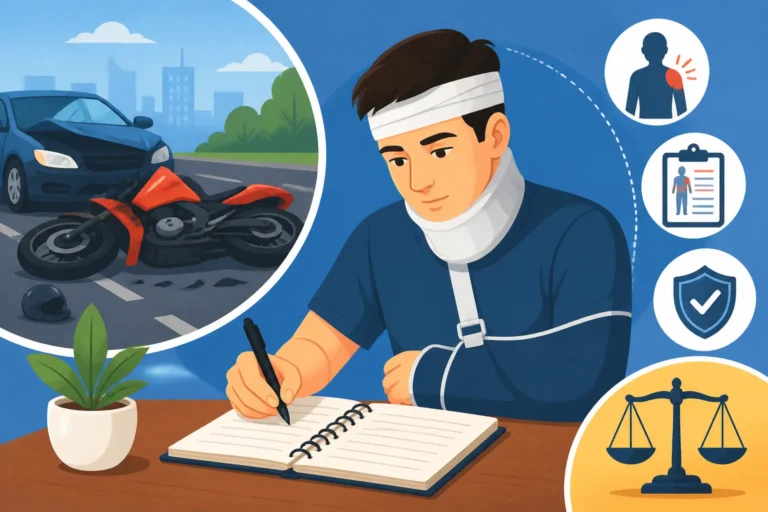
Maintaining a Detailed Injury Journal
While your medical records are the official account, keeping a personal injury journal provides an invaluable supplementary perspective. This journal is where you document, in your own words, your daily pain levels, how your injuries affect your sleep, work, hobbies, and family life. Note down every appointment, every new symptom, and every challenge you face. For instance, if your common motorcycle accident injuries include a shoulder injury, write down how difficult it is to lift your arm to wash your hair, or how certain movements at work cause sharp pain.
This journal can fill in the subjective details that medical records, by their nature, might miss. While your doctor's notes will record "patient reports 7/10 pain," your journal can explain what that pain feels like, when it occurs, and how it limits you. This personal account can be incredibly powerful in supporting your claims for pain and suffering by illustrating the real, day-to-day impact of your injuries. It helps humanize your medical records and provides rich detail that can be used to articulate the full extent of your non-economic damages.
Working with Medical Experts and Legal Counsel
Sometimes, standard medical records aren't enough, especially in complex cases involving catastrophic motorcycle injuries or disputed liability. This is where the expertise of medical specialists and experienced legal counsel becomes indispensable. Your attorney can work with your treating physicians to ensure your medical records are as comprehensive as possible, sometimes even requesting specific detailed reports or narratives that address the legal aspects of your claim.
In certain situations, your legal team might recommend obtaining an independent medical examination (IME) or retaining a medical expert witness. These experts can provide additional opinions, clarify complex medical jargon for a jury, or directly counter opposing medical opinions presented by the defense. They can testify about the causation of your injuries, their severity, your prognosis, and the necessity of future medical care. Partnering with a skilled attorney ensures that your medical evidence is not only collected efficiently but also presented in the most persuasive way possible, drastically improving your chances of securing a fair settlement. This collaborative approach can be crucial for understanding how to maximize your motorcycle accident settlement.
Disclaimer
Please remember that this article provides general information and insights into how medical records support motorcycle accident claims. It is not intended as legal advice. Every accident claim is unique, and the laws governing personal injury vary significantly by jurisdiction. For personalized advice regarding your specific situation, it is always recommended to consult with a qualified legal professional.