Why You Should Seek Immediate Treatment
It's incredibly jarring to go from enjoying the open road on your motorcycle to suddenly being involved in a collision. In the immediate aftermath, it’s all too common for riders to feel a rush of adrenaline, a desire to "walk it off," or a strong urge to get home and process what just happened. But here's the honest truth: resisting the urge to seek immediate medical attention after a motorcycle accident is one of the biggest mistakes you can make, both for your physical well-being and for any future motorcycle accident claim you might need to pursue. This guide is here to explain precisely why seeking immediate medical attention isn't just a good idea, it's absolutely critical for your health and any potential legal claim.
The Critical Importance of Your Health
When you’ve been in a motorcycle accident, your body goes into survival mode. Adrenaline floods your system, acting like a natural painkiller, masking injuries that could be severe. This phenomenon is a double-edged sword: it helps you cope in the immediate chaos, but it can also trick you into believing you’re not as hurt as you truly are. You might stand up, shake it off, and think, "I'm okay," only to find days later that something is seriously wrong.
Identifying Hidden Injuries
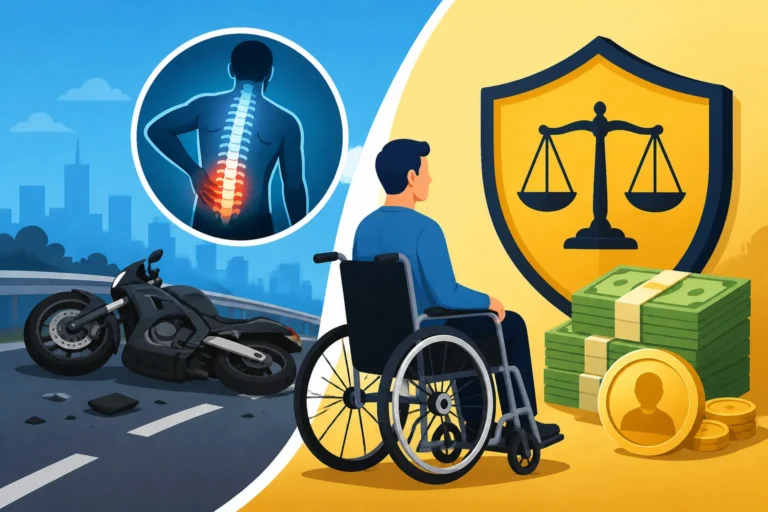
Many of the most dangerous injuries sustained in motorcycle accidents aren't immediately obvious. While road rash might be glaringly visible, what's happening underneath your skin can be far more insidious. A traumatic brain injury, for instance, might manifest as a slight headache or confusion at first, symptoms easily dismissed in the shock of a crash. Yet, untreated, these can lead to long-term cognitive issues, memory problems, or even become life-threatening. Similarly, internal bleeding can quietly worsen without external signs, posing an extreme risk to your life. You might feel a dull ache that you attribute to soreness, only for it to be a fractured rib or a spinal compression injury that needs immediate attention.
Think of it like this: your body has just absorbed a significant impact, and while you might feel functional, the delicate systems within have been jostled. A doctor can perform a comprehensive evaluation, including X-rays, CT scans, or MRIs, to uncover these hidden dangers that your adrenaline-fueled self might totally overlook. Without this crucial early screening, you're essentially gambling with your health, and the stakes are far too high.
Preventing Worsening Conditions
Even seemingly minor injuries can escalate quickly if not properly assessed and treated. A small cut, if not cleaned and dressed correctly, can become infected, leading to more serious health complications and potentially requiring antibiotics or even hospitalization. A whiplash injury, initially felt as a stiff neck, can progress to chronic pain, nerve damage, or limited mobility if left unaddressed. These secondary complications don't just add to your physical suffering; they also complicate your recovery process, potentially extending your time off work and increasing your medical bills.
When you delay treatment, you're not just postponing a diagnosis; you're allowing potential health problems to fester and become more entrenched. A timely medical intervention, whether it's setting a broken bone, closing a deep wound, or starting physical therapy for a soft tissue injury, can significantly alter your recovery trajectory. It helps stabilize your condition, mitigate further damage, and sets you on the quickest path to healing. Ignoring symptoms or hoping they will simply disappear is a risky gamble that rarely pays off in the long run.
Establishing a Baseline for Recovery
Immediate medical treatment creates an indispensable baseline for your recovery. When you visit a doctor right after an accident, they document your initial injuries, symptoms, and overall condition. This record serves as the starting point for your entire medical journey. Without it, it can become incredibly difficult to track the progression of your injuries, determine the effectiveness of treatments, or prove the necessity of ongoing care. This is especially vital when dealing with injuries that might develop or worsen over time, such as certain spinal cord injuries or complex fractures.
The initial medical assessment provides a clear, professional snapshot of your health at the earliest possible moment after the crash. This early documentation is not just for your immediate care; it's a foundational piece of evidence for understanding the full scope of your injuries and planning for the long-term. It helps medical professionals create a tailored treatment plan, ensuring you receive the appropriate care from the outset and preventing diagnostic errors down the line.
Strengthening Your Motorcycle Accident Claim
Beyond your personal health, seeking immediate medical treatment is perhaps the single most important step you can take to protect and strengthen any potential motorcycle accident claim. Insurance companies, unfortunately, are not always on your side, and they look for any reason to minimize payouts. Your medical records are the bedrock of your claim, providing objective, verifiable proof of your injuries and their direct link to the accident.
Documenting Your Injuries Immediately
The moment you receive medical attention, a detailed record begins to form. This includes everything from the initial paramedic report at the scene to the emergency room notes, diagnostic test results, and any follow-up visits with specialists. These medical records are not just important for your treatment; they are the most powerful evidence you have to prove your injuries in a personal injury claim. They establish a clear, undeniable timeline linking the sudden onset of your symptoms and physical damage directly to the motorcycle accident.
Imagine trying to explain a week or two later that your back pain is from the crash, even though you didn't go to the doctor until then. Without that immediate documentation, an insurance adjuster could easily argue that your pain might have come from lifting a heavy box, sleeping wrong, or another incident entirely, completely unrelated to the accident. These records substantiate your claims for medical expenses, lost wages, and pain and suffering, demonstrating to insurers and, if necessary, to a jury, the tangible impact the crash has had on your life. For more on this, you might find our guide on How Medical Records Support Your Claim particularly insightful.
Avoiding Gaps in Medical Treatment
One of the most common tactics used by insurance companies to deny or devalue a motorcycle accident claim is to highlight "gaps in treatment." If you delay seeking medical attention, or if you start treatment but then miss appointments or discontinue care prematurely, insurers will argue that your injuries weren't severe enough to warrant continuous treatment, or worse, that your current ailments aren't even related to the accident. They might claim that if you were truly injured, you would have sought and maintained consistent medical care.
These gaps in care create significant doubt and provide the insurance company with ammunition to undermine your credibility and the severity of your injuries. For example, if you waited two weeks to see a doctor after your crash, and then missed physical therapy sessions, the adjuster will quickly point to that delay and inconsistency as proof that your pain isn't as debilitating as you claim. This is a critical point that can severely impact your ability to recover full compensation, as discussed in detail in our article, How Gaps in Treatment Hurt Your Claim. Staying consistent with your doctor's recommendations is paramount.
Proving Causation and Severity
In any personal injury claim, you must prove two things: causation and severity. Causation means demonstrating that your injuries were directly caused by the other party's negligence in the motorcycle accident. Severity refers to the extent and impact of those injuries on your life. Immediate and continuous medical documentation provides the strongest foundation for proving both. Your doctors will document the specific injuries, their professional opinions on the cause, and the prognosis for recovery.
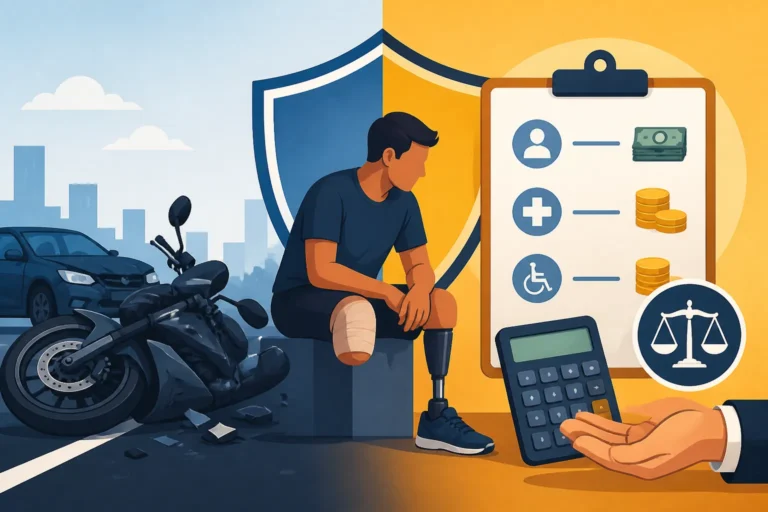
Without immediate medical records, proving that the accident, and not some other event, caused your injuries becomes an uphill battle. A doctor’s professional opinion, based on examinations conducted shortly after the incident, carries significant weight. Furthermore, the detailed notes from specialists, therapists, and follow-up care providers help illustrate the true severity of your injuries, including the pain, limitations, and future medical needs. This comprehensive medical history allows for an accurate calculation of all your damages, including both Economic vs Non-Economic Damages Explained.
Understanding Insurance Company Tactics
Let's face it, insurance companies are businesses, and their primary goal is to minimize payouts. They employ sophisticated strategies to challenge claims, and one of their most effective weapons against motorcycle accident victims is a lack of immediate medical documentation. They capitalize on any ambiguity or delay to shift blame or reduce the perceived value of your injuries.
The "Delayed Treatment" Defense
As mentioned, insurers are quick to use delayed treatment as a primary defense. If you wait days or even weeks to see a doctor after a crash, the insurance adjuster will almost certainly argue that your injuries are not directly related to the accident. They might claim that you could have suffered those injuries in another incident, or that your symptoms are merely pre-existing conditions flaring up. This tactic is particularly common when dealing with soft tissue injuries, such as whiplash or muscle strains, which might not show up on immediate X-rays.
For example, an adjuster for GEICO or Progressive might send you a letter noting the gap between your accident date and your first medical visit, stating they doubt the "causality" of your injuries. This defense can severely jeopardize your claim, making it harder to link your suffering directly to the crash. Even if you genuinely felt fine initially and symptoms only emerged later, the lack of immediate medical attention creates a significant hurdle you'll have to overcome, potentially requiring more effort and expert testimony to refute.
Minimizing Your Pain and Suffering
Pain and suffering are significant components of a motorcycle accident settlement, yet they are notoriously difficult to quantify. Insurance companies will often try to minimize these non-economic damages, especially if there's any perceived weakness in your medical documentation. If you didn't seek immediate treatment, or if your medical records don't clearly illustrate the intensity and duration of your pain, an insurer will have an easier time downplaying your discomfort. They may suggest that if your pain was truly debilitating, you would have been at the emergency room immediately.
The connection between immediate medical treatment and your ability to claim significant pain and suffering cannot be overstated. Consistent medical records, including doctor's notes describing your pain levels, limitations, and emotional distress, provide concrete evidence for these subjective damages. Without this, the insurer can cast doubt on the extent of your suffering, impacting your overall settlement. Our guide on How Insurers Value Pain and Suffering provides deeper insight into how they assess this crucial aspect of your claim.
The Burden of Proof and Early Medical Records
In a personal injury claim, the burden of proof generally falls on the injured party – meaning you are responsible for proving that the other driver caused your injuries and damages. Early medical records are your strongest tool in meeting this burden. They are objective, third-party documentation created by medical professionals, untainted by the passage of time or potential memory lapses. These records speak volumes, providing a factual basis for every aspect of your claim.
A comprehensive record of your initial evaluation, diagnosis, and prescribed treatments immediately following the accident can counteract many of the strategies insurance companies use to deny claims. This documentation serves as irrefutable proof of your condition, making it far more difficult for the at-fault driver's insurance provider, such as State Farm or Allstate, to argue against the existence or severity of your injuries. Having these records from the very beginning streamlines the entire claim process, allowing your legal team to present a clear and convincing case on your behalf.
Practical Steps After Seeking Treatment
So, you've been in a crash, gotten checked out, and now you're wondering what comes next. It's not enough to just visit the emergency room once and consider your medical responsibilities fulfilled. The post-treatment phase is just as vital as the initial visit for both your health and your claim. It requires diligence, consistent communication, and a clear understanding of your role in your own recovery.
Following Through with Medical Advice
Receiving immediate medical attention is only the first step. The real commitment comes in diligently following all medical advice, prescriptions, and recommended therapies. If your doctor tells you to attend physical therapy three times a week, go to those appointments. If they prescribe medication, take it as directed. If they refer you to a specialist – perhaps a neurologist for a suspected Motorcycle Accident Traumatic Brain Injuries or an orthopedic surgeon for broken bones – make those appointments promptly. Each appointment, each test, and each prescription fills in the gaps of your medical narrative, reinforcing the severity of your injuries and your commitment to recovery.
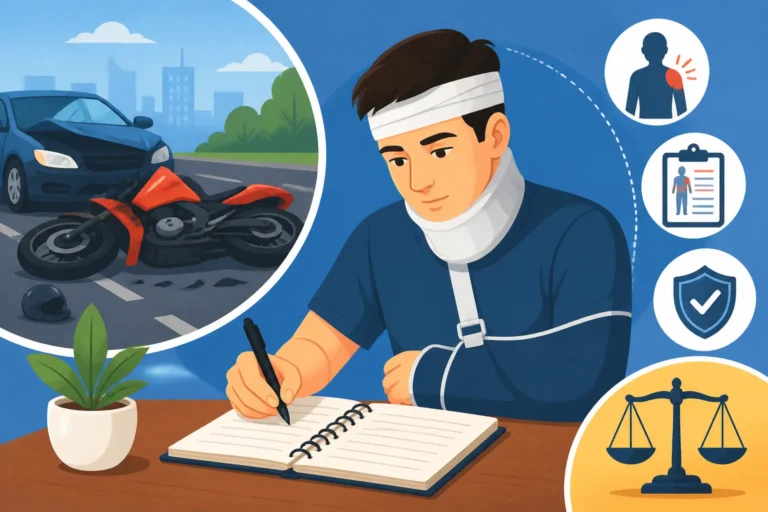
Failing to follow through provides another opening for insurance adjusters to argue that your injuries aren't as serious as you claim, or that your recovery is being hindered by your own non-compliance, rather than the accident itself. This isn't just about protecting your claim; it's about giving your body the best possible chance to heal properly. Your medical care team is there to guide you, and adhering to their expert advice is crucial for your long-term health. Keep a detailed log or How to Keep an Injury Journal to document your progress and any ongoing pain.
Maintaining Comprehensive Medical Records
While your healthcare providers maintain their own records, it’s a smart move to keep your own comprehensive file of all medical documentation related to your accident. This includes appointment dates, names of doctors and specialists, diagnoses, treatment plans, prescriptions, and most importantly, all medical bills. Request copies of all your records, including imaging results like X-rays or MRI reports, from every facility and practitioner you visit. This creates a personal, organized archive of your medical journey post-accident.
This personal archive is invaluable. It serves as a backup in case anything is missed by your healthcare providers, and it ensures you have immediate access to crucial information whenever it's needed, whether for future medical consultations or for your legal team. Having an organized collection of these documents will significantly streamline the process of building your claim and demonstrating the full financial impact of your injuries. This attention to detail can make a huge difference in demonstrating How to Document Injuries for a Claim.
Consulting with Legal Professionals
Once you've sought immediate medical attention and are stable, one of your next critical steps should be to consult with a motorcycle accident lawyer. Many riders, especially if they feel okay or the damage seems minor, might think they can handle the insurance claim on their own. However, even seemingly minor incidents can result in complex legal and medical challenges down the road. A legal professional specializing in motorcycle accidents understands the nuances of these cases and can protect your rights from the very beginning.
Bringing your initial medical records, police report, and any other evidence you've collected to a lawyer as soon as possible allows them to immediately start building a strong case on your behalf. They can handle all communication with insurance companies, ensuring you don't inadvertently say or do anything that could jeopardize your claim. Their early involvement means they can advise you on what evidence to collect, what medical appointments to prioritize, and how to navigate the complex legal landscape. Deciding When to Hire a Motorcycle Accident Lawyer can be pivotal, and often, the earlier, the better.
| Aspect | Immediate Treatment | Delayed Treatment |
|---|---|---|
| Health Impact | Identifies hidden injuries, prevents worsening conditions, establishes clear baseline for effective recovery. | Hidden injuries may go unnoticed, conditions can worsen significantly, recovery path becomes unclear and potentially longer. |
| Claim Strength | Provides irrefutable documentation, links injuries directly to the accident, establishes credibility. | Creates "gaps in treatment" for insurers to exploit, makes causation difficult to prove, reduces credibility. |
| Insurance Response | Harder for insurers to deny liability or minimize injury severity due to objective medical evidence. | Insurers frequently deny claims, argue injuries are unrelated, or offer significantly lower settlements. |
| Evidence Quality | Fresh, accurate medical records from the scene/ER are highly persuasive. | Recollections of symptoms weeks later are less reliable; medical records may lack direct linkage. |
| Legal Standing | Strong foundation for a lawyer to negotiate or litigate, clear demonstration of damages. | Uphill battle for a lawyer, requiring more effort to overcome insurer defenses, potentially leading to lower payouts. |
| Pain & Suffering | Well-documented, lending credibility to claims for non-economic damages. | Harder to prove, often minimized by insurers. |
Disclaimer
Please remember that this article is intended for informational purposes only and does not constitute legal or medical advice. Every motorcycle accident case is unique, and the information provided here may not apply to your specific situation. It is crucial to consult with a qualified medical professional for any health concerns and an experienced motorcycle accident attorney to discuss the specifics of your legal claim.